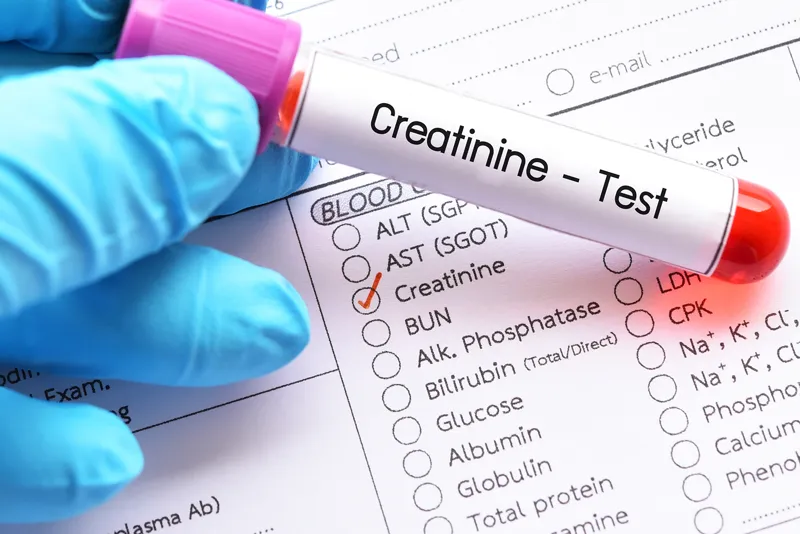
Ключевые выводы
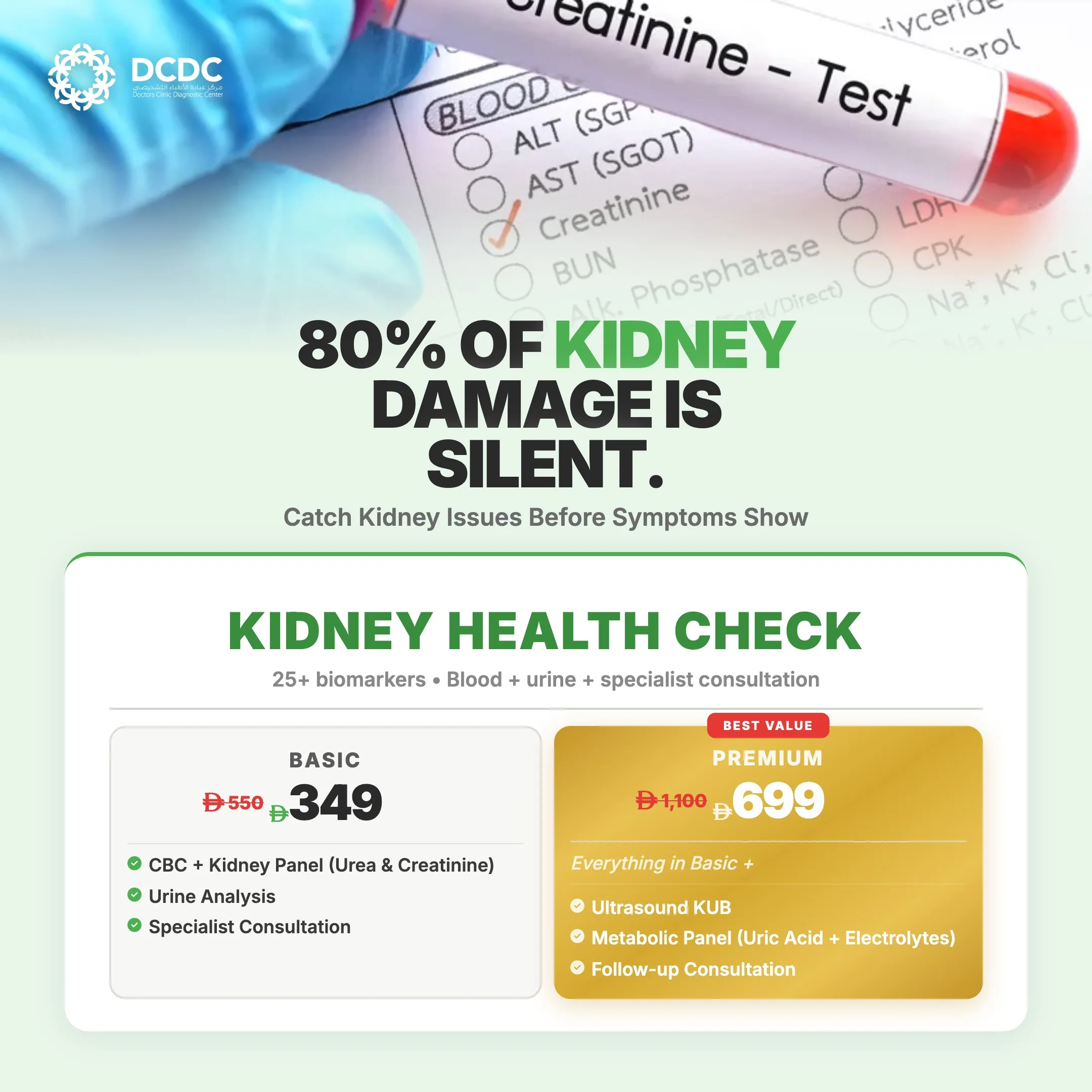
- A comprehensive kidney function test (KFT) starts from AED 149 at DCDC Dubai Healthcare City, including creatinine, BUN, and eGFR — with same-day results from our on-site MOHAP-licensed laboratory
- Basic KFT (creatinine + BUN) is available from AED 99, while a full renal panel with electrolytes, urine microalbumin, and 24-hour collection ranges from AED 199–399 depending on the markers included
- KFT is included in DCDC health checkup packages starting from AED 249 — often more cost-effective than ordering kidney tests individually
- The UAE has one of the highest rates of diabetes and hypertension in the world, both leading causes of chronic kidney disease — early kidney screening can detect damage years before symptoms appear
- Insurance covers kidney function tests when ordered by a physician — DCDC partners with 20+ insurers including Daman, AXA, Bupa, MetLife, and Cigna with direct billing
- No fasting is required for most kidney function tests — stay well-hydrated before your blood draw for the most accurate creatinine and GFR readings
If you are looking for the cost of a kidney function test in Dubai, a comprehensive KFT panel starts from AED 149 at DCDC Dubai Healthcare City. Kidney function tests — also called renal function tests or KFT — measure how effectively your kidneys filter waste, balance electrolytes, and regulate fluid. With the UAE reporting some of the highest diabetes and hypertension rates globally, both of which are leading drivers of chronic kidney disease, regular kidney screening is not a luxury — it is a medical necessity. Our blood tests at DCDC include a full range of kidney markers with same-day results from our on-site laboratory.
Whether you need a routine creatinine check, a comprehensive kidney panel with GFR and electrolytes, or a full renal assessment with urine microalbumin, this guide covers every kidney function test available in Dubai — what each test measures, how much it costs, what to expect during your visit, how to read your results, and when to see a nephrologist. Reviewed by Dr. Hadeel Elnur, General Practitioner at DCDC Dubai Healthcare City.
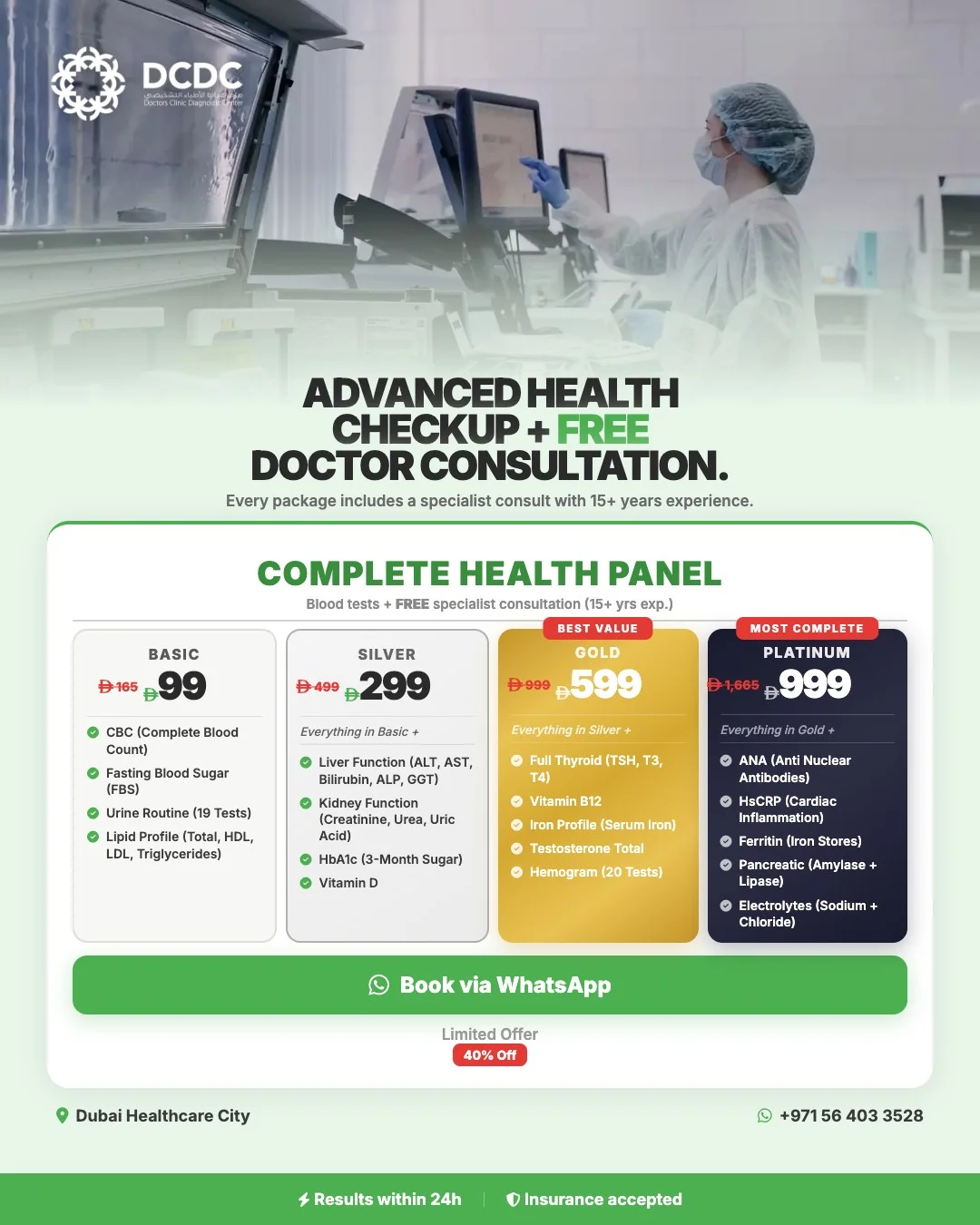
Health Screening Packages
Save with our bundled screening packages — specialist consultation included




Kidney Function Test Cost in Dubai: 2026 Price Breakdown
Kidney function test pricing in Dubai depends on the specific markers ordered, whether you choose a standalone test or a bundled panel, and whether you are paying through insurance or out of pocket. Hospital-based laboratories and private diagnostic centres in DHCC, City Walk, and DIFC typically charge between AED 150 and AED 500 for a standard KFT panel. At DCDC, we offer competitive pricing because our MOHAP-licensed laboratory processes samples on site — eliminating courier markups and external lab fees. All prices below reflect self-pay rates; insured patients with a physician's referral typically pay only their co-pay (10–20%).
| Kidney Function Test | DCDC Price (AED) | Dubai Market Range (AED) | Turnaround |
|---|---|---|---|
| Basic KFT (Creatinine + BUN) | From AED 99 | AED 100–250 | Same day |
| Comprehensive KFT Panel (Creatinine, BUN, GFR, Electrolytes) | From AED 149 | AED 200–500 | Same day |
| 24-Hour Urine Collection Analysis | From AED 199 | AED 250–600 | 1–2 days |
| KFT + Urine Microalbumin | From AED 199 | AED 250–500 | Same day |
KFT prices at DCDC Dubai Healthcare City (2026). Insured patients pay co-pay only. Prices are indicative and subject to updates.
As the table shows, DCDC's pricing sits at the lower end of the Dubai market while offering the same clinical-grade equipment and licensed pathologists found at larger hospital laboratories. The key difference is convenience: walk-in availability, same-day results for routine panels, and direct access to a nephrologist in the same building if your results require specialist review.
What Is a Kidney Function Test (KFT)?
A kidney function test is a group of blood and urine tests that evaluate how well your kidneys are performing their essential tasks. Your kidneys are two bean-shaped organs located below your ribcage that filter approximately 200 litres of blood every day, removing waste products and excess fluid while retaining essential proteins, electrolytes, and glucose. When kidney function declines — whether from diabetes, high blood pressure, infection, or genetic conditions — waste products accumulate in the blood and can cause serious complications including cardiovascular disease, anaemia, bone disorders, and eventually kidney failure requiring dialysis or transplant.
The critical point about kidney disease is that it is often completely silent in its early stages. Most people lose up to 50% of their kidney function before experiencing any noticeable symptoms. This is precisely why routine kidney function testing is so important — it detects declining function long before symptoms appear, giving you and your doctor the opportunity to intervene early and slow or stop the progression of damage.
What's Included in a Kidney Function Panel?
A comprehensive kidney function panel typically includes several complementary markers. Each measures a different aspect of kidney health, and together they provide a complete picture of renal function. Understanding what each marker means helps you have an informed conversation with your doctor about your results.
Serum Creatinine is a waste product generated by normal muscle metabolism. Healthy kidneys filter creatinine out of the blood efficiently, so elevated levels indicate reduced kidney filtration. The normal range is 0.7–1.3 mg/dL for adult men and 0.6–1.1 mg/dL for adult women. Creatinine is the single most commonly ordered kidney marker and forms the basis for calculating your GFR.
Blood Urea Nitrogen (BUN) measures the amount of urea — a by-product of protein breakdown — in your blood. Elevated BUN can indicate kidney dysfunction, dehydration, high-protein diets, or certain medications. The normal range is 7–20 mg/dL. BUN is most useful when interpreted alongside creatinine; the BUN-to-creatinine ratio helps distinguish between kidney-related and non-kidney-related causes of elevated levels.
Estimated Glomerular Filtration Rate (eGFR) is calculated from your creatinine level, age, sex, and body size. It is the single best indicator of overall kidney function and is used to stage chronic kidney disease. A normal eGFR is above 90 mL/min/1.73m². Values between 60 and 89 may indicate mild kidney damage, while values below 60 sustained for three months confirm chronic kidney disease. An eGFR below 15 indicates kidney failure. For a deeper understanding of how eGFR maps to CKD stages and what each stage means for your health, read our guide to chronic kidney disease stages.
Electrolytes (Sodium, Potassium, Chloride, Bicarbonate) are minerals that the kidneys carefully regulate. Abnormal electrolyte levels can indicate impaired kidney function and may cause muscle cramps, fatigue, irregular heartbeat, or confusion. Potassium is particularly important — dangerously elevated potassium (hyperkalemia) is a hallmark of advanced kidney disease and can cause life-threatening cardiac arrhythmias.
Uric Acid is a waste product from purine metabolism. Elevated uric acid can indicate kidney dysfunction, gout risk, or metabolic syndrome. The kidneys excrete about 70% of the body's uric acid, so persistently high levels may signal reduced renal clearance.
Urine Microalbumin (Albumin-to-Creatinine Ratio) detects tiny amounts of protein leaking into the urine — a condition called microalbuminuria. Healthy kidneys retain albumin in the blood; when the kidney's filtering units (glomeruli) are damaged, albumin leaks through. Microalbuminuria is one of the earliest detectable signs of kidney damage, particularly in patients with diabetes or hypertension, and is often present years before creatinine or GFR become abnormal.
Factors That Affect KFT Cost in Dubai
The cost of a kidney function test in Dubai is not fixed — several factors can significantly influence what you pay. Understanding these factors helps you make an informed decision and avoid overpaying for the same clinical-quality results.
Number of markers ordered: A basic KFT with only creatinine and BUN costs AED 99–250, while a comprehensive panel adding GFR, electrolytes, uric acid, and urine microalbumin ranges from AED 149–500. More markers mean more reagent costs and more analyser time, which increases the price. However, bundled panels are almost always more cost-effective per marker than ordering each test individually.
Facility type: Hospital-based laboratories in Dubai typically charge 30–50% more than standalone diagnostic centres or polyclinics because of higher overhead costs. A comprehensive KFT panel may cost AED 400–500 at a hospital outpatient lab but only AED 149–200 at a diagnostic centre like DCDC. The clinical equipment, reagents, and pathologist oversight are identical — the price difference reflects facility overhead, not test quality.
Insurance vs. self-pay: If your doctor orders a KFT and you have active health insurance in Dubai, the insurer typically covers the full lab cost minus your co-pay (usually 10–20% or a fixed AED 50–100 co-pay). Self-pay patients pay the full rate, but DCDC's self-pay pricing is designed to be competitive with — and often lower than — insured hospital rates.
Standalone vs. package: Kidney function tests are included in most health checkup packages. If you need other blood work done (lipid panel, CBC, thyroid, glucose), it is usually more economical to select a package that bundles KFT rather than ordering it as a separate add-on. DCDC's Basic Health Checkup from AED 249 includes a basic KFT alongside CBC, glucose, and lipid profile — far more economical than ordering each test individually.
Home collection surcharge: Some labs in Dubai offer home blood collection for kidney tests, typically adding AED 100–200 to the base test price. DCDC's walk-in blood draw service eliminates this surcharge, and our Building 64 location in DHCC offers free parking, making clinic visits convenient and cost-free beyond the test itself.
Kidney Function Test vs Comprehensive Metabolic Panel
Many patients and even some clinicians use the terms kidney function test, renal panel, and comprehensive metabolic panel (CMP) interchangeably, but they are not identical. Understanding the difference helps you know exactly what you are paying for and ensures you get the right tests for your situation.
A kidney function test (KFT) is focused specifically on renal markers: creatinine, BUN, eGFR, and often electrolytes and uric acid. It answers one question: how well are your kidneys working? A comprehensive metabolic panel (CMP) includes kidney markers but also adds liver function tests (ALT, AST, ALP, bilirubin, albumin) and glucose. A CMP is broader but less deep — it screens multiple organ systems at once but may not include specialised kidney markers like urine microalbumin or cystatin C that a dedicated renal panel would.
If your doctor has identified kidney-specific concerns — you have diabetes, hypertension, a family history of kidney disease, or a previous abnormal result — a dedicated KFT panel with urine microalbumin is more appropriate than a CMP. If you want a general health overview and your kidney risk is low, a CMP or health checkup package that includes basic kidney markers is sufficient and more cost-effective. At DCDC, our doctors can advise which panel is right for your clinical picture during a brief consultation.
Does Insurance Cover Kidney Function Tests in Dubai?
Yes — kidney function tests are covered by virtually all health insurance plans in Dubai when ordered by a licensed physician. Dubai's mandatory health insurance law (DHA Health Insurance Law No. 11 of 2013) requires all insurers to cover essential diagnostic laboratory tests, and KFT falls squarely within this category. Whether you hold a basic Essential Benefits Plan (EBP) or a premium corporate policy, your kidney blood work is covered.
The process at DCDC is straightforward: bring your insurance card and a doctor's referral (if required by your plan), and our front desk team verifies your coverage and handles electronic pre-authorisation before you even sit down for the blood draw. Most approvals come through within minutes. Insured patients typically pay only a co-pay of AED 0–100, depending on their plan, rather than the full test price.
DCDC currently partners with 20+ insurance providers for direct billing, including Daman (the largest public insurer in Abu Dhabi and Dubai), AXA, Bupa Global, MetLife, Cigna, Oman Insurance, Orient, National Health Insurance Company (NHIC), Neuron, and MSH International among others. If your insurer is not on our direct billing list, you can still pay out of pocket at our competitive self-pay rates and submit the invoice to your insurer for reimbursement.
For patients who need regular KFT monitoring (diabetics, CKD patients, those on nephrotoxic medications), insurance typically covers repeat testing every 3–6 months when clinically justified. Your doctor's clinical notes and diagnosis codes determine the frequency that your insurer will approve. For more on how laboratory tests are covered and priced across Dubai, see our comprehensive guide to blood tests in Dubai.
Book Your Kidney Function Test at DCDC
Comprehensive KFT panel from AED 149 with same-day results. Walk-in or book by phone/WhatsApp. DCDC Dubai Healthcare City — Building 64, Block A, Al Razi Medical Complex. View laboratory services or call us to schedule.
Direct billing with 20+ insurance providers. Free parking. Open Saturday–Thursday 8AM–10PM, Friday 9AM–9PM.
Who Should Get a Kidney Function Test?
While anyone can benefit from knowing their kidney health status, certain groups face significantly higher risk of kidney disease and should be tested regularly. According to the KDIGO (Kidney Disease: Improving Global Outcomes) guidelines, the following groups should have kidney function assessed at least annually:
- People with diabetes: Diabetes is the leading cause of kidney failure worldwide and in the UAE. High blood sugar damages the kidneys' filtering units over time. All diabetics should have creatinine, eGFR, and urine microalbumin checked at least once a year.
- People with hypertension: High blood pressure is the second leading cause of kidney disease. Uncontrolled hypertension damages blood vessels in the kidneys, reducing their ability to filter waste. Annual KFT is recommended for all hypertensive patients.
- Adults over 40: Kidney function naturally declines with age — eGFR drops by approximately 1 mL/min per year after age 40. Baseline testing helps establish your normal and track any accelerated decline.
- Family history of kidney disease: If a first-degree relative (parent, sibling) has had kidney disease, kidney failure, or dialysis, your risk is 2–3 times higher than the general population.
- People taking nephrotoxic medications: NSAIDs (ibuprofen, naproxen), certain antibiotics (gentamicin, vancomycin), lithium, some chemotherapy agents, and high-dose proton pump inhibitors can damage kidneys with prolonged use. Regular monitoring is essential.
- Smokers: Smoking accelerates kidney damage by reducing blood flow to the kidneys and worsening existing conditions like diabetes and hypertension.
- People who are overweight or obese: Obesity increases the risk of diabetes and hypertension, and also directly damages the kidneys through a mechanism called obesity-related glomerulopathy.
- People with cardiovascular disease: Heart and kidney health are closely linked. Reduced cardiac output affects kidney perfusion, and kidney disease worsens cardiovascular risk — a dangerous cycle.
- UAE residents exposed to chronic dehydration: Dubai's extreme summer heat causes chronic mild dehydration, which concentrates urine and stresses kidneys. People who work outdoors, exercise heavily, or drink insufficient water should monitor kidney function annually.
According to Dr. Hadeel Elnur, 'Kidney function tests are among the most underutilized screening tools in Dubai. Many patients with early-stage kidney disease have no symptoms. I recommend KFT as part of every annual health checkup, especially for patients with diabetes, hypertension, or a family history of kidney disease.'
How to Prepare for a Kidney Function Test
One of the advantages of kidney function testing is that preparation is minimal compared to other blood tests. However, a few simple steps can improve the accuracy of your results and make the experience more comfortable.
Fasting is generally not required for a standard KFT panel. Unlike lipid profiles or fasting glucose tests, creatinine, BUN, and electrolyte levels are not significantly affected by recent food intake. However, if your KFT is being bundled with other tests that do require fasting (such as a lipid panel or fasting glucose), you should fast for 10–12 hours before the blood draw.
Stay well-hydrated. Dehydration can artificially elevate creatinine and BUN levels, potentially suggesting kidney dysfunction that does not actually exist. Drink plenty of water in the 24 hours before your test — especially important in Dubai's hot climate. Aim for at least 2–3 litres on the day before your test and continue drinking water on the morning of the test.
Avoid heavy exercise for 24 hours. Intense physical activity — particularly weightlifting, high-intensity interval training, or endurance running — temporarily raises creatinine levels because muscle breakdown produces creatinine as a by-product. If you have a KFT scheduled, skip the gym the day before.
Inform your doctor about medications. Certain medications can affect kidney markers. NSAIDs (ibuprofen, diclofenac), ACE inhibitors, ARBs, metformin, and some antibiotics can influence creatinine, BUN, or electrolyte levels. Do not stop any medication without your doctor's advice, but make sure they know what you are taking so they can interpret results in context.
Avoid excessive protein intake. A very high-protein meal the night before your test can temporarily elevate BUN levels. Eat a normal, balanced meal rather than a protein-heavy dinner. This is particularly relevant for patients who follow high-protein diets or use protein supplements.
Understanding Your KFT Results: Normal Ranges
Receiving your KFT results can be confusing without context. Below is a reference table for normal ranges used by most Dubai laboratories, including DCDC. Keep in mind that 'normal' ranges can vary slightly between labs and may need to be interpreted in the context of your age, sex, muscle mass, and overall health. Your doctor will review the results and explain what they mean for you specifically.
| Marker | Normal Range | High May Indicate | Low May Indicate |
|---|---|---|---|
| Serum Creatinine | Men: 0.7–1.3 mg/dL | Women: 0.6–1.1 mg/dL | Reduced kidney function, dehydration, muscle injury | Low muscle mass, liver disease, pregnancy |
| BUN (Blood Urea Nitrogen) | 7–20 mg/dL | Kidney dysfunction, dehydration, high-protein diet, GI bleeding | Liver disease, malnutrition, overhydration |
| eGFR | >90 mL/min/1.73m² | N/A (higher is better) | Stage 1 CKD: 60–89 | Stage 2: 45–59 | Stage 3: 30–44 | Stage 4: 15–29 | Stage 5: <15 |
| Sodium | 136–145 mmol/L | Dehydration, Cushing's syndrome | Overhydration, SIADH, diuretic use |
| Potassium | 3.5–5.0 mmol/L | Kidney failure, ACE inhibitors, tissue damage | Diuretics, vomiting, diarrhea |
| Uric Acid | Men: 3.4–7.0 mg/dL | Women: 2.4–6.0 mg/dL | Gout, kidney disease, metabolic syndrome | Rarely clinically significant |
| Urine Microalbumin (ACR) | <30 mg/g creatinine | Early kidney damage (30–300: microalbuminuria; >300: macroalbuminuria) | Normal |
Normal reference ranges for kidney function markers. Interpret with your doctor based on individual clinical context.
A single abnormal result does not necessarily mean you have kidney disease. Temporary elevations in creatinine can be caused by dehydration, intense exercise, high-protein meals, or certain medications. Your doctor may recommend repeating the test in 2–4 weeks to confirm whether the finding is persistent or transient. Two or more abnormal results separated by at least three months, however, are clinically significant and warrant further evaluation.
What to Expect at DCDC for Your Kidney Function Test
Getting a kidney function test at DCDC Dubai Healthcare City is designed to be fast, comfortable, and hassle-free. Here is a step-by-step walkthrough of what to expect from arrival to results:
Step 1: Arrival. DCDC is located in Building 64, Block A, Al Razi Medical Complex, Dubai Healthcare City. Free parking is available on site. Walk-in patients are welcome during operating hours (Saturday–Thursday 8AM–10PM, Friday 9AM–9PM), or you can book ahead by phone or WhatsApp for a specific time slot.
Step 2: Check-in and insurance verification. At the front desk, present your Emirates ID and insurance card (if applicable). Our team verifies your coverage and handles electronic pre-authorisation within minutes. Self-pay patients receive a clear cost breakdown before proceeding. Average wait time from check-in to blood draw is 15 minutes.
Step 3: Blood draw. An experienced phlebotomist draws a small blood sample — typically one or two tubes depending on the markers ordered. The procedure takes 5–10 minutes, including labelling and confirmation. If your doctor has also ordered a urine microalbumin test, you will provide a urine sample at this stage. Our phlebotomy team performs thousands of draws monthly, so even patients who are anxious about needles typically find the experience smooth and virtually painless.
Step 4: On-site processing. Your sample goes directly to DCDC's on-site MOHAP-licensed laboratory — no courier transport, no external lab handoffs. Our state-of-the-art analysers process kidney markers with clinical-grade precision. This in-house processing is what enables our same-day results guarantee for routine KFT panels.
Step 5: Same-day results. Routine KFT results (creatinine, BUN, eGFR, electrolytes) are typically available within 4–6 hours. Results are delivered digitally for your convenience. If you have a same-day doctor consultation booked, your results are reviewed by the physician and explained in detail during your appointment.
Step 6: Follow-up if needed. If your results show abnormalities, DCDC offers a direct referral pathway to our on-site nephrology clinic. You can often see a kidney specialist within 24–48 hours — no need to visit a different facility or wait weeks for an external referral. Our nephrologist can order additional tests (renal ultrasound, cystatin C, 24-hour urine collection) and create a management plan, all under one roof.
With a 4.8/5 Google rating from 1,000+ patient reviews, a 98% patient satisfaction rate, and a team that handles everything from initial blood draw to specialist follow-up within one building, DCDC is designed to make kidney function testing as convenient and stress-free as possible.
When to Repeat Your Kidney Function Test
The frequency of kidney function testing depends on your risk profile and previous results. International guidelines from KDIGO and the National Kidney Foundation provide the following recommendations, which DCDC's physicians follow:
- Low-risk adults (no diabetes, no hypertension, no family history): KFT every 1–2 years as part of a routine health checkup, starting from age 40
- Diabetics: At least annually, including creatinine, eGFR, and urine microalbumin. If results are abnormal, increase to every 3–6 months
- Hypertensive patients: Annually. If starting or adjusting ACE inhibitors, ARBs, or diuretics, recheck KFT 1–2 weeks after medication changes
- CKD Stage 1–2 (eGFR 60–89): Every 6–12 months to monitor for progression
- CKD Stage 3 (eGFR 30–59): Every 3–6 months
- CKD Stage 4–5 (eGFR <30): Every 1–3 months under nephrologist supervision
- Patients on nephrotoxic medications: Baseline KFT before starting the medication, then every 3–6 months while on it
- Post-acute kidney injury (AKI): KFT at 2 weeks, 3 months, and 12 months after the event to confirm recovery and detect any chronic damage
If you have diabetes or take medications that affect kidney function, understanding the full cost landscape for regular monitoring is important. Our guide on diabetes testing costs covers how to bundle diabetes and kidney panels for maximum savings.
Kidney Function Test Dubai: Cost Comparison Table
For patients who want to combine kidney function testing with a broader health assessment, DCDC offers several packages that include KFT markers. These packages provide significantly better value than ordering kidney tests à la carte, especially if you also need lipid, glucose, thyroid, or liver function testing.
| Health Package | Includes KFT? | DCDC Price (AED) | Also Includes |
|---|---|---|---|
| Basic Health Checkup | Yes — Basic KFT | From AED 249 | CBC, glucose, lipid profile, urine analysis |
| Executive Health Checkup | Yes — Full KFT + Urine | From AED 1,499 | All basic + thyroid, vitamins, tumour markers, ECG, ultrasound, specialist consult |
| Diabetes Screening Panel | Yes — KFT + HbA1c | From AED 399 | HbA1c, fasting glucose, lipid profile, urine microalbumin |
DCDC health packages that include kidney function testing (2026 pricing). Package options offer the best per-test value.
As a rule of thumb: if you need three or more blood test categories (kidney, lipid, glucose, thyroid, CBC), selecting a health checkup package is almost always more economical than ordering each panel separately. The Basic Health Checkup at AED 249 includes a basic KFT, CBC, glucose, and lipid profile — tests that would cost AED 350–500 individually.
Why Kidney Screening Matters in the UAE
The UAE faces a particularly acute kidney health challenge. According to the International Diabetes Federation, the UAE has a diabetes prevalence rate of approximately 16.3% among adults aged 20–79 — one of the highest in the world. Hypertension affects roughly 29% of UAE adults. Because diabetes and hypertension are the two leading causes of chronic kidney disease globally, the UAE's kidney disease burden is correspondingly high.
Studies published in kidney health journals estimate that 1 in 7 UAE residents may have some degree of chronic kidney disease, with the majority undiagnosed because they have not been screened. Many expatriates in Dubai — who make up approximately 90% of the population — arrive without health screening records and may carry undiagnosed diabetes or hypertension for years before a kidney function test reveals the downstream damage.
Dubai's climate adds another risk factor. Summer temperatures regularly exceed 45°C, and chronic dehydration — whether from insufficient fluid intake, outdoor work, or excessive air-conditioned environments — concentrates urine and strains kidney function over time. A growing body of research links chronic heat exposure to increased risk of kidney stones and progressive kidney injury, particularly among outdoor workers and athletes.
The economic argument for early screening is compelling. Treating end-stage renal disease with dialysis costs approximately AED 200,000–350,000 per year per patient, while a kidney transplant costs AED 350,000–500,000 or more. In contrast, a comprehensive kidney function test costs from AED 149 — and early intervention with blood pressure medication, glucose control, and lifestyle changes can delay or prevent progression to dialysis by decades.
Protect Your Kidneys — Get Tested at DCDC Today
Early detection saves kidneys. Walk in for a kidney function test from AED 149 at DCDC Dubai Healthcare City. Same-day results, 20+ insurance partners, on-site nephrologist for immediate follow-up if needed.
Building 64, Block A, Al Razi Medical Complex, DHCC. Free parking. Open Saturday–Thursday 8AM–10PM, Friday 9AM–9PM. Call or WhatsApp to book.
Tips to Keep Kidney Function Test Costs Down in Dubai
While kidney function testing is already one of the more affordable diagnostic tests available, these strategies can help you maximise value and minimise out-of-pocket spending in Dubai:
- Use your insurance: If you have a valid doctor's referral, your insurer covers KFT and you pay only the co-pay. DCDC handles pre-authorisation on site.
- Bundle with a health package: If you need multiple blood tests, select a health checkup package that includes KFT rather than ordering each panel individually — this can save 30–50% compared to à la carte pricing.
- Choose a diagnostic centre over a hospital: DCDC's pricing is 30–50% lower than hospital-based labs in Dubai, with the same MOHAP-licensed equipment and pathologist oversight.
- Avoid unnecessary add-ons: A basic KFT (creatinine + BUN) from AED 99 is sufficient for routine screening if you have no risk factors. Reserve the comprehensive panel with microalbumin for patients with diabetes, hypertension, or known kidney concerns.
- Skip home collection fees: Home blood collection services add AED 100–200 to the test price. DCDC's walk-in service in DHCC with free parking eliminates this surcharge entirely.
- Ask about repeat-test discounts: If your doctor recommends quarterly KFT monitoring, ask about multi-test pricing. Regular monitoring patients may benefit from package rates at DCDC.
Связанные услуги в DCDC
Квалифицированная помощь и современная диагностика в Dubai Healthcare City
Frequently Asked Questions
Don't Wait for Symptoms — Get Your Kidneys Checked Today
Kidney disease is often called the 'silent epidemic' because most people with early-stage damage have no symptoms at all. By the time noticeable symptoms appear — persistent fatigue, swelling, changes in urination, nausea — kidney function may already be significantly compromised. A comprehensive kidney function test costing from AED 149 can detect problems years before symptoms develop, giving you and your doctor the window to intervene with medications, lifestyle changes, and monitoring that can prevent progression to dialysis or transplant.
In a country where diabetes affects 1 in 6 adults and hypertension affects nearly 1 in 3, kidney screening is not optional — it is essential preventive medicine. At DCDC Dubai Healthcare City, we have made kidney function testing accessible, affordable, and fast: walk-in availability with no appointment needed, same-day results from our on-site MOHAP-licensed laboratory, competitive self-pay pricing from AED 149, and direct billing with 20+ insurance providers. If your results need specialist attention, our on-site nephrology clinic means you can see a kidney specialist within 24–48 hours without leaving the building.
Whether you are getting your first kidney screening, monitoring a known condition, or bundling KFT into an annual health checkup, DCDC's team — including Dr. Hadeel Elnur and our specialist nephrology department — is here to guide you through testing, results interpretation, and any follow-up care you need. Contact us by phone or WhatsApp to book your kidney function test, or walk in to Building 64, Block A, Al Razi Medical Complex, Dubai Healthcare City. Your kidneys filter 200 litres of blood every day. A 10-minute test can tell you whether they are doing it well.
Источники и ссылки
Эта статья проверена нашей медицинской командой и ссылается на следующие источники:
- National Kidney Foundation — GFR Calculator and CKD Staging
- KDIGO (Kidney Disease: Improving Global Outcomes) — Clinical Practice Guidelines for CKD Evaluation and Management
- Mayo Clinic — Kidney Function Tests: Overview and Preparation
- NHS UK — Chronic Kidney Disease: Diagnosis and Testing
- Cleveland Clinic — Blood Urea Nitrogen (BUN) Test: What It Measures
Медицинский контент на этом сайте проверяется врачами, лицензированными DHA. См. нашу редакционную политику для получения дополнительной информации.

Автор
Dr. Hadeel Elnur
General Practitioner
MD, General Practice
Dr. Hadeel Elnur is a General Practitioner at Doctors Clinic Diagnostic Center (DCDC) in Dubai Healthcare City.
Related Articles
CKD Dubai: Stages, Symptoms & Treatment
Blood Test Dubai: Types, Cost & Fasting Guide
Kidney Stones Dubai: Causes & Treatment

UTI Treatment Dubai: Symptoms & Prevention
Kidney Health Dubai: Prevention & Warning Signs
More in General Health
Dizziness Causes Dubai: When to Get Checked (2026)
Читать далее
Elderly Care at Home Dubai: Full Guide (2026)
Читать далее
IV Drip at Home Dubai: From AED 449 (2026)
Читать далее
Nurse at Home Dubai: Cost & Services (2026)
Читать далее
Stomach Infection Treatment Dubai (2026)
Читать далее
Cholesterol Levels by Age Dubai: Chart (2026)
Читать далее© 2026 Doctors Clinic Diagnostic Center (DCDC), Dubai Healthcare City. Originally published at https://doctorsclinicdubai.ae/blog/kidney-function-test-cost-dubai. All rights reserved. Unauthorized reproduction is prohibited.