Ключевые выводы
- A dental abscess is a pocket of pus caused by a bacterial infection inside or around a tooth — it will not resolve on its own and requires professional dental treatment to prevent the infection from spreading to the jaw, neck, or bloodstream
- There are three main types of dental abscess: periapical (at the tooth root tip, caused by untreated decay), periodontal (in the gum alongside the tooth root, linked to gum disease), and gingival (in the gum tissue only, often from foreign body impaction)
- Treatment depends on the type and severity — options include incision and drainage (from AED 300), root canal therapy (from AED 800), tooth extraction (from AED 300), and antibiotics when the infection has spread beyond the local area
- Dental abscesses are dental emergencies — at DCDC in Dubai Healthcare City, same-day emergency slots are reserved daily for toothache, broken teeth, and infections, with extended hours (Sat-Thu 8 AM-10:30 PM, Fri 9 AM-10 PM)
- Advanced diagnostic imaging including CBCT scans and digital X-rays (which reduce radiation by up to 80 percent compared to traditional film) enables precise identification of abscess location, extent of bone involvement, and optimal treatment planning
- Prevention is the best strategy — regular dental cleanings (from AED 200 at DCDC), prompt treatment of cavities, and good oral hygiene significantly reduce the risk of developing a dental abscess
A dental abscess is one of the most painful and potentially dangerous dental conditions — a pocket of pus caused by a bacterial infection that can develop at the tip of a tooth root, alongside the root in the gum, or in the gum tissue itself. Left untreated, the infection can spread to the jaw, head, neck, and in rare cases the bloodstream, leading to life-threatening sepsis. The good news is that dental abscesses are highly treatable when diagnosed early. At Doctors Clinic Diagnostic Center (DCDC) in Dubai Healthcare City, our team of 6-plus dental specialists provides same-day emergency treatment for dental abscesses using advanced CBCT imaging, digital X-rays, and evidence-based protocols.
This comprehensive guide covers everything you need to know about dental abscesses in Dubai — from the different types, causes, and warning symptoms to the full range of treatment options, costs, insurance coverage, home care measures, and prevention strategies. Whether you are currently experiencing severe tooth pain and suspect an abscess, or you want to understand the condition to protect yourself and your family, this guide will help you make informed decisions about your dental health.


What Is a Dental Abscess?
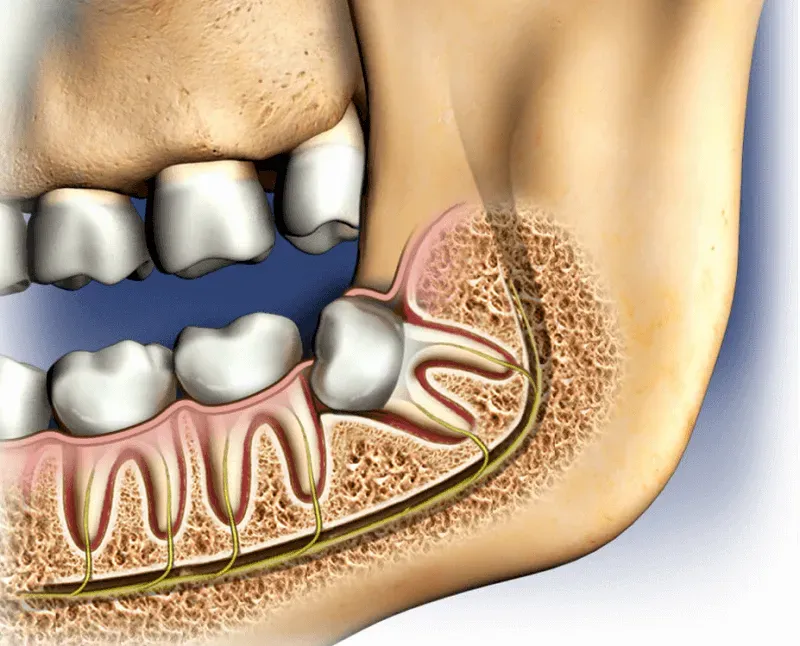
A dental abscess is a localised collection of pus that forms as a result of a bacterial infection in or around a tooth. The infection occurs when bacteria invade the dental pulp (the innermost part of the tooth containing nerves, blood vessels, and connective tissue), the periodontal ligament (the tissue that holds the tooth in the jawbone), or the gingival tissue (the gums). The body's immune response to the bacterial invasion produces pus — a thick, yellowish fluid composed of dead white blood cells, bacteria, and tissue debris. As the pus accumulates in a confined space, it creates significant pressure that causes intense, throbbing pain.
Dental abscesses do not heal on their own. Unlike a minor cut on the skin, an abscess in the mouth exists in an environment that is constantly exposed to bacteria, food particles, and saliva. Without professional treatment to drain the pus and eliminate the source of infection, the abscess will persist and can spread to surrounding tissues, the jawbone, and potentially through the bloodstream to other parts of the body. According to the NHS, a dental abscess can become life-threatening if the infection spreads, making prompt treatment essential.
Types of Dental Abscess
Understanding the type of abscess is critical because it determines the treatment approach. There are three main types, each originating in a different location and caused by different underlying conditions.
Periapical Abscess
A periapical abscess forms at the tip (apex) of the tooth root. It is the most common type of dental abscess. It occurs when bacteria enter the dental pulp through a deep cavity, a crack in the tooth, or trauma. Once the pulp becomes infected and dies (pulp necrosis), the bacteria multiply and spread through the root canal system to the bone at the root tip, forming an abscess. Symptoms include severe, constant throbbing pain that may radiate to the ear, jaw, or neck on the affected side; sensitivity to hot and cold temperatures; pain when biting or chewing; facial swelling; and sometimes fever. Treatment typically involves root canal therapy or extraction.
Periodontal Abscess
A periodontal abscess originates in the gum tissue alongside the tooth root, typically in a deep periodontal pocket. It is most commonly associated with existing gum disease (periodontitis), where bacteria become trapped in the deep pockets between the teeth and gums. The pocket opening can become blocked, trapping bacteria and pus inside. Periodontal abscesses can also occur after dental procedures or when a foreign object (such as a piece of food, a popcorn hull, or a toothpick fragment) becomes lodged between the tooth and gum. Symptoms include localised gum swelling and redness, tenderness when touching the area, pus discharge from the gum line, a bad taste in the mouth, and loosening of the affected tooth.
Gingival Abscess
A gingival abscess is confined to the gum tissue (gingiva) and does not involve the tooth structure or the periodontal ligament. It typically occurs when a foreign body — such as a fish bone, popcorn kernel, or toothbrush bristle — becomes embedded in the gum tissue, causing a localised bacterial infection. Gingival abscesses tend to be the least severe of the three types and are usually the easiest to treat, often requiring only incision, drainage, and removal of the foreign body.
| Feature | Periapical Abscess | Periodontal Abscess | Gingival Abscess |
|---|---|---|---|
| Location | Root tip (apex) | Alongside the root in the gum | Gum tissue only |
| Primary cause | Tooth decay, crack, or trauma | Gum disease (periodontitis) | Foreign body impaction |
| Tooth vitality | Non-vital (dead pulp) | Usually vital | Vital |
| Main treatment | Root canal or extraction | Drainage and periodontal treatment | Incision and drainage |
| Severity if untreated | High — can spread to bone/bloodstream | High — can destroy bone support | Moderate — localised |
Comparison of the three types of dental abscess. A periapical abscess is the most common and typically requires root canal treatment or extraction.
Causes and Risk Factors
A dental abscess develops when bacteria enter areas of the tooth or gum that are normally sterile. Understanding the causes and risk factors helps with both prevention and early detection.
Direct Causes
- Untreated tooth decay (dental caries): The most common cause of periapical abscesses. As decay progresses through the enamel and dentine, bacteria eventually reach the pulp chamber. According to the World Health Organization, untreated dental caries in permanent teeth is the most prevalent health condition globally, affecting approximately 2 billion people.
- Cracked, chipped, or broken teeth: Physical damage to a tooth can create a pathway for bacteria to reach the pulp, even in the absence of decay. This is particularly common after trauma or biting on hard objects.
- Gum disease (periodontitis): Chronic inflammation of the gums leads to deepening periodontal pockets where bacteria can accumulate and form periodontal abscesses. For more information, see our guide to gum disease treatment.
- Failed or ageing dental restorations: Old fillings, crowns, or other restorations can deteriorate over time, allowing bacteria to penetrate beneath them and infect the underlying tooth structure.
- Previous dental procedures: In rare cases, bacteria can be introduced during dental procedures, particularly if the tooth had pre-existing damage or the restoration fails to fully seal the tooth.
- Foreign body impaction: Food particles, popcorn husks, toothpick splinters, or other objects that become lodged between the teeth and gums can cause gingival or periodontal abscesses.
Risk Factors That Increase Susceptibility
- Poor oral hygiene: Inadequate brushing and flossing allows plaque and bacteria to accumulate on teeth and along the gum line, increasing the risk of both decay and gum disease
- High-sugar diet: Frequent consumption of sugary foods and drinks feeds the bacteria that cause tooth decay, significantly increasing abscess risk
- Dry mouth (xerostomia): Saliva helps neutralise acids and wash away bacteria. Medications, medical conditions, or mouth breathing that reduce saliva flow increase infection risk
- Weakened immune system: Conditions such as uncontrolled diabetes, HIV/AIDS, or immunosuppressive medications reduce the body's ability to fight bacterial infections
- Smoking and tobacco use: Tobacco impairs blood flow to the gums, weakens the immune response in the oral cavity, and is a major risk factor for periodontal disease
- Skipping regular dental check-ups: Without routine examinations, early decay and gum disease go undetected and untreated, progressing to the point where abscesses can form
Symptoms of a Dental Abscess
Recognising the symptoms of a dental abscess early is crucial for getting timely treatment and preventing complications. The hallmark symptom is intense, throbbing pain, but abscesses can present with a range of signs depending on the type, location, and severity. If you are experiencing any of these symptoms, read our guide on toothache causes to understand when tooth pain signals a serious problem.
Common Symptoms
- Severe, persistent, throbbing toothache: The pain is often described as intense and unrelenting, and may radiate to the jawbone, ear, or neck on the affected side
- Sensitivity to temperature: Pain that intensifies when eating or drinking hot or cold foods and beverages
- Pain when biting or chewing: Pressure on the affected tooth causes sharp pain because the abscess puts pressure on the surrounding bone and tissues
- Facial or gum swelling: Swelling in the cheek, face, or gum near the affected tooth — this swelling may spread to the eye area or neck in severe cases
- Red, swollen gums: The gum tissue around the affected tooth becomes inflamed, tender, and may appear shiny
- Foul taste or smell: If the abscess ruptures (bursts on its own), you may experience a sudden rush of foul-tasting, salty fluid in the mouth along with immediate pain relief
- Fever: A temperature above 38 degrees Celsius (100.4 degrees Fahrenheit) indicates the infection may be spreading beyond the local area
- Swollen lymph nodes: The lymph nodes under the jaw or in the neck may become tender and enlarged as the immune system responds to the infection
- Difficulty opening the mouth (trismus): Swelling and inflammation in the jaw muscles can restrict mouth opening — this is a warning sign of a severe infection
- Difficulty swallowing or breathing: This is a medical emergency that requires immediate hospital attention, as it indicates the infection may be compromising the airway
Clinical perspective from Dr. Chadi El Masry: "Many patients delay seeking treatment for a dental abscess because the pain sometimes decreases after the abscess ruptures on its own. This is dangerous — the infection is still very much active even when the pain subsides. A ruptured abscess creates a fistula (drainage channel) that temporarily relieves pressure, but the underlying infection continues to destroy bone and can spread. Any swelling in the face, persistent bad taste in the mouth, or pimple-like bump on the gum near a tooth should prompt an immediate dental visit."
When to Seek Emergency Dental Care
While all dental abscesses require professional treatment, certain symptoms indicate a more serious or rapidly spreading infection that needs urgent attention. Go to a hospital emergency department immediately if you experience difficulty breathing or swallowing, high fever with facial swelling, inability to open your mouth, swelling that is spreading to the eye or neck, or confusion and general malaise with dental symptoms. For urgent but non-life-threatening symptoms — such as severe toothache, localised facial swelling, or a gum boil — contact a dentist for same-day emergency care. At DCDC, same-day emergency slots are reserved daily for urgent dental conditions including abscesses, and the clinic is open extended hours (Sat-Thu 8 AM-10:30 PM, Fri 9 AM-10 PM) to accommodate urgent cases. For advice on handling any dental emergency, see our detailed guide.
How a Dental Abscess Is Diagnosed
Accurate diagnosis is the foundation of effective treatment. At DCDC, the diagnostic process for a suspected dental abscess involves a systematic clinical examination combined with advanced dental imaging to identify the type, location, and extent of the infection.
Clinical Examination
The dentist begins with a thorough medical and dental history, asking about the onset, duration, and nature of the pain, any aggravating or relieving factors, and relevant medical conditions. The clinical examination includes visual inspection of the teeth and gums for swelling, redness, or a sinus tract (fistula); palpation (pressing) of the gum tissue to check for tenderness and fluctuance (the feeling of fluid beneath the surface); percussion testing (tapping on the tooth) to identify the affected tooth; vitality testing using cold stimulus or an electric pulp tester to determine whether the tooth pulp is alive or dead; and assessment of periodontal pocket depths using a periodontal probe.
Dental Imaging
Imaging is essential for confirming the diagnosis, determining the extent of the infection, and planning treatment. DCDC uses advanced on-site dental imaging technology for fast, accurate diagnosis.
- Digital periapical X-rays: Show the area around the root tip of the suspected tooth, revealing periapical radiolucencies (dark areas at the root tip indicating bone destruction from the abscess). Digital X-rays reduce radiation exposure by up to 80 percent compared to traditional film X-rays and produce instant high-resolution images
- OPG (orthopantomogram): A panoramic X-ray that captures all the teeth, jaws, and surrounding structures in a single image. Useful for assessing the overall dental status, identifying multiple infections, and evaluating the proximity of the abscess to important anatomical structures such as the nerve canal in the lower jaw
- CBCT (cone beam computed tomography): Provides detailed three-dimensional imaging of the teeth, bone, and soft tissues. CBCT is particularly valuable for complex cases where the standard two-dimensional X-ray does not provide sufficient information — for example, assessing the three-dimensional extent of bone destruction, identifying additional root canals, or evaluating the relationship of the abscess to the maxillary sinus
Same-Day Emergency Dental Abscess Treatment at DCDC
Experiencing severe tooth pain, facial swelling, or signs of a dental abscess? Doctors Clinic Diagnostic Center in Dubai Healthcare City reserves same-day emergency slots daily. Our 6-plus dental specialists use CBCT imaging and digital X-rays to diagnose and treat dental abscesses promptly. Dental treatment with direct insurance billing accepted.
Call now or walk in — Sat-Thu 8 AM-10:30 PM, Fri 9 AM-10 PM. Free parking available at Building 64, Block A, Al Razi Medical Complex.
Dental Abscess Treatment Options
The primary goal of dental abscess treatment is to eliminate the infection, drain the pus, preserve the tooth whenever possible, and prevent recurrence. The specific treatment depends on the type and severity of the abscess, the condition of the affected tooth, and the patient's overall health. Treatment almost always involves one or more of the following approaches.
1. Incision and Drainage
For abscesses that have formed a visible swelling or collection of pus in the soft tissue, the dentist will make a small incision (cut) in the swollen area to allow the pus to drain out. The area is first numbed with local anaesthesia so the procedure is comfortable. After drainage, the cavity is irrigated with saline or an antiseptic solution to flush out remaining bacteria and debris. In some cases, a small rubber drain may be placed for one to two days to keep the incision open and allow continued drainage. Incision and drainage provides rapid pain relief by reducing pressure, but it is usually a first step — the underlying cause of the infection (the diseased tooth or periodontal pocket) must still be addressed to prevent recurrence.
2. Root Canal Treatment (Endodontic Therapy)
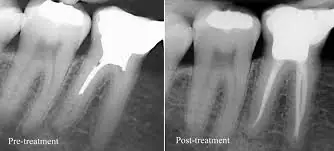
Root canal treatment is the preferred option when the abscess is periapical (originating from an infected tooth pulp) and the tooth has enough remaining structure to be restored. The procedure involves creating an opening through the top of the tooth, removing the infected or necrotic pulp tissue, cleaning and shaping the root canal system with specialised instruments, disinfecting the canals with antimicrobial irrigants, and filling the canals with a biocompatible material (gutta-percha) to seal them. A crown is typically placed afterward to strengthen the treated tooth. Root canal treatment has a success rate exceeding 95 percent when performed by an experienced dentist. For detailed pricing and procedure information, see our guide to root canal treatment in Dubai.
3. Tooth Extraction
Extraction is necessary when the tooth is too severely damaged or decayed to be saved, when there is insufficient bone support remaining, or when root canal treatment has failed or is not feasible. After extraction, the socket is cleaned and irrigated to remove any remaining infected tissue. The dentist may prescribe antibiotics if the infection has spread. Once healing is complete (typically six to eight weeks), the missing tooth can be replaced with a dental implant, bridge, or denture to restore function and aesthetics.
4. Periodontal Treatment
For periodontal abscesses caused by gum disease, treatment focuses on draining the abscess through the periodontal pocket, performing deep cleaning (scaling and root planing) to remove plaque, calculus, and bacteria from below the gum line, and using ultrasonic scalers to debride the root surfaces. At DCDC, ultrasonic scalers are used for precise, gentle, and efficient scaling and polishing. Advanced cases may require surgical intervention such as flap surgery to access and clean deep pockets, or guided bone regeneration to restore lost bone.
5. Antibiotics
Antibiotics are not a standalone treatment for dental abscesses — they cannot eliminate the source of infection inside the tooth or periodontal pocket. However, they are prescribed as an adjunct to dental treatment when the infection has spread beyond the local area (cellulitis or spreading facial swelling), there is systemic involvement (fever, malaise, lymphadenopathy), the patient is immunocompromised, or there is trismus (limited mouth opening) that prevents immediate dental treatment. The most commonly prescribed antibiotic for dental abscesses is amoxicillin (500 mg three times daily for five days). For patients allergic to penicillin, alternatives include metronidazole, clindamycin, or azithromycin. According to NHS guidelines, antibiotics are not routinely prescribed for dental abscesses when adequate drainage can be achieved.
Dental Abscess Treatment Cost in Dubai
The cost of treating a dental abscess in Dubai depends on the type of abscess, the treatment required, the tooth involved, and the clinic. At DCDC, we provide transparent pricing and will present a detailed treatment plan with costs before beginning any procedure. The following table outlines the typical cost ranges for dental abscess treatment in Dubai.
| Treatment | Price Range (AED) | When Used | Notes |
|---|---|---|---|
| Emergency consultation and X-ray | From 200–400 | Initial assessment of all abscess types | Includes clinical exam and digital X-ray |
| Incision and drainage | From 300–800 | Soft tissue abscess with visible swelling | Local anaesthesia included; may need follow-up |
| Root canal — front tooth (1 canal) | From 800–1,200 | Periapical abscess on incisors/canines | 45-60 minutes; simplest root canal |
| Root canal — premolar (1-2 canals) | 1,000–1,800 | Periapical abscess on premolars | 60-90 minutes; moderate complexity |
| Root canal — molar (3-4 canals) | 1,500–3,000 | Periapical abscess on molars | 90-120 minutes; most complex |
| Simple tooth extraction | From 300–600 | Tooth too damaged to save | Single visit; includes local anaesthesia |
| Surgical extraction | 700–1,500 | Impacted or multi-rooted teeth | May require sutures and follow-up |
| Deep cleaning (scaling and root planing) | From 200–1,500 | Periodontal abscess with gum disease | Per quadrant or full mouth; ultrasonic scalers used |
| Post-root-canal crown | 800–2,500 | Recommended after root canal on back teeth | Additional cost; 2 visits required |
| Antibiotics (course) | 50–150 | Adjunct when infection has spread | 5-7 day course; not a standalone treatment |
| CBCT scan | From 300–600 | Complex cases requiring 3D imaging | On-site at DCDC; results same day |
Dental abscess treatment costs in Dubai. Prices at DCDC are competitive and transparent. Root canal treatment starts from AED 800, dental cleaning from AED 200. Contact DCDC for a personalised treatment plan and cost estimate.
Total treatment cost for a dental abscess typically ranges from AED 300 for a straightforward drainage and antibiotics case to AED 5,500 or more for a complex molar root canal with a crown. Most comprehensive dental insurance plans in the UAE cover emergency dental treatment, root canals, and extractions. DCDC works with 20-plus insurance providers including Daman, AXA, and Bupa, with direct billing available so you do not need to pay upfront and claim later.
What to Expect at DCDC: Your Patient Journey
If you visit DCDC with a suspected dental abscess, here is what your treatment journey typically looks like from arrival to recovery.
- Step 1 — Arrival and registration: Walk in or arrive for your appointment at DCDC in Building 64, Block A, Al Razi Medical Complex, Dubai Healthcare City. Free parking is available. Our reception team will register you and, if applicable, verify your insurance coverage for immediate direct billing
- Step 2 — Emergency triage: Because dental abscesses are emergencies, you will be prioritised. If you are in severe pain, our team will ensure you are seen as quickly as possible. DCDC reserves same-day emergency slots daily for situations like this
- Step 3 — Clinical examination: Your dentist will take a detailed medical and dental history, examine the affected area, perform percussion and vitality tests on the tooth, and assess for signs of infection spreading
- Step 4 — Diagnostic imaging: A digital X-ray (periapical or OPG) will be taken to confirm the diagnosis and assess the extent of the abscess. For complex cases, a CBCT scan may be recommended to provide three-dimensional views of the infection. All imaging equipment is on-site at DCDC
- Step 5 — Pain management: Before any treatment begins, the area will be thoroughly numbed with local anaesthesia. For patients with dental anxiety, DCDC offers sedation options to ensure comfort throughout the procedure
- Step 6 — Immediate treatment: Depending on the diagnosis, the dentist will drain the abscess (incision and drainage), begin root canal treatment, or perform an extraction. The goal of the first visit is to resolve the acute infection and eliminate pain. Antibiotics will be prescribed if clinically indicated
- Step 7 — Treatment plan and follow-up: Your dentist will explain the full treatment plan, including any further procedures needed (such as completing a root canal or placing a crown), with transparent pricing. A follow-up appointment will be scheduled, typically within one to two weeks, to monitor healing and continue treatment as needed
- Step 8 — Preventive care plan: Once the acute issue is resolved, your dentist will discuss preventive measures to reduce the risk of future abscesses, which may include a professional dental cleaning, treatment of other cavities or gum disease, and personalised oral hygiene instruction
DCDC's 4.8/5 Google rating from over 1,000 verified reviews and 98 percent patient satisfaction rate reflect our commitment to providing compassionate, expert emergency dental care. As a MOHAP-licensed facility in Dubai Healthcare City, we adhere to the highest standards of infection control, sterilisation, and clinical protocols.
Home Care for a Dental Abscess Before Your Appointment
While professional dental treatment is essential and cannot be replaced, the following home care measures may provide temporary relief while you wait for your dental appointment. These are not treatments — they are comfort measures only.
- Over-the-counter pain relief: Ibuprofen (400-600 mg every 6-8 hours for adults) is generally the most effective option because it provides both pain relief and anti-inflammatory action. Paracetamol (500-1,000 mg every 4-6 hours) can be taken as an alternative or in combination. Avoid placing aspirin directly on the gum — this can cause chemical burns to the tissue
- Warm saltwater rinses: Dissolve half a teaspoon of table salt in a glass of warm (not hot) water and gently swish around the mouth for 30 seconds. Repeat three to four times daily. Saltwater helps draw pus towards the surface, provides mild antibacterial action, and soothes inflamed tissue
- Cold compress: Apply a cold pack wrapped in a cloth to the outside of the cheek over the swollen area for 15-20 minutes at a time to help reduce swelling and numb the pain. Do not apply ice directly to the skin
- Soft diet: Eat soft, lukewarm foods on the opposite side of the mouth. Avoid very hot, very cold, or sugary foods and drinks that may aggravate the pain
- Elevated sleeping position: Use an extra pillow to keep your head elevated while sleeping, which helps reduce blood pressure in the area and may lessen throbbing pain
What NOT to do: Do not attempt to drain the abscess yourself — this can spread the infection and introduce more bacteria. Do not stop taking prescribed antibiotics early, even if you feel better. Do not ignore a ruptured abscess that has stopped hurting — the infection is still present. Do not apply heat to the swollen area, as this can worsen swelling. Do not use undiluted hydrogen peroxide as a mouthwash, as it can damage healthy tissue.
Complications of Untreated Dental Abscess
A dental abscess that is left untreated can lead to serious, potentially life-threatening complications. The infection does not remain contained to the tooth or gum — it can spread through the bone, soft tissues, and bloodstream.
- Dental fistula (sinus tract): The body may create a drainage channel from the abscess through the bone and gum tissue to the surface. While this provides temporary pain relief, the underlying infection persists and continues to destroy tissue
- Osteomyelitis: Infection of the jawbone itself. This is a serious condition that may require prolonged antibiotic therapy, surgical debridement, and even removal of affected bone
- Cellulitis: The infection spreads from the localised abscess into the surrounding soft tissues, causing diffuse swelling, redness, and warmth in the face, neck, or under the jaw. Cellulitis requires urgent antibiotic treatment and may need hospitalisation
- Ludwig's angina: A rapidly spreading infection of the floor of the mouth and submandibular space. This is a medical emergency because the swelling can compress the airway, making breathing difficult or impossible. Hospital admission and surgical drainage are typically required
- Cavernous sinus thrombosis: In rare but extremely serious cases, the infection can spread from an upper tooth through venous channels to the cavernous sinus in the brain, causing a blood clot and potentially life-threatening intracranial infection
- Sepsis: If bacteria from the abscess enter the bloodstream, they can trigger sepsis — a systemic inflammatory response that can lead to organ failure and death if not treated urgently with intravenous antibiotics and supportive care
- Tooth loss: Even when the more serious complications above are avoided, a dental abscess will eventually destroy the bone support around the affected tooth, leading to loosening and loss of the tooth
According to research published in the Journal of Endodontics, dental infections remain a significant cause of emergency department visits worldwide, with potentially fatal outcomes when treatment is delayed. The message is clear — early treatment of a dental abscess is not optional, it is essential.
Insurance Coverage for Dental Abscess Treatment in Dubai
Dental abscess treatment is classified as medically necessary dental care and is covered by most comprehensive health insurance plans in the UAE. Emergency dental consultations, diagnostic X-rays, root canal treatment, extractions, and drainage procedures are typically covered under the dental benefits section of your plan. Coverage levels vary by insurer and plan tier, but most plans cover 70 to 100 percent of the cost after any applicable deductible or co-pay.
DCDC provides direct billing with over 20 insurance partners, including Daman (the mandatory insurer for Abu Dhabi visa holders), AXA, Bupa, MetLife, Cigna, and many others. With direct billing, you do not need to pay out of pocket and wait for reimbursement — DCDC bills your insurer directly, and you pay only any applicable co-pay or deductible at the time of treatment. Our front desk team can verify your coverage and provide a pre-authorisation if needed before treatment begins.
How to Prevent a Dental Abscess
Prevention is always better — and far less expensive — than treatment. The following measures significantly reduce the risk of developing a dental abscess.
- Brush twice daily with fluoride toothpaste: Use a soft-bristled toothbrush and brush for a full two minutes each time, covering all surfaces of every tooth. Fluoride strengthens enamel and helps prevent decay
- Floss daily: Flossing removes plaque and food particles from between the teeth and below the gum line where a toothbrush cannot reach — areas where abscesses commonly originate
- Schedule regular dental check-ups and cleanings: Professional cleanings remove hardened plaque (calculus) that you cannot remove at home, and routine examinations catch decay and gum disease early — before they progress to abscess. DCDC offers dental cleaning from AED 200, which includes oral cancer screening and thorough plaque and calculus removal using ultrasonic scalers
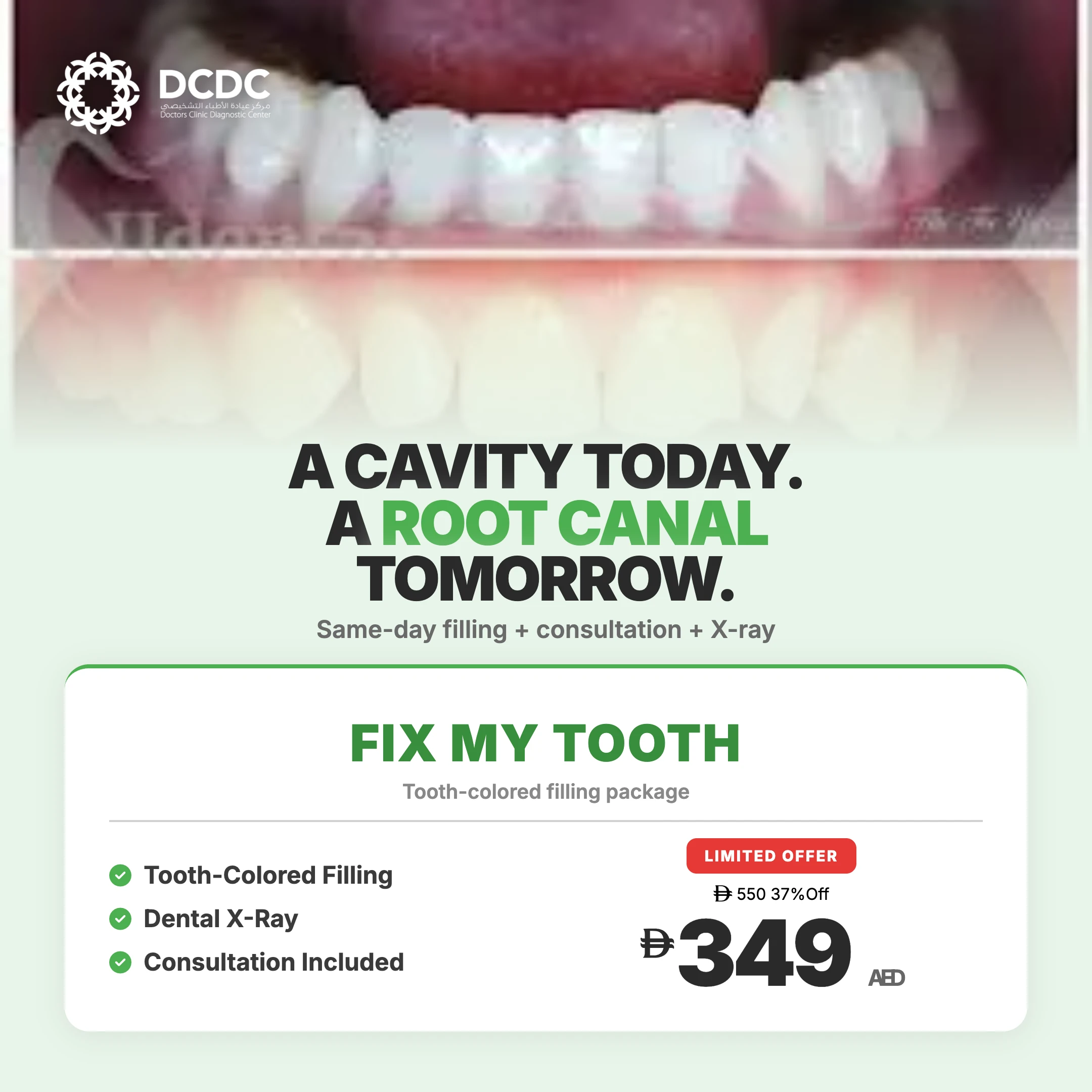
- Treat cavities promptly: A small filling today prevents the need for a root canal or extraction tomorrow. Do not wait until a tooth hurts — decay can reach the pulp before symptoms appear
- Limit sugary foods and drinks: Reduce the frequency of sugar exposure, especially between meals. When you do consume sugary foods, rinse your mouth with water afterward
- Replace your toothbrush regularly: Use a new toothbrush (or replacement head for an electric toothbrush) every three to four months, or sooner if the bristles become frayed
- Wear a mouthguard during contact sports: Protecting your teeth from trauma reduces the risk of cracks and fractures that can lead to pulp infection
- Address teeth grinding (bruxism): Chronic grinding can crack teeth and wear down enamel, creating pathways for bacteria. A custom night guard can protect your teeth while you sleep
- Quit smoking: Smoking is one of the strongest risk factors for gum disease and significantly impairs the body's ability to fight oral infections
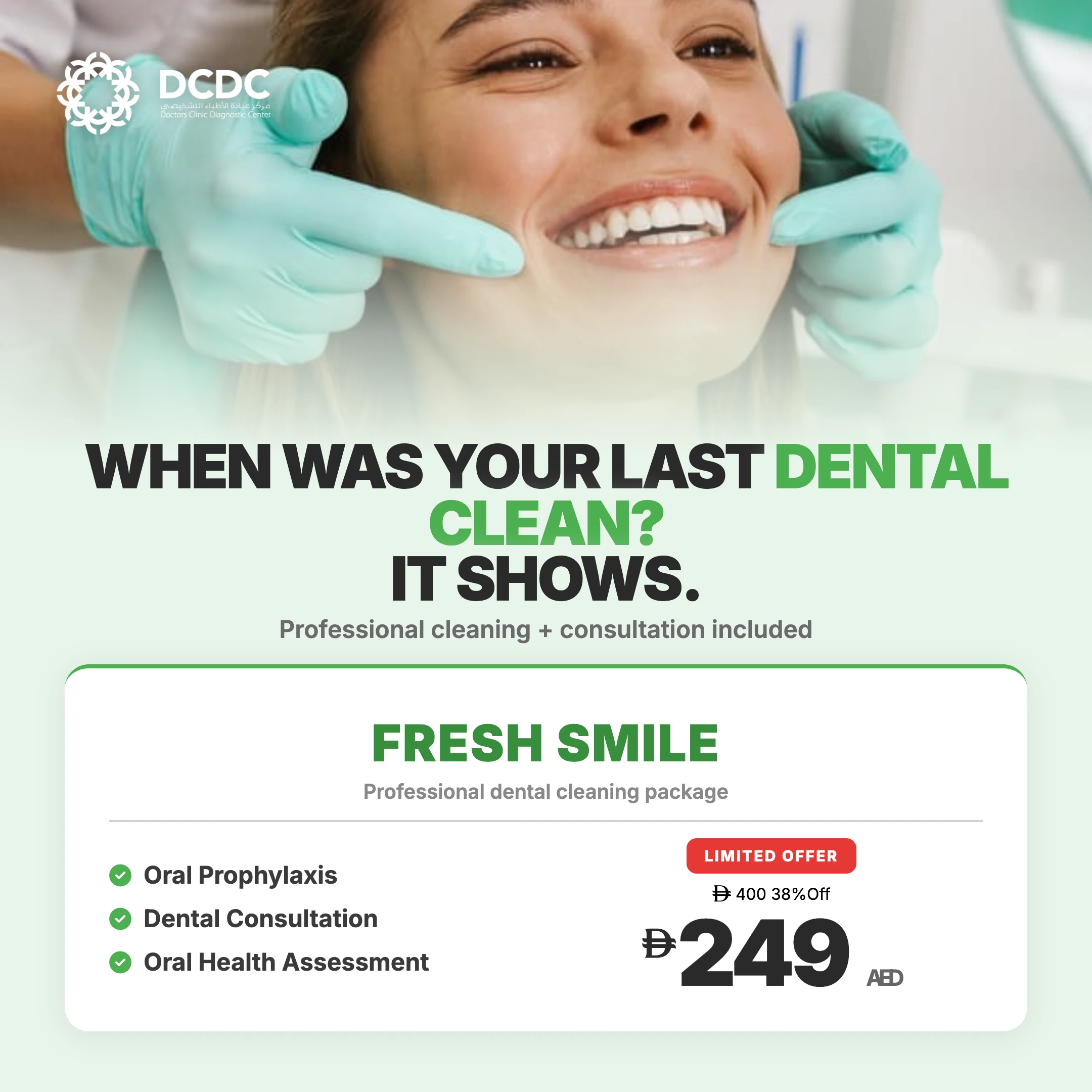
Dental Cleaning From AED 200 — Prevent Abscesses Before They Start
Regular dental cleanings are the most effective way to prevent dental abscesses. At Doctors Clinic Diagnostic Center, professional cleaning starts from AED 200 and includes oral cancer screening. Our dental team uses ultrasonic scalers for gentle, thorough plaque and calculus removal. With a 4.8/5 Google rating and 20-plus insurance partners, DCDC makes preventive care accessible and affordable.
Book your cleaning today — Sat-Thu 8 AM-10:30 PM, Fri 9 AM-10 PM. Direct insurance billing with Daman, AXA, Bupa, and more.
Dental Abscess in Children
Children can develop dental abscesses just as adults can, and the condition requires equally urgent attention. In fact, dental abscesses in children may be more dangerous because their immune systems are still developing, and infections can spread more rapidly. The most common cause of dental abscess in children is untreated tooth decay in baby (primary) teeth. Many parents mistakenly believe that decay in baby teeth does not matter because they will eventually fall out, but an abscess in a baby tooth can damage the developing permanent tooth underneath, spread to adjacent teeth, and cause pain, difficulty eating, and sleep disruption.
Signs of a dental abscess in children include persistent toothache (a child who is too young to describe the pain may refuse to eat, become irritable, or pull at their ear on the affected side), facial swelling, a visible pimple on the gum near a tooth, fever, and bad breath. If you suspect your child has a dental abscess, seek dental care immediately. At DCDC, our dentists are experienced in treating children with dental emergencies in a calm, child-friendly manner, with sedation options available for anxious young patients.
Dental Abscess vs Other Dental Conditions
Several dental conditions can cause similar symptoms to a dental abscess. Understanding the differences helps you communicate effectively with your dentist and understand the urgency of your situation.
| Condition | Key Symptoms | Urgency | Primary Treatment |
|---|---|---|---|
| Dental abscess | Severe throbbing pain, swelling, pus, fever possible | Emergency — same day | Drainage, root canal, or extraction |
| Reversible pulpitis | Sharp pain with cold/sweet, subsides quickly | Prompt — within days | Filling or crown |
| Irreversible pulpitis | Lingering pain after stimulus, spontaneous pain | Urgent — within 1-2 days | Root canal or extraction |
| Cracked tooth syndrome | Sharp pain on biting, intermittent | Soon — within a week | Crown, root canal, or extraction |
| Pericoronitis | Gum inflammation around partially erupted wisdom tooth | Urgent — within 1-2 days | Irrigation, antibiotics, extraction |
| Temporomandibular disorder (TMD) | Jaw pain, clicking, headache, difficulty opening mouth | Non-emergency | Splint, physiotherapy, medication |
Differential diagnosis: conditions that may mimic a dental abscess. If in doubt, seek professional evaluation — it is always better to rule out an abscess than to wait and risk complications.
Recovery After Dental Abscess Treatment
Recovery from dental abscess treatment varies depending on the procedure performed and the severity of the infection. In most cases, patients experience significant pain relief within 24 to 48 hours of treatment as the source of infection is addressed and the pressure from the abscess is released.
After Incision and Drainage
The swelling typically begins to reduce within two to three days. Mild discomfort at the incision site is normal and can be managed with over-the-counter pain relief. If a rubber drain was placed, you will return to the dentist in one to two days for its removal. Continue warm saltwater rinses three to four times daily to keep the area clean. Complete healing of the soft tissue usually takes one to two weeks.
After Root Canal Treatment
Some tenderness and mild aching around the treated tooth is normal for two to three days following the procedure. This occurs because the instruments used during treatment extend slightly beyond the root tip into the surrounding bone. Over-the-counter pain medication is usually sufficient. The tooth may feel slightly different or higher for a few days until the temporary filling settles. Avoid chewing on the treated tooth until the permanent crown is placed.
After Tooth Extraction
A blood clot will form in the extraction socket — this is essential for proper healing and must not be dislodged. Avoid spitting, using straws, smoking, and vigorous rinsing for the first 24 hours. Soft foods are recommended for the first two to three days. Swelling typically peaks at 48 to 72 hours post-extraction and then gradually subsides. The socket takes approximately six to eight weeks to fully heal.
Why Choose DCDC for Dental Abscess Treatment in Dubai
Choosing the right dental clinic for abscess treatment is important because timely, expert care can make the difference between saving and losing a tooth — and in serious cases, preventing life-threatening complications.
- Same-day emergency access: DCDC reserves emergency appointment slots daily specifically for dental emergencies including abscesses, severe toothache, broken teeth, and infections — no waiting days for an appointment when you are in pain
- Advanced on-site imaging: CBCT, OPG, and digital X-rays are available on-site for immediate diagnosis. No referral to an external imaging centre and no delay — your dentist can see the full extent of the infection within minutes
- 6-plus dental specialists: DCDC's dental team includes specialists in endodontics, periodontics, oral surgery, and general dentistry, meaning the right expertise is available in-house regardless of the type or complexity of your abscess
- Sedation options: For patients with dental anxiety (which is understandably heightened when dealing with a painful abscess), DCDC offers sedation options to ensure a comfortable, stress-free experience
- MOHAP-licensed facility in DHCC: As a MOHAP-licensed facility in Dubai Healthcare City, DCDC adheres to the highest regulatory standards for infection control, sterilisation, and clinical practice
- 4.8/5 Google rating: Over 1,000 verified patient reviews with a 98 percent satisfaction rate — reflecting consistently excellent clinical outcomes and patient experience
- Insurance and transparent pricing: Direct billing with 20-plus insurance providers including Daman, AXA, and Bupa. No hidden costs — a complete treatment plan with pricing is presented before any procedure begins
- Extended hours and convenient location: Open Sat-Thu 8 AM-10:30 PM and Fri 9 AM-10 PM, with free parking at Building 64, Block A, Al Razi Medical Complex, Dubai Healthcare City
Связанные услуги в DCDC
Квалифицированная помощь и современная диагностика в Dubai Healthcare City
Часто задаваемые вопросы
Заключение
A dental abscess is a serious infection that demands prompt professional treatment — not a condition to manage with painkillers and hope it resolves on its own. The bacteria causing the abscess will not stop multiplying, the pus will not be reabsorbed, and the damage to the surrounding bone will only increase with time. Whether the treatment required is a straightforward drainage procedure, a root canal to save the tooth, or an extraction to remove the source of infection, acting quickly protects your health and gives you the best possible outcome. In Dubai, dental abscess treatment costs start from AED 300 for drainage and AED 800 for root canal treatment, with most insurance plans covering the majority of the expense.
At Doctors Clinic Diagnostic Center in Dubai Healthcare City, our team of 6-plus dental specialists — including Dr. Chadi El Masry — is equipped with advanced CBCT imaging, digital X-rays, and ultrasonic scalers to diagnose and treat dental abscesses efficiently and comfortably. With same-day emergency slots reserved daily, extended clinic hours (Sat-Thu 8 AM-10:30 PM, Fri 9 AM-10 PM), sedation options for anxious patients, direct billing with 20-plus insurance providers, and free parking, DCDC makes it as easy as possible to get the urgent care you need. Do not wait for the pain to become unbearable or the swelling to spread — contact us today or walk in to our clinic in Building 64, Block A, Al Razi Medical Complex. Your dental health is too important to delay.
Источники и ссылки
Эта статья проверена нашей медицинской командой и ссылается на следующие источники:
- NHS — Dental Abscess: Causes, Symptoms and Treatment
- Mayo Clinic — Tooth Abscess: Symptoms, Causes and Treatment
- Cleveland Clinic — Periapical Abscess: Symptoms, Diagnosis and Treatment
- World Health Organization — Oral Health Fact Sheet
- Journal of Endodontics — Management of Acute Dental Infections
- NCBI — Periodontal Abscess: StatPearls Clinical Review
Медицинский контент на этом сайте проверяется врачами, лицензированными DHA. См. нашу редакционную политику для получения дополнительной информации.

Автор
Dr. Chadi El Masry
Dentist
DDS
Dr. Chadi El Masry is a Dentist at Doctors Clinic Diagnostic Center (DCDC) in Dubai Healthcare City.
Похожие статьи
Toothache Dubai: Causes & When to See a Dentist
Root Canal Cost Dubai: From AED 800
Gum Disease Treatment Dubai: From AED 1,000
Dental Emergency Dubai: What to Do & Cost

Dental Cleaning Cost Dubai: From AED 200
Больше в Dental
Bad Breath Dubai: Causes & Treatment (2026)
Читать далееDental Cleaning Cost Dubai: From AED 200 (2026)
Читать далее
Dental Crown Cost Dubai: From AED 800 (2026)
Читать далее
Dental Filling Cost Dubai: From AED 150 (2026)
Читать далее
Dental Implant Cost Dubai: From AED 3,000 (2026)
Читать далееDentures Cost Dubai: Types & Prices (2026)
Читать далее© 2026 Doctors Clinic Diagnostic Center (DCDC), Dubai Healthcare City. Originally published at https://doctorsclinicdubai.ae/blog/dental-abscess-treatment-dubai. All rights reserved. Unauthorized reproduction is prohibited.