मुख्य बातें
- Root canal treatment in Dubai starts from AED 800 for anterior (front) teeth, with prices ranging up to AED 3,000 for molars or retreatment cases — the cost depends primarily on tooth location, number of canals, and whether a crown is needed afterward
- A root canal saves a tooth that would otherwise need extraction by removing the infected or inflamed pulp tissue, cleaning and shaping the root canals, and sealing them — the procedure has a success rate exceeding 95 percent when performed by an experienced dentist
- Most patients experience little to no pain during root canal treatment thanks to modern anaesthesia and rotary instrumentation — post-procedure discomfort is typically mild and resolves within two to three days with over-the-counter pain medication
- Nearly all comprehensive dental insurance plans in the UAE cover root canal treatment under major restorative benefits, with typical coverage of 50 to 80 percent after deductible — DCDC works with 20-plus insurance partners including Daman, AXA, Bupa, MetLife, and Cigna
- Delaying a root canal when one is needed risks abscess formation, bone loss around the tooth root, spread of infection to adjacent teeth or soft tissues, and eventual tooth loss — early treatment is both safer and less expensive
- A dental crown is almost always recommended after root canal treatment on premolars and molars to protect the weakened tooth from fracture — crown cost (AED 800–2,500) is in addition to the root canal fee and should be factored into total treatment planning
When a tooth's inner pulp becomes infected or irreversibly inflamed, root canal treatment is the only way to save it from extraction. Also known as endodontic therapy, this common dental procedure removes the damaged nerve tissue, disinfects the canal system, and seals the tooth so it can continue to function normally for years or even decades. In Dubai, root canal costs start from AED 800, and most insurance plans cover a significant portion of the treatment.
This comprehensive guide covers everything you need to know about root canal treatment in Dubai — from detailed pricing by tooth type and the factors that affect cost, to a step-by-step explanation of the procedure, insurance coverage details, recovery expectations, and answers to the most frequently asked questions. Whether you are experiencing tooth pain and suspect you may need a root canal, or your dentist has already recommended one and you want to understand the costs involved, this guide will help you make an informed decision.

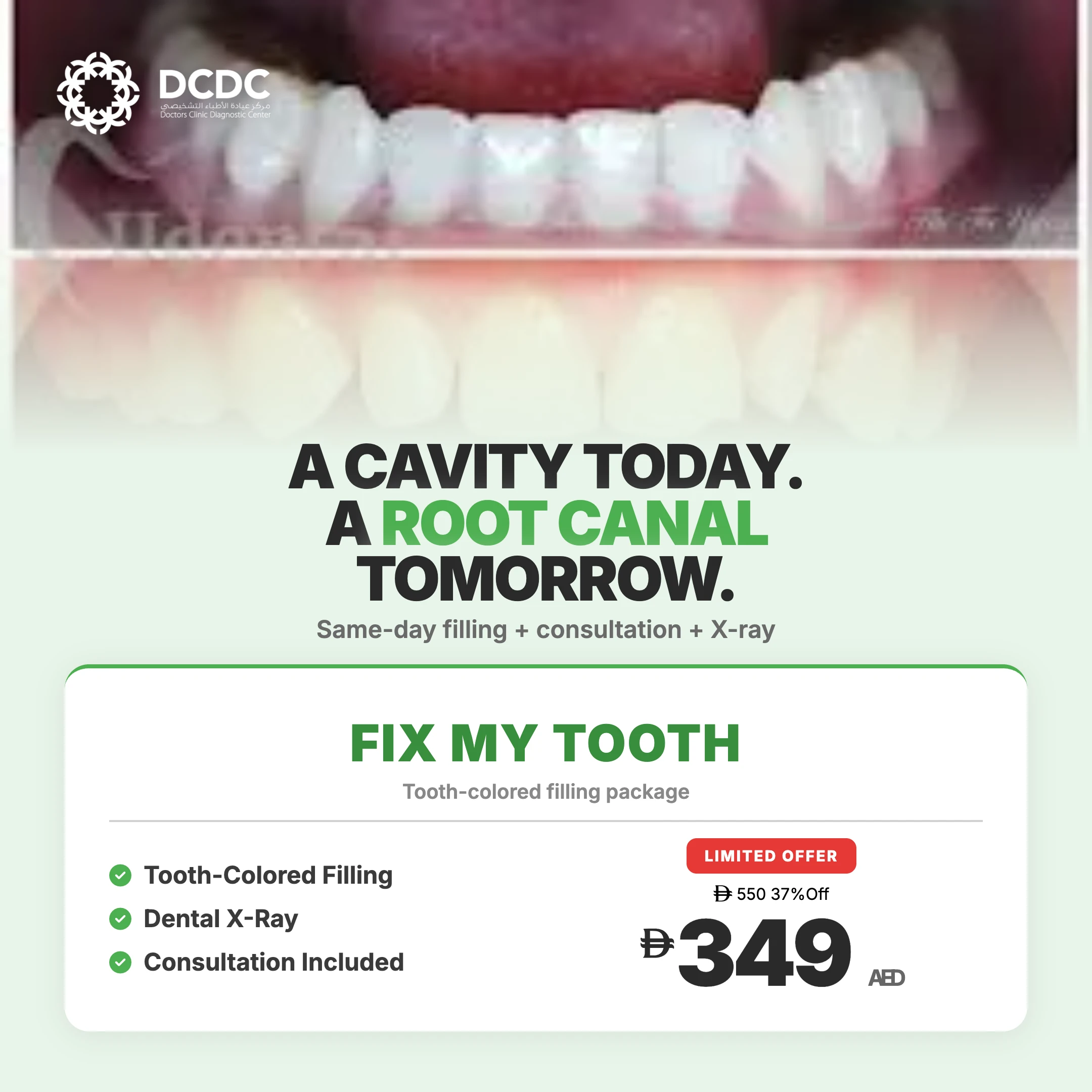

Root Canal Cost in Dubai: Pricing Overview
Root canal treatment costs in Dubai vary significantly depending on the tooth being treated, the complexity of the case, and the clinic. At Doctors Clinic Diagnostic Center, root canal treatment starts from AED 800. Market prices across Dubai range from AED 800 to AED 3,000 depending on the tooth type and whether the case involves retreatment of a previously treated tooth. The following table provides a comprehensive pricing breakdown.
| Treatment Type | Price Range (AED) | Typical Duration | Notes |
|---|---|---|---|
| Front tooth (incisor/canine) — 1 canal | From 800–1,200 | 45–60 minutes | Simplest; single straight canal |
| Premolar — 1–2 canals | 1,000–1,800 | 60–90 minutes | Moderate complexity; may have 2 canals |
| Molar — 3–4 canals | 1,500–3,000 | 90–120 minutes | Most complex; multiple curved canals |
| Retreatment (any tooth) | 1,800–3,000 | 90–120 minutes | Removal of old filling material adds complexity |
| Post-root-canal crown | 800–2,500 | 2 visits | Strongly recommended for premolars and molars |
Root canal pricing at DCDC starts from AED 800. Prices are approximate and may vary based on case complexity, number of canals, and need for additional procedures. Contact DCDC for a personalised quote.
It is important to understand that the root canal procedure itself is only one component of the total treatment cost. In most cases — particularly for back teeth — a dental crown is needed after the root canal to protect the tooth from fracture. When budgeting for root canal treatment, patients should factor in both the endodontic procedure and the subsequent crown. At DCDC, your dentist will provide a complete treatment plan with transparent pricing for all components before any work begins.
Total Root Canal Treatment Cost: Complete Breakdown
Many patients are surprised by additional costs beyond the root canal itself. The table below shows the full cost breakdown so you can budget accurately for the complete treatment.
| Treatment Component | Cost Range (AED) | When Required |
|---|---|---|
| Consultation and X-ray | 200 – 400 | Always — initial diagnosis and treatment planning |
| Root canal (front tooth, 1 canal) | 800 – 1,200 | When pulp is infected in incisors or canines |
| Root canal (premolar, 1-2 canals) | 1,000 – 1,500 | When pulp is infected in premolars |
| Root canal (molar, 3-4 canals) | 1,500 – 2,500 | When pulp is infected in molars — most common |
| Retreatment (previously treated tooth) | 1,800 – 3,000 | When a previous root canal has failed |
| Post and core (fibre post) | 300 – 600 | When significant tooth structure is missing — provides foundation for crown |
| Crown (zirconia) | 1,200 – 2,500 | Strongly recommended for premolars and molars |
| Crown (porcelain-fused-to-metal) | 800 – 1,500 | Cost-effective option for back teeth |
| Crown (all-ceramic / E-max) | 1,500 – 2,500 | Best aesthetics for front teeth |
| Temporary crown | 200 – 400 | Placed while permanent crown is being fabricated |
Complete cost breakdown for root canal treatment in Dubai (2026). Total treatment cost = root canal + crown (if recommended). At DCDC, all costs are discussed transparently before treatment begins.
Why Retreatment Costs More
Root canal retreatment — redoing a root canal that has failed — is significantly more complex and expensive than a first-time procedure. The dentist must first remove the existing gutta-percha filling material, navigate around posts and cores placed during the original restoration, locate any missed or calcified canals that were not treated initially, and address complications such as separated instruments or perforations. Retreatment typically costs 30-50% more than the original root canal and almost always requires two visits. At DCDC, retreatment cases are evaluated with CBCT 3D imaging to map the root anatomy precisely before treatment begins.
What Is a Root Canal? Understanding the Procedure
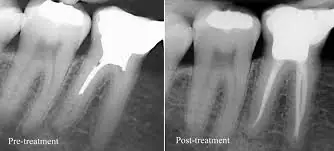
A root canal — formally called endodontic therapy — is a dental procedure that treats infection or inflammation inside a tooth. Every tooth contains a soft tissue called the pulp, which is housed in a chamber in the crown of the tooth and extends down through narrow channels (canals) in each root. The pulp contains nerves, blood vessels, and connective tissue that were essential for the tooth's development but are no longer necessary once the tooth is fully formed. An adult tooth can survive and function perfectly without its pulp because it continues to receive nourishment from the surrounding tissues.
When the pulp becomes infected (usually from deep decay, a crack, or trauma) or irreversibly inflamed, it cannot heal on its own. Without treatment, the infection can spread beyond the root tip into the surrounding bone, forming an abscess — a pus-filled pocket that causes pain, swelling, and can lead to serious systemic complications if left untreated. Root canal treatment removes the diseased pulp, thoroughly cleans and disinfects the entire canal system, shapes the canals to receive a filling material, and seals them with a biocompatible rubber-like material called gutta-percha. The tooth is then restored with a filling or crown.
According to the American Association of Endodontists, more than 15 million root canal procedures are performed annually in the United States alone, making it one of the most common dental treatments worldwide. Modern root canal treatment has a success rate exceeding 95 percent and allows patients to keep their natural teeth for a lifetime with proper care.
Signs You May Need a Root Canal
Not every toothache requires a root canal, but certain symptoms strongly suggest that the pulp is compromised and endodontic treatment may be necessary. If you experience any of the following, you should see a dentist as soon as possible for evaluation.
- Severe, persistent toothache: Pain that is spontaneous (not triggered by eating or drinking), throbbing, keeps you awake at night, or radiates to the jaw, ear, or temple often indicates pulp inflammation or infection. Unlike sensitivity that fades quickly, pulpitis pain tends to linger for minutes or longer.
- Prolonged sensitivity to heat or cold: While brief sensitivity to hot or cold is common and usually harmless, sensitivity that persists for more than 30 seconds after the stimulus is removed suggests irreversible pulp damage.
- Pain when biting or touching the tooth: Tenderness when pressure is applied to the tooth — whether biting down on food or simply pressing on it with a finger — can indicate inflammation at the root tip (periapical pathology).
- Swelling in the gum near the affected tooth: A localised swelling, bump (parulis or gum boil), or pimple on the gum near a tooth root is a classic sign of a dental abscess. The bump may drain intermittently, producing a foul taste.
- Darkening or discoloration of the tooth: A tooth that has turned grey, dark yellow, or brown compared to adjacent teeth may have a necrotic (dead) pulp. The discoloration is caused by breakdown products from the degenerating pulp tissue.
- A loose tooth: A previously stable tooth that becomes slightly mobile can indicate bone loss around the root tip caused by chronic infection draining from the pulp.
- Deep decay or a large fracture: A cavity that extends deep into the tooth or a fracture that reaches the pulp chamber exposes the nerve to bacteria, making infection almost inevitable without intervention.
- Previous trauma: A tooth that was injured months or years ago (knocked, hit, or displaced) can develop delayed pulp necrosis even if it appeared fine at the time of injury. Symptoms may appear years later.
Your dentist will confirm whether a root canal is needed through clinical examination, vitality testing (cold test, electric pulp test), and dental imaging. At DCDC, we use digital dental imaging including CBCT (cone beam computed tomography) and OPG (orthopantomogram) X-rays to visualise the root anatomy in detail, identify abscesses, and plan the treatment precisely. To understand how these imaging technologies work and what they cost, see our guides on CBCT scan cost in Dubai and OPG X-ray cost.
Factors That Affect Root Canal Cost in Dubai
Understanding why root canal prices vary so widely — from AED 800 to AED 3,000 — helps you evaluate quotes and make informed decisions. Several key factors influence the final cost of your treatment.
- Tooth location and number of canals: This is the single most important cost factor. Front teeth (incisors and canines) typically have one straight canal, making them the simplest and least expensive to treat. Premolars usually have one to two canals. Molars have three to four canals — and sometimes five — that are often curved and narrow, requiring significantly more time, skill, and instrumentation. A molar root canal can cost two to three times more than a front tooth root canal.
- First-time treatment vs retreatment: Retreating a root canal that has previously been treated and failed is substantially more complex and expensive than a first-time procedure. The dentist must remove the old filling material (gutta-percha), navigate through or around posts and cores, locate missed canals, and manage any complications from the original treatment. Retreatment typically costs 30 to 50 percent more than the original procedure.
- Complexity and anatomy: Some teeth have unusual anatomy — calcified canals, extra canals (accessory canals), severely curved roots, internal resorption, or perforations — that significantly increase treatment difficulty and time. These complex cases may require referral to an endodontist (root canal specialist) and use of specialised equipment such as an operating microscope.
- Need for a post-treatment crown: After root canal treatment, the tooth becomes more brittle because the pulp tissue and some tooth structure have been removed. A crown is strongly recommended for premolars and molars to prevent fracture. Crown costs range from AED 800 to AED 2,500 depending on the material (zirconia, porcelain-fused-to-metal, or all-ceramic). This is an additional cost on top of the root canal fee.
- Emergency vs scheduled treatment: An emergency root canal for acute pain or swelling may carry a surcharge due to the need for immediate appointment scheduling and extended clinic hours. Whenever possible, scheduling your treatment during regular hours is more cost-effective.
- Specialist vs general dentist: An endodontist (a dentist who has completed two to three years of additional training exclusively in root canal treatment) may charge more than a general dentist. However, for complex cases — particularly molars with curved canals or retreatment — a specialist's expertise can improve the success rate and long-term outcome.
- Technology and equipment: Clinics equipped with dental operating microscopes, electronic apex locators, nickel-titanium rotary files, and CBCT imaging can perform root canals more precisely and efficiently. While these technologies may contribute to slightly higher fees, they also improve outcomes and reduce treatment time.
The Root Canal Procedure: Step by Step
Understanding what happens during a root canal can significantly reduce anxiety. The procedure is performed under local anaesthesia, and most patients report that it feels similar to getting a filling. Here is the step-by-step process.
- Step 1 — Diagnosis and imaging: Your dentist examines the tooth clinically and takes dental X-rays (periapical radiograph, and in complex cases, a CBCT scan) to assess the extent of infection, the number and shape of root canals, and the health of the surrounding bone. This information is essential for treatment planning.
- Step 2 — Local anaesthesia: The area around the tooth is thoroughly numbed with local anaesthetic. For teeth with acute inflammation (hot pulpitis), supplementary anaesthesia techniques may be used to ensure complete numbness. You should feel no pain during the procedure.
- Step 3 — Rubber dam isolation: A thin rubber or silicone sheet (rubber dam) is placed over the tooth, isolating it from the rest of the mouth. This is a critical step that keeps the treatment area dry, prevents bacteria from saliva entering the canals, and protects the patient from ingesting irrigation solutions and small instruments.
- Step 4 — Access opening: The dentist creates a small opening through the top (crown) of the tooth to reach the pulp chamber. This is done with a dental handpiece using specific access burs. The opening is made as conservatively as possible to preserve maximum tooth structure.
- Step 5 — Pulp removal and canal location: Using small hand files and an operating microscope or magnifying loupes, the dentist removes the infected or necrotic pulp tissue from the pulp chamber and locates the entrance to each root canal. An electronic apex locator is used to determine the precise working length of each canal.
- Step 6 — Canal cleaning and shaping: Each canal is cleaned and shaped using a series of progressively larger nickel-titanium rotary files. These flexible instruments navigate the curved canals safely and efficiently. Throughout the process, the canals are irrigated with sodium hypochlorite (a strong disinfectant) and EDTA (a chelating agent that removes the smear layer) to eliminate bacteria and debris.
- Step 7 — Disinfection and medication: After shaping, the canals are given a final disinfection rinse. In cases with severe infection, a medicament such as calcium hydroxide may be placed inside the canals and the tooth sealed with a temporary filling. The patient returns in one to two weeks for the final filling once the infection has resolved. Many straightforward cases can be completed in a single visit.
- Step 8 — Canal filling (obturation): The clean, shaped canals are dried and filled with gutta-percha — a biocompatible, rubber-like material — along with a sealer cement. The gutta-percha is condensed into the canals to create a three-dimensional seal that prevents bacteria from re-entering. The quality of the fill is verified with an X-ray.
- Step 9 — Tooth restoration: The access opening is sealed with a composite filling. For front teeth with minimal structure loss, a filling alone may be sufficient as the final restoration. For premolars and molars, a crown is strongly recommended to protect the tooth from fracture. Your dentist will discuss the best restoration option and timeline.
Most root canal treatments are completed in one to two visits. A straightforward single-canal front tooth can often be finished in a single 45 to 60-minute appointment. Complex molar cases or teeth with active infections may require two visits spaced one to two weeks apart. At DCDC, our dental team uses modern rotary instrumentation and electronic apex locators to perform root canals efficiently and precisely, minimising both treatment time and discomfort.
Root Canal Treatment From AED 800 at DCDC
Save your natural tooth with gentle, precise root canal treatment at Doctors Clinic Diagnostic Center in Dubai Healthcare City. Our 6-plus dental specialists use advanced rotary instrumentation and digital imaging for predictable results. Root canal treatment starts from AED 800 with insurance accepted.
Book your appointment today or walk in — Sat–Thu 8 AM–10 PM, Fri 9 AM–9 PM.
Root Canal vs Tooth Extraction: Cost and Outcome Comparison
Some patients wonder whether it is cheaper to simply extract the tooth rather than invest in a root canal. While extraction has a lower upfront cost, the long-term financial and functional consequences almost always make root canal treatment the better investment. Here is a detailed comparison.
| Factor | Root Canal + Crown | Extraction + Implant | Extraction Only |
|---|---|---|---|
| Total cost (AED) | 1,600–5,500 | 5,000–15,000 | 300–1,500 |
| Preserves natural tooth | Yes | No | No |
| Treatment time | 1–2 visits | 3–6 months (with healing) | 1 visit |
| Bone preservation | Excellent | Good (with implant) | Bone loss over time |
| Adjacent teeth affected | No | No | Shifting may occur |
| Long-term success | 95%+ at 10 years | 95%+ at 10 years | N/A — tooth lost |
Comparison of root canal treatment versus extraction. While extraction is cheaper upfront, replacing the tooth with an implant is significantly more expensive and time-consuming than saving it with a root canal.
The bottom line is clear: whenever a tooth can be saved with a root canal, it should be. No artificial replacement — whether an implant, bridge, or denture — functions as well as a healthy natural tooth. Root canal treatment preserves the tooth's natural root, maintains bone density, prevents adjacent teeth from shifting, and costs a fraction of extraction followed by implant replacement. For a detailed look at implant pricing and alternatives, see our guide on dental implants vs veneers.
Does Insurance Cover Root Canal Treatment in Dubai?
Root canal treatment is classified as a major restorative procedure by most dental insurance providers in the UAE. The good news is that nearly all comprehensive dental plans provide coverage for endodontic treatment, although the specific terms vary by plan.
- Coverage level: Most comprehensive dental insurance plans in the UAE cover root canal treatment at 50 to 80 percent of the approved fee after the deductible. Enhanced and premium plans may offer higher coverage, sometimes up to 90 percent. Basic plans that cover only preventive and simple restorative services may exclude root canals or have a lower coverage percentage.
- Pre-authorisation: Root canal treatment almost always requires pre-authorisation from the insurance company. This involves submitting X-rays, a clinical justification, and a treatment plan before the procedure. At DCDC, our team handles the entire pre-authorisation process on your behalf, and we will inform you of the approved coverage and any expected out-of-pocket cost before proceeding.
- Crown coverage: The crown placed after a root canal is usually covered as a separate benefit under major restorative services. Coverage for crowns typically ranges from 50 to 80 percent. Some plans have a waiting period for major restorative work (usually 6 to 12 months from the policy start date).
- Annual maximums: Root canal treatment plus a crown can consume a significant portion of your annual dental benefit. Basic plans with AED 3,000 to AED 5,000 annual maximums may cover the root canal but leave limited benefit for the crown. Premium plans with AED 10,000 to AED 25,000 annual maximums provide more comfortable coverage.
- Network vs out-of-network: DCDC is an in-network provider for over 20 major insurance companies in the UAE, including Daman, AXA, Bupa, MetLife, and Cigna. In-network treatment typically provides higher coverage percentages and direct billing (no upfront payment required from the patient for the covered portion).
- Self-pay options: For patients without dental insurance or with limited coverage, DCDC offers competitive self-pay pricing. Your dentist will provide a transparent treatment plan with itemised costs before any work begins.
Root Canal Recovery: What to Expect After Treatment
Recovery from root canal treatment is generally straightforward, with most patients returning to normal activities the same day. Here is what to expect in the hours and days following your procedure.
First 24–48 Hours
- Mild discomfort is normal: You may experience mild to moderate tenderness in the treated tooth and surrounding area for two to three days. This is a normal inflammatory response and does not indicate a problem. Over-the-counter pain medication such as ibuprofen (400–600 mg every 6–8 hours) is usually sufficient to manage any discomfort.
- Avoid chewing on the treated side: Until your permanent crown is placed, avoid biting hard foods directly on the treated tooth. The tooth is structurally weakened after the procedure and a temporary filling provides only limited protection.
- The anaesthesia will wear off: Local anaesthetic typically wears off within two to four hours. Avoid eating until full sensation returns to prevent biting your cheek, lip, or tongue.
- Take prescribed medications: If your dentist prescribed antibiotics (for cases with active infection or swelling), complete the full course as directed. Do not stop antibiotics early even if you feel better.
Days 3–7 and Beyond
- Discomfort should steadily decrease: Pain and tenderness should improve noticeably each day. If pain worsens after the first two days, or if you develop significant swelling, fever, or a bad taste in your mouth, contact your dentist promptly — these may indicate a complication that needs attention.
- Resume normal oral hygiene: Brush and floss normally, including the treated tooth. Good oral hygiene around the temporary restoration helps prevent secondary infection.
- Schedule your crown promptly: If a crown was recommended (which it is for most premolars and molars), schedule the crown appointment within two to four weeks of the root canal. Delaying the crown increases the risk of tooth fracture or reinfection through the temporary filling.
- Long-term outlook: A properly performed root canal with a well-fitting crown can last a lifetime. Studies show that root canal-treated teeth have a survival rate exceeding 95 percent at 10 years. Regular dental check-ups every six months allow your dentist to monitor the treated tooth and ensure long-term success.
Maintaining excellent oral hygiene is essential for the long-term success of any root canal treatment. Regular professional dental cleanings help keep the gums healthy around the treated tooth and prevent new decay. For details on cleaning costs and frequency, see our guide on dental cleaning cost in Dubai.
Root Canal Myths vs Facts
Root canal treatment is surrounded by more myths and misconceptions than almost any other dental procedure. These outdated beliefs often cause patients to delay necessary treatment, leading to worse outcomes. Here are the facts.
- Myth: Root canals are extremely painful. Fact: Modern root canal treatment is performed under effective local anaesthesia, and most patients report that the procedure feels similar to getting a large filling. A study published in the Journal of Endodontics found that patients who had experienced a root canal rated their pain during the procedure as significantly lower than they had anticipated. The pain you feel before treatment — from the infected pulp — is far worse than the procedure itself.
- Myth: It is better to pull the tooth than get a root canal. Fact: Preserving your natural tooth is almost always the best option. No dental prosthetic — implant, bridge, or denture — replicates the function, feel, and proprioception (pressure-sensing ability) of a natural tooth. Extraction also triggers bone resorption in the jaw, and replacing the tooth with an implant costs significantly more than a root canal.
- Myth: Root canals cause illness. Fact: This myth originates from debunked research by Dr. Weston Price from the 1920s. Multiple large-scale studies and systematic reviews, including those published in the Journal of the American Medical Association (JAMA), have found no scientific evidence linking root canal treatment to systemic disease. The American Association of Endodontists, the World Health Organization, and major dental associations worldwide confirm that root canal treatment is safe.
- Myth: If the tooth does not hurt, you do not need a root canal. Fact: A necrotic (dead) pulp may cause no pain at all, even while the infection spreads silently into the surrounding bone. Your dentist may detect the problem on a routine X-ray before any symptoms appear. Waiting for pain before seeking treatment allows the infection to progress and can make treatment more complex and expensive.
- Myth: Root canal treatment takes many long appointments. Fact: Most root canals are completed in one to two visits. With modern rotary instrumentation and digital imaging, a straightforward front tooth root canal can be finished in under an hour. Even complex molar cases rarely require more than two appointments.
- Myth: Antibiotics can replace a root canal. Fact: Antibiotics cannot eliminate an infection inside a tooth. The pulp chamber has no blood supply once the nerve dies, so antibiotics circulating in the bloodstream cannot reach the infection. Antibiotics may temporarily reduce swelling and discomfort, but the infection will return unless the source — the necrotic pulp — is physically removed through root canal treatment.
What to Expect at DCDC: Your Root Canal Patient Journey
At Doctors Clinic Diagnostic Center in Dubai Healthcare City, we have designed a patient journey that prioritises comfort, transparency, and clinical excellence. Here is what your root canal experience looks like from start to finish.
- Arrival and registration: Our clinic is located in Building 64, Block A, Al Razi Medical Complex in DHCC, with free dedicated on-site parking. Walk in or arrive for your scheduled appointment. Our multilingual reception team (Arabic, English, Farsi, Urdu, Hindi) will greet you and handle registration efficiently. Average wait time is just 15 minutes.
- Insurance verification: If you have dental insurance, our team verifies your coverage in real-time and obtains pre-authorisation for the root canal procedure. We work with over 20 insurance partners — including Daman, AXA, Bupa, MetLife, and Cigna — with direct billing so you only pay your co-payment, not the full fee upfront.
- Consultation and diagnosis: Dr. Chadi El Masry or one of our 6-plus dental specialists will examine the affected tooth, review your symptoms and medical history, and take the necessary digital imaging. We use CBCT scans and OPG X-rays to visualise the root anatomy in three dimensions, identify the extent of infection, and plan the treatment with precision.
- Treatment plan and pricing: Before any treatment begins, your dentist will explain the diagnosis, discuss your treatment options (including whether a crown will be needed), and provide a transparent, itemised cost estimate. You will know exactly what to expect — clinically and financially — before you agree to proceed.
- Root canal treatment: The procedure is performed in a modern, well-equipped dental suite with advanced rotary instrumentation, electronic apex locators, and ergonomic dental chairs. Local anaesthesia ensures you feel no pain. Most treatments are completed in a single visit.
- Post-treatment care: Your dentist will provide detailed aftercare instructions, prescribe any necessary medication, and schedule your follow-up appointment. If a crown is recommended, the crown preparation can often be started at the same visit or scheduled within two to four weeks.
- Follow-up: A review appointment ensures the tooth is healing properly. Our team is available for any questions or concerns throughout your recovery. We are open Sat–Thu 8 AM–10 PM and Fri 9 AM–9 PM.
With a 4.8 out of 5 Google rating from over 1,000 verified reviews and a 98 percent patient satisfaction rate, DCDC is trusted by patients across Dubai for compassionate, high-quality dental care. Our MOHAP licence (No. NIMY7VY5-240925) confirms our commitment to meeting the highest regulatory standards in the UAE.
How to Prevent Needing a Root Canal
While not all root canals are preventable — trauma and genetic factors play a role — the vast majority are caused by tooth decay that has been allowed to progress unchecked. Taking proactive steps to maintain your oral health can dramatically reduce your risk.
- Brush twice daily with fluoride toothpaste: Thorough brushing for two minutes, twice a day, removes the bacterial plaque that causes decay. Fluoride strengthens enamel and helps reverse early demineralisation before it becomes a cavity.
- Floss daily: Flossing removes plaque and food debris from between teeth where your toothbrush cannot reach. Interproximal (between-teeth) decay is one of the most common pathways for infection to reach the pulp.
- Get regular dental check-ups and cleanings: Professional examinations every six months allow your dentist to detect cavities when they are small and treatable with a simple filling — long before they reach the pulp and require a root canal. Professional cleaning removes calculus (tarite) that you cannot remove at home.
- Treat cavities early: A small filling costs from AED 150 and takes 30 minutes. A root canal costs from AED 800 and takes 60 to 120 minutes, plus the cost of a crown. Early treatment of decay is always simpler, faster, and less expensive. See our guide on dental fillings cost in Dubai for details.
- Wear a mouthguard for sports: Dental trauma from contact sports is a significant cause of pulp damage. A custom-fitted mouthguard protects your teeth from impacts that can crack enamel, fracture roots, and damage the pulp.
- Address teeth grinding (bruxism): Chronic grinding or clenching can crack teeth and wear through enamel, eventually exposing the pulp. A custom night guard protects your teeth and reduces the risk of fracture.
- Limit sugar and acidic foods: Frequent sugar consumption feeds the bacteria that produce acids and cause decay. Acidic drinks (soft drinks, energy drinks, citrus juices) directly erode enamel. Reducing the frequency of sugar and acid exposure significantly lowers your risk of developing the deep decay that leads to root canals.
- Do not ignore dental symptoms: Sensitivity, pain, or discoloration are your body's warning signals. Seeking prompt dental care at the first sign of trouble allows problems to be treated conservatively before they escalate to the point where a root canal — or even extraction — is needed.
Healthy gums are also essential for keeping teeth strong and preventing infections that can reach the pulp. If you notice bleeding, swelling, or recession in your gums, addressing periodontal disease early is critical. Our detailed guide on gum disease treatment in Dubai covers diagnosis, treatment options, and costs.
Root Canal Cost Dubai: Dr. Chadi El Masry's Clinical Perspective
"As a cosmetic and restorative dentistry specialist, I perform root canal treatments regularly at DCDC, and I can tell you that the number one regret I hear from patients is 'I wish I had come in sooner.' A tooth that needed a simple filling six months ago now needs a root canal and a crown — that is both more treatment and more cost that could have been avoided with early intervention."
"Modern root canal treatment is nothing like the experience patients fear. With today's rotary instrumentation, electronic apex locators, and advanced anaesthesia techniques, the procedure is comfortable and efficient. Most of my patients are surprised at how straightforward it is. At DCDC, we use digital CBCT imaging to visualise root anatomy in three dimensions before we begin, which means we can identify every canal and plan the treatment precisely. This technology-driven approach improves success rates and reduces chair time."
"I always tell patients that investing in a root canal now is investing in keeping your natural tooth for life. The cost of a root canal and crown — typically AED 1,600 to AED 5,500 total — is a fraction of what you would spend on extraction followed by an implant, which can cost AED 5,000 to AED 15,000 and takes months to complete. Your natural tooth, properly restored, is always the best option."
When to See a Dentist Urgently
Some dental situations require urgent attention. If you experience any of the following symptoms, contact a dentist immediately rather than waiting for a scheduled appointment.
- Severe, unrelenting tooth pain that does not respond to over-the-counter pain medication, keeps you awake at night, or is progressively worsening
- Visible swelling of the face, cheek, jaw, or gum near a tooth — this may indicate an abscess that requires drainage and antibiotic treatment in addition to root canal therapy
- Fever combined with dental pain, which suggests the infection may be spreading beyond the tooth and requires immediate medical attention
- A broken tooth with exposed pulp — if you can see pink or red tissue inside the tooth after a fracture, the pulp is exposed to bacteria and needs urgent treatment
- Pus discharge from the gum near a tooth, which indicates an active abscess that needs professional drainage and treatment
- A knocked-out or severely displaced tooth from trauma — seek treatment within 30 minutes to one hour for the best chance of saving the tooth
DCDC offers extended clinic hours — Saturday to Thursday 8 AM to 10 PM and Friday 9 AM to 9 PM — to accommodate urgent dental situations. If you have concerns about a dental extraction that may be needed, our guide on wisdom teeth removal cost in Dubai covers surgical extraction procedures and pricing.
Experiencing Tooth Pain? Get Expert Root Canal Treatment at DCDC
Do not wait until a treatable problem becomes a dental emergency. Our experienced dental team at Doctors Clinic Diagnostic Center in DHCC provides gentle, precise root canal treatment from AED 800 with 20-plus insurance partners accepted and direct billing available. Rated 4.8/5 from 1,000+ verified reviews.
Call us, WhatsApp, book online, or walk in during clinic hours — no referral needed.
DCDC में संबंधित सेवाएं
दुबई हेल्थकेयर सिटी में विशेषज्ञ देखभाल और उन्नत निदान
Frequently Asked Questions
Final Thoughts
Root canal treatment is one of the most successful procedures in modern dentistry, saving millions of teeth every year that would otherwise be lost to infection. In Dubai, root canal costs start from AED 800 for front teeth and range up to AED 3,000 for complex molar cases, with most insurance plans covering a significant portion of the cost. The procedure itself is comfortable, efficient, and — thanks to modern technology — more predictable than ever. The key takeaway is simple: do not delay. A tooth that needs a root canal today will not improve on its own, and waiting only increases the risk of complications, additional treatment, and higher costs.
At Doctors Clinic Diagnostic Center in Dubai Healthcare City, our team of 6-plus dental specialists — including Dr. Chadi El Masry — provides expert root canal treatment using advanced digital imaging, rotary instrumentation, and a patient-centred approach that prioritises comfort and transparency. With root canal treatment from AED 800, direct billing with 20-plus insurance partners, and extended clinic hours (Sat–Thu 8 AM–10 PM, Fri 9 AM–9 PM), getting the care you need has never been more accessible. Contact us today to book your appointment or walk in — no referral needed.
स्रोत एवं संदर्भ
यह लेख हमारी चिकित्सा टीम द्वारा समीक्षित है और निम्नलिखित स्रोतों का संदर्भ देता है:
- American Association of Endodontists — Root Canal Treatment
- World Health Organization — Oral Health Fact Sheet
- Journal of Endodontics — Outcome of Endodontic Treatment and Retreatment
- NHS — Root Canal Treatment Overview
- Cleveland Clinic — Root Canal Procedure: What to Expect
- American Dental Association — Endodontics (Root Canal Treatment)
इस साइट पर चिकित्सा सामग्री DHA-लाइसेंस प्राप्त चिकित्सकों द्वारा समीक्षित है। हमारी देखें संपादकीय नीति अधिक जानकारी के लिए।
लेखक
Dr. Chadi El Masry
Cosmetic & Restorative Dentistry
DDS
Dr. Chadi El Masry is a Cosmetic & Restorative Dentistry specialist at Doctors Clinic Diagnostic Center (DCDC) in Dubai Healthcare City.
Related Articles
Dental Fillings Cost Dubai: From AED 150 (2026)

Dental Cleaning Cost Dubai: From AED 200 (2026)

Hollywood Smile Dubai: Cost & Veneer Guide (2026)
Wisdom Teeth Removal Dubai: From AED 399 (2026)
Gum Disease Treatment Dubai: From AED 1,000 (2026)
और अधिक Dental में
Bad Breath Dubai: Causes & Treatment (2026)
और पढ़ेंDental Cleaning Cost Dubai: From AED 200 (2026)
और पढ़ें
Dental Crown Cost Dubai: From AED 800 (2026)
और पढ़ेंDental Filling Cost Dubai: From AED 150 (2026)
और पढ़ें
Dental Implant Cost Dubai: From AED 3,000 (2026)
और पढ़ेंDentures Cost Dubai: Types & Prices (2026)
और पढ़ें© 2026 Doctors Clinic Diagnostic Center (DCDC), Dubai Healthcare City. Originally published at https://doctorsclinicdubai.ae/blog/root-canal-cost-dubai. All rights reserved. Unauthorized reproduction is prohibited.