
मुख्य बातें
- Eczema (atopic dermatitis) affects up to 20% of children and 10% of adults worldwide. Dubai's climate creates unique challenges — constant air conditioning dries the skin barrier while outdoor heat and humidity trigger sweating and irritation, making flare-ups more frequent than in temperate climates.
- Dubai-specific eczema triggers include over-cooled indoor air from AC, chlorinated swimming pools, desert dust and sandstorms, desalinated water, synthetic fabrics in heat, and sudden temperature shifts between air-conditioned buildings and outdoor heat.
- GP consultation for eczema in Dubai starts from AED 250-500, with allergy testing (IgE panels) from AED 200-800 available on-site at DCDC to identify specific triggers. Many insurance plans cover eczema consultations with direct billing.
- Treatment follows a stepwise approach: daily emollients and moisturisers as the foundation, topical corticosteroids for flare-ups, calcineurin inhibitors for sensitive areas, and biologics (dupilumab) for severe cases unresponsive to standard therapies.
- Allergy testing is recommended for eczema patients in Dubai — IgE blood tests and skin prick tests can identify environmental and food triggers that worsen flare-ups, enabling targeted avoidance strategies rather than guesswork.
- At DCDC Dubai Healthcare City, eczema patients receive same-day GP consultations, on-site allergy panel testing with same-day results, prescription management, and a personalised flare-up prevention plan — all under one roof with direct insurance billing.
If your skin is red, itchy, and cracked — and it gets worse every time you walk from the scorching Dubai heat into an ice-cold air-conditioned building — you may be dealing with eczema. Atopic dermatitis (the most common form of eczema) affects millions worldwide, but living in Dubai creates a unique set of triggers that can make managing this condition particularly challenging. From the dry air pumped by relentless AC systems to chlorinated pools, desert dust, and desalinated water, Dubai residents face skin barrier stressors that people in temperate climates simply do not encounter. This guide covers everything you need to know about eczema treatment in Dubai — the types, triggers, diagnostic tests, treatment options, costs, and when to book a GP consultation to get your flare-ups under control.
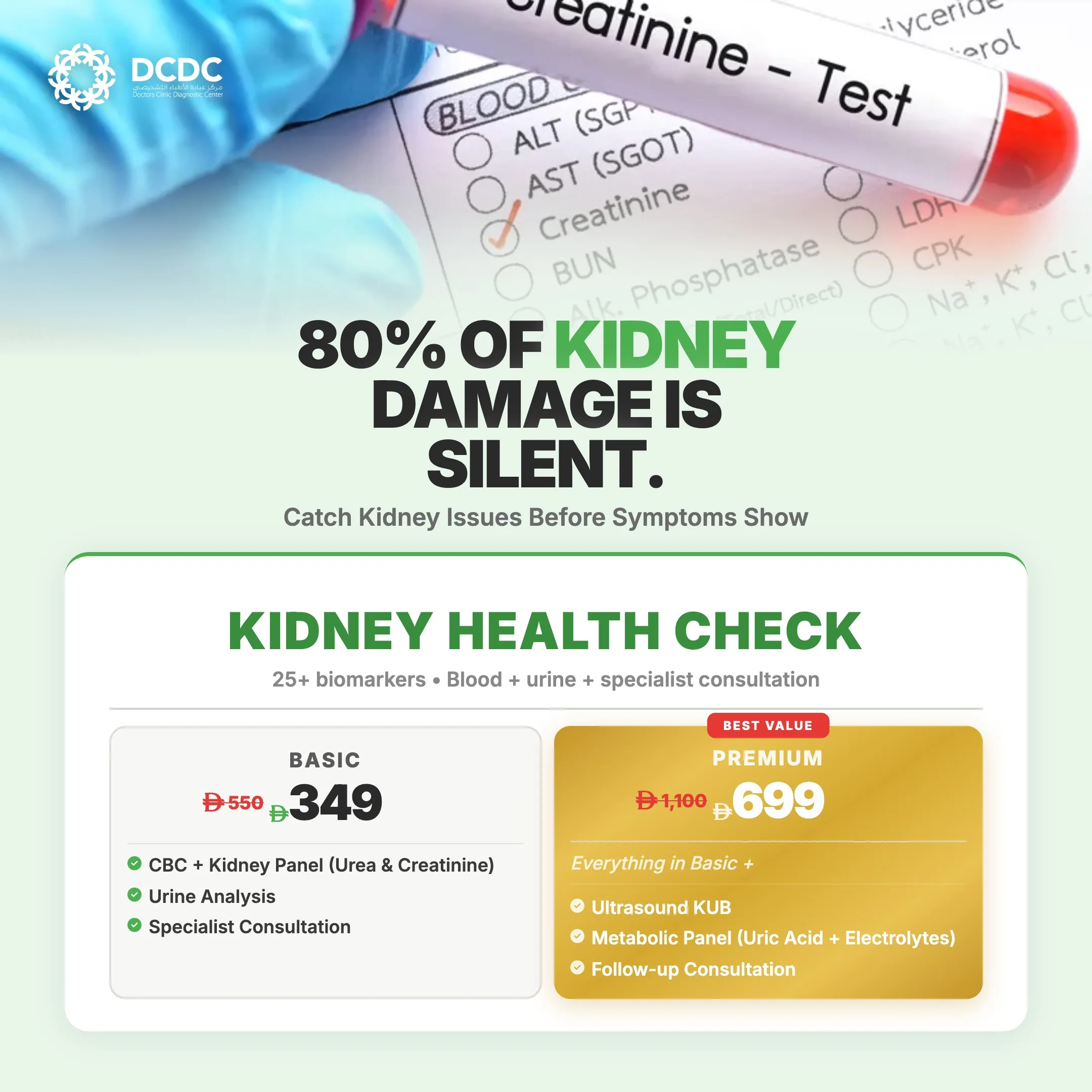
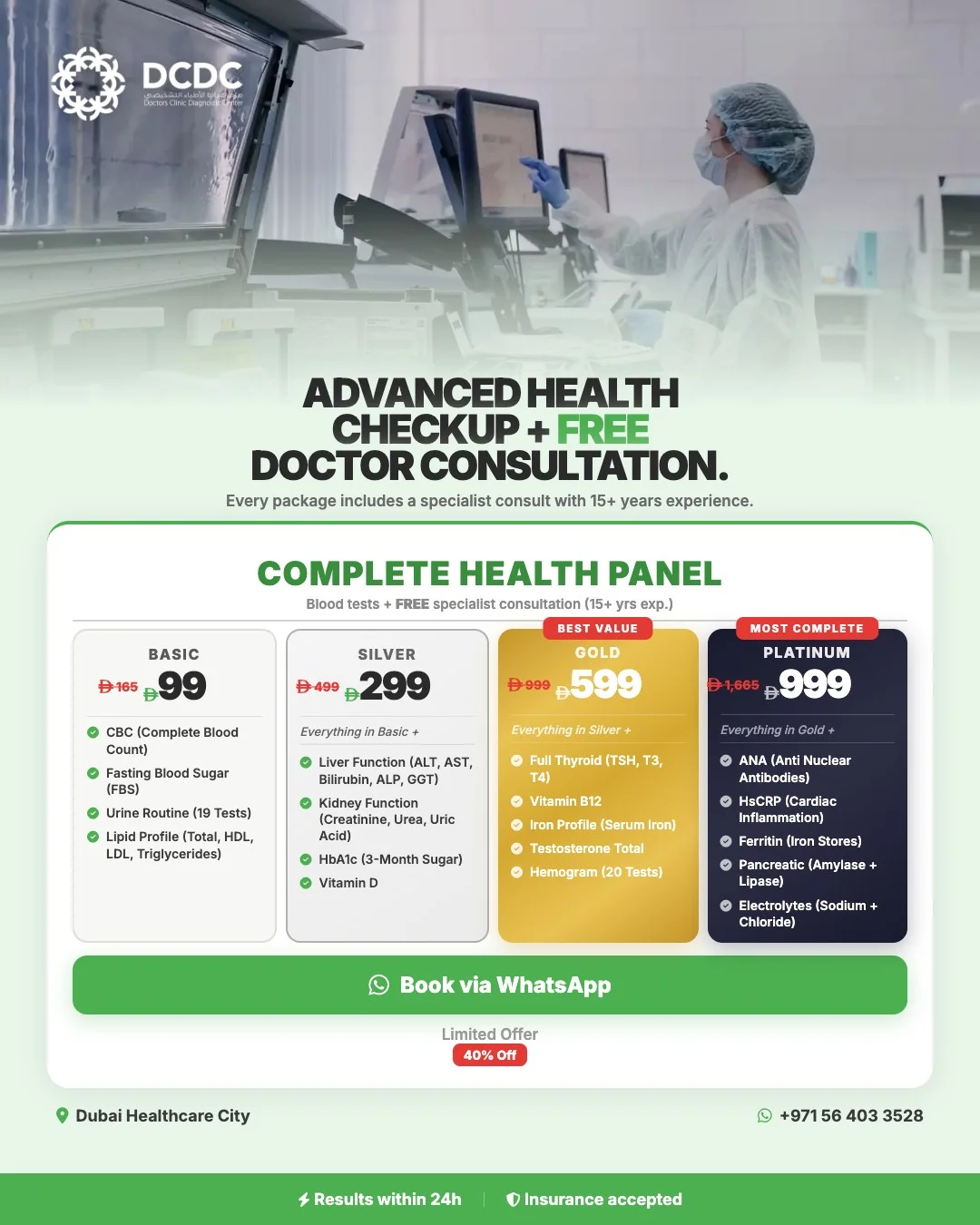
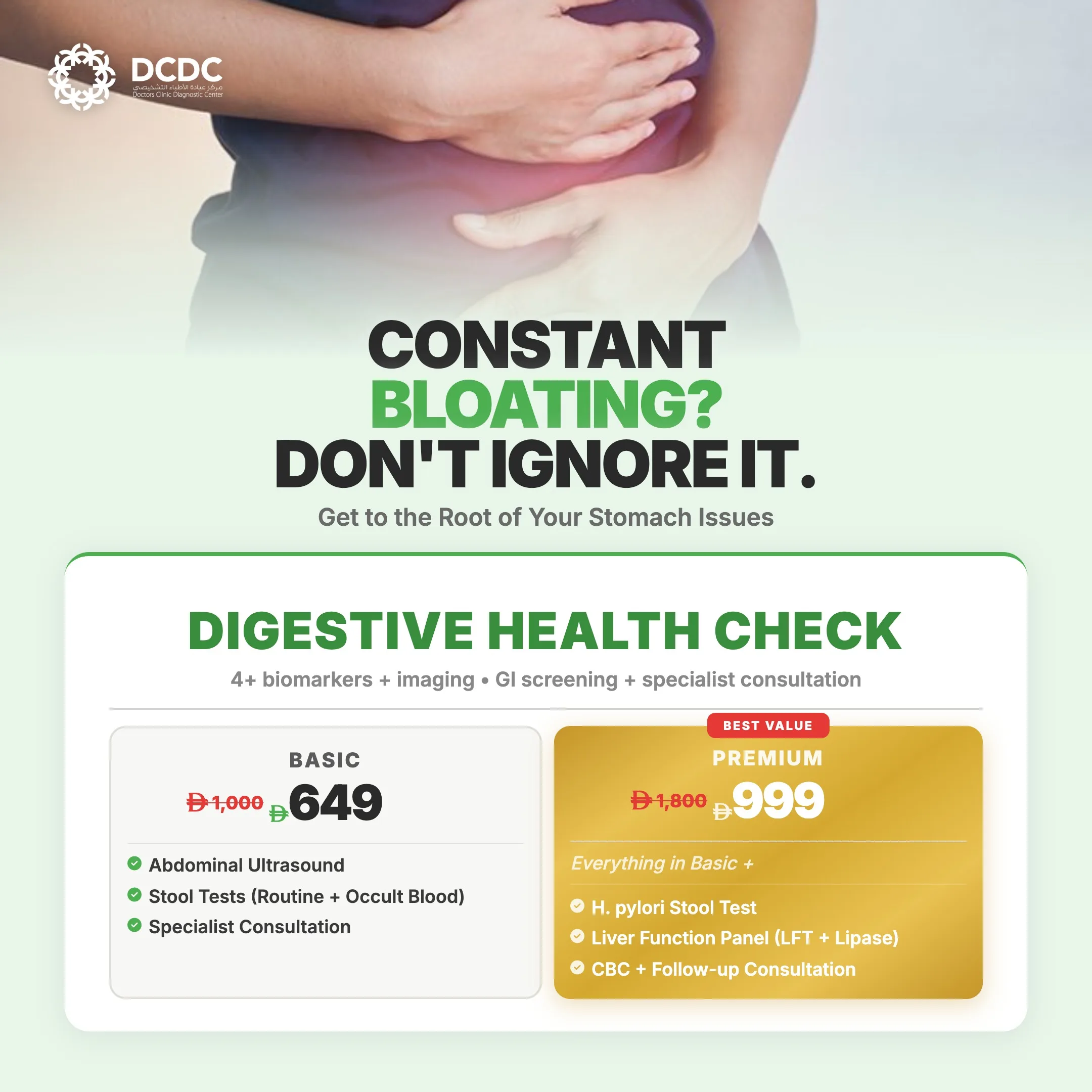
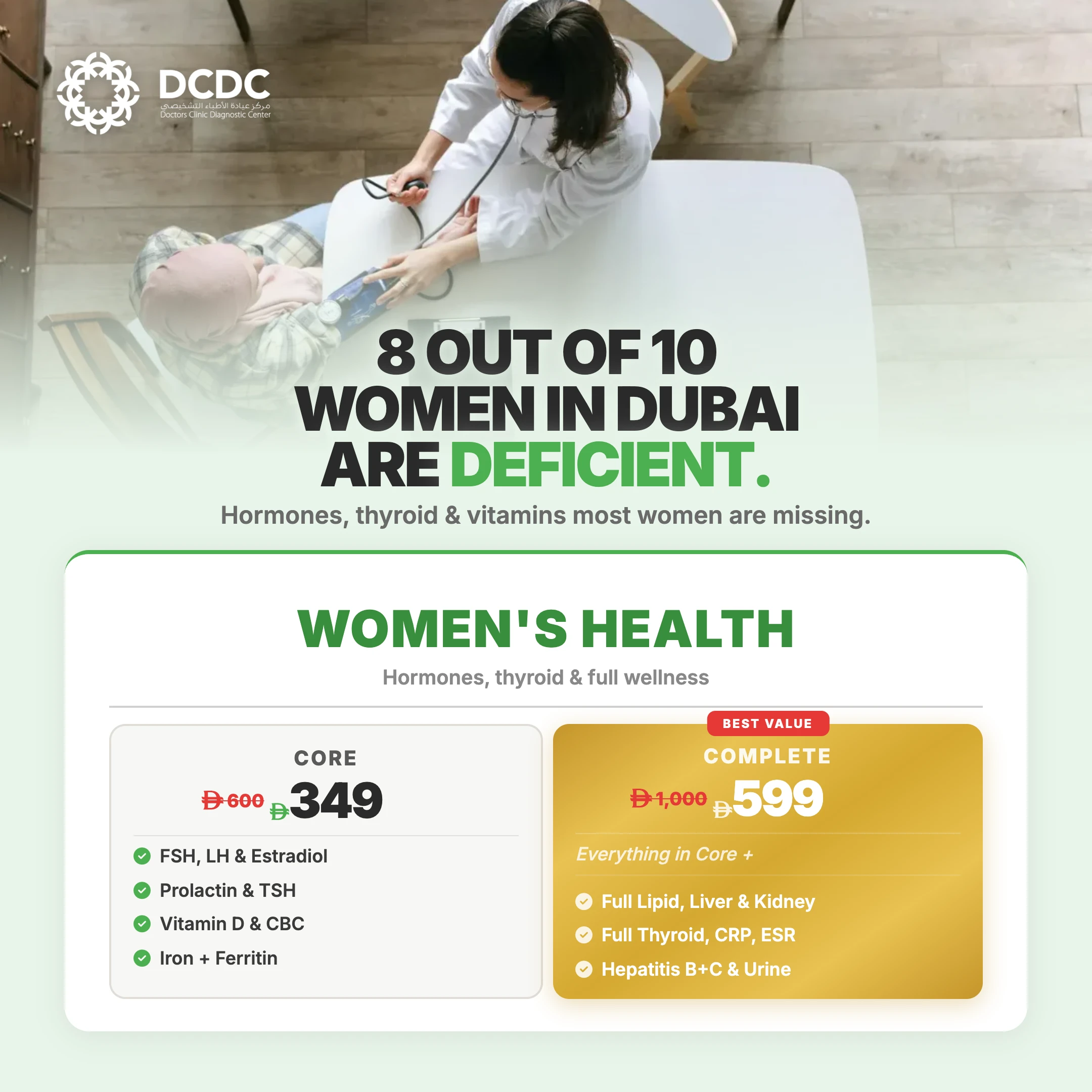
Health Screening Packages
Save with our bundled screening packages — specialist consultation included


What Is Eczema (Atopic Dermatitis)?
Eczema is a chronic inflammatory skin condition characterised by dry, itchy, red, and sometimes weeping patches of skin. The term "eczema" is an umbrella that covers several types of skin inflammation, but atopic dermatitis (AD) is by far the most common — accounting for roughly 80% of eczema cases. It is not contagious, not caused by poor hygiene, and not something you can simply "wash away."
Atopic dermatitis is fundamentally a skin barrier dysfunction combined with immune system overactivity. In healthy skin, the outer layer (stratum corneum) acts as a waterproof seal — locking moisture in and keeping irritants, allergens, and microbes out. In eczema, this barrier is compromised due to reduced production of filaggrin (a key structural protein), ceramide deficiency, and immune-driven inflammation. The result: moisture escapes, irritants enter, and the immune system launches an exaggerated inflammatory response.
According to the National Eczema Association, eczema affects approximately 31.6 million people in the United States alone, with global prevalence estimated at up to 20% of children and 10% of adults. The condition often appears in infancy or early childhood — around 60% of cases begin before age one — but it can start at any age, including adulthood. The atopic triad links eczema with asthma and allergic rhinitis (hay fever), meaning many eczema patients also suffer from one or both of these related conditions.
Types of Eczema Common in Dubai
While atopic dermatitis is the most prevalent, Dubai's climate and lifestyle make several other eczema types particularly common among residents.
Atopic Dermatitis
The most common chronic form, driven by genetic predisposition and immune dysfunction. In Dubai, the constant cycling between extreme outdoor heat and aggressively air-conditioned indoor environments places enormous stress on the skin barrier, making atopic dermatitis flare-ups more frequent and severe.
Contact Dermatitis
Triggered by direct contact with irritants or allergens. In Dubai, common culprits include heavily chlorinated pool water, certain sunscreen ingredients, fragranced laundry detergents, and nickel in jewellery (sweating in heat increases nickel release). Contact dermatitis is divided into irritant contact dermatitis (more common — a direct chemical irritation) and allergic contact dermatitis (a delayed immune response to a specific allergen).
Dyshidrotic Eczema (Pompholyx)
Characterised by small, intensely itchy blisters on the palms, fingers, and soles of the feet. This type is worsened by sweating — a major issue in Dubai's heat. Many residents develop pompholyx during summer months when hand and foot perspiration is at its worst, particularly if they frequently wash their hands or use alcohol-based sanitisers.
Nummular (Discoid) Eczema
Appears as round, coin-shaped patches of irritated skin. Often triggered by dry skin and environmental irritants, this type responds well to consistent moisturising — critical in Dubai's dehydrating environment.
Seborrhoeic Dermatitis
Affects oily areas — scalp, face, and chest. Dubai's heat and humidity can worsen this type by promoting the growth of Malassezia yeast on the skin. It presents as flaky, scaly patches and is often confused with dandruff.
Eczema Symptoms: How to Recognise It
Eczema symptoms vary depending on the type, severity, and the patient's age, but there are hallmark signs that distinguish eczema from other skin conditions. Recognising these early allows for faster treatment and prevents complications such as skin infections.
Primary Symptoms
- Intense itching (pruritus): The defining symptom — often worse at night, disrupting sleep. Itching typically precedes visible skin changes
- Dry, rough skin: Skin feels sandpapery and lacks moisture even after applying lotion
- Red or inflamed patches: On lighter skin tones, patches appear red. On darker skin tones (common among Dubai's diverse population), patches may appear darker brown, purple, or ashen grey
- Cracked, weeping skin: In acute flare-ups, skin may crack and ooze clear fluid, then crust over
- Thickened, leathery skin (lichenification): Chronic scratching causes the skin to thicken and develop exaggerated skin lines — commonly seen on inner elbows, behind knees, and wrists
- Swelling: Affected areas may become puffy during active flares
Symptoms by Age Group
- Infants (0-2 years): Eczema typically affects the face (cheeks, forehead), scalp, and outer surfaces of the arms and legs. Patches are often weepy and crusted
- Children (2-12 years): Moves to flexural areas — inner elbows (antecubital fossa), behind knees (popliteal fossa), wrists, ankles, and neck creases. Skin becomes dry and thickened from chronic scratching
- Teenagers and adults: Affects hands, feet, eyelids, neck, and flexural creases. In adults, hand eczema is particularly common — and often occupational. Facial eczema around the eyes and mouth is also frequent in adults
If you notice persistent itchy patches that worsen in Dubai's AC-heavy environments, keep a symptom diary noting when flare-ups occur — this information is invaluable for your doctor in identifying your specific triggers. Eczema is sometimes linked to underlying allergies, and allergy testing in Dubai can help pinpoint whether environmental or food allergens are contributing to your flares.
Dubai-Specific Eczema Triggers
According to Dr. Hadeel Elnur, "Dubai's dry indoor air from constant air conditioning combined with outdoor heat creates the perfect storm for eczema flare-ups. I recommend patients focus on maintaining skin hydration and identifying their personal triggers through allergy testing."
While eczema triggers are partly universal (stress, certain foods, fragranced products), Dubai's environment introduces several region-specific factors that residents and visitors should understand.
Air Conditioning and Indoor Dryness
This is arguably the number one eczema trigger in Dubai. AC systems strip moisture from indoor air, often reducing humidity to 20-30% — well below the 40-60% range recommended for healthy skin. Most buildings, homes, offices, malls, and vehicles in Dubai run AC continuously for 8-10 months of the year. The result is relentless dehydration of the skin barrier, making it more vulnerable to cracking and irritation. Additionally, poorly maintained AC units harbour dust mites, mould spores, and bacteria that circulate through the air and settle on the skin.
Temperature Cycling
Repeatedly moving between extreme outdoor heat (40-50 degrees Celsius in summer) and aggressively cooled indoor environments (often set to 18-22 degrees Celsius) causes rapid vasodilation and vasoconstriction of skin blood vessels. This thermal shock stresses the skin barrier and can trigger immediate eczema flares — particularly on exposed areas like the face, neck, and hands.
Desert Dust and Sandstorms
Dubai experiences regular dust storms and a baseline of fine particulate matter in the air year-round. Desert dust particles are abrasive and contain allergens that can settle on the skin, triggering contact irritation and exacerbating eczema. Dust also accumulates in homes despite filtration, particularly on bedding, upholstery, and carpets where dust mites thrive.
Chlorinated Swimming Pools
Swimming is a core part of Dubai lifestyle — many residences have pools, and children swim year-round. Chlorine is a known skin irritant that strips natural oils from the skin and disrupts the acid mantle. For eczema patients, pool exposure without proper pre- and post-swim skin care almost always triggers a flare. The combination of chlorine exposure followed by rinsing with Dubai's desalinated water (which itself can be drying) compounds the problem.
Water Quality
Dubai's tap water is produced by desalination and can be mineral-heavy depending on the area. Some residents report that the water feels "harsh" on skin. While not as problematic as hard water in European countries, the chlorine used in water treatment and the mineral content can contribute to skin dryness — particularly during long, hot showers.
Heat and Perspiration
Sweat is a direct eczema trigger for many patients. Dubai's summer heat makes sweating unavoidable during any outdoor activity, and sweat that lingers on already-compromised eczema skin causes stinging, itching, and flare-ups. Wearing synthetic fabrics that trap heat worsens this — a common issue in Dubai where fast-fashion synthetic clothing is prevalent.
Other Dubai-Relevant Triggers
- Sun exposure: While moderate sun can benefit some eczema through natural UV therapy and vitamin D production, excessive sun exposure and sunburn worsen flare-ups. Dubai's intense UV index (8-11+ in summer) makes this a fine balance
- Stress: Dubai's fast-paced, high-pressure lifestyle is a well-documented eczema trigger — cortisol (the stress hormone) directly promotes skin inflammation
- Food allergens: Dubai's diverse culinary scene exposes residents to a wide variety of potential food triggers including shellfish, nuts, dairy, and spices not common in their home countries
- Fragranced products: The UAE's strong perfume culture means heavy exposure to fragranced products — oud, bakhoor (incense), and potent perfumes — all potential contact irritants for eczema skin
When to See a Doctor for Eczema in Dubai
Many people manage mild eczema with over-the-counter emollients from pharmacies. However, there are clear signs that indicate you need professional medical evaluation and prescription-strength treatment.
- Itching disrupts sleep or daily activities: If eczema is waking you at night or affecting work or school concentration, you need treatment adjustment
- Over-the-counter moisturisers and 1% hydrocortisone are not controlling symptoms: You likely need a stronger prescription topical or a different treatment approach
- Signs of skin infection: Yellow crusting, pus-filled blisters, increased redness or warmth, fever, or rapidly spreading patches — eczema skin is vulnerable to bacterial (Staphylococcus aureus) and viral (eczema herpeticum) infections
- Large body surface area affected: If eczema covers more than 10% of your body or involves the face, hands, or genitals
- You suspect a specific allergy trigger: An IgE allergy blood test can identify environmental or food allergens driving your flares
- Child with worsening eczema: Particularly if accompanied by asthma, recurrent wheeze, or food allergy symptoms
- Eczema started recently in adulthood: New-onset eczema in adults should be medically evaluated to rule out contact dermatitis, drug reactions, or other underlying conditions
- Emotional or psychological impact: Eczema significantly affects mental health — anxiety, depression, and social withdrawal are common. Medical support should address both skin and wellbeing
How Eczema Is Diagnosed
There is no single definitive laboratory test for eczema. Diagnosis is primarily clinical — based on your history and physical examination. A GP or dermatologist will assess your skin, ask about symptom patterns, family history of atopy (eczema, asthma, hay fever), and known triggers.
Clinical Criteria
Doctors use established diagnostic criteria, such as the Hanifin and Rajka criteria or the UK Working Party diagnostic criteria, which require the presence of itchy skin plus three or more of the following: history of flexural involvement, personal or family history of atopy, generalised dry skin, visible flexural eczema, or onset before age two.
Supporting Investigations
While not required for diagnosis, certain tests help guide treatment — especially in identifying triggers and ruling out complications.
- Specific IgE blood test: Measures IgE antibodies against common environmental allergens (dust mites, mould, pet dander, pollen) and food allergens. Elevated specific IgE indicates sensitisation that may be driving eczema flares
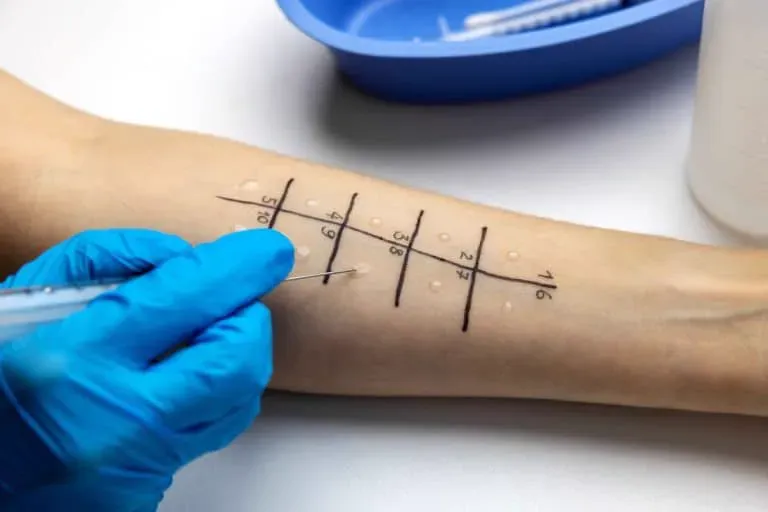
- Skin prick test: Tests immediate allergic reactions to a panel of allergens by pricking a tiny amount of allergen extract into the skin. Results available in 15-20 minutes
- Patch testing: Used specifically for suspected allergic contact dermatitis — allergens are applied to the back under patches for 48 hours, then read at 48 and 96 hours
- Total IgE: A general measure of allergic activity — often elevated in atopic dermatitis but non-specific
- CBC (complete blood count): May show elevated eosinophils, supporting an allergic/atopic component
- Skin swab for culture: If infection is suspected — identifies bacterial or viral causes for targeted antibiotic treatment
- Vitamin D level: Low vitamin D is associated with more severe eczema. Despite the abundant sunshine in Dubai, vitamin D deficiency is surprisingly common due to indoor lifestyles and sun avoidance
Eczema Treatment Options in Dubai
Eczema treatment follows a stepwise approach — starting with the simplest, safest interventions and escalating to more potent therapies only when needed. The goal is to restore the skin barrier, reduce inflammation, relieve itching, and prevent flare-ups. There is no permanent cure for atopic dermatitis, but with the right treatment plan, most patients achieve excellent symptom control.
Step 1: Emollients and Moisturisers (Foundation of All Eczema Treatment)
Daily emollient use is the single most important element of eczema management — and the step most patients underdo. Emollients repair and reinforce the damaged skin barrier by trapping moisture and creating a protective film. Patients should apply emollients at least twice daily and immediately after bathing (within 3 minutes — the "soak and seal" technique). In Dubai's dry-air-conditioned environments, many patients need to apply emollients 3-4 times daily.
- Ointments (e.g., petroleum jelly, Epaderm): Most occlusive — best for very dry skin and nighttime use. Can feel heavy in Dubai's heat
- Creams (e.g., Cerave, Cetaphil, Eucerin): Good balance of hydration and cosmetic acceptability — most popular choice in Dubai's climate
- Lotions: Least occlusive — suitable for hairy areas or daytime use in heat but may not provide adequate barrier repair for moderate-to-severe eczema
- Look for: Ceramide-containing moisturisers, fragrance-free formulations, and products labeled for eczema-prone skin
Step 2: Topical Anti-Inflammatory Medications
When emollients alone do not control flare-ups, prescription topical anti-inflammatories are added. These treat active inflammation and should be used at the first sign of a flare — not as a last resort.
- Topical corticosteroids: The mainstay of eczema flare-up treatment. Available in mild (hydrocortisone 1%), moderate (betamethasone valerate 0.025%), potent (betamethasone valerate 0.1%, mometasone furoate), and very potent (clobetasol propionate) strengths. The right potency depends on the body site, patient age, and severity. Used for 7-14 day courses during flares, or as proactive twice-weekly maintenance on flare-prone areas
- Topical calcineurin inhibitors (tacrolimus, pimecrolimus): Steroid-free anti-inflammatories particularly useful for sensitive areas — face, eyelids, neck, groin, and skin folds — where prolonged corticosteroid use risks thinning. Also used for long-term maintenance therapy
- Topical PDE4 inhibitor (crisaborole): A newer non-steroidal option for mild-to-moderate eczema, suitable for children aged 3 months and older
- Topical JAK inhibitors (ruxolitinib): The latest class of topical treatment, targeting the JAK-STAT signalling pathway involved in eczema inflammation. Provides rapid itch relief
Struggling with Eczema Flare-Ups in Dubai?
Book a GP consultation at DCDC Dubai Healthcare City. Get a personalised treatment plan, on-site allergy testing, and same-day prescriptions — all with direct insurance billing.
Walk-in and same-day appointments available — 20+ insurance partners
Medical Treatments for Eczema
For moderate-to-severe eczema that does not respond adequately to topical therapy alone, several systemic and advanced treatments are available in Dubai.
Phototherapy (Light Therapy)
Narrowband UVB phototherapy is one of the most effective second-line treatments for widespread eczema. Controlled doses of UVB light reduce skin inflammation and modulate the immune response. Treatment typically involves 2-3 sessions per week for 8-12 weeks. While Dubai has abundant natural sunlight, medical phototherapy delivers a specific wavelength (311nm) at a controlled dose — making it safer and more effective than unprotected sun exposure.
Systemic Medications
- Oral antihistamines: Sedating antihistamines (hydroxyzine, chlorpheniramine) help with nighttime itching and sleep. Non-sedating antihistamines (cetirizine, loratadine) have limited direct benefit for eczema itch but help if concurrent allergic rhinitis is present
- Short-course oral corticosteroids: Prednisolone for 5-7 days may be used to break a severe flare cycle, but is not suitable for long-term use due to side effects
- Immunosuppressants: Ciclosporin, azathioprine, mycophenolate, and methotrexate may be used for severe, refractory eczema under specialist supervision, with regular blood monitoring
- Oral JAK inhibitors (abrocitinib, upadacitinib, baricitinib): A newer class of oral medications that rapidly control moderate-to-severe eczema — some patients report significant itch reduction within 48 hours
Biologic Therapy
Dupilumab (Dupixent) is a breakthrough biologic treatment that targets interleukin-4 (IL-4) and interleukin-13 (IL-13) — key drivers of type 2 inflammation in atopic dermatitis. Administered as a subcutaneous injection every two weeks, dupilumab has transformed outcomes for patients with moderate-to-severe eczema who have failed other treatments. Clinical trials showed 36-37% of patients achieved clear or almost clear skin at 16 weeks. Tralokinumab (Adtralza), targeting IL-13 alone, is another biologic option now available. These treatments are available in Dubai through specialist dermatologists, with costs from AED 3,000-5,000 per injection — sometimes covered by insurance for qualifying patients.
Treating Eczema Complications
- Bacterial infection: Oral or topical antibiotics (flucloxacillin, fusidic acid) when infection signs are present — yellow crusting, pus, increased pain
- Eczema herpeticum: A serious viral complication requiring urgent antiviral treatment (aciclovir). Presents as clusters of painful, punched-out lesions — seek emergency care immediately
- Wet wrap therapy: For acute, severe flare-ups — emollient or dilute topical steroid is applied, then covered with a damp layer of bandaging and a dry outer layer. Enhances medication absorption and provides rapid relief
Eczema in Children vs Adults
While eczema is fundamentally the same disease across age groups, there are important differences in presentation, triggers, and management that parents and adult patients in Dubai should understand.
Eczema in Children
Childhood eczema is extremely common — affecting up to 20% of children — and typically appears before age five. In Dubai, paediatric eczema is a frequent reason for GP visits, particularly during summer months when heat, sweat, and pool chlorine combine to trigger severe flares.
- Food triggers are more common: Up to 30% of children with moderate-to-severe eczema have an associated food allergy — most commonly cow's milk, eggs, peanuts, wheat, and soy. Testing is worthwhile for children with persistent eczema despite good skin care
- The "atopic march": Many children with eczema go on to develop asthma (30-50%) and allergic rhinitis (60-70%). Early, aggressive eczema treatment may help prevent this progression
- Steroid anxiety: Many parents in Dubai worry about topical steroids on children. Used correctly (right potency, right duration, right body site), topical corticosteroids are safe and remain the cornerstone of childhood eczema treatment. Under-treatment due to steroid phobia causes more harm than appropriate steroid use
- Sleep disruption: Children with eczema lose an estimated 1-2 hours of sleep per night during flare-ups, affecting behaviour, school performance, and family wellbeing
Eczema in Adults
- Hand eczema: The most common adult-specific pattern, often occupational — healthcare workers, cleaners, food handlers, hairdressers, and those who frequently wash or sanitise hands
- Facial and eyelid eczema: More common in adults, especially women, and often triggered by cosmetics, fragrances, or airborne allergens
- Psychological impact: Adult eczema significantly affects quality of life — studies show it has a greater impact on quality of life than diabetes or heart disease. Visible eczema on hands and face carries social stigma and affects professional interactions
- New-onset adult eczema: Adults who develop eczema for the first time in Dubai may be reacting to new environmental allergens (dust mites, mould) or the dramatic climate differences. Allergy testing is particularly valuable in this group
What to Expect at DCDC
At Doctors Clinic Diagnostic Center (DCDC) in Dubai Healthcare City, eczema patients receive comprehensive assessment and treatment under one roof. Here is what your visit looks like.
Your Eczema Consultation Journey
- Arrival and check-in: DCDC is located in Building 64, Block A, Al Razi Medical Complex, DHCC — with dedicated free on-site parking. Average wait time is approximately 15 minutes. Walk-in and same-day appointments are available Saturday through Thursday, 8 AM to 10 PM, and Friday 9 AM to 9 PM
- GP consultation: Dr. Hadeel Elnur or one of our experienced GPs will conduct a thorough assessment — examining your skin, reviewing your medical and family history, discussing your symptom patterns and known triggers, and evaluating the severity and distribution of your eczema
- Allergy testing (if indicated): If trigger identification is needed, allergy testing is available on-site at our in-house laboratory — IgE blood panels to test for environmental and food allergens, skin prick tests for immediate allergy identification, and supporting blood work (CBC, inflammatory markers, vitamin D levels). Blood test results are typically available same day
- Diagnosis and treatment plan: You will receive a clear diagnosis, a written treatment plan with specific product recommendations (emollients, topical medications), prescriptions if needed, and trigger avoidance guidance tailored to Dubai's environment
- Follow-up: A review appointment is typically scheduled for 2-4 weeks to assess treatment response and adjust the plan if needed. For severe or complex cases, referral to a specialist dermatologist may be arranged
Why Patients Choose DCDC for Eczema Care
- 4.8/5 Google rating from 1,000+ verified patient reviews
- 98% patient satisfaction rate
- MOHAP-licensed facility in Dubai Healthcare City
- On-site laboratory: Same-day allergy panel results and blood work — no need to visit a separate lab
- Direct insurance billing: 20+ insurance partners including Daman, AXA, Bupa, MetLife, and Cigna — no upfront payment required in most cases
- Convenient hours: Open late evenings and weekends — fitting around work and school schedules
Eczema Treatment Cost in Dubai
Understanding the costs involved helps you plan your treatment. Below is a guide to typical eczema-related costs in Dubai. At DCDC, most consultations and testing are covered by insurance with direct billing — you may only pay a copay or deductible.
| Service | Typical Cost in Dubai | Notes |
|---|---|---|
| GP eczema consultation | AED 250-500 | Initial assessment, diagnosis, and treatment plan |
| Dermatologist consultation | AED 400-800 | Specialist referral for complex or severe eczema |
| IgE allergy panel (blood test) | From AED 200-800 | Tests environmental and food allergens — panel size varies |
| Skin prick test | AED 300-600 | Tests 20-40 allergens with immediate results |
| Patch test (contact dermatitis) | AED 400-700 | Applied for 48 hours, read at 48 and 96 hours |
| Prescription emollients | AED 50-200 | Medical-grade moisturisers (Cerave, Epaderm, Doublebase) |
| Topical corticosteroids | AED 30-150 | Mild to potent strength — depends on prescription |
| Calcineurin inhibitors (tacrolimus/pimecrolimus) | AED 100-250 | Steroid-free topical for face and sensitive areas |
| Phototherapy (per session) | AED 200-500 | Typically 2-3 sessions per week for 8-12 weeks |
| Dupilumab biologic (per injection) | AED 3,000-5,000 | Every 2 weeks — for severe eczema unresponsive to other treatments |
| Vitamin D blood test | From AED 80-150 | Recommended for eczema patients — deficiency worsens symptoms |
| CBC and inflammatory markers | From AED 100-250 | Supporting blood work to assess eczema severity |
Eczema treatment costs in Dubai — prices are approximate ranges. Insurance coverage varies by plan. DCDC offers direct billing with 20+ insurance partners.
At DCDC, GP consultation for eczema starts from AED 250, with on-site allergy panel testing available. Most insurance plans cover eczema consultations and allergy testing when medically indicated, and we verify your coverage before any charges.
Living with Eczema in Dubai's Climate
Managing eczema in Dubai requires specific strategies that account for the unique environmental challenges. These practical tips are drawn from the experiences of Dubai-based patients and evidence-based dermatology guidelines.
Managing Indoor Air Quality
- Use a humidifier: Place a humidifier in your bedroom to counteract AC dryness — aim for 40-50% humidity. Clean the humidifier weekly to prevent mould growth
- Set AC to moderate temperatures: Avoid overcooling. Set your AC to 23-25 degrees Celsius rather than the common 18-20. This reduces the humidity-stripping effect and the temperature shock when going outside
- Maintain your AC system: Have filters cleaned or replaced every 3 months and ducts professionally cleaned annually to reduce dust mites, mould, and bacteria circulating through your home
- Use HEPA air purifiers: Particularly in bedrooms, to reduce airborne dust and allergens
Skin Care Routine for Dubai
- Shower smart: Use lukewarm water (not hot), limit showers to 5-10 minutes, use fragrance-free soap substitutes (aqueous cream, Dermol), and apply emollient within 3 minutes of towelling dry
- Apply emollients generously and often: In Dubai, you may need to moisturise 3-4 times daily — morning, midday, after afternoon activities, and before bed. Keep a travel-size emollient in your bag
- Pool protocol: Apply a thick layer of petroleum jelly or emollient before swimming to create a barrier against chlorine. Shower immediately after swimming with lukewarm water and fragrance-free wash. Apply emollient immediately after
- Sun protection: Use a mineral (zinc oxide/titanium dioxide) sunscreen rather than chemical sunscreens, which can irritate eczema skin. Reapply every 2 hours when outdoors
Clothing and Fabric Choices
In Dubai's heat, clothing choices significantly affect eczema. Wear loose-fitting, 100% cotton or bamboo clothing next to the skin. Avoid polyester, nylon, and wool. Choose light colours that reflect heat rather than dark colours that absorb it. Wash all new clothes before wearing them to remove processing chemicals, and use fragrance-free, sensitive-skin laundry detergent. Consider an extra rinse cycle to remove all detergent residue.
Eczema Prevention Tips
While eczema cannot be prevented entirely (it has a strong genetic component), flare-ups can be significantly reduced with consistent preventive strategies. Prevention is especially important in Dubai, where environmental triggers are abundant.
- 1. Maintain a consistent emollient routine: Apply emollients even when your skin looks clear. Eczema skin has a permanently compromised barrier — daily moisturising prevents subclinical inflammation from becoming a visible flare
- 2. Identify and avoid your triggers: Keep a flare-up diary recording activities, foods, products, and environmental conditions in the 24-48 hours before each flare. Over time, patterns emerge. Consider formal IgE allergy blood test to identify triggers objectively
- 3. Proactive (maintenance) therapy: For areas that frequently flare, apply a low-potency topical steroid or calcineurin inhibitor twice weekly even during clear periods — this prevents flare recurrence rather than waiting to react
- 4. Manage dust mites: Use anti-allergen mattress and pillow encasements, wash bedding weekly at 60 degrees Celsius, remove bedroom carpets if possible, and vacuum with a HEPA-filtered vacuum
- 5. Stay hydrated: Drink adequate water throughout the day — dehydration in Dubai's heat indirectly affects skin hydration
- 6. Monitor vitamin D levels: Low vitamin D is linked to eczema severity. Despite living in one of the sunniest cities on earth, many Dubai residents are vitamin D deficient due to indoor lifestyles. A simple blood test can check your level, and supplementation may help
- 7. Stress management: Practice stress-reducing activities — exercise (in cooled environments), mindfulness, adequate sleep. Stress is a well-documented eczema trigger
- 8. Avoid known irritants: Choose fragrance-free products for everything — soap, shampoo, laundry detergent, fabric softener, cleaning products. Read ingredient labels carefully
- 9. Bathing best practices: Lukewarm baths with colloidal oatmeal or bath oil can soothe eczema skin. Avoid bubble bath, and never scrub eczema-affected areas with a loofah or rough washcloth
- 10. Nail care: Keep fingernails short and smooth to minimise skin damage from scratching — particularly important for children. Cotton gloves at night can prevent unconscious scratching during sleep
Take Control of Your Eczema Today
At DCDC Dubai Healthcare City, our GPs provide expert eczema assessment, on-site allergy testing, and personalised treatment plans. With 20+ insurance partners, direct billing, and same-day appointments — getting help has never been easier.
Call, WhatsApp, or book online — Sat-Thu 8 AM-10 PM, Fri 9 AM-9 PM
DCDC में संबंधित सेवाएं
दुबई हेल्थकेयर सिटी में विशेषज्ञ देखभाल और उन्नत निदान
Allergy Panel
IgE blood testing and comprehensive allergy panels to identify eczema triggers.
अपॉइंटमेंट बुक करेंAllergy Testing
Skin prick tests and environmental allergy assessments at DCDC.
अपॉइंटमेंट बुक करेंGeneral Consultation
Expert GP consultation for eczema diagnosis and treatment planning.
अपॉइंटमेंट बुक करेंFrequently Asked Questions
Final Thoughts
Eczema in Dubai is a uniquely challenging condition — not because the disease itself is different, but because the environment constantly tests the skin barrier. The relentless cycle of AC-dried indoor air, extreme outdoor heat, chlorinated pools, desert dust, and desalinated water means that eczema patients in Dubai need to be more vigilant with their skin care routine than those in milder climates.
The good news is that eczema treatment has advanced enormously. With the right combination of consistent emollient use, appropriate topical medications, trigger identification through allergy testing, and environmental modifications, the vast majority of patients can achieve well-controlled skin. For the small percentage with severe, refractory eczema, biologic therapies like dupilumab have been transformative.
Do not accept chronic itching, sleepless nights, or cracked, painful skin as your normal. Effective treatment exists — it simply requires the right diagnosis, the right treatment plan, and consistent follow-through. At Doctors Clinic Diagnostic Center in Dubai Healthcare City, our team provides expert eczema care from first consultation through ongoing management — with on-site allergy testing, same-day prescriptions, and direct insurance billing to make the process as seamless as possible.
स्रोत एवं संदर्भ
यह लेख हमारी चिकित्सा टीम द्वारा समीक्षित है और निम्नलिखित स्रोतों का संदर्भ देता है:
- American Academy of Dermatology (AAD) — Atopic Dermatitis Clinical Guidelines (2024)
- National Eczema Association — Eczema Facts and Statistics
- NHS — Atopic Eczema: Overview, Treatment, and Self-Help
- Mayo Clinic — Atopic Dermatitis (Eczema): Symptoms and Causes
- Cleveland Clinic — Eczema: Types, Symptoms, Causes, and Treatment
- Journal of the American Academy of Dermatology — Prevalence of Atopic Dermatitis (2025)
- PubMed Central — Healthcare Resource Utilization and Direct Cost of Patients with Atopic Dermatitis in Dubai, UAE
इस साइट पर चिकित्सा सामग्री DHA-लाइसेंस प्राप्त चिकित्सकों द्वारा समीक्षित है। हमारी देखें संपादकीय नीति अधिक जानकारी के लिए।

लेखक
Dr. Hadeel Elnur
General Practitioner
MD General Practice
Dr. Hadeel Elnur is a General Practitioner at Doctors Clinic Diagnostic Center (DCDC) in Dubai Healthcare City. She provides expert care for eczema and skin conditions, helping patients identify triggers through allergy testing and develop personalised treatment plans suited to Dubai's unique climate challenges.
Related Articles
Allergy Testing Dubai: IgE, Skin Prick & Cost (2026)
IgE Allergy Blood Test Dubai: Cost & Guide (2026)

Vitamin D Deficiency Dubai: Symptoms & Treatment (2026)

Child Food Allergy Dubai: Signs & Testing (2026)
Blood Test Dubai: Types, Cost & Fasting Guide (2026)
Food Intolerance Test Dubai: Guide & Cost (2026)

Hair Loss Treatment Dubai: Costs & Options (2026)
More in Dermatology
© 2026 Doctors Clinic Diagnostic Center (DCDC), Dubai Healthcare City. Originally published at https://doctorsclinicdubai.ae/blog/eczema-treatment-dubai. All rights reserved. Unauthorized reproduction is prohibited.