मुख्य बातें
- Dry needling uses thin filament needles inserted into myofascial trigger points to release muscle tension and reduce pain — no medication is injected
- It is fundamentally different from acupuncture: dry needling targets anatomical trigger points based on Western medicine, while acupuncture follows traditional Chinese meridian theory
- Research supports dry needling for chronic neck pain, lower back pain, tension headaches, tennis elbow, and shoulder impingement
- A typical session lasts 15-30 minutes and is usually performed as part of a broader physiotherapy treatment plan
- The most common side effect is temporary muscle soreness lasting 24-48 hours — similar to post-exercise soreness
- Dry needling is most effective when combined with therapeutic exercise, not used as a standalone treatment
- Not everyone is suitable: patients on blood thinners, those with needle phobia, pregnant women, and people with certain medical conditions should discuss alternatives
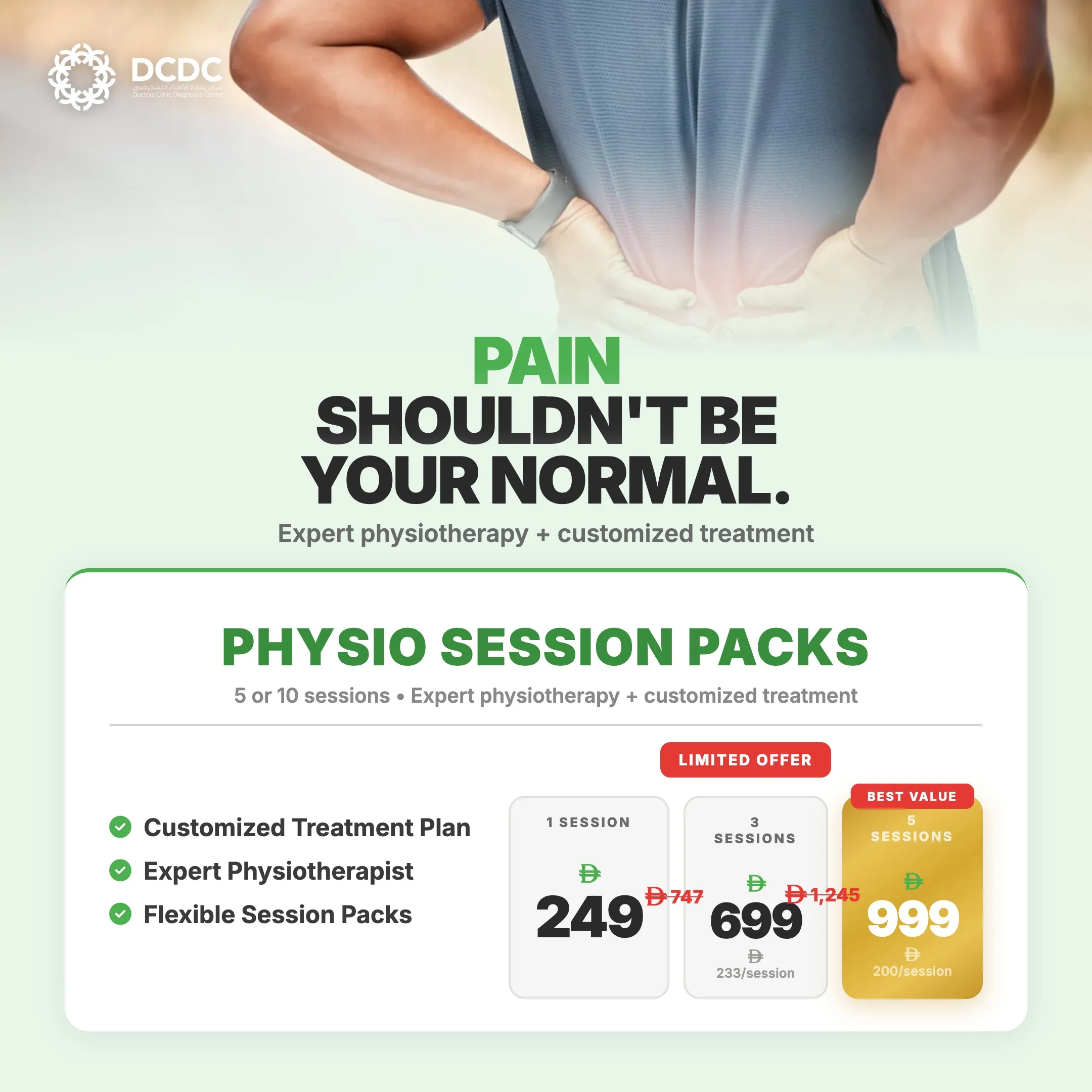
Dry needling has become one of the most requested physiotherapy techniques in Dubai, yet it remains widely misunderstood. Patients confuse it with acupuncture, worry it will be extremely painful, or expect it to fix their problem in a single session. This guide separates the evidence from the marketing. Our Physiotherapy service at DCDC offers same-day appointments in Dubai Healthcare City.
If your physiotherapist has recommended dry needling or you have been hearing about it and wondering whether it could help your condition, this article covers everything you need to know. If this is your first time visiting a physio, you may also want to read about what to expect at your first physiotherapy session. We explain the science behind how it works, what conditions respond best, what a session actually feels like, and the honest limitations of the technique.
What Is Dry Needling and How Does It Work?
Dry needling is a technique performed by trained physiotherapists using thin, solid filament needles (the same type used in acupuncture) inserted directly into myofascial trigger points — the tight, painful knots you can feel in muscles. The term "dry" means no medication or fluid is injected; the needle itself creates the therapeutic effect.
When a needle enters a trigger point, it provokes a local twitch response — an involuntary contraction of the muscle fibres that resets their resting tension. This twitch response is both a sign that the correct trigger point has been targeted and part of the mechanism that provides relief. The needle also stimulates blood flow to the area and triggers the release of endorphins, your body's natural pain-relieving chemicals.
How Is Dry Needling Different from Acupuncture?
Despite using the same type of needle, dry needling and acupuncture are fundamentally different treatments based on entirely different theoretical frameworks. Understanding this distinction helps you make an informed choice about which approach suits your condition.
| Feature | Dry Needling | Acupuncture |
|---|---|---|
| Theoretical basis | Western anatomy and neurophysiology | Traditional Chinese Medicine (meridian theory) |
| Target | Myofascial trigger points in specific muscles | Acupuncture points along energy meridians |
| Practitioner | Physiotherapist with dry needling training | Licensed acupuncturist or TCM practitioner |
| Diagnosis method | Palpation of muscle trigger points | Pulse diagnosis, tongue assessment, TCM diagnosis |
| Needle placement | Based on anatomical location of trigger point | Based on meridian theory and Qi flow |
| Session duration | 15-30 minutes (needles in for seconds to minutes) | 20-40 minutes (needles left in place longer) |
| Primary goal | Release muscle tension, reduce local pain | Balance energy flow, treat systemic conditions |
| Evidence base | Growing Western research, particularly for musculoskeletal pain | Mixed evidence; some support for pain, nausea, headaches |
Key differences between dry needling and acupuncture
Which Conditions Does Dry Needling Treat Effectively?
Dry needling is most effective for conditions involving myofascial pain — pain originating from muscles and their surrounding connective tissue. The evidence is strongest for conditions where trigger points are a significant contributing factor to the patient's symptoms. It is not a universal fix, and your physiotherapist should assess whether it is appropriate for your specific presentation.
- Chronic neck pain: Strong evidence for trigger points in the upper trapezius, levator scapulae, and suboccipital muscles
- Lower back pain: Effective for myofascial components, particularly in the quadratus lumborum and multifidus muscles. See our lower back pain exercises guide for complementary treatment
- Tension-type headaches: Trigger points in neck and shoulder muscles commonly refer pain to the head
- Tennis elbow (lateral epicondylitis): Targeting the extensor muscles of the forearm alongside exercise therapy
- Shoulder impingement and rotator cuff pain: Addressing trigger points in the rotator cuff and surrounding muscles. An ultrasound scan may be used to confirm the diagnosis
- Plantar fasciitis: Needling the calf muscles and intrinsic foot muscles that contribute to plantar loading
- TMJ (jaw) pain: Trigger points in the masseter and temporalis muscles
- Myofascial pelvic pain: Specialist application for pelvic floor trigger points (women's health physiotherapy)
What Does a Dry Needling Session Feel Like?
The insertion of the needle itself is rarely painful — the filament needles are much thinner than injection needles and most patients describe a brief pinprick or nothing at all. The sensation that follows depends on whether a trigger point is successfully targeted. When the needle hits a trigger point, you will feel a local twitch response — a brief, involuntary muscle contraction that can feel like a deep cramp lasting one to two seconds.
This twitch response is the therapeutic goal, not a side effect. It feels unusual but is not typically described as painful. Most patients report a deep ache or pressure sensation during treatment. The entire needling process for one area takes 5-15 minutes, and your physiotherapist may treat multiple trigger points in a single session.
What to Expect During Your Session
- Your physiotherapist palpates the muscle to locate the active trigger point
- The skin is cleaned with an alcohol swab
- A thin filament needle is inserted through the skin into the trigger point
- The needle is gently manipulated to elicit a twitch response
- Multiple trigger points may be treated in one session
- After needle removal, light pressure is applied briefly
- The session continues with stretching, exercise, or manual therapy to maximise the benefit
What Are the Side Effects and Risks of Dry Needling?
Dry needling is a safe technique when performed by a trained physiotherapist, but like any treatment involving needles, it carries some risks. Being aware of potential side effects helps you distinguish normal post-treatment responses from complications that require attention.
| Side Effect | Frequency | Duration | Action |
|---|---|---|---|
| Muscle soreness | Very common (60-70%) | 24-48 hours | Normal — apply ice if needed |
| Small bruise at needle site | Common (20-30%) | 3-7 days | Normal — no treatment needed |
| Temporary increase in pain | Occasional (10-15%) | 24-48 hours | Normal — contact physio if lasting >48h |
| Fatigue or drowsiness | Occasional (10-15%) | Few hours | Normal — rest if needed |
| Bleeding at needle site | Uncommon (5%) | Seconds | Normal — light pressure stops it |
| Pneumothorax (lung puncture) | Very rare (<0.01%) | Medical emergency | Seek emergency care — only risk with thoracic needling |
Potential side effects of dry needling and their management
Who Should Avoid Dry Needling?
Dry needling is not suitable for everyone. Your physiotherapist should screen for contraindications before offering this treatment. A health checkup can help identify any underlying conditions. If any of the following apply to you, discuss alternatives with your physio before proceeding.
- Blood-thinning medication: Patients on warfarin, heparin, or novel anticoagulants have increased bleeding risk. A blood test can confirm your clotting levels. Low-dose aspirin is generally acceptable with caution
- Severe needle phobia: The anxiety response can counteract any therapeutic benefit. Manual trigger point release may achieve similar results
- Pregnancy: Dry needling is generally avoided during pregnancy, particularly in the first trimester and over the abdomen/lower back
- Compromised immune system: Patients with active infections, immunosuppression, or poorly controlled diabetes may have increased infection risk
- Local skin conditions: Needling through infected skin, open wounds, or active dermatitis is contraindicated
- Lymphoedema: Needling into limbs affected by lymphoedema may increase swelling or infection risk
What Does the Evidence Say About Dry Needling?
The evidence base for dry needling has grown substantially over the past decade. Systematic reviews published in journals including the Journal of Orthopaedic & Sports Physical Therapy, the British Journal of Sports Medicine, and Pain Medicine support its use for myofascial pain, particularly when combined with exercise therapy. The strongest evidence exists for neck pain, headache, and lateral epicondylitis.
However, the evidence also has limitations. Dry needling should not be used as a standalone treatment. The research consistently shows that the best outcomes occur when needling is combined with active exercise rehabilitation — not used in isolation. For conditions like frozen shoulder or herniated disc, a comprehensive approach is essential. If a clinic offers dry needling without exercise prescription, that is a red flag.
How Does Dry Needling Fit into a Physiotherapy Treatment Plan?
At DCDC, dry needling is one tool within a comprehensive physiotherapy treatment plan. A typical session might begin with dry needling to release tight trigger points, followed by stretching the treated muscles, and then progressing into strengthening exercises. This combination takes advantage of the window of reduced pain and increased range of motion that dry needling provides.
For a broader understanding of the physiotherapy techniques available and how they complement each other, see our complete guide to physiotherapy in Dubai.
Interested in Dry Needling Treatment?
Our trained physiotherapy team at DCDC Dubai Healthcare City can assess whether dry needling is appropriate for your condition and incorporate it into your personalised treatment plan.
Book a physiotherapy assessment to discuss whether dry needling is right for you.
DCDC में संबंधित सेवाएं
दुबई हेल्थकेयर सिटी में विशेषज्ञ देखभाल और उन्नत निदान
Frequently Asked Questions
Is Dry Needling Right for You?
Dry needling is a valuable physiotherapy technique with growing evidence to support its use for myofascial pain conditions. It works best as part of a comprehensive treatment plan that includes exercise, not as a standalone magic fix. For an overview of physiotherapy costs in Dubai, see our pricing guide. The key is having it performed by a trained physiotherapist who can assess whether your condition is likely to respond to this approach.
At DCDC, dry needling is one of several techniques our physiotherapy team uses to achieve the best outcomes for each patient. If you are dealing with persistent muscle pain, tension headaches, or trigger point-related symptoms, a physiotherapy assessment can determine whether dry needling should be part of your treatment strategy.
स्रोत एवं संदर्भ
यह लेख हमारी चिकित्सा टीम द्वारा समीक्षित है और निम्नलिखित स्रोतों का संदर्भ देता है:
- Journal of Orthopaedic & Sports Physical Therapy — Dry Needling Clinical Practice Guidelines
- British Journal of Sports Medicine — Dry Needling for Myofascial Pain
- Cochrane Database — Dry Needling for Musculoskeletal Conditions
- Pain Medicine — Systematic Review of Dry Needling Effectiveness
- World Physiotherapy — Position Statement on Dry Needling
इस साइट पर चिकित्सा सामग्री DHA-लाइसेंस प्राप्त चिकित्सकों द्वारा समीक्षित है। हमारी देखें संपादकीय नीति अधिक जानकारी के लिए।

लेखक
Dr. Hadi Komshi
Specialist Internal Medicine
MD, DHA-Licensed
Dr. Hadi Komshi is a DHA-licensed Internal Medicine Specialist at Doctors Clinic Diagnostic Center in Dubai Healthcare City, with extensive experience in managing acute and chronic medical conditions including musculoskeletal pain and rehabilitation.
Related Articles
Complete Guide to Physiotherapy in Dubai (2026)
Shockwave Therapy vs Traditional Physiotherapy

Frozen Shoulder Treatment: A Physiotherapy Approach
More in Physiotherapy
Physiotherapy Packages Dubai: Save 20%+ (2026)
और पढ़ें
Shoulder Pain Dubai: 7 Causes & When to Worry (2026)
और पढ़ें
PRP vs Cortisone Dubai: Which Injection? (2026)
और पढ़ें
PRP Injection for Joints Dubai: From AED 1,500 (2026)
और पढ़ेंPhysiotherapy Cost Dubai: AED 250–500/Session (2026)
और पढ़ेंPhysiotherapy Dubai: Types, Cost & Guide (2026)
और पढ़ें© 2026 Doctors Clinic Diagnostic Center (DCDC), Dubai Healthcare City. Originally published at https://doctorsclinicdubai.ae/blog/dry-needling-benefits-what-to-expect. All rights reserved. Unauthorized reproduction is prohibited.