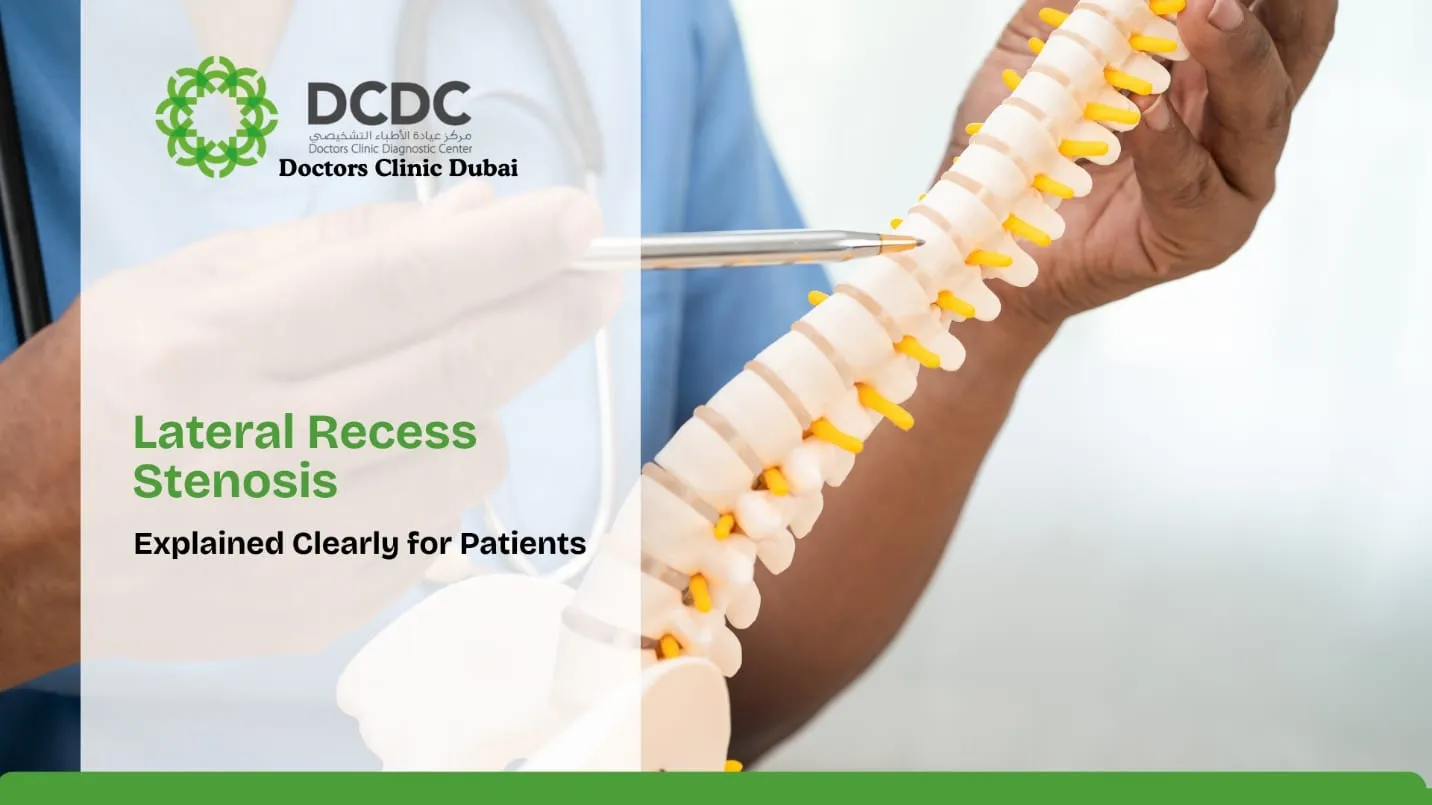
Points cles
- La sténose du récessus latéral est une pathologie rachidienne où le passage nerveux devient étroit, provoquant une pression sur les nerfs
- Les symptômes courants incluent des douleurs lombaires, des douleurs aux jambes, des picotements ou une faiblesse, particulièrement lors de la marche ou en position debout
- Le scanner est souvent l'outil diagnostique privilégié pour visualiser clairement les os et le rétrécissement
- La plupart des patients répondent bien au traitement conservateur sans chirurgie
- Un diagnostic précoce prévient l'aggravation des lésions nerveuses au fil du temps
La sténose du récessus latéral est une pathologie rachidienne où le passage nerveux d'un côté du canal rachidien devient étroit, exerçant une pression sur les nerfs adjacents. Cette pression provoque souvent des douleurs lombaires, des douleurs aux jambes, des picotements ou une faiblesse, particulièrement lors de la marche ou en position debout. Elle est généralement associée aux modifications liées à l'âge de la colonne vertébrale et est souvent confirmée par imagerie comme un scanner ou un angioscanner lorsqu'il existe des préoccupations concernant les nerfs ou la circulation sanguine.
Cette pathologie affecte principalement la colonne lombaire et est fréquemment confondue avec la sténose spinale générale. La différence réside dans la localisation. Un diagnostic précoce est important car la pression nerveuse peut s'aggraver avec le temps. Avec une imagerie précise et une approche clinique appropriée, la plupart des patients peuvent bien gérer leurs symptômes sans recourir précipitamment à la chirurgie.


Quelles sont les causes de la sténose du récessus latéral ?
La sténose du récessus latéral se développe lorsque les structures à l'intérieur de la colonne vertébrale réduisent progressivement l'espace destiné aux racines nerveuses. Ces changements ne surviennent pas du jour au lendemain et s'accumulent généralement sur plusieurs années.
Les causes les plus courantes comprennent le bombement discal, l'épaississement des ligaments, l'hypertrophie des articulations facettaires et la prolifération osseuse due à l'usure. Les traumatismes, une mauvaise posture et les contraintes répétitives peuvent accélérer le processus.
Avant d'énumérer les causes, il est utile de comprendre que de nombreux patients présentent plusieurs facteurs simultanément.
- Dégénérescence rachidienne liée à l'âge
- Hernies discales ou disques bombés
- Arthrose des articulations facettaires
- Épaississement des ligaments rachidiens
- Antécédent de traumatisme ou de chirurgie rachidienne
Connaître la cause aide les médecins à déterminer si l'imagerie comme le scanner seul suffit ou si des examens complémentaires sont nécessaires.
Symptômes courants remarqués en premier par les patients
Les symptômes commencent souvent légèrement et progressent lentement, ce qui explique pourquoi de nombreuses personnes retardent leur consultation. La douleur augmente généralement lors de la marche ou en position debout et diminue en position assise ou penchée en avant.
Les symptômes au niveau des jambes sont plus fréquents que les douleurs dorsales. Les patients peuvent ressentir des brûlures, des engourdissements ou une faiblesse suivant un trajet nerveux le long d'une jambe. Dans les cas avancés, des troubles de l'équilibre peuvent apparaître.
Si les symptômes affectent la distance de marche quotidienne ou la qualité du sommeil, l'imagerie devient nécessaire pour confirmer le diagnostic et exclure d'autres problèmes rachidiens.
Comment la sténose du récessus latéral est-elle diagnostiquée ?
L'examen clinique donne les premiers indices, mais l'imagerie confirme ce qui se passe à l'intérieur de la colonne vertébrale. Les médecins recherchent la compression nerveuse, les modifications osseuses et les problèmes discaux.
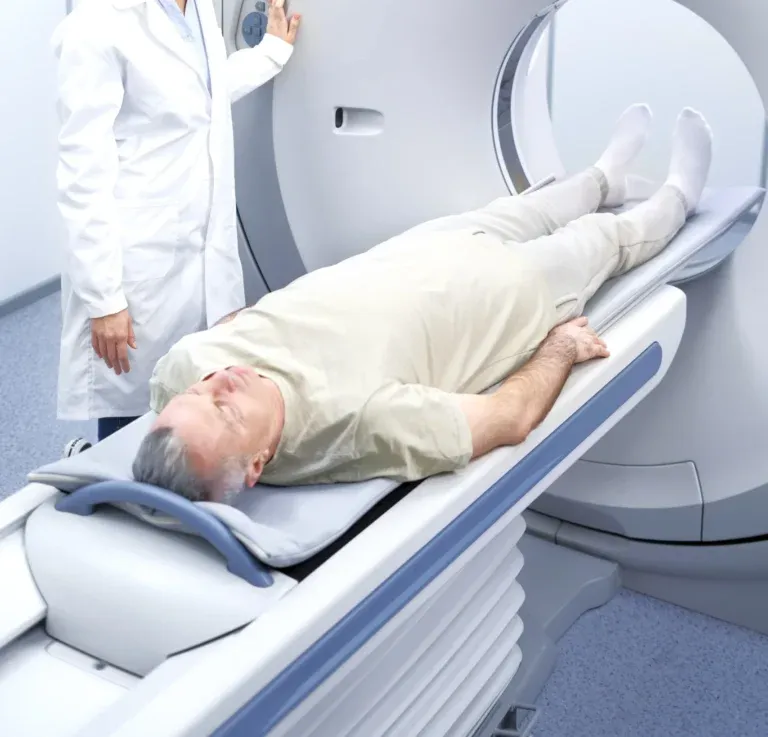
Un scanner de la colonne vertébrale est souvent utilisé lorsqu'une visualisation précise des os est nécessaire. Il montre clairement le rétrécissement, l'hypertrophie articulaire et la prolifération osseuse. Lorsque les symptômes suggèrent une atteinte vasculaire ou qu'une planification chirurgicale est nécessaire, un angioscanner peut être recommandé.
Comparés à d'autres examens d'imagerie, les examens basés sur le scanner sont plus rapides et adaptés aux patients qui ne peuvent pas passer d'IRM en raison d'implants ou d'un inconfort sévère.
Scanner versus angioscanner pour l'évaluation rachidienne
Les deux examens utilisent l'imagerie avancée, mais leur objectif diffère. Le choix du bon examen dépend des symptômes et des constatations cliniques.
| Examen d'imagerie | Ce qu'il montre le mieux | Quand il est utilisé |
|---|---|---|
| Scanner rachidien | Os, articulations, rétrécissement du canal | Confirmer la compression nerveuse |
| Angioscanner | Vaisseaux sanguins, circulation | Suspicion d'atteinte vasculaire |
| Scanner standard | Modifications structurelles | Évaluation rachidienne initiale |
Les médecins combinent parfois les résultats des deux examens pour obtenir une image complète avant de décider du traitement.
Options de traitement selon la sévérité
Le traitement dépend de l'intensité des symptômes et de l'importance de la compression nerveuse visible à l'imagerie. De nombreux patients répondent bien au traitement conservateur.
Les cas précoces s'améliorent souvent avec la kinésithérapie, la correction posturale et le contrôle de la douleur. Les infiltrations peuvent aider à réduire l'inflammation autour de la racine nerveuse.
La chirurgie n'est envisagée que lorsque les symptômes limitent la vie quotidienne ou que le risque de lésion nerveuse augmente. Les résultats d'imagerie des scanners guident la planification chirurgicale en montrant les points de compression exacts.
Coûts fréquemment demandés par les patients à Dubaï
La transparence des coûts est importante lors de la planification des examens diagnostiques ou du traitement. Les prix peuvent varier selon la technologie, l'expertise et la localisation.
| Service | Coût estimé (AED) |
|---|---|
| Scanner rachidien | 700 – 1 200 |
| Angioscanner | 1 800 – 3 000 |
| Consultation spécialiste | 300 – 600 |
| Traitement conservateur (par séance) | 200 – 400 |
Le prix réel dépend des besoins cliniques et de la nécessité d'un produit de contraste ou d'une reconstruction avancée.
Pathologies associées souvent abordées ensemble
Les patients atteints de sténose du récessus latéral s'interrogent souvent sur d'autres problèmes de santé lors de l'évaluation. Certains ont des préoccupations cardiologiques existantes, c'est pourquoi la planification de l'angioscanner prend en compte la santé cardiaque et vasculaire.
Une communication claire aide à distinguer les besoins d'imagerie liés à la colonne vertébrale des autres préoccupations médicales sans confusion.
Pourquoi une imagerie précise fait vraiment la différence
L'imagerie ne sert pas seulement à confirmer un diagnostic. Elle façonne l'ensemble du plan de soins. Un scanner détaillé aide à éviter les traitements inutiles et concentre l'attention sur le nerf précisément concerné.
Pour les patients porteurs d'implants métalliques ou ne pouvant supporter de longs examens, l'imagerie par scanner offre une alternative fiable avec des résultats rapides. Elle joue également un rôle clé dans les contrôles de suivi après traitement. Réaliser l'imagerie dans le bon centre réduit les examens répétés et accélère les décisions de récupération.
Imagerie scanner avancée au Doctors Clinic Diagnostic Center
Au Doctors Clinic Diagnostic Center, l'imagerie est planifiée autour du confort du patient et de la clarté diagnostique. Situé à Dubai Healthcare City, notre centre accueille les patients d'Oud Metha, Umm Hurair 2 et Karama. Nos services de scanner et angioscanner permettent l'évaluation rachidienne, nerveuse et vasculaire avec des équipements modernes et des équipes de radiologie expérimentées.
Services associés au DCDC
Soins spécialisés et diagnostics avancés à Dubai Healthcare City
Frequently Asked Questions
Conclusion
La sténose du récessus latéral peut sembler alarmante, mais avec un diagnostic clair et des soins opportuns, la plupart des patients la gèrent bien. Comprendre les symptômes précocement, choisir la bonne imagerie et suivre un plan de traitement guidé font une réelle différence dans le confort quotidien et la mobilité.
Les scanners et angioscans jouent un rôle central en montrant exactement où les nerfs sont sous pression, aidant les médecins à éviter les approximations. Si les symptômes au dos ou aux jambes limitent votre routine, une évaluation plus précoce plutôt que tardive fait gagner du temps, du stress et des coûts inutiles. Une imagerie fiable, combinée à des soins centrés sur le patient, vous donne clarté et confiance pour chaque prochaine étape.
Sources et references
Cet article a ete revise par notre equipe medicale et fait reference aux sources suivantes :
- Autorité sanitaire de Dubaï - Directives de soins rachidiens
- Société nord-américaine du rachis - Prise en charge de la sténose
- Académie américaine des chirurgiens orthopédistes - Pathologies rachidiennes
Le contenu medical de ce site est revise par des medecins agrees DHA. Voir notre politique editoriale pour plus d'informations.
Redige par
Dr. Mersad Moosavi
Chirurgien Orthopédiste Consultant
MD, Fellowship en chirurgie rachidienne
Le Dr. Mersad Moosavi est chirurgien orthopédiste consultant spécialisé dans les soins rachidiens et la médecine du sport. Il propose des traitements chirurgicaux et non chirurgicaux pour les douleurs dorsales au DCDC Dubai Healthcare City.
Articles connexes
Douleur dorsale chronique : causes et traitement non chirurgical
IRM à Dubaï : coût, types, utilisations et à quoi s'attendre
Récupération après blessure sportive : PRP et médecine régénérative
More in Orthopedics
Orthopedic Consultation Cost Dubai (2026)
Lire la suite
ACL Reconstruction Surgery in Dubai: Cost (2026)
Lire la suite
Best Orthopedic Surgeon in Dubai: Dr. Mersad Moosavi at DCDC (2026)
Lire la suiteIranian Orthopedic Surgeon in Dubai: Dr. Mersad Moosavi at DCDC (2026)
Lire la suiteKnee Replacement Surgery in Dubai: Cost, Recovery & Best Surgeon (2026)
Lire la suite
Orthopedic Surgeon in Dubai Healthcare City: Dr. Mersad Moosavi (2026)
Lire la suite© 2026 Doctors Clinic Diagnostic Center (DCDC), Dubai Healthcare City. Originally published at https://doctorsclinicdubai.ae/blog/lateral-recess-stenosis-ct-scan. All rights reserved. Unauthorized reproduction is prohibited.