Points cles
- L'OPG fournit une vue panoramique 2D plate de toute la machoire ; le CBCT cree un volume 3D detaille des dents, de l'os et des structures environnantes
- L'OPG utilise significativement moins de radiation (5-26 µSv) compare au CBCT (30-200 µSv), bien que les deux soient consideres comme faible dose
- L'OPG coute 150-350 AED a Dubai ; le CBCT coute 500-1 500 AED selon le champ de vue
- Choisissez l'OPG pour le depistage de routine, l'evaluation orthodontique et les bilans dentaires generaux
- Choisissez le CBCT pour la planification implantaire, les extractions complexes, le diagnostic endodontique et la planification chirurgicale maxillo-faciale
- De nombreux cas beneficient d'un OPG de depistage d'abord, puis d'un CBCT pour un detail 3D cible si necessaire
"Dois-je faire un CBCT ou un OPG ?" C'est l'une des questions les plus frequentes que j'entends de la part des patients orientes pour une imagerie dentaire. La reponse honnete est que cela depend entierement de ce que votre dentiste a besoin de voir. Un OPG nous donne un apercu panoramique fiable de vos machoires, dents et sinus en une seule image plate. Un CBCT nous donne un modele tridimensionnel que nous pouvons faire pivoter, couper et mesurer avec une precision sous-millimetrique. Ni l'un ni l'autre ne remplace l'autre. Ils servent des objectifs differents, et comprendre ces objectifs vous aide a eviter de payer pour un examen dont vous n'avez pas besoin tout en vous assurant d'obtenir celui qui vous est necessaire.
Ce guide compare les scanners dentaires CBCT et OPG cote a cote, couvrant la technologie d'imagerie, l'exposition aux radiations, le cout a Dubai et les scenarios cliniques specifiques ou chaque examen est le bon choix.


CBCT vs OPG en un coup d'oeil
Avant d'entrer dans les details, voici un apercu rapide de la comparaison entre ces deux methodes d'imagerie dentaire. Si vous n'avez que 30 secondes, ce tableau vous dit l'essentiel. Les sections suivantes expliquent le raisonnement derriere chaque ligne.
| Caracteristique | OPG (Radiographie panoramique) | CBCT (Cone Beam CT) |
|---|---|---|
| Dimensions | Image panoramique 2D plate | Jeu de donnees volumetriques 3D |
| Dose de radiation | Tres faible (5-26 µSv) | Faible (30-200 µSv) |
| Duree du scan | 15-20 secondes | 10-40 secondes |
| Niveau de detail | Bon apercu, detail fin limite | Excellent detail, precision sous-millimetrique |
| Fourchette de prix (Dubai) | 150-350 AED | 500-1 500 AED |
| Ideal pour | Depistage general, orthodontie, bilan de base | Planification implantaire, chirurgie complexe, diagnostic endodontique |
| Couverture d'assurance | Generalement couvert avec une prescription dentaire | Necessite souvent une autorisation prealable et une justification clinique |
Comparaison OPG vs CBCT. Les couts sont approximatifs et peuvent varier selon le prestataire et le champ de vue.
Le point cle de ce tableau est simple : l'OPG est le pilier de l'imagerie dentaire de routine, tandis que le CBCT est l'outil specialise qu'on utilise lorsque l'information bidimensionnelle ne suffit pas. La plupart des patients commencent par un OPG. Seule une fraction a besoin du CBCT, mais quand c'est le cas, rien d'autre ne fournit le meme niveau de detail tridimensionnel.
Qu'est-ce qu'un OPG ?
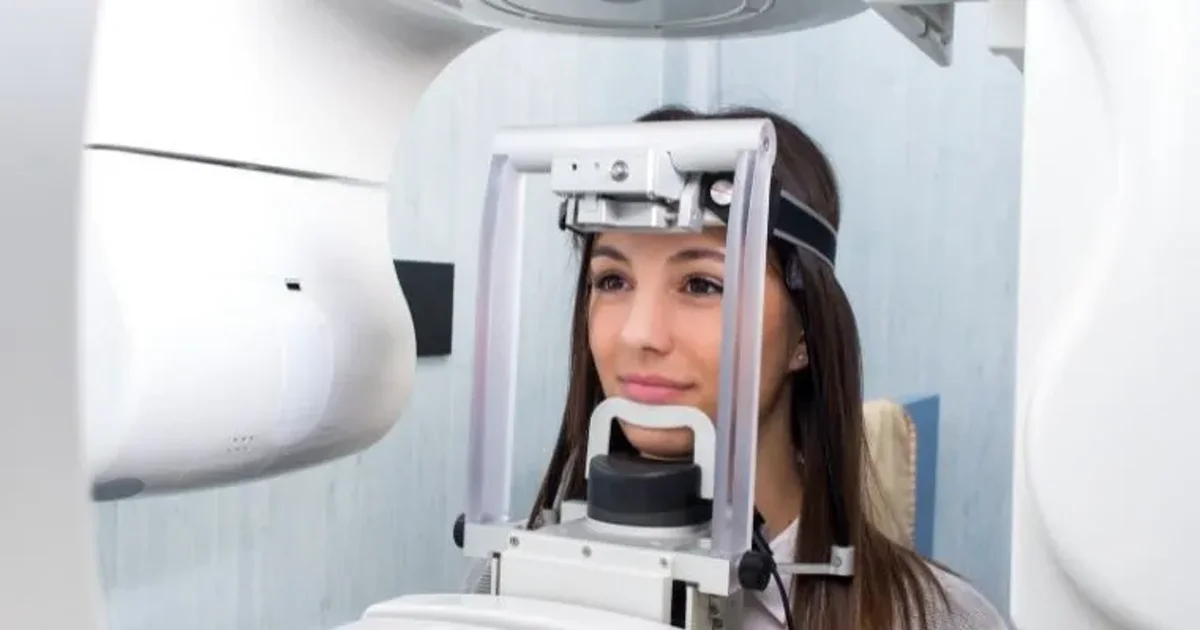
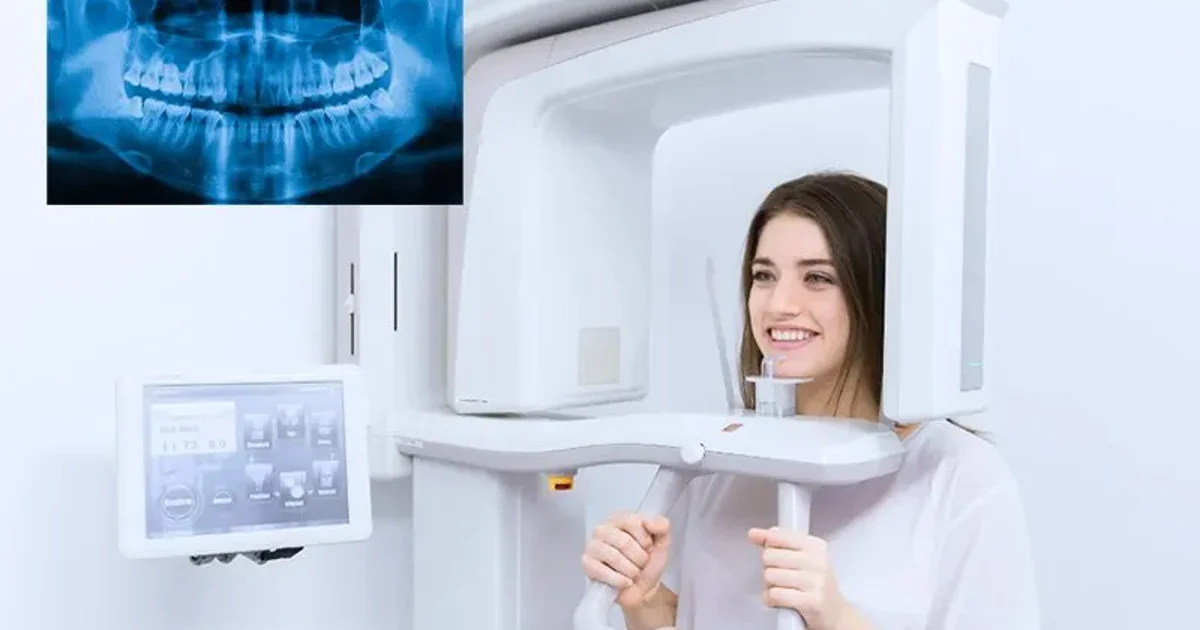
Un OPG, egalement appele orthopantomogramme ou radiographie panoramique, est une image unique grand angle qui capture les deux machoires, toutes les dents, les articulations temporo-mandibulaires (ATM) et des portions des sinus et de la cavite nasale en un seul cliche. L'appareil tourne autour de votre tete pendant que vous restez immobile en mordant sur une petite languette, et le processus complet prend environ 15 a 20 secondes.
Le resultat est une bande panoramique plate et bidimensionnelle qui donne aux dentistes un apercu general. Elle est excellente pour detecter les caries, evaluer les niveaux osseux dans les maladies parodontales, verifier la position des dents de sagesse, identifier les kystes ou grandes lesions et planifier le traitement orthodontique. Comme la dose de radiation est extremement faible, comparable a environ un a trois jours de radiation naturelle de fond, l'OPG est considere comme sur pour une utilisation de routine chez les adultes, les adolescents et meme les enfants lorsque cela est cliniquement justifie.
La principale limitation de l'OPG est qu'il s'agit d'une representation bidimensionnelle d'une structure tridimensionnelle. La superposition anatomique, la distorsion de grossissement (generalement 20-30 %) et l'impossibilite de mesurer la profondeur osseuse signifient que l'OPG seul ne peut pas repondre a toutes les questions cliniques. C'est la que le CBCT entre en jeu.
Qu'est-ce qu'un scanner CBCT ?
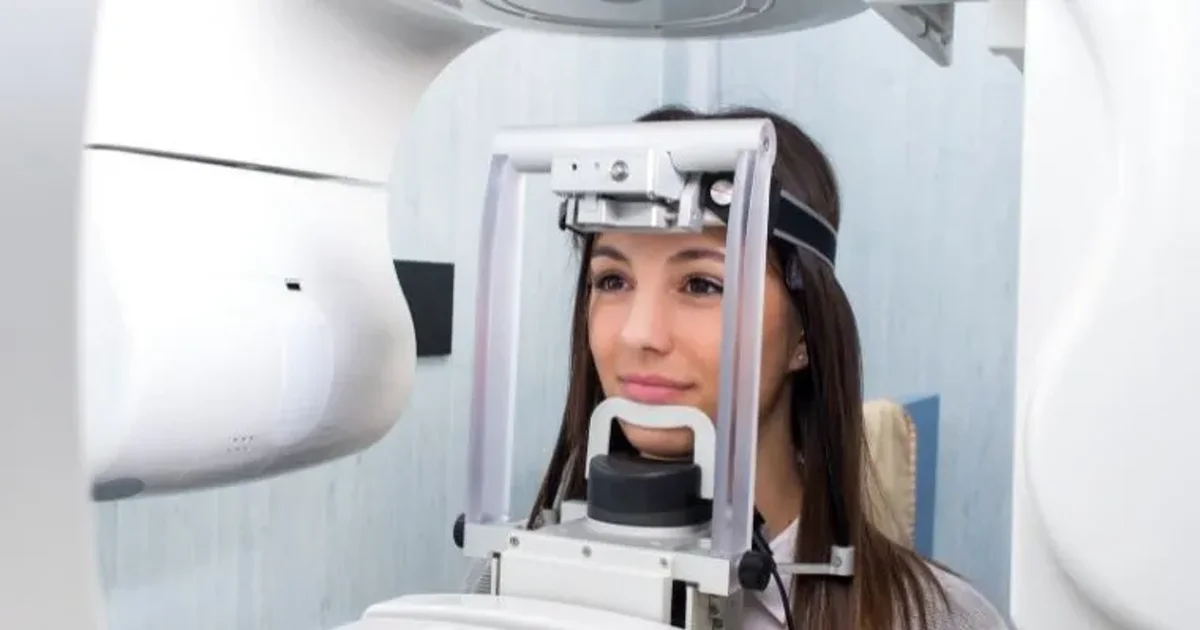
La tomodensitometrie a faisceau conique (CBCT) est une forme specialisee de scanner CT concue specifiquement pour la region de la tete et du cou. Au lieu du faisceau de rayons X en eventail utilise dans le CT medical, le CBCT utilise un faisceau conique qui tourne une fois autour de votre tete, capturant des centaines de projections individuelles. Le logiciel reconstruit ensuite ces projections en un volume tridimensionnel qui peut etre visualise dans n'importe quel plan : axial, coronal, sagittal, ou meme sous forme de rendu 3D des surfaces osseuses.
Le champ de vue peut etre ajuste. Un petit champ (4x4 cm ou 5x5 cm) ne capture que quelques dents a une resolution extremement elevee, ce qui est ideal pour le diagnostic endodontique. Un champ moyen couvre une machoire. Un grand champ capture les deux machoires, l'ATM, les sinus et des parties des voies aeriennes. Le temps de scan varie de 10 a 40 secondes selon l'appareil et le champ de vue selectionne.
Ce qui rend le CBCT puissant est sa capacite a eliminer le probleme de superposition qui limite l'OPG. Avec le CBCT, chaque structure peut etre visualisee de maniere isolee. Vous pouvez mesurer la largeur, la hauteur et la densite osseuse sur un site implantaire propose. Vous pouvez tracer le trajet exact du nerf alveolaire inferieur. Vous pouvez voir le nombre reel et la courbure des canaux radiculaires. Vous pouvez cartographier l'etendue d'une ligne de fracture a travers une racine. Cette clarte tridimensionnelle est la raison pour laquelle le CBCT est devenu indispensable pour la planification therapeutique en implantologie, chirurgie orale, endodontie et orthodontie.
Quand choisir l'OPG plutot que le CBCT
L'OPG reste le choix d'imagerie de premiere intention pour la majorite des situations cliniques dentaires. Voici les scenarios ou une radiographie panoramique est le bon examen et ou le CBCT serait inutile :
Depistage dentaire general
Lorsque vous consultez un nouveau dentiste ou venez pour un bilan de routine, un OPG fournit un apercu complet. Il revele les caries cachees entre les dents, montre l'etat des restaurations et couronnes precedentes, met en evidence toute perte osseuse due a une maladie des gencives et identifie les problemes en developpement comme les kystes ou les dents incluses. Pour cet objectif de depistage large, le detail supplementaire du CBCT ajoute du cout sans ajouter de valeur clinique.
Evaluation orthodontique
Les orthodontistes utilisent couramment l'OPG avec une teleradiographie laterale pour planifier le traitement par bagues ou gouttieres. La vue panoramique montre toutes les dents en developpement et ayant fait leur eruption, les longueurs radiculaires et les rapports maxillo-mandibulaires. A moins qu'il n'y ait une complication specifique comme une canine incluse dans une position difficile ou une resorption radiculaire suspectee necessitant une localisation 3D, l'OPG suffit pour la planification orthodontique.
Evaluation basique des dents de sagesse
La plupart des evaluations de dents de sagesse commencent et se terminent avec un OPG. L'image panoramique montre clairement la position de la dent de sagesse par rapport a la machoire, l'angle d'inclusion et s'il existe une pathologie associee comme un kyste dentifere. Le CBCT n'est necessaire que lorsque l'OPG suggere que les racines de la dent de sagesse sont en tres grande proximite avec le canal du nerf alveolaire inferieur - un point que nous discutons plus en detail dans la section CBCT.
Evaluation osseuse parodontale
Pour evaluer les schemas generalises de perte osseuse dans la maladie parodontale, l'OPG combine avec des radiographies periapicales donne aux dentistes toutes les informations dont ils ont besoin. La vue bidimensionnelle est adequate pour mesurer les niveaux osseux autour des dents et surveiller la progression de la maladie dans le temps.
Patients sensibles au cout et pediatriques
A 150-350 AED, l'OPG coute une fraction du CBCT. Pour les patients payant de leur poche ou pour les enfants ayant besoin d'imagerie pour la planification orthodontique, le cout inferieur et la dose de radiation significativement plus faible font de l'OPG le choix evident. En dentisterie pediatrique, le principe ALARA (As Low As Reasonably Achievable - aussi bas que raisonnablement realisable) recommande specifiquement d'utiliser la dose de radiation la plus faible qui repond a la question clinique.
"Pour la grande majorite des patients qui entrent dans un cabinet dentaire, un OPG est la bonne premiere etape. Il nous donne la vision d'ensemble. Si quelque chose sur l'OPG souleve une question a laquelle seule l'imagerie 3D peut repondre, alors nous passons au CBCT pour cette zone specifique. Cette approche par etapes permet aux patients d'economiser de l'argent et maintient l'exposition aux radiations au strict minimum." — Dr. Osama Elzamzami, Radiologue consultant
Quand choisir le CBCT plutot que l'OPG
Le CBCT devient le bon choix lorsque l'imagerie bidimensionnelle ne peut pas fournir les informations necessaires pour un traitement sur et precis. Voici les scenarios cliniques ou le CBCT est prefere ou meme essentiel :
Planification d'implants dentaires
C'est la raison la plus courante pour prescrire un CBCT en pratique dentaire. Avant de poser un implant, votre chirurgien a besoin de connaitre la largeur, la hauteur et la densite exactes de l'os disponible. Il doit voir ou passe le nerf alveolaire inferieur, a quelle distance se trouve le plancher du sinus maxillaire et s'il existe des pathologies cachees dans l'os. L'OPG montre la hauteur mais pas la largeur, et son grossissement de 20-30 % rend les mesures peu fiables. Le CBCT fournit des mesures reelles 1:1 dans les trois dimensions, permettant aux chirurgiens de selectionner la taille et la position correctes de l'implant avec precision. De nombreux systemes implantaires utilisent desormais les donnees CBCT pour creer des guides chirurgicaux, ameliorant encore la precision.
Extractions complexes de dents de sagesse et chirurgicales
Lorsqu'un OPG montre que les racines d'une dent de sagesse inferieure semblent chevaucher ou devier le canal du nerf alveolaire inferieur, un CBCT est recommande pour determiner la veritable relation spatiale. Le canal nerveux passe-t-il entre les racines ? Est-il du cote vestibulaire ou lingual des racines ? La racine touche-t-elle reellement la paroi du canal, ou y a-t-il une marge de securite ? Cette information affecte directement l'approche chirurgicale et permet au chirurgien de conseiller le patient sur le risque de lesion nerveuse avec une precision bien superieure. De meme, les dents profondement incluses, les dents surnumeraires ou les dents fusionnees a l'os (ankylose) sont mieux evaluees avec le CBCT.
Diagnostic endodontique et retraitement
Les endodontistes s'appuient de plus en plus sur le CBCT petit champ pour diagnostiquer la cause des douleurs persistantes apres un traitement canalaire, identifier les canaux manques, detecter les fractures radiculaires verticales invisibles sur les radiographies 2D et evaluer l'etendue reelle de la pathologie periapicale. Une radiographie periapicale comprime l'anatomie tridimensionnelle en deux dimensions, ce qui signifie qu'une lesion sur la racine vestibulaire peut etre cachee derriere une racine palatine saine. Le CBCT elimine cette superposition, montrant chaque racine et l'os environnant de maniere isolee.
Analyse detaillee de l'ATM
Alors que l'OPG peut montrer des modifications osseuses importantes de l'articulation temporo-mandibulaire, le CBCT fournit des vues tridimensionnelles detaillees du condyle, de la fosse et de l'eminence articulaire. Ceci est particulierement precieux pour evaluer l'erosion condylienne, les osteophytes, l'ankylose et les anomalies de developpement. Pour les patients souffrant de douleurs chroniques de l'ATM qui n'ont pas repondu au traitement conservateur, le CBCT peut reveler une pathologie osseuse que l'OPG ne peut tout simplement pas montrer.
Planification de chirurgie maxillo-faciale (orthognathique)
La chirurgie orthognathique pour corriger les decalages maxillo-mandibulaires necessite des mesures tridimensionnelles precises du crane, des machoires et des dents. Le CBCT grand champ fournit un modele 3D complet qui peut etre utilise pour la planification chirurgicale virtuelle, y compris la simulation des osteotomies et la prediction du profil facial final. Ce niveau de planification n'est tout simplement pas possible avec l'imagerie bidimensionnelle seule.
Pathologie suspectee et traumatisme
Lorsque l'OPG revele une lesion suspecte dans la machoire, le CBCT aide a determiner sa taille exacte, son etendue, sa relation avec les structures vitales et si elle a provoque une perforation corticale. Pour les traumatismes dentaires et faciaux, le CBCT peut detecter les fractures radiculaires, les fractures de l'os alveolaire et les deplacements dentaires que les radiographies periapicales et panoramiques peuvent manquer.
"J'ai eu une patiente venue pour une consultation implantaire de routine. Son OPG semblait simple - suffisamment d'os, pas de probleme evident. Mais quand nous avons fait le CBCT, nous avons decouvert que l'os etait extremement mince du cote de la joue, seulement 3 mm de large la ou nous avions besoin d'au moins 6 mm. Sans le CBCT, nous aurions pose l'implant et aurions presque certainement eu un echec. Le scanner 3D a change tout le plan de traitement. Nous avons d'abord fait une greffe osseuse, attendu quatre mois, puis pose l'implant avec succes. C'est le type d'information que seul le CBCT peut vous donner." — Dr. Osama Elzamzami, Radiologue consultant
Reservez votre scanner CBCT ou OPG au DCDC
Le DCDC a Dubai Healthcare City propose des scanners OPG et CBCT avec interpretation par un radiologue expert et resultats le jour meme. Notre equipe vous aidera a obtenir le bon examen pour vos besoins cliniques.
Pouvez-vous avoir besoin des deux, OPG et CBCT ?
Oui, et dans de nombreux parcours cliniques, c'est exactement ce qui se passe. Les deux examens sont complementaires, pas concurrents. Voici comment ils fonctionnent ensemble :
Etape 1 : OPG pour le depistage. Votre dentiste prescrit une radiographie panoramique comme premiere etape d'imagerie. Cela donne un apercu complet des deux machoires, de toutes les dents et des structures environnantes a un cout et une radiation minimaux. L'OPG peut reveler que tout est simple et qu'aucune imagerie supplementaire n'est necessaire.
Etape 2 : CBCT pour le detail cible. Si l'OPG souleve une question specifique, comme savoir si la racine d'une dent de sagesse touche le nerf, quelle quantite d'os est disponible pour un implant, ou quelle est l'etendue reelle d'une lesion, votre dentiste prescrit un CBCT concentre sur cette zone specifique. Un CBCT petit champ de la region d'interet maintient la dose de radiation basse tout en fournissant les reponses tridimensionnelles necessaires a la planification therapeutique.
Cette approche par etapes est la strategie la plus rentable pour les patients. Vous evitez de payer 500-1 500 AED pour un CBCT quand un OPG a 150-350 AED aurait repondu a la question. Et quand vous avez besoin du CBCT, l'OPG a deja restreint le champ, vous pouvez donc souvent utiliser un champ de vue plus petit (et moins couteux).
Il existe des cas ou le CBCT est prescrit directement sans OPG prealable, le plus souvent lorsque le besoin clinique est deja clair. Un patient venant specifiquement pour une planification implantaire, par exemple, peut aller directement au CBCT parce que le dentiste sait deja que des donnees 3D seront necessaires. De meme, une orientation par un endodontiste pour une fracture radiculaire verticale suspectee va directement a un CBCT petit champ.
Comparaison des radiations : OPG vs CBCT
La dose de radiation est l'une des preoccupations les plus courantes des patients, et a juste titre. Mettons les chiffres en perspective avec des comparaisons concretes :
| Type d'imagerie | Dose effective (µSv) | Equivalent en radiation naturelle de fond |
|---|---|---|
| Radiographie periapicale dentaire unique | 1-8 µSv | < 1 jour |
| OPG (panoramique) | 5-26 µSv | 1-3 jours |
| CBCT petit champ (region d'une machoire) | 30-80 µSv | 4-10 jours |
| CBCT champ moyen (une machoire complete) | 50-150 µSv | 6-19 jours |
| CBCT grand champ (deux machoires + sinus) | 100-200 µSv | 12-25 jours |
| Scanner medical de la tete | 1 000-2 000 µSv | 4-8 mois |
| Radiation naturelle annuelle (EAU) | ~2 400 µSv | 365 jours (reference) |
Comparaison des doses de radiation. Le CBCT delivre 2-10x plus de radiation que l'OPG, mais 5-20x moins que le scanner medical. Sources : SEDENTEXCT, Commission europeenne.
Plusieurs points importants ressortent de cette comparaison. Premierement, l'OPG et le CBCT sont tous deux bien dans la gamme des faibles doses. Ni l'un ni l'autre ne s'approche de l'exposition aux radiations d'un scanner medical de la tete, qui utilise un faisceau en eventail et delivre des doses considerablement plus elevees. Deuxiemement, la difference de radiation entre l'OPG et le CBCT petit champ est relativement modeste, a peu pres equivalente a quelques jours supplementaires d'exposition naturelle de fond. Troisiemement, le CBCT grand champ delivre significativement plus de radiation, c'est pourquoi il ne devrait etre utilise que lorsque la question clinique necessite veritablement une imagerie de l'ensemble de la region cranio-faciale.
Securite pour les enfants
Les enfants sont plus sensibles aux radiations que les adultes car leurs cellules se divisent plus rapidement et ils ont plus d'annees devant eux pour que des effets potentiels se manifestent. Pour cette raison, le CBCT chez les enfants ne devrait etre realise que lorsque l'information ne peut etre obtenue a partir d'alternatives a plus faible dose comme l'OPG ou les radiographies periapicales. Les recommandations SEDENTEXCT et l'Academie europeenne de radiologie dento-maxillo-faciale (EADMFR) recommandent toutes deux que le CBCT pour les patients pediatriques soit limite au plus petit champ de vue et aux reglages de dose les plus bas disponibles, et uniquement lorsqu'il y a une justification clinique claire.
Le principe ALARA
L'OPG et le CBCT adherent tous deux au principe ALARA : As Low As Reasonably Achievable (aussi bas que raisonnablement realisable). Cela signifie que le choix d'imagerie devrait toujours etre l'option a plus faible radiation pouvant repondre a la question clinique. Si un OPG peut fournir la reponse, le CBCT ne devrait pas etre utilise. Si un CBCT petit champ peut fournir la reponse, un CBCT grand champ ne devrait pas etre utilise. Au DCDC, nos radiologues examinent chaque prescription de CBCT pour s'assurer que l'examen est cliniquement justifie et que le champ de vue est adapte a la question clinique.
OPG et CBCT au DCDC Dubai Healthcare City
Au centre d'imagerie diagnostique du DCDC a Dubai Healthcare City, nous proposons des scanners OPG et CBCT avec un equipement de derniere generation et une interpretation par un radiologue expert. Voici ce a quoi vous pouvez vous attendre :
- OPG et CBCT disponibles sur place avec possibilite de consultation sans rendez-vous et sur rendez-vous
- Un radiologue certifie examine chaque examen et fournit un rapport detaille sous 24 heures
- Conseil du radiologue sur l'examen le plus adapte a votre situation clinique, pour que vous ne payiez jamais pour une imagerie inutile
- Images numeriques partagees electroniquement avec votre dentiste ou chirurgien referent pour une planification therapeutique fluide
- Donnees CBCT exportees en format DICOM compatible avec tous les principaux logiciels de planification implantaire
- Protocoles optimises pour la pediatrie avec des reglages de dose reduits pour les enfants
- Coordination d'assurance et assistance pour les autorisations prealables pour les examens couverts
Que vous ayez besoin d'un OPG rapide pour un bilan dentaire ou d'un CBCT detaille pour une planification implantaire ou chirurgicale, notre equipe s'assurera que vous recevez le bon examen avec les bons reglages, interprete par un radiologue experimente qui comprend le contexte clinique.
Besoin d'un examen dentaire ? Nous vous aiderons a choisir le bon
Apportez la prescription de votre dentiste et notre radiologue confirmera si vous avez besoin d'un OPG, d'un scanner CBCT, ou des deux. Nous acceptons les consultations sans rendez-vous et les rendez-vous le jour meme pour l'imagerie dentaire au DCDC a Dubai Healthcare City.
Appeler : +971 56 403 3528
Services associés au DCDC
Soins spécialisés et diagnostics avancés à Dubai Healthcare City
Frequently Asked Questions
Choisir le bon examen dentaire
L'OPG et le CBCT ne sont pas des concurrents. Ce sont des partenaires dans un parcours d'imagerie rationnel. L'OPG vous donne l'apercu panoramique dont chaque patient dentaire a besoin a un moment donne. Le CBCT vous donne la precision tridimensionnelle que des situations cliniques specifiques exigent. Choisir entre eux ne consiste pas a determiner lequel est "meilleur" dans l'abstrait. Il s'agit de savoir quel examen repond a la question specifique que votre dentiste pose.
Au DCDC a Dubai Healthcare City, nos radiologues travaillent avec votre dentiste referent pour s'assurer que vous recevez exactement l'imagerie dont vous avez besoin - ni plus ni moins. Si vous avez ete oriente pour un examen dentaire et n'etes pas sur de savoir si vous avez besoin d'un OPG, d'un CBCT ou des deux, notre equipe est la pour vous guider vers le bon choix.
Sources et references
Cet article a ete revise par notre equipe medicale et fait reference aux sources suivantes :
- SEDENTEXCT Project - Evidence-Based Guidelines on Cone Beam CT for Dental and Maxillofacial Radiology
- European Commission - Radiation Protection No. 172: Cone Beam CT for Dental and Maxillofacial Radiology
- American Dental Association - Dental Radiographic Examinations: Recommendations for Patient Selection and Limiting Radiation Exposure
- European Academy of DentoMaxilloFacial Radiology (EADMFR) - Position Paper on Use of CBCT in Dentistry
Le contenu medical de ce site est revise par des medecins agrees DHA. Voir notre politique editoriale pour plus d'informations.

Redige par
Dr. Osama Elzamzami
Radiologue consultant
FRCR, MD
Le Dr Osama Elzamzami est radiologue consultant au DCDC avec une vaste experience en imagerie dentaire et maxillo-faciale, y compris le CBCT, l'OPG et la radiologie diagnostique avancee. Il s'engage a s'assurer que chaque patient recoit l'imagerie la plus appropriee avec la dose de radiation la plus faible necessaire pour un diagnostic precis.
Articles connexes
Radiographie OPG : Guide complet de l'imagerie dentaire panoramique et des resultats
Scanner CBCT : Guide complet de l'imagerie dentaire 3D
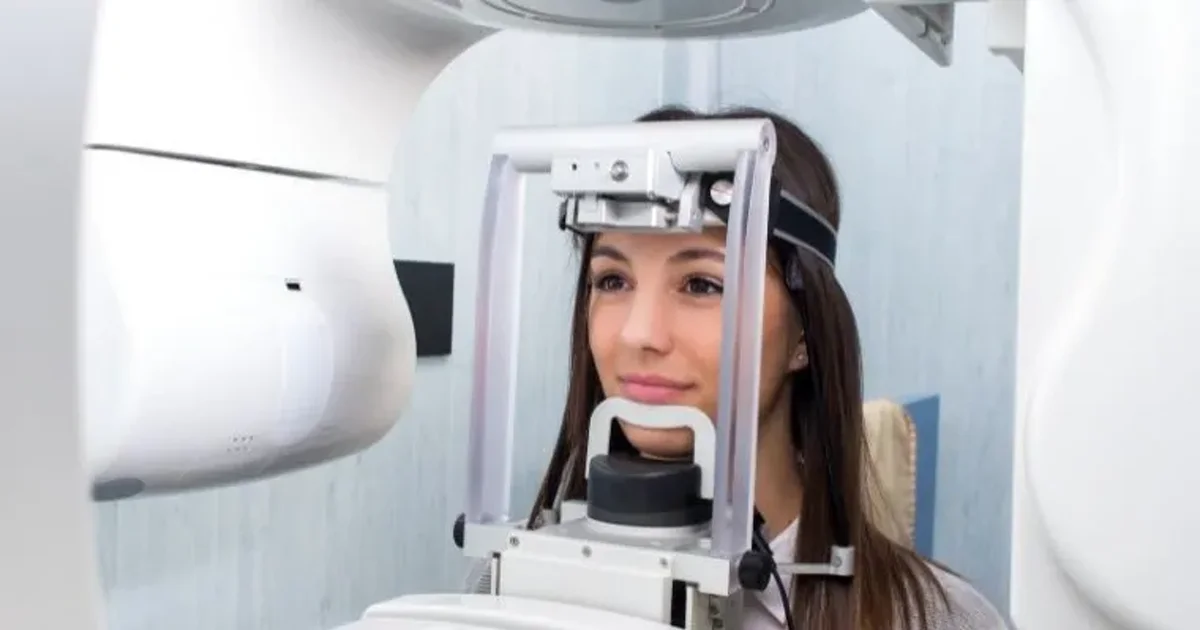
Cout du scanner CBCT a Dubai : Prix et couverture d'assurance
More in Diagnostic Imaging
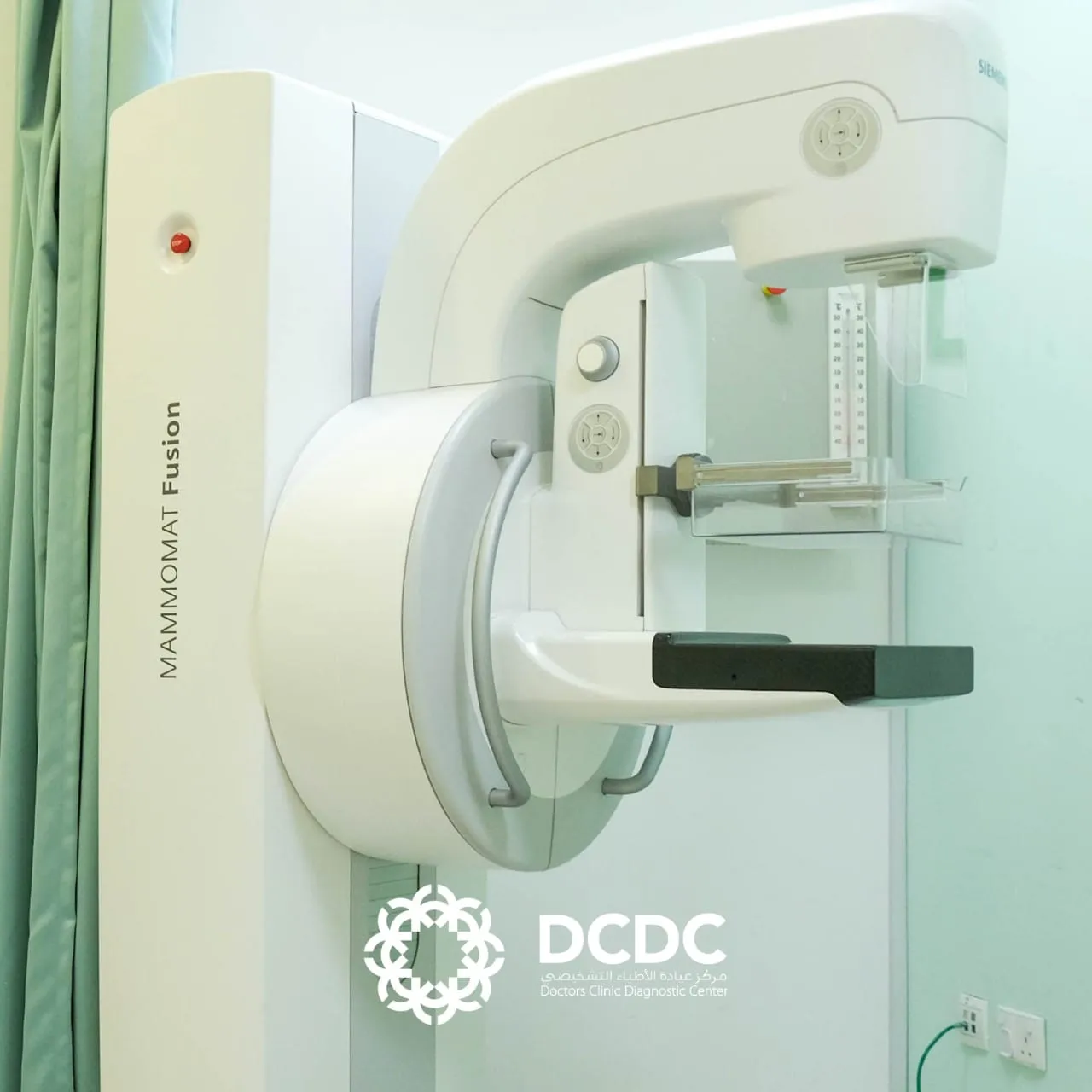
3D vs 2D Mammogram Dubai: Key Differences (2026)
Lire la suite
X-Ray at Home Dubai: Cost & Guide (2026)
Lire la suite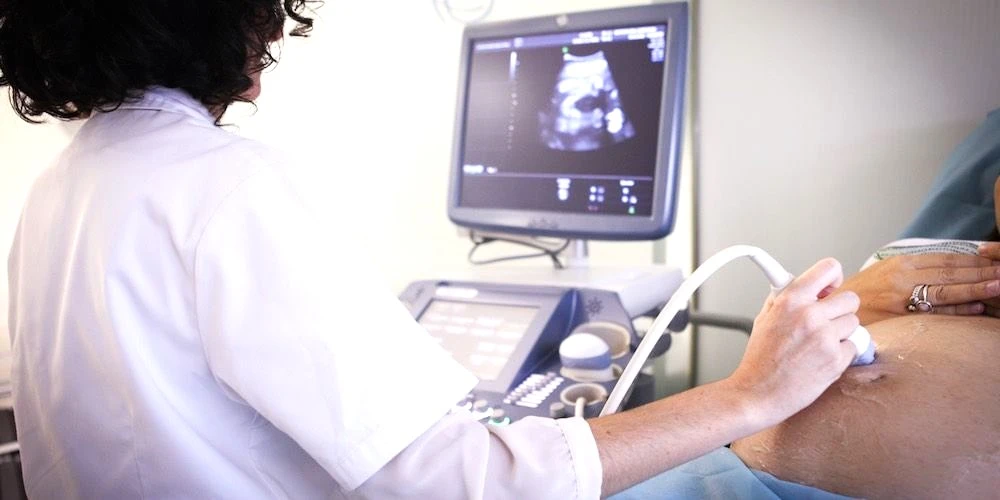
Ultrasound at Home Dubai: From AED 599 (2026)
Lire la suite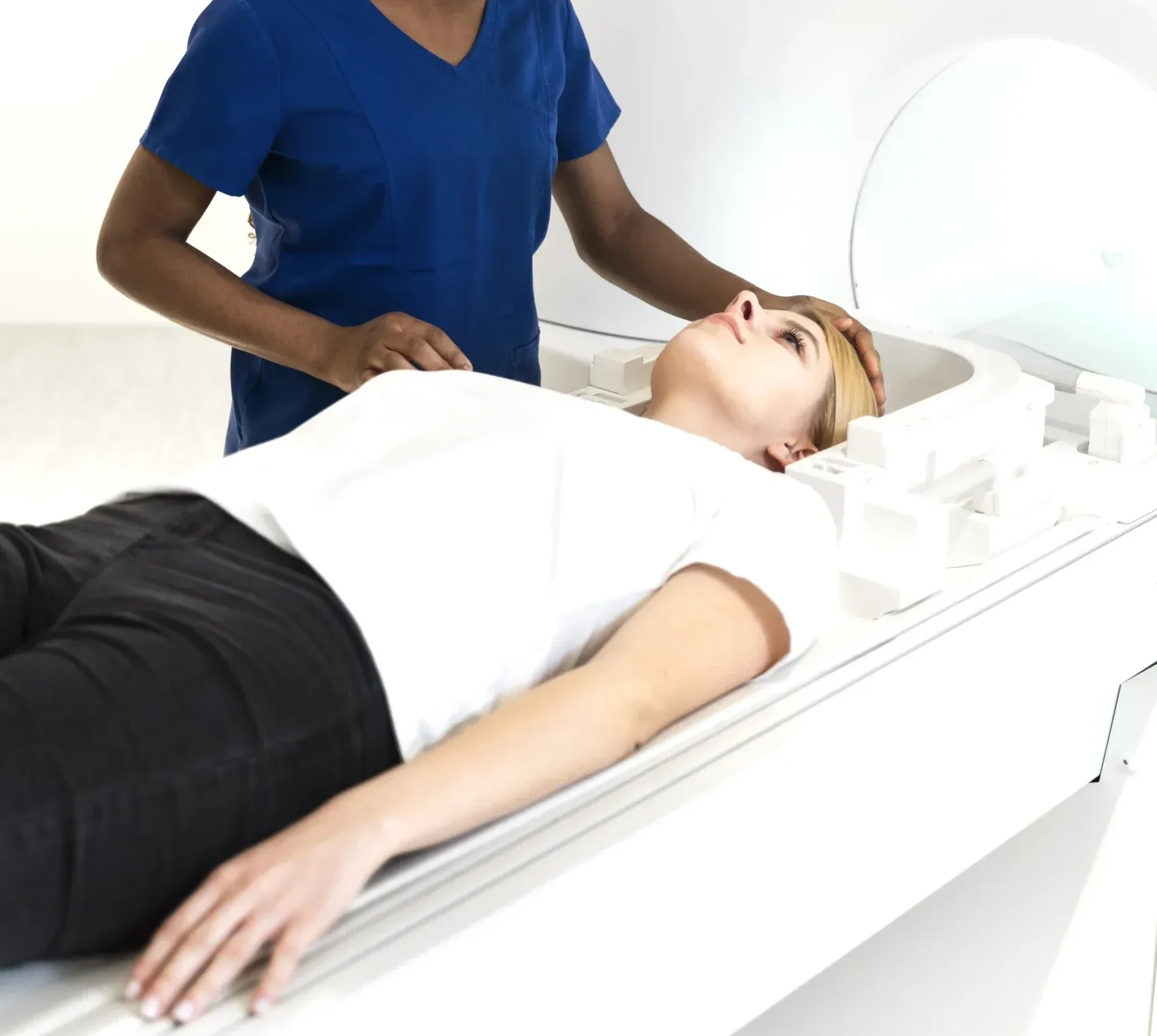
Neck MRI Dubai: What It Shows & Cost (2026)
Lire la suite
X-Ray Scan Dubai: Complete Guide (2026)
Lire la suite
MRI vs Ultrasound Dubai: Which Scan? (2026)
Lire la suite© 2026 Doctors Clinic Diagnostic Center (DCDC), Dubai Healthcare City. Originally published at https://doctorsclinicdubai.ae/blog/cbct-vs-opg-xray. All rights reserved. Unauthorized reproduction is prohibited.