
Mga Pangunahing Punto
- Dubai temperatures reach 45-50°C in summer, and the human body can lose 1-2 litres of sweat per hour in extreme heat — making dehydration one of the most common and dangerous summer health risks in the UAE
- Early dehydration signs include dark yellow urine, dry mouth, headache, dizziness, and fatigue — by the time you feel thirsty, you may already be 1-2% dehydrated, which is enough to impair cognitive function and physical performance
- Severe dehydration is a medical emergency marked by rapid heartbeat, confusion, fainting, no urination for 8+ hours, and sunken eyes — it requires immediate medical attention and possibly IV fluids
- Children and the elderly are 3-5 times more vulnerable to severe dehydration due to lower body water reserves, reduced thirst sensation, and less efficient temperature regulation
- Chronic dehydration increases kidney stone risk by 2-3 times and accelerates kidney damage — a simple electrolyte panel and kidney function test can detect early signs before permanent harm occurs
- At DCDC Dubai Healthcare City, dehydration evaluation includes a GP consultation from AED 250, electrolyte panel from AED 150, and kidney function tests from AED 200 — with on-site lab results available same day
Every summer, UAE emergency departments see a 30-40% surge in heat-related visits — and dehydration is the leading cause. In a city where temperatures regularly exceed 45°C and outdoor humidity can reach 90%, your body loses fluids far faster than most people realise. Whether you are an outdoor worker, a weekend athlete, a parent worried about your child, or simply someone who forgets to drink enough water in air-conditioned offices, understanding dehydration could save your life or prevent a costly emergency visit. This guide covers everything: the warning signs from mild to life-threatening, which blood tests detect dehydration, how we treat it at every stage, and practical strategies to stay safe in Dubai's extreme climate. If you are experiencing symptoms now, our General Medicine Consultation service at DCDC offers same-day walk-in appointments in Dubai Healthcare City.
From recognising the earliest symptoms to understanding when dehydration becomes dangerous, which diagnostic tests reveal the full picture, and how to protect yourself and your family through Dubai's hottest months — this is the most comprehensive dehydration guide for UAE residents and visitors. Reviewed by Dr. Hadeel Elnur, General Practitioner at DCDC Dubai Healthcare City.
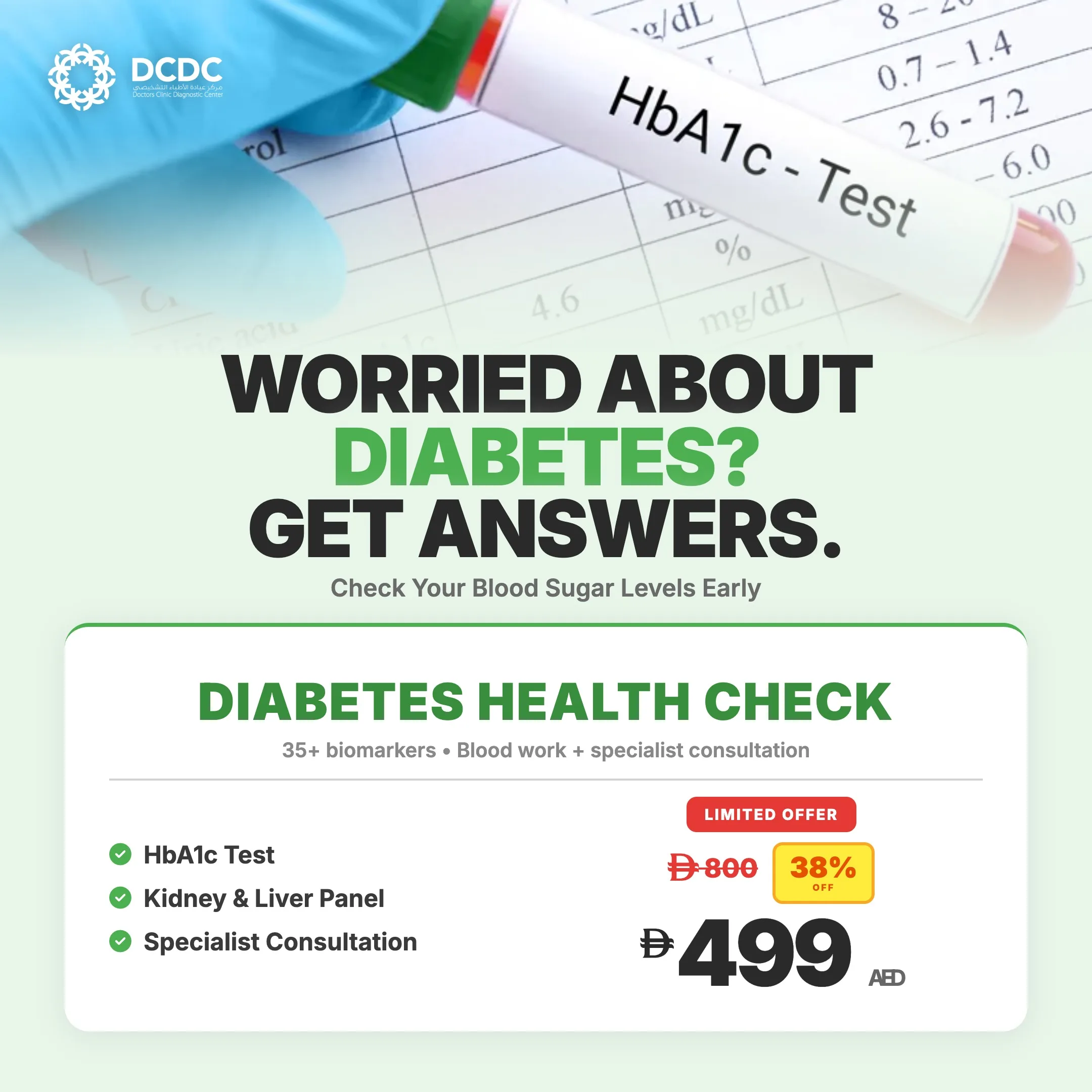
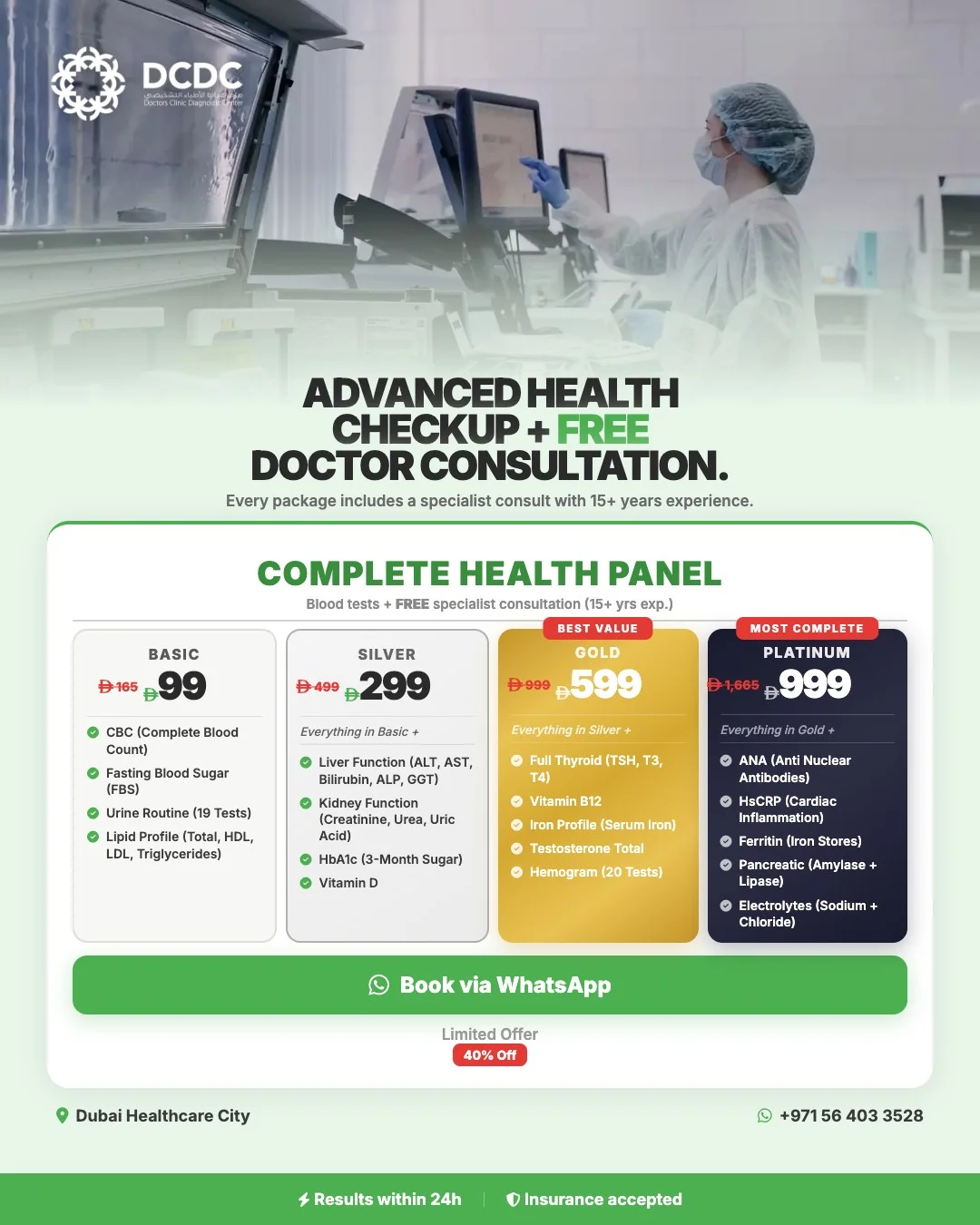
Health Screening Packages
Save with our bundled screening packages — specialist consultation included




Dehydration in Dubai: Why It's More Dangerous Than You Think
Dehydration occurs when your body loses more fluid than it takes in, disrupting the delicate balance of minerals and electrolytes that keep every organ functioning. In temperate climates, mild dehydration is an inconvenience. In Dubai's summer, it can become a medical emergency within hours.
What makes Dubai uniquely dangerous is the combination of extreme heat and high humidity. When temperatures reach 45-50°C and humidity climbs above 70%, your body's primary cooling mechanism — sweating — becomes less effective. Sweat cannot evaporate efficiently in humid air, so your core temperature rises even as you lose massive amounts of fluid. The result: you dehydrate faster while your body overheats simultaneously.
Research shows that up to 75% of people are chronically mildly dehydrated without knowing it. In Dubai, this baseline dehydration is compounded by summer heat, making residents vulnerable to rapid escalation from mild to severe dehydration. The transition from "I have a headache" to "I need emergency care" can happen in as little as 2-3 hours of outdoor exposure without adequate fluid intake.
Understanding the signs, knowing when to seek medical help, and having a prevention plan are not optional in this climate — they are essential for every Dubai resident, especially from May through October.
What Causes Dehydration in Dubai's Climate?
Dehydration in Dubai is driven by a combination of environmental, behavioural, and physiological factors that are often underestimated:
Environmental Factors
- Extreme ambient temperature: Dubai summer temperatures of 45-50°C force your body into overdrive to maintain a core temperature of 37°C. Your body can lose 1-2 litres of sweat per hour in these conditions — far more than most people replace
- High humidity: Coastal humidity in Dubai often exceeds 70-90% during summer mornings and evenings. High humidity prevents sweat from evaporating, reducing cooling efficiency while fluid loss continues
- UV radiation: Intense sun exposure accelerates fluid loss through the skin even without visible sweating, and sunburn itself increases fluid requirements
- Air conditioning paradox: Moving between extreme outdoor heat and heavily air-conditioned indoor spaces (often set to 18-20°C) stresses the body and masks thirst signals. Air conditioning also reduces ambient humidity, causing insensible fluid loss through breathing and skin
Behavioural Factors
- Inadequate fluid intake: Many people simply do not drink enough water, especially during Ramadan fasting, busy work days, or when relying on coffee and tea as primary beverages
- Outdoor exercise in heat: Running, cycling, or playing sports during summer months — even in early morning — can cause rapid fluid loss that outpaces intake
- Alcohol consumption: Alcohol is a diuretic that increases urine output and accelerates dehydration. A night out followed by summer heat is a high-risk combination
- Caffeine overconsumption: While moderate caffeine has minimal diuretic effect, consuming more than 3-4 cups of coffee daily without compensating with water contributes to fluid deficit
- Ignoring early symptoms: Many people dismiss headaches, fatigue, and dark urine as minor issues rather than recognising them as dehydration warning signs
Medical and Physiological Factors
- Medications: Diuretics (water pills), blood pressure medications, antihistamines, and some psychiatric medications increase fluid loss
- Chronic conditions: Diabetes (especially uncontrolled), kidney disease, and gastrointestinal disorders all increase dehydration risk
- Acute illness: Vomiting, diarrhoea, and fever — common in Dubai due to food-related illnesses — can cause dangerous fluid loss rapidly
- Pregnancy: Pregnant women have higher fluid requirements and are more susceptible to dehydration, which can trigger preterm contractions
Signs and Symptoms of Dehydration: Mild to Severe
Dehydration progresses through distinct stages. Recognising the early signs allows you to intervene before the condition becomes dangerous. Here is a comprehensive breakdown by severity:
Mild Dehydration (1-3% Body Water Loss)
- Thirst: The earliest signal, though by the time you feel thirsty, dehydration has already begun
- Dark yellow urine: Normal urine is pale straw-coloured. Dark yellow or amber urine is the most reliable early indicator
- Dry mouth and lips: Reduced saliva production causes a sticky or dry feeling
- Headache: Often the first noticeable symptom — dehydration headaches are typically dull, throbbing, and worsen with movement
- Fatigue and irritability: Even 2% body water loss impairs cognitive function, mood, and concentration
- Reduced urine frequency: Urinating fewer than 4 times per day suggests insufficient fluid intake
Moderate Dehydration (3-6% Body Water Loss)
- Very dry mouth and absence of tears: Mucous membranes become visibly dry
- Dizziness and lightheadedness: Especially when standing up quickly (orthostatic hypotension due to reduced blood volume)
- Muscle cramps: Electrolyte imbalance causes painful cramping, particularly in the legs and abdomen
- Rapid heartbeat: The heart beats faster to compensate for reduced blood volume
- Decreased skin elasticity: When pinched, skin on the back of the hand takes longer than 2 seconds to return to normal (poor skin turgor)
- Reduced urine output: Urine becomes very dark and scant
- Nausea: Dehydration affects the gastrointestinal system, causing nausea that paradoxically makes it harder to drink fluids
Severe Dehydration (>6% Body Water Loss) — Medical Emergency
- Confusion, delirium, or unconsciousness: Brain function deteriorates significantly with severe fluid loss
- No urination for 8+ hours: The kidneys shut down urine production to conserve remaining fluid
- Sunken eyes: Visible hollowing around the eyes due to fluid loss from surrounding tissues
- Very rapid heartbeat and low blood pressure: Cardiovascular system under severe stress
- Rapid breathing: The body attempts to compensate for metabolic acidosis
- Cold, clammy, or mottled skin: Blood is redirected from the skin to vital organs
- Fainting or inability to stand: Dangerously low blood pressure and blood volume
- Seizures: Severe electrolyte imbalance (particularly sodium) can trigger seizures
If you or someone near you shows signs of severe dehydration — confusion, fainting, no urination, rapid heartbeat — call 998 (UAE ambulance) immediately. Severe dehydration can be fatal without prompt medical intervention. For a comprehensive overview of the blood tests used to assess dehydration and overall health, see our blood test guide for Dubai.
Dehydration in Children and the Elderly: Special Risks in Dubai
Children under 5 and adults over 65 are 3-5 times more vulnerable to severe dehydration than healthy adults. In Dubai's extreme climate, these populations require extra vigilance.
Dehydration in Children
Children are at higher risk because they have a higher body surface area relative to body mass, meaning they absorb heat faster and lose fluids more quickly through their skin. They also rely on adults to provide fluids and may not recognise or communicate thirst effectively.
- Warning signs in infants: Fewer than 6 wet nappies in 24 hours, no tears when crying, sunken fontanelle (soft spot on head), unusual drowsiness, dry mouth
- Warning signs in toddlers/children: Dark urine, dry lips and tongue, no tears when crying, unusual tiredness or irritability, dizziness, cool hands and feet
- Gastroenteritis risk: Vomiting and diarrhoea are common causes of paediatric dehydration in Dubai. Food-related illness combined with summer heat can cause rapid, dangerous fluid loss
- School and outdoor play: Children playing outdoors during summer, even for short periods, can become dehydrated rapidly. Schools should enforce regular water breaks
- Treatment: Oral rehydration solutions (ORS) are the first-line treatment. Small, frequent sips are more effective than large amounts at once. Seek medical attention if a child cannot keep fluids down or shows signs of moderate-to-severe dehydration
Dehydration in the Elderly
Older adults face a unique combination of risk factors: diminished thirst sensation (the brain's thirst centre becomes less sensitive with age), reduced kidney function (kidneys are less efficient at concentrating urine), medication effects (many common medications for hypertension and heart disease are diuretics), and reduced body water reserves (the percentage of body weight that is water decreases from ~60% in young adults to ~50% or less in the elderly).
- Warning signs in older adults: Confusion or increased disorientation (often mistaken for dementia progression), constipation, urinary tract infections, dizziness and falls, low blood pressure, concentrated urine
- Medication review: If an elderly person experiences recurrent dehydration, their medications should be reviewed — diuretics, laxatives, and some blood pressure medications may need adjustment during summer months
- Prevention strategy: Set scheduled drinking times rather than relying on thirst. Keep water visible and accessible. Carers should monitor fluid intake and urine colour
Heat-Related Illnesses: Dehydration, Heat Exhaustion, and Heatstroke
Dehydration is closely linked to other heat-related illnesses that form a continuum of severity. Understanding the differences is critical because the treatment escalates significantly at each stage:
| Condition | Core Temperature | Key Symptoms | Treatment |
|---|---|---|---|
| Heat Cramps | Normal | Painful muscle spasms (legs, abdomen), heavy sweating | Rest, cool environment, electrolyte fluids, gentle stretching |
| Heat Exhaustion | Up to 40°C | Heavy sweating, weakness, nausea, dizziness, headache, rapid pulse | Move to cool area, remove excess clothing, cool compresses, oral fluids, seek medical attention if no improvement in 30 min |
| Heatstroke | Above 40°C | Confusion, loss of consciousness, hot dry skin (sweating may stop), seizures, rapid breathing | Call 998 IMMEDIATELY. This is life-threatening. Cool the person rapidly (ice packs to neck, armpits, groin). Do not give fluids if unconscious |
Heat-related illness severity spectrum. Dehydration accelerates progression through all stages.
In Dubai, the progression from heat exhaustion to heatstroke can occur rapidly — sometimes within 10-15 minutes. Outdoor workers, athletes, and anyone exposed to direct sun for extended periods during summer months are at highest risk. If someone stops sweating in extreme heat, this is a red flag for heatstroke — the body's cooling system has failed.
How Dehydration Affects Your Kidneys and Heart
Dehydration is not just about feeling thirsty. Chronic or repeated dehydration causes measurable damage to vital organs, particularly the kidneys and cardiovascular system.
Kidneys
Your kidneys filter approximately 180 litres of blood daily, producing 1-2 litres of urine. When you are dehydrated, the kidneys receive less blood flow and must work harder to concentrate urine and maintain electrolyte balance. Over time, this stress causes real damage:
- Kidney stones: Dehydration increases kidney stone risk by 2-3 times. Concentrated urine allows minerals (calcium, oxalate, uric acid) to crystallise into stones. Dubai has one of the highest kidney stone rates globally, directly linked to the hot climate
- Urinary tract infections: Concentrated, infrequent urine allows bacteria to thrive in the urinary tract
- Acute kidney injury (AKI): Severe dehydration can cause sudden kidney failure. Blood tests show rapidly rising creatinine and BUN levels
- Chronic kidney disease progression: Repeated episodes of dehydration accelerate kidney damage in people with existing kidney disease, diabetes, or hypertension
For a deeper look at how hydration protects your kidneys and what warning signs to watch for, read our kidney health prevention guide.
Heart and Cardiovascular System
- Increased heart rate: With less blood volume, the heart must beat faster to deliver oxygen to tissues — a sustained elevated heart rate strains the cardiovascular system
- Low blood pressure: Dehydration reduces blood volume, causing drops in blood pressure that lead to dizziness, fainting, and in severe cases, shock
- Blood clot risk: Dehydrated blood is thicker and more viscous, increasing the risk of blood clots, deep vein thrombosis (DVT), and potentially stroke
- Electrolyte imbalance: Dehydration disrupts sodium, potassium, and magnesium levels — all essential for normal heart rhythm. Severe imbalances can cause dangerous arrhythmias
Dehydration Diagnosis: Blood Tests and Clinical Assessment
While mild dehydration can be identified by symptoms alone, moderate-to-severe dehydration requires laboratory confirmation to assess the full extent of fluid and electrolyte imbalance and detect any organ damage. Here are the key diagnostic tests:
Essential Blood Tests for Dehydration
- Electrolyte panel (sodium, potassium, chloride, bicarbonate): The most important test for dehydration. Sodium levels indicate the type of dehydration. Potassium imbalance can cause dangerous heart rhythm changes. Bicarbonate reveals acid-base disturbances
- Kidney function tests (BUN, creatinine, eGFR): Elevated BUN and creatinine indicate the kidneys are struggling. The BUN-to-creatinine ratio helps distinguish dehydration (pre-renal) from intrinsic kidney disease. eGFR estimates overall kidney filtering capacity
- Complete blood count (CBC): Haemoglobin and haematocrit values rise with dehydration (the blood becomes more concentrated). This is called haemoconcentration and is a classic laboratory sign of dehydration
- Serum osmolality: Measures the concentration of dissolved particles in the blood. Elevated osmolality (>295 mOsm/kg) confirms dehydration at a biochemical level
- Blood glucose: Dehydration can cause elevated blood sugar, especially in diabetic patients. Diabetic ketoacidosis (DKA) combines severe dehydration with dangerously high blood sugar
Urinalysis
- Urine specific gravity: Values above 1.025 indicate concentrated urine consistent with dehydration. This is a quick, non-invasive marker
- Urine colour: While visible to the naked eye, laboratory confirmation provides an objective measurement
- Urine electrolytes: Help determine whether the kidneys are appropriately conserving sodium and water
Clinical Assessment
Beyond laboratory tests, your doctor will perform a physical examination including: vital signs (blood pressure lying down and standing, heart rate, temperature), skin turgor test (pinching the skin to check elasticity), capillary refill time (pressing the fingernail and timing how quickly colour returns), mucous membrane assessment (checking moisture in the mouth), and weight comparison (if a recent baseline weight is available, weight loss indicates fluid loss).
Dehydration Treatment: From Oral Rehydration to Medical Intervention
Treatment depends entirely on the severity of dehydration. Here is a step-by-step guide from self-care to hospital-level intervention:
Mild Dehydration: Self-Care at Home
- Drink water steadily: Small, frequent sips (200-250 ml every 15-20 minutes) are better than gulping large amounts at once
- Oral rehydration solutions (ORS): Available at any Dubai pharmacy. ORS contains the precise balance of sodium, potassium, and glucose to optimise fluid absorption. More effective than water alone for rehydration
- Avoid caffeine and alcohol: Both increase fluid loss and worsen dehydration
- Rest in a cool environment: Move indoors to air conditioning. Reduce physical activity until fully rehydrated
- Eat water-rich foods: Watermelon, cucumber, oranges, and yoghurt provide both fluids and electrolytes
- Monitor urine colour: Continue drinking until urine returns to pale straw colour
Moderate Dehydration: When to See a Doctor
Seek medical attention if: you cannot keep fluids down due to vomiting, symptoms persist despite drinking fluids for 2-3 hours, you have a chronic condition (diabetes, kidney disease, heart disease), you are pregnant, or a child or elderly person shows signs of dehydration. A doctor can assess whether oral rehydration is sufficient or whether intravenous fluids are needed.
Severe Dehydration: Emergency Medical Treatment
- Intravenous (IV) fluid resuscitation: Normal saline or Ringer's lactate administered directly into the bloodstream for rapid rehydration
- Electrolyte correction: Specific electrolyte imbalances (sodium, potassium) are corrected carefully — too-rapid correction can itself be dangerous
- Monitoring: Continuous monitoring of heart rate, blood pressure, urine output, and repeat blood tests to track recovery
- Treatment of underlying cause: If dehydration was caused by vomiting, diarrhoea, or another condition, that cause must also be treated
- Hospital admission: Severe cases, especially in children, elderly, or patients with comorbidities, may require 24-48 hours of inpatient care
Experiencing Dehydration Symptoms?
Walk in or book a same-day GP appointment at DCDC Dubai Healthcare City. On-site blood tests with same-day results, electrolyte assessment, and personalised treatment. Book a consultation or WhatsApp us now.
Cost of Dehydration Treatment in Dubai (2026)
Treating dehydration early at a clinic is significantly less expensive than an emergency room visit. Here is a breakdown of costs at DCDC compared to typical Dubai market rates:
| Service | DCDC Price | Dubai Market Range |
|---|---|---|
| GP Consultation | From AED 250 | AED 300–600 |
| Electrolyte Panel | From AED 150 | AED 150–400 |
| Kidney Function Tests (BUN, Creatinine, eGFR) | From AED 200 | AED 200–500 |
| Complete Blood Count (CBC) | From AED 100 | AED 100–300 |
| Urinalysis | From AED 80 | AED 80–200 |
| Comprehensive Blood Panel | From AED 399 | AED 400–1,000 |
Prices are indicative and may vary based on insurance coverage. DCDC operates under DHA-regulated pricing at Dubai Healthcare City. Prices valid as of May 2026.
DCDC accepts 20+ insurance partners, and self-pay patients benefit from DHA-regulated pricing with no hidden fees. An early GP visit with basic blood work (approximately AED 400-650 total) can prevent an emergency room visit that could cost AED 2,000-5,000 or more.
What to Expect at DCDC for Dehydration Evaluation
If you visit DCDC Dubai Healthcare City with dehydration symptoms, here is the step-by-step patient journey:
Step 1: Walk-In or Same-Day Appointment
DCDC offers walk-in availability and same-day appointments for acute symptoms like dehydration. No need to wait days for an opening — you can be seen the same day you call or walk in. The clinic is open with extended hours until 10 PM, making it accessible even after work. Free parking is available on-site.
Step 2: Vitals Check
A nurse will immediately check your blood pressure (lying and standing to assess orthostatic changes), heart rate, temperature, and oxygen saturation. These vitals provide the first objective indicators of dehydration severity. Weight is recorded if available for comparison.
Step 3: Doctor Consultation
Dr. Hadeel Elnur or another GP will take a detailed history: how long symptoms have been present, fluid intake, recent activity, medication use, and any underlying conditions. A focused physical examination includes skin turgor assessment, mucous membrane check, and capillary refill time.
Step 4: Diagnostic Tests
Based on clinical assessment, your doctor may order: electrolyte panel (sodium, potassium, chloride, bicarbonate), kidney function tests (BUN, creatinine, eGFR), complete blood count (CBC), and urinalysis. All samples are collected on-site at DCDC's in-house laboratory. Routine blood test results are available same day, so your doctor can review results and discuss next steps during the same visit or shortly after.
Step 5: Treatment Plan
Depending on your results, treatment may include: oral rehydration therapy with specific fluid and electrolyte recommendations, medication if needed (anti-nausea medication to enable fluid intake, electrolyte supplements), and a follow-up plan. For patients with abnormal kidney function or electrolytes, a follow-up visit may be recommended within 48-72 hours to confirm improvement.
Dr. Hadeel's Clinical Perspective
"Every summer, I see a significant increase in patients presenting with dehydration — from mild cases of headache and fatigue to more concerning presentations with electrolyte imbalances and early kidney stress. What concerns me most is that many patients have been mildly dehydrated for weeks before a heat exposure event tips them into symptoms. My approach is always to check the full picture: electrolytes, kidney function, and hydration markers. I want to make sure we are not just treating the immediate symptoms but identifying any underlying damage and creating a prevention plan for the rest of summer. I always tell my patients: in Dubai, water is not optional — it is medicine."
DCDC is a MOHAP-licensed facility in Dubai Healthcare City (DHCC), rated 4.8/5 on Google with 98% patient satisfaction. Our on-site laboratory, extended hours (until 10 PM), and 20+ insurance partners make dehydration evaluation accessible and affordable. For more on how vitamin deficiencies interact with dehydration and summer health, see our vitamin D deficiency guide.
Preventing Dehydration in Dubai: Daily Hydration Guide
Prevention is always better — and cheaper — than treatment. Here is an evidence-based daily hydration plan tailored for Dubai's climate:
How Much Water Do You Actually Need?
The generic "8 glasses a day" advice is insufficient for Dubai residents during summer. A more accurate guide:
- Sedentary indoor workers: 2.5-3 litres per day (approximately 10-12 glasses)
- Active individuals or outdoor workers: 3.5-5 litres per day, more during exercise
- Children (4-8 years): 1.2-1.5 litres per day
- Children (9-13 years): 1.5-2.2 litres per day
- Pregnant women: 2.5-3 litres per day minimum
- Breastfeeding women: 3-3.5 litres per day
- Elderly: 2-2.5 litres per day, on a schedule rather than relying on thirst
Practical Hydration Strategies for Dubai
- Start your day with water: Drink 500 ml of water within the first 30 minutes of waking, before coffee or breakfast
- Carry a water bottle everywhere: Keep a reusable bottle (1 litre minimum) with you at all times. Set phone reminders to drink if you tend to forget
- Pre-hydrate before going outdoors: Drink 500 ml 30 minutes before any outdoor activity. Continue sipping every 15-20 minutes while outside
- Electrolyte supplementation: During heavy sweating, plain water is not enough. Add electrolyte tablets or sachets (available at Dubai pharmacies) to replace sodium, potassium, and magnesium lost through sweat
- Eat hydrating foods daily: Watermelon (92% water), cucumber (96% water), oranges, strawberries, yoghurt, soups, and salads contribute significantly to total fluid intake
- Limit dehydrating beverages: For every cup of coffee, drink an equal amount of water. Minimise alcohol, especially during hot months
- Monitor your urine: Check urine colour every time you use the bathroom. Pale straw = well hydrated. Dark yellow = drink more. Brown or no urine = seek medical attention
- Adjust for Ramadan: During fasting hours, hydrate intensively between iftar and suhoor. Avoid salty foods that increase thirst. Choose water and hydrating foods over sugary drinks
- Time outdoor activities wisely: Avoid outdoor exercise between 10 AM and 4 PM during summer months. Early morning (before 7 AM) or late evening (after 8 PM) are safer alternatives
- Dress appropriately: Light-coloured, loose-fitting, breathable clothing reduces heat absorption and allows sweat to evaporate more efficiently
When Plain Water Is Not Enough
In situations involving heavy sweating (outdoor work, exercise, prolonged sun exposure), plain water alone can actually be harmful if consumed in extreme quantities without electrolytes. This condition, called hyponatraemia (low blood sodium), occurs when excessive water intake dilutes blood sodium levels. Symptoms mimic dehydration — confusion, nausea, headache — but the treatment is opposite. This is why electrolyte supplementation during heavy sweating is not optional but essential.
Protect Your Health This Summer
Book a summer health checkup at DCDC Dubai Healthcare City. Comprehensive blood panel including electrolytes, kidney function, and vitamin levels from AED 399. Rated 4.8/5 on Google with 98% patient satisfaction.
Walk in or call to book — open until 10 PM with free parking
Kaugnay na Serbisyo sa DCDC
Dalubhasang pangangalaga at advanced diagnostics sa Dubai Healthcare City
Frequently Asked Questions
Stay Hydrated, Stay Safe in Dubai's Summer
Dehydration is one of the most preventable yet potentially dangerous health conditions in Dubai. With summer temperatures reaching 45-50°C and humidity that can exceed 90%, every resident needs a conscious hydration strategy — not just during outdoor activities, but throughout the entire day. The symptoms start quietly: a headache, dark urine, fatigue. But they can escalate to a medical emergency within hours.
Prevention costs nothing — water, electrolytes, and awareness. But if symptoms develop or persist, early medical evaluation is far safer and more affordable than waiting for an emergency. At DCDC Dubai Healthcare City, our team provides same-day dehydration assessment with on-site blood testing, electrolyte analysis, and personalised treatment plans. Walk in, WhatsApp us, or call to book — we are open until 10 PM with free parking. Your health in Dubai's summer starts with one simple habit: drink before you are thirsty.
Mga Sanggunian at Reperensya
Ang artikulong ito ay sinuri ng aming medikal na team at tumutukoy sa mga sumusunod na sanggunian:
- World Health Organization — Drinking-Water Quality and Health
- Mayo Clinic — Dehydration: Symptoms and Causes
- NHS — Dehydration Overview
- Cleveland Clinic — Dehydration
- UAE Ministry of Health and Prevention — Summer Health Advisory
- American Academy of Pediatrics — Preventing Dehydration in Children
Ang medikal na nilalaman sa site na ito ay sinusuri ng mga DHA-licensed na manggagamot. Tingnan ang aming patakarang editorial para sa higit pang impormasyon.

Isinulat ni
Dr. Hadeel Elnur
General Practice
MD, General Practice
Dr. Hadeel Elnur is a General Practitioner at Doctors Clinic Diagnostic Center (DCDC) in Dubai Healthcare City.
Related Articles
Blood Test Dubai: Types, Cost & Fasting Guide (2026)

Kidney Health Dubai: Prevention & Warning Signs (2026)
CKD Dubai: Stages, Symptoms & Treatment (2026)

Vitamin D Deficiency Dubai: Signs & Treatment (2026)

Annual Health Checkup: Tests You Need by Age (2026)
Higit pa sa General Health

AC Sickness Dubai: Summer Cold Symptoms (2026)
Basahin Pa
Allergy Specialist Dubai: Tests & Guide (2026)
Basahin PaAllergy Testing Dubai: IgE Blood Panels & Cost (2026)
Basahin PaBlood Test Dubai: Types, Cost & Fasting Guide (2026)
Basahin Pa
Cancer Screening Dubai: Tests & Cost by Age (2026)
Basahin Pa
Cortisol Test Dubai: Levels & Cost Guide (2026)
Basahin Pa© 2026 Doctors Clinic Diagnostic Center (DCDC), Dubai Healthcare City. Originally published at https://doctorsclinicdubai.ae/blog/dehydration-symptoms-treatment-dubai. All rights reserved. Unauthorized reproduction is prohibited.