Wichtigste Erkenntnisse
- Ein CBCT-Scan (Cone Beam Computed Tomography) ist ein spezialisiertes 3D-Roentgen, das detaillierte dreidimensionale Bilder von Zaehnen, Kieferknochen, Nervenbahnen, Nasennebenhoehlen, Atemwegen und umliegenden Gesichtsstrukturen in einer einzigen 20-bis-40-sekuendigen Rotation erzeugt
- CBCT liefert 50- bis 100-mal weniger Strahlung als ein konventioneller medizinischer CT-Scan, mit typischen Dosen von 30 bis 200 Mikrosievert im Vergleich zu etwa 2.000 Mikrosievert fuer ein Standard-Kopf-CT
- CBCT ist unverzichtbar fuer die Implantatplanung (aendert den chirurgischen Plan in etwa 30% der Faelle), Weisheitszahn-Nervenmapping (reduziert Nervenverletzungen um 25-30%), Wurzelkanaldiagnose (erkennt bis zu 34% mehr Kanaele) und kieferorthopaedische Behandlungsplanung
- Der Scan erfordert keine besondere Vorbereitung, kein Fasten, keine Injektion und keine Sedierung — der gesamte Termin dauert 10 bis 15 Minuten ohne Erholungszeit
- DCDC in Dubai Healthcare City bietet fortschrittliche CBCT-Bildgebung mit Ergebnissen am selben Tag, dosisoptimierten Protokollen, paediatrischen Einstellungen und Befundung durch erfahrene Fachradiologen
Ein CBCT-Scan (Cone Beam Computed Tomography) ist eine spezialisierte Roentgentechnologie, die detaillierte, dreidimensionale Bilder der Zaehne, des Kieferknochens, der Weichgewebe, der Nervenbahnen und der umliegenden Gesichtsstrukturen in einer einzigen Rotation erzeugt. Im Gegensatz zu herkoemmlichen Zahnroentgenaufnahmen, die flache, zweidimensionale Bilder erzeugen, erfasst die CBCT-Dental-Bildgebung einen vollstaendigen volumetrischen Datensatz, der es Zahnaerzten, Oralchirurgen, Kieferorthopaedern, Endodontologen und Radiologen ermoeglicht, die Anatomie aus jedem Winkel und in jeder Schnittebene zu betrachten. Diese Technologie hat die moderne Zahnmedizin durch die Bereitstellung der fuer komplexe Eingriffe wie Zahnimplantat-Platzierung, Weisheitszahnentfernungsplanung, Wurzelbehandlung und kieferorthopaedische Bewertung erforderlichen Praezision revolutioniert.
Dieser umfassende Leitfaden behandelt alles, was Patienten und ueberweisende Kliniker im Jahr 2026 ueber CBCT-Scanning wissen muessen: wofuer CBCT steht und wie die Technologie funktioniert, wie sie sich von normalen Zahnroentgenaufnahmen und medizinischem CT unterscheidet, die verschiedenen CBCT-Scan-Typen nach Sichtfeld, spezifische Anwendungen bei Implantatplanung, Weisheitszaehnen, Wurzelbehandlung und Kieferorthopaedie, weitere klinische Anwendungen, wie man sich auf einen Scan vorbereitet, was waehrend des Verfahrens Schritt fuer Schritt passiert, Strahlensicherheit und Dosisvergleiche, und wo man einen CBCT-Scan im Doctors Clinic Diagnostic Center (DCDC) in Dubai Healthcare City erhaelt.



Was ist ein CBCT-Scan?
CBCT steht fuer Cone Beam Computed Tomography, eine diagnostische Bildgebungstechnik, die einen kegelfoermigen Roentgenstrahl verwendet, um ein zylindrisches Datenvolumen in einer einzigen 360-Grad-Rotation um den Kopf des Patienten zu erfassen. Der Name beschreibt die Geometrie des Roentgenstrahls: Anstelle des schmalen, faecherfoermigen Strahls, der in herkoemmlichen medizinischen CT-Scannern verwendet wird, sendet ein CBCT-Geraet einen breiten, kegelfoermigen Strahl aus, der einen gesamten Interessenbereich in einem Durchgang erfasst. Dieser grundlegende Unterschied in der Strahlgeometrie ist es, der CBCT schneller, kompakter und strahlungsaermer als konventionelles CT macht.
Die CBCT-Technologie wurde Ende der 1990er Jahre erstmals fuer die Zahn- und Kieferbildgebung eingefuehrt und hat sich seitdem zu einem Standard-Diagnosewerkzeug in Zahnarztpraxen, oralchirurgischen Praxen und diagnostischen Bildgebungszentren weltweit entwickelt. Die Technologie schliesst die Luecke zwischen begrenzten zweidimensionalen Zahnroentgenaufnahmen (wie periapikalen und Panoramaaufnahmen) und vollstaendigen medizinischen CT-Scans und bietet dreidimensionale Details bei einem Bruchteil der Strahlendosis und Kosten eines Krankenhaus-CT-Scanners.
Ein CBCT-Scan funktioniert, indem eine kompakte Roentgenquelle und ein Flachbilddetektor in einem einzigen Bogen um den Kopf des Patienten rotieren und dabei zwischen 200 und 600 einzelne Projektionsbilder ueber einen Zeitraum von 20 bis 40 Sekunden aufnehmen. Diese Rohprojektionsbilder werden dann durch ausgefeilte Rekonstruktionsalgorithmen verarbeitet, die sie in einen dreidimensionalen volumetrischen Datensatz umwandeln, der aus Hunderten von Querschnittsbildern besteht, die jeweils nur 0,1 bis 0,3 Millimeter duenn sind.
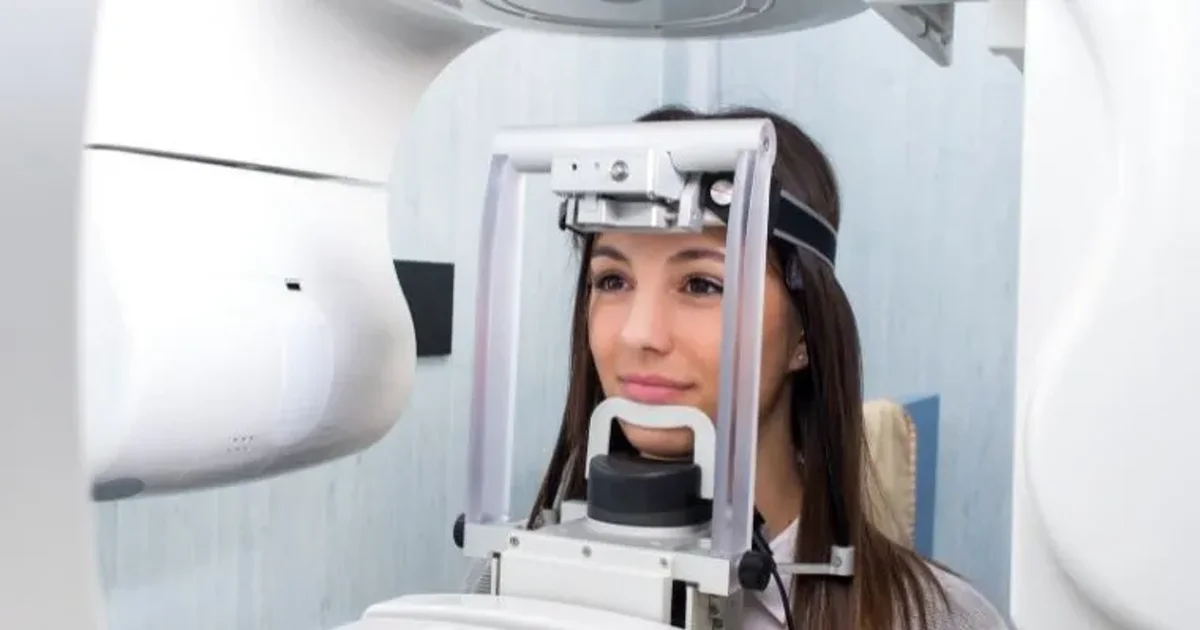
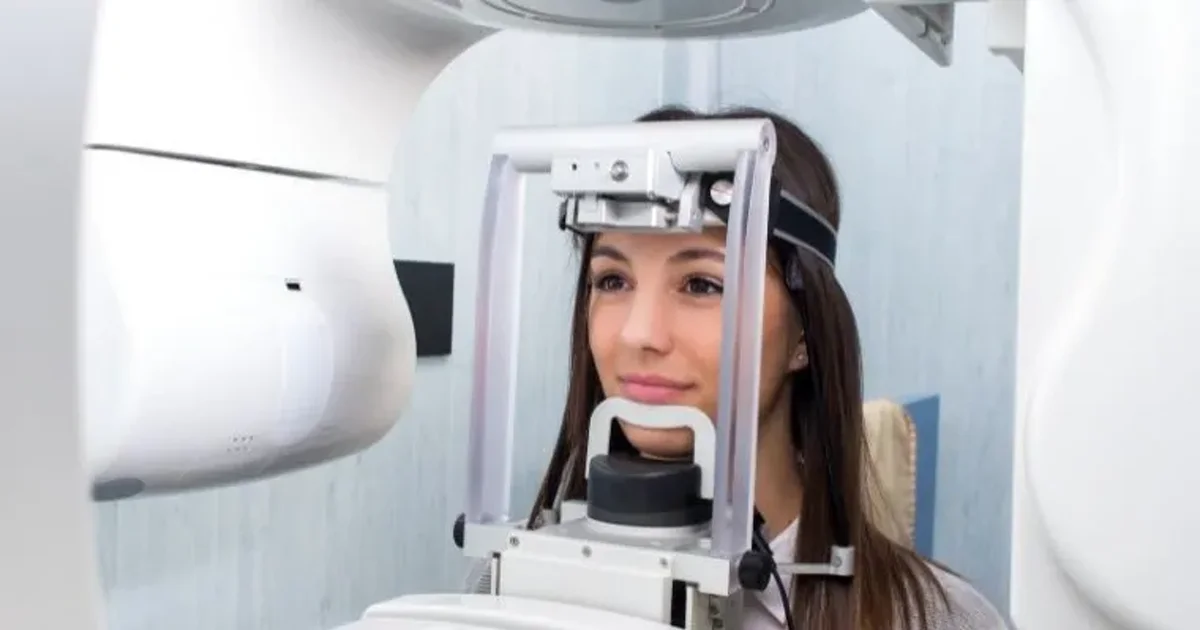
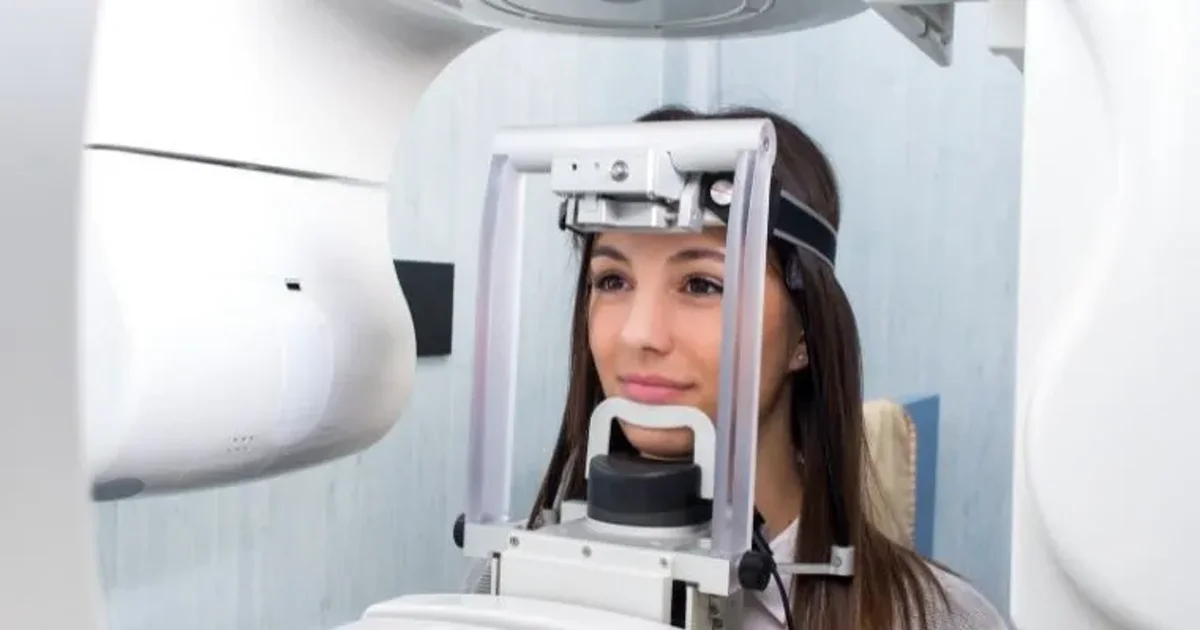
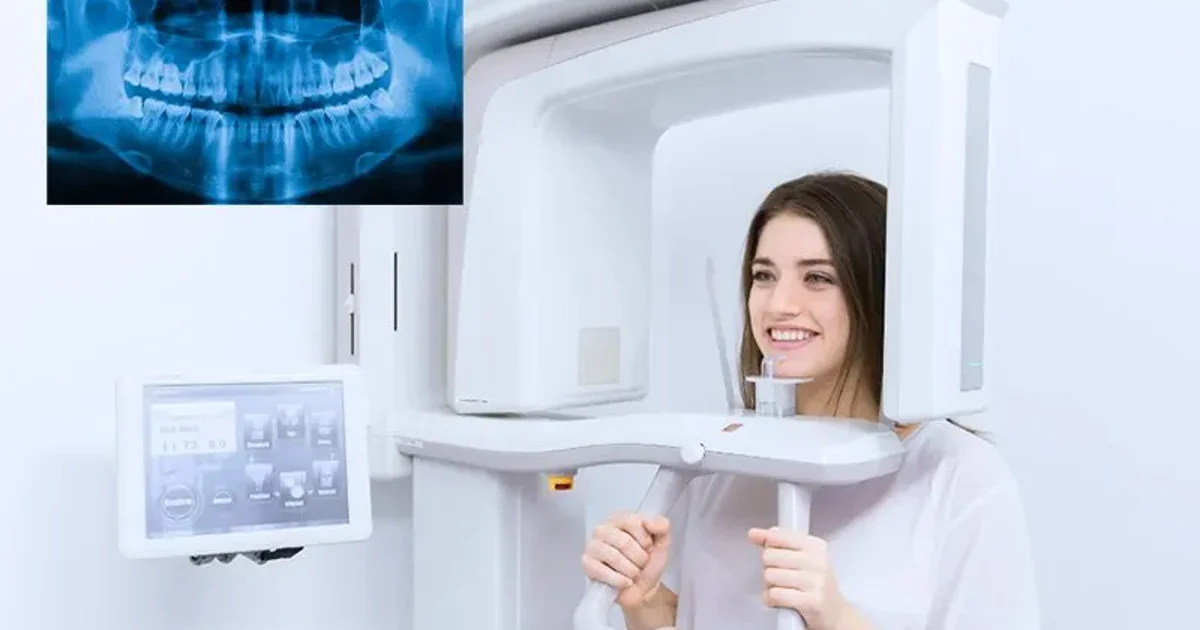
Waehrend des Scans steht oder sitzt der Patient mit stabilisiertem Kopf auf einer Kinnstuetze und Kopfstuetze. Der C-Arm des CBCT-Geraets rotiert gleichmaessig um den Kopf, und der Patient muss lediglich fuer die Dauer der Rotation still bleiben. Es gibt keinen Tunnel oder geschlossenen Raum, was CBCT deutlich komfortabler als einen herkoemmlichen medizinischen CT-Scanner macht, insbesondere fuer Patienten mit Klaustrophobie.
Sobald die Rohdaten erfasst sind, rekonstruiert der Computer die Bilder in drei Standardansichtsebenen: axial (horizontale Schnitte von oben nach unten), koronal (Schnitte von vorne nach hinten) und sagittal (Schnitte von Seite zu Seite). Kliniker koennen auch gekruemmte Panoramarekonstruktionen, Querschnittsansichten entlang des Kieferbogens und vollstaendige 3D-Volumenrenderings erstellen. Diese Vielseitigkeit ist es, die CBCT fuer die Behandlungsplanung in mehreren zahnmedizinischen Fachgebieten unverzichtbar macht.
"Bei DCDC verwenden wir CBCT-Technologie, die ein vollstaendiges 3D-Bild des Kiefers in unter 40 Sekunden mit Strahlenwerten erfasst, die deutlich niedriger sind als bei einem medizinischen Standard-CT-Scan," erklaert Dr. Osama Elzamzami, Facharzt fuer Radiologie bei DCDC. "Das bedeutet, dass Patienten die praezise Bildgebung erhalten, die ihr Zahnarzt benoetigt, ohne unnoetige Strahlenbelastung."
Was zeigt ein CBCT-Scan?
Ein CBCT-Scan zeigt eine umfassende Palette von Zahn- und Kieferstrukturen mit aussergewoehnlicher Klarheit und liefert diagnostische Informationen, die von herkoemmlichen zweidimensionalen Roentgenaufnahmen schlichtweg nicht verfuegbar sind:
- Zaehne und Zahnwurzeln: Position, Form, Anzahl, Laenge, Kruemmung, Wurzelfrakturen sowie ueberzaehlige oder nicht durchgebrochene Zaehne
- Kieferknochen (Alveolarknochen): Knochhoehe, -breite, -dichte und -volumen fuer Zahnimplantate oder Knochenaufbau
- Nervenkanaele: Der genaue Verlauf des Nervus alveolaris inferior, des Foramen mentale und anderer kritischer Nervenstrukturen, die waehrend der Operation vermieden werden muessen
- Kieferhoehlen: Position des Kieferhoehlebodens, Schleimhautdicke, Schleimhautretentionszysten und Sinusitis
- Atemwege: Obere Atemwegsdimensionen relevant fuer die Schlafapnoe-Beurteilung und kieferorthopaedische Behandlungsplanung
- Kiefergelenke (TMJ): Kondylenmorphologie, Gelenkspalt, degenerative Veraenderungen und Zeichen von Kiefergelenkerkrankungen
- Pathologie: Zysten, Tumore, periapikale Laesionen, Knocheninfektionen (Osteomyelitis), Wurzelresorption und andere Kieferanomalien
- Impaktierte Zaehne: Die praezise dreidimensionale Position impaktierter Weisheitszaehne und Eckzaehne im Verhaeltnis zu benachbarten Zaehnen und Nerven
CBCT vs regulaeres Zahnroentgen vs medizinisches CT
Das Verstaendnis der Unterschiede zwischen einem CBCT-Scan, einem regulaeren Zahnroentgen und einem medizinischen CT-Scan hilft Patienten zu verstehen, warum ihr Zahnarzt eine Bildgebungsart ueber eine andere empfehlen kann. Jede Technologie hat berechtigte Anwendungsbereiche, und die Wahl haengt von der klinischen Fragestellung ab. Der grundlegende Unterschied zwischen CBCT und medizinischem CT liegt in der Form des Roentgenstrahls, der Groesse des Geraets, der abgebildeten Koerperregion und der abgegebenen Strahlendosis.
Ein CBCT (Cone Beam CT)-Geraet verwendet einen breiten, kegelfoermigen Roentgenstrahl gepaart mit einem Flachbilddetektor. In einer einzigen Rotation erfasst es ein vollstaendiges dreidimensionales Volumen in 20 bis 40 Sekunden. CBCT-Geraete sind kompakt, wobei Patienten in einem offenen Design stehen oder sitzen. Ein medizinischer CT-Scanner verwendet einen schmalen, faecherfoermigen Strahl, der kontinuierlich rotiert, waehrend der Patient auf einem Tisch durch eine grosse tunnelfoermige Gantry faehrt und ueber Hunderte von Rotationen duenne Schichten aufnimmt. Dieser Ansatz liefert deutlich mehr Strahlung, erfasst aber aussergewoehnlichen Weichgewebekontrast, der fuer Gehirn-, Organ- und Gefaessbildgebung erforderlich ist.
Ein weiterer wesentlicher Unterschied ist die raeumliche Aufloesung. CBCT-Scanner erreichen Voxelgroessen von 0,1 bis 0,3 Millimetern, ideal zur Visualisierung feiner Knochenstrukturen, einzelner Zahnwurzeln, duenner Kortikalisplatten und enger Nervenkanaele. Medizinische CT-Scanner haben typischerweise eine Aufloesung von 0,5 bis 1,0 Millimetern fuer die Knochenbildgebung. Das bedeutet, dass CBCT tatsaechlich schaerfere Bilder der Knochenanatomie produziert als medizinisches CT, trotz deutlich geringerer Strahlung.
| Merkmal | Regulaeres Zahnroentgen (2D) | CBCT-Scan (3D) | Medizinischer CT-Scan |
|---|---|---|---|
| Dimensionen | Zweidimensionales Flachbild | Dreidimensionale volumetrische Daten | Dreidimensionale volumetrische Daten |
| Strahlendosis | 5-20 uSv (periapikales/OPG) | 30-200 uSv | 2.000-20.000 uSv |
| Knochenaufloesung | Begrenzt, ueberlagernde Strukturen | 0,1-0,3 mm Voxel (ueberlegen) | 0,5-1,0 mm Voxel |
| Weichgewebekontrast | Keiner | Begrenzt (nicht diagnostisch) | Ausgezeichnet (diagnostische Qualitaet) |
| Scanzeit | < 1 Sek. bis 15 Sek. | 20-40 Sekunden | 5-30 Sekunden pro Region |
| Patientenposition | Stehend oder sitzend | Stehend oder sitzend, offenes Design | Liegend, geschlossener Tunnel |
| Kontrastmittel | Nicht verwendet | Nicht verwendet | Haeufig verwendet (IV jodhaltig) |
| Sichtbarkeit der Nervenkanaele | Nur Annaeherung | Exakter 3D-Verlauf und Dimensionen | Sichtbar, aber niedrigere Knochenaufloesung |
| Knochenmessung | Geschaetzt (Vergroesserungsfehler) | Praezise auf 0,1 mm, echtes 1:1 | 0,5-1,0 mm Genauigkeit |
| Am besten fuer | Routineuntersuchungen, Karies | Implantate, Chirurgie, komplexe Zahnmedizin | Weichgewebe, Trauma, Krebs-Staging |
| Kostenbereich (Dubai) | AED 50-200 | AED 500-1.500 | AED 2.000-5.000+ |
Vergleich von Zahnroentgen, CBCT und medizinischem CT-Scan. CBCT bietet die beste Balance aus Knochendetail, niedriger Strahlung und Kosten fuer die Zahn- und Kieferbildgebung.
"Der einfachste Weg, den Unterschied zu verstehen, ist folgender: CBCT ist ein Spezialwerkzeug, das speziell fuer Zaehne und Kiefer entwickelt wurde, waehrend medizinisches CT ein Allzweckwerkzeug ist, das fuer die Bildgebung von Gehirn bis Becken konzipiert wurde," sagt Dr. Osama Elzamzami. "Fuer die Zahn- und Kieferdiagnose gibt uns CBCT das Knochendetail, das wir benoetigen, bei einem Bruchteil der Strahlung. Medizinisches CT wird nur notwendig, wenn wir Weichgewebe oder Bereiche ausserhalb von Kopf und Hals sehen muessen."
Fuer einen detaillierten Seite-an-Seite-Vergleich von CBCT und Panorama-Roentgenaufnahmen lesen Sie unseren speziellen Artikel ueber CBCT vs OPG-Roentgen: Was brauchen Sie?
Arten von CBCT-Scans: Kleines, mittleres und grosses Sichtfeld
Nicht alle CBCT-Scans sind gleich. Das Sichtfeld (FOV) bestimmt, wie viel Anatomie erfasst wird, und beeinflusst direkt die Strahlendosis, Bildaufloesung und Kosten. Ihr Zahnarzt oder Radiograph waehlt das kleinste FOV, das den klinischen Interessenbereich abdeckt, gemaess dem ALARA-Prinzip zur Minimierung der Strahlung bei gleichzeitiger Aufrechterhaltung der diagnostischen Qualitaet.
| FOV-Typ | Abdeckungsbereich | Typische Groesse | Strahlendosis | Ungefaehre Kosten (Dubai) | Haeufige Anwendungen |
|---|---|---|---|---|---|
| Kleines FOV | Einige Zaehne und umgebender Knochen | 4x4 bis 5x5 cm | 30-80 uSv | AED 500-800 | Einzelner Implantatstandort, endodontische Bewertung, lokale Pathologie, Wurzelfraktur |
| Mittleres FOV | Ein vollstaendiger Kiefer oder Quadrant | 8x8 bis 10x10 cm | 50-150 uSv | AED 700-1.000 | Mehrere Implantate in einem Kiefer, Weisheitszaehne, kieferorthopaedische Bewertung eines Bogens |
| Grosses FOV | Beide Kiefer und vollstaendiges Gesichtsskelett | 15x15 bis 20x17 cm | 100-200 uSv | AED 900-1.500 | Vollbogen-Implantate (All-on-4/6), chirurgische Planung, bilaterale TMJ, vollstaendige kieferorthopaedische Unterlagen |
CBCT-Sichtfeldoptionen mit entsprechenden Strahlendosen, Kosten und klinischen Indikationen. Kleineres FOV bedeutet niedrigere Strahlung und hoehere Aufloesung fuer den Zielbereich.
Ein Patient, der eine Bewertung eines einzelnen Implantatstandorts benoetigt, erhaelt einen Kleinfeld-Scan, keinen Vollkiefer-Scan, wodurch die Strahlung im Vergleich zu einem grossen FOV um bis zu 60 Prozent reduziert wird. Moderne CBCT-Geraete bieten auch spezielle paediatrische Dosisreduktionsprotokolle, die den Roehrenstrom und die Spannung an kleinere Koerpergroessen anpassen und die effektive Dosis im Vergleich zu Erwachseneneinstellungen um 30 bis 40 Prozent reduzieren.
Fuer detaillierte Preisinformationen lesen Sie unseren Leitfaden zu CBCT-Scan-Kosten in Dubai.
CBCT fuer Zahnimplantate
Die Zahnimplantatplatzierung ist die haeufigste Indikation fuer eine CBCT-Scan-Dental-Untersuchung. Implantatchirurgie beinhaltet das Bohren in lebenden Knochen und das Einsetzen eines Titanpfostens, der ueber mehrere Monate mit dem umliegenden Gewebe verwachsen muss. Die Fehlertoleranz ist extrem gering. Ein Implantat, das auch nur 1 bis 2 Millimeter vom Kurs abweicht, kann einen Nerv beschaedigen, den Kieferhoehleboden perforieren oder zu unzureichender Knochenstuetzung fuehren, was zum Implantatversagen fuehrt. Ein CBCT-Scan eliminiert einen Grossteil dieses Risikos, indem er dem Chirurgen eine vollstaendige anatomische Karte vor Operationsbeginn liefert.
Herkoemmliche 2D-Zahnroentgenaufnahmen, einschliesslich Panoramaaufnahmen (OPG), komprimieren dreidimensionale Anatomie in ein flaches Bild. Ein Panoramaroentgen zeigt die Hoehe, aber nicht die bukkolinguale (Wangen-zu-Zungen-) Dimension des Kiefers. Es vergroessert Strukturen auch um 15 bis 30%, was Messungen unzuverlaessig macht. Da ein Implantat Raum in allen drei Dimensionen einnimmt, ist die Planung mit nur zwei Dimensionen grundsaetzlich unvollstaendig.
Was CBCT fuer die Implantatplanung zeigt
- Verfuegbares Knochenvolumen: Praezise Hoehen-, Breiten- und Tiefenmessungen an jedem geplanten Implantatstandort, genau auf 0,1 mm
- Knochendichte und -qualitaet: Unterscheidung zwischen dichtem Kortikalknochen und schwammigem Trabekularknochen, was die Implantatstabilitaet und Heilungszeit beeinflusst
- Position des Nervkanals des Nervus alveolaris inferior: Genaue Lage und Verlauf des Nervs, der die Empfindung der Unterlippe und des Kinns versorgt, kritisch fuer Unterkieferimplantate
- Lage des Foramen mentale: Der Punkt, an dem der Nerv den Kieferknochen verlaesst, der bei Praemolarenregion-Implantaten vermieden werden muss
- Hoehe des Kieferhoehlebodens: Der Abstand zwischen dem Kieferkamm und dem Kieferhoehleboden, der bestimmt, ob ein Sinuslift erforderlich ist
- Benachbarte Zahnwurzeln: Genaue Wurzelpositionen und -winkel, um ausreichenden Abstand zwischen Implantaten und natuerlichen Zaehnen zu gewaehrleisten
- Bestehende Pathologie: Zysten, Granulome, Restwurzelspitzen und Knochenlaesionen, die vor der Implantatplatzierung behandelt werden muessen
Veroeffentlichte Forschung im International Journal of Oral & Maxillofacial Implants berichtet, dass Implantate, die mit CBCT-gefuehrter Planung platziert werden, Erfolgsraten von ueber 97% erreichen, verglichen mit etwa 90 bis 95% bei Platzierung nur mit 2D-Bildgebung. CBCT-Bildgebung aendert den chirurgischen Plan in etwa 30% der Zahnimplantatfaelle und zeigt Knochen, der duenner ist als erwartet, Nerven, die hoeher positioniert sind als auf dem Panoramafilm angedeutet, oder Sinusanatomie, die eine Aenderung des Behandlungsansatzes erfordert.
Gefuehrte Implantatchirurgie
Gefuehrte Implantatchirurgie stellt die fortschrittlichste Anwendung von CBCT-Daten dar. Der CBCT-Scan wird in Implantatplanungssoftware wie Nobel Clinician, Blue Sky Plan oder coDiagnostiX importiert. Der Chirurg platziert jedes Implantat virtuell in der idealen Position, dann wird eine chirurgische Fuehrung 3D-gedruckt, die auf die Zaehne oder das Zahnfleisch des Patienten aufschnappt. Waehrend der Operation fuehrt die Schablone den Bohrer im exakten Winkel und in der exakten Tiefe, die digital geplant wurden, und erreicht eine Platzierungsgenauigkeit innerhalb von 0,5 mm der geplanten Position.
Wann ist CBCT bei Implantaten obligatorisch?
- Implantate in der Naehe des Nervus alveolaris inferior: Jedes Implantat im hinteren Unterkiefer, bei dem die Position des Nervenkanals auf 2D-Bildgebung unsicher ist
- Sinuslift-Verfahren: Wenn der Kieferhoehlenboden niedrig ist und eine Anhebung erforderlich ist, um ausreichende Knochhoehe zu schaffen
- Knochenaufbaufaelle: Wenn der Kieferkamm zu schmal oder zu kurz ist und eine Augmentation erforderlich ist
- Vollbogen-Rehabilitation (All-on-4, All-on-6): Komplexe Eingriffe, die praezise Angulation von 4 bis 6 Implantaten erfordern
- Sofortige Implantatplatzierung: Das Einsetzen eines Implantats zum selben Zeitpunkt wie die Zahnextraktion erfordert detaillierte Kenntnis der Alveolendimensionen
- Geschichte fehlgeschlagener Implantate: Das Verstaendnis, warum ein frueheres Implantat gescheitert ist, erfordert eine 3D-Bewertung des Restknochens
Die European Association for Osseointegration (EAO) und das International Team for Implantology (ITI) empfehlen beide CBCT-Bildgebung, wenn konventionelle Radiografie nicht genuegend Informationen fuer eine sichere Implantatplatzierung liefert, was in der Praxis die Mehrheit der Implantatfaelle bedeutet.
Planen Sie Zahnimplantate? Lassen Sie zuerst einen CBCT-Scan machen
Bei DCDC in our facility liefert unser CBCT-Scan Ihrem Implantatchirurgen die praezisen 3D-Daten fuer eine sichere, genaue Implantatplatzierung. Termine am selben Tag und digitale Befundlieferung an Ihren Zahnarzt.
CBCT fuer Weisheitszaehne
Die Weisheitszahnentfernung ist einer der weltweit am haeufigsten durchgefuehrten oralchirurgischen Eingriffe, birgt jedoch ein messbares Risiko einer Verletzung des Nervus alveolaris inferior (IAN), des Nervs, der die Empfindung der Unterlippe, des Kinns und des Zahnfleischs versorgt. Ein Standard-Panoramaroentgen kann andeuten, dass eine Weisheitszahnwurzel in der Naehe des Nervenkanals liegen koennte, kann aber die dreidimensionale Beziehung nicht bestaetigen. Die Wurzeln koennen auf dem flachen Bild den Kanal zu ueberlagern scheinen, aber in Wirklichkeit bukkal oder lingual passieren, ohne den Nerv tatsaechlich zu beruehren. Umgekehrt kann ein 2D-Roentgenbild einen Zahn als sicher erscheinen lassen, wenn die Wurzeln tatsaechlich den Nervenkanal komprimieren.
Ein CBCT-Scan fuer Weisheitszaehne eliminiert dieses Raten. Forschung, die im British Journal of Oral and Maxillofacial Surgery veroeffentlicht wurde, zeigt, dass die CBCT-Bewertung vor einer Weisheitszahnentfernung die Haeufigkeit von Verletzungen des Nervus alveolaris inferior um 25-30% reduziert im Vergleich zu nur auf Panoramaaufnahmen basierender Chirurgieplanung.
Was CBCT ueber Weisheitszaehne zeigt
- Wurzelanzahl und -morphologie: Weisheitszaehne koennen eine bis fuenf Wurzeln haben, die gerade, gekruemmt, hakenfoermig, dilaceriert oder verschmolzen sein koennen. CBCT zeigt die genaue Form und Kruemmung jeder Wurzel.
- Wurzel-Nerv-Beziehung: Ob die Wurzeln vom Nervenkanal durch intakten Knochen getrennt sind, in direktem Kontakt stehen oder ob der Kanal zwischen divergierenden Wurzeln verlaeuft
- Impaktionstiefe und -winkel: Praezise Messungen, wie tief der Zahn eingebettet ist und in welchem Winkel er sich relativ zum benachbarten zweiten Molaren neigt
- Beziehung zum zweiten Molaren: Erkennung selbst fruehstadiger Resorption (Erosion) der benachbarten zweiten Molarenwurzel, die auf Panoramaroentgenbildern unsichtbar ist
- Assoziierte Pathologie: Dentogene Zysten, Tumore oder Infektionen im Zusammenhang mit dem impaktierten Zahn, mit praezisen Ausmassungsmessungen
- Linguale Knochenplattendicke: Eine duenne oder fehlende linguale Platte erhoeht das Risiko einer lingualen Nervenverletzung, und CBCT identifiziert dies vor der Operation
Weisheitszahn-Impaktionstypen im CBCT
| Impaktionstyp | Angulation | Haeufigkeit | Klinische Bedeutung |
|---|---|---|---|
| Mesioangular | Nach vorne zum zweiten Molaren geneigt | 43% der Impaktionen | Am haeufigsten; maessige Schwierigkeit; Risiko der Schaedigung des zweiten Molaren |
| Distoangular | Nach hinten in den Ramus geneigt | Weniger haeufig | Schwierigste Extraktion; hoeheres Risiko einer Unterkieferwinkelfraktur |
| Horizontal | Seitlich parallel zum Kiefer liegend | Variabel | Hoechstes Risiko fuer Nervenverletzung und Resorption des zweiten Molaren; Koronektomie wird oft in Betracht gezogen |
| Vertikal | Aufrecht, aber nicht in der Lage durchzubrechen | Variabel | Am wenigsten kompliziert; Nervenrisiko haengt von der Wurzeltiefe relativ zum Kanal ab |
Klassifikation der Weisheitszahn-Impaktionstypen. CBCT klassifiziert Impaktionen mit weitaus groesserer Genauigkeit als Panoramaroentgen, indem es Ueberlagerung und Verzerrung eliminiert.
Wann sollte man von OPG auf CBCT fuer Weisheitszaehne umsteigen?
Ein Panoramaroentgen bleibt die Standard-Erstlinienbildgebung fuer die Weisheitszahnbeurteilung. CBCT wird empfohlen, wenn das OPG radiografische Zeichen der Nervennaehe zeigt (Wurzelverdunklung an der Kanalkreuzung, Kanalablenkung oder -verengung, Kanalumleitung oder Verengung der Wurzelspitze), tiefe horizontale oder distoangulare Impaktion, ungewoehnliche Wurzelmorphologie, Verdacht auf Pathologie, Resorption der zweiten Molarenwurzel oder wenn der Patient grosse Angst vor Nervenrisiken hat. Internationale Richtlinien von NICE und der European Association for Cranio-Maxillo-Facial Surgery empfehlen CBCT in diesen Szenarien.
"In etwa 30-40% der Faelle, in denen das Panoramaroentgen Nervennaehe andeutet, zeigt das CBCT, dass der Nerv tatsaechlich durch intakten Knochen von den Wurzeln getrennt ist und die Extraktion normal durchgefuehrt werden kann," bemerkt Dr. Osama Elzamzami. "In den uebrigen Faellen bestaetigt das CBCT einen echten intimen Kontakt, und der Chirurg kann entscheiden, eine Koronektomie durchzufuehren oder den chirurgischen Ansatz zum Schutz des Nervs zu modifizieren. In beiden Faellen profitiert der Patient von einer Entscheidung, die auf Evidenz basiert, anstatt auf Vermutungen."
CBCT fuer Wurzelbehandlung
Die Wurzelbehandlung beruht auf der Faehigkeit des Endodontologen, jeden Kanal innerhalb eines Zahns zu lokalisieren, zu reinigen und zu versiegeln. Wenn ein Kanal uebersehen wird oder eine Infektion unentdeckt bleibt, schlaegt die Behandlung fehl. CBCT fuer die Wurzelbehandlung hat die Endodontie revolutioniert, indem es Klinikern eine vollstaendige dreidimensionale Ansicht der Wurzelanatomie, periapikalen Pathologie und umliegenden Strukturen bietet, die konventionelle zweidimensionale Roentgenaufnahmen nicht liefern koennen.
Eine wegweisende Studie, veroeffentlicht im Journal of Endodontics, ergab, dass CBCT-Bildgebung die Diagnose in 62% der endodontischen Faelle im Vergleich zur periapikalen Radiografie allein aenderte. Forschung im International Endodontic Journal zeigt, dass CBCT bis zu 34% mehr Wurzelkanaele identifiziert als konventionelle Radiografie, insbesondere den zweiten mesiobukkalen Kanal (MB2) der oberen ersten Molaren, der in etwa 90% der Zaehne vorhanden ist, aber auf periapikalen Roentgenbildern in weniger als 55% der Faelle erkannt wird.
Was CBCT fuer die Endodontie zeigt
- Extra- und versteckte Wurzelkanaele: Der MB2-Kanal und andere akzessorische Kanaele, die der haeufigste Grund fuer das Scheitern einer Wurzelbehandlung sind, wenn sie uebersehen werden
- Periapikale Laesionen und Infektionen: CBCT erkennt periapikale Pathologie in einem deutlich frueheren Stadium als 2D-Roentgenbilder, die Laesionen erst nach Kortikalknochenrosion zeigen koennen. CBCT findet periapikale Laesionen in bis zu 34% mehr Wurzeln.
- Vertikale Wurzelfrakturen: Periapikale Roentgenbilder haben nur eine Sensitivitaet von 20-30% fuer vertikale Wurzelfrakturen; CBCT erreicht eine Sensitivitaet von 70-80% durch Bereitstellung von Querschnittsansichten, die Ueberlagerung eliminieren
- Wurzelresorption: Definitive Visualisierung interner vs. externer Resorption, ihrer Lokalisation und ihres Ausmasses, wobei bestimmt wird, ob der Zahn restaurierbar ist
- Kanalanatomie und -kruemmungen: Vollstaendige Verfolgung jedes Kanals von der Pulpakammer bis zum apikalen Foramen, Identifizierung scharfer Kruemmungen, S-foermiger Biegungen und Kanalbifurkationen
CBCT fuer Wurzelkanalrevision
Die Wurzelkanalrevision ist eine der staerksten klinischen Indikationen fuer CBCT-Bildgebung. Wenn die initiale Wurzelkanalbehandlung fehlschlaegt, muss der Endodontologe bestimmen, warum. Ein konventionelles periapikales Roentgenbild kann vorhandenes Fuellungsmaterial und eine periapikale Radioluzenz zeigen, kann diese Frage aber nicht zuverlaessig beantworten. CBCT zeigt uebersehene Kanaele, die nie behandelt wurden, separierte Instrumente in Kanaelen, Hohlraeume und Luecken in der Wurzelkanalfuellung, Perforationsstellen und das wahre dreidimensionale Ausmass persistierender Infektionen. Die American Association of Endodontists empfiehlt CBCT speziell fuer Revisionsfaelle.
"Ein zweidimensionales Roentgenbild zeigt Ihnen, was es kann, aber ein CBCT-Scan zeigt Ihnen, was Sie sehen muessen," erklaert Dr. Osama Elzamzami. "In der Endodontie kann der Unterschied zwischen einem sichtbaren und einem versteckten Kanal den Unterschied zwischen einer erfolgreichen Behandlung und einem Zahn bedeuten, der letztendlich extrahiert werden muss."
Wann wird CBCT fuer die Wurzelbehandlung empfohlen?
- Komplexe Wurzelanatomie: Obere Molaren (MB2-Kanal), Unterkieferpraemolaren mit mehreren Kanaelen, Unterkiefermolaren mit Extrawurzeln (Radix entomolaris)
- Revisionsfaelle: Wenn die Erstbehandlung fehlgeschlagen ist und die Ursache auf konventionellen Roentgenbildern unklar ist
- Verdacht auf Wurzelfraktur: Patienten mit Symptomen, die auf eine vertikale Wurzelfraktur hindeuten (isolierte tiefe Tasche, Sinustrakt, Schmerzen beim Beissen)
- Anhaltende Symptome nach Behandlung: Schmerzen, Schwellung oder Sinustrakt trotz anscheinend adaequater Wurzelbehandlung
- Praechirurgische Planung (Apikektomie): Praezise Wurzelspitzenposition, Naehe zu Nerven und Kortikalknochendicke
- Zahntrauma: Luxationsverletzungen, horizontale Wurzelfrakturen und Wurzelresorption, die auf periapikalen Roentgenbildern nicht sichtbar sind
CBCT fuer Kieferorthopaedie
Kieferorthopaedische Behandlung beinhaltet die bewusste Bewegung von Zaehnen durch Knochen ueber Monate oder Jahre. Jeder Millimeter zaehlt. Wenn der Kieferorthopaedie die Knochendicke um eine Zahnwurzel unterschaetzt, kann die Wurzel durch die aeussere Knochenplatte gedrueckt werden, was eine Dehiszenz oder Fenestration verursacht. Ein CBCT-Scan fuer Kieferorthopaedie gibt dem Kieferorthopaedem eine vollstaendige dreidimensionale Ansicht von Zaehnen, Wurzeln, Kieferknochen, TMJ und oberen Atemwegen und bietet diagnostische Details, die herkoemmliche Panorama- und Kephalometrie-Roentgenbilder nicht liefern koennen.
Forschung, veroeffentlicht im American Journal of Orthodontics and Dentofacial Orthopedics, bestaetigt, dass CBCT-Bildgebung die kieferorthopaedische Diagnose oder den Behandlungsplan in bis zu 36% der Faelle aendert im Vergleich zur konventionellen 2D-Bildgebung allein.
Was CBCT fuer die kieferorthopaedische Planung zeigt
- Wurzelpositionen und -morphologie: Exakte Laenge, Kruemmung und 3D-Position jeder Zahnwurzel, entscheidend fuer die Bestimmung sicherer Bewegungsrichtungen
- Alveolarknochendicke: Bukkale und linguale Knochendicke um jeden Zahn mit Sub-Millimeter-Praezision, Identifizierung duenner Bereiche vor Behandlungsbeginn
- Impaktierte Eckzaehne: Exakte 3D-Position impaktierter Eckzaehne relativ zu benachbarten Wurzeln. CBCT erkannte Wurzelresorption benachbarter Zaehne durch impaktierte Eckzaehne in 48% der Faelle, in denen die Resorption auf Panoramaroentgenbildern unsichtbar war
- Atemwegsdimensionen: Volumetrische Atemwegsmessung in Kubikmillimetern fuer Patienten mit Verdacht auf obstruktive Schlafapnoe oder enge Atemwege
- Skelettale Asymmetrie: Praezise 3D-Kephalometrieanalyse, die wahre skelettale Asymmetrie erfasst, die 2D-Kephalogramme durch Ueberlagerung linker und rechter Seiten maskieren
- TMJ-Bewertung: Kondylenform, Gelenkspalt und degenerative Veraenderungen, sichtbar vor Beginn der kieferorthopaedischen Behandlung
- Vorliegende Wurzelresorption: Baseline-Erkennung von Wurzelresorption durch fruehere Behandlung, Trauma oder idiopathische Ursachen, die die gewaehlten Kraftniveaus beeinflussen
CBCT fuer Zahnspangen vs transparente Aligner
Fuer feste Zahnspangen identifiziert CBCT Zaehne mit kurzen oder dilacerierten Wurzeln, die anfaellig fuer Resorption unter starken Kraeften sind, kartiert die Knochentopografie fuer Expansions- vs. Extraktionsentscheidungen und zeigt ideale Einsetzstellen fuer temporaere Verankerungsgeraete (TADs/Mini-Schrauben). Fuer chirurgische Kieferorthopaedie ist CBCT unverzichtbar fuer virtuelle chirurgische Planung, Osteotomiesimulation und chirurgische Schienenfertigung.
Fuer transparente Aligner-Behandlung (Invisalign, Spark) fuegt CBCT eine entscheidende Ebene hinzu. Die meiste Aligner-Software arbeitet mit intraoralen Scans, die nur Kronenoberflaechn erfassen, nicht Wurzeln oder Knochen. Wenn CBCT-Daten mit dem intraoralen Scan zusammengefuehrt werden, sieht der Kieferorthopaedie das vollstaendige Bild: Kronenposition, Wurzelposition und Knochengrenzen zusammen. Dies ermoeglicht die Verifizierung, dass geplante Bewegungen die Wurzeln nicht ausserhalb der Knochenhuelle druecken, was iatrogene Nebenwirkungen reduziert.
Ist CBCT fuer jeden kieferorthopaedischen Fall notwendig?
Nein. CBCT wird nicht fuer jeden kieferorthopaedischen Patienten benoetigt. Fuer unkomplizierte Faelle wie leichte Engstaeende, einfache Luecken oder Klasse-I-Ausrichtung bei einem Jugendlichen ohne impaktierte Zaehne liefern ein Panoramaroentgen und ein laterales Kephalometrie-Bild in der Regel ausreichende diagnostische Informationen. CBCT wird speziell empfohlen fuer impaktierte Zaehne, skelettale Asymmetrie, chirurgische Kieferorthopaedie, TAD-Platzierungsplanung, Atemwegsbewertung, Lippen-Kiefer-Gaumenspalten-Faelle und komplexe Wurzelanatomie.
Weitere CBCT-Anwendungen
TMJ-Erkrankungen
Patienten mit Kieferschmerzen, Knacken, Blockierung oder eingeschraenkter Mundoeffnung profitieren von einer CBCT-Bewertung des Kiefergelenks. Der Scan zeigt knoecherne Veraenderungen des Kondylus wie Abflachung, Erosion, Osteophytenbildung und Frakturen, die auf eine degenerative Gelenkerkrankung hinweisen. Waehrend MRT der Goldstandard fuer die Weichgewebsbewertung der TMJ-Scheibe bleibt, bietet CBCT eine ueberlegene Visualisierung der Hartgewebekomponenten und ist oft der erste Bildgebungsschritt in einer TMJ-Abklaerung. Ein fokussierter CBCT beider TMJs liefert hochaufloesende Bilder bei einem Bruchteil der Strahlendosis und Kosten eines medizinischen CT.
Kieferchirurgie (Orthognathe Chirurgie)
Orthognathe Chirurgie, Kieferrekonstruktion nach Trauma und die Entfernung von Tumoren oder Zysten erfordern alle detaillierte dreidimensionale Bildgebung des Gesichtsskeletts. CBCT-Daten koennen in chirurgische Planungssoftware importiert werden, um virtuelle chirurgische Simulationen, massgeschneiderte Schnittfuehrungen und 3D-gedruckte chirurgische Modelle zu erstellen. Dieses Mass an Planungspraezision reduziert die Operationszeit, verbessert die chirurgischen Ergebnisse und minimiert das Komplikationsrisiko.
Trauma und Frakturen
Dental- und Kiefertrauma, einschliesslich Wurzelfrakturen, Alveolarknochenfrakturen und dentoalveolaere Verletzungen, profitieren von einer CBCT-Bewertung. Die 3D-Bilder zeigen das volle Ausmass der Frakturlinien, die Verschiebung von Fragmenten und die Beteiligung benachbarter Zaehne und Nervenstrukturen, die auf konventionellen Roentgenbildern moeglicherweise nicht erkennbar sind.
Pathologieerkennung
CBCT kann Zahninfektionen (periapikale Abszesse, Osteomyelitis), Zysten (dentogene Zysten, odontogene Keratozysten) und Tumore (Ameloblastom, Odontom) im Kieferknochen erkennen. Die 3D-Bilder zeigen Groesse, Lage und Ausmass der Pathologie genauer als 2D-Roentgenbilder. Fuer Weichgewebstumore oder Verdacht auf maligne Erkrankungen kann jedoch ein MRT oder ein kontrastverstaerktes medizinisches CT fuer die weitere Abklaerung empfohlen werden.
Parodontaler Knochenverlust
CBCT zeigt das wahre dreidimensionale Muster des Knochenverlustes um Zaehne, einschliesslich bukkaler und lingualer Defekte, die auf Standard-2D-Roentgenbildern unsichtbar sind. Diese Informationen helfen Parodontologen bei der Planung regenerativer Verfahren und der Bewertung des wahren Ausmasses parodontaler Zerstoerung.
Wie man sich auf einen CBCT-Scan vorbereitet
Die gute Nachricht ist, dass die Vorbereitung auf einen CBCT-Scan bemerkenswert unkompliziert ist. Im Gegensatz zu vielen medizinischen Bildgebungsverfahren, die Fasten, Kontrastmittelinjektionen oder langwierige Vorbereitungsprotokolle erfordern, erfordert ein CBCT-Scan fast keine Vorausvorbereitung.
Was Sie normal tun koennen
- Normal essen und trinken: Es gibt keine Fastenvorschriften. Tatsaechlich wird empfohlen, vor Ihrem Termin eine leichte Mahlzeit zu sich zu nehmen, damit Sie sich waehrend des Scans stabil fuehlen.
- Nehmen Sie Ihre regulaeren Medikamente ein: Nehmen Sie alle verschriebenen Medikamente normal weiter ein. Es gibt keine Arzneimittelwechselwirkungen, da keine Kontrastmittel oder Beruhigungsmittel verwendet werden.
- Fahren Sie zum und vom Termin: Da keine Sedierung beteiligt ist, koennen Sie selbst fahren.
- Kehren Sie sofort zu normalen Aktivitaeten zurueck: Sie koennen direkt nach dem Scan zur Arbeit, Schule oder zum Sport zurueckkehren. Es gibt keine Erholungsphase.
Was vor dem Scan entfernt werden muss
Der wichtigste Vorbereitungsschritt ist das Entfernen aller Metallobjekte aus dem Kopf- und Halsbereich. Metall erzeugt helle weisse Streifen und dunkle Schatten auf den 3D-Bildern, sogenannte Artefakte, die die Strukturen verdecken koennen, die Ihr Zahnarzt sehen muss.
| Zu entfernender Gegenstand | Warum er entfernt werden muss |
|---|---|
| Ohrringe (Stecker, Ringe, Haenger) | Streuartefakte verzerren Bilder des Ohrbereichs, TMJ und Oberkiefers |
| Halsketten und Ketten | Streifenartefakte verdecken Unterkiefer, Kinn und Halswirbelsaeulenbereich |
| Brillen und Sonnenbrillen | Metallrahmen erzeugen Artefakte in der Naehe von Oberkiefer, Nasennebenhoehlen und Orbitalregion |
| Hoergeraete | Elektronische und metallische Komponenten erzeugen erhebliche Artefakte in der Naehe des Gehoergangs und TMJ |
| Haarnadeln, Clips und Haarspangen | Selbst kleine Metallclips verursachen lokalisierte Streifenartefakte im gesamten Scanvolumen |
| Herausnehmbarer Zahnersatz (Teil- oder Vollprothese) | Metallklammern und -gerueste erzeugen ausgedehnte Artefakte, die Zahn- und Knochendetails verdecken |
| Kieferorthopaedische Retainer (herausnehmbar) | Metalldraehte erzeugen Artefaktlinien, die die Bildklarheit reduzieren |
| Gesichtspiercings (Nase, Lippe, Zunge) | Jedes Metallpiercing im Scanfeld erzeugt lokalisierte Artefakte |
| Schals/Hijabs mit Metallverschluessen | Metallnadeln oder Broschen muessen entfernt werden; Stoff ohne Metall ist in Ordnung |
Gegenstaende, die vor einem CBCT-Scan entfernt werden muessen. Fester Zahnersatz (Kronen, Bruecken, Implantate, feste Zahnspangen) muss nicht entfernt werden.
Was Sie mitbringen sollten
- Ueberweisungsschreiben: Wenn Ihr Zahnarzt eine Ueberweisung ausgestellt hat, bringen Sie diese mit. Dies hilft dem Radiographen, die richtigen Scanparameter und das Sichtfeld einzustellen.
- Fruehere Bildgebung: Wenn Sie fruehere Zahnroentgenbilder oder CBCT-Scans von einer anderen Einrichtung haben, bringen Sie diese mit, damit der Radiologe Befunde vergleichen kann.
- Versicherungskarte und Ausweis: Emirates ID oder Reisepass fuer die Patientenregistrierung.
Besondere Ueberlegungen
Schwangerschaft: CBCT-Scans werden waehrend der Schwangerschaft als Vorsichtsmassnahme generell vermieden. Wenn Sie schwanger sind oder vermuten, schwanger zu sein, informieren Sie den Radiographen vor dem Scan. In den meisten nicht dringenden Situationen kann der Scan bis nach der Entbindung verschoben werden. Kinder: CBCT kann sicher bei Kindern durchgefuehrt werden, wenn klinisch gerechtfertigt. Moderne Geraete bieten paediatrische Protokolle mit reduzierter Strahlung. Kinder benoetigen moeglicherweise einen Elternteil zur Beruhigung.
Was waehrend eines CBCT-Scans passiert: Schritt-fuer-Schritt-Verfahren
Das CBCT-Scan-Verfahren ist unkompliziert, nicht-invasiv und bemerkenswert schnell. Von der Ankunft bis zum Verlassen dauert der gesamte Termin typischerweise 10 bis 15 Minuten, wobei der eigentliche Scan nur 20 bis 40 Sekunden dauert. Das Verfahren ist voellig schmerzlos -- es gibt keine Injektion, kein Kontrastmittel, keine Sedierung und kein physisches Empfinden waehrend des Scans selbst.
| Schritt | Was passiert | Dauer |
|---|---|---|
| 1. Ankunft und Registrierung | Anmeldung an der Rezeption, Vorlage von Ueberweisung und Ausweis. Keine Formulare fuer Allergien oder Krankengeschichte speziell fuer den Scan, da kein Kontrastmittel oder Sedierung verwendet wird. | 2-3 Minuten |
| 2. Vorbereitung | Entfernen aller Metallobjekte aus dem Kopf- und Halsbereich. Eine Bleischilddruese kann um Ihren Hals gelegt werden, um die Schilddruese vor Streustrahlung zu schuetzen. | 1-2 Minuten |
| 3. Positionierung | Stehen oder sitzen am CBCT-Geraet. Kinn ruht auf einer gepolsterten Stuetze, Stirnstabilisator haelt den Kopf in Position. Einige Geraete verwenden einen Aufbissblock fuer zusaetzliche Stabilitaet. | 1-2 Minuten |
| 4. Der Scan | C-Arm rotiert gleichmaessig um Ihren Kopf. Leises Summen. Halten Sie die Zunge an den Gaumen gedrueckt, Lippen geschlossen, atmen Sie durch die Nase. Voellig schmerzlos. | 20-40 Sekunden |
| 5. Bildrekonstruktion | Computer rekonstruiert 3D-Bilder. Radiograph prueft Scanqualitaet auf ausreichende Abdeckung und Schaerfe. Bei Bewegungsartefakten dauert eine Wiederholung nur weitere 20-40 Sekunden. | 3-5 Minuten |
| 6. Befundung und Ergebnisse | Facharzt fuer Radiologie prueft alle Schnitte und Rekonstruktionen. Detaillierter schriftlicher Befund wird erstellt und digital an Ihren ueberweisenden Zahnarzt uebermittelt. | Am selben Tag bei DCDC |
Vollstaendiger Zeitplan des CBCT-Scan-Verfahrens von der Ankunft bis zu den Ergebnissen. Die Gesamtterminzeit betraegt etwa 10-15 Minuten.
Im Gegensatz zum MRT (20-60 Minuten in einer engen Roehre liegen) oder kontrastverstaerktem CT (erfordert eine IV-Injektion) erfordert ein CBCT-Scan nichts weiter als fuer eine halbe Minute still zu stehen oder zu sitzen. Es gibt keinen geschlossenen Raum, keinen Tunnel und kein Gefuehl der Beengung. Patienten, die bei zahnmedizinischen Eingriffen aengstlich oder klaustrophobisch sind, empfinden den CBCT-Scan oft als den komfortabelsten Teil ihrer gesamten Zahnbehandlungsreise.
Nach Ihrem CBCT-Scan
Es gibt keine Erholungszeit, keine Nebenwirkungen und keine Einschraenkungen nach dem Scan. Sie koennen sofort Ihren Schmuck wieder anlegen, Zahnersatz wieder einsetzen und Ihren Tag fortsetzen. Ergebnisse werden in zwei Formaten geliefert: ein schriftlicher Radiologen-Befund mit Zusammenfassung aller Ergebnisse und der vollstaendige 3D-Bilddatensatz im DICOM-Format, den Ihr Zahnarzt oder Chirurg in seine Planungssoftware laden kann. Bei DCDC werden beide digital ueber sichere elektronische Uebertragung an Ihren ueberweisenden Kliniker uebermittelt.
Buchen Sie Ihren CBCT-Scan bei DCDC
Im Doctors Clinic Diagnostic Center in our center dauert der gesamte CBCT-Scan-Termin nur 10-15 Minuten mit Ergebnissen am selben Tag. Unser erfahrenes Radiologie-Team sorgt fuer eine komfortable, effiziente Erfahrung von Anfang bis Ende.
CBCT-Strahlensicherheit
Patienten, denen gesagt wird, dass sie einen CBCT-Scan benoetigen, fragen oft: Ist CBCT sicher? Die kurze Antwort ist, dass ein CBCT-Scan eine der sichersten fortgeschrittenen Bildgebungstechnologien in der modernen Zahnmedizin ist. Die CBCT-Strahlendosis reicht von 30 bis 200 Mikrosievert, was ungefaehr 1 bis 3 Tagen der natuerlichen Hintergrundstrahlung entspricht, der jeder Mensch aus der Umgebung ausgesetzt ist. Im Vergleich dazu liefert ein medizinischer Standard-CT-Scan des Kopfes etwa 2.000 Mikrosievert, was bedeutet, dass CBCT den Patienten 50- bis 100-mal weniger Strahlung aussetzt.
Strahlendosis-Vergleichstabelle
| Bildgebungstyp | Effektive Dosis (uSv) | Aequivalente Hintergrundstrahlung | Relativ zu CBCT |
|---|---|---|---|
| Einzelnes periapikales Roentgen | 5 | ~1 Tag | ~10x niedriger |
| Bissfluegel-Roentgenbilder (4 Filme) | 20 | ~3 Tage | ~5x niedriger |
| Panorama-Roentgen (OPG) | 10-20 | ~2-3 Tage | ~5-10x niedriger |
| Kephalometrisches Roentgen | 5-10 | ~1-2 Tage | ~10-20x niedriger |
| CBCT-Scan (kleines FOV) | 30-80 | ~5-12 Tage | Baseline (klein) |
| CBCT-Scan (mittleres FOV) | 50-150 | ~8-23 Tage | Baseline (mittel) |
| CBCT-Scan (grosses FOV) | 100-200 | ~15-30 Tage | Baseline (gross) |
| Thorax-Roentgen | 20 | ~3 Tage | ~5x niedriger |
| Medizinischer CT-Scan (Kopf) | 2.000 | ~10 Monate | ~10-60x hoeher |
| Medizinischer CT-Scan (Abdomen) | 8.000-10.000 | ~3-4 Jahre | ~50-300x hoeher |
| Jaehrliche Hintergrundstrahlung (VAE) | 2.400/Jahr | 365 Tage | Referenz |
Strahlendosisvergleich ueber dentale und medizinische Bildgebungsmodalitaeten. CBCT liegt zwischen konventionellen Zahnroentgenbildern und medizinischem CT, aber viel naeher an Zahnroentgenbildern.
Eine vollstaendige Mundserie periapikaler Roentgenbilder (18-20 Filme) liefert etwa 90-100 Mikrosievert, was sich mit dem Dosisbereich eines mittelgrossen CBCT-Scans ueberschneidet. In Faellen, in denen sowohl eine vollstaendige Mundserie als auch ein Panoramaroentgen benoetigt wuerden, kann ein einzelner CBCT-Scan beide ersetzen und dabei ueberlegene diagnostische Informationen bei einer vergleichbaren Gesamtdosis liefern.
Das ALARA-Prinzip
Jeder CBCT-Scan folgt dem ALARA-Prinzip: As Low As Reasonably Achievable (So niedrig wie vernuenftigerweise erreichbar). Das bedeutet, dass ein Scan nur empfohlen wird, wenn der klinische Nutzen der 3D-Bildgebung die minimale Strahlenexposition eindeutig ueberwiegt. Der Radiograph waehlt das kleinste Sichtfeld und die niedrigsten Dosiseinstellungen, die ein diagnostisch adaequates Bild erzeugen. Bei DCDC wird jede Scananfrage ueberprüft, um die klinische Rechtfertigung zu bestaetigen, bevor fortgefahren wird.
CBCT-Sicherheit fuer Kinder
Kinder sind strahlenempfindlicher als Erwachsene, da ihre Gewebe noch wachsen und sich die Zellen schneller teilen. CBCT ist jedoch fuer Kinder sicher, wenn es klinisch gerechtfertigt ist. Moderne CBCT-Geraete bieten spezielle paediatrische Dosisreduktionsprotokolle, die die effektive Dosis im Vergleich zu Erwachseneneinstellungen um 30 bis 40 Prozent reduzieren koennen. Ein kleines FOV CBCT bei einem Kind mit paediatrischen Einstellungen kann nur 15 bis 40 Mikrosievert liefern, vergleichbar mit zwei oder drei Standard-Zahnroentgenbildern. Die European Academy of DentoMaxilloFacial Radiology (EADMFR) und die American Academy of Oral and Maxillofacial Radiology (AAOMR) empfehlen beide, dass CBCT bei Kindern nur durchgefuehrt werden sollte, wenn konventionelle Radiografie nicht genuegend Informationen liefert.
Ueberlegungen zur Schwangerschaft
CBCT-Scans werden waehrend der Schwangerschaft generell als Vorsichtsmassnahme vermieden. Die Strahlendosis eines dentalen CBCT ist auf Kopf und Kiefer gerichtet, weit entfernt vom Abdomen. Forschung, veroeffentlicht in Radiation Protection Dosimetry, bestaetigte, dass die fetale Dosis eines dentalen CBCT-Scans weniger als 0,01 Mikrosievert betraegt, tausendmal unter der Schwelle von 100.000 Mikrosievert, ab der ein messbares fetales Risiko beobachtet wurde. Trotz dieses extrem niedrigen Risikos ist die Standardpraxis, elektive CBCT-Scans bis nach der Entbindung zu verschieben. Bei echten Zahnnotfaellen waehrend der Schwangerschaft kann der Scan mit zusaetzlichen Schutzmassnahmen einschliesslich einer Bleischuerze durchgefuehrt werden.
Wie oft kann man einen CBCT-Scan haben?
Es gibt keine feste Begrenzung, wie viele CBCT-Scans ein Patient haben kann, aber jeder Scan muss klinisch gerechtfertigt sein. Die meisten Patienten benoetigen nur einen oder zwei CBCT-Scans pro Behandlungsepisode. Selbst drei mittelgrosse Scans in einem Jahr (etwa 300-450 Mikrosievert insgesamt) wuerden die jaehrliche Strahlenexposition nur um 12 bis 19 Prozent ueber dem natuerlichen Hintergrundniveau erhoehen. Zum Vergleich: Ein Hin- und Rueckflug zwischen Dubai und London fuegt etwa 60 bis 80 Mikrosievert kosmischer Strahlung hinzu.
"Die Strahlung eines typischen dentalen CBCT-Scans ist so niedrig, dass sie biologisch vergleichbar ist mit der natuerlichen Strahlung, die Sie waehrend eines kurzen Inlandsfluges oder ein paar Tagen normalen Lebens auf der Erde absorbieren," erklaert Dr. Osama Elzamzami. "Wenn ein CBCT klinisch indiziert ist, ueberwiegt der diagnostische Nutzen diese minimale Exposition bei weitem."
CBCT-Scan bei DCDC DCDC
DCDC (Doctors Clinic Diagnostic Center) in our clinic ist eine fuehrende diagnostische Bildgebungseinrichtung, die fortschrittliches CBCT-Scanning neben einem umfassenden Angebot an zahnmedizinischen und medizinischen Bildgebungsdiensten anbietet. Das Zentrum vereint modernste Cone-Beam-CT-Technologie mit der Expertise erfahrener Fachradiologen, die auf die Interpretation von Zahn- und Kieferbildgebung spezialisiert sind.
Technologie und Sicherheitsprotokolle
DCDC verwendet ein modernes CBCT-System, das hochaufloesende 3D-Bilder mit einstellbaren Sichtfeldern erfassen kann, von kleinen fokussierten Scans weniger Zaehne bis hin zu vollstaendigen maxillofazialen Volumina, die beide Kiefer und das gesamte Gesichtsskelett abdecken. Das Geraet arbeitet mit optimierten Dosisprotokollen, die mit internationalen Richtlinien der ICRP, EADMFR und der Dubai Health Authority (DHA) uebereinstimmen.
- Klinische Rechtfertigungspruefung: Jede Scananfrage wird bewertet, um zu bestaetigen, dass 3D-Bildgebung notwendig ist und dass die klinische Frage nicht durch konventionelle Roentgenbilder mit niedrigerer Dosis beantwortet werden kann
- Optimierte Dosiseinstellungen: Radiographen verwenden die niedrigsten kV- und mA-Einstellungen, die diagnostisch akzeptable Bilder erzeugen, mit speziellen paediatrischen Protokollen fuer juengere Patienten
- Kleinstes Sichtfeld: Der Scan ist auf den kleinsten Bereich beschraenkt, der die klinische Interessenregion abdeckt, wodurch die Strahlung im Vergleich zu Vollfeld-Scans um bis zu 60 Prozent reduziert wird
- Bleischilddruesenschutz: Wird waehrend jedes Scans ueber die Schilddruese gelegt, um dieses strahlenempfindliche Organ vor Streustrahlung zu schuetzen
- Schwangerschaftsscreening: Alle weiblichen Patientinnen im gebaerfaehigen Alter werden vor jeder Roentgenuntersuchung nach einer Schwangerschaft gefragt
- Aufsicht durch Facharzt fuer Radiologie: Jeder Scan wird von einem Facharzt fuer Radiologie mit Expertise in Zahn- und Kieferbildgebung ueberprüft und befundet
Ergebnisse am selben Tag und digitale Weitergabe
In den meisten Faellen sind der Befund des Radiologen und der 3D-Bilddatensatz am selben Tag wie der Scan verfuegbar. Digitale Bilder koennen direkt an Ihren ueberweisenden Zahnarzt, Oralchirurgen, Kieferorthopaeaden oder Endodontologen per sicherer elektronischer Uebertragung im DICOM-Format uebermittelt werden, kompatibel mit allen gaengigen Behandlungsplanungsprogrammen wie Nobel Clinician, Blue Sky Plan, Dolphin, InVivoDental und Anatomage. Dies eliminiert die Notwendigkeit, physische Filme zwischen Terminen zu transportieren.
Standort und Buchung
DCDC befindet sich in our facility, einer der fuehrenden medizinischen Freizonen der Region, leicht erreichbar von Oud Metha, Karama, Bur Dubai, Downtown und den weiteren VAE. Das Zentrum ist sechs Tage die Woche geoeffnet, und CBCT-Termine koennen telefonisch, per WhatsApp oder ueber das Online-Buchungsformular vereinbart werden. Walk-in-Patienten werden ebenfalls nach Verfuegbarkeit aufgenommen. Fuer Preisdetails lesen Sie unseren Leitfaden zu CBCT-Scan-Kosten in Dubai.
Mit ueber 13 Jahren Betrieb und mehr als 1.000 diagnostischen Scans pro Monat hat DCDC einen Ruf fuer genaue, zeitnahe und patientenorientierte diagnostische Bildgebung aufgebaut. Ob Sie einen CBCT-Scan fuer Implantatplanung, Weisheitszaehne, Kieferorthopaedie, Wurzelbehandlung, TMJ-Bewertung oder jede andere zahnmedizinische Indikation benoetigen, das DCDC-Radiologie-Team stellt sicher, dass Sie die praezise Bildgebung erhalten, die Ihr Kliniker benoetigt, um die bestmoegliche Versorgung zu liefern.
Patientengeschichten: Wie CBCT Behandlungsplaene aenderte
Nebenhoehlenfund, der einen Implantatplan aenderte
Ein 45-jaehriger Einwohner Dubais benoetigte Zahnimplantate im Oberkiefer, hatte aber von einer frueheren Klinik, basierend auf einem Standard-Panoramaroentgen, erfahren, dass er genuegend Knochen fuer den Eingriff habe. Als er bei DCDC eine Zweitmeinung einholte, deckte ein CBCT-Scan einen kritischen Befund auf, den das zweidimensionale Roentgenbild vollstaendig uebersehen hatte: Der Boden der Kieferhoehle war deutlich niedriger als erwartet, was weit weniger Knochhoehe hinterliess, als das Panoramaroentgen vermuten liess. "Das Panoramaroentgen zeigte, was wie 10 Millimeter Knochen unter der Kieferhoehle aussah. Das CBCT zeigte nur 3 Millimeter tatsaechliche Knochhoehe," sagt Dr. Osama Elzamzami. Der Chirurg plante zuerst ein Sinuslift-Verfahren, baute die notwendige Knochhoehe auf und platzierte die Implantate dann sicher einige Monate spaeter ohne Komplikationen.
CBCT zeigt Nerv um Weisheitszahnwurzel gewickelt
Eine 28-jaehrige Patientin wurde an DCDC ueberwiesen, nachdem ihr Panoramaroentgen zeigte, dass Weisheitszahnwurzeln sich direkt mit dem Kanal des Nervus alveolaris inferior ueberschnitten. Das CBCT zeigte, dass der Nervenkanal nicht einfach unter den Wurzeln verlief -- er verlief direkt zwischen den beiden divergierenden Wurzeln, wobei die Kortikalknochengrenze auf beiden Seiten vollstaendig fehlte. Basierend auf diesem Befund empfahl der Oralchirurg eine Koronektomie, bei der nur die Krone entfernt und die Wurzeln ungestoert belassen wurden, um den Nerv zu schuetzen. Der Eingriff war erfolgreich und ohne Nervensymptome. Ein Kontroll-CBCT sechs Monate spaeter bestaetigte, dass die verbliebenen Wurzeln vom Nerv weggewandert waren. Ohne das CBCT haette eine vollstaendige Extraktion eine hohe Wahrscheinlichkeit fuer dauerhafte Lippentaubheit getragen.
Versteckter Kanal rettet Zahn vor Extraktion
Ein 38-jaehriger Patient litt unter anhaltenden Schmerzen in einem unteren Molaren, der zwei Jahre zuvor wurzelbehandelt worden war. Mehrere periapikale Roentgenbilder zeigten einen scheinbar gut behandelten Zahn ohne sichtbare periapikale Radioluzenz. Der CBCT-Scan deckte zwei Befunde auf, die die Roentgenbilder vollstaendig uebersehen hatten: einen uebersehenen distalen Kanal, der waehrend des urspruenglichen Verfahrens nie behandelt wurde, und eine 4 mm periapikale Laesion, die vollstaendig innerhalb des bukkalen spongiosen Knochens lag und auf der Standard-Roentgenprojektion unsichtbar war. Der Patient unterzog sich einer Revision, die auf den unbehandelten Kanal abzielte, und seine Symptome loesten sich innerhalb von Wochen vollstaendig auf. Ohne das CBCT waere der Zahn wahrscheinlich extrahiert worden.
Erhalten Sie Ihren 3D-Dental-Scan bei DCDC
DCDC in our center bietet fortschrittliche CBCT-Scan-Dienste mit Ergebnissen am selben Tag, erfahrenen Fachradiologen, dosisoptimierten Protokollen und transparenter Preisgestaltung. Walk-in oder Voranmeldung fuer Ihren Termin.
Verwandte Leistungen im DCDC
Fachkundige Betreuung und moderne Diagnostik in Dubai Healthcare City
Häufig gestellte Fragen
Abschliessende Gedanken
Ein CBCT-Scan stellt einen der bedeutendsten Fortschritte in der zahnmedizinischen diagnostischen Bildgebung dar und liefert dreidimensionale Details, die grundlegend veraendern, wie Zahnaerzte, Oralchirurgen, Endodontologen und Kieferorthopaeaden Behandlungen planen und durchfuehren. Von der Praezision, die fuer eine sichere Zahnimplantatplatzierung erforderlich ist, ueber das Nervenmapping, das fuer die Weisheitszahnentfernung unentbehrlich ist, bis hin zur Erkennung versteckter Kanaele, die Zaehne waehrend der Wurzelbehandlung rettet, und der Skelettanalyse, die kieferorthopaedische Entscheidungen leitet, liefert CBCT diagnostische Informationen, die zweidimensionale Roentgenbilder einfach nicht bieten koennen. Mit Strahlendosen, die 50- bis 100-mal niedriger sind als medizinisches CT, Scanzeiten unter 40 Sekunden und ohne erforderliche Vorbereitung oder Erholungszeit ist CBCT zu einem unverzichtbaren Werkzeug in der modernen evidenzbasierten Zahnmedizin geworden.
Im Doctors Clinic Diagnostic Center in DCDC profitieren Patienten von fortschrittlicher CBCT-Technologie, strengen ALARA-Sicherheitsprotokollen, paediatrischen Dosiseinstellungen, erfahrenen Radiologie-Spezialisten und Ergebnissen am selben Tag, die Behandlungsplaene auf Kurs halten. Wenn Ihr Zahnarzt einen CBCT-Scan empfohlen hat oder wenn Sie Zahnimplantate, kieferorthopaedische Behandlung, Weisheitszahnentfernung oder Wurzelbehandlung planen und die genaueste diagnostische Grundlage sicherstellen moechten, ist die Buchung eines CBCT-Scans in Dubai bei DCDC ein praktischer und unkomplizierter Schritt. Fuer Preisinformationen besuchen Sie unseren Leitfaden zu CBCT-Scan-Kosten in Dubai, vergleichen Sie CBCT mit Panorama-Roentgenbildern in unserem CBCT vs OPG-Roentgen-Leitfaden, oder erkunden Sie unsere spezielle CBCT-Bildgebung-Serviceseite fuer weitere Details zu dem, was DCDC bietet.
Quellen und Referenzen
Dieser Artikel wurde von unserem medizinischen Team überprüft und bezieht sich auf folgende Quellen:
- American Dental Association (ADA) - Dental Radiographic Examinations: Recommendations for Patient Selection and Limiting Radiation Exposure
- European Academy of DentoMaxilloFacial Radiology (EADMFR) - Basic Principles for Use of Dental Cone Beam CT
- International Commission on Radiological Protection (ICRP) - Publication 103: The 2007 Recommendations
- Ludlow JB, Timothy R, Walker C, et al. - Effective dose of dental CBCT: a meta-analysis. Dentomaxillofacial Radiology, 2015; 44(1): 20140197
- International Journal of Oral & Maxillofacial Implants - CBCT in Implant Dentistry: Systematic Review
- British Journal of Oral and Maxillofacial Surgery - CBCT Assessment of Mandibular Third Molars and the Inferior Alveolar Nerve
- American Association of Endodontists (AAE) - Position Statement on Use of CBCT in Endodontics
- American Journal of Orthodontics and Dentofacial Orthopedics - Impact of CBCT on Orthodontic Diagnosis and Treatment Planning
- RadiologyInfo.org - Cone Beam CT (CBCT)
Medizinische Inhalte auf dieser Website werden von DHA-lizenzierten Ärzten überprüft. Siehe unsere redaktionelle Richtlinien für weitere Informationen.

Verfasst von
Dr. Osama Elzamzami
Facharzt fuer Radiologie
MD, FRCR
Dr. Osama Elzamzami ist Facharzt fuer Radiologie, spezialisiert auf diagnostische Bildgebung einschliesslich CBCT, CT, MRT und Ultraschall bei DCDC our clinic. Er hat einen MD und FRCR (Fellowship of the Royal College of Radiologists) und verfuegt ueber umfangreiche Erfahrung in der Zahn- und Kieferbildgebung.
Verwandte Artikel
CBCT-Scan-Kosten in Dubai: Preisleitfaden
CBCT vs OPG-Roentgen: Was brauchen Sie?
OPG-Roentgen-Ergebnisse erklaert: Vollstaendiger Leitfaden
Mehr in Diagnostic Imaging
CT Scan Cost Dubai: Prices & Types (2026)
Weiterlesen
DEXA Scan Dubai: Cost, T-Score & Who Needs It (2026)
Weiterlesen![Full Body MRI Cost Dubai: AED 5,000-15,000 [2026]](/wp-media/blog/full-body-mri-scan.webp)
Full Body MRI Cost Dubai: AED 5,000-15,000 [2026]
Weiterlesen
MRI Preparation Dubai: Complete Guide (2026)
Weiterlesen
Ultrasound Preparation Dubai: What to Expect (2026)
Weiterlesen
3D vs 2D Mammogram Dubai: Key Differences (2026)
Weiterlesen© 2026 Doctors Clinic Diagnostic Center (DCDC), Dubai Healthcare City. Originally published at https://doctorsclinicdubai.ae/blog/what-is-cbct-scan. All rights reserved. Unauthorized reproduction is prohibited.