Wichtigste Erkenntnisse
- See an orthopedic doctor if joint or bone pain persists for more than 2 weeks despite rest, ice, and over-the-counter medication
- Seek same-day orthopedic care for visible deformity, inability to bear weight, sudden severe joint swelling, or signs of infection such as redness with fever
- Lower back pain and knee osteoarthritis are the two most common orthopedic complaints in Dubai, accounting for over half of musculoskeletal visits
- A conservative-first approach, including physiotherapy, medication, injections, and PRP, resolves the majority of orthopedic conditions without surgery
- Orthopedic consultations in Dubai typically cost AED 400-1,200, with DCDC offering specialist consultations from AED 500 with on-site imaging
- One-visit diagnostics at DCDC allow you to have your consultation, X-ray, MRI, or CT scan in a single appointment for faster diagnosis
Bone and joint problems are among the leading causes of disability worldwide, and Dubai is no exception. Whether you are dealing with chronic knee pain from years of running, a sudden sports injury on the padel court, or persistent back stiffness from long hours at a desk, knowing when to move beyond self-care and see a specialist can make a meaningful difference in your outcome. Our Orthopedic Consultation service at DCDC in Dubai Healthcare City provides same-day appointments with on-site imaging so you can get answers quickly.
This guide covers the key symptoms that warrant an orthopedic consultation, the conditions an orthopedic doctor treats, what the diagnostic process looks like, how much it costs in Dubai, and what you should expect during your first visit. It is written for Dubai residents who want clear, practical guidance rather than medical jargon.
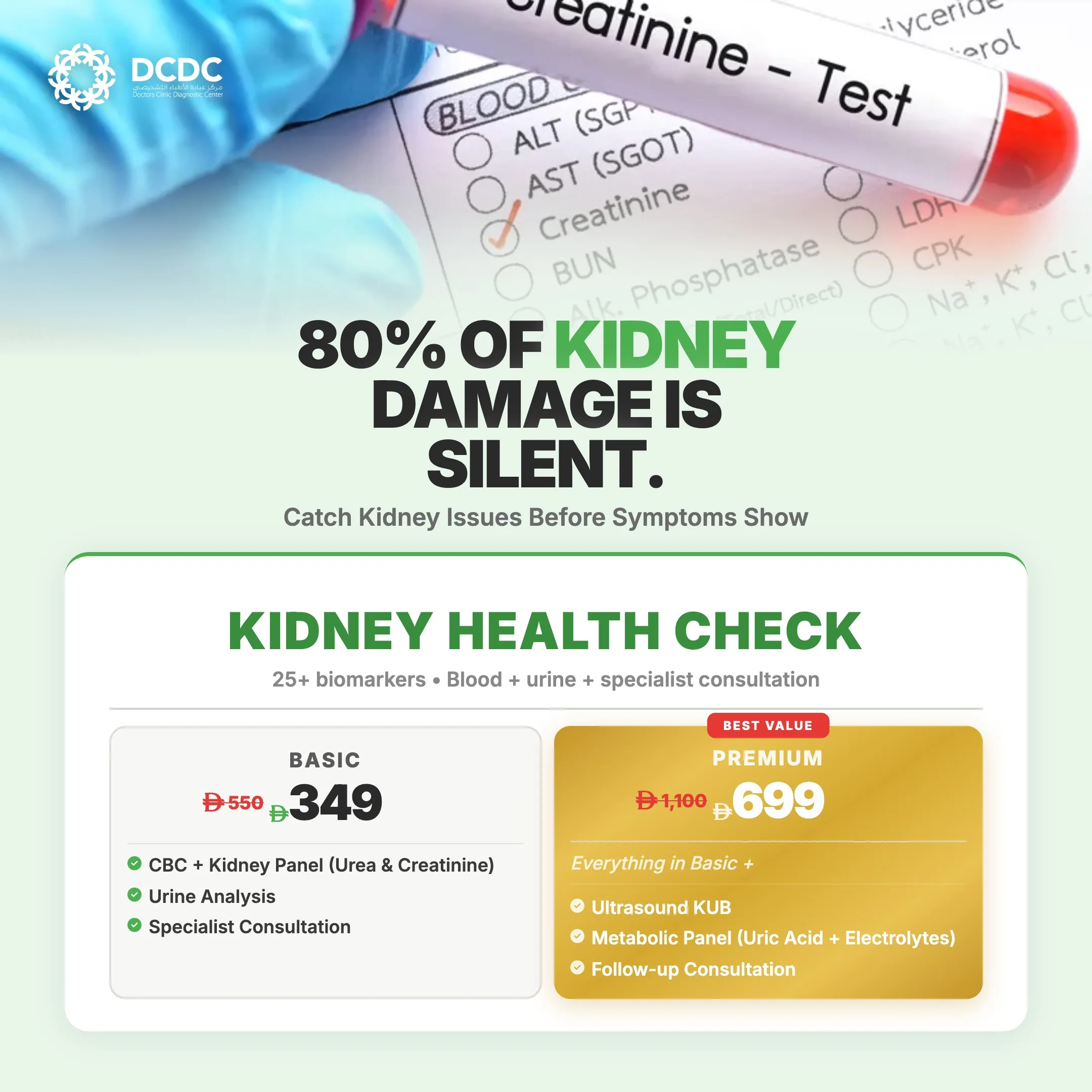
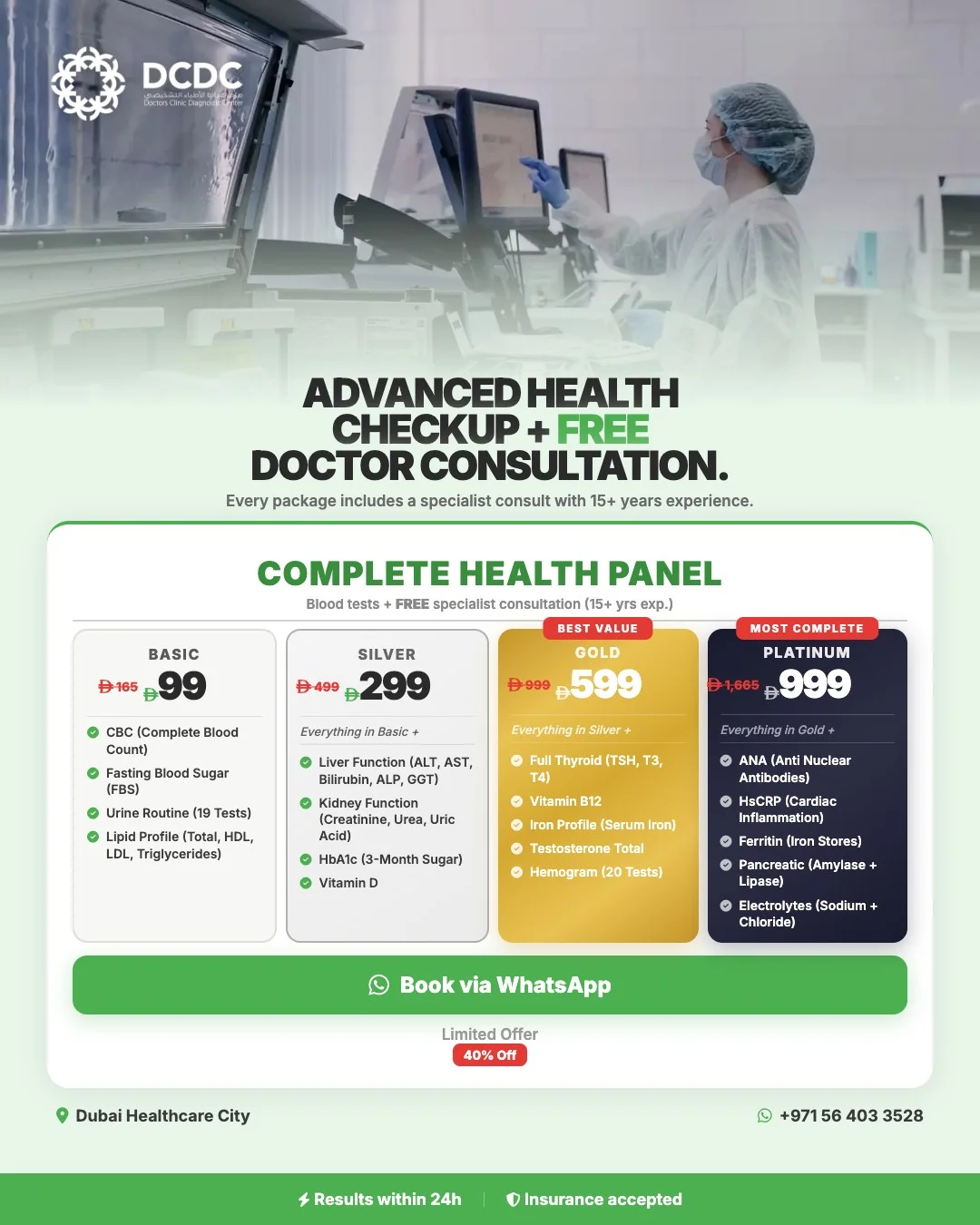
Health Screening Packages
Save with our bundled screening packages — specialist consultation included




What Does an Orthopedic Doctor Do?
An orthopedic doctor, also called an orthopedic surgeon or musculoskeletal specialist, diagnoses and treats conditions affecting bones, joints, ligaments, tendons, muscles, and nerves. Despite the word surgeon in their title, the majority of orthopedic care is non-surgical. Orthopedic specialists spend most of their clinical time managing conditions through conservative methods: medication, physiotherapy, bracing, injections, and lifestyle modifications.
Orthopedic doctors complete extensive training that typically includes 5-6 years of medical school, 5-6 years of orthopedic surgical residency, and often 1-2 years of subspecialty fellowship in areas such as spine surgery, sports medicine, joint replacement, or hand surgery. This depth of training means they understand both the surgical and non-surgical management of musculoskeletal conditions, which is essential for providing honest guidance on whether a patient truly needs an operation.
Symptom Checklist: When to See an Orthopedic Doctor
Not every ache requires a specialist. But certain patterns should prompt you to book an orthopedic consultation rather than continuing to wait it out. According to the American Academy of Orthopaedic Surgeons (AAOS), early evaluation of musculoskeletal symptoms leads to better treatment outcomes and can prevent conditions from progressing. Use this checklist to assess whether your symptoms warrant a specialist visit.
- Pain lasting more than 2 weeks: Joint, bone, or muscle pain that has not improved with rest, ice, compression, elevation, and over-the-counter anti-inflammatories
- Pain that wakes you at night: Musculoskeletal pain severe enough to disrupt sleep is a significant clinical indicator that warrants evaluation
- Swelling that does not resolve: Persistent joint swelling, especially if warm to touch, suggests inflammation or structural damage requiring diagnosis
- Decreased range of motion: If you cannot fully bend or straighten a joint, or if stiffness limits daily activities like dressing, cooking, or driving
- Instability or giving way: A knee or ankle that buckles or feels unreliable during walking, climbing stairs, or standing suggests ligament damage
- Clicking, locking, or catching: Mechanical symptoms in a joint, particularly if painful, often indicate cartilage tears or loose bodies
- Numbness, tingling, or weakness: These neurological symptoms alongside joint or spine pain suggest nerve compression requiring prompt assessment
- Difficulty with daily activities: Struggling with walking, climbing stairs, lifting objects, or basic self-care because of pain or stiffness
- Visible deformity: Any obvious change in the shape or alignment of a bone or joint after injury needs urgent evaluation
- Previous injury that never fully healed: Old injuries that were not properly treated can develop into chronic problems and degenerative changes
Dr. Mersad Moosavi, with over 14 years of orthopedic experience at DCDC, notes that many patients wait too long before seeking specialist advice. A common pattern is tolerating gradually worsening knee or back pain for months or even years, during which time the underlying condition progresses and treatment becomes more complex. Early assessment is almost always better than late assessment.
Urgent vs Non-Urgent Orthopedic Symptoms: When to Act Fast
While most orthopedic conditions develop gradually, certain situations require same-day or emergency care. Understanding the difference between urgent and non-urgent symptoms helps you make the right decision about where and when to seek help.
| Urgency Level | Symptoms | Action |
|---|---|---|
| Emergency (A&E / ER) | Suspected fracture with visible deformity, open wound over a fracture, loss of circulation (pale or blue limb), spinal injury with weakness or numbness in legs | Go to Emergency Department immediately |
| Same-Day / Urgent | Inability to bear weight after injury, sudden severe joint swelling, joint redness with fever (possible infection), severe pain uncontrolled by medication | Call for same-day orthopedic appointment or urgent care |
| Within 1-2 Weeks | Persistent pain > 2 weeks, worsening stiffness, new clicking or locking, progressive difficulty with activities | Book an orthopedic consultation |
| Routine / Preventive | Mild joint aches that respond to rest, previous injury for second opinion, pre-sport fitness assessment, osteoporosis screening | Schedule at your convenience |
Orthopedic symptom urgency guide: when to seek care
If you are uncertain about the urgency of your symptoms, err on the side of seeking an earlier appointment. At DCDC, same-day orthopedic appointments are frequently available, and the clinical team can triage your concern quickly. For related guidance on joint symptoms, see our guide on joint pain treatment in Dubai.
Common Orthopedic Conditions in Dubai
Research published in the International Journal of Rheumatic Diseases found that lower back pain is the most common musculoskeletal presentation in Dubai primary care clinics (33%), followed by knee osteoarthritis (25%). Musculoskeletal disorders ranked as the second leading cause of disability across the Gulf Cooperation Council countries, affecting an estimated 18% of the UAE population. These are the conditions an orthopedic doctor in Dubai sees most frequently.
- Osteoarthritis (knee, hip, shoulder): The most common form of arthritis, causing cartilage breakdown, pain, stiffness, and reduced mobility. Prevalence increases significantly after age 45
- Lower back pain and disc problems: Herniated discs, degenerative disc disease, spinal stenosis, and mechanical back pain are extremely common, particularly in desk-based professionals
- Sports injuries: ACL tears, meniscus tears, rotator cuff injuries, ankle sprains, and stress fractures are prevalent in Dubai's active population, especially among padel, football, and running enthusiasts
- Tendon disorders: Tennis elbow, golfer's elbow, Achilles tendinopathy, and rotator cuff tendinitis from overuse or repetitive strain
- Fractures: From acute trauma (falls, road accidents, sports injuries) or osteoporotic fragility fractures in older adults
- Shoulder conditions: Frozen shoulder (adhesive capsulitis), rotator cuff tears, labral tears, and shoulder impingement are particularly common in the 40-60 age group
- Carpal tunnel syndrome: Nerve compression at the wrist causing numbness, tingling, and weakness in the hand, often related to prolonged computer use
- Osteoporosis and fragility fractures: Low bone density leading to increased fracture risk, particularly in postmenopausal women and vitamin D-deficient individuals
- Cervical spine disorders: Neck pain, cervical disc herniation, and cervical spondylosis causing neck stiffness, radiating arm pain, and headaches
Self-Assessment: Do You Need an Orthopedic Doctor or Your GP?
Many patients are unsure whether they should start with their general practitioner or go directly to an orthopedic specialist. In Dubai, unlike some countries with strict referral systems, you can often book directly with a specialist. However, understanding which route is appropriate can save time and money. For a deeper look at back-related symptoms, see our guide on back pain causes and treatment.
Start with your GP if: your pain is mild, started recently (less than a week), responds well to over-the-counter medication, is not associated with injury, or is accompanied by general symptoms such as fatigue or unexplained weight loss that could indicate a systemic condition rather than a structural problem.
Go directly to an orthopedic doctor if: your pain followed a specific injury, has persisted for more than 2 weeks despite self-care, involves mechanical symptoms like locking, clicking, or instability, limits your daily function, is progressively worsening, or involves numbness and tingling. In Dubai, most insurance plans allow direct specialist access without a GP referral, though some HMO plans may require one.
What Happens During an Orthopedic Consultation?
Understanding what to expect during your first orthopedic visit can help you prepare and get the most out of the appointment. A typical consultation at DCDC follows a structured approach designed to reach an accurate diagnosis efficiently.
- Step 1 - Medical history review (5-10 minutes): The orthopedic doctor will ask about your symptoms, when they started, what makes them better or worse, your activity level, previous injuries, medications, and medical history. Bring any previous imaging or reports
- Step 2 - Physical examination (10-15 minutes): A hands-on assessment of the affected area including range of motion testing, strength assessment, joint stability tests, palpation for tenderness, and specific provocative tests relevant to your condition
- Step 3 - Diagnostic imaging (if needed): Based on findings, the doctor may order X-rays (available immediately at DCDC), MRI, CT scan, or ultrasound. On-site imaging at DCDC means you can often have these done the same day rather than waiting for a separate appointment
- Step 4 - Diagnosis and treatment plan: The orthopedic doctor explains your diagnosis, discusses treatment options (conservative through to surgical if relevant), and creates a personalised plan. You should leave with a clear understanding of your condition and next steps
The entire process, from walking in to leaving with a diagnosis and plan, typically takes 30-60 minutes depending on whether imaging is needed. DCDC's on-site X-ray, MRI, and CT scanning equipment eliminates the common frustration of being sent to a separate facility for imaging and then returning for another appointment to discuss results.
Concerned About Bone or Joint Pain?
Get a comprehensive orthopedic assessment with on-site MRI, X-ray, and CT imaging at DCDC Dubai Healthcare City. Consultations from AED 500, with same-day appointments frequently available.
Treatment Approaches: Conservative-First Philosophy
A common misconception is that seeing an orthopedic surgeon means you will end up having surgery. In reality, the vast majority of orthopedic conditions are managed conservatively. At DCDC, we follow a conservative-first treatment philosophy, meaning surgery is only recommended when non-surgical options have been genuinely exhausted or when the condition clearly requires operative intervention from the outset, such as certain fractures or complete ligament tears in active patients.
Dr. Mersad Moosavi, who trained at Tehran University of Medical Sciences and has authored over 20 international publications on spine surgery, consistently emphasises a stepped treatment approach. The goal is always to find the least invasive treatment that effectively addresses the patient's condition. For many patients, structured physiotherapy combined with targeted medication or injections provides excellent results without surgical risk.
| Treatment Level | Methods | Typical Conditions |
|---|---|---|
| Level 1: Self-Care & Lifestyle | Rest, activity modification, ice/heat, weight management, ergonomic changes | Mild sprains, early tendinitis, postural pain |
| Level 2: Medications | Oral anti-inflammatories, topical medications, nerve pain medications | Moderate joint pain, disc-related pain, arthritis flares |
| Level 3: Physiotherapy | Structured exercise programmes, manual therapy, electrotherapy, hydrotherapy | Most chronic musculoskeletal conditions, post-injury rehabilitation |
| Level 4: Injections | Corticosteroid injections, PRP (platelet-rich plasma), hyaluronic acid | Knee osteoarthritis, frozen shoulder, tendinopathy, plantar fasciitis |
| Level 5: Minimally Invasive Procedures | Arthroscopy, nerve blocks, spinal injections | Meniscus tears, diagnostic arthroscopy, spinal stenosis |
| Level 6: Surgery | Joint replacement, fracture fixation, ligament reconstruction, spinal fusion | End-stage arthritis, complex fractures, complete ligament tears, spinal instability |
Stepped treatment approach used at DCDC orthopedic clinic
For patients considering injection therapy, our detailed comparison of PRP versus cortisone injections explains the differences, benefits, and which option may be better suited to your condition. PRP therapy in particular has become an increasingly popular non-surgical option for joint and tendon conditions.
Orthopedic Consultation Costs in Dubai
Orthopedic consultation fees in Dubai vary significantly depending on the facility, the specialist's experience, and whether additional diagnostics are required. Understanding the cost landscape helps you budget appropriately and avoid surprises.
| Service | Typical Dubai Range | DCDC Price |
|---|---|---|
| Orthopedic specialist consultation | AED 400 - 1,200 | From AED 500 |
| Follow-up consultation | AED 300 - 800 | From AED 300 |
| X-ray (per region) | AED 200 - 500 | From AED 200 |
| MRI scan (per region) | AED 1,500 - 4,000 | From AED 1,500 |
| CT scan (per region) | AED 1,000 - 3,000 | From AED 1,000 |
| PRP injection (single joint) | AED 2,000 - 4,500 | From AED 2,000 |
| Corticosteroid injection | AED 500 - 1,500 | From AED 500 |
| Physiotherapy session | AED 300 - 600 | From AED 350 |
Orthopedic service costs in Dubai (2026). DCDC accepts 20+ insurance partners with direct billing.
DCDC works with over 20 insurance partners including Daman, AXA, Bupa, MetLife, and Cigna, offering direct billing so you do not need to pay out of pocket and claim later. For self-pay patients, the clinic provides transparent pricing with no hidden fees. DCDC's location in Dubai Healthcare City also means free parking and easy accessibility.
What to Expect at DCDC Orthopedic Clinic
Doctors Clinic Diagnostic Center (DCDC) is located in Building 64, Block A, Al Razi Medical Complex in Dubai Healthcare City. The clinic is MOHAP licensed (NIMY7VY5-240925) and holds a 4.8 out of 5 Google rating from over 1,000 patient reviews with 98% patient satisfaction. Here is what sets the orthopedic experience at DCDC apart.
- One-visit diagnostics: Consultation plus imaging (X-ray, MRI, or CT) in the same appointment. No separate referral, no second visit to collect results. You leave with a diagnosis and treatment plan
- On-site advanced imaging: DCDC has in-house X-ray, MRI, and CT scanning equipment, eliminating the delays that come with external imaging referrals
- Conservative-first approach: Treatment plans start with the least invasive effective option. Physiotherapy, medication, injections, and PRP are all available in-house before any surgical discussion
- Same-day availability: Appointments are frequently available on the same day, which is particularly valuable for acute injuries and urgent symptoms
- Direct insurance billing: Over 20 insurance partners including Daman, AXA, Bupa, MetLife, and Cigna. The front desk handles the paperwork so you focus on your health
- Extended hours: Open Saturday to Thursday 8 AM to 10 PM and Friday 9 AM to 9 PM, making it easier to schedule around work commitments
- Multidisciplinary team: In-house physiotherapy, radiology, and pain management means coordinated care without sending you to multiple locations
For patients dealing with sports-related injuries specifically, our guide on sports injury recovery in Dubai provides additional context on the rehabilitation process and timelines.
How to Prepare for Your Orthopedic Appointment
Proper preparation helps you get the most value from your orthopedic consultation. Dubai clinics typically allocate 20-30 minutes for initial consultations, so being organised means more time for discussion rather than filling in gaps.
- Bring previous imaging: If you have had X-rays, MRI scans, or CT scans done elsewhere, bring the films or digital copies. This avoids unnecessary repeat imaging and gives the specialist a baseline for comparison
- List your medications: Include all current medications, supplements, and any pain relievers you have been taking, along with how effective they have been
- Prepare a symptom timeline: Note when symptoms started, what triggered them, whether they are getting better, worse, or staying the same, and what makes them better or worse
- Bring your insurance card: If you have insurance, bring your card and any pre-authorisation numbers. DCDC's front desk can verify coverage and arrange direct billing before your consultation
- Wear appropriate clothing: Loose, comfortable clothing that allows easy access to the affected area. You may need to change into examination clothing for imaging
- Write down your questions: Patients often forget questions during the appointment. Writing them down ensures you cover everything important, from diagnosis to treatment options to recovery timelines
Orthopedic Doctor vs Other Specialists: Who Should You See?
The musculoskeletal system is treated by several different types of specialists. Choosing the right one avoids wasted appointments and gets you to appropriate treatment faster.
| Specialist | Best For | When to Choose |
|---|---|---|
| Orthopedic Surgeon | Structural bone/joint problems, fractures, ligament tears, disc problems, joint replacement | When you suspect a structural problem, had an injury, or need surgical opinion |
| Rheumatologist | Autoimmune arthritis (RA, lupus), gout, fibromyalgia, inflammatory conditions | When joint pain involves multiple joints symmetrically, morning stiffness > 1 hour, or blood tests show inflammation |
| Physiotherapist | Rehabilitation, exercise therapy, manual therapy, injury prevention | When you have a diagnosis and need rehabilitation, or for mild conditions that respond to exercise |
| Pain Management Specialist | Chronic pain syndromes, complex regional pain, nerve blocks | When pain persists despite standard orthopedic treatment |
| Sports Medicine Doctor | Sports injuries, exercise-related conditions, performance optimisation | When injury is directly sport-related and you want a return-to-sport focus |
Choosing the right musculoskeletal specialist for your condition
If you are unsure which specialist you need, an orthopedic doctor is generally the best starting point for any bone, joint, or structural musculoskeletal problem. They can diagnose the condition and refer you to a rheumatologist, physiotherapist, or pain specialist if a different approach would be more appropriate. For ACL and ligament-related concerns specifically, see our detailed ACL injury recovery guide.
Insurance Coverage for Orthopedic Care in Dubai
Understanding your insurance coverage before booking an orthopedic consultation avoids unexpected costs. In the UAE, health insurance is mandatory, and most plans cover orthopedic consultations, though the extent of coverage varies.
- Basic DHA plans: Typically cover orthopedic consultations with a co-pay ranging from AED 0-50. Imaging such as X-ray and MRI usually requires pre-authorisation
- Enhanced plans (Daman, AXA, Bupa, MetLife, Cigna): Generally cover consultations, imaging, physiotherapy, and injections with lower co-pays. Some plans offer full coverage for in-network providers
- Pre-authorisation: MRI scans, CT scans, and certain treatments typically require pre-authorisation from your insurer. DCDC's insurance team handles this process for you and can usually obtain approval within 24-48 hours
- Self-pay patients: DCDC offers competitive self-pay rates for patients without insurance or those who prefer not to use their insurance for a particular visit
DCDC partners with over 20 insurance providers and offers direct billing, meaning you pay only your co-pay at the time of visit. The clinic's insurance coordination team can verify your coverage before your appointment so there are no surprises.
When Physiotherapy Alone Is Enough
Not every musculoskeletal complaint requires an orthopedic doctor. In many cases, physiotherapy is the first-line treatment and may be all you need. Understanding when physiotherapy alone is sufficient can save you time and money. For a full overview of options and pricing, read our guide on physiotherapy costs in Dubai.
Physiotherapy may be sufficient if: your symptoms are mild to moderate, you have a clear mechanical trigger (such as starting a new exercise or changing your desk setup), the pain is muscular rather than deep joint pain, you have no neurological symptoms (numbness, tingling, weakness), and there is no history of significant trauma or injury.
You should see an orthopedic doctor first if: your symptoms are severe, the pain followed a specific injury, you have mechanical joint symptoms like locking or catching, there are neurological symptoms present, or if physiotherapy has not improved your symptoms after 4-6 weeks. An orthopedic assessment ensures you have an accurate diagnosis before committing to a treatment path.
Ready to Address Your Bone or Joint Concern?
Book an orthopedic consultation at DCDC Dubai Healthcare City. Consultations from AED 500, on-site MRI and X-ray, direct billing with 20+ insurers. Open Saturday to Thursday 8 AM-10:30 PM, Friday 9 AM-10 PM.
Red Flags: Symptoms That Need Emergency Orthopedic Care
While most orthopedic conditions can wait for a scheduled appointment, some situations require emergency attention. Recognising these red flags could prevent serious complications. Go directly to an Emergency Department if you experience any of the following.
- Open fracture: Bone visible through the skin or an open wound over a suspected fracture site. This is a surgical emergency requiring immediate treatment to prevent infection
- Loss of circulation: A limb that becomes pale, blue, or cold after injury, or loss of pulse below an injury site, indicates vascular compromise
- Cauda equina syndrome: Severe lower back pain with loss of bladder or bowel control, numbness in the groin area, or progressive leg weakness. This requires emergency spinal surgery
- Compartment syndrome: Severe, worsening pain in a limb that is out of proportion to the injury, especially after a fracture or crush injury. The limb may feel tight and swollen
- Septic arthritis: A hot, red, severely swollen joint with fever and inability to move it. Joint infection can destroy cartilage rapidly if not drained and treated with antibiotics
- Dislocation: A joint that is visibly out of position with severe pain and inability to move. Prompt reduction (putting it back) prevents nerve and blood vessel damage
Living in Dubai: Lifestyle Factors That Increase Orthopedic Risk
Dubai's unique lifestyle and environment contribute to certain orthopedic patterns that specialists in this region see regularly. Being aware of these risk factors can help with prevention.
- Vitamin D deficiency: Despite abundant sunshine, studies show that up to 90% of UAE residents have insufficient vitamin D levels due to indoor lifestyles and heat avoidance. Low vitamin D weakens bones and contributes to osteoporosis and stress fractures
- Padel and football injuries: Dubai's booming padel and football culture leads to a high incidence of knee ligament injuries, ankle sprains, and shoulder problems. Inadequate warm-up and weekend warrior patterns increase risk
- Sedentary work culture: Long hours at desks in air-conditioned offices contribute to back pain, neck stiffness, and deconditioning. Ergonomic setups and regular movement breaks are essential
- High-impact gym culture: CrossFit, heavy weightlifting, and high-intensity training without proper form guidance leads to disc injuries, shoulder problems, and knee conditions
- Heat-related dehydration: Dehydration during summer months affects joint lubrication and increases the risk of muscle cramps, strains, and tendon injuries during exercise
Verwandte Leistungen im DCDC
Fachkundige Betreuung und moderne Diagnostik in Dubai Healthcare City
Frequently Asked Questions
Taking the Right Step for Your Bone and Joint Health
Musculoskeletal problems rarely improve on their own once they have persisted beyond a few weeks. The natural tendency to push through pain and hope it resolves often leads to delayed diagnosis, more advanced disease, and ultimately more complex treatment. An orthopedic consultation is a diagnostic starting point, not a commitment to surgery. The vast majority of patients who see an orthopedic doctor leave with a conservative treatment plan that keeps them active and avoids the operating theatre.
If you have been living with joint pain, back problems, or a nagging injury that you keep putting off, the most productive step is a proper assessment. At DCDC in Dubai Healthcare City, you can get that assessment efficiently, with on-site imaging, a conservative-first treatment philosophy, and a team that works with your insurance to minimise out-of-pocket costs. Your bones and joints carry you through every day of your life, and they deserve the same attention you would give any other aspect of your health.
Quellen und Referenzen
Dieser Artikel wurde von unserem medizinischen Team überprüft und bezieht sich auf folgende Quellen:
- American Academy of Orthopaedic Surgeons (AAOS) - Clinical Practice Guidelines for Musculoskeletal Conditions
- Mayo Clinic - Osteoarthritis Diagnosis and Treatment
- NHS - Orthopaedics (Bones and Joints) Services and Referral Guidance
- International Journal of Rheumatic Diseases - Prevalence of Musculoskeletal Diseases in Dubai Primary Care
- BMC Musculoskeletal Disorders - Burden of Musculoskeletal Disorders in GCC Countries 1990-2019
- WebMD - What Is an Orthopedic Physician: What They Do, When to See One
Medizinische Inhalte auf dieser Website werden von DHA-lizenzierten Ärzten überprüft. Siehe unsere redaktionelle Richtlinien für weitere Informationen.

Verfasst von
DCDC Medical Team
Doctors Clinic Diagnostic Center
Dubai Healthcare City
DCDC (Doctors Clinic Diagnostic Centre) is a multi-specialty medical center in Dubai Healthcare City offering comprehensive healthcare services across cardiology, orthopedics, gynecology, internal medicine, neurology, radiology, laboratory, and more.
Related Articles
Joint Pain Treatment Dubai: Causes & Relief Guide
Back Pain: Causes, Treatment & When to See a Doctor
PRP Injection for Joints: Treatment Guide Dubai
ACL Injury Recovery: Complete Rehabilitation Guide
More in General Health
Dizziness Causes Dubai: When to Get Checked (2026)
Weiterlesen
Elderly Care at Home Dubai: Full Guide (2026)
Weiterlesen
IV Drip at Home Dubai: From AED 449 (2026)
Weiterlesen
Nurse at Home Dubai: Cost & Services (2026)
Weiterlesen
Stomach Infection Treatment Dubai (2026)
Weiterlesen
Cholesterol Levels by Age Dubai: Chart (2026)
Weiterlesen© 2026 Doctors Clinic Diagnostic Center (DCDC), Dubai Healthcare City. Originally published at https://doctorsclinicdubai.ae/blog/orthopedic-doctor-dubai-guide. All rights reserved. Unauthorized reproduction is prohibited.