Key Takeaways
- Wheezing is a high-pitched whistling sound caused by narrowed airways, most often heard when breathing out, and it is a symptom that needs a cause identified rather than a diagnosis in itself.
- Asthma is the most common cause, but allergies, COPD, bronchitis, infections, reflux, heart failure and inhaled objects can all cause wheezing.
- Wheezing differs from stridor, a harsher sound on breathing in that signals upper-airway obstruction and is generally more urgent.
- Go to an emergency room for wheezing with severe breathlessness, blue lips, facial swelling, chest pain or sudden choking; see a GP within 24 hours for wheezing with fever or worsening symptoms.
- Diagnosis combines a lung examination, pulse oximetry, spirometry, and, when needed, chest X-ray, blood tests (CBC, CRP, IgE) and allergy testing.
- Dubai's air conditioning, dust storms and humidity swings can trigger wheezing, and a GP consultation at DCDC starts from AED 249.
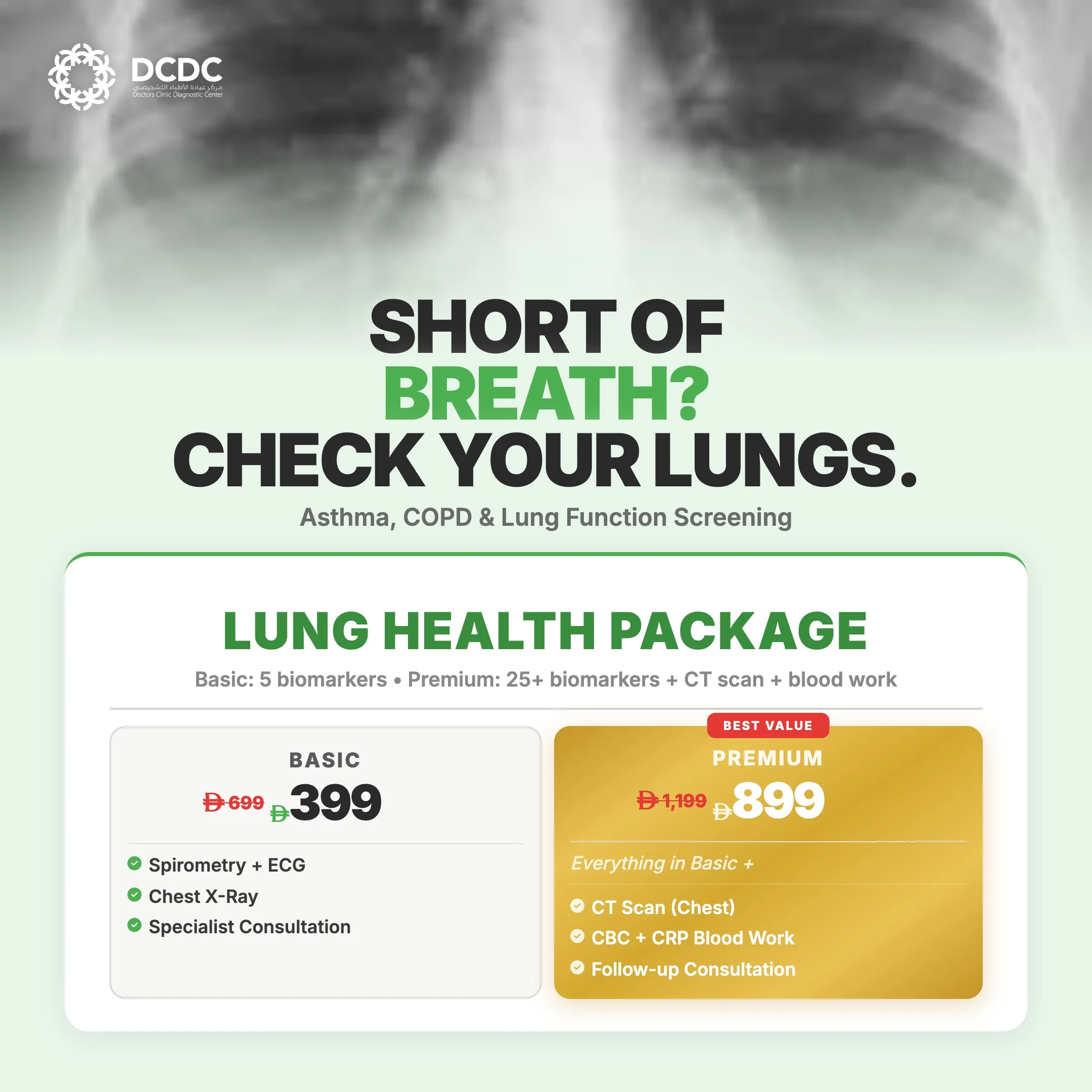
If you have noticed a whistling or squeaking sound when you breathe, it is natural to wonder whether it is harmless or a sign of something more serious. Wheezing is caused by narrowed or inflamed airways, and the cause can range from a passing viral infection to asthma, COPD or an allergic reaction. At Doctors Clinic Diagnostic Center (DCDC) in Dubai Healthcare City, a General Consultation from AED 249 includes a lung examination and oxygen check, with on-site chest X-ray and blood tests available if needed.
This guide explains what wheezing is, the most common causes in adults and children, how it differs from stridor, which warning signs mean you should go to an emergency room, how doctors diagnose it, what a visit to DCDC involves, the treatment options available, and the Dubai-specific triggers worth knowing about.

What Is Wheezing?
Wheezing is a high-pitched, whistling or squeaking sound produced when air moves through airways that have become narrowed, inflamed or partly blocked. It is a symptom rather than a diagnosis, and it tells a doctor that something is restricting airflow somewhere in the breathing tubes. The sound is created by turbulent air vibrating the walls of the smaller airways, much like air squeezed through the neck of a balloon.
Most wheezing is heard when breathing out (expiratory wheeze), because the airways inside the chest naturally narrow a little further as you exhale. When the narrowing is more severe, wheezing can also be heard when breathing in (inspiratory wheeze), and in the most significant obstruction it may be audible during both phases. Some wheezes are only detectable through a stethoscope, while others can be heard across a room.
Wheezing vs Stridor: An Important Distinction
Wheezing is often confused with stridor, a harsher, higher-pitched sound heard mainly on breathing in. Stridor usually comes from the voice box (larynx) or windpipe (trachea) and points to a narrowing in the upper airway. It is generally treated as more urgent than wheezing because it can signal a rapidly worsening blockage, such as swelling of the throat or an inhaled object. A third sound, stertor, is a low snoring-type noise from the nose or throat. Because wheeze and stridor can sound alike to the untrained ear and are managed differently, a clinical examination matters. Stridor, especially in a child, should always be assessed urgently.
Common Causes of Wheezing
Doctors have long recognised that asthma is the most frequent cause of wheezing, but many other lung and non-lung conditions can produce the same sound. A classic review of wheezing in patients without asthma, indexed on PubMed, stresses that identifying the true cause matters because each condition needs its own treatment. The most important causes are outlined below.
Asthma
Asthma is the leading cause of recurrent wheezing in both children and adults. The airways become inflamed and hypersensitive, and in response to triggers such as allergens, exercise, cold air, smoke or viral infections the muscle around them tightens and the lining swells. Wheezing is typically accompanied by cough, chest tightness and breathlessness, and is often worse at night or in the early morning. Our detailed asthma guide for Dubai residents covers triggers, inhaler types and long-term control.
Allergies
Allergic conditions can trigger wheezing directly, by provoking an asthma-type response in the lower airways, or indirectly through postnasal drip and airway irritation. Common triggers include dust mites, pet dander, pollen, mould spores and certain foods. If wheezing follows a pattern, for example on contact with a particular animal, in a dusty room, or during certain seasons, an allergic component is likely and allergy testing can help identify the culprit.
COPD (Chronic Obstructive Pulmonary Disease)
COPD, which includes emphysema and chronic bronchitis, causes persistent and usually progressive narrowing of the airways, most often after years of smoking or exposure to fumes and dust. Wheezing in COPD is usually accompanied by a long-standing cough, sputum production and breathlessness on exertion. New wheezing in a current or former smoker over 40 deserves proper evaluation with spirometry. You can read more in our COPD symptoms and management guide.
Bronchitis
Acute bronchitis is inflammation of the large airways, usually following a viral cold. Alongside a cough that can last for weeks, many people notice wheezing and chest soreness as the airway lining swells and produces extra mucus. Wheezing from bronchitis typically settles as the infection resolves, although in some people it lingers. See our guide to bronchitis symptoms and treatment for the details, and our article on chronic cough if a cough has outlasted the wheeze.
Respiratory Infections
Viral infections such as the common cold, influenza, RSV and COVID-19 can all inflame the airways enough to cause wheezing, particularly in young children and in people who already have asthma or COPD. Bacterial pneumonia can also cause wheezing alongside fever, productive cough and breathlessness. Infection-related wheezing that is accompanied by high fever, rapid breathing or worsening tiredness should be assessed promptly.
Gastro-Oesophageal Reflux Disease (GERD)
Acid reflux is an under-recognised cause of wheezing. Stomach acid can irritate the airways directly if tiny amounts are inhaled, and it can also trigger a nerve reflex that tightens the airways. Reflux-related wheezing tends to be worse at night, after large or late meals, or when lying flat, and may be accompanied by heartburn, a sour taste or a chronic dry cough. Treating the reflux often improves the airway symptoms.
Foreign Body in the Airway
An inhaled object, such as a piece of food, a small toy or a nut, can partly block an airway and produce sudden wheezing, often on one side of the chest. This is most common in toddlers who put objects in their mouths. A sudden onset of wheezing and coughing or choking in a child who was previously well, particularly while eating or playing, should be treated as an emergency.
Anaphylaxis
Anaphylaxis is a severe, life-threatening allergic reaction to a trigger such as a food, insect sting or medication. Wheezing and difficulty breathing may appear together with hives, swelling of the lips, tongue or face, vomiting, dizziness or a drop in blood pressure. This is a medical emergency that requires an adrenaline injection and immediate emergency services. Never wait to see if symptoms settle.
Other Causes Doctors Consider
Less commonly, wheezing can be caused by heart failure (sometimes called cardiac asthma, when fluid backs up in the lungs), blood clots in the lungs, bronchiectasis, vocal cord dysfunction, tumours pressing on the airway, certain medications such as beta-blockers or aspirin in sensitive people, and cystic fibrosis in children. When wheezing is new, persistent or does not respond to standard treatment, a doctor will look beyond asthma. If breathlessness is your main complaint, see our article on causes of shortness of breath.
Wheezing in Children vs Adults
The likely causes of wheezing differ considerably with age, which is why doctors ask about when the wheezing started and how it has behaved over time.
Wheezing in Children
In infants and preschool children, most episodes of wheezing are triggered by viral respiratory infections. Children's airways are smaller, so even a modest amount of swelling or mucus can cause noisy breathing. Many young children who wheeze with colds outgrow the problem by school age, but others go on to develop asthma, particularly when there is eczema, allergies or a family history of asthma. Other causes in children include bronchiolitis in babies, inhaled foreign bodies, reflux, enlarged tonsils and adenoids, and, rarely, congenital airway abnormalities or cystic fibrosis. Reviews on PubMed covering the diagnosis of wheezing in children and the management of asthma in infants and preschoolers recommend chest X-ray when wheezing is recurrent or does not respond to bronchodilators.
Wheezing in Adults
In adults, asthma (including asthma that starts for the first time in adulthood), COPD, chronic bronchitis, allergies and reflux account for most cases. Heart failure becomes a more important consideration with age, and new wheezing in a smoker or ex-smoker should prompt a search for COPD and, in some cases, lung cancer. Occupational exposures to dust, chemicals and fumes can also cause adult-onset wheezing.
| Feature | Children | Adults |
|---|---|---|
| Most common causes | Viral infections, early-life wheeze, asthma, bronchiolitis (infants) | Asthma, COPD, bronchitis, allergies, GERD |
| Unique concerns | Inhaled foreign body, congenital airway problems, cystic fibrosis | Heart failure, lung cancer, occupational exposures, medication effects |
| Outlook | Many outgrow viral-triggered wheeze; some develop asthma | Often chronic and needs long-term management |
| Urgent sign | Sudden onset with choking, stridor, drawing in of the chest, blue lips | Severe breathlessness, chest pain, inability to speak a full sentence |
When to See a Doctor for Wheezing: Red Flags
Not every episode of wheezing is an emergency, but some situations need urgent care. The table below summarises when to go to an emergency room and when a clinic visit is appropriate.
| Urgency | Warning Signs | What to Do |
|---|---|---|
| Emergency: call 998 (ambulance) or go to the nearest ER | Wheezing with severe difficulty breathing; blue or grey lips or face; unable to speak in full sentences; swelling of the face, lips or tongue; wheezing after a sting, food or medication; sudden wheezing after choking in a child; chest pain; confusion or drowsiness; no relief from a reliever inhaler | Seek emergency care immediately. Do not drive yourself if you are struggling to breathe. |
| See a doctor within 24 hours | Wheezing with fever, green or bloody sputum, or rapid breathing; a child who is feeding poorly or breathing fast; worsening wheeze despite using a prescribed inhaler; wheezing at night waking you repeatedly | Book a same-day or next-day GP consultation. |
| Book a routine appointment | Recurrent wheezing with colds, exercise or allergens; wheezing lasting more than two to three weeks; wheezing with heartburn; first-ever wheezing without any red flags | Schedule a GP consultation for assessment and testing. |
This is a general guide only and does not replace medical advice. If in doubt, seek care.
Seek care sooner if you also have unexplained weight loss, night sweats, persistent hoarseness, coughing up blood, or swelling of the legs, as these can point to conditions other than asthma.
How Wheezing Is Diagnosed
Diagnosis begins with a conversation. A doctor will ask when the wheezing started, whether it comes and goes, what triggers it, whether it is worse at night, and about smoking, allergies, reflux, family history, medications and workplace exposures. This history alone often suggests the cause.
- Physical examination: Listening to the chest with a stethoscope confirms the wheeze and its pattern (inspiratory, expiratory or both), and helps distinguish it from stridor or crackles. The doctor will also check breathing rate, look for use of accessory muscles, examine the nose and throat, and check for eczema, ankle swelling and signs of heart problems.
- Pulse oximetry: A painless clip on the finger measures the oxygen saturation of your blood and helps judge severity.
- Spirometry (lung function test): You blow forcefully into a device that measures how much air you can exhale and how fast. The test is repeated after a bronchodilator to see whether the airway narrowing reverses, which strongly supports asthma, whereas persistent obstruction suggests COPD.
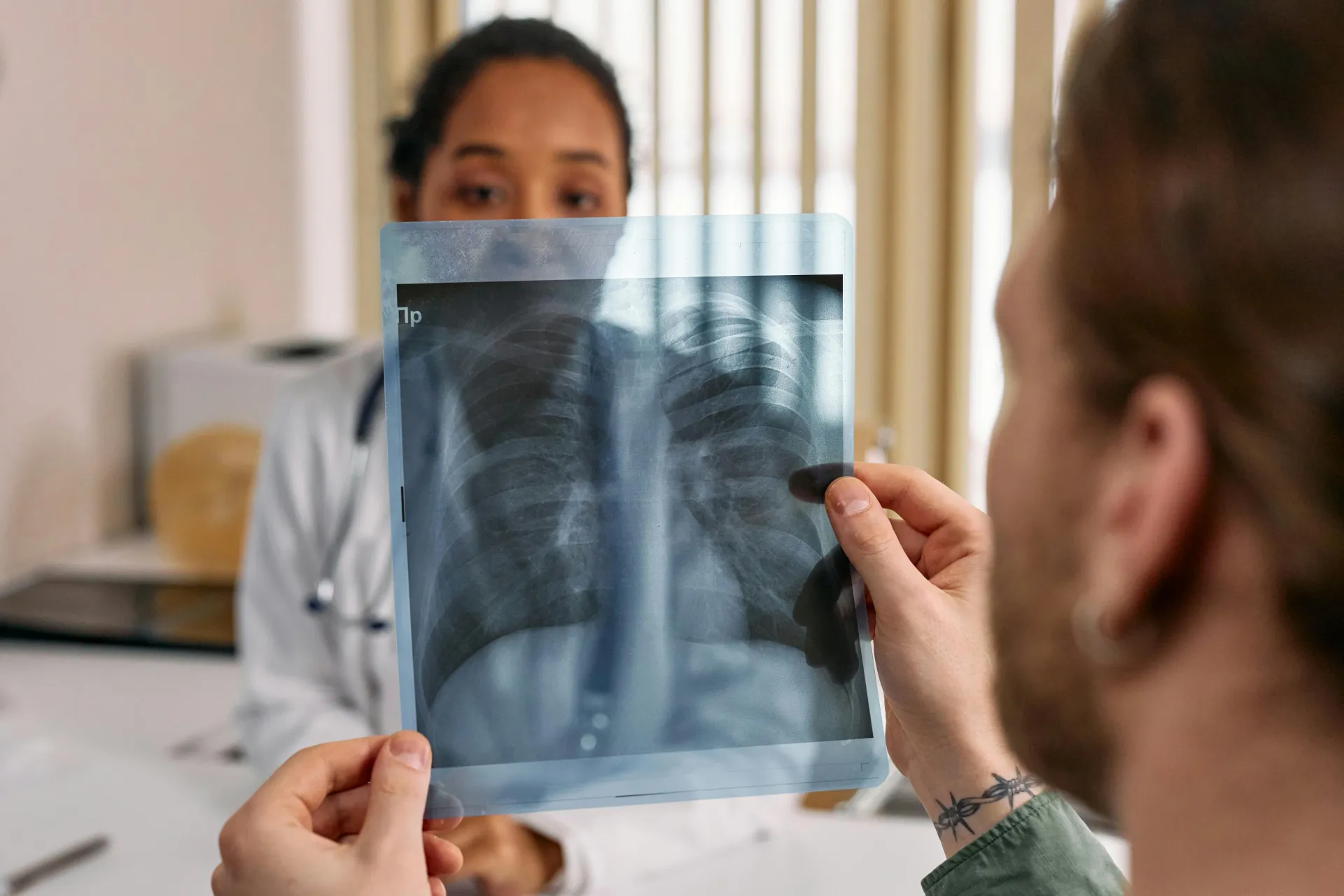
- Chest X-ray: An X-ray can reveal pneumonia, hyperinflated lungs, fluid from heart failure, a foreign body or a mass. It is particularly helpful when wheezing is new, persistent or not responding to treatment.
- Blood tests: A complete blood count (CBC) can show raised eosinophils (linked to allergy and asthma) or signs of infection, CRP indicates inflammation, and total IgE helps identify an allergic tendency.
- Allergy testing: Skin prick tests or specific blood tests identify triggers such as dust mites, pollen, pets and moulds, which guides avoidance and treatment.
- Further tests when needed: A high-resolution CT (HRCT) scan of the chest, an ECG or echocardiogram for suspected heart causes, reflux evaluation, or a nasal and throat examination by an ENT specialist for upper-airway causes.
A PubMed-indexed review of adult asthma diagnosis emphasises that the diagnosis requires both a compatible symptom pattern and objective evidence of variable airflow obstruction, which is why spirometry is central rather than relying on symptoms alone.
What to Expect at DCDC
Doctors Clinic Diagnostic Center (DCDC) is located at Building 64, Block A, Al Razi Medical Complex, Dubai Healthcare City (DHCC). The clinic is open Saturday to Thursday from 8 AM to 10 PM and Friday from 9 AM to 9 PM. Here is how a wheezing evaluation typically unfolds.
- Step 1: Arrival and registration. Free parking is available at the Al Razi Medical Complex, and our multilingual reception team will register you and check your insurance. DCDC works with 20+ insurance partners with direct billing.
- Step 2: GP assessment. A General Practitioner takes a detailed history, listens to your lungs, and checks your oxygen level with pulse oximetry. A General Consultation starts from AED 249.
- Step 3: On-site chest X-ray if needed. If the examination suggests infection, a structural problem or an unclear cause, a chest X-ray can be done in the same building, with results within 18 to 24 hours.
- Step 4: Blood tests. Our on-site laboratory processes tests such as CBC (from AED 149), CRP (from AED 149) and an IgE allergy panel. Results for routine blood tests are typically available the same day.
- Step 5: Allergy testing referral. If your history suggests an allergic trigger, you will be referred for allergy testing so the cause can be identified and managed.
- Step 6: ENT referral for upper-airway causes. If the noise may be coming from the nose, throat or voice box, ENT specialist Dr. Yousra Mohamed is available on site for an ENT consultation.
- Step 7: Advanced imaging if required. For unexplained or persistent symptoms, DCDC has a multi-slice CT scanner for HRCT of the chest.
DCDC holds a 4.8/5 Google rating from over 1,000 reviews. Your GP will explain the findings, outline a treatment plan and arrange follow-up or specialist referral if needed.
Treatment Options for Wheezing
Treatment depends entirely on the underlying cause, which is why diagnosis comes first. The main approaches are outlined below. Your doctor will prescribe and adjust medicines according to your own assessment.
Bronchodilators
Bronchodilators relax the muscles around the airways and open them quickly. Short-acting relievers (such as salbutamol) are used for rapid relief of wheezing and breathlessness, usually through a metered-dose inhaler with a spacer or through a nebuliser. Longer-acting bronchodilators are used daily in COPD and some forms of asthma. If you find yourself needing your reliever more often than usual, that is a sign your condition is not well controlled and needs review.
Inhaled Corticosteroids
Where wheezing is caused by ongoing airway inflammation, as in persistent asthma, inhaled corticosteroids reduce swelling and sensitivity of the airways and prevent attacks when used regularly. Current asthma guidelines favour anti-inflammatory treatment over relying on a reliever alone. Short courses of oral steroids may be used for a severe flare-up.
Treating Infections
Viral causes of wheezing are managed with rest, fluids and symptom relief, while bacterial infections such as pneumonia require antibiotics. Antibiotics do not help viral bronchitis, so your doctor will prescribe them only when clearly indicated.
Allergy Management
When allergy is the driver, the focus is on identifying and reducing exposure, along with antihistamines, nasal steroid sprays and, in selected patients, allergen immunotherapy. Washing bedding at high temperatures, using dust-mite covers, keeping pets out of the bedroom and fixing damp areas can all help.
Treating Reflux and Other Causes
If reflux is contributing, acid-suppressing medicines, smaller earlier evening meals and raising the head of the bed can reduce nocturnal wheezing. Heart failure, vocal cord dysfunction and other causes each have their own specific treatment.
Lifestyle Measures
- Stop smoking and avoid second-hand smoke, shisha and incense smoke.
- Follow your written asthma or COPD action plan and carry your reliever inhaler.
- Keep vaccinations up to date, including influenza and pneumococcal vaccines where recommended.
- Maintain a healthy weight, which can reduce breathlessness and reflux.
- Keep indoor air clean and avoid known triggers such as strong perfumes and cleaning chemicals.
Dubai-Specific Triggers for Wheezing
Living in the UAE brings a set of environmental triggers that can provoke or worsen wheezing, particularly in people with asthma, allergies or COPD.
- Air conditioning and indoor air: AC is used for much of the year. Poorly maintained units and dirty filters can recirculate dust, mould and allergens, and moving between hot outdoor air and cold indoor air can irritate sensitive airways. Cleaning filters regularly and having ducts serviced helps.
- Dust and sandstorms: Fine desert dust is a well-known airway irritant. On dusty days, people with asthma or COPD should limit time outdoors, keep windows closed, and carry their reliever inhaler.
- Humidity and temperature swings: High summer humidity encourages dust mites and mould indoors, while sudden changes between humid heat and dry chilled air can trigger bronchospasm.
- Seasonal allergies and colds: Cooler months bring more pollen in some areas and a rise in viral respiratory infections, which are a common trigger of wheeze in both children and adults.
- Ramadan fasting and medication: Fasting can disrupt routine inhaler schedules. Many people with well-controlled asthma can fast safely, but you should speak to your doctor (and, if you wish, a religious adviser about inhaler use) before Ramadan. Your doctor can often rearrange dosing times, for example using controller inhalers at suhoor and after iftar, and will advise what to do if wheezing flares during a fast. Never stop preventer medication without medical advice. Dehydration from fasting in hot weather can also thicken mucus and worsen symptoms.
Wheezing Causes at a Glance
| Cause | Typical Symptoms | Key Test | Urgency Level |
|---|---|---|---|
| Asthma | Recurrent wheeze, cough, chest tightness, worse at night or with triggers | Spirometry with bronchodilator response | Routine; urgent if severe attack |
| Allergies | Wheeze with sneezing, itchy eyes, runny nose; pattern linked to exposure | IgE blood test, skin prick test | Routine |
| COPD | Persistent cough, sputum, breathlessness on exertion, history of smoking | Spirometry, chest X-ray | Routine; urgent if sudden worsening |
| Bronchitis | Cough after a cold, chest soreness, mild wheeze | Clinical exam, chest X-ray if needed | Routine to soon |
| Respiratory infection | Fever, cough, tiredness, rapid breathing | Examination, CBC, CRP, chest X-ray | Within 24 hours |
| GERD | Heartburn, sour taste, night-time wheeze, dry cough | Clinical assessment, reflux evaluation | Routine |
| Foreign body | Sudden wheeze and choking, often one-sided, usually in toddlers | Chest X-ray, specialist airway evaluation | Emergency |
| Anaphylaxis | Wheeze with hives, swelling of lips/face, dizziness, vomiting | Clinical diagnosis | Emergency |
| Heart failure | Wheeze with ankle swelling, breathlessness lying flat | ECG, echocardiogram, chest X-ray | Soon to urgent |
Worried About Your Wheezing? Get Checked at DCDC
Wheezing has many possible causes, and the right treatment depends on finding the right one. Book a consultation at DCDC in Dubai Healthcare City for a lung examination, pulse oximetry, and on-site chest X-ray and blood tests if needed. Rated 4.8/5 from 1,000+ Google reviews, with direct billing for 20+ insurance partners and free parking.
GP consultation from AED 249 | CBC from AED 149 | Same-day results for routine blood tests
Related Services at DCDC
Expert care and advanced diagnostics at Dubai Healthcare City
Frequently Asked Questions
Final Thoughts
Wheezing is your airways telling you that something is narrowing or irritating them. Sometimes the cause is minor and temporary, such as a cold, but recurrent or persistent wheezing, wheezing at night, and wheezing that comes with breathlessness should not be ignored or treated by guesswork. Identifying the cause, whether asthma, allergy, COPD, reflux or something else, is what makes treatment effective.
Know the red flags: severe breathlessness, blue lips, swelling of the face or tongue, chest pain, or sudden wheezing after choking need emergency care. For everything else, an early assessment is simple and often leads to a clear plan.
If you are wheezing, our team at DCDC in Dubai Healthcare City can examine your lungs, arrange a chest X-ray and blood tests on site, and refer you to ENT or allergy testing when needed. A GP consultation starts from AED 249, with direct billing for 20+ insurance partners. Message us on WhatsApp or call +971 54 219 5008 to book.
Sources & References
This article references the following sources:
- PubMed: Evaluation of wheezing in the nonasthmatic patient
- PubMed: Diagnosis and Management of Asthma in Adults: A Review (JAMA)
- PubMed: The diagnosis of wheezing in children (American Family Physician)
- PubMed: Diagnosis and management of asthma in infants and preschoolers
This information is educational and does not replace individual medical advice. See our editorial policy for more information.

Written by
Dr. Hadeel Elnur
General Practitioner
MD, General Practice
Dr. Hadeel Elnur is a General Practitioner at Doctors Clinic Diagnostic Center (DCDC) in Dubai Healthcare City.
Related Articles
Asthma Symptoms Dubai: Guide & Treatment (2026)
Bronchitis Treatment Dubai: Symptoms & Care (2026)

COPD Symptoms Dubai: Management Guide (2026)
Shortness of Breath Dubai: Causes & Help (2026)
Chest Infection Dubai: Symptoms & Treatment (2026)
More in Respiratory
© 2026 Doctors Clinic Diagnostic Center (DCDC), Dubai Healthcare City. Originally published at https://doctorsclinicdubai.ae/blog/wheezing-causes-treatment-dubai. All rights reserved. Unauthorized reproduction is prohibited.