Key Takeaways
- DEXA body composition scans measure fat mass, lean muscle mass, and bone mineral density simultaneously in a single 10-minute test
- Regional breakdown shows fat and muscle distribution in arms, legs, trunk, and android/gynoid regions separately
- DEXA is considered the clinical gold standard for body composition with accuracy within 1-2% for body fat percentage
- Athletes benefit from tracking lean mass gains and fat loss by region to identify imbalances between left and right sides
- Recommended every 3-6 months during training cycles to monitor progress and adjust nutrition plans accordingly
A DEXA body composition scan is the most accurate clinical method for measuring how much of your body is fat, how much is lean muscle, and how dense your bones are. Unlike bathroom scales or handheld devices, a DEXA scan breaks down your body composition by specific regions, giving athletes, coaches, and sports medicine professionals detailed data to optimize training, nutrition, and recovery.
Whether you are a competitive bodybuilder preparing for stage, a marathon runner monitoring lean mass during high-volume training, or a recreational athlete tracking progress toward fitness goals, DEXA provides objective numbers that other methods simply cannot match. This guide covers everything athletes need to know about DEXA body composition testing, including how it works, what the results mean, how it compares to other technologies, and how often you should get scanned.



What Does a DEXA Body Composition Scan Measure?
DEXA stands for Dual-Energy X-ray Absorptiometry. It works by passing two low-energy X-ray beams through the body at different energy levels. Because fat, lean tissue, and bone each absorb these beams differently, the scanner can distinguish between all three tissue types with remarkable precision.
A single DEXA body composition scan provides three core measurements:
- Fat mass - total body fat in kilograms and as a percentage of total body weight, broken down by region
- Lean mass (muscle + organs + water) - total lean tissue mass by region, which serves as a reliable proxy for muscle mass
- Bone mineral content (BMC) and bone mineral density (BMD) - total skeletal mass and density scores at key sites
What makes DEXA uniquely valuable for athletes is its regional analysis. The scan divides the body into specific zones: left arm, right arm, left leg, right leg, trunk, android region (waist area), and gynoid region (hip area). For each zone, you get separate fat mass, lean mass, and bone measurements. This means you can see whether your left leg carries more muscle than your right, whether fat is concentrated around your midsection, and how your bone density compares across different skeletal sites.
Why Athletes Use DEXA Scans
Athletes at every level increasingly rely on DEXA body composition data because it provides actionable insights that a scale or mirror cannot. The number on a scale tells you total weight but nothing about what that weight consists of. An athlete who gains two kilograms could have gained muscle, fat, water, or a combination. Only DEXA can separate these components with clinical accuracy.
Tracking Training Progress
DEXA scans taken at regular intervals create a precise record of how your body responds to training. During a muscle-building phase, you can verify whether lean mass is actually increasing and whether fat gain is staying within acceptable limits. During a cutting phase, DEXA confirms whether you are losing fat while preserving muscle, which is the primary goal of any well-designed cut. Without DEXA, athletes often rely on subjective measures like mirror appearance or scale weight, both of which can be misleading.
Optimizing Nutrition
Sports dietitians and nutritionists use DEXA data to calibrate caloric intake and macronutrient ratios. If an athlete is losing lean mass during a caloric deficit, protein intake may need to increase or the deficit may need to decrease. Conversely, if fat mass is rising faster than lean mass during a surplus, the surplus may be too aggressive. DEXA provides the objective feedback loop that makes precise nutritional adjustments possible.
Identifying Muscular Imbalances
The regional breakdown of a DEXA scan reveals left-to-right asymmetries that are invisible to the naked eye. A runner might discover that their right leg carries significantly more lean mass than their left, which could predispose them to overuse injuries. A tennis player might find substantial arm asymmetry. Identifying these imbalances allows targeted corrective training to reduce injury risk and improve overall athletic performance.
Monitoring Bone Health
Athletes in certain sports face unique bone health challenges. Distance runners, cyclists, and swimmers may develop lower-than-expected bone density because their sports lack the high-impact loading that stimulates bone formation. Female athletes, particularly those with menstrual irregularities or low energy availability, are at risk of the Relative Energy Deficiency in Sport (RED-S) syndrome, which includes reduced bone density. DEXA detects these issues early, allowing intervention before stress fractures occur.
DEXA vs InBody vs Calipers: Accuracy Comparison
Athletes have several body composition assessment options, but they differ significantly in accuracy, what they measure, and how useful the data is for training decisions. Understanding these differences helps you choose the right tool.
| Feature | DEXA Scan | InBody (BIA) | Skinfold Calipers |
|---|---|---|---|
| Technology | Dual-energy X-ray beams | Bioelectrical impedance analysis | Manual measurement of skinfold thickness |
| Body fat accuracy | Within 1-2% of true value | Within 3-5% (varies with hydration) | Within 3-8% (varies with technician skill) |
| Regional analysis | Yes - arms, legs, trunk, android/gynoid | Limited segmental analysis | Site-specific but no whole-body map |
| Bone density | Yes - full BMD and BMC | Estimates mineral mass only | No |
| Visceral fat | Yes - direct measurement | Estimated from impedance | No |
| Affected by hydration | No | Significantly - up to 5% error | Minimally |
| Affected by exercise timing | Minimally | Yes - sweat and blood flow affect readings | Minimally |
| Time required | 10-15 minutes | 2-3 minutes | 10-20 minutes |
| Cost (Dubai) | AED 1,000-2,000 | AED 100-300 | AED 50-150 or free at gyms |
| Reproducibility | Excellent (< 1% variation) | Moderate (2-3% variation) | Poor to moderate (depends on tester) |
DEXA provides the most accurate and comprehensive body composition data, while InBody offers convenience and calipers offer low cost.
The key advantage of DEXA over bioelectrical impedance devices like InBody is that DEXA results are not affected by hydration status, recent exercise, food intake, or skin temperature. An InBody reading taken after a morning coffee will differ from one taken after a two-hour workout, even though actual body composition has not changed. DEXA eliminates this variability, making it far more reliable for tracking changes over weeks and months.
Skinfold calipers, while inexpensive, depend heavily on the skill of the person taking the measurements. Even experienced practitioners show significant inter-tester variability. Calipers also only measure subcutaneous fat at specific sites and cannot assess visceral fat, lean mass distribution, or bone density. For serious athletes who need reliable longitudinal data, DEXA is the clear choice.
For a detailed head-to-head comparison between DEXA and InBody technology, including when each test is appropriate, see our guide on DEXA vs InBody accuracy.
Understanding Your DEXA Body Composition Results
A DEXA body composition report contains several pages of data. Understanding the key metrics helps you and your coach or nutritionist make informed decisions.
Total Body Fat Percentage
This is the most commonly referenced number. It represents the percentage of your total body weight that consists of fat tissue. Healthy ranges vary significantly by sex and athletic discipline. Male athletes typically range from 6-20% body fat depending on sport, while female athletes typically range from 14-28%. It is important to note that DEXA-measured body fat tends to read 3-5% higher than caliper-based estimates because DEXA captures all fat including intramuscular and visceral fat that calipers miss.
| Category | Men (Body Fat %) | Women (Body Fat %) |
|---|---|---|
| Essential fat | 2-5% | 10-13% |
| Competition bodybuilding | 3-8% | 8-15% |
| Athletic / fit | 6-13% | 14-20% |
| Healthy / active | 14-20% | 21-28% |
| Acceptable | 18-25% | 25-32% |
| Elevated | Above 25% | Above 32% |
Body fat percentage ranges vary by sex. DEXA values may read 3-5% higher than caliper-based norms. Extremely low body fat carries health risks.
Regional Body Composition
The regional breakdown is where DEXA truly shines for athletes. Your report will show fat mass and lean mass for each arm, each leg, and the trunk separately. This data reveals asymmetries that are common but often unrecognized. A difference of more than 10% in lean mass between corresponding limbs may warrant targeted strength training to address the imbalance and reduce injury risk.
Android-to-Gynoid Fat Ratio
The android region corresponds roughly to the abdominal area, while the gynoid region corresponds to the hips and upper thighs. The ratio between fat in these two regions is a powerful health indicator. An android-to-gynoid ratio above 1.0 indicates central fat distribution, which is associated with higher metabolic and cardiovascular risk. Athletes typically have ratios well below 1.0, but monitoring this number during off-seasons or periods of weight gain provides early warning if fat distribution shifts unfavorably. For more on why abdominal fat distribution matters, read our guide on visceral fat risks and measurement.
Visceral Adipose Tissue (VAT)
DEXA scanners with advanced software can estimate visceral adipose tissue, the deep abdominal fat surrounding organs. This fat is metabolically active and strongly linked to insulin resistance, inflammation, and cardiovascular disease. Most athletes have low VAT, but it can creep up during prolonged off-seasons. VAT is reported in grams or as an area, and healthy ranges are typically below 100 square centimeters.
How Often Should Athletes Get DEXA Scans?
The optimal scanning frequency depends on your goals and training phase. Because body composition changes gradually, scanning too frequently provides little new information and unnecessary cost. Scanning too infrequently means you might miss important trends.
- General recommendation: Every 3-6 months during active training. This interval allows sufficient time for measurable changes in fat and lean mass.
- Competition prep (bodybuilding, weight-class sports): A baseline scan 12-16 weeks before competition, one mid-prep scan, and one post-competition scan.
- Off-season monitoring: One scan at the start and one at the end of the off-season to quantify changes.
- Injury recovery: A scan before and after rehabilitation periods to assess lean mass loss and plan return-to-play nutrition.
- Youth athletes: Annually at most. Body composition fluctuates significantly during adolescent growth and DEXA should not drive restrictive eating behaviors in young athletes.
For consistency, aim to replicate conditions at each scan. Scan at the same time of day, in a fasted or similarly fed state, and avoid intense exercise in the 24 hours prior. While DEXA is less sensitive to these variables than InBody, standardizing conditions maximizes the reliability of comparisons over time. For general guidelines on DEXA testing frequency across age groups and risk levels, see our article on how often you should get a DEXA scan.
The DEXA Scan Procedure: What Athletes Should Expect
The DEXA body composition scan is quick, painless, and requires minimal preparation. Understanding the process beforehand helps you plan it around training schedules.
Before the scan: Wear lightweight athletic clothing without metal zippers, buttons, or underwire. Remove jewelry, belts, and any metal accessories. There is no need to fast, but for best consistency between scans, try to eat and drink similarly before each appointment. Avoid heavy training in the 12-24 hours prior, as exercise-induced fluid shifts and inflammation can slightly affect lean mass readings.
During the scan: You lie flat on a padded table while a scanning arm passes slowly over your body from head to toe. The process takes approximately 10 minutes. You do not enter a tunnel, there is no noise, and the radiation exposure is extremely low, about one-tenth of a standard chest X-ray. You simply lie still and breathe normally.
After the scan: Results are typically available within 24-48 hours. Your report will include detailed charts and tables showing total and regional body composition, trend data if you have previous scans on file, and bone density scores. Many facilities provide a consultation to walk you through the results and discuss implications for your training and nutrition plans.
DEXA Body Composition Scan Cost in Dubai
In Dubai, a DEXA body composition scan typically costs between AED 1,000 and AED 2,000 depending on the facility and whether a consultation is included. Some clinics offer package pricing for athletes who plan to scan multiple times per year.
| Service | Cost Range (AED) | What's Included |
|---|---|---|
| DEXA body composition scan only | 1,000 - 2,000 | Full body composition analysis with regional breakdown |
| DEXA scan with consultation | 600 - 1,000 | Scan plus doctor or nutritionist review of results |
| DEXA bone density + body composition | 500 - 900 | Combined bone density assessment and body composition |
| Follow-up scan (return patient) | 300 - 500 | Repeat scan with trend comparison to previous results |
| Athlete performance package | 800 - 1,500 | DEXA scan plus blood panel (vitamin D, iron, metabolic markers) |
Prices vary by facility. Package deals for serial scanning offer better value for athletes tracking progress over time.
Compared to the cost of personal training, supplements, and competition preparation, a DEXA scan every few months represents a small investment for data that can fundamentally improve training and nutrition decisions. Many athletes find that the insights from a single scan pay for themselves in avoided wasted effort on ineffective approaches.
Some insurance plans in Dubai cover DEXA when ordered for medical reasons such as osteoporosis screening, but body composition analysis for athletic purposes is generally not covered. For a comprehensive assessment including blood tests and body composition, consider combining your DEXA scan with a broader health checkup package.
"Athletes often come in expecting confirmation of what they already know about their body, but DEXA frequently reveals surprises. I've seen runners with excellent cardiovascular fitness who have higher visceral fat than expected, and bodybuilders who assume perfect symmetry but show significant left-to-right lean mass differences. The objective data changes how they train," notes Dr. Osama Elzamzami.
Get Your DEXA Body Composition Analysis
Know exactly where you stand with precise fat, muscle, and bone measurements. Our DEXA scan service provides detailed regional body composition data to help you optimize your training and nutrition.
DEXA Body Composition at DCDC Dubai Healthcare City
At Doctors Clinic Diagnostic Center, athletes receive accurate body composition testing using advanced DEXA technology with same-day reporting. Located in Dubai Healthcare City near Oud Metha and Karama, the clinic offers flexible scheduling to fit around your training.
Related Services at DCDC
Expert care and advanced diagnostics at Dubai Healthcare City
Frequently Asked Questions
Final Thoughts
DEXA body composition scanning gives athletes something no mirror, scale, or handheld device can: objective, regional, reproducible data about exactly what their body is made of. Whether you are fine-tuning your physique for competition, monitoring recovery from injury, or simply trying to train smarter, the precision of DEXA data transforms guesswork into evidence-based decisions.
The investment of 10 minutes and a few hundred dirhams every few months provides insights that can fundamentally change your approach to nutrition and training. Knowing exactly how your body responds to different protocols means you can double down on what works and abandon what does not, saving time, effort, and frustration.
For reliable DEXA body composition testing in Dubai, Doctors Clinic Diagnostic Center in Dubai Healthcare City provides accurate scanning with detailed reports and professional guidance to help you interpret and act on your results.
Sources & References
This article was reviewed by our medical team and references the following sources:
- International Society for Clinical Densitometry - Body Composition
- American College of Sports Medicine - Body Composition Assessment
- Journal of Clinical Densitometry - DEXA Precision in Athletes
- National Strength and Conditioning Association - Body Composition
- British Journal of Sports Medicine - Body Composition in Sport
Medical content on this site is reviewed by DHA-licensed physicians. See our editorial policy for more information.

Written by
Dr. Osama Elzamzami
Consultant Radiologist
MD, Radiology
Dr. Osama Elzamzami is a Consultant Radiologist specializing in diagnostic imaging including DEXA scans, MRI, CT, and ultrasound at DCDC Dubai Healthcare City.
Related Articles
DEXA vs InBody: Which Body Composition Test Is More Accurate?
Visceral Fat: Hidden Health Risk & How to Measure It
How Often Should You Get a DEXA Scan?
DEXA Scan Dubai: Cost, T-Score Results & Who Needs It
More in Diagnostic Imaging

Chest X-Ray Cost Dubai: From AED 150 (2026)
Read More
CT Scan Cost Dubai: Prices & Types (2026)
Read More![Ultrasound Cost Dubai: AED 300-800 by Type [2026 Prices]](/wp-media/blog/ultrasound-scan-guide.webp)
Ultrasound Cost Dubai: AED 300-800 by Type [2026 Prices]
Read More
CT Scan vs Ultrasound Dubai: Which Test? (2026)
Read More
Open vs Closed MRI Dubai: Key Differences (2026)
Read More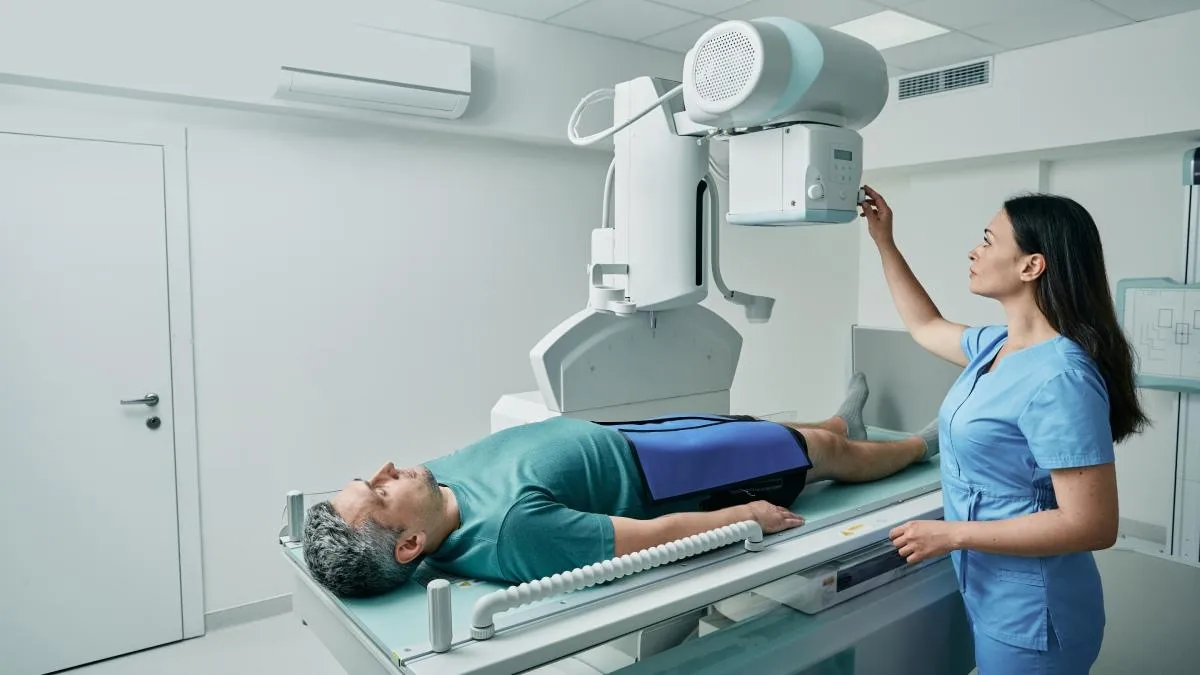
X-Ray Cost Dubai: Prices by Body Part (2026)
Read More© 2026 Doctors Clinic Diagnostic Center (DCDC), Dubai Healthcare City. Originally published at https://doctorsclinicdubai.ae/blog/dexa-body-composition-athletes. All rights reserved. Unauthorized reproduction is prohibited.