Key Takeaways
- Missing a vaccine dose does not mean starting the series over — a catch-up vaccination schedule resumes exactly where your child left off, using minimum-interval rules set by the WHO and CDC
- DHA-regulated and KHDA-registered schools in Dubai, including GEMS and Taaleem institutions, require a complete official UAE vaccination card before enrollment — incomplete records can delay your child's start date
- July and August are the ideal months to begin a catch-up plan, since multi-dose series like hepatitis B, MMR, and varicella need 2-3 months to complete before the September school year begins
- DCDC creates a personalized catch-up plan by comparing your child's international vaccination records against the DHA schedule, so no vaccine already given is unnecessarily repeated
- It is safe to receive several catch-up vaccines in a single visit — a child's immune system handles far more antigens daily through ordinary life than any combination of vaccines given together
- Children who fall behind on early doses are significantly more likely to also miss later ones — one 2025 US cohort study found children late on 2-month vaccines were nearly 7 times more likely to miss MMR entirely
- Catch-up vaccination consultations at DCDC start from AED 300, with cold-chain certified vaccine storage, 15-20 minutes per visit including observation, and specialist pediatrician oversight for every dose
If your child has missed a vaccine dose — whether from a house move, a bout of illness, or simply falling behind the calendar — a catch-up vaccination schedule is how pediatricians safely bring them back in line with the recommended timeline, without restarting any series from scratch. Our child immunization schedule service at Doctors Clinic Diagnostic Center (DCDC) in Dubai Healthcare City is built specifically for this situation, and it matters more right now than at any other point in the year: schools across Dubai open for the new academic year in September, and the Dubai Health Authority requires a complete, up-to-date vaccination record before your child can register.
Whether you relocated to Dubai mid-series, your toddler was too unwell for a scheduled visit, or the paperwork from your previous country simply does not map cleanly onto the UAE schedule, this guide walks through exactly how catch-up vaccination works — the age-by-age timeline, which vaccines can be safely combined, what DHA and KHDA schools actually require, and what a catch-up visit at DCDC looks like from the first phone call to the final dose. Dr. Yusra Alshaikh, a pediatrician at DCDC who reviewed this guide, sees this exact scenario every week: a family arrives in Dubai in July or August with a stack of records in a language or format the school registrar does not recognize, and a September deadline bearing down.
What Is a Catch-Up Vaccination Schedule?
A catch-up vaccination schedule is a personalized, accelerated immunization plan built for any child who has fallen behind the standard age-based timeline — for any reason. It is not a punishment and it does not mean your child has to repeat vaccines they have already received. Instead, a doctor reviews exactly which doses are documented, calculates which doses are still outstanding, and schedules the remaining doses using the shortest medically approved gap between them (the 'minimum interval') rather than the longer gaps used in the routine, on-time schedule.
The CDC's official guidance is direct on this point: for essentially every routinely administered childhood vaccine, there is no series that needs to be restarted simply because too much time has passed between doses. A hexavalent (6-in-1) dose given at 5 months instead of the standard 4 months still counts. A second MMR dose given at 6 years instead of the standard 4-6-year window still counts. The immune system does not 'forget' a prior dose — it simply needs the full course completed to build lasting protection.
Who needs a catch-up schedule? In practice, four groups of children make up almost every case DCDC sees: children who relocated to Dubai from a country with a different national schedule, infants and toddlers whose routine visits were delayed by illness or scheduling gaps, school-age children whose records were lost or never transferred, and children whose parents deliberately paused or spaced out vaccines and now need to complete the series before school enrollment.
Common Reasons Children Miss Vaccinations in Dubai
Dubai's population is one of the most internationally mobile in the world, and that mobility is the single biggest driver of incomplete vaccination records we see at DCDC. But relocation is far from the only cause.
- International relocation: Families arriving in Dubai from the UK, South Asia, North America, or elsewhere often find their child's home-country schedule does not align dose-for-dose with the DHA/MOHAP schedule — some vaccines given abroad are not recorded in a format Dubai schools accept, and some UAE-mandated vaccines (like varicella, which is not routine in the UK) were simply never given.
- Pandemic-era and post-pandemic delays: Many children who were infants or toddlers during 2020-2022 missed routine well-child visits when clinics scaled back non-urgent appointments. Global immunization coverage still has not fully recovered to pre-pandemic levels in several age cohorts.
- Illness at the scheduled appointment: A moderate fever or acute illness on the day of a scheduled dose is a legitimate reason to postpone — but the follow-up appointment is often forgotten once the child recovers.
- Vaccine hesitancy or spacing choices: Some parents choose to delay or space out vaccines based on personal preference. This is a valid parental choice, but it does create a documented gap that needs a catch-up plan before school registration.
- Lost or incomplete paper records: Vaccination booklets get misplaced during a move, or a previous clinic's records were never digitized and are no longer retrievable.
UAE and DHA Vaccination Requirements for School Enrollment
The Dubai Health Authority requires every child entering a KHDA-regulated school — including nurseries, kindergartens, and grade schools across the GEMS, Taaleem, and other major networks — to submit a complete, up-to-date vaccination record as part of enrollment. This record must show the DHA/MOHAP-mandated vaccines: BCG, hepatitis B, the DTaP-IPV-Hib-HepB hexavalent series, pneumococcal (PCV13), rotavirus, MMR, varicella, and hepatitis A, along with the school-age boosters checked at Grade 1, Grade 6, and Grade 11 medical examinations.
If your child's vaccination history is incomplete — or if it exists but is in a foreign language or a format the school registrar cannot verify — enrollment can be held up. Schools do not typically reject a child outright; instead, they require families to bring the record up to date within a defined window, which is exactly why starting a catch-up plan in July or August, well before the September term, gives you the buffer needed to complete multi-dose series without a last-minute scramble.
At DCDC, every completed catch-up visit results in an official UAE vaccination card, accepted by all KHDA-regulated schools in Dubai — including GEMS and Taaleem institutions — so there is no gap between what our clinic records and what your school requires to see. For a full breakdown of the standard DHA schedule from birth through school age, see our Child Vaccination Schedule Dubai guide, which pairs well with this catch-up guide if you are mapping your child's history against what is actually required.
Catch-Up Vaccination Schedule: Age-by-Age Guide
The table below shows how a catch-up plan is typically structured by the age your child is when catch-up begins, adapted from CDC catch-up immunization guidance and DHA clinical immunization protocols. Minimum intervals are the shortest medically approved gap between doses in the same series — they allow a child to complete a delayed series safely and as quickly as possible, without compromising how well the vaccine works.
| Age When Catch-Up Starts | Vaccines Typically Needed | Minimum Interval Between Doses | Important Notes |
|---|---|---|---|
| 4-6 months (missed 2-month or 4-month doses) | INFANRIX HEXA (hexavalent) catch-up dose, ROTARIX, PCV13 | 4 weeks between hexavalent doses; 4 weeks between ROTARIX doses | ROTARIX has a strict age cutoff — WHO and CDC guidance recommends the final rotavirus dose be given no later than 8 months of age, so this series cannot be delayed indefinitely |
| 7-11 months | Hexavalent catch-up doses, PCV13 catch-up dose | 4 weeks between doses | An early measles-containing dose given before 12 months (for travel or outbreak exposure) does not count as valid and must be repeated after the first birthday |
| 12-23 months | PRIORIX (MMR) dose 1, VARILRIX (chickenpox) dose 1, Hepatitis A dose 1, hexavalent/pentavalent booster | MMR dose 2 may follow dose 1 by a minimum of 4 weeks if accelerating; VARILRIX dose 2 minimum 4 weeks under age 13 if catching up (standard interval is 3 months) | This is the age window where most catch-up plans concentrate the largest number of remaining doses |
| 2-6 years (pre-school catch-up) | DTaP-IPV booster, PRIORIX dose 2, VARILRIX dose 2 | Minimum 4 weeks between MMR doses; minimum 4 weeks between varicella doses if accelerated | Required before KHDA-regulated nursery and kindergarten enrollment in Dubai |
| 7-10 years | BOOSTRIX (Tdap) if the primary DTaP series was incomplete; any outstanding MMR or varicella doses | Minimum 4 weeks between remaining primary-series doses | Schools commonly flag these gaps during Grade 1 and Grade 6 entrance medical checks |
| 11-18 years | BOOSTRIX booster, meningococcal ACWY, HPV catch-up series, any never-completed MMR or varicella doses | HPV: 2 doses with a 6-month gap if the series starts before age 15; minimum 4 weeks for other catch-up doses | Grade 6 and Grade 11 school medicals are the most common point these gaps are identified |
Adapted from the CDC catch-up immunization schedule and DHA clinical immunization guidelines. Your pediatrician at DCDC will confirm the exact brands, doses, and intervals appropriate for your child's individual vaccination history.
One nuance worth flagging: doses given too early — more than a few days before the minimum interval or minimum age — are not counted as valid under WHO and CDC rules and typically need to be repeated. This is precisely why a professional review of your child's actual dated records matters so much more than guessing based on age alone.
Which Vaccines Can Be Given Together?
A major reason catch-up plans can be completed faster than parents expect is that most childhood vaccines can be safely co-administered in the same visit, at different injection sites or by different routes. This dramatically reduces the number of separate clinic visits needed to fully catch up.
- Hexavalent, pneumococcal, and rotavirus: INFANRIX HEXA (an intramuscular injection) and PCV13 (a separate intramuscular injection, different limb) can be given at the same visit as ROTARIX (an oral dose, no injection at all).
- MMR and varicella: PRIORIX and VARILRIX can be given at the same visit, at separate injection sites, even though they are two distinct live-attenuated vaccines.
- Tdap boosters with adolescent vaccines: BOOSTRIX can typically be co-administered with meningococcal ACWY or an HPV dose at the same school-age visit.
- Live vaccine spacing rule: The one important exception — if two live vaccines (like MMR and varicella) are NOT given on the same day, they generally need to be separated by at least 4 weeks, since giving them too close together (but not simultaneously) can reduce how well the second one works.
Is It Safe to Give Multiple Catch-Up Vaccines at Once?
Yes. This is one of the most common questions parents ask when they see a catch-up plan listing three or four vaccines for a single visit, and the answer is unambiguous across every major medical authority. The WHO, CDC, and American Academy of Pediatrics all confirm that receiving multiple vaccines simultaneously is standard, well-studied practice, not a shortcut that compromises safety. A child's immune system fields thousands of antigens every single day through ordinary eating, breathing, and playing — the antigens contained in even a combination of several vaccines represent a vanishingly small fraction of that everyday exposure.
Combination vaccines like INFANRIX HEXA exist specifically to reduce the injection count during catch-up, since it packages protection against six diseases into a single shot instead of six separate needles. For school-age children who need a full school entrance medical alongside catch-up doses, our School Health Check Dubai guide explains how vaccination review is folded into that same appointment, so families are not making separate trips for the physical exam and the vaccines.
Risks of Delayed or Missed Vaccinations
The case for not letting a gap linger is not theoretical. Recent surveillance data illustrates how quickly a small delay compounds into a much larger vulnerability. Among US states that track kindergarten MMR coverage, 67% of counties and jurisdictions now sit below the 95% coverage threshold that epidemiologists consider necessary for herd immunity against measles. Global measles cases have risen sharply as a direct consequence — the United States alone recorded more than 2,000 measles cases in 2025, the highest number since the disease was declared eliminated domestically in 2000.
The mechanism behind this is well documented: a maternal-antibody 'window of vulnerability' opens around 6 months of age, once antibodies passed from mother to baby before birth wane, but the first MMR dose is not routinely given until 12 months. A large 2025 US cohort study covering more than 320,000 infants found that children who were late on their 2-month vaccines were nearly seven times more likely to also miss their MMR dose entirely (adjusted odds ratio 6.96), and children late on 4-month vaccines were over six times more likely (adjusted odds ratio 6.16). In other words, one missed early appointment is a strong predictor of a much larger gap forming later — which is exactly why catching up promptly, rather than waiting, matters so much.
- Measles: Highly contagious with serious complication rates — unvaccinated children face materially higher risk of pneumonia, ear infections, and (rarely) encephalitis.
- Whooping cough (pertussis): Most dangerous in infants too young to be fully vaccinated, who rely on the herd immunity of vaccinated older children and adults around them.
- Rotavirus: A leading cause of severe dehydrating diarrhea in unvaccinated infants worldwide; the vaccine's strict age cutoff means a delayed start can mean missing the protection window entirely.
- Chickenpox (varicella): Generally mild in early childhood but carries higher complication risk in adolescents and adults if the vaccine window is missed and natural infection occurs later.
How DCDC Creates Your Child's Catch-Up Plan
We designed the catch-up process at DCDC specifically for families who feel overwhelmed looking at a stack of foreign-language records or a school deadline. Here is exactly what happens, step by step.
- Step 1 — Call or WhatsApp to book: Reach our Dubai Healthcare City clinic directly to schedule a catch-up consultation. Same-day appointments are available when capacity allows.
- Step 2 — Bring existing vaccination records: International records are accepted in any format — a home-country vaccination booklet, a hospital discharge summary, digital records from a previous clinic, or a WHO International Certificate of Vaccination.
- Step 3 — Pediatrician reviews the immunization history: Dr. Yusra Alshaikh or the attending pediatrician compares every dated dose against the DHA-mandated schedule to identify genuine gaps — not assumptions based on age alone.
- Step 4 — A personalized catch-up plan is created: The plan sequences the remaining doses using minimum-interval spacing, grouping compatible vaccines into the same visit wherever safely possible to minimize the total number of appointments.
- Step 5 — Vaccines are administered: Each visit takes 15-20 minutes including the mandatory post-vaccination observation period, during which we monitor for any immediate reaction.
- Step 6 — An official UAE vaccination card is issued: Accepted by all KHDA-regulated schools, including GEMS and Taaleem institutions, so your paperwork is school-ready without further translation or certification steps.
- Step 7 — Follow-up visits are scheduled: We book the next dose(s) before you leave, so the catch-up plan stays on track without you needing to remember dates.
According to Dr. Yusra Alshaikh, "Many families moving to Dubai find that their child's vaccination records don't align with the UAE schedule. At DCDC, we review every international record carefully and create a personalized catch-up plan that follows DHA guidelines while minimizing the number of visits. The key is to start catching up as early as possible — most children can be fully up-to-date within 2-3 months."
Bring Your Child's Records In Before September
DCDC reviews international vaccination records of any format and builds a catch-up plan that follows DHA guidelines while minimizing the number of visits. Walk in or book online at our Dubai Healthcare City clinic.
Catch-up consultations from AED 300. Cold-chain certified storage with continuous temperature monitoring on every vaccine we administer.
DHA Vaccination Card: What You Need for School Registration
Every KHDA-regulated school in Dubai will ask for a specific set of documents at the point of enrollment, and vaccination proof is almost always among them. Knowing exactly what to bring avoids a second trip to the clinic.
- The DHA Health Card or equivalent vaccination record: Issued at birth for children born in Dubai, or created at your first DCDC visit for children who arrived from elsewhere.
- Your child's Emirates ID or passport: Required to register the vaccination record under the correct identity.
- Any existing international vaccination booklet: Bring it even if it is in another language — our clinical team can map foreign brand names and dates against the DHA schedule directly.
- Insurance card, if applicable: Many routine childhood vaccinations, including catch-up doses, are covered as preventive care under UAE health insurance plans.
Two vaccines worth flagging specifically for school registration are varicella and hepatitis B, since both are commonly missing from records of children who moved from countries where they are not part of the routine schedule. If your child's catch-up plan includes either, our detailed cost and scheduling breakdowns for the Chickenpox Vaccine Dubai guide and Hepatitis B Vaccine Dubai guide cover exactly what to expect dose-by-dose.
Cost of Catch-Up Vaccinations in Dubai
Catch-up vaccination cost in Dubai depends primarily on how many doses your child needs and whether your insurance plan covers routine childhood immunization as preventive care.
- Catch-up consultation: From AED 300 at DCDC, covering the pediatrician's record review, gap analysis, and personalized plan.
- Individual vaccine costs: Vary by product and whether a combination vaccine (like the hexavalent) is used, which typically offers better value than separate single-antigen doses when several are due at once.
- Insurance coverage: DCDC offers direct billing with 20+ insurance providers including Daman, AXA, and Bupa — insured families often pay nothing out of pocket at the time of the visit for covered catch-up doses.
- Uninsured families: DCDC provides transparent, upfront pricing before the appointment begins, with no hidden charges added afterward.
If your catch-up plan is bundled with a full school entrance physical — which many parents schedule together in July and August ahead of September registration — our Back-to-School Checkup Dubai guide covers exactly what that combined visit includes and what it costs. DCDC's 4.8/5 Google rating from over 1,000 verified patient reviews and 98% patient satisfaction rate reflect a clinic families return to precisely because a catch-up visit rarely means just one appointment — it means a coordinated plan they can trust to actually finish.
Preparing Your Child for Multiple Vaccination Visits
A catch-up plan may involve two, three, or occasionally more visits over 2-3 months, depending on how many doses are outstanding and which minimum intervals apply. A little preparation makes each visit smoother.
- Bring every record you have, even partial ones: A single dated entry can confirm a dose was already given and save your child an unnecessary repeat injection.
- Book the next appointment before you leave each visit: This is the single biggest factor in whether a catch-up plan actually finishes on schedule.
- Dress your child for easy access to the upper arm and thigh: Speeds up the actual administration step considerably.
- Feed infants shortly before the appointment: A content, recently fed baby tolerates the visit far better than a hungry one.
- Plan for mild after-effects: A low-grade fever, fussiness, or a sore arm for a day or two is normal and expected, especially when several doses are given at once — it is not a sign to skip the next appointment.
- Take advantage of DCDC's extended hours: Open Saturday to Thursday 8 AM to 10 PM and Friday 9 AM to 9 PM, with free dedicated parking and an average wait time of just 15 minutes — evening slots are often the easiest to fit around school and work schedules.
Start Your Child's Catch-Up Plan Today
Doctors Clinic Diagnostic Center in Dubai Healthcare City reviews international vaccination records, builds a personalized catch-up schedule that follows DHA guidelines, and issues an official UAE vaccination card accepted by all KHDA-regulated schools. Book online or walk in — we are open Saturday to Thursday 8 AM to 10 PM, Friday 9 AM to 9 PM.
MOHAP Licensed (License No. NIMY7VY5-240925). 20+ insurance partners with direct billing including Daman, AXA, and Bupa. Free parking. 4.8/5 from 1,000+ verified reviews.
Related Services at DCDC
Expert care and advanced diagnostics at Dubai Healthcare City
Frequently Asked Questions
Do Not Let a Vaccination Gap Become a School Deadline Crisis
A missed vaccine dose is common, correctable, and never a reason to panic — but it is also not something to leave until a school registrar forces the issue. The earlier a catch-up plan starts, the more comfortably multi-dose series like MMR, varicella, and hepatitis B can be completed on the minimum-interval timeline, without cramming several injections into the final weeks of August.
At Doctors Clinic Diagnostic Center in Dubai Healthcare City, we built our catch-up process around exactly this scenario: families with international records, a September deadline, and questions about what is actually still needed. With cold-chain certified vaccine storage, specialist pediatrician oversight from Dr. Yusra Alshaikh on every dose, and an official UAE vaccination card accepted by all KHDA-regulated schools, we remove the guesswork from getting your child school-ready. If you are reading this in July or August, that is exactly the right time to book — bring whatever records you have, and we will handle the rest.
Sources & References
This article was reviewed by our medical team and references the following sources:
- World Health Organization — Vaccines and Immunization
- Centers for Disease Control and Prevention — Catch-up Immunization Schedule for Children and Adolescents
- American Academy of Pediatrics — Immunization Policy
- Dubai Health Authority — Clinical Guidelines for Best Practice in Immunization
- UAE Ministry of Health and Prevention — National Immunization Program
- Emirates Health Services — Child Health and Vaccinations
Medical content on this site is reviewed by DHA-licensed physicians. See our editorial policy for more information.

Written by
Dr. Yusra Alshaikh
Pediatrics
MBBS, Arab Board of Pediatrics, Emirati Board of Pediatrics
Dr. Yusra Alshaikh is a Pediatrician at Doctors Clinic Diagnostic Center (DCDC) in Dubai Healthcare City.
Related Articles

Child Vaccination Schedule Dubai: Full Guide

School Health Check Dubai: Guide & Cost
Back to School Checkup Dubai: Full Guide
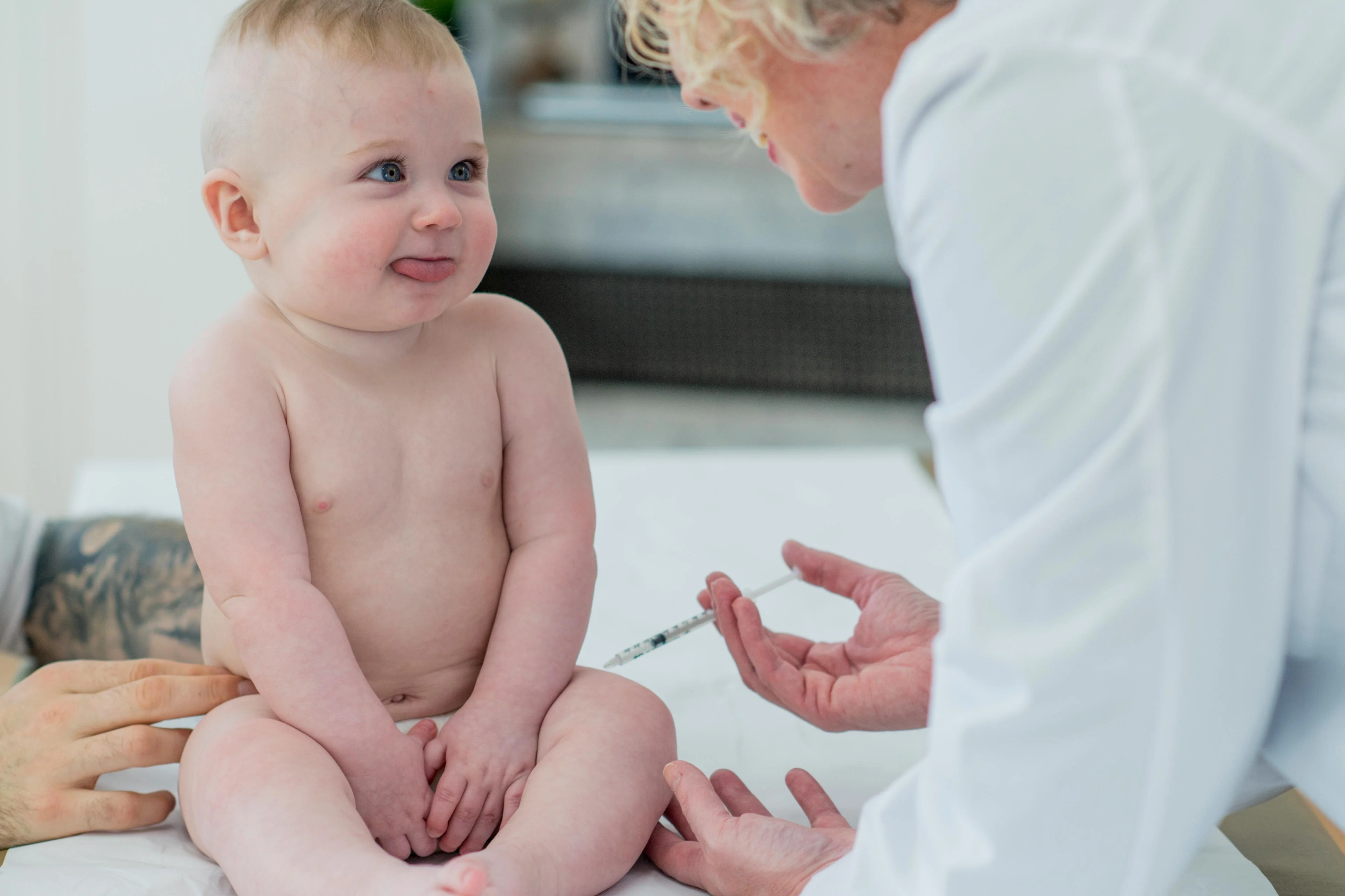
Chickenpox Vaccine Dubai: Cost & Schedule
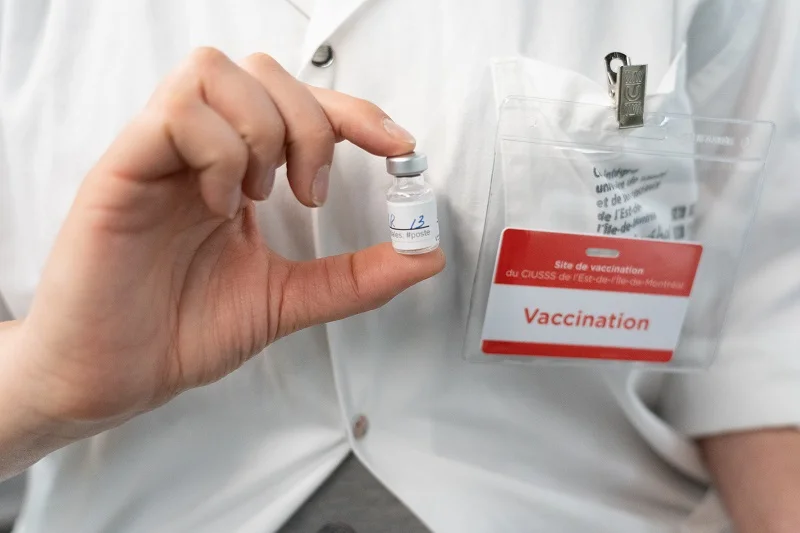
Hepatitis B Vaccine Dubai: Cost & Guide
More in Child Vaccination
© 2026 Doctors Clinic Diagnostic Center (DCDC), Dubai Healthcare City. Originally published at https://doctorsclinicdubai.ae/blog/catch-up-vaccination-schedule-dubai. All rights reserved. Unauthorized reproduction is prohibited.