Key Takeaways
- A blocked ear is one of the most common ENT complaints in Dubai. The leading causes are earwax impaction, eustachian tube dysfunction (ETD), ear infections, sinus congestion, allergies, barotrauma from flying, and water trapped after swimming.
- Cerumen (earwax) impaction affects roughly 6% of the general population and up to 57% of nursing home residents. It accounts for approximately 12 million patient visits and 8 million removal procedures annually in the US alone.
- Dubai's unique environment increases blocked ear risk: year-round swimming culture promotes swimmer's ear, constant AC dries nasal and ear canal mucosa, desert dust triggers allergic rhinitis, and frequent air travel makes barotrauma more common.
- Red flags that require urgent evaluation include sudden hearing loss in one ear (a medical emergency that must be seen within 24-48 hours), ear discharge, severe pain with fever, facial weakness, and severe vertigo.
- ENT consultation for a blocked ear at DCDC in Dubai Healthcare City starts from AED 299-599, with ear wax removal by microsuction from AED 300 and hearing tests from AED 299. Over 20 insurance plans are accepted.
- Most blocked ears resolve with appropriate treatment. Earwax is removed safely by microsuction, ETD responds to nasal sprays and Valsalva exercises, and infections clear with targeted medication. Prevention in Dubai centres on ear drying after swimming, humidity management, and allergy control.
A blocked ear is one of the most common reasons patients visit an ENT specialist in Dubai. That muffled feeling, the sensation of fullness, or reduced hearing in one or both ears can range from a mild annoyance to a sign of something that needs urgent medical attention. In Dubai, environmental factors such as year-round swimming, aggressive air conditioning, desert dust, and frequent flying make blocked ears an especially frequent complaint. This guide covers every major cause of a blocked ear, explains when you should worry, outlines what diagnosis and treatment involve, and breaks down costs so you know what to expect. If your blocked ear is affecting your hearing or daily life, an ENT consultation at DCDC in Dubai Healthcare City can identify the cause and provide same-day treatment in most cases.
What Causes a Blocked Ear?
A blocked ear occurs when something disrupts the normal transmission of sound through the ear canal to the eardrum, or when pressure imbalances develop in the middle ear. The ear is divided into three sections — outer, middle, and inner — and blockage can originate in any of them. The causes range from harmless earwax accumulation to serious conditions such as sudden sensorineural hearing loss that require emergency treatment.
The most common causes of a blocked ear include earwax impaction, eustachian tube dysfunction, middle and outer ear infections, sinus congestion and allergies, barotrauma from flying, water trapped after swimming, and foreign bodies (particularly in children). Each cause produces a slightly different pattern of symptoms, and understanding these differences helps you decide whether to try home remedies or seek medical care promptly.
In Dubai specifically, certain causes are over-represented compared to temperate climates. The combination of year-round pool access, extreme humidity fluctuations between outdoor and air-conditioned indoor environments, airborne desert particulates, and the city's role as a global aviation hub all contribute to a higher prevalence of blocked ear complaints among residents and visitors.
Earwax Buildup: The Most Common Cause of Blocked Ears
Cerumen — commonly known as earwax — is the single most frequent cause of a blocked ear worldwide. The ear canal produces wax as a natural protective mechanism: it traps dust, bacteria, and small particles, lubricates the canal, and maintains an acidic environment that inhibits microbial growth. Under normal circumstances, earwax migrates outward on its own through jaw movements during chewing and talking, eventually falling out or being washed away.
Problems arise when this self-cleaning mechanism fails. According to a systematic review published in BJGP Open, cerumen impaction affects approximately 6% of the general population, 10% of children, and up to 57% of nursing home residents. In the United States alone, earwax problems account for roughly 12 million patient visits and 8 million cerumen removal procedures each year. The condition is so common that the American Academy of Family Physicians (AAFP) has published dedicated clinical guidelines for its management.
Why Earwax Builds Up
- Cotton bud use: Inserting cotton buds (Q-tips) into the ear canal is the most common cause of impaction. Rather than removing wax, they push it deeper and compact it against the eardrum
- Hearing aids and earbuds: Devices worn inside the ear canal block natural wax migration. People who wear hearing aids or use in-ear headphones for extended periods are significantly more likely to develop impaction
- Narrow or hairy ear canals: Some people have naturally narrow ear canals or excessive hair growth that slows wax movement
- Overproduction: Certain individuals genetically produce more cerumen than average, or produce a drier, harder type that is more prone to accumulation
- Age-related changes: As people age, cerumen becomes drier and harder while the ear canal's self-cleaning mechanism becomes less efficient
- Dust exposure: Living or working in dusty environments — relevant in Dubai during sandstorm season — increases the amount of particulate matter the ear must trap, accelerating wax buildup
Symptoms of Earwax Blockage
- Gradual hearing reduction in the affected ear, often described as hearing 'through cotton wool'
- A sensation of fullness or pressure in the ear
- Tinnitus (ringing, buzzing, or humming) in the blocked ear
- Earache or dull discomfort
- Dizziness or mild vertigo in some cases
- Itching in the ear canal
If earwax is causing your symptoms, professional removal is the safest approach. For a detailed look at methods, costs, and what to expect during the procedure, see our guide on ear wax removal cost in Dubai.
Eustachian Tube Dysfunction and Ear Congestion
The eustachian tube is a narrow passage that connects the middle ear to the back of the throat (nasopharynx). Its primary job is to equalise air pressure on both sides of the eardrum and drain fluid from the middle ear. You activate your eustachian tubes every time you swallow, yawn, or chew — that brief 'click' or 'pop' you feel is the tube opening momentarily.
Eustachian tube dysfunction (ETD) occurs when the tube fails to open and close properly, leading to pressure imbalance in the middle ear. This produces the classic sensation of ear fullness, muffled hearing, and sometimes pain. According to the Cleveland Clinic, ETD is one of the most common causes of a blocked ear in adults and is frequently misattributed to earwax by patients who attempt self-treatment before seeking medical advice.
Common Triggers for ETD
- Upper respiratory infections: Colds and flu cause swelling of the mucous membranes that line the eustachian tube
- Allergic rhinitis: Allergies inflame nasal passages and the eustachian tube opening. This is particularly relevant in Dubai where desert dust, mould from AC units, and indoor allergens are common triggers
- Sinusitis: Chronic or acute sinus infection creates swelling and mucus that can obstruct the eustachian tube. Read more about how sinus problems affect the ears in our sinusitis treatment guide
- Air pressure changes: Flying, diving, or driving through mountains causes rapid pressure shifts that the eustachian tube cannot compensate for quickly enough
- Air conditioning: Constant exposure to dry, recirculated AC air — a near-universal factor in Dubai where AC runs year-round — dries the nasal and eustachian tube mucosa, reducing its ability to open and close efficiently
- Gastro-oesophageal reflux (GORD): Acid reflux can irritate the nasopharynx and eustachian tube opening
ETD symptoms can persist for days to weeks and may fluctuate throughout the day. Many patients describe the blocked feeling as worse in the morning (after lying flat overnight) and after exposure to air conditioning. If your ear feels blocked but nothing is inside, ETD is one of the most likely explanations.
Ear Infections That Cause a Blocked Feeling
Both middle ear infections (otitis media) and outer ear infections (otitis externa) commonly present with a blocked or plugged sensation. The mechanism differs between the two, but both can significantly reduce hearing and cause discomfort.
Otitis Media (Middle Ear Infection)
Otitis media causes blockage because fluid and pus accumulate behind the eardrum, preventing it from vibrating normally. Approximately 80% of children experience at least one episode of otitis media before starting school. In adults, middle ear infections are less common but still occur, often following a cold or sinus infection. The blocked feeling may persist for weeks after the infection resolves if fluid (effusion) remains in the middle ear.
Otitis Externa (Swimmer's Ear)
Otitis externa is an infection of the ear canal itself. Swelling of the canal lining narrows the passage and, combined with discharge, creates a physical blockage. The ear may feel completely shut, and hearing on the affected side drops noticeably. In Dubai, otitis externa is particularly common because of year-round pool and beach use. For a comprehensive look at ear infection types and treatments, see our ear infection treatment guide.
How to Tell the Difference
| Feature | Otitis Media (Middle Ear) | Otitis Externa (Outer Ear) |
|---|---|---|
| Typical cause | Cold or upper respiratory infection | Water exposure, trauma, humid environment |
| Pain pattern | Deep, throbbing pain inside the ear | Pain worsens when pulling the ear or pressing the tragus |
| Discharge | Only if eardrum perforates (yellow/white) | Often present (clear, yellow, or greenish) |
| Fever | Common, especially in children | Uncommon unless severe |
| Hearing loss | Moderate (conductive) | Mild to moderate (canal obstruction) |
| Most affected group | Children under 5 | Swimmers, adults in humid climates |
Distinguishing middle ear infection from outer ear infection
Sinus Problems, Allergies, and Ear Pressure in Dubai
The nose, sinuses, and ears are intimately connected through the eustachian tube and shared mucous membranes. When the nasal passages become congested — whether from a sinus infection, allergic rhinitis, or vasomotor rhinitis — the resulting swelling frequently extends to the eustachian tube, causing secondary ear blockage. In Dubai, several environmental factors make this connection especially relevant.
Dubai-Specific Allergy and Sinus Triggers
- Desert dust and sandstorms: Fine particulate matter from the desert triggers allergic rhinitis in many residents, particularly during shamal wind season. The resulting nasal congestion frequently extends to the ears
- Air conditioning and humidity swings: Moving between Dubai's humid outdoor air (often exceeding 80% humidity in summer) and aggressively cooled indoor environments (sometimes below 30% humidity) causes vasomotor rhinitis — a non-allergic nasal response to temperature and humidity changes that can block the eustachian tubes
- Mould from AC systems: Poorly maintained AC units harbour mould and bacteria, circulating allergens that cause chronic nasal congestion. This is a common but under-recognised cause of persistent ear fullness in Dubai
- Indoor dust mites: Dubai's carpeted interiors and soft furnishings, combined with warm temperatures, create ideal conditions for dust mites — the most common indoor allergen worldwide
- Construction dust: Ongoing construction across the city exposes residents to fine particulate matter, especially near building sites and along major highways
If your blocked ears coincide with nasal congestion, sneezing, itchy eyes, or facial pressure, an allergy or sinus problem is very likely contributing. An ENT specialist can assess both the nasal and ear components simultaneously, and treating the underlying nasal condition often resolves the ear blockage without direct ear intervention.
Blocked Ear After Flying: Barotrauma in Dubai's Travel Hub
Dubai International Airport is one of the busiest airports in the world, and many Dubai residents are frequent travellers. Barotrauma — injury caused by pressure differences between the middle ear and the environment — is a common cause of blocked ears in this population. During aircraft descent, cabin pressure increases rapidly. If the eustachian tube cannot open quickly enough to equalise pressure, the eardrum is pushed inward, causing pain, fullness, muffled hearing, and sometimes even rupture.
Who Is Most at Risk
- People flying with a cold, sinus infection, or active allergies
- Children and infants (shorter, more horizontal eustachian tubes)
- People with a history of eustachian tube dysfunction
- Frequent flyers who do not allow recovery time between flights
- Passengers who sleep through descent (no swallowing to open the eustachian tube)
Prevention During Flights
- Swallow frequently during descent — chew gum, sip water, or suck on a boiled sweet
- Perform the Valsalva manoeuvre gently — pinch your nose, close your mouth, and blow gently until you feel a pop
- Use a decongestant nasal spray 30 minutes before descent if you have nasal congestion
- For infants, encourage bottle-feeding or breastfeeding during descent to promote swallowing
- Avoid flying with an active ear infection or severe upper respiratory infection if possible
According to the Mayo Clinic, most cases of airplane ear resolve within hours to days. If your blocked ear persists for more than 48 hours after flying, or if you experience severe pain, bleeding, or significant hearing loss, seek ENT evaluation promptly.
Blocked Ear After Swimming: A Year-Round Dubai Risk
With temperatures exceeding 40°C for much of the year, swimming is a daily activity for many Dubai residents. This near-constant water exposure makes blocked ears from swimming a year-round concern rather than a seasonal one. Water can cause ear blockage in two ways: by becoming physically trapped in the ear canal, and by creating conditions that lead to swimmer's ear (otitis externa).
Trapped Water
Water can become trapped in the ear canal, especially if earwax is partially obstructing the passage. The resulting blocked, sloshing sensation is usually temporary and resolves by tilting the head, gently pulling the earlobe, or using gravity. However, water that remains in the ear canal for extended periods strips away the protective cerumen layer and softens the skin lining, creating an entry point for bacteria.
From Trapped Water to Swimmer's Ear
If the ear canal remains moist for too long, bacteria — most commonly Pseudomonas aeruginosa — colonise the softened skin and cause otitis externa. The ear initially feels blocked, then progresses to itching, pain (especially when touching or pulling the ear), discharge, and further hearing reduction. Dubai's chlorinated pool water, while killing some bacteria, also strips protective ear canal oils more aggressively than fresh water.
Protecting Your Ears While Swimming in Dubai
- Dry ears thoroughly after every swim — tilt head to each side, gently pull the earlobe to open the canal, and use a towel or hair dryer on low heat held 30 cm away
- Use well-fitting silicone swimmer's earplugs, especially if you have a history of otitis externa or ear tubes
- Avoid inserting cotton buds or fingers into the ear canal after swimming
- Consider preventive ear drops (a mixture of equal parts white vinegar and rubbing alcohol) after swimming to restore the ear canal's acidic pH — consult your ENT before starting
- If you swim daily, schedule periodic ENT check-ups to monitor ear canal health
Blocked Ear That Will Not Clear?
Do not let a blocked ear affect your hearing, sleep, or daily life. DCDC Dubai Healthcare City offers same-day ENT assessment with otoscopy, ear wax removal, and hearing tests under one roof.
ENT consultations from AED 299 — most insurance plans accepted
Red Flags: When a Blocked Ear Needs Urgent Care
Most blocked ears are caused by benign conditions that resolve with simple treatment. However, certain symptoms alongside a blocked ear signal potentially serious conditions that require urgent or emergency medical attention. Recognising these red flags can prevent permanent hearing damage and other complications.
Seek Emergency ENT Care If You Experience
- Sudden hearing loss in one ear: This is a medical emergency. Sudden sensorineural hearing loss (SSNHL) affects the inner ear and must be evaluated within 24–48 hours for the best chance of recovery. According to the Cleveland Clinic, treatment with high-dose corticosteroids started within this window significantly improves outcomes. If you notice sudden, unexplained hearing loss in one ear, do not wait — see an ENT or go to the emergency department immediately
- Ear discharge (otorrhoea): Any fluid draining from the ear — especially if bloody, foul-smelling, or persistent — suggests eardrum perforation, infection, or, rarely, cholesteatoma
- Severe pain with high fever: This combination suggests an acute infection that may be spreading beyond the ear — possible mastoiditis or intracranial complication
- Facial weakness or drooping: The facial nerve runs through the middle ear. Infection or inflammation affecting this nerve requires immediate treatment to prevent permanent facial paralysis
- Severe vertigo: Intense spinning dizziness with a blocked ear suggests inner ear involvement (labyrinthitis or vestibular neuritis) or other serious pathology
- Sudden tinnitus with hearing change: New-onset ringing or buzzing combined with hearing loss warrants prompt evaluation to rule out inner ear damage
- Symptoms lasting more than 2 weeks: A blocked ear that does not improve after 2 weeks of home measures or initial treatment should be assessed by an ENT specialist to rule out underlying causes such as Meniere's disease, acoustic neuroma, or nasopharyngeal pathology
For a deeper understanding of hearing changes that accompany a blocked ear, including when hearing loss becomes a concern, read our detailed guide on hearing loss causes and treatment in Dubai.
How Blocked Ears Are Diagnosed
Diagnosing the cause of a blocked ear is usually straightforward for an experienced ENT specialist and begins with a focused history and physical examination. The diagnostic process aims to identify which part of the ear is affected and what is causing the blockage.
Clinical History
Your ENT will ask about the onset (sudden versus gradual), duration, one side or both, associated symptoms (pain, discharge, tinnitus, dizziness, nasal congestion), recent swimming or flying, cotton bud use, hearing aid or earbud use, and any history of ear problems. This history alone often narrows the likely cause to one or two possibilities.
Physical Examination
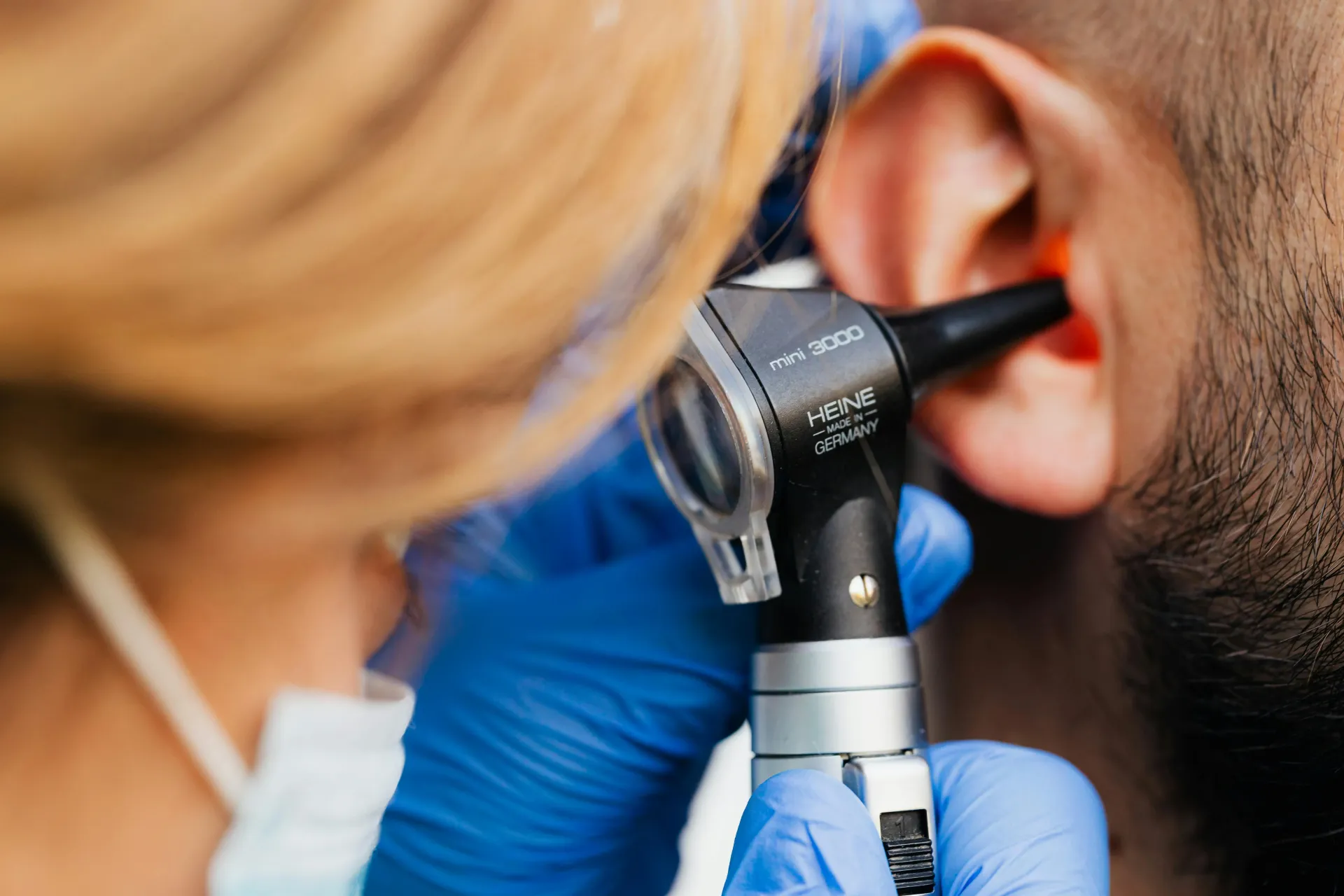
- Otoscopy: The ENT examines the ear canal and eardrum using an otoscope (a handheld magnifying light). This reveals earwax impaction, ear canal swelling or discharge, eardrum retraction or bulging, middle ear fluid, foreign bodies, and eardrum perforations
- Pneumatic otoscopy: A puff of air is directed at the eardrum to assess its mobility. Reduced movement indicates middle ear fluid or negative pressure from ETD
- Nasal endoscopy: If ETD or sinus disease is suspected, a thin flexible camera is passed through the nose to examine the eustachian tube opening and nasal passages
- Tuning fork tests: The Weber and Rinne tests use a vibrating tuning fork to quickly differentiate between conductive hearing loss (outer/middle ear blockage) and sensorineural hearing loss (inner ear problem)
Diagnostic Tests
- Pure tone audiometry (hearing test): Measures hearing thresholds across different frequencies. Essential for quantifying hearing loss and determining whether it is conductive, sensorineural, or mixed. For more on what a hearing test involves, see our hearing test guide
- Tympanometry: Measures eardrum compliance and middle ear pressure. Produces a tympanogram that can diagnose middle ear effusion, ETD, eardrum perforation, and ossicular chain problems
- CT scan of temporal bone: Reserved for complex or recurrent cases, suspected cholesteatoma, chronic ear disease, or when surgery is being considered
- MRI: Ordered if an acoustic neuroma (vestibular schwannoma) or other retrocochlear pathology is suspected, particularly in cases of unilateral hearing loss with tinnitus
In most cases, otoscopy alone identifies the cause and treatment can begin immediately during the same visit. Additional testing is reserved for cases where the diagnosis is unclear, hearing loss is significant, or the blocked ear does not respond to initial treatment.
Blocked Ear Treatment Options in Dubai
Treatment for a blocked ear depends entirely on the underlying cause. The table below summarises the most common treatments, followed by a pricing comparison.
Treatment by Cause
| Cause | Treatment Approach |
|---|---|
| Earwax impaction | Microsuction (gold standard), ear irrigation, manual removal with curette. Softening drops (olive oil, sodium bicarbonate) may be used first |
| Eustachian tube dysfunction | Nasal steroid sprays, decongestants (short-term), antihistamines if allergy-related, Valsalva or Toynbee manoeuvres, balloon eustachian tuboplasty for chronic ETD |
| Otitis media (middle ear infection) | Antibiotics (amoxicillin first-line), pain management, watchful waiting for mild cases in children over 2. Persistent effusion may need tympanostomy tubes |
| Otitis externa (swimmer's ear) | Topical antibiotic-steroid ear drops (ciprofloxacin-dexamethasone), ear canal cleaning, keeping the ear dry, ear wick insertion for severely swollen canals |
| Sinus/allergy-related congestion | Nasal steroid spray, antihistamines, saline nasal irrigation, allergen avoidance, immunotherapy for persistent allergies |
| Barotrauma | Decongestants, nasal sprays, Valsalva manoeuvre, time. Severe cases with haemotympanum or perforation may need ENT follow-up |
| Trapped water | Gravity (tilt head), gentle earlobe pulling, ear drying drops. No cotton bud insertion |
| Sudden sensorineural hearing loss | Emergency high-dose oral or intratympanic corticosteroids within 24–48 hours. Urgent audiology and MRI |
Blocked ear treatments by underlying cause
Blocked Ear Treatment Costs in Dubai
| Service | DCDC Price | Typical Dubai Range |
|---|---|---|
| ENT consultation | AED 299–599 | AED 300–900 |
| Ear wax removal (microsuction) | From AED 300 | AED 300–800 |
| Hearing test (pure tone audiometry) | From AED 299 | AED 150–600 |
| Follow-up ENT visit | From AED 299 | AED 250–500 |
Blocked ear treatment costs: DCDC vs typical Dubai pricing (2026)
DCDC accepts over 20 insurance plans and processes claims directly, so your out-of-pocket cost may be significantly lower depending on your coverage. Self-pay patients benefit from transparent pricing with no hidden consultation fees.
What to Expect at DCDC for Blocked Ear Treatment
At Doctors Clinic Diagnostic Center (DCDC) in Dubai Healthcare City, blocked ear assessment and treatment follow a streamlined, patient-centred pathway. Here is what a typical visit looks like from arrival to treatment.
Your Visit Step by Step
- Arrival and parking: DCDC is located in Building 47, Dubai Healthcare City (DHCC). Free parking is available in the DHCC parking structure. The clinic is easily accessible from Al Khail Road and Dubai–Al Ain Road
- Check-in and registration: The reception team processes your insurance or self-pay details. Average waiting time is approximately 15 minutes. Bring your Emirates ID and insurance card if applicable
- ENT consultation with otoscopy: Your ENT specialist takes a detailed history and examines both ears with an otoscope. The examination is painless and takes a few minutes. The doctor identifies whether the blockage is from wax, infection, ETD, or another cause
- Ear wax removal by microsuction (if needed): If earwax impaction is the cause, removal is typically performed during the same visit using microsuction — a safe, precise technique that uses gentle suction under direct vision rather than water irrigation. Most patients notice immediate improvement in hearing
- Hearing test (if indicated): If the ENT suspects hearing loss beyond what the blockage explains, or if the blocked ear does not improve after wax removal, a pure tone audiometry test is performed on-site in a soundproof booth. Results are available immediately
- Treatment plan and prescriptions: Based on the diagnosis, the ENT provides a treatment plan — this may include prescriptions for ear drops, nasal sprays, antibiotics, or antihistamines, filled at DCDC's in-house pharmacy or a nearby DHCC pharmacy
- Results and follow-up: All results are discussed same day. If follow-up is needed (for example, to recheck a middle ear effusion or monitor hearing), the next appointment is scheduled before you leave
Dr. Yousra Mohamed's Approach to Blocked Ears
Dr. Yousra Mohamed, ENT specialist at DCDC, emphasises a thorough, cause-directed approach: "A blocked ear is a symptom, not a diagnosis. Many patients come in assuming they need wax removal, but on examination the cause turns out to be eustachian tube dysfunction, an early infection, or an allergy-driven process. I always examine the ear canal and eardrum carefully, check nasal passages when relevant, and perform a hearing test if there is any concern about hearing loss. Identifying the true cause means we can treat effectively the first time and prevent recurrence."
Why Patients Choose DCDC
- 4.8/5 patient rating with 98% satisfaction across verified reviews
- MOHAP-licensed facility in Dubai Healthcare City's regulated healthcare free zone
- Over 20 insurance plans accepted with direct billing — minimal out-of-pocket cost for insured patients
- Average 15-minute wait time from check-in to consultation
- Same-day diagnostics: Otoscopy, microsuction, audiometry, and tympanometry all available on-site
- Multidisciplinary access: If your blocked ear is connected to allergies, sinuses, or other conditions, specialist referral is available within the same clinic
How to Prevent Blocked Ears in Dubai
Prevention strategies depend on which cause of blocked ears you are most susceptible to. The following recommendations are tailored to the common risk factors Dubai residents face.
Earwax Prevention
- Stop using cotton buds: This single change prevents the majority of wax impactions. Clean only the outer ear with a damp cloth
- Use softening drops periodically: A few drops of olive oil or pharmacy-grade ear drops once a week can keep wax soft and promote natural migration
- Limit earbud use: Take breaks from in-ear headphones and clean them regularly. Consider over-ear headphones if you are prone to wax buildup
- Schedule regular ENT checks: If you have a history of recurrent impaction, a preventive cleaning every 6–12 months avoids symptomatic blockage
ETD and Sinus-Related Prevention
- Manage allergies proactively: If you know you react to dust, mould, or pollen in Dubai, use a daily nasal steroid spray during flare-up seasons and keep bedroom environments allergen-reduced
- Humidify indoor air: Counter the drying effect of AC by maintaining indoor humidity between 40–60%. A bedside humidifier is especially helpful for those who wake with ear fullness
- Service AC units regularly: Annual cleaning and filter replacement reduces mould, bacteria, and dust circulation through the home
- Use saline nasal rinses: A daily saline irrigation (neti pot or squeeze bottle) keeps nasal passages moist and clears irritants that could trigger ETD
- Stay hydrated: Adequate fluid intake keeps mucous membranes throughout the nose, throat, and eustachian tube well-hydrated and functioning properly
Swimming-Related Prevention
- Always dry ears thoroughly after every swim — tilt, pull the earlobe, and towel dry
- Use moulded silicone earplugs for regular swimming, especially in pools
- Avoid submerging your head if you have an active ear infection or recent ear procedure
- Consider preventive ear drops after swimming if you are prone to otitis externa (ask your ENT for a suitable formulation)
Flying-Related Prevention
- Avoid flying with an active cold or sinus infection when possible
- Use a decongestant nasal spray 30 minutes before descent
- Swallow frequently, chew gum, or perform gentle Valsalva manoeuvres during ascent and descent
- For children and infants, encourage feeding or sucking during altitude changes
- Consider filtered pressure-regulating earplugs (available at airport pharmacies) for flights
If your blocked ear is accompanied by ringing, buzzing, or other sounds, you may also want to read our guide on tinnitus treatment in Dubai to understand how these symptoms overlap and when tinnitus warrants its own evaluation.
Book Your ENT Consultation at DCDC
Get expert diagnosis and treatment for your blocked ear at Doctors Clinic Diagnostic Center in Dubai Healthcare City. Same-day appointments available. Walk in or book online.
ENT consultation from AED 299 — over 20 insurance plans accepted
Related Services at DCDC
Expert care and advanced diagnostics at Dubai Healthcare City
Frequently Asked Questions
Final Thoughts
A blocked ear is one of the most common ENT symptoms, and in Dubai's unique environment — with its year-round swimming, constant air conditioning, desert dust, and frequent air travel — it is a concern that touches residents of all ages and backgrounds. The good news is that the vast majority of blocked ears are caused by treatable conditions: earwax impaction, eustachian tube dysfunction, mild infections, or allergy-driven congestion.
The key is knowing when to wait and when to act. Simple earwax buildup and minor ETD from a cold often resolve with basic home measures. But sudden hearing loss, persistent blockage beyond two weeks, pain with fever, or any discharge from the ear should prompt a visit to an ENT specialist without delay. Recognising these red flags and acting quickly — especially in the case of sudden sensorineural hearing loss — can make the difference between full recovery and permanent hearing damage.
Prevention in Dubai means adapting to the environment: drying ears after swimming, managing indoor humidity to counter aggressive AC, controlling allergies triggered by dust and mould, and using proper equalisation techniques during the frequent flights that Dubai life often involves.
At Doctors Clinic Diagnostic Center in Dubai Healthcare City, our ENT team provides a comprehensive, same-day pathway for blocked ears — from diagnosis through otoscopy and hearing assessment to treatment including microsuction wax removal, medical management of ETD and infections, and specialist referral when needed. With transparent pricing from AED 299 for an ENT consultation, over 20 accepted insurance plans, and a patient satisfaction rating of 4.8 out of 5, DCDC is where Dubai residents turn when a blocked ear needs expert attention.
Sources & References
This article was reviewed by our medical team and references the following sources:
- BJGP Open — Cerumen Impaction: Prevalence, Complications, and Management
- AAFP — Cerumen Impaction: Diagnosis and Management
- Mayo Clinic — Earwax Blockage: Symptoms and Causes
- Mayo Clinic — Airplane Ear: Diagnosis and Treatment
- Cleveland Clinic — Earwax Buildup and Blockage
- Cleveland Clinic — Eustachian Tube Dysfunction: Causes, Symptoms, and Treatment
- Cleveland Clinic — Sudden Hearing Loss: An Ear Emergency
Medical content on this site is reviewed by DHA-licensed physicians. See our editorial policy for more information.

Written by
Dr. Yousra Mohamed
ENT Specialist
MBBS, Arab Board ORL, MRCS
Dr. Yousra Mohamed is an ENT specialist at Doctors Clinic Diagnostic Center (DCDC) in Dubai Healthcare City. She holds an MBBS, Arab Board certification in Otorhinolaryngology, and MRCS.
Related Articles
Ear Infection Treatment Dubai
Ear Wax Removal Cost Dubai
Hearing Loss Causes and Treatment Dubai

Hearing Test Dubai Guide
Tinnitus Treatment Dubai
More in ENT


© 2026 Doctors Clinic Diagnostic Center (DCDC), Dubai Healthcare City. Originally published at https://doctorsclinicdubai.ae/blog/blocked-ear-causes-treatment-dubai. All rights reserved. Unauthorized reproduction is prohibited.