النقاط الرئيسية
- An IgE allergy blood test measures Immunoglobulin E antibodies in your blood to identify specific allergens triggering your symptoms. It is the most reliable blood-based method for diagnosing true (IgE-mediated) allergies, including food, environmental, and insect venom allergies.
- There are two types of IgE tests: Total IgE (from AED 150) measures overall allergic activity, while Specific IgE (AED 80-150 per allergen) identifies exact triggers. Comprehensive panels testing 100+ allergens range from AED 1,200-2,000 in Dubai.
- IgE blood tests require no fasting and no medication changes — you can continue taking antihistamines, unlike skin prick tests which require stopping antihistamines 5-7 days before. This makes blood tests ideal for patients already on allergy medication.
- Results are classified on a 0-6 scale (kU/L): Class 0 is negative (<0.35 kU/L), while Class 3-6 indicates clinically significant sensitisation. However, a positive result does not always mean clinical allergy — correlation with symptoms is essential.
- Dubai's environment — dust mites in AC systems, construction dust, mould from humidity, and sandstorms — makes allergic sensitisation extremely common. Studies show dust mite sensitisation rates exceed 40% among atopic individuals in the Gulf region.
- At DCDC Dubai Healthcare City, IgE allergy panels are available from AED 550 with results in 1-3 days. Walk-in testing is available with no appointment needed, and most Dubai insurance plans cover IgE testing when medically indicated.
Chronic sneezing every time the air conditioning switches on, unexplained hives after meals, worsening eczema during sandstorm season, or a child who breaks out in a rash after trying new foods — these are all signs that your immune system may be reacting to specific allergens. An IgE allergy blood testing in Dubai can identify exactly which substances are triggering your symptoms, replacing guesswork with precision. In this guide, we explain how IgE testing works, what it costs in Dubai, how to read your results, and why this test has become the cornerstone of modern allergy diagnosis.
From understanding the difference between total and specific IgE to comparing blood tests with skin prick tests, knowing which allergen panels to request, decoding your result classes, and finding the most cost-effective testing in Dubai — this guide covers everything residents and visitors need to know about IgE allergy blood testing. Reviewed by Dr. Hadeel Elnur, General Practitioner at DCDC Dubai Healthcare City.
What Is an IgE Allergy Test? How It Works
Immunoglobulin E (IgE) is a class of antibody produced by the immune system. In non-allergic individuals, IgE exists in very small quantities in the blood — it evolved primarily to fight parasitic infections. In allergic individuals, however, the immune system mistakenly produces IgE antibodies against harmless substances such as pollen, dust mite proteins, food proteins, or pet dander. These allergen-specific IgE antibodies bind to mast cells in tissues and basophils in the blood, priming them for a rapid response.
When you encounter the allergen again, it cross-links the IgE antibodies on mast cells, triggering degranulation — the explosive release of histamine, leukotrienes, prostaglandins, and other inflammatory mediators. This cascade produces the classic allergic symptoms: sneezing, itching, swelling, hives, runny nose, watery eyes, wheezing, and in severe cases, anaphylaxis. The entire process from exposure to symptom onset can take as little as 5-30 minutes, which is why IgE-mediated allergies are classified as Type I (immediate) hypersensitivity reactions.
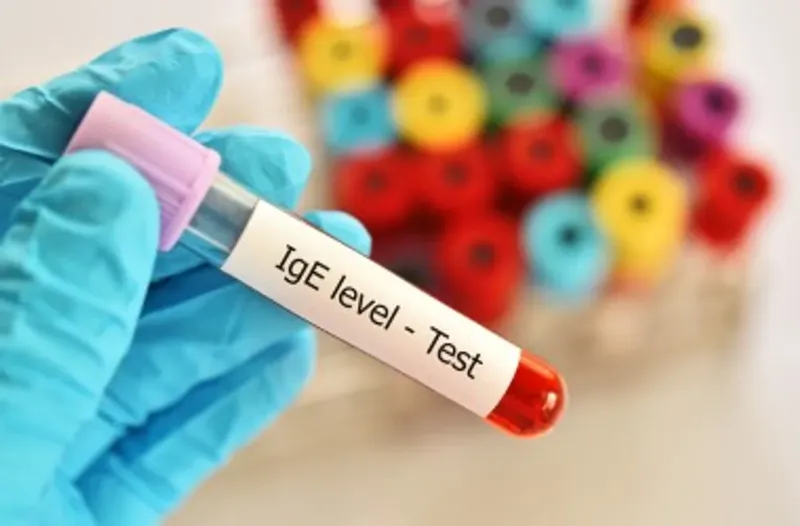
An IgE allergy blood test works by detecting and quantifying these antibodies in a blood sample. Modern platforms such as ImmunoCAP (Thermo Fisher) and ALEX2 (Macro Array Diagnostics) use fluorescent enzyme immunoassay technology to measure IgE levels with high sensitivity and specificity. The blood sample is exposed to specific allergen proteins bound to a solid phase. If allergen-specific IgE is present in the blood, it binds to the allergen, and the amount of binding is measured and reported in kilounits per litre (kU/L). According to the American Academy of Allergy, Asthma & Immunology (AAAAI), specific IgE testing has a sensitivity of 85-95% for most common allergens when using validated platforms.
Total IgE vs Specific IgE: Key Differences
When your doctor orders an IgE test, it is important to understand that two fundamentally different measurements exist, and they answer different clinical questions. Many patients are confused when they receive a "normal" total IgE result but still have significant allergies — or an elevated total IgE without any identifiable allergy. Understanding the distinction is crucial for proper diagnosis.
Total IgE (Serum IgE)
Total IgE measures the combined concentration of all IgE antibodies in your blood, regardless of what they are directed against. Normal total IgE levels vary by age, but in adults, the reference range is typically <100-150 IU/mL. Elevated total IgE can indicate an allergic constitution (atopy), parasitic infection, certain autoimmune conditions, or specific immunological diseases such as allergic bronchopulmonary aspergillosis (ABPA) or hyper-IgE syndrome.
- What it tells you: Whether your immune system is producing excessive IgE overall — a marker of allergic tendency (atopy)
- What it does NOT tell you: Which specific allergens you are reacting to. A person can have a normal total IgE but high specific IgE to one or two allergens
- Clinical use: Screening tool for atopy, monitoring response to anti-IgE therapy (omalizumab), diagnosing ABPA, ruling out parasitic infections in expatriates returning from endemic areas
- Cost in Dubai: From AED 150, results in 1-2 days
Specific IgE (Allergen-Specific IgE)
Specific IgE measures the concentration of IgE antibodies directed against one particular allergen — for example, IgE specific to Dermatophagoides pteronyssinus (house dust mite), Ara h 1 (peanut protein), or cat dander (Fel d 1). This is the test that actually identifies your triggers. Results are reported in kU/L and classified on a 0-6 scale, with values above 0.35 kU/L generally considered positive for sensitisation.
- What it tells you: Whether you have IgE antibodies against a specific allergen — the key to identifying your triggers
- Component-resolved diagnostics (CRD): Advanced specific IgE testing can identify which individual protein components within an allergen source you react to — critical for determining cross-reactivity and risk of severe reactions
- Clinical use: Identifying specific food, environmental, medication, or insect venom allergies. Guiding allergen avoidance and immunotherapy decisions
- Cost in Dubai: AED 80-150 per individual allergen, or AED 550-2,000 for panels testing 20-100+ allergens
When Do You Need an IgE Allergy Blood Test?
An IgE blood test is clinically indicated in a range of situations. The World Health Organization estimates that allergic diseases affect 30-40% of the global population, making them one of the most common chronic conditions worldwide. In the UAE specifically, studies published in the Annals of Allergy, Asthma & Immunology have documented dust mite sensitisation rates exceeding 40% among atopic patients in Gulf countries — driven by the combination of indoor living with air conditioning and the region's humidity-temperature profile.
Your doctor may recommend IgE testing if you experience any of the following:
- Allergic rhinitis: Persistent or seasonal sneezing, nasal congestion, runny nose, and post-nasal drip that do not resolve with standard treatment — especially if symptoms worsen indoors with air conditioning
- Suspected food allergy: Hives, lip/tongue swelling, vomiting, or breathing difficulty within 2 hours of eating specific foods. In children, unexplained eczema flare-ups may also indicate food allergy
- Asthma with suspected allergic trigger: Wheezing and chest tightness that worsen with specific exposures (dust, pets, mould, exercise in pollen season)
- Chronic urticaria (hives): Recurrent episodes of hives lasting more than 6 weeks, where an allergic trigger is suspected
- Eczema (atopic dermatitis): Moderate to severe eczema, especially in children, where identifying and avoiding triggers may improve control
- Insect sting reactions: Severe local or systemic reactions after bee, wasp, or ant stings — IgE testing identifies the specific venom to guide immunotherapy
- Drug allergy assessment: Suspected allergy to penicillin, cephalosporins, or other medications where specific IgE testing is available
- Pre-immunotherapy evaluation: Before starting allergy shots or sublingual immunotherapy, specific IgE testing confirms the target allergens
For a broader overview of all allergy testing methods available — including skin prick tests, patch tests, and IgG food intolerance panels — see our comprehensive allergy testing guide.
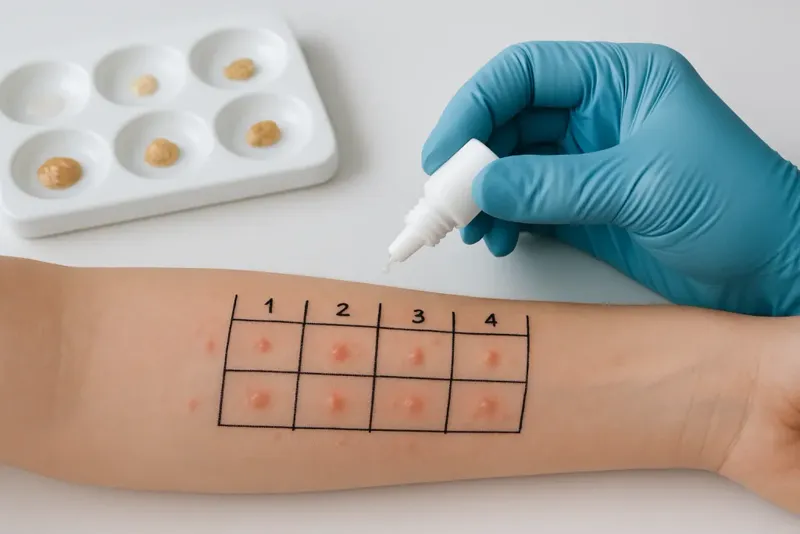
IgE Allergy Test vs Skin Prick Test: Which Is Better?
This is one of the most common questions patients ask. Both tests detect IgE-mediated allergies, but they do so differently and each has distinct advantages. The answer to "which is better" depends on your specific clinical situation. Neither test is universally superior — they are complementary tools, and in some cases, both may be performed.
| Feature | IgE Blood Test | Skin Prick Test |
|---|---|---|
| How it works | Blood sample analysed in laboratory | Allergen applied to skin, reaction observed |
| Results available | 1-3 days (laboratory turnaround) | 15-20 minutes (immediate) |
| Antihistamine use | Can continue all medications | Must stop antihistamines 5-7 days before |
| Skin conditions | Unaffected by eczema or dermographism | Cannot perform on inflamed or highly reactive skin |
| Number of allergens | Can test 100+ allergens from one sample | Typically 20-40 allergens per session |
| Risk of allergic reaction | Zero (blood drawn, tested in lab) | Minimal but possible (allergen contacts skin) |
| Quantitative result | Yes (kU/L with 0-6 class scale) | Semi-quantitative (wheal size in mm) |
| Best for | Patients on antihistamines, children, severe eczema, comprehensive panels | Rapid results, initial screening, lower cost per allergen |
IgE blood test vs skin prick test comparison
When IgE blood testing is preferred over skin prick testing: Patients who cannot stop antihistamines (severe allergic rhinitis or urticaria requiring daily medication), children under age 2, patients with widespread eczema or dermographism (skin writing), patients with a history of severe anaphylaxis (where skin testing carries a small risk), and when comprehensive multi-allergen panels of 50-100+ allergens are needed. The Mayo Clinic notes that IgE blood testing is also preferred when skin testing may be unreliable — such as in patients taking beta-blockers, which can interfere with the treatment of anaphylaxis should it occur during skin testing.
What Allergens Can an IgE Panel Detect?
Modern IgE testing platforms can test for hundreds of individual allergens from a single blood sample. Panels are typically grouped by category, and your doctor will select the most appropriate panel based on your symptoms, clinical history, and suspected triggers. Here are the main categories of allergens that can be detected through specific IgE blood testing:
Environmental and Inhalant Allergens
- House dust mites: Dermatophagoides pteronyssinus (Der p 1, Der p 2) and Dermatophagoides farinae (Der f 1) — the most common allergen trigger in Dubai and the Gulf region, thriving in the humid, air-conditioned indoor environment
- Mould spores: Aspergillus fumigatus, Alternaria alternata, Cladosporium herbarum, Penicillium chrysogenum — common in poorly maintained AC units, bathrooms, and damp areas
- Pollen: Grass pollen (timothy, bermuda), tree pollen (olive, palm, mesquite/prosopis), weed pollen (mugwort, plantain) — relevant during Dubai's mild winter months when certain plants pollinate
- Animal dander: Cat (Fel d 1), dog, horse, rabbit, hamster, guinea pig epithelium and dander
- Insect allergens: Cockroach (Bla g 1, Bla g 2), moth, storage mites
Food Allergens
- Major food allergens: Cow's milk (casein, whey proteins), hen's egg (ovomucoid, ovalbumin), peanut (Ara h 1, 2, 3, 6, 8, 9), wheat (omega-5 gliadin), soy, fish, shrimp/prawn, sesame
- Tree nuts: Almond, walnut, cashew, hazelnut, pistachio, macadamia, Brazil nut, pecan — each tested individually as cross-reactivity is not universal
- Fruits and vegetables: Kiwi, banana, avocado, apple, peach, celery, carrot — particularly important for latex-fruit syndrome and oral allergy syndrome (pollen-food)
- Spices and seeds: Mustard, coriander, cumin, fenugreek, sesame — increasingly recognised in Dubai's diverse culinary environment
Other Allergens
- Insect venoms: Honey bee, yellow jacket wasp, paper wasp, fire ant — essential for patients with a history of systemic sting reactions
- Latex: Natural rubber latex (Hev b proteins) — relevant for healthcare workers and patients with frequent surgical procedures
- Medications: Penicilloyl G and V, amoxicilloyl, cefaclor, insulin, chlorhexidine — available for selected drug allergy evaluations
Get Your IgE Allergy Panel at DCDC
Comprehensive IgE allergy panels available at DCDC Dubai Healthcare City — food, environmental, and comprehensive panels with results in 1-3 days. Walk-in or appointment.
Allergy panels from AED 550 — most insurance plans accepted
How to Prepare for Your IgE Blood Test
One of the greatest advantages of IgE blood testing over skin prick testing is the minimal preparation required. For most patients, no special preparation is needed at all. However, understanding the details ensures accurate results and avoids unnecessary repeat testing.
- No fasting required: IgE levels are not affected by food intake. You can eat and drink normally before the test
- Continue all medications: Antihistamines (cetirizine, loratadine, fexofenadine), nasal sprays, asthma inhalers, corticosteroids, and all other medications can be continued. This is a key advantage over skin prick testing
- Timing does not matter: Unlike cortisol or hormone tests, IgE levels do not fluctuate significantly throughout the day. You can have the test at any time
- Hydration: Drink water normally. Adequate hydration makes veins easier to access for the blood draw
- Inform your doctor about recent anaphylaxis: If you have had a severe allergic reaction within the past 4-6 weeks, specific IgE levels to the trigger allergen may be temporarily lower due to antibody consumption. Your doctor may recommend waiting or interpreting results with this context
- Note current symptoms: Keep a symptom diary noting when symptoms occur, what you were eating or exposed to, and the timing of reactions — this information helps your doctor select the right allergen panel and interpret results
The blood draw itself takes less than 5 minutes. A phlebotomist or nurse draws a standard venous blood sample (typically 5-10 mL) from a vein in your arm. For children, smaller volumes can be used with paediatric tubes. The sample is sent to the laboratory and analysed using immunoassay technology. For more information about blood test procedures, preparation guidelines, and what to expect during a blood draw, see our detailed blood test guide for Dubai.
Understanding Your IgE Test Results
IgE test results can be confusing for patients, particularly because a positive result (sensitisation) does not always mean clinical allergy, and the numerical value does not directly predict symptom severity. Here is how to interpret both total and specific IgE results.
Total IgE Reference Ranges
Total IgE is reported in IU/mL (international units per millilitre). Normal ranges vary by age: newborns have very low total IgE (<1.5 IU/mL), which gradually increases through childhood. In adults, the reference range is typically <100-150 IU/mL, though this varies slightly by laboratory. Elevated total IgE (>200 IU/mL) suggests atopy, parasitic infection, or other IgE-mediated conditions. Very high total IgE (>1,000 IU/mL) may indicate allergic bronchopulmonary aspergillosis (ABPA), hyper-IgE syndrome, or heavy parasitic burden.
Specific IgE Result Classification
| IgE Level (kU/L) | Class | Clinical Interpretation |
|---|---|---|
| <0.35 | 0 | Negative — no IgE sensitisation detected to this allergen |
| 0.35 - 0.69 | 1 | Low positive — equivocal; may or may not correlate with clinical symptoms |
| 0.70 - 3.49 | 2 | Moderate positive — likely clinically relevant if symptoms match exposure |
| 3.50 - 17.49 | 3 | High — clinically significant sensitisation; strong correlation with allergic symptoms |
| 17.50 - 52.49 | 4 | Very high — strong sensitisation; symptoms on exposure are very likely |
| 52.50 - 99.99 | 5 | Very high — very strong sensitisation |
| >100 | 6 | Extremely high — strongest level of sensitisation measurable |
Specific IgE result classification (ImmunoCAP scale, kU/L)
Critical points about IgE result interpretation: A Class 1 (low positive) result requires careful clinical correlation — it may represent early sensitisation that has not yet caused symptoms, cross-reactivity with a related allergen, or a clinically irrelevant finding. Conversely, the absolute IgE value does not reliably predict reaction severity: a patient with a Class 2 peanut IgE may experience anaphylaxis, while another with Class 4 may only have mild oral itching. The NHS emphasises that IgE results must always be interpreted by a doctor in the context of your clinical history, symptom pattern, and timing of reactions.
Component-Resolved Diagnostics (CRD)
Component-resolved diagnostics represent the next generation of specific IgE testing. Rather than testing IgE against a whole allergen extract (e.g., peanut extract), CRD tests against individual protein components within the allergen. For peanut, this means testing separately for Ara h 2 (storage protein — associated with severe systemic reactions and anaphylaxis), Ara h 8 (PR-10 protein — associated with mild oral allergy syndrome and birch pollen cross-reactivity), and Ara h 9 (lipid transfer protein — associated with severe reactions in Mediterranean populations). This distinction fundamentally changes risk assessment and management recommendations.
IgE Allergy Test Cost in Dubai: Pricing Breakdown
IgE allergy testing costs in Dubai vary significantly depending on the type of test, the number of allergens tested, and the facility. The DHA regulates laboratory pricing, but variation exists between clinics. Here is a comprehensive pricing overview based on current market rates:
| Test Type | Price Range (AED) | Turnaround Time |
|---|---|---|
| Total IgE | From AED 150 | 1-2 days |
| Specific IgE (per allergen) | AED 80-150 | 2-3 days |
| Food Allergy Panel (20+ allergens) | AED 550-1,200 | 2-3 days |
| Environmental Panel (dust, pollen, mould) | AED 550-1,000 | 2-3 days |
| Comprehensive Panel (100+ allergens) | AED 1,200-2,000 | 3-5 days |
IgE allergy test pricing in Dubai (2026 estimates, DHA-regulated facilities)
Insurance coverage: Most Dubai health insurance plans — including Essential Benefits Plan (EBP), enhanced plans, and corporate insurance — cover IgE allergy testing when ordered by a doctor with a clinical indication. Common accepted indications include allergic rhinitis (J30), allergic asthma (J45), atopic dermatitis (L20), food allergy (T78.1), and anaphylaxis history (T78.2). IgG food intolerance testing, by contrast, is often excluded from coverage as it is classified as a wellness or investigational test.
Cost-saving tip: If you have multiple suspected allergies, a panel test (20-100+ allergens in one test) is significantly more cost-effective than ordering individual specific IgE tests. For example, testing 20 individual allergens at AED 100 each would cost AED 2,000 — whereas a 20-allergen panel costs from AED 550. Always discuss panel options with your doctor.
Why Choose DCDC for IgE Allergy Testing in Dubai?
Doctors Clinic Diagnostic Center (DCDC) in Dubai Healthcare City offers comprehensive IgE allergy testing with several distinct advantages for patients:
- DHA-licensed in-house laboratory: DCDC operates a fully equipped, DHA-licensed laboratory within Dubai Healthcare City, ensuring standardised testing protocols, validated platforms, and quality-controlled results. Your blood sample does not leave the building — reducing turnaround times and the risk of sample degradation
- Walk-in availability: No appointment is needed for IgE blood testing. Walk in during operating hours, have your blood drawn, and receive results digitally within 1-3 days depending on the panel
- Doctor consultation included: At DCDC, allergy testing is not a standalone lab service — it begins with a doctor consultation to ensure the right panel is selected based on your symptoms and clinical history, and ends with a results review where your doctor explains findings and creates a management plan
- Competitive DHA-regulated pricing: IgE allergy panels from AED 550. No hidden fees, transparent pricing, and insurance pre-authorisation assistance
- Strategic location: Dubai Healthcare City (Building 64, Block A) is centrally located and accessible by Metro (Healthcare City station), with dedicated parking available
- Multidisciplinary follow-up: DCDC's on-site ENT specialists, dermatologists, paediatricians, and general practitioners allow seamless referral for allergy management — from diagnosis through to immunotherapy, medication optimisation, or specialist consultation
Common Allergies in Dubai: Environmental Triggers
Dubai's unique environment creates a distinctive allergy profile that differs significantly from Europe, North America, or South Asia. Understanding the most common allergens in this region helps patients and doctors select the most relevant IgE panels and develop effective avoidance strategies. Research published in the Journal of Allergy and Clinical Immunology and regional epidemiological studies have identified the following as the most prevalent allergic triggers in the UAE:
Dust Mites — The Dominant Indoor Allergen
House dust mites (Dermatophagoides pteronyssinus and Dermatophagoides farinae) are the single most common allergen trigger in the UAE. These microscopic arachnids thrive in temperatures of 20-25 degrees Celsius with relative humidity of 60-80% — conditions found year-round inside air-conditioned homes and offices. Dust mites feed on shed human skin cells and concentrate in mattresses, pillows, upholstered furniture, and carpets. Their faecal pellets contain potent allergen proteins (Der p 1, Der p 2) that become airborne when disturbed. Studies in Gulf countries show that up to 80% of allergic rhinitis patients in the region are sensitised to house dust mites, making them the primary target for IgE testing panels.
Mould Spores — The Hidden AC Problem
The extreme outdoor heat (exceeding 45 degrees Celsius in summer) combined with cold indoor air conditioning creates condensation — an ideal breeding ground for mould. Aspergillus, Alternaria, Cladosporium, and Penicillium species commonly colonise AC ducts, drip trays, bathroom ceilings, and poorly ventilated spaces. Mould allergy symptoms typically worsen when the AC is first turned on (stirring settled spores), in bathrooms after showering, and during humid months (September-November). Regular AC maintenance, including duct cleaning and filter replacement, is essential for mould allergy management in this climate.
Construction Dust and Sand
The region's ongoing construction activity and periodic shamal (sandstorm) events generate significant particulate matter. While sand particles themselves are not classical allergens (they are inorganic silica), they act as carriers for mould spores, pollen grains, and organic debris that trigger allergic responses. Construction dust containing cement particles, fibreglass, and chemical irritants can exacerbate allergic rhinitis and asthma through non-IgE irritant mechanisms. For patients who experience worsening respiratory symptoms during sandstorms or near construction sites, consulting an ENT specialist is advisable.
Managing Your Allergies After Diagnosis
Receiving your IgE test results is only the first step. The real value of allergy testing lies in using the results to develop a targeted management strategy. Depending on the type and severity of your allergies, your doctor will recommend one or more of the following approaches, tailored to your specific IgE profile:
Allergen Avoidance Strategies
For dust mite allergy — the most common positive finding on IgE panels in Dubai — evidence-based avoidance measures include: encasing mattresses, pillows, and duvets in allergen-proof covers (pore size <6 micrometres); washing bedding weekly at 60 degrees Celsius or above; removing wall-to-wall carpets (replacing with hard floors); maintaining indoor humidity below 50% with dehumidifiers; using HEPA-filter vacuum cleaners; and scheduling regular professional AC duct cleaning at least once annually.
Pharmacological Treatment
- Second-generation antihistamines: Cetirizine, loratadine, fexofenadine, bilastine — first-line treatment for allergic rhinitis and urticaria. Non-sedating, once-daily dosing
- Intranasal corticosteroids: Fluticasone, mometasone, budesonide — the most effective treatment for persistent allergic rhinitis, reducing nasal congestion, sneezing, and rhinorrhoea
- Leukotriene receptor antagonists: Montelukast — useful as add-on therapy for patients with both allergic rhinitis and asthma
- Epinephrine auto-injectors: Essential for patients with IgE-confirmed food, insect venom, or drug allergies with a history of anaphylaxis or high-risk sensitisation profiles (e.g., high Ara h 2 specific IgE for peanut)
- Anti-IgE therapy (omalizumab): A biologic medication that binds free IgE in the blood, reducing allergic responses. Used for severe allergic asthma and chronic spontaneous urticaria unresponsive to antihistamines
Allergen Immunotherapy
For patients with confirmed IgE-mediated allergies to dust mites, pollen, or insect venoms, allergen immunotherapy offers the possibility of long-term tolerance. This involves administering gradually increasing doses of the allergen over 3-5 years, either by subcutaneous injection (SCIT) every 4-6 weeks or sublingual tablets/drops (SLIT) taken daily. Studies show immunotherapy can reduce symptom severity by 30-40%, decrease medication use, and in some cases achieve long-lasting remission. Specific IgE test results are essential for selecting the correct immunotherapy formulation.
Ready to Identify Your Allergy Triggers?
Book your IgE allergy blood test at DCDC Dubai Healthcare City. Walk-in testing available, no fasting needed, results in 1-3 days. Our doctors will help you interpret results and develop a personalised management plan.
Call or WhatsApp to book — allergy panels from AED 550
خدمات ذات صلة في DCDC
رعاية متخصصة وتشخيص متقدم في مدينة دبي الطبية
الأسئلة الشائعة
Final Thoughts
IgE allergy blood testing has transformed allergy diagnosis from a guessing game into a precise, evidence-based process. A single blood sample can reveal sensitisation to dozens or even hundreds of specific allergens, identifying exactly which substances your immune system is reacting to — whether it is the dust mites in your pillow, the mould in your AC ducts, the peanut protein in your child's snack, or the cat dander on your colleague's jacket.
In Dubai, where dust mites, mould, construction particulates, and a cosmopolitan food environment create a uniquely challenging allergy landscape, knowing your specific IgE profile is the foundation of effective management. Without testing, you are treating symptoms blindly. With testing, you can target avoidance, select the right medications, determine whether immunotherapy is appropriate, and in the case of food allergies, understand which foods genuinely pose a risk and which are safe.
At Doctors Clinic Diagnostic Center in Dubai Healthcare City, we offer comprehensive IgE allergy panels from AED 550, with walk-in testing, no fasting required, and results in 1-3 days. Our doctors will interpret your results, explain what each positive finding means for your daily life, and create a personalised allergy management plan.
المصادر والمراجع
تمت مراجعة هذا المقال من قبل فريقنا الطبي ويستند إلى المصادر التالية:
- World Health Organization (WHO) — White Book on Allergy (2024 Update): Allergic Diseases as a Global Health Problem
- American Academy of Allergy, Asthma & Immunology (AAAAI) — Allergy Blood Testing: Overview and Clinical Guidelines
- Mayo Clinic — Allergy Skin Tests and Blood Tests: When They Are Used and What Results Mean
- National Health Service (NHS) — Allergies: Diagnosis, Including IgE Blood Tests and Skin Prick Testing
- Cleveland Clinic — Immunoglobulin E (IgE) Test: Purpose, Procedure, and Results Interpretation
يتم مراجعة المحتوى الطبي على هذا الموقع من قبل أطباء مرخصين من هيئة الصحة. اطلع على سياستنا التحريرية لمزيد من المعلومات.

Related Articles

Allergy Testing Dubai: IgE, Skin Prick & Cost (2026)

Blood Test Dubai: Types, Cost & Fasting Guide (2026)

ENT Doctor Dubai: When to See a Specialist (2026)

Vitamin D Deficiency Dubai: Signs & Treatment (2026)
blogPage.moreFromCategory

Hair Loss Treatment Dubai: Costs & Options (2026)
اقرأ المزيد
Ear Infection Treatment Dubai: Causes & Care (2026)
اقرأ المزيد
Stroke Warning Signs Dubai: FAST Guide (2026)
اقرأ المزيد
Lipid Profile Test Dubai: Cost & Guide (2026)
اقرأ المزيد
Yellow Fever Vaccine Dubai: Cost & Guide (2026)
اقرأ المزيد
Sinusitis Treatment Dubai: ENT Relief Guide (2026)
اقرأ المزيد© 2026 Doctors Clinic Diagnostic Center (DCDC), Dubai Healthcare City. Originally published at https://doctorsclinicdubai.ae/blog/ige-allergy-test-dubai. All rights reserved. Unauthorized reproduction is prohibited.