اہم نکات
- HSG uses X-ray and iodine contrast dye, while SSG (sonosalpingography) uses ultrasound and saline or foam contrast with no radiation exposure
- HSG is considered the gold standard for detailed tubal and uterine cavity assessment, providing permanent X-ray image records
- SSG/HyCoSy is preferred when patients have contrast allergy, radiation concerns, or need a quick office-based screening
- Both tests evaluate fallopian tube patency, but HSG provides superior detail of the uterine cavity shape and tubal architecture
- DCDC Dubai Healthcare City offers both HSG and ultrasound-based tubal assessments, with the choice guided by each patient's clinical needs
When your doctor recommends a tubal patency test as part of a fertility workup, two names come up most often: HSG (hysterosalpingography) and sonosalpingography (SSG), also called HyCoSy. Both tests check whether the fallopian tubes are open, but they use different imaging technologies, carry different advantages and drawbacks, and suit different clinical situations. This guide compares the two procedures side by side so you can understand which test may be more appropriate for your needs.
Below we explain how each test works, compare them across key factors including radiation, pain, accuracy, and cost, and outline when one is preferred over the other. We also cover what DCDC recommends and answer the most common questions patients in Dubai ask about these procedures.
How HSG Works
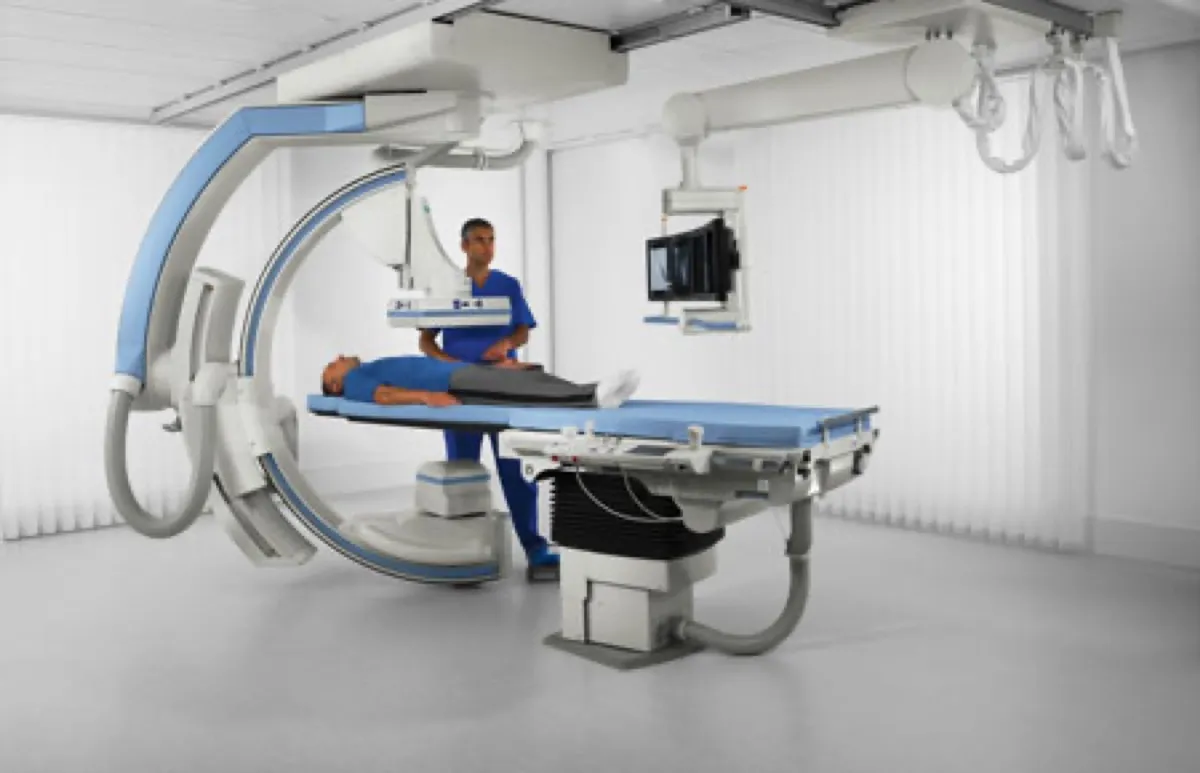
Hysterosalpingography (HSG) is an X-ray-based procedure in which iodine contrast dye is injected through the cervix into the uterus. As the dye fills the uterine cavity and travels through the fallopian tubes, real-time X-ray images (fluoroscopy) are captured. If the dye spills freely from the ends of the tubes into the pelvic cavity, the tubes are confirmed open. If it stops at any point, a blockage is suspected. For a full explanation of the procedure, see our article on what an HSG test is.
How Sonosalpingography (SSG/HyCoSy) Works
Sonosalpingography (SSG), also known as HyCoSy (hysterosalpingo-contrast sonography), is an ultrasound-based procedure. Instead of X-rays and iodine dye, it uses a transvaginal ultrasound probe while sterile saline, an air-saline mixture, or a specialized foam contrast agent is injected through the cervix. The movement of the fluid through the uterus and tubes is tracked on the ultrasound screen in real time. When the contrast is seen passing through and spilling from the tubes, patency is confirmed.
Side-by-Side Comparison Table
| Factor | HSG (Hysterosalpingography) | SSG / HyCoSy |
|---|---|---|
| Imaging technology | X-ray (fluoroscopy) | Ultrasound |
| Contrast agent | Iodine-based dye | Saline, air-saline, or foam |
| Radiation exposure | Low-dose X-ray radiation | None |
| Pain level | Mild to moderate cramping | Mild cramping (often reported as less painful) |
| Procedure duration | 15 to 30 minutes | 10 to 20 minutes |
| Uterine cavity detail | Excellent — clear outline of cavity shape | Moderate — less detailed cavity imaging |
| Tubal patency accuracy | High (gold standard) | Good (slightly lower specificity) |
| Permanent image record | Yes — X-ray films stored digitally | Limited — ultrasound clips are operator-dependent |
| Contrast allergy risk | Possible iodine allergy reaction | No iodine — minimal allergy risk |
| Setting | Radiology suite with fluoroscopy | Gynecology office or ultrasound room |
| Approximate cost in Dubai | AED 1,500 – 3,000 | AED 1,000 – 2,500 |
Comparison of key factors between HSG and sonosalpingography. Individual results may vary depending on the clinic and patient.
Advantages of HSG
HSG has been the gold standard for tubal patency testing for decades. Its main strengths lie in the quality and permanence of the images it produces and the depth of information it provides about both the fallopian tubes and the uterine cavity.
- Gold standard status: HSG is recommended by major fertility guidelines worldwide, including ASRM and NICE, as a first-line tubal patency test
- Detailed tubal architecture: Fluoroscopy captures real-time dye flow, showing exactly where a blockage is located — proximal, mid-tube, or distal — and whether it is partial or complete
- Superior uterine cavity imaging: The contrast outlines the entire cavity clearly, making it easier to detect septum, polyps, fibroids, and adhesions
- Permanent records: X-ray images can be stored digitally, reviewed by multiple specialists, and compared with future studies
- Potential therapeutic effect: Some studies suggest that the flushing action of oil-based contrast dye may improve pregnancy rates in the months after HSG. Learn about HSG results
- Widely accepted: Almost all fertility clinics and insurance providers recognize HSG results, making referrals and treatment planning straightforward
Advantages of SSG / HyCoSy
Sonosalpingography has gained popularity as a less invasive alternative that avoids some of the drawbacks associated with HSG, particularly radiation exposure and iodine contrast.
- No radiation: SSG uses ultrasound only, making it suitable for patients who want to avoid any X-ray exposure
- No iodine contrast: Patients with a known or suspected iodine allergy can safely undergo SSG because it uses saline or foam instead
- Office-based convenience: The procedure can be performed in a standard gynecology clinic with an ultrasound machine, without requiring a dedicated radiology suite
- Generally less painful: Many patients report milder cramping compared to HSG, likely because saline causes less uterine distension than contrast dye
- Shorter procedure time: SSG typically takes 10 to 20 minutes, slightly faster than HSG
- Additional pelvic information: Because it uses ultrasound, the operator can simultaneously evaluate the ovaries, check for fibroids, and assess the endometrial lining
When HSG Is the Better Choice
HSG is generally the preferred option in clinical scenarios where detailed tubal imaging and permanent documentation are important.
- When a detailed assessment of tubal architecture is needed, such as distinguishing between proximal spasm and true proximal occlusion
- When the uterine cavity must be mapped precisely, for example before surgical correction of a septum or before IVF
- When the fertility specialist requires permanent image documentation to share with other physicians or review over time
- When the patient has suspected hydrosalpinx, as HSG can clearly show the dilated tube filled with dye
- When insurance or fertility clinic protocols specifically require HSG results for treatment authorization
For patients concerned about discomfort during HSG, modern pain management techniques including pre-procedure medications can significantly reduce cramping. Read more in our article on whether the HSG test is painful.
When SSG Is the Better Choice
SSG may be the more appropriate option in the following situations:
- When the patient has a known iodine or contrast dye allergy that makes HSG contraindicated
- When the patient prefers to avoid radiation exposure, even though the dose from HSG is very low
- When a quick screening for tubal patency is needed in an office setting without scheduling a separate radiology appointment
- When the doctor also wants to assess ovarian morphology and pelvic structures during the same examination
- When the patient has had previous allergic reactions to iodinated contrast agents in other imaging studies
Accuracy: What the Research Shows
Multiple studies have compared the diagnostic accuracy of HSG and SSG for tubal patency assessment. HSG consistently demonstrates high sensitivity (approximately 85 to 95 percent) and good specificity for detecting tubal blockages. SSG/HyCoSy shows comparable sensitivity (approximately 80 to 92 percent) but may have slightly lower specificity, meaning it can occasionally produce false-positive results suggesting a blockage when the tubes are actually open.
The clinical significance of this difference is relatively small for screening purposes. However, when a definitive diagnosis is required before proceeding with major treatment decisions such as IVF or tubal surgery, most fertility specialists prefer HSG because of its established track record, higher reproducibility, and superior image quality.
"I perform both types of assessments, and each has its place," says Dr. Osama Elzamzami, Consultant Radiologist at DCDC. "But when a fertility specialist needs to make a definitive treatment decision, HSG is almost always what I recommend. The fluoroscopic images give me a level of detail about the uterine cavity and tubal architecture that ultrasound-based methods simply cannot match. I can pinpoint the exact location of a blockage and distinguish between a true obstruction and a spasm, which directly affects the treatment plan."
A 33-year-old patient from Al Ain had undergone an SSG at a local clinic that showed a possible right tubal blockage. Her fertility specialist wanted confirmation before moving to IVF. She came to DCDC for a formal HSG, which clearly demonstrated that both tubes were patent with free bilateral spill. The SSG finding had been a false positive. She went on to conceive naturally within five months, avoiding an IVF cycle that would have cost significantly more in both financial and emotional terms. Her experience underscores why choosing the right diagnostic tool matters.
What DCDC Recommends
At Doctors Clinic Diagnostic Center in Dubai Healthcare City, our radiology and gynecology teams work together to recommend the most appropriate tubal assessment for each patient. With more than 13 years of diagnostic imaging experience and over 1,000 scans performed every month, our team has the expertise to deliver accurate results with both modalities. In most cases, we recommend HSG as the primary tubal patency test because of its gold-standard accuracy, detailed imaging, permanent records, and wide acceptance by fertility clinics across the UAE.
However, we recognize that SSG is a valuable alternative for specific patients. If you have a documented iodine allergy, strong radiation concerns, or your gynecologist determines that an ultrasound-based assessment is sufficient for your clinical situation, we support that approach. The decision is always individualized based on your medical history, your doctor's recommendation, and your personal preferences.
Dubai-Specific Context: Pricing and Insurance
In Dubai, HSG typically costs between AED 1,500 and AED 3,000 depending on the facility, while SSG generally ranges from AED 1,000 to AED 2,500. Most major insurance providers in the UAE, including those regulated by the Dubai Health Authority, cover HSG when it is part of a documented fertility workup with a physician referral. Coverage for SSG/HyCoSy varies more widely between insurance plans, so patients should verify with their provider before scheduling. For a detailed pricing breakdown, see our guide on HSG test cost in Dubai.
At DCDC, we assist patients with insurance pre-authorization when applicable and provide transparent pricing for self-pay patients. Our HSG test service is performed by experienced consultant radiologists using modern fluoroscopy equipment, ensuring both diagnostic accuracy and patient comfort.
Need Help Choosing Between HSG and SSG?
Our radiology and gynecology teams at Doctors Clinic Diagnostic Center in Dubai Healthcare City can help determine which tubal patency test is right for you based on your medical history and clinical needs. Book a consultation or schedule your HSG test today.
Book a Consultationاکثر پوچھے گئے سوالات
Final Thoughts
Both HSG and sonosalpingography are valuable tools for evaluating fallopian tube patency as part of a fertility assessment. HSG remains the gold standard thanks to its detailed imaging, permanent records, and universal acceptance across fertility clinics. SSG offers a radiation-free, iodine-free alternative that is gentler and faster, making it well suited for patients with specific concerns or contraindications.
The best test for you depends on your individual clinical situation, and there is no single right answer for everyone. If you are preparing for a tubal patency assessment and are unsure which test to choose, Doctors Clinic Diagnostic Center in Dubai Healthcare City offers expert consultations to help guide your decision. Early and accurate diagnosis is the first step toward effective treatment and better outcomes. For a breakdown of fees, see our HSG test cost in Dubai guide.
ذرائع اور حوالہ جات
یہ مضمون ہماری طبی ٹیم نے جائزہ لیا ہے اور درج ذیل ذرائع کا حوالہ دیتا ہے:
- American Society for Reproductive Medicine - Diagnostic Evaluation of the Infertile Female
- National Institute for Health and Care Excellence (NICE) - Fertility Assessment and Treatment
- Radiological Society of North America - Hysterosalpingography
- Maheux-Lacroix et al. - Hysterosalpingosonography for Diagnosing Tubal Occlusion (Cochrane Review)
- Dubai Health Authority - Diagnostic Imaging Standards
اس سائٹ پر طبی مواد کا جائزہ DHA لائسنس یافتہ ڈاکٹرز نے لیا ہے۔ ہماری دیکھیں تحریری پالیسی مزید معلومات کے لیے۔

تحریر
Dr. Osama Elzamzami
Consultant Radiologist
MD, Radiology
Dr. Osama Elzamzami is a Consultant Radiologist specializing in diagnostic imaging including MRI, CT, ultrasound, and fluoroscopy procedures such as HSG at DCDC Dubai Healthcare City.