Ключевые выводы
- Chronic kidney disease (CKD) affects an estimated 10-13% of the global population, and the UAE's high rates of diabetes and hypertension make Dubai residents particularly vulnerable — yet CKD is often silent until 60-70% of kidney function is already lost
- Key warning signs that warrant a nephrologist visit include persistent foamy urine, blood in urine, swollen ankles or face, unexplained fatigue, and consistently high blood pressure that does not respond to standard medication
- Anyone with diabetes, hypertension, a family history of kidney disease, or age over 50 should have kidney function tested annually — early detection can slow or halt CKD progression by up to 50%
- A nephrologist is a kidney specialist trained beyond internal medicine to diagnose and manage CKD, glomerulonephritis, kidney stones, electrolyte disorders, and renal hypertension — they differ from urologists, who focus on surgical conditions
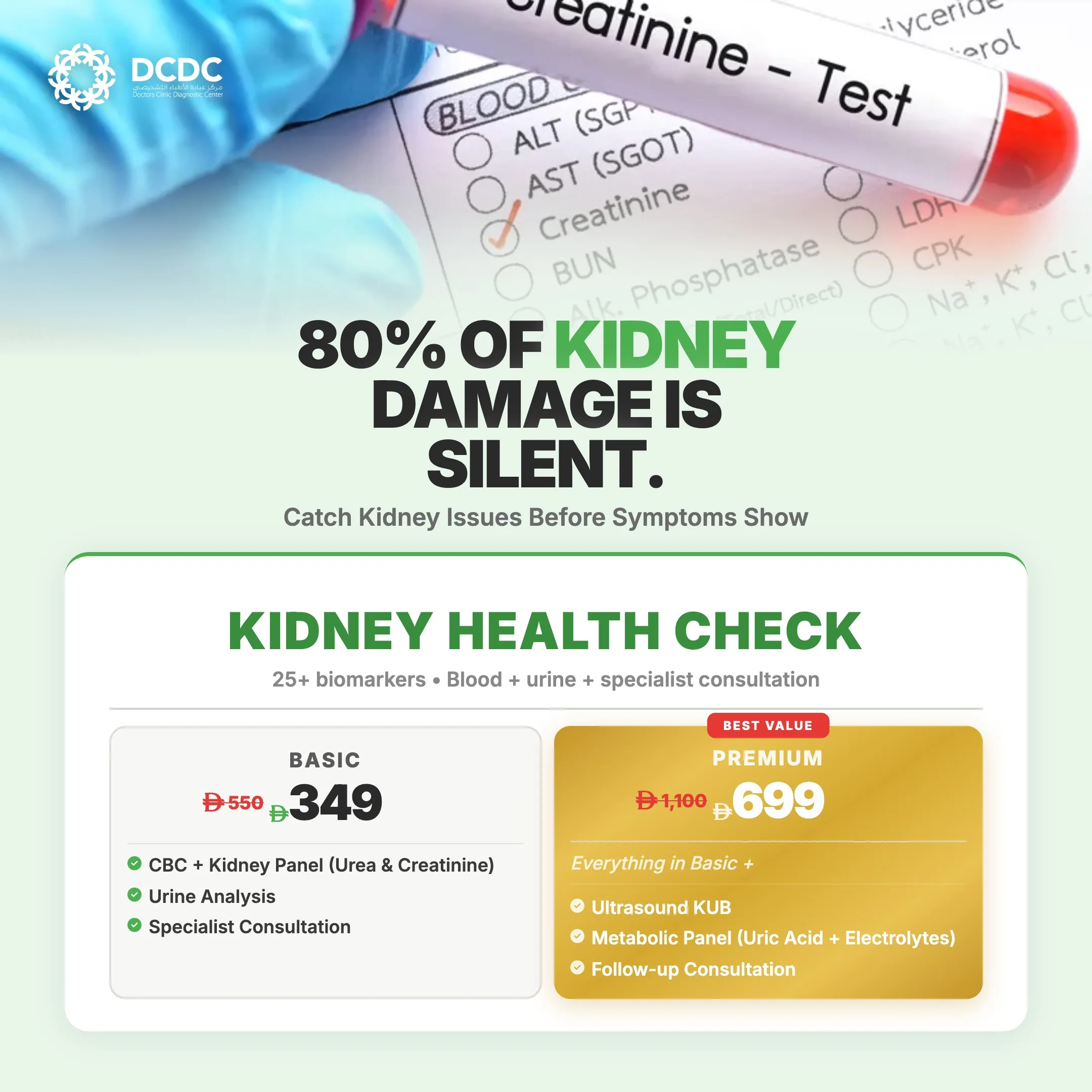
- At DCDC Dubai Healthcare City, kidney evaluation includes same-day blood work, urine analysis, and renal ultrasound under one roof — with nephrologist consultations from AED 500 and kidney function tests from AED 200
- Early referral to a nephrologist at CKD stage 3 (eGFR below 60) is associated with significantly better outcomes, including delayed dialysis, preserved quality of life, and lower cardiovascular risk
Your kidneys filter roughly 180 litres of blood every day, regulate blood pressure, balance electrolytes, and remove toxins — yet most people never think about kidney health until something goes visibly wrong. The problem is that chronic kidney disease (CKD) is famously silent: symptoms rarely appear until 60-70% of function is already lost. In the UAE, where diabetes and hypertension prevalence ranks among the highest globally, kidney disease is a growing public health concern. This guide explains exactly which warning signs should prompt you to see a nephrologist, what a kidney specialist actually does, which tests you need, and what to expect if you visit our Nephrology Clinic at DCDC Dubai Healthcare City.
From recognising the earliest kidney warning signs to understanding CKD stages, knowing which blood and urine tests detect kidney damage, and learning how a nephrologist can preserve your remaining kidney function — this is a comprehensive nephrology guide for Dubai residents. Reviewed by Dr. Hadeel Elnur, General Practitioner at DCDC Dubai Healthcare City.


What Is a Nephrologist and What Do They Treat?
A nephrologist is a medical doctor who has completed additional fellowship training in kidney medicine after qualifying as an internal medicine specialist. While a general practitioner or internist can order basic kidney blood tests, a nephrologist brings specialised expertise in diagnosing, staging, and managing the full spectrum of kidney conditions.
Conditions a Nephrologist Manages
- Chronic kidney disease (CKD): All five stages, from early decline in filtration rate through to dialysis planning and transplant coordination
- Acute kidney injury (AKI): Sudden drops in kidney function caused by dehydration, medication toxicity, infections, or obstruction
- Glomerulonephritis: Inflammation of the kidney's filtering units, often autoimmune in origin
- Kidney stones (recurrent): Metabolic workup, dietary modification, and prevention strategies for patients with frequent stone formation
- Renal hypertension: High blood pressure caused by or damaging the kidneys — a bidirectional relationship that requires specialist management
- Electrolyte and acid-base disorders: Abnormalities in sodium, potassium, calcium, phosphorus, and bicarbonate levels that the kidneys normally regulate
- Proteinuria and haematuria: Persistent protein or blood in the urine, which may indicate glomerular or tubular kidney damage
- Diabetic nephropathy: Kidney damage caused by long-standing diabetes — the single most common cause of end-stage kidney disease worldwide
- Polycystic kidney disease (PKD): A genetic condition causing cyst formation in the kidneys, requiring lifelong monitoring
- Dialysis management: Haemodialysis and peritoneal dialysis for patients with kidney failure
Nephrologist vs Urologist: What Is the Difference?
This is one of the most common points of confusion. A nephrologist is a medical (non-surgical) kidney specialist who manages conditions through medication, diet, and ongoing monitoring. A urologist is a surgeon who treats structural and surgical conditions of the urinary tract — including kidney stones requiring removal, prostate problems, bladder cancer, and reconstructive procedures. In many cases, nephrologists and urologists collaborate: for example, a nephrologist manages the metabolic prevention of recurrent kidney stones while a urologist performs lithotripsy or surgical removal when needed.
10 Warning Signs You Need to See a Nephrologist
Because kidney disease is often silent in its early stages, knowing the warning signs is critical. If you experience any of the following, particularly more than one, you should consult a kidney specialist in Dubai:
- 1. Persistent foamy or frothy urine: Occasional foam from a strong urine stream is normal. Persistent, fine foam that looks like the head on a beer — regardless of how hard the stream is — suggests protein leaking into the urine (proteinuria), which is one of the earliest signs of kidney damage
- 2. Blood in the urine (haematuria): Urine that is pink, red, or brown — or blood detected on a routine urine test even when invisible to the naked eye (microscopic haematuria) — requires kidney investigation to rule out glomerulonephritis, stones, or more serious pathology
- 3. Swelling in ankles, feet, hands, or face: Puffy eyes in the morning or swollen ankles by evening can indicate the kidneys are not removing excess fluid and sodium properly. This is called oedema and is a hallmark of impaired kidney function
- 4. Persistent unexplained fatigue: Healthy kidneys produce erythropoietin (EPO), a hormone that stimulates red blood cell production. As kidney function declines, EPO drops, leading to anaemia and a deep fatigue that sleep does not resolve
- 5. High blood pressure that does not respond to medication: If you are taking two or more blood pressure medications and your readings remain above 140/90, there may be a renal cause. The kidneys are central to blood pressure regulation, and renal artery stenosis or CKD can cause resistant hypertension
- 6. Changes in urination pattern: Needing to urinate much more frequently (especially at night — called nocturia), significantly less than usual, or difficulty urinating can all signal kidney problems
- 7. Persistent nausea, loss of appetite, or metallic taste: As kidney function drops below 20-25%, waste products (uraemia) build up in the blood, causing a constant feeling of nausea, reduced appetite, and a metallic or ammonia-like taste in the mouth
- 8. Unexplained itching (pruritus): Severe, generalised itching without a skin rash can be caused by phosphorus and calcium imbalance or toxin buildup from failing kidneys
- 9. Muscle cramps (especially at night): Electrolyte imbalances — particularly low calcium and high phosphorus — caused by declining kidney function trigger frequent, painful muscle cramps
- 10. Abnormal blood test results: Elevated creatinine, low eGFR (below 60), elevated BUN, or abnormal urine albumin-to-creatinine ratio (UACR) discovered on routine blood work is one of the most common and important reasons for a nephrologist referral
If you recognise two or more of these symptoms, do not wait. Early intervention by a kidney specialist can slow CKD progression by up to 50% and significantly delay or prevent the need for dialysis.
Risk Factors: Who Should Get Kidney Screening?
Even without symptoms, certain groups should have regular kidney function testing because they are at elevated risk of developing CKD. In Dubai, several of these risk factors are particularly prevalent:
- Diabetes (type 1 or type 2): Diabetes is the leading cause of kidney failure globally and in the UAE. Approximately 30-40% of diabetic patients develop some degree of kidney damage. The UAE has one of the highest diabetes rates in the world, making this especially relevant for Dubai residents
- Hypertension (high blood pressure): The second leading cause of CKD. High blood pressure damages the tiny blood vessels in the kidneys over time, gradually reducing their filtering capacity
- Family history of kidney disease: If a first-degree relative (parent or sibling) has CKD, polycystic kidney disease, or required dialysis, your risk increases significantly
- Age over 50: Kidney function naturally declines with age. After 40, eGFR drops by approximately 1 ml/min per year on average. By 70, many people have measurably reduced kidney function
- Obesity: BMI above 30 is an independent risk factor for CKD. Obesity increases the workload on the kidneys and is associated with focal segmental glomerulosclerosis (FSGS)
- Cardiovascular disease: Heart failure, coronary artery disease, and peripheral vascular disease are closely linked to kidney health — the heart and kidneys affect each other in a relationship called the cardiorenal syndrome
- Regular use of NSAIDs: Over-the-counter painkillers like ibuprofen and diclofenac, when used frequently, can cause chronic interstitial nephritis and reduce kidney function
- History of kidney stones: Recurrent stones suggest metabolic abnormalities that, if untreated, may damage kidney tissue over time
- Autoimmune conditions: Lupus (SLE), IgA nephropathy, and vasculitis can attack the kidneys directly
- Chronic dehydration: In Dubai's extreme climate, chronic under-hydration is common and contributes to kidney stone formation and gradual kidney stress
If you have one or more of these risk factors, an annual kidney function test is strongly recommended. For practical tips on protecting your kidneys, including hydration and dietary strategies specific to Dubai's climate, see our kidney health prevention tips guide.
Kidney Tests: What a Nephrologist Will Order
When you see a nephrologist — or when your GP suspects a kidney problem — several tests are used to assess kidney function, detect damage, and determine the cause. Understanding these tests helps you prepare and interpret your results:
Blood Tests
- Serum creatinine: Creatinine is a waste product from muscle metabolism that the kidneys filter out. Elevated creatinine (above 1.2 mg/dL in men, 1.0 mg/dL in women) suggests reduced kidney filtering capacity. However, creatinine alone can be misleading — a muscular person may have higher creatinine without kidney disease
- eGFR (estimated glomerular filtration rate): Calculated from creatinine, age, sex, and ethnicity, eGFR is the gold standard for assessing kidney function. Normal is above 90 ml/min. Below 60 on two occasions three months apart confirms CKD
- Blood urea nitrogen (BUN): Another waste product filtered by the kidneys. The BUN-to-creatinine ratio helps differentiate pre-renal (dehydration) from intrinsic kidney causes
- Electrolyte panel: Sodium, potassium, chloride, bicarbonate, calcium, and phosphorus — all regulated by the kidneys. Abnormalities indicate the severity and type of kidney dysfunction
- Complete blood count (CBC): Anaemia (low haemoglobin) is common in CKD because the kidneys produce less erythropoietin
- HbA1c and fasting glucose: To assess diabetic control, since diabetes is the leading cause of CKD
- Lipid panel: Dyslipidaemia accelerates CKD progression and cardiovascular risk
Urine Tests
- Urine albumin-to-creatinine ratio (UACR): The most sensitive early marker of kidney damage. A ratio above 30 mg/g indicates albuminuria. Persistently above 300 mg/g indicates severe kidney damage. This test can detect CKD years before creatinine rises
- Urinalysis with microscopy: Examines urine for blood cells, protein, glucose, casts, and crystals. Red blood cell casts, for example, strongly suggest glomerulonephritis
- 24-hour urine collection: Measures total protein excretion and creatinine clearance for precise kidney function assessment. Also used for metabolic stone workup
Imaging
- Renal ultrasound: The first-line imaging study. It assesses kidney size (normal is 9-12 cm), detects cysts, stones, hydronephrosis (swelling from blocked urine flow), and evaluates cortical thickness. It is non-invasive, radiation-free, and available same day at DCDC
- Renal Doppler ultrasound: Evaluates blood flow through the renal arteries. Used when renal artery stenosis (narrowing) is suspected as a cause of hypertension or kidney decline
- CT scan (non-contrast): The gold standard for detecting kidney stones and assessing stone size and location
At DCDC, all of these tests — blood work, urine analysis, and renal ultrasound — are available under one roof with same-day results for routine tests. This means your nephrologist can review a complete kidney picture in a single visit rather than requiring multiple appointments across different facilities.
Understanding CKD Stages: When Kidney Function Declines
Chronic kidney disease is classified into five stages based on eGFR. Understanding where you fall on this spectrum determines your treatment plan, monitoring frequency, and whether you need a nephrologist:
| CKD Stage | eGFR (ml/min) | Kidney Function | Symptoms | Action Required |
|---|---|---|---|---|
| Stage 1 | 90 or above | Normal or high | Usually none — damage detected by urine tests (protein/blood) | Monitor annually. Address risk factors (diabetes, BP control) |
| Stage 2 | 60–89 | Mildly decreased | Usually none | Monitor every 6-12 months. Lifestyle modifications |
| Stage 3a | 45–59 | Mild-to-moderate decrease | May begin: fatigue, fluid retention | Nephrologist referral recommended. Monitor every 3-6 months |
| Stage 3b | 30–44 | Moderate-to-severe decrease | Fatigue, swelling, urine changes more likely | Active nephrologist management. Medication adjustments |
| Stage 4 | 15–29 | Severely decreased | Nausea, poor appetite, itching, cramps, anaemia | Prepare for renal replacement therapy. Dialysis access planning |
| Stage 5 | Below 15 | Kidney failure | Severe uraemic symptoms. Life-threatening without treatment | Dialysis or transplant required |
CKD stages based on KDIGO 2024 guidelines. eGFR must be confirmed on two occasions at least 3 months apart for CKD diagnosis.
The critical takeaway is that early referral matters enormously. Patients referred to a nephrologist at stage 3 have significantly better outcomes than those referred at stage 4 or 5. At stage 3, there is still substantial opportunity to slow progression through medication optimisation, blood pressure control, dietary changes, and management of underlying conditions like diabetes. For a detailed explanation of each stage, treatment protocols, and progression rates, read our chronic kidney disease stages guide.
When It Is Urgent: Kidney Emergencies That Need Immediate Care
While most kidney conditions develop gradually, certain situations are medical emergencies requiring immediate hospital care. Know these red flags:
- Complete cessation of urine output (anuria): Producing no urine for 12+ hours suggests acute kidney failure or a complete urinary obstruction. This is a medical emergency
- Severe, sudden flank pain with blood in urine: May indicate a large kidney stone blocking the ureter, which can damage the kidney if not relieved within hours
- Dangerous potassium levels (hyperkalaemia): Potassium above 6.0 mEq/L can cause life-threatening heart rhythm disturbances. Symptoms include muscle weakness, palpitations, and chest discomfort
- Sudden severe swelling with breathlessness: Rapid fluid buildup in the lungs (pulmonary oedema) due to kidney failure requires emergency treatment
- Confusion or seizures in a known CKD patient: May indicate severe uraemia, dangerous electrolyte imbalance, or hypertensive encephalopathy
- Acute drop in kidney function after starting medication: Certain drugs (ACE inhibitors, NSAIDs, contrast dye, some antibiotics) can cause sudden kidney injury. A rapid rise in creatinine after starting new medication requires immediate medical review
If you experience any of these symptoms, go to the nearest emergency department or call 998 (UAE ambulance). For non-emergency kidney concerns — abnormal blood test results, persistent symptoms, or risk factor screening — a scheduled or same-day appointment with a nephrologist at DCDC is the appropriate first step.
Concerned About Your Kidney Health?
Book a nephrology consultation at DCDC Dubai Healthcare City. Same-day blood work, urine analysis, and renal ultrasound under one roof. Consultations from AED 500 with 20+ insurance partners accepted. Book a consultation or WhatsApp us now.
Average wait time: 15 minutes. Open Sat-Thu until 10 PM.
What to Expect at DCDC: Your Nephrology Visit Step by Step
If you are visiting DCDC Dubai Healthcare City for a kidney concern — whether referred by your GP, prompted by abnormal blood results, or self-referred — here is the step-by-step patient journey:
Step 1: Registration and Insurance Verification
Arrive at Building 64, Block A, Al Razi Medical Complex in Dubai Healthcare City (DHCC). Free parking is available on-site. Our front desk verifies your insurance (DCDC accepts 20+ insurance partners including Daman, AXA, Bupa, MetLife, and Cigna with direct billing) or arranges self-pay. Average wait time is approximately 15 minutes.
Step 2: Initial Assessment
A nurse records your vitals: blood pressure (measured seated and standing to check for orthostatic changes), heart rate, weight, and temperature. Your weight is particularly important in nephrology — it helps assess fluid status and track changes over time.
Step 3: Nephrologist Consultation
Your nephrologist conducts a detailed history covering: symptom timeline (when symptoms started, how they have progressed), medical history (diabetes, hypertension, previous kidney issues), family history (kidney disease, dialysis, transplant), medication review (including over-the-counter NSAIDs, supplements, and herbal remedies), and lifestyle factors (hydration habits, diet, exercise). A focused physical examination checks for oedema, skin changes, and cardiovascular signs.
Step 4: Same-Day Diagnostics
Based on clinical assessment, your nephrologist orders the necessary tests — and at DCDC, they are all available on-site: blood samples are drawn at the in-house laboratory for creatinine, eGFR, electrolytes, CBC, and HbA1c; a urine sample is collected for albumin-to-creatinine ratio and full urinalysis; and if imaging is needed, a renal ultrasound is performed in the same building. Routine blood test results are typically available same day, meaning your nephrologist can often review results before you leave.
Step 5: Diagnosis and Management Plan
With results in hand, your nephrologist explains: your CKD stage (if applicable), the likely cause of kidney dysfunction, a treatment plan including medication adjustments (particularly blood pressure and diabetes medications), dietary recommendations (protein, sodium, potassium, and phosphorus targets), follow-up schedule (repeat blood work in 4-12 weeks depending on severity), and any need for coordinated care — DCDC has on-site cardiologists for patients with renal hypertension or cardiorenal syndrome.
Dr. Hadeel's Clinical Perspective
"As a general practitioner, I am often the first point of contact for patients who do not yet know they have a kidney problem. Abnormal creatinine on a routine blood test, protein detected on a urine dip, persistent swelling that does not resolve — these are the findings that trigger my referral to our nephrology team. What I tell patients is this: a kidney specialist referral is not a cause for alarm. It is the opposite — it is the smart, proactive step. The earlier a nephrologist sees a declining kidney, the more tools they have to slow the decline. I coordinate the multi-specialty workup here at DCDC, and the fact that we can run blood work, urine analysis, and renal ultrasound under one roof on the same day means patients leave with answers, not more questions."
DCDC is a MOHAP-licensed facility (NIMY7VY5-240925) in Dubai Healthcare City, rated 4.8/5 on Google from 1,000+ verified reviews with 98% patient satisfaction. The clinic is open Saturday to Thursday 8 AM-10 PM and Friday 9 AM-9 PM.
Cost of Seeing a Nephrologist in Dubai (2026)
Kidney evaluation costs vary across Dubai depending on the facility and scope of testing. Here is a breakdown of typical costs at DCDC compared to wider market rates:
| Service | DCDC Price | Dubai Market Range |
|---|---|---|
| Nephrologist Consultation | From AED 500 | AED 500–1,200 |
| Kidney Function Test (Creatinine, eGFR, BUN) | From AED 200 | AED 200–500 |
| Urine Albumin-to-Creatinine Ratio (UACR) | From AED 120 | AED 120–350 |
| Renal Ultrasound | From AED 400 | AED 400–900 |
| Electrolyte Panel | From AED 150 | AED 150–400 |
| Complete Blood Count (CBC) | From AED 100 | AED 100–300 |
| Full Kidney Workup (Consultation + Blood + Urine + Ultrasound) | From AED 1,200 | AED 1,500–3,500 |
Prices are indicative and may vary based on insurance coverage. DCDC operates under DHA-regulated pricing at Dubai Healthcare City. Prices valid as of July 2026.
DCDC accepts 20+ insurance partners with direct billing, including Daman, AXA, Bupa, MetLife, and Cigna. For self-pay patients, DHA-regulated pricing ensures transparency with no hidden fees. A comprehensive kidney function test — the kind that can detect early CKD — starts from just AED 200. For a complete understanding of kidney function tests, what they measure, and how to read your results, see our kidney function test guide.
How to Protect Your Kidneys: Prevention Strategies
Whether you are at risk for CKD, have been diagnosed with early-stage disease, or simply want to preserve kidney health long-term, these evidence-based strategies make a measurable difference:
Blood Pressure and Blood Sugar Control
- Target blood pressure below 130/80 mmHg: For CKD patients, strict blood pressure control is the single most impactful intervention. ACE inhibitors and ARBs are preferred because they protect the kidneys beyond their blood pressure effects
- HbA1c below 7%: For diabetic patients, maintaining glycaemic control reduces the risk of developing diabetic nephropathy by 30-40%
- Take medications as prescribed: Do not skip or adjust blood pressure or diabetes medications without consulting your doctor
Diet and Hydration
- Reduce sodium intake: Aim for less than 2,000 mg (5 g of salt) per day. High sodium increases blood pressure and forces the kidneys to work harder. Avoid processed foods, fast food, and excessive seasoning
- Moderate protein intake: Excessive protein increases kidney workload. For CKD patients, a renal dietitian may recommend 0.6-0.8 g of protein per kg of body weight daily
- Stay well hydrated: In Dubai's climate, aim for 2.5-3 litres of water daily (more if active or outdoors). Adequate hydration prevents kidney stones and reduces kidney stress
- Limit potassium and phosphorus if advised: In advanced CKD, the kidneys cannot excrete these minerals effectively. Your nephrologist will specify dietary limits based on your blood levels
Lifestyle Modifications
- Stop smoking: Smoking accelerates kidney decline by 30-40% in CKD patients and increases cardiovascular risk
- Maintain a healthy weight: BMI above 30 is an independent CKD risk factor. Even 5-10% weight loss can improve kidney markers
- Exercise regularly: 150 minutes of moderate exercise per week improves blood pressure, blood sugar, and cardiovascular fitness — all of which protect the kidneys
- Avoid NSAIDs: Ibuprofen, diclofenac, and naproxen can damage kidneys with regular use. Use paracetamol (acetaminophen) for pain relief instead, and consult your doctor about alternatives
- Annual kidney screening: If you have any risk factors, a yearly creatinine, eGFR, and urine albumin test takes minutes and can catch CKD years before symptoms appear
Common Myths About Kidney Disease
Misinformation about kidney health leads to delayed diagnosis and inappropriate self-treatment. Here are common myths corrected with medical evidence:
- Myth: "Kidney disease always causes pain." Fact: CKD is usually painless until very advanced stages. Pain is more associated with kidney stones and infections, not with the gradual loss of function that characterises CKD. This is precisely why screening is essential
- Myth: "Drinking lots of water cures kidney disease." Fact: While adequate hydration is important, excessive water intake does not reverse kidney damage and can actually be harmful in advanced CKD where the kidneys cannot excrete excess fluid. Water intake should match your CKD stage and your nephrologist's recommendation
- Myth: "Only older people get kidney disease." Fact: CKD can occur at any age. Diabetes, autoimmune conditions, genetic disorders like polycystic kidney disease, and even frequent NSAID use can cause kidney damage in young adults. In the UAE, where diabetes prevalence is rising among younger demographics, kidney screening should start at diagnosis of any risk factor, regardless of age
- Myth: "If my urine looks normal, my kidneys are fine." Fact: Significant kidney damage can exist with completely normal-looking urine. Microscopic haematuria and microalbuminuria — two of the earliest markers of kidney disease — are invisible without laboratory testing
- Myth: "Kidney disease means dialysis is inevitable." Fact: Many patients with CKD stages 1-3 never progress to dialysis if the condition is managed properly. Medication, blood pressure control, dietary changes, and regular monitoring can stabilise kidney function for decades
- Myth: "Herbal supplements and detox teas are good for the kidneys." Fact: Many herbal supplements are nephrotoxic (kidney-damaging). Aristolochic acid, found in some traditional remedies, is a known cause of kidney failure. Always disclose supplement use to your nephrologist
Kidney Disease Self-Assessment Checklist
Use this checklist to evaluate whether you should book a kidney screening or nephrologist consultation. If you tick three or more items, a kidney function test is strongly recommended:
- I have been diagnosed with diabetes (type 1 or type 2)
- I have high blood pressure or take blood pressure medication
- A family member has had kidney disease, dialysis, or a kidney transplant
- I am over 50 years old
- I notice foamy or frothy urine regularly
- I have seen blood in my urine (pink, red, or brown)
- I experience swelling in my ankles, feet, or around my eyes
- I feel unusually tired despite adequate sleep
- I wake up multiple times at night to urinate
- I take NSAIDs (ibuprofen, diclofenac) regularly
- I have a BMI above 30
- I have a history of recurrent kidney stones
- My last blood test showed elevated creatinine or low eGFR
- I have an autoimmune condition (lupus, vasculitis, IgA nephropathy)
This checklist is for informational purposes and does not replace medical advice. However, if multiple items apply to you, a kidney function test (from AED 200 at DCDC) is a simple, fast, and affordable way to check your kidney health.
Check Your Kidney Health Today
Walk in or book a kidney function test at DCDC Dubai Healthcare City. Same-day blood work and urine analysis from AED 200. Nephrologist consultation from AED 500 with 20+ insurance partners and direct billing. Rated 4.8/5 on Google with 98% patient satisfaction.
Building 64, Block A, Al Razi Medical Complex, DHCC — free parking on-site
Связанные услуги в DCDC
Квалифицированная помощь и современная диагностика в Dubai Healthcare City
Frequently Asked Questions
Your Kidneys Deserve Attention Before Symptoms Appear
Kidney disease is called a silent epidemic for good reason: by the time most people notice symptoms — swelling, fatigue, changes in urine — significant damage has already occurred. In the UAE, where diabetes and hypertension rates are among the highest in the world, the risk is compounded. The good news is that early detection changes outcomes dramatically. A simple blood and urine test can identify kidney problems years before they become serious, and early intervention can slow or even halt progression.
If you have any risk factors — diabetes, high blood pressure, family history, age over 50, regular NSAID use — or if you have noticed any of the warning signs discussed in this guide, do not wait for symptoms to worsen. At DCDC Dubai Healthcare City, our nephrology team provides same-day kidney evaluation with blood work, urine analysis, and renal ultrasound under one roof. Walk in, WhatsApp us, or call to book — we are open Saturday to Thursday until 10 PM and Friday until 9 PM. Free parking is available on-site. Early action today protects your kidneys for decades to come.
Источники и ссылки
Эта статья проверена нашей медицинской командой и ссылается на следующие источники:
- KDIGO 2024 Clinical Practice Guideline for the Evaluation and Management of CKD
- NHS — Chronic Kidney Disease Overview
- Mayo Clinic — Chronic Kidney Disease: Symptoms and Causes
- Cleveland Clinic — Nephrologist: What They Do
- National Institute of Diabetes and Digestive and Kidney Diseases (NIDDK) — Kidney Disease
- World Health Organization — Noncommunicable Diseases: Diabetes
Медицинский контент на этом сайте проверяется врачами, лицензированными DHA. См. нашу редакционную политику для получения дополнительной информации.

Автор
Dr. Hadeel Elnur
General Practice
MD, General Practice
Dr. Hadeel Elnur is a General Practitioner at Doctors Clinic Diagnostic Center (DCDC) in Dubai Healthcare City.
Related Articles

Kidney Health Dubai: Prevention & Warning Signs

Kidney Function Test Dubai: KFT Guide & Cost
CKD Dubai: Stages, Symptoms & Treatment
High Creatinine Levels Dubai: Causes & Guide
UTI Treatment Dubai: Symptoms & Prevention
More in Nephrology
© 2026 Doctors Clinic Diagnostic Center (DCDC), Dubai Healthcare City. Originally published at https://doctorsclinicdubai.ae/blog/when-to-see-nephrologist-dubai. All rights reserved. Unauthorized reproduction is prohibited.