Ключевые выводы
- Acute bronchitis is one of the most common respiratory conditions in Dubai, driven by extreme AC-to-heat temperature swings that irritate the bronchial passages — cases peak during summer months (June-September) when indoor-outdoor temperature differences exceed 20 degrees Celsius
- Most acute bronchitis cases are viral (85-95%) and do not require antibiotics — the cough typically resolves within 2-3 weeks, but some patients experience a lingering cough for up to 6-8 weeks as the airways heal
- Seek medical attention immediately if you have a fever above 38.5 degrees Celsius lasting more than 3 days, blood-tinged sputum, difficulty breathing at rest, or chest pain — these may indicate pneumonia or another serious condition requiring urgent care
- Self-care measures including adequate hydration, humidified air, rest, and over-the-counter medications are sufficient for most mild-to-moderate cases — but a doctor should evaluate anyone with pre-existing lung disease, immunosuppression, or symptoms lasting beyond 3 weeks
- Chronic bronchitis (cough with sputum production on most days for at least 3 months in 2 consecutive years) requires ongoing medical management including spirometry, imaging, and a personalised treatment plan to prevent progressive lung damage
- At DCDC Dubai Healthcare City, bronchitis evaluation starts from AED 150 for a GP consultation, with on-site chest X-ray from AED 150 and rapid blood tests (CRP, CBC) from AED 100 — all with same-day results and 20+ insurance partners for direct billing
A persistent cough that keeps you awake at night, tightness in your chest, and that exhausting cycle of clearing mucus every few minutes — if this sounds familiar, you may be dealing with bronchitis. In Dubai, where residents move between extreme outdoor heat (45 degrees Celsius and above) and aggressively air-conditioned indoor spaces (often set to 18-20 degrees Celsius), the bronchial passages are under constant stress. This dramatic temperature fluctuation, combined with dry recycled air from AC systems, makes Dubai residents particularly vulnerable to both acute and chronic bronchitis — especially during the summer months. Whether you are experiencing your first episode or managing a recurrent cough, understanding when to manage symptoms at home versus when to seek infectious disease treatment at DCDC can prevent complications and speed your recovery.
This comprehensive guide covers bronchitis symptoms from mild to severe, self-care strategies, when to see a doctor, what to expect during your consultation, and how Dubai's unique climate contributes to respiratory conditions. Reviewed by Dr. Hadeel Elnur, General Practitioner at DCDC Dubai Healthcare City.
Health Screening Packages
Save with our bundled screening packages — specialist consultation included





What Is Bronchitis? Understanding the Condition
Bronchitis is inflammation of the bronchial tubes (bronchi), the airways that carry air to and from your lungs. When these tubes become inflamed and swollen, their inner lining produces excess mucus, which triggers the hallmark persistent cough as your body attempts to clear the airways.
There are two distinct forms of bronchitis, each with different causes, durations, and treatment approaches:
Acute Bronchitis
Acute bronchitis is a temporary inflammation of the bronchial tubes, most commonly caused by viral infections (the same viruses that cause colds and flu). It develops rapidly, often following an upper respiratory tract infection, and typically resolves within 2-3 weeks — though the cough can linger for 6-8 weeks as damaged airways heal. Acute bronchitis is the most common form seen in Dubai clinics, particularly during summer and winter months.
Chronic Bronchitis
Chronic bronchitis is a long-term condition classified under chronic obstructive pulmonary disease (COPD). It is defined clinically as a productive cough (with mucus) that occurs on most days for at least 3 months in 2 consecutive years, where other causes of chronic cough have been excluded. The primary cause is long-term exposure to irritants — cigarette smoke, air pollution, occupational dust, or chemical fumes. Unlike acute bronchitis, chronic bronchitis causes permanent structural changes to the airways and requires ongoing medical management.
In Dubai, both forms are common. Acute bronchitis peaks during summer (AC-related thermal stress) and winter (influenza season), while chronic bronchitis affects long-term smokers, shisha users, and individuals with prolonged exposure to construction dust or industrial pollutants.
Bronchitis Symptoms: Complete Checklist
Recognising bronchitis symptoms early allows you to begin appropriate self-care and know when medical attention is needed. Here is a comprehensive symptom checklist organised by type and severity:
Primary Symptoms (Present in Most Cases)
- Persistent cough: The defining symptom — initially dry and hacking, progressing to a productive cough with mucus (sputum) within 2-3 days. The cough may worsen at night and with cold air exposure
- Mucus production: Clear, white, yellowish-grey, or occasionally green sputum. Note that green mucus does not necessarily indicate a bacterial infection requiring antibiotics — it simply reflects the presence of immune cells
- Chest tightness or discomfort: A feeling of heaviness, congestion, or soreness in the chest area, worsened by coughing
- Fatigue and malaise: General tiredness and feeling unwell, often disproportionate to other symptoms
- Low-grade fever: Temperature of 37.5-38.5 degrees Celsius in the first few days (not always present)
Secondary Symptoms (Common but Not Universal)
- Wheezing: A whistling or squeaky sound when breathing, caused by narrowed airways
- Shortness of breath: Mild breathlessness, especially with exertion — this distinguishes bronchitis from a simple cold
- Sore throat: Often present in the early stages when the infection begins in the upper airways before spreading to the bronchi
- Body aches and headache: Systemic symptoms typical of the underlying viral infection
- Nasal congestion and runny nose: Concurrent upper respiratory symptoms, especially in the first week
- Chills: Usually accompanying fever in the initial phase
Chronic Bronchitis: Additional Symptoms
- Morning cough with sputum: Chronic bronchitis typically produces the most mucus upon waking, as secretions accumulate overnight
- Recurrent respiratory infections: Damaged airways are more susceptible to repeated infections
- Progressive breathlessness: Gradually worsening shortness of breath over months and years, eventually limiting daily activities
- Cyanosis: In advanced cases, bluish discolouration of lips or fingertips due to reduced oxygen levels
- Ankle swelling: In severe cases, indicating right-sided heart strain (cor pulmonale)
Why Bronchitis Is So Common in Dubai: Climate Factors
Dubai's unique climate creates a perfect storm for bronchitis development. Understanding these factors helps explain why respiratory infections spike at certain times and why prevention strategies need to be tailored to local conditions.
The AC Temperature Shock Effect
The single biggest contributor to bronchitis in Dubai is the extreme temperature differential between outdoors and indoors. Stepping from 45-50 degrees Celsius outdoor heat into a 18-20 degree Celsius air-conditioned building creates a thermal shock of 25-30 degrees in seconds. This rapid change causes the bronchial passages to constrict reflexively, triggers excess mucus production, and temporarily paralyses the cilia (tiny hair-like structures that sweep debris and pathogens out of the airways). Repeated daily exposure — car to mall, office to street, gym to parking — keeps the bronchial lining in a constant state of irritation.
Dry Recirculated Air
Air conditioning systems remove moisture from indoor air, often dropping humidity below 20% in offices and homes. This chronically dry air dehydrates the protective mucous membranes lining the airways, reducing their ability to trap and expel pathogens. Additionally, poorly maintained AC units harbour bacteria, mould spores, and allergens in their filters and ducts, continuously exposing occupants to respiratory irritants. For residents already managing respiratory issues, understanding proper hydration is essential — our guide on dehydration symptoms and treatment in Dubai covers this critical connection.
Summer Cold Phenomenon
Contrary to popular belief, summer is peak cold and bronchitis season in Dubai — not winter. The combination of thermal stress weakening mucosal immunity, crowded indoor spaces with recirculated air, and increased viral circulation in enclosed environments makes June through September the highest-risk period. Many patients are surprised to develop "a cold in summer," but in Dubai's climate this is entirely expected.
Humidity and Outdoor Air Quality
Dubai's outdoor humidity, particularly in coastal areas, can exceed 90% during summer mornings. High humidity promotes the growth of mould and dust mites — common triggers for airway inflammation. Combined with construction dust, vehicle emissions, and occasional sandstorms that introduce fine particulate matter, the outdoor air quality adds another layer of bronchial irritation for susceptible individuals.
When to See a Doctor for Bronchitis: Urgency Guide
Not every cough requires a doctor visit. Most cases of acute bronchitis resolve with self-care. However, certain symptoms indicate that professional evaluation is necessary to rule out pneumonia, whooping cough, or other serious conditions. Use this guide to determine your level of urgency:
See a Doctor Within 24-48 Hours If:
- Your cough has persisted for more than 3 weeks without improvement
- You are producing large volumes of thick, discoloured mucus (especially if progressively worsening)
- You have a fever above 38 degrees Celsius lasting more than 3 days
- You experience wheezing or mild shortness of breath that was not present before
- You have recurrent episodes (3 or more per year)
- You have pre-existing conditions such as asthma, COPD, heart disease, diabetes, or are immunosuppressed
- You are over 65 years old or caring for a child under 2 with persistent cough
- The cough is disrupting your sleep significantly or preventing you from working
Seek Urgent/Same-Day Medical Attention If:
- You are coughing up blood or blood-streaked sputum (haemoptysis)
- You have severe difficulty breathing or breathlessness at rest
- Your fever exceeds 39 degrees Celsius or you have rigors (shaking chills)
- You experience sharp chest pain that worsens with breathing (pleuritic pain)
- You notice confusion, drowsiness, or altered consciousness
- Your lips or fingertips appear blue (cyanosis)
- You are unable to keep fluids down due to vomiting
If you experience any red-flag symptoms — blood in sputum, severe breathing difficulty, high fever with confusion, or cyanosis — do not wait. These could indicate pneumonia, pulmonary embolism, or another life-threatening condition. At DCDC, same-day appointments are available for urgent respiratory symptoms, with on-site chest X-ray and blood testing for immediate assessment.
A sore throat often precedes bronchitis as the viral infection moves from the upper to lower airways. If your sore throat has progressed to a deep chest cough, read our guide to sore throat causes and treatment in Dubai for background on upper respiratory infections.
Self-Care vs Medical Treatment: What Works for Bronchitis
Understanding which bronchitis cases respond to self-care and which require medical intervention helps you make informed decisions about your health. Here is a clear comparison:
Self-Care Measures (Appropriate for Mild-Moderate Acute Bronchitis)
- Rest: Allow your immune system to fight the infection. Reduce work and exercise intensity for the first 5-7 days
- Hydration: Drink 2.5-3 litres of warm fluids daily (water, herbal tea, clear broth). Adequate hydration thins mucus and makes it easier to expel
- Humidify your air: Use a cool-mist humidifier in your bedroom, especially if running AC overnight. Target 40-60% humidity to prevent airway dryness
- Honey (adults and children over 1 year): 1-2 teaspoons of honey before bed has been shown in clinical studies to reduce cough frequency and severity — as effective as some over-the-counter cough suppressants
- Elevate your head while sleeping: Use an extra pillow to reduce postnasal drip and nighttime coughing
- Avoid irritants: Stay away from cigarette smoke, shisha, strong perfumes, cleaning chemicals, and dusty environments
- Over-the-counter medications: Paracetamol or ibuprofen for fever and body aches. Expectorants (guaifenesin) to thin mucus. Avoid cough suppressants during the day — productive coughing helps clear infection
- Steam inhalation: Breathing in warm steam (from a bowl or during a hot shower) can temporarily relieve congestion and soothe irritated airways
- Saline nasal rinse: Reduces postnasal drip that worsens cough
Medical Treatment (When Self-Care Is Not Enough)
- Bronchodilator inhalers: Short-acting beta-agonists (e.g., salbutamol) prescribed for significant wheezing or airway narrowing — these open the airways and reduce breathlessness
- Inhaled corticosteroids: For persistent inflammation with wheezing, a short course may be prescribed to reduce airway swelling
- Antibiotics: Only indicated when bacterial infection is confirmed or strongly suspected (prolonged fever, purulent sputum with clinical deterioration, elevated CRP/procalcitonin). Not appropriate for routine viral bronchitis
- Oral corticosteroids: A short burst (5-7 days) may be prescribed for severe airway inflammation causing significant breathing difficulty
- Codeine-based cough suppressants: Prescription-only, used only for severe dry cough that prevents sleep and does not respond to other measures
- Nebuliser therapy: For severe bronchoconstriction or patients unable to use inhalers effectively
A key point: antibiotics do not help viral bronchitis and should not be prescribed "just in case." Overuse of antibiotics contributes to antimicrobial resistance — a growing global health concern. At DCDC, we use CRP blood testing and clinical assessment to determine whether antibiotics are truly needed, ensuring you receive appropriate treatment without unnecessary medication.
Bronchitis vs Pneumonia: How to Tell the Difference
One of the most important clinical distinctions is between bronchitis and pneumonia. While both cause cough and respiratory symptoms, pneumonia is significantly more serious and requires different treatment. Here is how to differentiate:
| Feature | Acute Bronchitis | Pneumonia |
|---|---|---|
| Location of infection | Bronchial tubes (airways) | Lung tissue (alveoli) |
| Fever | Low-grade (37.5-38.5°C) or absent | Often high (above 38.5°C), with chills |
| Breathing difficulty | Mild, mainly with exertion | Moderate to severe, even at rest |
| Chest pain | Soreness from coughing | Sharp, pleuritic pain (worse on breathing) |
| Sputum | White/clear, sometimes yellow-green | Rust-coloured, blood-tinged, or purulent |
| General condition | Unwell but functional | Significantly ill, may appear toxic |
| Chest X-ray | Usually normal or mild bronchial thickening | Shows consolidation (white patches) |
| Treatment | Primarily supportive/self-care | Antibiotics essential (bacterial); antivirals for influenza pneumonia |
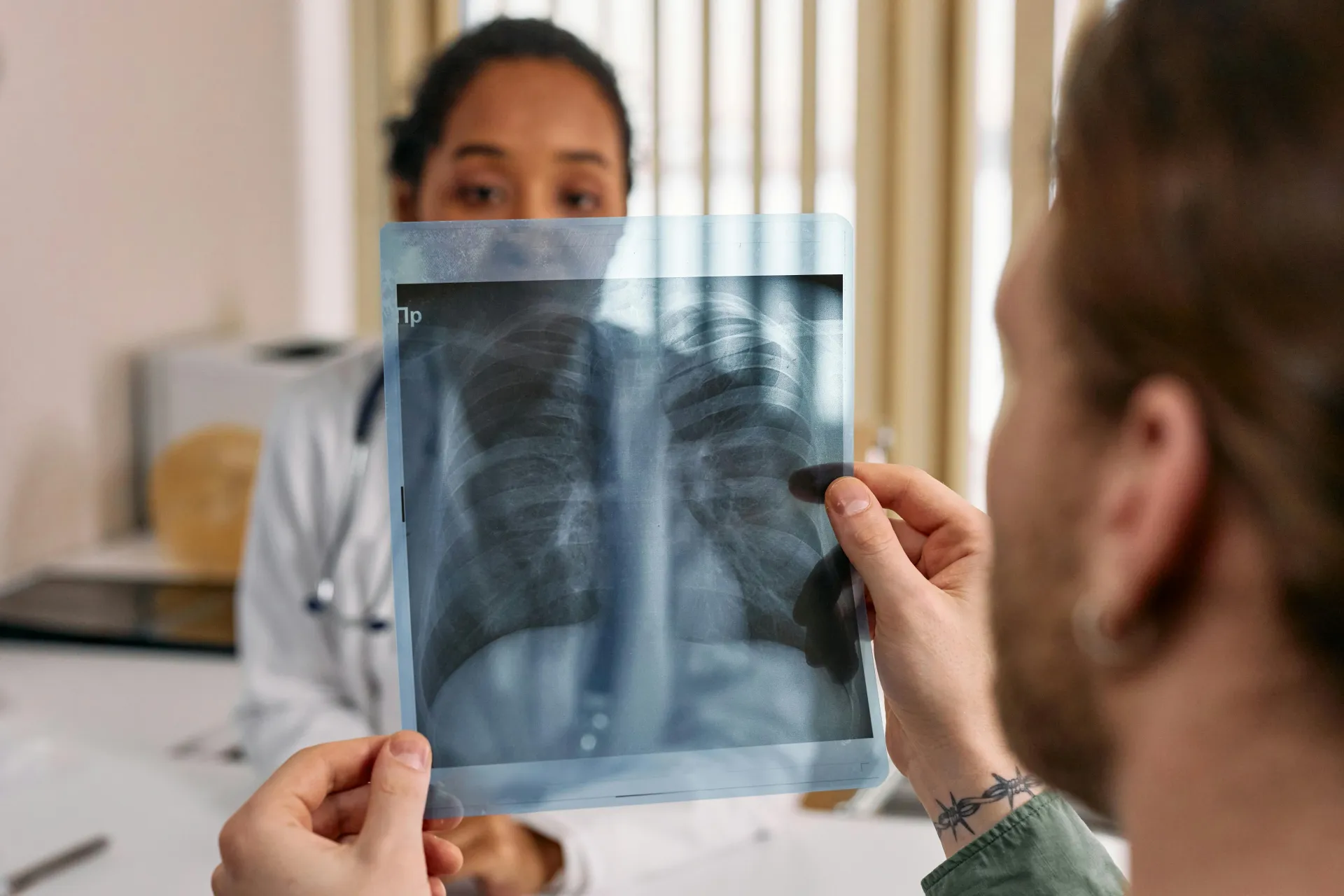
If you are unsure whether your symptoms indicate bronchitis or pneumonia, a chest X-ray is the definitive way to distinguish them.
A chest X-ray is the single most useful investigation when pneumonia needs to be ruled out. At DCDC, on-site digital chest X-ray is available with same-day reporting by a consultant radiologist. For detailed information on what to expect, see our chest X-ray cost and guide for Dubai.
How Long Does Bronchitis Last? Recovery Timeline
Understanding the typical recovery timeline helps you know what to expect and when to seek help if recovery is not progressing normally:
Acute Bronchitis Recovery Timeline
- Days 1-3: Symptom onset — sore throat, mild fever, dry cough, fatigue, body aches. This is when the virus is most active and contagious
- Days 4-7: Cough becomes productive (mucus production increases). Fever typically resolves. Fatigue persists. Most patients feel worst during this phase
- Days 7-14: Gradual improvement. Mucus production decreases. Energy returns. Cough remains but becomes less frequent
- Weeks 2-3: Most symptoms resolve. A residual dry cough may persist as the bronchial lining repairs itself
- Weeks 3-8: Post-bronchitis cough syndrome — up to 25% of patients experience a lingering dry cough for several weeks after the infection clears. This does not indicate ongoing infection but rather airway hyperreactivity during healing
If your symptoms are worsening after day 5-7 rather than improving, or if new symptoms develop (higher fever, increasing breathlessness, blood in sputum), this suggests either a secondary bacterial infection or an alternative diagnosis that requires medical evaluation.
Factors That Slow Recovery
- Continued smoking or shisha use during illness
- Returning to intense exercise too soon
- Persistent exposure to dry AC air without humidification
- Inadequate hydration
- Pre-existing asthma or COPD
- Stress and sleep deprivation (common in demanding work environments)
Is Bronchitis Contagious? Transmission and Prevention
Acute bronchitis caused by viral infection is contagious for approximately 3-7 days from symptom onset. The virus spreads through respiratory droplets (coughing, sneezing) and contaminated surfaces. However, the bronchitis itself (inflammation of the airways) is not directly transmitted — rather, the underlying virus is passed to others, who may or may not develop bronchitis depending on their susceptibility.
Reducing Transmission in Dubai
- Stay home when acutely unwell: The first 3-5 days are the most contagious period. Working while symptomatic in closed, air-conditioned offices spreads infection rapidly
- Practice cough hygiene: Cover your mouth and nose with a tissue or elbow. Dispose of tissues immediately
- Wash hands frequently: Especially after coughing and before touching shared surfaces
- Wear a mask: If you must leave home while symptomatic, a surgical mask reduces droplet transmission significantly
- Ventilate indoor spaces: Open windows briefly or request improved AC ventilation in workplaces — recirculated air concentrates viral particles
- Get vaccinated: Annual influenza vaccination prevents flu-related bronchitis — one of the most common and preventable causes
Influenza vaccination is one of the most effective ways to prevent viral bronchitis. For current pricing and availability, see our flu vaccine cost guide for Dubai.
Persistent Cough? Get Assessed Today
If your cough has lasted more than 2 weeks, is getting worse, or is accompanied by fever or breathing difficulty, book a same-day GP consultation at DCDC Dubai Healthcare City. On-site chest X-ray, blood tests, and specialist referral if needed — all under one roof. GP consultation from AED 150.
Walk-in welcome or WhatsApp to book. Open Sat-Thu 8AM-10PM, Fri 9AM-9PM. Free parking available.
Bronchitis Diagnosis: What Tests Are Needed?
In most cases of straightforward acute bronchitis, diagnosis is clinical — based on your symptoms and a physical examination (listening to your chest with a stethoscope). However, certain situations require additional testing to confirm the diagnosis, rule out more serious conditions, or guide treatment decisions.
Physical Examination Findings
Your doctor will listen to your lungs with a stethoscope, checking for rhonchi (low-pitched rumbling sounds indicating mucus in large airways), wheezing (high-pitched sounds suggesting airway narrowing), and crackles (which may suggest pneumonia). They will also assess your respiratory rate, oxygen saturation, temperature, and overall clinical appearance.
Investigations Your Doctor May Order
- Chest X-ray: The most important investigation when pneumonia needs to be excluded. Indicated for patients with high fever, significant breathlessness, chest pain, abnormal lung examination, or elderly/immunocompromised patients. Available on-site at DCDC with same-day results
- C-reactive protein (CRP): A blood marker of inflammation that helps differentiate viral from bacterial infection. CRP above 50-100 mg/L suggests possible bacterial involvement. Rapid results available at DCDC
- Complete blood count (CBC): Elevated white blood cell count with neutrophil predominance may suggest bacterial infection. Also useful to assess overall health status
- Pulse oximetry: A non-invasive clip placed on your finger that measures blood oxygen levels. Saturation below 94% warrants further investigation
- Sputum culture: Rarely needed for uncomplicated cases. May be requested for patients with recurrent infections, treatment failure, or suspected unusual pathogens
- Spirometry (lung function test): Used when chronic bronchitis or asthma is suspected. Measures how much air you can blow out and how quickly
- Procalcitonin: A newer biomarker that is more specific than CRP for bacterial infection — useful for guiding antibiotic decisions
Bronchitis Treatment Cost in Dubai
Understanding the costs associated with bronchitis evaluation and treatment helps you plan your visit. At DCDC Dubai Healthcare City, we maintain transparent pricing with no hidden fees:
| Service | DCDC Price (AED) | Market Range (AED) |
|---|---|---|
| GP Consultation | from 150 | 150 - 500 |
| Chest X-Ray (PA view) | from 150 | 80 - 250 |
| CRP Blood Test | from 100 | 80 - 200 |
| CBC (Complete Blood Count) | from 100 | 60 - 180 |
| Spirometry (Lung Function Test) | from 200 | 150 - 400 |
| Follow-up Consultation | from 100 | 100 - 350 |
Prices are indicative starting points. Final costs depend on clinical needs and insurance coverage. DCDC partners with 20+ insurers including Daman, AXA, and Bupa for direct billing.
A typical bronchitis evaluation at DCDC (consultation + chest X-ray + blood tests if needed) costs approximately AED 350-500 without insurance. With insurance, most patients pay only their co-pay or deductible. DCDC accepts direct billing from over 20 insurance partners including Daman, AXA, Bupa, Cigna, MetLife, and others — meaning you do not need to pay upfront and claim later.
What to Expect at DCDC: Your Bronchitis Consultation
Knowing what happens during your visit reduces anxiety and helps you prepare. Here is the typical patient journey for a bronchitis consultation at DCDC Dubai Healthcare City:
Step 1: Arrival and Registration (5-10 minutes)
Arrive at DCDC in Dubai Healthcare City (Building 47). Free parking is available. At reception, present your Emirates ID and insurance card (if applicable). Self-pay patients can register immediately. Average wait time for appointments is approximately 15 minutes.
Step 2: GP Consultation with Dr. Hadeel Elnur (15-20 minutes)
Dr. Hadeel Elnur will take a detailed history including symptom duration, severity, triggers, medications tried, and relevant medical history. A thorough physical examination follows — including chest auscultation, vital signs (temperature, oxygen saturation, respiratory rate, blood pressure), and throat examination. Based on findings, Dr. Hadeel will determine whether additional tests are needed or whether clinical diagnosis is sufficient.
Step 3: Investigations If Required (15-30 minutes)
If a chest X-ray or blood tests are indicated, these are performed on-site immediately — no need to visit a separate facility or return another day. The on-site laboratory provides rapid CRP and CBC results, typically within 1-2 hours for routine tests. Digital chest X-rays are reported by a consultant radiologist, often within the same visit.
Step 4: Diagnosis and Treatment Plan
Once all information is gathered, Dr. Hadeel discusses the diagnosis, explains the expected recovery timeline, prescribes appropriate medication if needed, and provides personalised self-care instructions. If symptoms suggest chronic bronchitis or asthma, a referral to a pulmonologist or internal medicine specialist within DCDC's multi-specialty team is arranged.
Step 5: Follow-Up Plan
For straightforward acute bronchitis, a follow-up visit may not be needed. However, you will be advised to return if symptoms worsen, do not improve within the expected timeline, or new symptoms develop. Dr. Hadeel coordinates multi-specialty workups when needed, ensuring continuity of care.
Bronchitis Treatment at Home: Evidence-Based Strategies
Most cases of acute bronchitis can be managed effectively at home with the right approach. These evidence-based strategies support your recovery and reduce symptom severity:
Hydration and Nutrition
- Drink at least 2.5-3 litres of warm fluids daily — warm water, herbal teas (ginger, thyme, peppermint), clear broths. Warm fluids help thin mucus and soothe irritated airways
- Avoid dairy products during acute illness if you notice they thicken your mucus (this varies between individuals)
- Eat anti-inflammatory foods: turmeric, ginger, garlic, citrus fruits, leafy greens, and fatty fish (salmon, sardines) support immune function
- Take vitamin C (500-1000mg daily) and zinc during acute illness — evidence suggests modest reduction in symptom duration
Environmental Modifications (Essential in Dubai)
- Set AC temperature to 23-25 degrees Celsius (not 18-20 degrees) to reduce thermal stress on your airways while maintaining comfort
- Use a humidifier: Maintain bedroom humidity at 40-60%. Dubai's AC-dried indoor air exacerbates bronchial irritation
- Change AC filters regularly: Dirty filters circulate dust, mould, and allergens. Replace or clean filters monthly during summer months
- Avoid sudden temperature transitions: Allow your body to adjust gradually when moving between indoor and outdoor environments
- Keep windows closed during sandstorms: Fine particulate matter from desert sand is a potent bronchial irritant
Over-the-Counter Medications
- Paracetamol (500-1000mg every 4-6 hours): For fever and body aches. Maximum 4g per day
- Ibuprofen (400mg every 6-8 hours with food): Anti-inflammatory and analgesic. Avoid if you have asthma, kidney disease, or stomach ulcers
- Guaifenesin (expectorant): Thins mucus and makes it easier to cough up. Take with plenty of water
- Dextromethorphan (cough suppressant): Only for dry, non-productive cough at night that prevents sleep. Do not suppress a productive cough during the day
- Throat lozenges with menthol: Provide temporary relief of throat irritation and suppress the cough reflex
Do You Need Antibiotics for Bronchitis?
This is one of the most common questions patients ask — and one of the most misunderstood areas of bronchitis treatment. The evidence is clear:
85-95% of acute bronchitis cases are caused by viruses (rhinovirus, influenza, parainfluenza, coronavirus, RSV, adenovirus). Antibiotics have zero effect on viral infections. Multiple large clinical trials and systematic reviews have confirmed that antibiotics provide no meaningful benefit for most patients with acute bronchitis — they do not reduce cough duration, speed recovery, or prevent complications in otherwise healthy adults.
Antibiotics ARE appropriate in specific situations:
- Confirmed or highly suspected bacterial superinfection (clinical deterioration after initial improvement, very high CRP/procalcitonin, purulent sputum with systemic toxicity)
- Patients with severe COPD experiencing an acute exacerbation with increased sputum purulence
- Pertussis (whooping cough) — diagnosed or strongly suspected based on paroxysmal cough pattern
- Patients who are significantly immunocompromised
- Elderly patients with multiple comorbidities at high risk of rapid deterioration
At DCDC, we follow evidence-based prescribing guidelines. When antibiotics are genuinely needed, common choices include amoxicillin, doxycycline, or azithromycin — selected based on the suspected organism and local resistance patterns. However, we will never prescribe antibiotics unnecessarily, as this contributes to antimicrobial resistance that threatens future treatment effectiveness for everyone.
Bronchitis in Children: What Parents Should Know
Children in Dubai are particularly susceptible to bronchitis due to their developing immune systems and the same AC-related thermal stress that affects adults. However, bronchitis in children requires special attention because their airways are smaller, making them more vulnerable to breathing difficulties.
When to Seek Medical Help for a Child's Cough
- Rapid breathing or visible chest retractions (skin pulling in between or below the ribs)
- Persistent wheezing or stridor (harsh breathing sound)
- Refusing to drink fluids or unable to feed (infants)
- Fever above 38.5 degrees Celsius in a child under 3 months, or above 39 degrees Celsius in any child lasting more than 3 days
- Lethargy, unusual drowsiness, or reduced responsiveness
- Blue lips or fingertips
- Cough lasting more than 3 weeks in any child
Recurrent bronchitis in children (3 or more episodes per year) may indicate underlying asthma, particularly if episodes are triggered by exercise, allergens, or cold air. Our detailed guide on childhood asthma symptoms and treatment in Dubai covers the diagnostic pathway and management options for children with recurrent wheezing.
Preventing Bronchitis in Dubai: Practical Strategies
While you cannot eliminate the risk entirely, these Dubai-specific strategies significantly reduce your chances of developing bronchitis:
- Moderate your AC settings: Set indoor temperature to 23-25 degrees Celsius rather than extreme cold. Every degree closer to outdoor temperature reduces thermal stress on your airways
- Service your AC regularly: Professional AC maintenance every 6 months prevents mould, bacteria, and allergen buildup in ducts and filters. Clean or replace filters monthly during peak summer
- Use humidifiers: Maintain indoor humidity at 40-60%. A hygrometer (humidity meter) helps you monitor levels
- Get vaccinated: Annual influenza vaccine reduces flu-related bronchitis risk by 40-60%. Pneumococcal vaccine is recommended for over-65s and those with chronic conditions
- Quit smoking and avoid shisha: The single most important modifiable risk factor for chronic bronchitis. Shisha delivers 100-200 times more smoke than a single cigarette per session
- Wash hands frequently: Especially during winter flu season and when using shared office spaces. Hand sanitiser is a practical alternative
- Stay hydrated: Adequate hydration keeps airway mucous membranes moist and functional. Aim for 2.5-3 litres daily in summer
- Transition gradually between temperatures: Pause in lobbies or covered areas before stepping into full sun. Carry a light layer to put on when entering heavily air-conditioned spaces
- Exercise regularly (when well): Regular moderate exercise strengthens immune function and improves respiratory capacity
Doctor's Perspective: Managing Bronchitis in Dubai's Climate
"Bronchitis is one of the conditions I see most frequently at DCDC, particularly during summer months when our air-conditioned lifestyles create the perfect conditions for respiratory irritation. Many patients come in worried they need antibiotics, but in most cases what they actually need is reassurance, proper symptom management, and guidance on environmental modifications specific to Dubai's climate. I always tell my patients: if your AC is set below 22 degrees, you are almost certainly making your cough worse. Simple changes — adjusting AC settings, using a humidifier, staying hydrated — often make more difference than any medication. That said, I take every persistent cough seriously. A 5-minute chest X-ray can rule out pneumonia and give both of us peace of mind. My approach is thorough assessment, targeted investigation when indicated, and evidence-based treatment — never a prescription pad response to what is usually a self-limiting viral illness." — Dr. Hadeel Elnur, MD, General Practice, DCDC Dubai Healthcare City
Book Your Bronchitis Consultation at DCDC
Same-day GP appointments available at DCDC Dubai Healthcare City. On-site chest X-ray, rapid blood tests, and specialist referral if needed. GP consultation from AED 150. MOHAP-licensed facility rated 4.8/5 on Google with 98% patient satisfaction.
20+ insurance partners with direct billing. Open Sat-Thu 8AM-10PM, Fri 9AM-9PM. Free parking.
Связанные услуги в DCDC
Квалифицированная помощь и современная диагностика в Dubai Healthcare City
Frequently Asked Questions
Bronchitis in Dubai: Know When to Rest, Know When to Act
Bronchitis is overwhelmingly a self-limiting condition — most healthy adults recover fully within 2-3 weeks with nothing more than rest, hydration, and patience. Dubai's climate makes it more common than in many other cities, but understanding the role of AC temperature management, humidity control, and immune support gives you practical tools to both speed recovery and reduce recurrence.
The key is knowing the difference between normal recovery and warning signs. A cough that gradually improves over 2-3 weeks is expected. A cough that worsens after the first week, is accompanied by high fever, breathing difficulty, or blood-tinged sputum, demands medical evaluation. At DCDC Dubai Healthcare City, our MOHAP-licensed team provides same-day assessment with on-site imaging and laboratory, 20+ insurance partners, and a patient-first approach that has earned a 4.8/5 Google rating from over 1,000 reviews. Whether you need reassurance that your cough is nothing to worry about, or thorough investigation to rule out something more serious, we are here to help — walk in, call, or WhatsApp us today.
Источники и ссылки
Эта статья проверена нашей медицинской командой и ссылается на следующие источники:
- NHS — Bronchitis: Symptoms, Causes and Treatment
- Mayo Clinic — Bronchitis: Symptoms and Causes
- Cleveland Clinic — Acute Bronchitis
- UpToDate — Acute Bronchitis in Adults
- World Health Organization — Antimicrobial Resistance: Key Facts
- American Lung Association — Bronchitis Symptoms and Treatment
Медицинский контент на этом сайте проверяется врачами, лицензированными DHA. См. нашу редакционную политику для получения дополнительной информации.

Автор
Dr. Hadeel Elnur
General Practice
MD, General Practice
Dr. Hadeel Elnur is a General Practitioner at Doctors Clinic Diagnostic Center (DCDC) in Dubai Healthcare City.
Related Articles

Sore Throat Dubai: Causes & Treatment (2026)

Chest X-Ray Cost Dubai: From AED 150 (2026)

Childhood Asthma Dubai: Symptoms & Care (2026)

Flu Vaccine Cost Dubai: Guide & Prices (2026)

Dehydration Dubai: Symptoms & Treatment (2026)
More in General Health

Wound Care at Home Dubai: Full Guide (2026)
Читать далее
Dizziness Causes Dubai: When to Get Checked (2026)
Читать далее
Elderly Care at Home Dubai: Full Guide (2026)
Читать далееIV Drip at Home Dubai: From AED 449 (2026)
Читать далее
Nurse at Home Dubai: Cost & Services (2026)
Читать далее
Stomach Infection Treatment Dubai (2026)
Читать далее© 2026 Doctors Clinic Diagnostic Center (DCDC), Dubai Healthcare City. Originally published at https://doctorsclinicdubai.ae/blog/bronchitis-symptoms-treatment-dubai. All rights reserved. Unauthorized reproduction is prohibited.