मुख्य बातें
- A mammogram is a low-dose X-ray of the breast and the gold standard for detecting breast cancer before symptoms appear
- Approximately 1 in 8 women will develop breast cancer in their lifetime, but early detection through mammogram screening raises the five-year survival rate to 99%
- Women at average risk should begin annual mammogram screening at age 40; those with risk factors may need to start earlier
- Digital mammography and 3D mammograms (tomosynthesis) detect 20-40% more cancers than older film-based systems
- The entire mammogram procedure takes only 10 to 15 minutes and involves minimal radiation exposure
- DCDC Dubai Healthcare City offers digital mammography with female radiographers, same-day results, and insurance acceptance
A mammogram is a specialized low-dose X-ray examination of the breast tissue that allows radiologists to detect breast cancer at its earliest and most treatable stage. It is the single most effective screening tool available for breast cancer, capable of identifying tumors up to three years before they become large enough to feel as a lump.
Breast cancer affects approximately 1 in 8 women worldwide during their lifetime, making it the most commonly diagnosed cancer among women globally and in the UAE. The difference between a favorable and an unfavorable outcome often comes down to timing. When breast cancer is detected early through routine mammogram screening, the five-year survival rate reaches 99%. When it is found at a later stage, that number drops significantly. This comprehensive guide explains what a mammogram is, how the mammography test works, the different types available, when you should begin screening, and what to expect during and after the procedure at Doctors Clinic Diagnostic Center in Dubai Healthcare City.
What Is a Mammogram and Why Is It Important?
A mammogram is a diagnostic imaging procedure that uses low-energy X-rays to create detailed pictures of the internal structures of the breast. The term comes from the Latin "mamma" (breast) and the Greek "gramma" (record or picture). In clinical practice, a mammography test serves as the gold standard for breast cancer screening because no other widely available imaging modality has been proven to reduce breast cancer mortality as effectively in large population studies.
The importance of the mammogram test cannot be overstated. Breast cancer is the leading cause of cancer-related death among women in the UAE and the second leading cause worldwide. According to the American Cancer Society, when breast cancer is detected at the localized stage (before it has spread beyond the breast), the five-year relative survival rate is 99%. By contrast, when breast cancer is not detected until it has spread to distant organs, the five-year survival rate drops to approximately 31%.
These statistics reveal a critical truth: the single most impactful action a woman can take to protect herself from breast cancer is to undergo regular mammogram screening. The goal of screening is not to prevent breast cancer from occurring but to find it when it is small, confined to the breast, and highly responsive to treatment.
- Early detection advantage: Mammograms can identify cancers 1 to 3 years before they become palpable (large enough to feel)
- Microcalcification detection: Tiny calcium deposits that may signal early cancer or pre-cancerous changes are visible only on mammography
- Mortality reduction: Regular mammogram screening reduces breast cancer mortality by 20 to 40% in women aged 40 to 74
- Treatment options: Cancers found early are more likely to be treated with breast-conserving surgery rather than mastectomy
- Lower treatment burden: Early-stage cancers are less likely to require aggressive chemotherapy, reducing side effects and recovery time
"I have seen firsthand how regular mammogram screening saves lives. In my practice, the women who maintain their annual screening schedule are the ones whose cancers we catch at stage 0 or stage 1, when treatment is most successful and least invasive," explains Dr. Osama Elzamzami, Consultant Radiologist at DCDC. "The statistics are clear: a woman whose breast cancer is found through screening has a dramatically better outcome than a woman who presents with a symptomatic lump. That difference is entirely within your control."
How Does a Mammogram Work?
Understanding how a mammography test works can help reduce anxiety and encourage more women to schedule their screening appointments. The technology behind mammography has advanced significantly over the past two decades, making the procedure faster, more comfortable, and more accurate than ever before.
The X-Ray Technology Behind Mammography
A mammography machine generates a controlled beam of low-dose X-rays that pass through the breast tissue. Different types of tissue absorb X-rays at different rates. Dense fibrous and glandular tissue absorbs more radiation and appears white on the image. Fatty tissue absorbs less radiation and appears darker. Cancerous tissue, calcifications, and other abnormalities tend to appear as bright white areas against the surrounding tissue, which is how radiologists identify potential problems.
Breast Compression: Why It Is Necessary
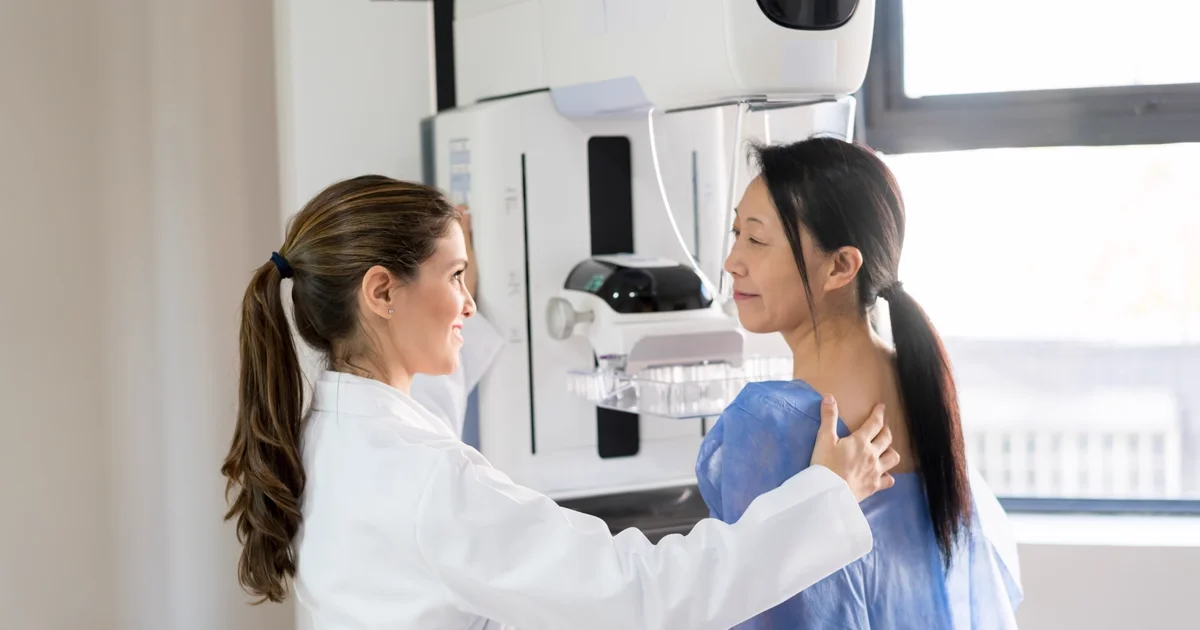
During the mammogram procedure, each breast is placed on a flat support plate and gently compressed by a clear plastic paddle. This compression is the aspect of mammography that most women are aware of and sometimes apprehensive about. However, compression serves several essential purposes:
- Spreads tissue evenly: Compression separates overlapping breast tissue so that small abnormalities are not hidden behind or between layers of normal tissue
- Reduces motion blur: A thinner, immobilized breast produces sharper images with finer detail
- Lowers radiation dose: A compressed breast requires less radiation to penetrate, keeping the overall dose as low as possible
- Improves image quality: Uniform breast thickness produces more consistent exposure across the entire image
Compression typically lasts only 10 to 15 seconds per image. Most women describe it as firm pressure or brief discomfort rather than actual pain.
Digital Imaging and Processing
Modern digital mammography captures the X-ray image on an electronic detector rather than on photographic film. The digital image is displayed immediately on a high-resolution monitor, allowing the radiologist to adjust brightness, contrast, and magnification without retaking the image. Digital technology also enables computer-aided detection (CAD), where specialized software scans the images and highlights areas that warrant closer review by the radiologist.
The standard mammogram procedure captures two views of each breast: the craniocaudal (CC) view, which images the breast from top to bottom, and the mediolateral oblique (MLO) view, which images the breast from an angled side perspective. Together, these two views provide comprehensive coverage of the breast tissue. The entire examination typically takes 10 to 15 minutes from start to finish.
Types of Mammograms
Not all mammograms are the same. Several types of mammography tests exist, each designed for specific clinical situations. Understanding the differences helps you have an informed discussion with your doctor about which type is most appropriate for you.
Screening Mammogram
A screening mammogram is a routine examination performed on women who have no breast symptoms and no known breast problems. Its sole purpose is to detect cancer before any signs or symptoms develop. A standard screening mammogram consists of two X-ray images per breast (four images total) and is the type of mammography recommended for annual or biennial screening in women aged 40 and older.
Screening mammograms are the backbone of breast cancer early detection programs worldwide. The Dubai Health Authority recommends that all women in the UAE begin screening mammography at age 40 and continue annually.
Diagnostic Mammogram
A diagnostic mammogram is a more detailed examination performed when there is a specific reason for concern. This may include a palpable lump, breast pain localized to one area, nipple discharge, skin changes, or an abnormality found on a screening mammogram that requires further investigation. Diagnostic mammograms typically include additional views such as spot compression (pressing on a specific area for a magnified view) and magnification views (enlarging a small area of interest).
Unlike screening mammograms, diagnostic mammograms are performed with a radiologist available to review images in real time and determine whether additional views or an immediate ultrasound are needed.
3D Mammogram (Tomosynthesis)
A 3D mammogram, formally known as digital breast tomosynthesis (DBT), represents the most significant advancement in mammography technology in recent decades. During a 3D mammogram, the X-ray tube moves in an arc over the breast, capturing multiple low-dose images from different angles. A computer then reconstructs these images into thin slices, similar to how a CT scan works. The radiologist can scroll through these slices to examine each layer of breast tissue individually.
The clinical advantage is substantial. Research published in major radiology journals shows that 3D mammography detects 20 to 40% more invasive cancers than standard 2D mammography alone. It is especially valuable for women with dense breast tissue, where overlapping layers of fibrous and glandular tissue can mask small cancers on a conventional 2D image. Additionally, 3D mammography reduces false-positive callbacks by 15 to 40%, meaning fewer women are called back unnecessarily for additional imaging.
Digital Mammogram
A digital mammogram refers to any mammogram that captures the breast image electronically rather than on traditional X-ray film. Today, virtually all modern mammography units are digital. Digital mammograms offer significant advantages over older film-based systems: images can be stored, transmitted, and retrieved electronically, brightness and contrast can be adjusted without retaking the image, and computer-aided detection software can assist the radiologist in identifying subtle abnormalities.
Studies have shown that digital mammography is particularly superior to film mammography for three groups of women: those under age 50, those with dense breast tissue, and those who are pre- or perimenopausal. If your imaging center still uses film-based mammography, consider seeking a facility with digital equipment for more accurate results.
| Type of Mammogram | Purpose | Best For | Extra Views |
|---|---|---|---|
| Screening mammogram | Routine annual check | Women 40+ with no symptoms | No (standard 4 images) |
| Diagnostic mammogram | Investigate a concern | Women with symptoms or abnormal screening | Yes (spot, magnification) |
| 3D mammogram (tomosynthesis) | Enhanced detection | Dense breasts, high-risk women | Multiple angle slices |
| Digital mammogram | Standard modern technology | All women (replaces film) | Depends on type |
Each type of mammogram serves a distinct purpose. Your doctor will recommend the most appropriate option based on your age, risk level, and clinical situation.
When Should You Start Getting Mammograms?
One of the most common questions women ask is when to get a mammogram for the first time. The answer depends on your individual risk profile. While various medical organizations have slightly different recommendations, a consensus has emerged around the core principle that screening should begin no later than age 40 for women at average risk.
Age-Based Screening Guidelines
The following table summarizes current recommendations from the American Cancer Society, the Dubai Health Authority, and other leading medical organizations:
| Age Group | Recommendation | Frequency |
|---|---|---|
| Under 40, average risk | Breast awareness and clinical breast exams; mammography not routinely recommended | Clinical exam every 1-3 years |
| 40-44, average risk | Option to begin annual mammogram screening | Annual (if chosen) |
| 45-54, average risk | Annual mammogram screening strongly recommended | Annual |
| 55-74, average risk | Continue mammogram screening; may switch to every 2 years | Annual or biennial |
| 75+, average risk | Continue if in good health with life expectancy over 10 years | As advised by doctor |
| Any age, high risk | Begin screening earlier (often age 25-30); may include breast MRI | Annual mammogram + annual MRI |
Screening frequency should be discussed with your doctor based on individual risk factors. High-risk women may benefit from alternating mammograms and MRI every six months.
Risk Factors That May Warrant Earlier Screening
Certain factors place a woman in a higher risk category, potentially requiring mammogram screening to begin before age 40. These include:
- Family history: A first-degree relative (mother, sister, daughter) diagnosed with breast cancer, especially before age 50
- Genetic mutations: Known carriers of BRCA1 or BRCA2 gene mutations, which raise lifetime breast cancer risk to 45-85%
- Previous chest radiation: Women who received radiation therapy to the chest between ages 10 and 30 (for example, for Hodgkin lymphoma)
- Dense breast tissue: Extremely dense breasts increase cancer risk and reduce mammographic sensitivity
- Personal history: Previous breast cancer, ductal carcinoma in situ (DCIS), or atypical hyperplasia
- Certain hereditary syndromes: Li-Fraumeni syndrome, Cowden syndrome, or other conditions associated with elevated cancer risk
If any of these risk factors apply to you, consult your doctor or a breast health specialist about creating a personalized screening plan. Many high-risk women benefit from a combination of annual mammography and annual breast MRI, with the two tests spaced six months apart for year-round surveillance.
Schedule Your Mammogram Screening
At DCDC in Dubai Healthcare City, our experienced radiology team provides comprehensive mammogram screening with advanced digital mammography, female radiographers, and same-day results. Take the first step toward early detection.
Mammogram vs Breast Ultrasound: When You Need Each
Women often wonder whether a mammogram or a breast ultrasound is the better test. The answer is that they serve different but complementary purposes, and neither fully replaces the other. Understanding their distinct strengths helps clarify why your doctor may recommend one, the other, or both.
| Feature | Mammogram | Breast Ultrasound |
|---|---|---|
| Best for | Screening for breast cancer in asymptomatic women; detecting microcalcifications | Evaluating palpable lumps; distinguishing solid masses from fluid-filled cysts |
| Radiation | Low-dose X-ray (equivalent to about 7 weeks of natural background radiation) | None (uses sound waves) |
| Dense breasts | Less effective in very dense tissue (cancer can be hidden) | More effective in dense tissue; used as supplemental screening |
| Cost (AED) | Approximately 400-700 for screening | Approximately 400-600 |
| Pain level | Brief compression discomfort (10-15 seconds per image) | Minimal to none |
| Duration | 10-15 minutes | 15-30 minutes |
| Detects calcifications | Yes (primary advantage over ultrasound) | No |
| Guidance for biopsy | Yes (stereotactic biopsy) | Yes (ultrasound-guided biopsy, most common) |
Mammography and breast ultrasound are complementary tools. For most women, mammography is the primary screening test, while ultrasound is added when needed for specific clinical situations.
For women with dense breast tissue, the combination of mammography plus breast ultrasound provides significantly better cancer detection rates than mammography alone. Dense tissue appears white on mammography, and because cancers also appear white, tumors can be hidden within dense tissue. Ultrasound can detect cancers that mammography misses in these cases.
For women under 30, breast ultrasound is typically the first-line imaging test rather than mammography. Younger women tend to have denser breast tissue, which reduces the effectiveness of mammography, and their breast tissue is more sensitive to radiation. However, if ultrasound reveals a suspicious finding in a younger woman, a mammogram may be added for further evaluation.
What to Expect During a Mammogram
Knowing what happens during the mammogram procedure step by step can significantly reduce anxiety and help you feel prepared. The following describes the typical experience at DCDC Dubai Healthcare City.
Before the Procedure
- Schedule wisely: Book your appointment for the week after your menstrual period, when breast tissue is least tender and swollen
- Avoid products: Do not apply deodorant, antiperspirant, powder, perfume, or lotion to your underarms or breasts on the day of the exam, as these products can appear as white spots on the images and mimic calcifications
- Wear a two-piece outfit: You will undress from the waist up and wear a hospital gown, so a separate top and bottom makes the process easier
- Bring previous mammograms: If you have had mammograms at another facility, bring the images or have them sent electronically so the radiologist can compare with prior studies
- Consider pain relief: If you are sensitive to breast compression, taking an over-the-counter pain reliever such as ibuprofen 30 to 60 minutes before the exam may help
During the Procedure
- Step 1: A trained female radiographer at DCDC will position you in front of the mammography machine and place one breast on the flat detector plate
- Step 2: A clear plastic paddle lowers onto the breast, applying compression to spread the tissue evenly. The pressure is firm but brief.
- Step 3: The radiographer captures the first image (craniocaudal view, from top to bottom). You must hold still and briefly hold your breath.
- Step 4: The breast is repositioned for the second image (mediolateral oblique view, from the side at an angle)
- Step 5: Steps 1-4 are repeated for the other breast. Total time: approximately 10 to 15 minutes for all four images
Addressing Common Concerns
Many women delay their mammogram screening due to concerns about pain, radiation, or embarrassment. Here is the reality behind these common fears:
- Pain: Most women describe the compression as uncomfortable pressure rather than pain. It lasts only 10 to 15 seconds per image. Scheduling after your period and taking a mild pain reliever beforehand can minimize discomfort.
- Radiation: A standard mammogram delivers approximately 0.4 millisieverts of radiation, roughly the amount you receive from 7 weeks of everyday natural background radiation. This is considered very low and safe for annual screening.
- Privacy: At DCDC, all mammograms are performed by experienced female radiographers in a private room. Only the breast being imaged is exposed at any time.
- Embarrassment: Our staff performs mammograms every day and is trained to ensure your comfort and dignity. Many women report that the experience was far easier than they expected.
Understanding Mammogram Results
After your mammography test, the images are reviewed by a radiologist who assigns a standardized assessment category. Understanding these categories and what they mean can help you respond calmly and appropriately when you receive your results.
BI-RADS Categories Explained
The Breast Imaging Reporting and Data System (BI-RADS) is a standardized classification system developed by the American College of Radiology. Every mammogram report includes a BI-RADS category from 0 to 6:
- BI-RADS 0 - Incomplete: Additional imaging is needed. This does not mean cancer is suspected; it simply means the radiologist needs more information (additional views, ultrasound, or comparison with prior mammograms).
- BI-RADS 1 - Negative: The mammogram is completely normal. No masses, calcifications, or other abnormalities are seen. Continue routine annual screening.
- BI-RADS 2 - Benign: A finding is present but is definitively benign (non-cancerous), such as a known cyst, calcified fibroadenoma, or fat necrosis. Continue routine screening.
- BI-RADS 3 - Probably Benign: A finding has a very high probability (greater than 98%) of being benign. Short-interval follow-up mammography (usually at 6 months) is recommended rather than biopsy.
- BI-RADS 4 - Suspicious: A finding has a 2 to 95% chance of being cancer. This is subdivided into 4A (low suspicion), 4B (moderate suspicion), and 4C (high suspicion). Tissue biopsy is recommended.
- BI-RADS 5 - Highly Suggestive of Malignancy: A finding has a greater than 95% probability of being cancer. Tissue biopsy and appropriate action are essential.
- BI-RADS 6 - Known Malignancy: Cancer has already been confirmed by biopsy. Imaging is being used to monitor treatment response or guide surgical planning.
What a Callback Means
Being called back after a screening mammogram is one of the most anxiety-inducing experiences for women. However, it is important to understand the statistics: approximately 10% of women are called back after their screening mammogram for additional imaging, and of those, only about 1 in 10 (roughly 1% of all women screened) are ultimately diagnosed with cancer. The vast majority of callbacks result in a benign finding or are resolved with additional mammographic views or ultrasound.
False Positives and What They Mean
A false positive occurs when a mammogram shows an abnormality that turns out not to be cancer after further evaluation. Over a 10-year period of annual screening, approximately 50% of women will experience at least one false-positive result. While this can cause short-term anxiety, it is a trade-off inherent in any sensitive screening test. The alternative, using a less sensitive test that misses cancers, would have far worse consequences.
Timeline for Results
At DCDC, screening mammogram results are typically reviewed and reported on the same day or within 24 hours. If a finding requires follow-up, our radiology team contacts you directly to schedule additional imaging or consultation. For diagnostic mammograms performed to evaluate a specific symptom, the radiologist reviews images in real time and often provides preliminary results before you leave.
"One of my patients, a 47-year-old businesswoman, nearly cancelled her routine annual mammogram because she felt perfectly healthy and was busy with work. She came in only because her daughter encouraged her. That screening mammogram detected a 9-millimeter invasive ductal carcinoma, a cancer so small she would not have felt it for another year or more," recalls Dr. Osama Elzamzami. "She underwent a lumpectomy and short course of radiation. Today, three years later, she is cancer-free. She tells me that mammogram saved her life, and I believe she is right. Early detection is not a slogan. It is a measurable, proven difference between life and death."
Mammogram Screening at DCDC Dubai Healthcare City
At Doctors Clinic Diagnostic Center (DCDC) in Dubai Healthcare City, we provide comprehensive mammogram screening services designed for accuracy, comfort, and convenience. Our imaging department is equipped with the latest digital mammography technology and staffed by experienced professionals who are dedicated to making your screening experience as smooth as possible.
Our Mammography Services
- Full-field digital mammography (FFDM): State-of-the-art digital imaging system that produces high-resolution breast images with minimal radiation exposure
- 3D mammography (tomosynthesis): Advanced imaging for enhanced cancer detection, especially recommended for women with dense breast tissue
- Diagnostic mammography: Detailed evaluation of breast symptoms or abnormalities found on screening, with additional views as needed
- Ultrasound-guided biopsy: Minimally invasive tissue sampling when further evaluation of a suspicious finding is required
- Breast ultrasound: Complementary imaging for dense breasts, lump evaluation, and women under 30. Learn more about our mammography service
Why Choose DCDC for Your Mammogram
- Female radiographers: All mammograms are performed by trained and experienced female technologists to ensure your comfort and privacy
- Same-day results: Our radiologists prioritize mammogram reporting, with results typically available the same day or within 24 hours
- DHA-licensed radiologists: Your images are interpreted by consultant radiologists licensed by the Dubai Health Authority with extensive breast imaging experience
- Insurance accepted: We work with all major insurance providers in the UAE, including direct billing for covered screening mammograms
- Convenient location: Located in Dubai Healthcare City, with easy access and dedicated parking
- Rapid follow-up: If an abnormality is detected, we expedite additional imaging, biopsy, and specialist referrals to minimize waiting time and anxiety
Book Your Mammogram Screening Today
Early detection saves lives. Do not wait for symptoms to appear before scheduling your mammogram. At Doctors Clinic Diagnostic Center in Dubai Healthcare City, our experienced radiologists and female technologists provide thorough, comfortable mammogram screening with same-day results. Take control of your breast health today.
Or call us directly to schedule your appointment.
अक्सर पूछे जाने वाले प्रश्न
Your Mammogram Could Save Your Life
A mammogram is not just an imaging test. It is the most powerful tool available for catching breast cancer at a stage when treatment is most effective and survival rates are highest. When breast cancer is found through routine mammogram screening, the five-year survival rate is 99%. That single statistic should be enough to motivate every woman to schedule her screening.
Do not let fear, a busy schedule, or the misconception that breast cancer only happens to women with family history delay your mammogram. Approximately 85% of breast cancers occur in women with no family history at all. Regular mammogram screening is something every woman can do to protect her health. Book your mammogram at DCDC Dubai Healthcare City today and take the most important step toward early detection.
स्रोत एवं संदर्भ
यह लेख हमारी चिकित्सा टीम द्वारा समीक्षित है और निम्नलिखित स्रोतों का संदर्भ देता है:
- American Cancer Society - Breast Cancer Screening Guidelines
- World Health Organization - Breast Cancer Fact Sheet
- RadiologyInfo.org - Mammography
- Dubai Health Authority - Breast Cancer Screening Program
इस साइट पर चिकित्सा सामग्री DHA-लाइसेंस प्राप्त चिकित्सकों द्वारा समीक्षित है। हमारी देखें संपादकीय नीति अधिक जानकारी के लिए।

लेखक
Dr. Osama Elzamzami
Consultant Radiologist
MBBS, FRCR, Consultant Radiologist
Dr. Osama Elzamzami is a consultant radiologist at DCDC Dubai Healthcare City with extensive experience in breast imaging, including mammography, breast ultrasound, and image-guided biopsies. He is committed to early detection and accurate diagnosis, helping women in Dubai maintain their breast health through comprehensive screening programs.