मुख्य बातें
- Well-baby checkups are scheduled preventive visits at birth, 1 week, 1 month, 2, 4, 6, 9, 12, 15, 18, and 24 months — each timed to catch conditions during their most treatable window
- Every visit includes growth measurements (weight, length, head circumference), developmental milestone screening (motor, speech, social-emotional), and vaccination review per the DHA schedule
- The WHO growth percentile charts used at DCDC track your baby's growth trajectory over time — a single measurement matters less than the overall trend across multiple visits
- Vitamin D supplementation (400 IU daily) is recommended for all breastfed infants in Dubai from birth, and iron status should be screened at the 9-12 month visit
- DCDC offers well-baby checkup packages from AED 249 and pediatrician consultations from AED 300, with on-site blood tests and direct billing with 20+ insurers
- Red flags that warrant immediate evaluation include no social smile by 3 months, not babbling by 9 months, no words by 16 months, and any loss of previously acquired skills at any age
A well-baby checkup is a scheduled preventive visit designed to monitor your baby's growth, track developmental milestones, administer vaccinations, and detect health issues before symptoms appear. The American Academy of Pediatrics and the World Health Organization both recommend a structured series of well-baby visits during the first two years of life — the period of the most rapid brain and body development your child will ever experience. Our well-baby checkups at DCDC in Dubai Healthcare City follow these international guidelines while incorporating DHA-specific requirements, giving your baby the most thorough preventive care available in Dubai.
This guide explains the complete well-baby checkup schedule from birth through age five, what doctors assess at each visit, which developmental milestones to expect, how growth charts work, what the visits cost, and how to prepare. Dr. Hadeel Elnur, a general practitioner at DCDC who serves as the first point of contact for pediatric families and coordinates multi-specialty workups, reviewed this guide to ensure it reflects current clinical practice.
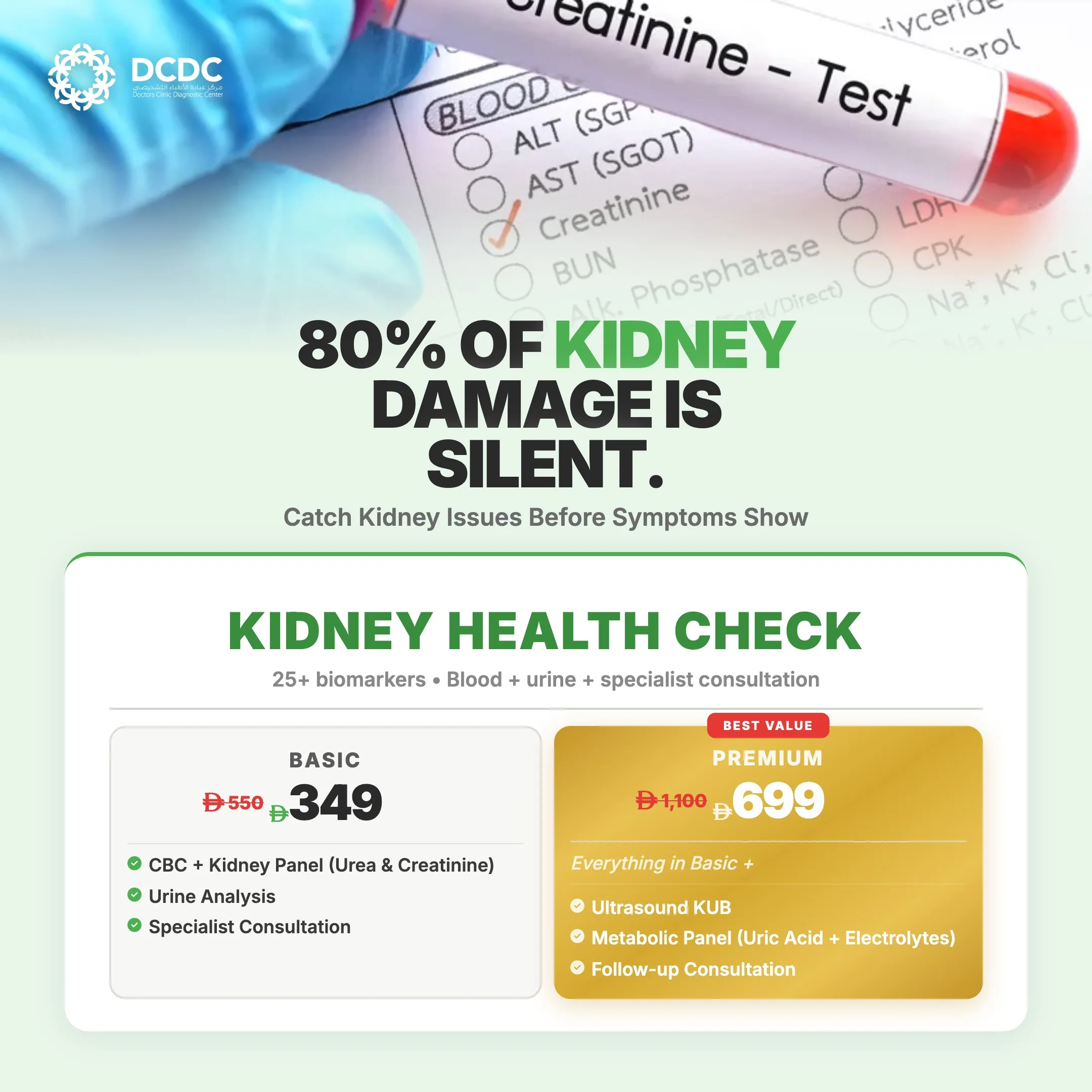
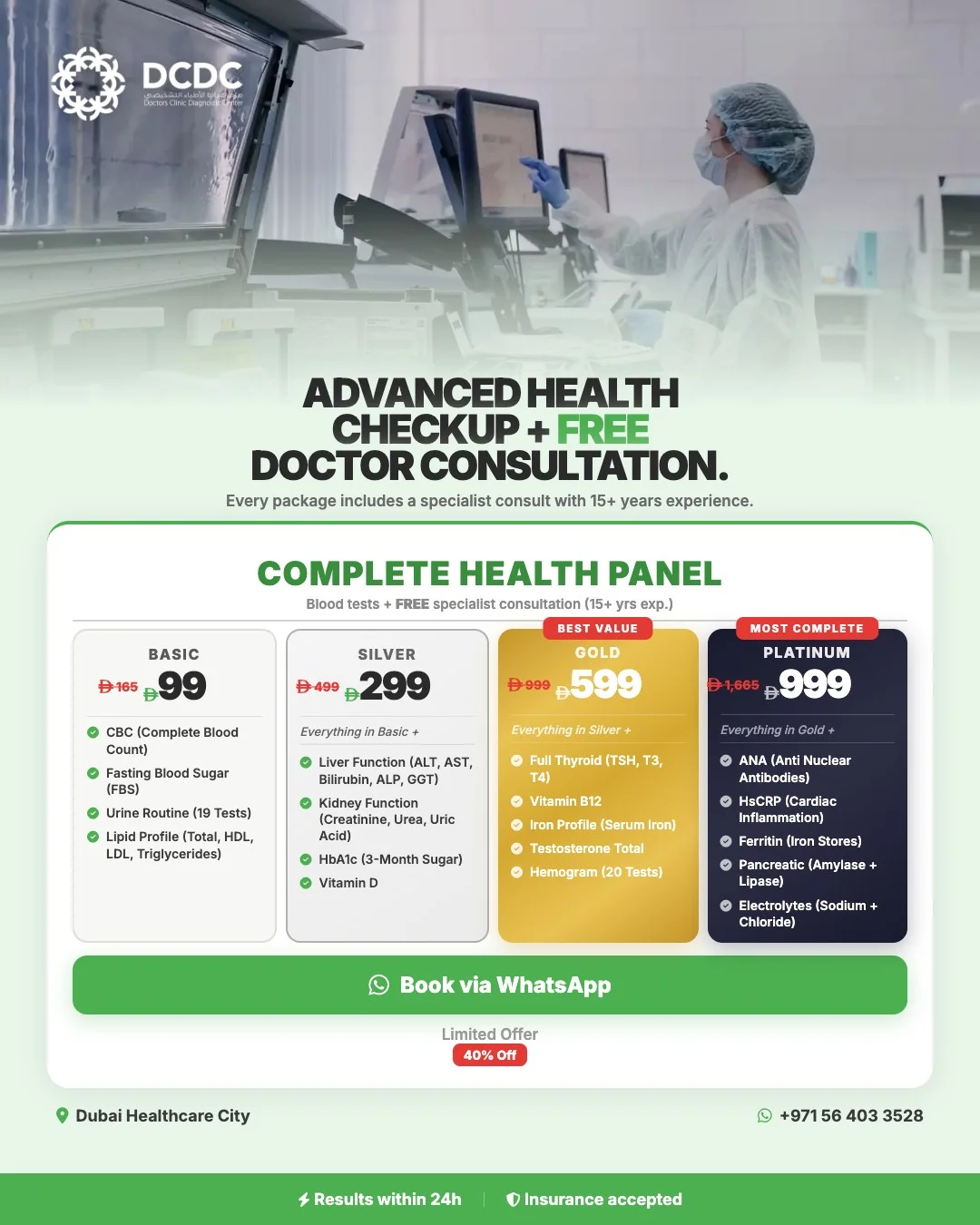
Health Screening Packages
Save with our bundled screening packages — specialist consultation included




What Is a Well-Baby Checkup and Why Does It Matter?
A well-baby checkup — also called a well-child visit, well-baby exam, or pediatric wellness visit — is a scheduled appointment focused entirely on prevention. Unlike a sick visit where you bring your baby in because something is wrong, a well-baby checkup is designed to evaluate your baby when they appear healthy. The goal is to identify conditions that have no visible symptoms in the early stages but respond dramatically better to early intervention.
The first 1,000 days of a child's life (from conception through age two) represent a critical window of brain development. During this period, a baby's brain forms more than one million new neural connections every second. Nutritional deficiencies, sensory impairments, and developmental delays during this window can have lasting effects on cognitive function, language acquisition, and social development. Well-baby checkups are timed to coincide with specific developmental stages so that problems can be caught during the periods when intervention has the greatest impact.
Research published by the World Health Organization shows that structured preventive health visits during infancy reduce hospitalizations, improve vaccination coverage, and lead to earlier detection of conditions including iron deficiency anaemia, vitamin D insufficiency, hip dysplasia, hearing loss, and autism spectrum conditions. In Dubai, where the international population means children arrive with varying health backgrounds and the climate creates specific nutritional challenges, these visits are particularly valuable.
Recommended Well-Baby Checkup Schedule: Birth to 5 Years
The following schedule is based on the AAP Bright Futures periodicity schedule and DHA guidelines. Each visit is timed to align with key developmental milestones, vaccination schedules, and screening windows. Missing a visit does not mean you have failed — if you are behind, your doctor will create a catch-up plan. But staying on schedule gives your baby the best chance of early detection for any issues.
| Age | Growth Assessed | Development Checked | Screenings & Vaccines |
|---|---|---|---|
| Newborn (3-5 days) | Birth weight recovery, head circumference, length | Reflexes (Moro, rooting, grasp), muscle tone, alertness | Newborn hearing screen, jaundice check, BCG, Hepatitis B (1st) |
| 1 month | Weight gain trajectory (expect 150-200 g/week), head growth | Head lifting during tummy time, visual fixation, response to sound | Feeding assessment, umbilical cord healing, parental wellbeing screen |
| 2 months | Weight, length, head circumference plotted on WHO charts | Social smile, tracking objects past midline, vocalizing (cooing) | Hexavalent (1st), PCV13 (1st), Rotavirus (1st) |
| 4 months | Weight (expect doubling birth weight by 4-5 months), length | Reaching and grasping, rolling front to back, laughing, head steady | Hexavalent (2nd), PCV13 (2nd), Rotavirus (2nd) |
| 6 months | Weight, length, head circumference; growth velocity assessment | Sitting with support, transferring objects hand-to-hand, babbling (ba-ba, da-da) | Hexavalent (3rd), PCV13 (3rd), Rotavirus (3rd); weaning guidance |
| 9 months | Weight, length; iron and haemoglobin screening recommended | Crawling, pincer grasp, stranger anxiety, responding to name, waving | Haemoglobin/iron screen; continued feeding assessment |
| 12 months | Weight (expect tripling birth weight), length, head circumference | Pulling to stand, first words (mama/baba), pointing, social referencing | MMR (1st), Varicella (1st), Hepatitis A (1st), PCV13 booster |
| 15 months | Weight, height (standing measurement begins), growth trend review | Walking independently, 3-6 words, stacking 2 blocks, following simple commands | Catch-up vaccines if behind; dental health check |
| 18 months | Weight, height, BMI tracking may begin; growth percentile trend | Running, 10-20 words, two-word phrases emerging, parallel play | Pentavalent booster, Hepatitis A (2nd), MMR (2nd), Varicella (2nd); M-CHAT autism screen |
| 24 months | Weight, height, BMI; growth velocity over past year | Two-word sentences, jumping, kicking a ball, imaginative play, 50+ words | Annual flu vaccine; dental referral if not yet seen |
| 3 years | Weight, height, BMI, blood pressure (first measurement) | Full sentences, pedalling tricycle, cooperative play, toilet training | Vision screening (first formal), hearing recheck; DTaP-IPV booster at 4-6 |
| 4-5 years | Weight, height, BMI, blood pressure; pre-school growth assessment | Drawing shapes, counting, dressing independently, complex sentences | DTaP-IPV booster, vision screening; school readiness assessment |
Source: AAP Bright Futures Periodicity Schedule and DHA guidelines. Your doctor may add or adjust assessments based on your baby's individual risk factors and health history.
Developmental Milestones by Age: What Doctors Look For
Developmental milestones are specific skills or behaviors that most children achieve by a certain age. They are grouped into four domains: gross motor (large movements like sitting and walking), fine motor (small movements like grasping and drawing), speech and language (babbling, words, sentences), and social-emotional (smiling, playing, empathy). At each well-baby visit, your doctor evaluates all four domains using structured observation and standardized tools like the Ages and Stages Questionnaire (ASQ).
It is important to understand that milestones represent the age by which most children achieve a skill — not the age by which every child must achieve it. Wide variation is normal. A baby who walks at 14 months is just as healthy as one who walks at 10 months. However, consistently falling behind across multiple domains, or losing a skill that was previously present, is a pattern that warrants further evaluation. The following table outlines milestones your baby's doctor assesses at each visit, as described in our child vaccination schedule guide, which also covers what happens at each DHA-recommended visit.
| Age | Gross Motor | Fine Motor | Speech & Language | Social-Emotional |
|---|---|---|---|---|
| 2 months | Lifts head during tummy time | Hands open intermittently | Cooing, vowel sounds | Social smile, recognizes parent |
| 4 months | Rolls front to back, steady head | Reaches for and bats at objects | Laughs, squeals, varied vowels | Smiles spontaneously, enjoys play |
| 6 months | Sits with support, rolls both ways | Transfers objects between hands | Babbling with consonants (ba, da, ma) | Knows familiar vs. unfamiliar faces |
| 9 months | Sits independently, crawls, pulls to stand | Pincer grasp developing | Responds to name, imitates sounds | Stranger anxiety, plays peek-a-boo |
| 12 months | Cruises furniture, may walk independently | Neat pincer grasp, bangs objects together | 1-3 words with meaning, follows one-step commands | Waves bye-bye, imitates actions, social referencing |
| 18 months | Walks well, begins running, climbs stairs with help | Stacks 2-4 blocks, scribbles | 10-20 words, points to body parts, follows two-step commands | Parallel play, shows possessiveness, beginning empathy |
| 24 months | Runs, kicks a ball, walks up/down stairs holding rail | Stacks 6 blocks, turns pages, unscrews lids | 50+ words, two-word phrases, names pictures | Imitates others, takes turns, shows a wider range of emotions |
| 3 years | Pedals tricycle, climbs well, runs easily | Draws circles, uses scissors, turns door handles | Full sentences (3-4 words), asks questions, 200+ words | Cooperative play, takes turns, understands 'mine' vs. 'yours' |
Source: CDC Developmental Milestones and WHO Child Development Standards. These are average ages — there is a normal range for each milestone.
Growth Monitoring: Understanding WHO Percentile Charts
At every well-baby visit, your doctor measures three key parameters: weight, length (or height once your child can stand), and head circumference (up to age 2-3). These measurements are plotted on WHO growth percentile charts — standardized curves that show how your baby's size compares to a reference population of healthy children worldwide.
A percentile tells you what proportion of children of the same age and sex are smaller than your baby. For example, if your baby is at the 60th percentile for weight, it means 60% of babies the same age weigh less and 40% weigh more. The key clinical principle is that the percentile itself matters less than the trajectory. A baby consistently tracking along the 25th percentile is growing normally — that is simply their growth pattern. A baby who drops from the 75th to the 25th percentile over two visits, however, may be faltering and needs further evaluation.
Head circumference is particularly important in the first two years because it reflects brain growth. A head that is growing too quickly may indicate raised intracranial pressure, while a head that plateaus in growth could signal a condition affecting brain development. At DCDC, we use WHO growth charts for children under 2 and CDC growth charts for children 2-18, consistent with international best practice.
Common growth patterns that are normal but worry parents unnecessarily include: a slight weight loss in the first 3-5 days of life (up to 7-10% of birth weight is expected), a growth plateau around 4-6 months when babies transition from rapid early growth, and a temporary dip when solid foods are introduced if the baby is initially a picky eater. Your doctor will distinguish between normal variations and concerning trends.
Vision and Hearing Screening at Key Ages
Vision and hearing are foundational to language development, social interaction, and learning. Because babies cannot tell you they cannot see or hear properly, screening at well-baby visits is the primary way these impairments are detected. Early intervention for both vision and hearing problems is time-sensitive — the brain's ability to develop these sensory pathways decreases significantly after the first few years of life.
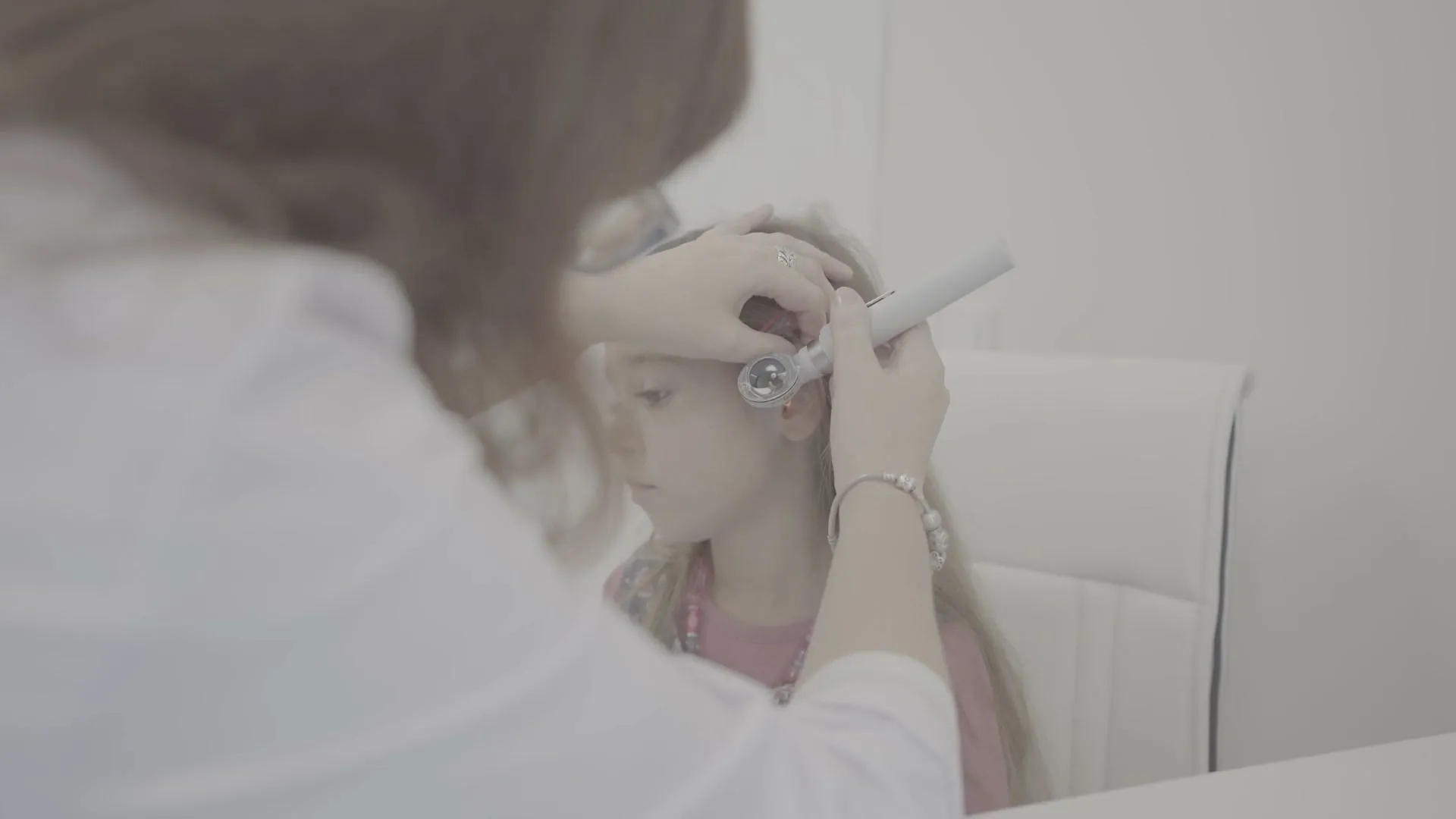
Hearing screening: All newborns in the UAE should have a hearing screen within the first month of life (otoacoustic emissions test or auditory brainstem response). Hearing is informally assessed at every subsequent well-baby visit by checking whether the baby turns toward sounds, responds to their name (by 9 months), and follows verbal instructions (by 12-15 months). Formal audiometry is recommended if any concerns arise or at 4-5 years before school entry.
Vision screening: At every visit, the doctor checks for symmetrical eye movement, the red reflex (a test that can detect cataracts, retinoblastoma, and other serious conditions), and whether the baby fixates and follows objects. Formal vision screening with a chart begins at age 3-4, when children can cooperate with testing. Amblyopia (lazy eye) affects 2-3% of children and is fully treatable if caught before age 7, but much more difficult to correct after that window closes. Strabismus (misaligned eyes) beyond 4 months of age should always be evaluated.
Nutritional Assessment: Breastfeeding, Weaning, and Supplements
Nutrition is assessed at every well-baby visit because it directly affects growth, brain development, immune function, and energy levels. The nutritional discussion at each visit evolves as your baby grows from exclusive milk feeding through weaning to a varied diet. At DCDC, nutritional counselling is a core part of every well-baby checkup, not an optional add-on.
Birth to 6 months (exclusive milk feeding): Your doctor assesses breastfeeding technique, feeding frequency, and whether your baby is gaining weight appropriately. Common issues addressed include latching difficulties, nipple pain, low milk supply concerns, and formula supplementation decisions. The WHO recommends exclusive breastfeeding for the first 6 months, but every family's situation is different, and your doctor can guide you without judgment. For our complete guide to age-appropriate checkups as your child grows, see our child health checkup guide which covers the full timeline from birth to 18.
Vitamin D supplementation: The AAP recommends 400 IU of vitamin D daily for all breastfed infants starting from birth, because breast milk alone does not provide sufficient vitamin D — even in sunny Dubai, where the climate paradoxically contributes to vitamin D deficiency because families spend most of the day indoors due to extreme heat. Formula-fed babies receiving at least 1 litre of formula daily typically get adequate vitamin D from the fortified formula.
6 to 12 months (complementary feeding/weaning): Your doctor will guide the introduction of solid foods alongside continued breastfeeding or formula. Iron-rich foods (pureed meat, iron-fortified cereals, lentils) are prioritized because iron stores from birth begin to deplete around 6 months. An iron and haemoglobin screen at the 9-12 month visit is recommended to catch iron deficiency anaemia, which affects an estimated 20-25% of infants globally and can impair cognitive development if untreated.
12 months and beyond: Transition from formula to whole cow's milk (if no allergy), introduction of a wide variety of textures and flavours, and managing common feeding challenges like food refusal and picky eating. Your doctor monitors BMI from 24 months onwards as an early indicator of whether caloric intake is balanced with activity levels.
Vaccination Review During Well-Baby Checkups
Vaccinations are a central component of every well-baby visit. The DHA mandates a comprehensive immunization schedule that begins at birth and protects against 14 major childhood diseases including tuberculosis, hepatitis B, diphtheria, tetanus, pertussis, polio, Haemophilus influenzae type B, pneumococcal disease, rotavirus, measles, mumps, rubella, chickenpox, and hepatitis A. Combination vaccines (such as the hexavalent 6-in-1 vaccine given at 2, 4, and 6 months) reduce the number of injections while maintaining full protection.
At each well-baby visit, your doctor reviews your baby's vaccination record against the DHA schedule and administers any doses that are due. If your baby has missed doses — common for families who have recently relocated to Dubai from countries with different schedules — a catch-up plan is created that prioritizes the most critical vaccines first while respecting minimum interval requirements between doses.
Mild reactions following vaccination are normal and expected: a sore or slightly swollen injection site, low-grade fever (below 38.5°C), fussiness, and reduced appetite for 24-48 hours. These are signs that the immune system is responding to the vaccine. Paracetamol can be given for comfort if needed. Serious reactions are extremely rare. Your doctor will explain what to expect after each vaccination and provide clear guidance on when to call the clinic.
When to Worry: Red Flags That Need Early Intervention
While well-baby checkups are designed to catch developmental concerns early, parents are with their babies every day and often notice things first. The following red flags are signs that warrant a medical evaluation sooner than the next scheduled visit. These do not necessarily mean something is wrong — many children who show one of these signs develop normally — but they should always be assessed rather than adopted as a "wait and see" approach.
- By 2 months: Does not respond to loud sounds, does not watch things as they move, does not bring hands to mouth, cannot hold head up when pushing up on tummy
- By 4 months: Does not watch things as they move, no social smile, cannot hold head steady, does not coo or make sounds, does not bring things to mouth
- By 6 months: Does not reach for things, shows no affection for caregivers, does not respond to sounds around them, difficulty getting things to mouth, does not make vowel sounds, does not roll in either direction, seems unusually stiff or unusually floppy
- By 9 months: Does not bear weight on legs with support, does not sit with help, does not babble (mama, baba, dada), does not play any back-and-forth games, does not respond to own name, does not seem to recognize familiar people
- By 12 months: Does not crawl, cannot stand when supported, does not search for things that they see you hide, does not say single words like 'mama' or 'baba', does not learn gestures like waving or shaking head, loses skills they once had
- By 18 months: Does not point to show things to others, does not know what familiar things are for (cup, spoon, phone), does not copy others, does not have at least 6 words, does not notice or mind when a caregiver leaves or returns, does not walk
- By 24 months: Does not use two-word phrases (not including imitation), does not know what to do with common items (brush, phone, fork), does not copy actions and words, does not follow simple instructions, does not walk steadily, loses skills they once had
- At any age: Loss of previously acquired skills (regression) is always a red flag that requires prompt evaluation. This includes a child who was babbling and stops, was walking and stops, or was making eye contact and stops
If you notice any of these red flags, do not wait for the next scheduled well-baby visit. Contact your doctor for an assessment. Early intervention services for developmental delays — including speech therapy, occupational therapy, and physiotherapy — are most effective when started during the first two to three years of life, when brain plasticity is at its peak.
Concerned About Your Baby's Development?
If you have noticed any developmental red flags or simply want reassurance that your baby is on track, DCDC's team can provide a thorough assessment with same-day results. Our on-site lab handles iron, vitamin D, and other blood tests during the same visit. Rated 4.8/5 from over 1,000 verified patient reviews. Book online or send us a WhatsApp message.
MOHAP-licensed facility in Dubai Healthcare City. Direct billing with 20+ insurance providers including Daman, AXA, and Bupa.
What to Expect at DCDC for Your Baby's Checkup
At Doctors Clinic Diagnostic Center in Dubai Healthcare City, we have designed the well-baby checkup experience to be thorough, evidence-based, and comfortable for both babies and parents. Here is what happens from arrival to departure.
Arrival: DCDC is located in Building 64, Block A, Al Razi Medical Complex, DHCC. Free dedicated parking is available, and the building is accessible by car and metro (Healthcare City station). Our waiting area is designed to be child-friendly with a comfortable, clean environment. Most families are seen within 15 minutes of their appointment time.
Growth measurement: A nurse weighs your baby on calibrated digital infant scales (undressed for accuracy), measures length on a standardised measuring board (or height on a stadiometer once your child can stand), and measures head circumference with a non-stretch tape. All measurements are plotted on WHO growth percentile charts and compared to previous visits to assess the growth trajectory.
Developmental assessment: The doctor evaluates your baby across all four developmental domains — gross motor (can they sit, crawl, walk?), fine motor (can they grasp, transfer objects, use pincer grip?), speech and language (babbling, words, comprehension), and social-emotional (eye contact, attachment, play behaviour). Structured developmental screening tools are used at key ages to ensure objective, consistent assessment. The M-CHAT (Modified Checklist for Autism in Toddlers) is administered at the 18-month visit.
Vision and hearing screening: At every visit, the doctor checks eye alignment, red reflex, and visual tracking. Hearing is assessed by observing responses to sounds and verbal interaction. Formal screening tools are used at ages where specific concerns are being evaluated or at the 3-4 year pre-school assessment.
Nutritional counselling: Whether your baby is exclusively breastfed, formula-fed, or in the weaning phase, your doctor provides specific, practical guidance. Breastfeeding support includes latch assessment and supply concerns. Weaning guidance covers which foods to introduce first, iron-rich food priorities, and allergen introduction. Vitamin D supplementation (400 IU daily for breastfed infants) and iron status are routinely reviewed.
Vaccination record review and administration: Your baby's vaccination booklet is checked against the DHA schedule. Any due vaccines are administered during the visit. If your family has relocated and your baby's vaccination history differs from the DHA schedule, a catch-up plan is created. All vaccines are stored per cold-chain protocols.
On-site diagnostics: If the doctor identifies any concerns during the assessment — for example, possible iron deficiency or vitamin D insufficiency — blood tests are performed on-site in our laboratory during the same visit. There is no need to visit a separate lab, wait for results, and then return for a follow-up. Results for basic blood panels (CBC, iron studies, vitamin D) are typically available the same day or next day.
Follow-up plan: At the end of each visit, your doctor provides a clear summary of findings, an updated growth chart, any prescriptions or supplement recommendations, and the date for the next scheduled well-baby visit. If a referral to a specialist is needed — for example, an ophthalmologist for a vision concern or a speech therapist for a language delay — the referral is coordinated from within DCDC.
According to Dr. Hadeel Elnur: "The well-baby checkup is the most important appointment on your baby's calendar, even when they seem perfectly healthy. As a general practitioner serving as the first point of contact at DCDC, I have identified iron deficiency, vitamin D insufficiency, hip dysplasia, and early speech delays during routine checkups — conditions that parents understandably could not detect at home. When I identify a concern that needs specialist input, I coordinate the multi-specialty workup personally so that parents do not have to navigate referrals alone. Early detection during a 30-minute well-baby visit can save months of corrective treatment later."
Well-Baby Checkup Cost and Insurance Coverage in Dubai
Understanding the cost of well-baby checkups helps families budget for their baby's preventive care. At DCDC, we have structured pricing to make routine checkups accessible, and we work with over 20 insurance partners to minimise out-of-pocket expenses. For a comprehensive breakdown of pediatric consultation fees across Dubai, see our pediatrician cost guide.
| Service | Cost at DCDC | What's Included |
|---|---|---|
| Well-Baby Checkup Package | From AED 249 | Physical exam, growth measurements (weight, length, head circumference), developmental screening, doctor consultation, growth chart update |
| Pediatrician / GP Consultation | From AED 300 | Comprehensive assessment, milestone evaluation, nutritional guidance, vaccination review, prescriptions if needed |
| Vaccination Visit | From AED 300 + vaccine cost | Doctor assessment, vaccine administration, post-vaccine monitoring (15 min), schedule update |
| Blood Tests (Iron, Vitamin D, CBC) | AED 150-500 | On-site collection, same-day or next-day results, doctor interpretation included |
| Comprehensive Baby Wellness Package | AED 500-900 | Full physical, blood work (iron, vitamin D, CBC), growth assessment, developmental screening, nutritional review |
Prices are indicative and may vary. Contact DCDC for current pricing. Most well-baby visits are covered by insurance as preventive care.
Most comprehensive health insurance plans in Dubai — including Daman, AXA, Bupa, MetLife, Cigna, and others — cover well-baby visits, routine vaccinations, and developmental screening as part of preventive care benefits. DCDC offers direct billing with 20+ insurance providers, which means you typically pay only your copay at the time of the visit. Our reception team verifies your coverage before the appointment and advises on any costs not covered by your plan.
For families without insurance, the health checkup packages from AED 249 offer significant value compared to paying for each component separately. Bundling the consultation, growth measurements, and developmental screening into a single package keeps preventive care affordable so that cost does not become a barrier to your baby's health.
How to Prepare for Your Baby's Well-Baby Checkup
A little preparation makes each visit smoother and more productive. The doctor's time is limited, so arriving prepared ensures you get the most out of every appointment.
- Bring the vaccination booklet: Your baby's DHA vaccination card or health booklet is essential for every visit. The doctor needs it to verify which vaccines have been given and which are due
- Write down your questions: Parents often forget questions in the moment. Write down anything you have noticed or wondered about since the last visit — sleep patterns, feeding concerns, a movement you are unsure about, a rash that came and went
- Bring your Emirates ID and insurance card: Required for registration and insurance verification. For first visits, also bring your baby's birth certificate and any previous medical records
- Feed your baby 30-60 minutes before the appointment: A hungry baby is a fussy baby. A recently fed, content baby allows for a more thorough and accurate examination
- Dress your baby in easy-to-remove clothing: The doctor needs to examine your baby undressed. Complicated outfits with many buttons and layers add stress for everyone. Simple onesies or two-piece outfits are ideal
- Bring a comfort item and a change of clothes: A favourite blanket or pacifier helps with soothing after vaccinations. A spare outfit is useful in case of a nappy change during the visit
- Note milestones you have observed at home: The doctor can only observe your baby for 20-30 minutes. Your observations at home — first smile, first roll, first word, how they play — provide critical information for the developmental assessment
Frequently Asked Questions Parents Have at Well-Baby Visits
In our experience at DCDC, parents — especially first-time parents — often have similar questions. Here are practical answers to the concerns we hear most frequently during well-baby checkups.
"My baby is not on the 50th percentile — is that a problem?" No. Percentiles describe a distribution, not a ranking. Only 50% of healthy babies are above the 50th percentile by definition. A baby consistently tracking along the 15th percentile is growing normally for their individual pattern. The 50th percentile is not a target — it is simply the middle of the range. Your doctor watches the trajectory, not the number.
"My friend's baby is walking already and mine is not — should I be concerned?" The normal range for independent walking is 9 to 18 months. A baby who walks at 15 months is completely within the normal range. Your doctor assesses walking readiness by checking whether your baby pulls to stand, cruises along furniture, and has the balance and coordination precursors. If these are present, walking will follow in its own time.
"Can I delay vaccines if my baby has a cold?" Mild illness (runny nose, low-grade fever below 38°C, mild cough) is not a reason to delay vaccination. Babies in childcare settings may have a mild cold for much of their first year, and delaying every time would mean falling significantly behind schedule. Vaccines should be postponed only for moderate to severe illness, which your doctor will assess.
Book Your Baby's Well-Baby Checkup at DCDC
Doctors Clinic Diagnostic Center in Dubai Healthcare City offers comprehensive well-baby checkups from birth through age five. On-site blood tests, WHO growth monitoring, and DHA-schedule vaccinations — everything under one roof. Book online or message us on WhatsApp — same-day appointments frequently available.
MOHAP Licensed. Extended hours: Sat-Thu 8 AM - 10:30 PM, Fri 9 AM - 10 PM. Free parking. Direct billing with 20+ insurance providers including Daman, AXA, and Bupa.
DCDC में संबंधित सेवाएं
दुबई हेल्थकेयर सिटी में विशेषज्ञ देखभाल और उन्नत निदान
Frequently Asked Questions
Your Baby's Health Starts With Regular Checkups
Well-baby checkups are the foundation of your baby's preventive healthcare. They provide a structured, evidence-based framework for tracking growth, monitoring developmental milestones, maintaining vaccination coverage, identifying nutritional deficiencies, and catching health conditions during the narrow window when early intervention makes the greatest difference. Every visit your baby attends is an investment in their long-term cognitive development, physical health, and quality of life.
At Doctors Clinic Diagnostic Center in Dubai Healthcare City, we make well-baby checkups as thorough and convenient as possible: calibrated growth measurements plotted on WHO percentile charts, structured developmental screening tools, DHA-schedule vaccinations, on-site blood tests for iron and vitamin D, and same-day results — all under one roof. With packages from AED 249, direct billing with 20+ insurers, free parking, and extended hours six days a week (Sat-Thu 8 AM - 10:30 PM), there is no reason to delay your baby's next checkup. Book online, call us, or send a WhatsApp message to schedule your baby's visit today.
स्रोत एवं संदर्भ
यह लेख हमारी चिकित्सा टीम द्वारा समीक्षित है और निम्नलिखित स्रोतों का संदर्भ देता है:
- American Academy of Pediatrics — Bright Futures Periodicity Schedule (Recommended Preventive Pediatric Health Care)
- World Health Organization — Child Growth Standards
- Centers for Disease Control and Prevention — Developmental Milestones
- NHS UK — Your Baby's Health and Development Reviews
- Cleveland Clinic — Well-Child Visits: What to Expect
- World Health Organization — Developmental Difficulties in Early Childhood
इस साइट पर चिकित्सा सामग्री DHA-लाइसेंस प्राप्त चिकित्सकों द्वारा समीक्षित है। हमारी देखें संपादकीय नीति अधिक जानकारी के लिए।

लेखक
Dr. Hadeel Elnur
General Practitioner
MD, General Practice
Dr. Hadeel Elnur is a General Practitioner at Doctors Clinic Diagnostic Center (DCDC) in Dubai Healthcare City.
Related Articles

Child Health Checkup Dubai: Full Guide (2026)
Child Vaccination Schedule Dubai: Full Guide (2026)
Newborn Screening Tests Dubai: Full Guide (2026)
Pediatrician Cost Dubai: From AED 300 (2026)
More in General Health

Wound Care at Home Dubai: Full Guide (2026)
और पढ़ें
Dizziness Causes Dubai: When to Get Checked (2026)
और पढ़ें
Elderly Care at Home Dubai: Full Guide (2026)
और पढ़ेंIV Drip at Home Dubai: From AED 449 (2026)
और पढ़ें
Nurse at Home Dubai: Cost & Services (2026)
और पढ़ें
Stomach Infection Treatment Dubai (2026)
और पढ़ें© 2026 Doctors Clinic Diagnostic Center (DCDC), Dubai Healthcare City. Originally published at https://doctorsclinicdubai.ae/blog/well-baby-checkup-dubai. All rights reserved. Unauthorized reproduction is prohibited.