मुख्य बातें
- The triple marker test measures three substances in maternal blood — AFP (alpha-fetoprotein), hCG (human chorionic gonadotropin), and uE3 (unconjugated estriol) — to screen for chromosomal conditions and neural tube defects
- The test is performed between weeks 15 and 20 of pregnancy (optimal at week 16-18) — it cannot be done before 15 weeks as the markers are not yet at detectable levels
- A "screen positive" result means increased risk, not a diagnosis — approximately 5% of women will screen positive, but the majority of these do NOT have an affected pregnancy
- NIPT is significantly more accurate than the triple marker test for Down syndrome screening (99% vs 70% detection rate, 0.04% vs 5% false positive rate)
- The triple marker test costs AED 300-600 in Dubai, making it a more affordable but less accurate alternative to NIPT (AED 999-2,500)
The triple marker test — also called the triple screen, triple test, or maternal serum screening — has been a standard part of prenatal care for over three decades. It analyses three proteins in the mother's blood to estimate the risk of certain chromosomal conditions (primarily Down syndrome and trisomy 18) and neural tube defects (such as spina bifida). While it has been largely superseded by NIPT for chromosomal screening in many developed countries, the triple marker test remains widely offered in Dubai and across the Middle East, particularly for women who did not have first-trimester screening or who want a more affordable option. Understanding what this test measures, its accuracy, and how it compares to modern alternatives is essential for making informed prenatal screening decisions. Our Nipt Test service at DCDC offers same-day appointments in Dubai Healthcare City.
This guide explains the science behind the triple marker test, when it is performed, how to interpret the results, why a "screen positive" does not mean your baby has a problem, and how the triple test compares to NIPT in accuracy and clinical utility. If you are deciding between the triple marker test and NIPT, or have received a screen positive result and want to understand your next steps, this guide provides the evidence you need.
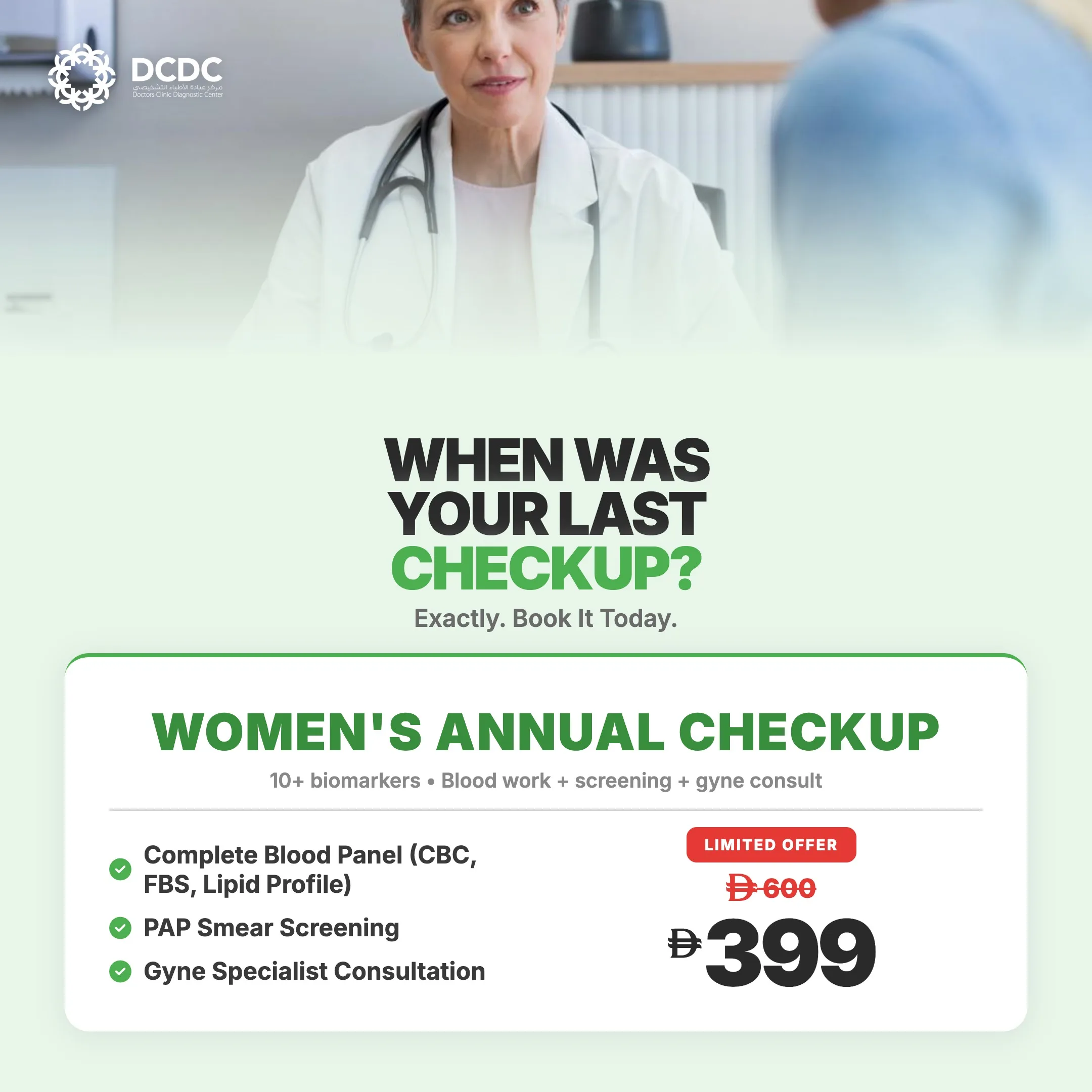
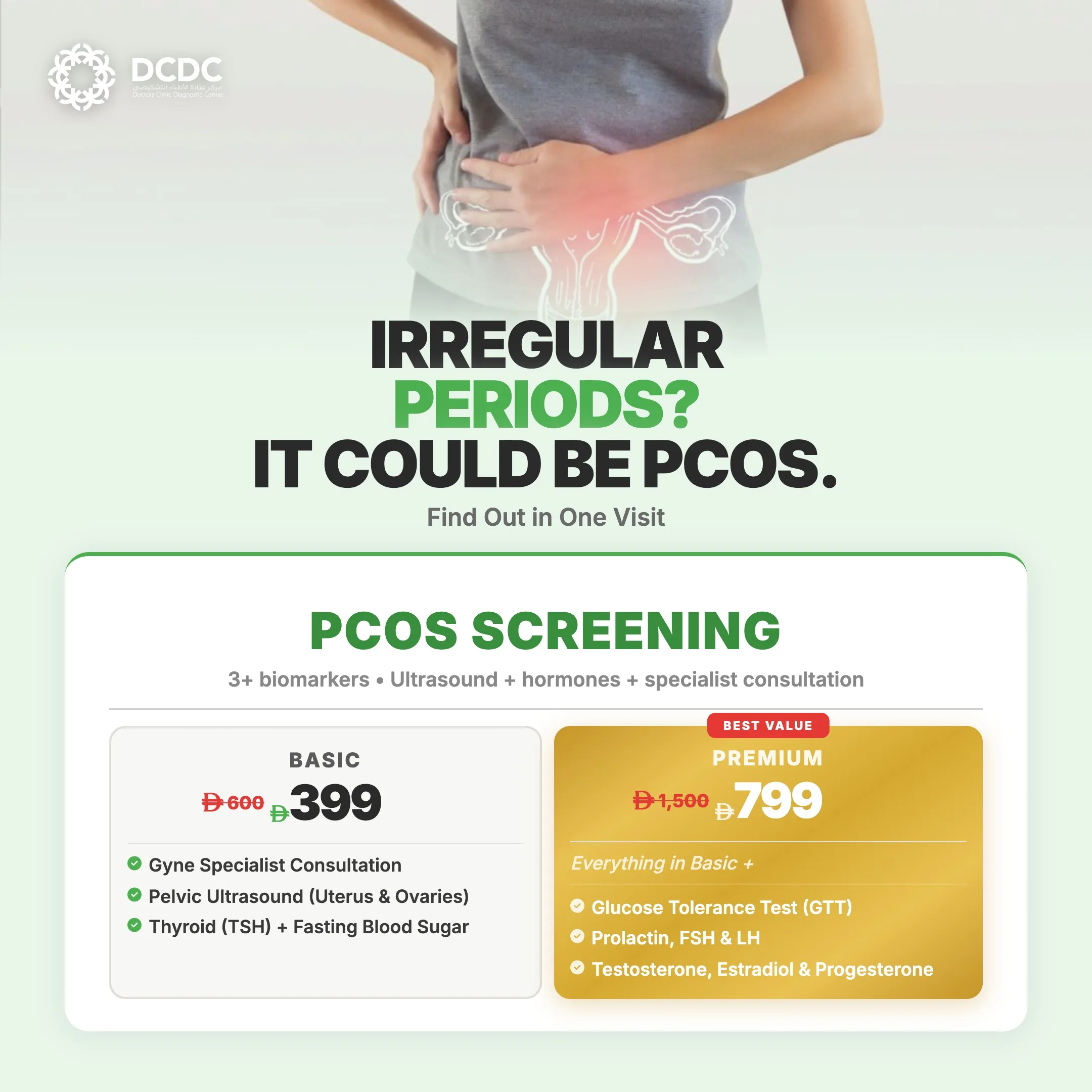
Health Screening Packages
Save with our bundled screening packages — specialist consultation included




What the Triple Marker Test Measures
The triple marker test measures three specific substances in the mother's blood. Each substance is produced by the fetus, the placenta, or both, and their levels change in characteristic patterns when certain conditions are present. The laboratory combines these three measurements with the mother's age, weight, ethnicity, gestational age, and diabetic status to calculate a personalised risk score.
AFP (Alpha-Fetoprotein)
AFP is a protein produced primarily by the fetal liver. It crosses the placenta into the maternal bloodstream, where its concentration increases steadily from week 14 to week 32. Elevated AFP (higher than expected for the gestational age) can indicate neural tube defects (spina bifida, anencephaly), abdominal wall defects (gastroschisis, omphalocele), multiple pregnancies, or incorrect gestational age dating. Low AFP (lower than expected) is associated with Down syndrome (trisomy 21) and trisomy 18. AFP is the most important marker for neural tube defects — a role that NIPT cannot fulfil, which is one reason some doctors still order AFP even when NIPT is performed.
hCG (Human Chorionic Gonadotropin)
hCG is a hormone produced by the placenta. In the second trimester, elevated hCG is the single strongest marker for Down syndrome in the triple test. Pregnancies affected by trisomy 21 tend to have hCG levels approximately twice as high as unaffected pregnancies. Conversely, low hCG is associated with trisomy 18, which tends to produce a pattern of all three markers being low. Elevated hCG can also occur in molar pregnancies, multiple pregnancies, or simply as normal biological variation.
uE3 (Unconjugated Estriol)
Unconjugated estriol is produced jointly by the fetal adrenal glands, fetal liver, and the placenta. It reflects fetal-placental function. Low uE3 is associated with both Down syndrome and trisomy 18. In Down syndrome pregnancies, uE3 levels are typically about 25% lower than in unaffected pregnancies. Very low uE3 can also indicate Smith-Lemli-Opitz syndrome (a rare metabolic condition), fetal adrenal insufficiency, or placental sulfatase deficiency.
| Condition | AFP Level | hCG Level | uE3 Level |
|---|---|---|---|
| Down syndrome (trisomy 21) | Low | High | Low |
| Trisomy 18 (Edwards syndrome) | Low | Low | Low |
| Neural tube defect (spina bifida) | High | Normal | Normal |
| Normal pregnancy | Normal | Normal | Normal |
| Twin pregnancy | High | High | Normal/High |
Typical triple marker test patterns by condition
Timing: When to Have the Triple Marker Test
The triple marker test must be performed between weeks 15 and 20 of pregnancy, with the optimal window being weeks 16-18. This timing is critical because the three blood markers reach detectable and interpretable levels only in the second trimester. Testing before week 15 produces unreliable results, and testing after week 20 reduces the accuracy of the risk calculation because the normal ranges for the markers change rapidly with gestational age.
Accurate gestational age dating is essential for correct interpretation. Because the expected normal range for each marker changes daily during the second trimester, even a one-week error in gestational age can significantly alter the calculated risk. For this reason, the gestational age used should be based on a dating ultrasound (preferably first-trimester crown-rump length measurement) rather than last menstrual period alone.
The Quadruple Screen: An Enhanced Version
The quadruple screen (quad screen) adds a fourth marker — inhibin A — to the three markers in the triple test. Inhibin A is elevated in Down syndrome pregnancies, and adding it to the panel improves the Down syndrome detection rate from approximately 70% (triple test) to approximately 81% (quad test) at the same 5% false positive rate. The quad screen has largely replaced the triple test in many countries, though both remain available in Dubai. The timing, cost, and interpretation are similar for both tests.
| Feature | Triple Marker Test | Quadruple Screen |
|---|---|---|
| Markers measured | AFP, hCG, uE3 | AFP, hCG, uE3, inhibin A |
| Down syndrome detection rate | ~70% | ~81% |
| False positive rate | ~5% | ~5% |
| Neural tube defect detection | Yes (via AFP) | Yes (via AFP) |
| Timing | Week 15-20 | Week 15-20 |
| Cost in Dubai | AED 300-600 | AED 400-800 |
Triple marker test vs quadruple screen comparison
How to Read Your Triple Marker Test Results
Triple marker test results are reported as MoM values (Multiples of the Median). For each marker, the laboratory calculates the expected median value for your gestational age and then expresses your actual value as a multiple of that median. A result of 1.0 MoM means your level is exactly at the median. A result of 2.0 MoM means your level is twice the median. These MoM values are then combined with your age, weight, and other factors using a mathematical algorithm to produce a risk estimate for each condition — typically expressed as "1 in X" (for example, "1 in 200 for Down syndrome"). For related information, see our guide on NIPT vs Amniocentesis: Which Test to Choose.
The result is then classified as either "screen negative" (low risk) or "screen positive" (increased risk) based on a predetermined cutoff, usually 1 in 250 to 1 in 350 for Down syndrome. It is absolutely critical to understand what "screen positive" means and what it does NOT mean:
- Screen positive does NOT mean your baby has Down syndrome. It means your calculated risk exceeds the cutoff threshold, and further evaluation is recommended. Approximately 5% of all women who take the test will screen positive, but the vast majority of these women have healthy babies
- Screen negative does NOT guarantee a healthy baby. The triple test catches approximately 70% of Down syndrome cases, meaning it misses about 30%. A screen negative result reduces your risk but does not eliminate it
- The risk number is a statistical estimate, not a certainty. A risk of "1 in 100" means that out of 100 women with the same risk profile, approximately 1 will have an affected pregnancy and 99 will not. You have no way of knowing which group you fall into without diagnostic testing
If your result is screen positive, your doctor will typically recommend one of the following next steps: a detailed anatomy ultrasound to look for structural markers of chromosomal conditions, NIPT (which has much higher accuracy and may reclassify your risk as low), or diagnostic testing (amniocentesis) for a definitive answer. The choice depends on your preferences, gestational age, and the specific risk pattern.
Questions About Your Screening Results?
If you have received a screen positive result or want to understand your options, book a consultation at DCDC Dubai Healthcare City for personalised guidance.
Triple Marker Test vs NIPT: An Honest Accuracy Comparison
The introduction of NIPT has fundamentally changed the landscape of prenatal screening, and the accuracy gap between NIPT and the triple marker test is substantial. For Down syndrome detection — the most common condition both tests screen for — NIPT detects 99% of affected pregnancies with a false positive rate of 0.04%. The triple marker test detects approximately 70% with a false positive rate of 5%. This means NIPT catches 29% more cases and produces 125 times fewer false positives.
| Metric | Triple Marker Test | NIPT |
|---|---|---|
| Down syndrome detection rate | ~70% | ~99% |
| Trisomy 18 detection rate | ~60% | ~97-98% |
| False positive rate | ~5% | ~0.04% |
| Neural tube defect detection | Yes (via AFP) | No |
| Gender determination | No | Yes (99.9%) |
| Sex chromosome screening | No | Yes (~95%) |
| Earliest timing | Week 15 | Week 10 |
| Cost in Dubai | AED 300-600 | AED 999-2,500 |
| Results turnaround | 5-7 days | 5-14 days |
Triple marker test vs NIPT accuracy and feature comparison
Given this accuracy gap, why is the triple marker test still offered? Several reasons. First, cost: the triple test costs one-third to one-half of NIPT, making it more accessible for families without insurance coverage. Second, neural tube defect screening: the triple test includes AFP, which screens for spina bifida and anencephaly — conditions that NIPT does not detect. Third, availability and familiarity: the triple test has been the standard of care for decades, and many providers continue to offer it, particularly in regions where NIPT adoption is still growing.
The emerging consensus in prenatal medicine is that NIPT should replace the triple/quad screen for chromosomal screening whenever possible, as the accuracy improvement is dramatic. However, because NIPT does not screen for neural tube defects, many providers now recommend NIPT plus AFP (a standalone AFP blood test at 15-20 weeks) as the optimal second-trimester screening strategy. This gives you the best of both worlds: NIPT-level accuracy for chromosomal conditions and AFP-level screening for neural tube defects.
Limitations and Common Misconceptions
- "Screen positive means my baby has a problem." FALSE. Approximately 95% of women who screen positive on the triple test have healthy babies. The test has a 5% false positive rate, meaning 50 out of every 1,000 women tested will receive a false alarm
- "Screen negative means my baby is definitely fine." FALSE. The triple test misses approximately 30% of Down syndrome cases and does not screen for many other chromosomal conditions. A screen negative result reduces but does not eliminate risk
- "The triple test is outdated and useless." Not entirely accurate. While NIPT is more accurate for chromosomal conditions, the triple test's AFP component provides neural tube defect screening that NIPT does not. For women who cannot afford NIPT, the triple test still provides meaningful risk information
- "I do not need the triple test if I had NIPT." Partially true. NIPT replaces the triple test for chromosomal screening, but a standalone AFP blood test at 15-20 weeks is still recommended alongside NIPT to screen for neural tube defects. Discuss with your doctor whether this applies to your situation
- "My risk number means X% chance." Not exactly. A risk of "1 in 200" does not mean there is a 0.5% chance your baby has Down syndrome in absolute terms — it means your calculated risk is equivalent to that of a population of women with similar characteristics. The actual probability for any individual pregnancy is either 0% or 100%
Next Steps If Your Triple Marker Test Is Screen Positive
Receiving a screen positive result on the triple marker test is understandably anxiety-provoking, but it is important to remember that it is a screening result, not a diagnosis. The vast majority of screen positive results — approximately 95% for Down syndrome — are false positives. Here is the typical path forward: You may also find our NIPT Test Dubai: Cost, Accuracy & Timing helpful.
- Step 1: Verify gestational age. Because the triple test is highly sensitive to gestational age, the first step is to confirm your dates with ultrasound. Even a one-week discrepancy can change a "screen positive" to "screen negative" once the correct gestational age is applied
- Step 2: Detailed ultrasound. A targeted anatomy scan looks for "soft markers" of chromosomal conditions (thickened nuchal fold, echogenic bowel, short femur, etc.) and structural anomalies (neural tube defects, heart defects). If the ultrasound is completely normal, the likelihood of a chromosomal condition is significantly lower
- Step 3: Consider NIPT. If your triple test was screen positive for Down syndrome or trisomy 18, NIPT can provide a much more accurate risk assessment. Many women who are screen positive on the triple test will be reclassified as low-risk by NIPT, avoiding the need for amniocentesis
- Step 4: Consider amniocentesis. If NIPT is also high-risk, or if you want a definitive answer, amniocentesis (performed at 15-20 weeks) analyses actual fetal cells and provides a 99.9% accurate diagnosis. The procedure carries a small risk of miscarriage (approximately 1 in 500-1,000)
- Step 5: Genetic counselling. Regardless of which path you choose, genetic counselling can help you understand the results, assess your options, and make decisions that align with your values and preferences
At DCDC Dubai Healthcare City, we provide a complete pathway from triple marker testing through NIPT, detailed ultrasound, and referral for diagnostic testing if needed. Our team ensures that every result is explained clearly, every option is presented, and every decision is supported with accurate, unbiased medical information.
Upgrade to NIPT for Better Accuracy
If you want the most accurate prenatal chromosomal screening, book a NIPT test at DCDC Dubai Healthcare City. Available from week 10 with 99% Down syndrome detection.
Also available: triple marker test from AED 300
DCDC में संबंधित सेवाएं
दुबई हेल्थकेयर सिटी में विशेषज्ञ देखभाल और उन्नत निदान
Frequently Asked Questions
Understanding Your Screening Options
The triple marker test has served prenatal medicine well for over 30 years, and it continues to provide meaningful screening information for families who may not have access to or cannot afford NIPT. Its ability to screen for neural tube defects via AFP remains a unique advantage that no other blood-based screening test — including NIPT — currently offers.
However, the accuracy gap between the triple test and NIPT for chromosomal conditions is substantial and undeniable. A 70% detection rate with a 5% false positive rate (triple test) versus a 99% detection rate with a 0.04% false positive rate (NIPT) represents a generational leap in screening technology. For families who want the most accurate chromosomal screening, NIPT is the clear choice. For those concerned about neural tube defects, adding a standalone AFP test to NIPT provides comprehensive coverage.
At DCDC Dubai Healthcare City, we offer both the triple marker test and NIPT as part of our comprehensive prenatal care programme. Our team will help you understand the differences, choose the screening strategy that fits your clinical situation and preferences, and interpret your results with clarity and care. Whatever your screening choice, the most important step is to get screened.
स्रोत एवं संदर्भ
यह लेख हमारी चिकित्सा टीम द्वारा समीक्षित है और निम्नलिखित स्रोतों का संदर्भ देता है:
- American College of Obstetricians and Gynecologists — Prenatal Screening and Diagnostic Testing
- ACOG Practice Bulletin — Neural Tube Defects
- Malone et al. — First-Trimester vs Second-Trimester Screening for Down Syndrome (FASTER Trial, NEJM)
- Society for Maternal-Fetal Medicine — Second-Trimester Screening Guidance
- Wald et al. — Prenatal Screening for Down Syndrome: A Historical Perspective
इस साइट पर चिकित्सा सामग्री DHA-लाइसेंस प्राप्त चिकित्सकों द्वारा समीक्षित है। हमारी देखें संपादकीय नीति अधिक जानकारी के लिए।

लेखक
Dr. Hadi Komshi
Specialist Internal Medicine
MD, Internal Medicine Specialist
Dr. Hadi Komshi is a Specialist in Internal Medicine with expertise in preventive health and comprehensive patient care. He practices at DCDC Dubai Healthcare City.
Related Articles

NIPT Test Dubai: Everything You Need to Know

NIPT vs Amniocentesis: Prenatal Tests Compared

When Is the Best Time for NIPT?

NIPT Test Results Explained
More in Women's Health
Gestational Diabetes Dubai: Screening (2026)
और पढ़ें
Mammogram Preparation Dubai: What to Expect (2026)
और पढ़ें
CA-125 Test Dubai: Ovarian Cancer Marker (2026)
और पढ़ेंMammogram vs Breast Ultrasound Dubai (2026)
और पढ़ेंEndometriosis Dubai: Symptoms & Diagnosis (2026)
और पढ़ेंMaternity Package Cost Dubai: From AED 1,500 (2026)
और पढ़ें© 2026 Doctors Clinic Diagnostic Center (DCDC), Dubai Healthcare City. Originally published at https://doctorsclinicdubai.ae/blog/triple-marker-test-pregnancy. All rights reserved. Unauthorized reproduction is prohibited.