मुख्य बातें
- A kidney infection (pyelonephritis) is a serious upper urinary tract infection that requires prompt antibiotic treatment to prevent complications such as sepsis and permanent kidney damage
- Key kidney infection symptoms include high fever (38 degrees C or higher), flank or lower back pain, nausea, vomiting, and painful or frequent urination — if you experience these, seek medical attention within 24 hours
- Kidney infections are usually caused by bacteria (most commonly E. coli) ascending from the bladder — women, pregnant women, and people with urinary obstructions are at highest risk
- Diagnosis requires a urine analysis and urine culture to identify the specific bacteria and determine the most effective antibiotic — DCDC provides same-day urine testing with on-site laboratory results
- Treatment typically involves 7 to 14 days of targeted antibiotics, with most patients improving within 48 to 72 hours — severe cases may require IV antibiotics or hospital admission
- Prevention strategies include staying well hydrated, urinating after intercourse, complete bladder emptying, and promptly treating lower UTIs before they ascend to the kidneys
- At DCDC in Dubai Healthcare City, kidney infection consultation starts from AED 300, with same-day urine culture, kidney function tests, and ultrasound available on-site under one roof
A kidney infection (medically known as pyelonephritis) is a serious type of urinary tract infection that occurs when bacteria travel from the bladder upward into one or both kidneys. Unlike a simple bladder infection, kidney infection symptoms are more severe and can lead to dangerous complications if left untreated — including sepsis (blood poisoning) and permanent kidney damage. Recognizing the symptoms early and getting prompt UTI and kidney infection treatment is critical. This comprehensive guide covers everything you need to know about kidney infection symptoms, how pyelonephritis is diagnosed, treatment options available in Dubai, what to expect at your appointment, and how to prevent recurrent infections.


What Is a Kidney Infection (Pyelonephritis)?
A kidney infection, or pyelonephritis, is a bacterial infection that causes inflammation of the kidney tissue, renal pelvis, and surrounding structures. It is classified as an upper urinary tract infection and is almost always caused by bacteria — most commonly Escherichia coli (E. coli) — that originate in the gastrointestinal tract, colonize the urethra and bladder, and then ascend through the ureters to reach the kidneys.
While lower urinary tract infections (cystitis) are common and often resolve with short courses of antibiotics, pyelonephritis is a more serious condition that can become life-threatening without proper treatment. According to the European Association of Urology (EAU) 2025 guidelines, kidney infections are now classified as systemic urinary tract infections because they involve the kidney parenchyma and can trigger a systemic inflammatory response, distinguishing them from localized bladder infections.
Kidney infections can be acute (sudden onset) or chronic (recurring or persistent). Acute pyelonephritis is more common and typically responds well to antibiotic therapy. Chronic pyelonephritis usually results from underlying structural abnormalities such as vesicoureteral reflux (VUR), kidney stones, or urinary obstruction, and may lead to progressive kidney scarring and reduced kidney function over time.
Kidney Infection Symptoms: Complete Checklist
Kidney infection symptoms typically develop rapidly, often within hours to a day, and are usually more severe than those of a simple bladder infection. The hallmark triad of pyelonephritis is fever, flank pain, and urinary symptoms. However, symptoms can vary by age and individual health. Use the following checklist to assess your symptoms:
Classic Kidney Infection Symptoms
- High fever (38 degrees C / 100.4 degrees F or higher), often with chills and rigors
- Flank pain or lower back pain — usually one-sided, located below the ribs on the affected side, may radiate to the groin
- Nausea and vomiting — caused by the systemic inflammatory response
- Painful urination (dysuria) — burning or stinging sensation during urination
- Frequent urination (urinary frequency) — feeling the need to urinate often, even when the bladder is not full
- Urgent urination (urinary urgency) — sudden, strong need to urinate that is difficult to delay
- Cloudy or foul-smelling urine — indicating the presence of bacteria and white blood cells
- Blood in urine (hematuria) — urine may appear pink, red, or cola-colored
- General malaise and fatigue — feeling unwell, weak, or unusually tired
- Loss of appetite
Symptoms in Specific Populations
- Elderly adults: May present atypically with confusion, altered mental status, or general decline without classic fever or flank pain — making diagnosis more challenging
- Children: May show irritability, poor feeding, bedwetting (in previously toilet-trained children), abdominal pain rather than flank pain, and high fever
- Pregnant women: Symptoms may be similar to non-pregnant adults, but pyelonephritis during pregnancy carries higher risks including preterm labor, low birth weight, and maternal sepsis — requiring immediate medical attention
Kidney Infection vs UTI: Key Differences
Understanding the difference between a kidney infection (upper UTI) and a bladder infection (lower UTI) is essential because treatment approaches and urgency differ significantly. A kidney infection is technically a type of UTI, but it is far more serious. The table below summarizes the critical distinctions. For a comprehensive guide to lower UTIs, see our article on UTI Treatment Dubai: Symptoms and Prevention.
| Factor | Bladder Infection (Cystitis) | Kidney Infection (Pyelonephritis) |
|---|---|---|
| Location | Lower urinary tract (bladder, urethra) | Upper urinary tract (one or both kidneys) |
| Fever | Rarely present or low-grade | High fever (38 degrees C+), often with chills |
| Pain location | Lower abdomen, pelvic area | Flank / lower back (below ribs), may radiate |
| Nausea / Vomiting | Uncommon | Common |
| Urinary symptoms | Burning, frequency, urgency | Same plus cloudy/bloody urine |
| Severity | Uncomfortable but usually not dangerous | Can be life-threatening if untreated |
| Treatment duration | 3 to 7 days antibiotics | 7 to 14 days antibiotics (may need IV) |
| Risk of complications | Low (may ascend to kidneys if untreated) | High (sepsis, kidney damage, abscess) |
| Urgency | See doctor within a few days | See doctor within 24 hours or go to ER |
A kidney infection is an upper UTI with systemic symptoms requiring prompt treatment. A bladder infection is a lower UTI that is less severe but should be treated to prevent ascending infection.
What Causes a Kidney Infection?
The vast majority of kidney infections are caused by bacteria — most commonly Escherichia coli (E. coli), which accounts for approximately 70 to 95 percent of community-acquired cases. Other causative organisms include Klebsiella pneumoniae, Proteus mirabilis, Enterococcus species, and Staphylococcus saprophyticus. In rare cases, fungal infections (such as Candida) can cause pyelonephritis, particularly in immunocompromised patients.
The most common route of infection is the ascending pathway: bacteria from the bowel colonize the perineal area, enter the urethra, travel to the bladder (causing cystitis), and then ascend through the ureters to the kidneys. Less commonly, bacteria can reach the kidneys through the bloodstream (hematogenous spread), which is more typical of Staphylococcus aureus infections.
Risk Factors for Kidney Infection
- Female anatomy: Women are significantly more likely to develop kidney infections because the female urethra is shorter (approximately 4 cm compared to 20 cm in males), making it easier for bacteria to reach the bladder and ascend to the kidneys. Approximately 50 to 60 percent of women will experience at least one UTI in their lifetime
- Untreated or recurrent UTIs: A lower urinary tract infection that is not adequately treated can ascend to the kidneys
- Urinary obstruction: Kidney stones, enlarged prostate (BPH), ureteral strictures, or tumors can block urine flow and create conditions favorable for bacterial growth
- Pregnancy: Hormonal changes relax the ureters and slow urine flow, while the enlarged uterus can compress the ureters, increasing the risk of pyelonephritis — which occurs in 1 to 2 percent of pregnancies
- Vesicoureteral reflux (VUR): Abnormal backflow of urine from the bladder into the ureters and kidneys, more common in children
- Urinary catheter use: Indwelling catheters provide a direct pathway for bacteria into the urinary tract
- Weakened immune system: Diabetes, HIV/AIDS, immunosuppressive medications, or chronic illness reduce the body's ability to fight infection
- Structural kidney abnormalities: Congenital anomalies such as polycystic kidney disease, horseshoe kidney, or duplex collecting systems
- Sexual activity: Can introduce bacteria into the urethra — the risk is higher in women who use diaphragms or spermicides
For more on maintaining kidney health and understanding risk factors, read our guide on Kidney Health Dubai: Prevention and Warning Signs.
When to See a Doctor: Kidney Infection Urgency Guide
A kidney infection requires prompt medical attention. Delayed treatment increases the risk of serious complications. Use the following urgency guide to determine when to seek care:
Go to the Emergency Department Immediately If You Have:
- Fever above 39 degrees C (102.2 degrees F) with shaking chills
- Severe flank pain combined with vomiting and inability to keep fluids down
- Signs of sepsis: rapid heartbeat, rapid breathing, confusion, dizziness, or very low blood pressure
- Blood in urine with high fever
- You are pregnant with any suspected kidney infection symptoms
- You have a single kidney, kidney transplant, or known kidney disease
See a Doctor Within 24 Hours If You Have:
- Fever (38 degrees C or higher) with flank or lower back pain
- Worsening UTI symptoms despite taking prescribed antibiotics for 48 hours
- New back or side pain developing during a current UTI
- Persistent nausea with urinary symptoms
- You are diabetic, immunocompromised, or over age 65 with UTI symptoms and fever
Self-Assessment Questions
If you are unsure whether you might have a kidney infection, consider these questions. If you answer yes to two or more, you should see a doctor promptly:
- Do you have a fever (feeling hot, chills, or measured temperature above 38 degrees C)?
- Do you have pain in your side, lower back, or below your ribs that is different from typical muscle aches?
- Have you been experiencing burning or pain when urinating for more than 2 days?
- Have you noticed blood, cloudiness, or a strong smell in your urine?
- Do you feel nauseated, have you vomited, or have you lost your appetite?
- Have you recently had a UTI or bladder infection that may not have fully resolved?
- Are you pregnant, diabetic, or do you have a weakened immune system?
How Is a Kidney Infection Diagnosed?
Diagnosing a kidney infection involves a combination of clinical assessment, laboratory tests, and sometimes imaging studies. Early and accurate diagnosis is essential for selecting the right antibiotic and preventing complications.
Clinical Examination
Your doctor will review your symptoms, medical history, and perform a physical examination. A key finding is costovertebral angle (CVA) tenderness — pain when the doctor taps the area over your kidneys in the lower back. This is one of the most specific physical examination signs for pyelonephritis.
Laboratory Tests
- Urinalysis (urine dipstick and microscopy): A rapid initial test that detects white blood cells (pyuria), bacteria (bacteriuria), nitrites, and blood in the urine. This test can be performed within minutes and provides immediate preliminary information
- Urine culture and sensitivity: The gold standard for kidney infection diagnosis. A urine sample is cultured to identify the exact bacteria causing the infection and determine which antibiotics it is sensitive or resistant to. This ensures culture-guided antibiotic therapy — the most effective treatment approach. Results typically take 24 to 48 hours. For a complete overview of urine testing, see our Urine Test Dubai: Types, Cost and Guide
- Blood tests: Complete blood count (CBC) to check for elevated white blood cells; C-reactive protein (CRP) or procalcitonin to assess inflammation severity; blood urea nitrogen (BUN) and creatinine to evaluate kidney function; blood cultures if sepsis is suspected
- Kidney function tests (KFT): Creatinine, BUN, and estimated glomerular filtration rate (eGFR) to assess whether the infection has affected kidney function. Learn more in our Kidney Function Test Dubai: KFT Guide
Imaging Studies
- Kidney ultrasound: Often the first imaging study, used to check for kidney swelling (hydronephrosis), abscess formation, or structural abnormalities such as kidney stones that may be causing obstruction. Ultrasound is safe, radiation-free, and available on-site at DCDC
- CT scan (with or without contrast): Recommended when ultrasound is inconclusive, when complications such as abscess or emphysematous pyelonephritis are suspected, or when the patient is not responding to initial antibiotic treatment
- DMSA renal scan: A nuclear medicine scan used primarily in children to detect kidney scarring from recurrent infections — not typically needed for a first uncomplicated episode in adults
Same-Day Kidney Infection Testing at DCDC
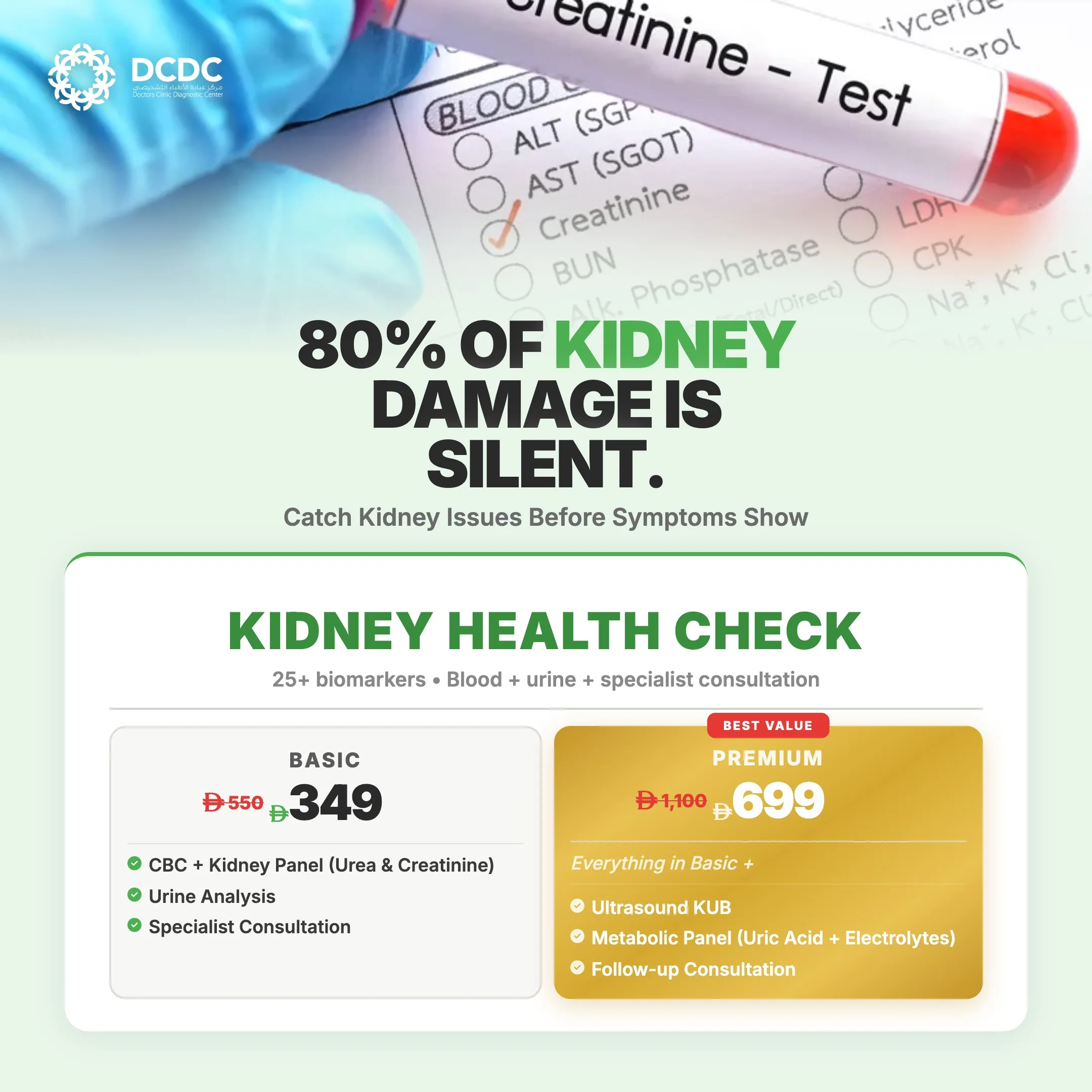
At Doctors Clinic Diagnostic Center in Dubai Healthcare City, we provide same-day urine analysis and culture testing with our on-site laboratory. Walk in or book a same-day appointment — average wait time is just 15 minutes.
Call 04 874 3578 or WhatsApp us to book
Kidney Infection Treatment Options
The primary treatment for a kidney infection is antibiotic therapy. The choice of antibiotic, route of administration (oral vs intravenous), and duration depend on the severity of the infection, the patient's risk factors, and urine culture results. Treatment aims to eradicate the bacteria, relieve symptoms, and prevent complications.
Outpatient Treatment (Mild to Moderate Cases)
Most uncomplicated kidney infections in otherwise healthy adults can be treated at home with oral antibiotics. Empiric (initial) antibiotic therapy is started immediately based on likely pathogens and local resistance patterns, then adjusted if needed once urine culture results are available (usually within 24 to 48 hours). Common oral antibiotic regimens include:
- Fluoroquinolones (ciprofloxacin, levofloxacin): 7 to 10 days — effective first-line agents when local resistance rates are below 10 percent
- Trimethoprim-sulfamethoxazole (TMP-SMX): 14 days — used when culture confirms sensitivity; not recommended as empiric therapy due to rising resistance
- Third-generation cephalosporins (cefixime, cefpodoxime): 10 to 14 days — commonly used as empiric therapy, especially in pregnant women where fluoroquinolones are contraindicated
- Amoxicillin-clavulanate: 14 days — an alternative when culture confirms sensitivity
Inpatient Treatment (Severe Cases)
Hospitalization and intravenous (IV) antibiotics are required for severe kidney infections, including patients who are unable to tolerate oral medications due to vomiting, patients with signs of sepsis, pregnant women with pyelonephritis, immunocompromised patients, and patients with urinary obstruction (such as a blocking kidney stone). IV antibiotics are typically administered for 24 to 48 hours until the patient stabilizes, followed by a step-down to oral antibiotics to complete a 10 to 14 day course.
Supportive Treatment
- Pain management: Paracetamol (acetaminophen) or NSAIDs (ibuprofen) for fever and flank pain — NSAIDs should be used cautiously in patients with reduced kidney function
- Hydration: Drinking plenty of fluids (2 to 3 liters per day) to flush bacteria from the urinary tract and prevent dehydration from fever and vomiting
- Rest: Adequate rest supports the immune system during recovery
- Urinary obstruction management: If a kidney stone or other blockage is contributing to the infection, interventional procedures (ureteral stent or nephrostomy tube) may be needed to drain the kidney before the infection can resolve
Most patients begin to feel significantly better within 48 to 72 hours of starting appropriate antibiotics. However, it is critical to complete the full prescribed antibiotic course — even if symptoms improve — to prevent relapse, treatment failure, and the development of antibiotic-resistant bacteria.
Kidney Infection Complications: Why Early Treatment Matters
When treated promptly with appropriate antibiotics, most kidney infections resolve completely without lasting damage. However, delayed treatment or inadequate therapy can lead to serious, potentially life-threatening complications. For more on recognizing early signs of kidney problems, see our article on CKD Dubai: Stages, Symptoms and Treatment.
- Sepsis and septic shock: The most dangerous complication — bacteria enter the bloodstream causing a widespread inflammatory response. Sepsis can progress rapidly to organ failure and death if not treated aggressively with IV antibiotics and supportive care
- Renal abscess: A collection of pus within the kidney tissue (intrarenal abscess) or surrounding the kidney (perinephric abscess). Abscesses may require percutaneous drainage in addition to antibiotics
- Emphysematous pyelonephritis: A rare but life-threatening necrotizing infection most commonly seen in diabetic patients, where gas forms within the kidney tissue. This is a urological emergency requiring urgent intervention
- Permanent kidney damage: Repeated or chronic kidney infections can cause scarring of kidney tissue, leading to reduced kidney function and potentially contributing to chronic kidney disease (CKD)
- Pregnancy complications: Pyelonephritis during pregnancy is associated with preterm delivery, low birth weight, respiratory distress syndrome, and maternal sepsis
- Acute kidney injury (AKI): A sudden decline in kidney function that may occur during severe pyelonephritis. Research shows that patients with pre-existing impaired kidney function are at the highest risk for developing AKI during a kidney infection
What to Expect at DCDC for Kidney Infection Treatment
At Doctors Clinic Diagnostic Center (DCDC) in Dubai Healthcare City, we provide comprehensive kidney infection diagnosis and treatment under one roof. Our MOHAP-licensed clinic (License: NIMY7VY5-240925) is designed to deliver fast, accurate care with minimal wait times. Here is what you can expect during your visit:
- Step 1 — Same-Day Appointment: Book online, by phone, or via WhatsApp. Walk-ins are also welcome. Average wait time is approximately 15 minutes. Same-day appointments are available Saturday through Thursday 8 AM to 10 PM and Friday 9 AM to 9 PM
- Step 2 — Consultation with Your Doctor: A general practitioner or specialist will review your symptoms, perform a physical examination including CVA tenderness assessment, and take a detailed history of your urinary symptoms and any previous infections
- Step 3 — On-Site Urine Testing: You will provide a urine sample for urinalysis (results within minutes) and urine culture (results within 24 to 48 hours). Our on-site laboratory ensures no delays. Blood tests including kidney function markers and CBC are also available with same-day results
- Step 4 — Immediate Treatment: Based on your clinical presentation and initial urinalysis results, your doctor will start empiric antibiotic therapy immediately — you do not need to wait for culture results to begin treatment. Pain relief and anti-nausea medication are also provided if needed
- Step 5 — Culture-Guided Adjustment: Once urine culture results are available (24 to 48 hours), your doctor will contact you if a change in antibiotic is needed to ensure you are on the most effective medication for your specific bacteria
- Step 6 — Imaging if Needed: If your doctor suspects a complicating factor such as kidney stones or structural abnormalities, an ultrasound can be performed on-site the same day
- Step 7 — Follow-Up and Prevention Plan: After completing treatment, a follow-up appointment and repeat urine test confirm the infection has cleared. For patients with recurrent infections, a personalized prevention plan is developed
Dr. Hadeel Elnur's Clinical Perspective: "Kidney infections are among the conditions where timing of treatment directly impacts outcomes. In our practice at DCDC, I frequently see patients who initially dismissed flank pain and fever as a simple cold or muscle strain, delaying treatment by several days. By the time they arrive, the infection has progressed and may require more intensive therapy. My advice is to always take the combination of fever plus back or side pain seriously — especially if you have had a recent UTI or urinary symptoms. With our same-day urine testing and on-site laboratory, we can confirm the diagnosis and start targeted treatment within a single visit, which significantly reduces the risk of complications."
Kidney Infection Treatment Cost in Dubai
The cost of kidney infection diagnosis and treatment in Dubai depends on the severity of the infection, diagnostic tests required, and choice of antibiotics. At DCDC, we work with 20+ insurance partners including Daman, AXA, Bupa, and more — offering direct billing so you pay only your co-pay or deductible. Below is a general pricing guide for self-pay patients:
| Service | Approximate Cost (AED) | Notes |
|---|---|---|
| GP Consultation | AED 300 – 500 | Initial assessment and prescription |
| Urinalysis (dipstick + microscopy) | AED 50 – 100 | Rapid same-day results |
| Urine Culture and Sensitivity | AED 150 – 300 | Gold standard test, results in 24-48 hours |
| Kidney Function Test (KFT) | From AED 149 | Creatinine, BUN, eGFR, electrolytes |
| Complete Blood Count (CBC) | AED 50 – 100 | White blood cell count and inflammation markers |
| Kidney Ultrasound | AED 400 – 700 | To rule out stones, abscess, or obstruction |
| Antibiotics (oral course) | AED 50 – 200 | Depends on specific antibiotic prescribed |
| Total Estimated Cost (typical) | AED 700 – 1,500 | Consultation + urine tests + antibiotics |
Prices are approximate for self-pay patients at DCDC. Most insurance plans cover kidney infection diagnosis and treatment when medically indicated. Contact us for exact pricing and insurance verification.
DCDC offers direct billing with major insurance providers, which means insured patients typically only pay their co-pay amount at the time of the visit. Our patient services team can verify your insurance coverage and expected out-of-pocket cost before or during your appointment.
How to Prevent Kidney Infections
Most kidney infections develop as a complication of an untreated or inadequately treated lower UTI. Therefore, the most effective prevention strategy is to reduce the risk of bladder infections and treat them promptly when they occur. The following evidence-based strategies can significantly reduce your risk:
- Stay well hydrated: Drink at least 1.5 to 2 liters of water daily (more in Dubai's hot climate where dehydration risk is higher). Adequate hydration helps flush bacteria from the urinary tract before they can multiply and ascend
- Do not delay urination: Empty your bladder regularly and completely. Holding urine for prolonged periods allows bacteria to multiply in the stagnant urine
- Urinate after sexual intercourse: This helps flush any bacteria that may have been introduced into the urethra during intercourse
- Wipe from front to back: After using the toilet, always wipe from front to back to prevent bowel bacteria from reaching the urethra
- Treat UTIs promptly and completely: If you develop symptoms of a bladder infection (burning, frequency, urgency), see a doctor promptly and complete the full course of prescribed antibiotics. Do not stop antibiotics early even if symptoms improve
- Avoid irritating feminine products: Douches, scented sprays, and spermicidal products can disrupt the normal vaginal flora and increase UTI risk
- Manage underlying conditions: Control diabetes, address kidney stones, and manage any structural urinary tract abnormalities that increase infection risk
- Consider prophylactic measures for recurrent UTIs: For women with 3 or more UTIs per year, your doctor may recommend low-dose prophylactic antibiotics, post-coital antibiotics, or vaginal estrogen therapy (in postmenopausal women)
Kidney Infection During Pregnancy: Special Considerations
Pyelonephritis during pregnancy is one of the most common serious medical conditions in pregnant women, affecting approximately 1 to 2 percent of pregnancies. Pregnant women are at increased risk because hormonal changes (progesterone) relax the smooth muscle of the ureters, slowing urine flow, and the growing uterus can physically compress the ureters — both creating conditions favorable for bacterial growth and ascending infection.
Kidney infection in pregnancy is considered a medical emergency requiring immediate treatment. Complications include preterm labor, low birth weight, respiratory distress syndrome in the newborn, and maternal sepsis. Most guidelines recommend hospitalization and IV antibiotics for pregnant women with pyelonephritis, at least until the patient has been afebrile for 24 to 48 hours. Safe antibiotics during pregnancy include cephalosporins and amoxicillin-clavulanate — fluoroquinolones are contraindicated. Screening for and treating asymptomatic bacteriuria (bacteria in urine without symptoms) during prenatal visits is an important preventive measure.
Kidney Infection Recovery: Timeline and Tips
Understanding the typical recovery timeline helps set expectations and ensures you know when to seek further medical advice if recovery is not progressing as expected:
- 24 to 48 hours after starting antibiotics: Fever typically begins to decrease. Some improvement in energy levels and appetite may be noticed
- 48 to 72 hours: Most patients feel significantly better. Fever should be resolved or nearly resolved. Flank pain begins to ease
- 5 to 7 days: Most symptoms should be substantially improved. Some mild discomfort or fatigue may persist
- 7 to 14 days: Full antibiotic course is completed. Symptoms should be fully resolved. A follow-up urine test may be recommended to confirm eradication
- 2 to 4 weeks: Full recovery. Energy levels return to normal. Follow-up appointment to review results and discuss prevention
Important: If your symptoms are not improving after 48 to 72 hours of antibiotic treatment, contact your doctor. This may indicate the bacteria are resistant to the prescribed antibiotic (which is why urine culture is essential), a complication such as abscess has developed, or there is an underlying obstruction that is preventing the infection from clearing.
Concerned About Kidney Infection Symptoms?
Do not wait for symptoms to worsen. At DCDC Dubai Healthcare City, we offer same-day kidney infection diagnosis and treatment with on-site urine testing, culture-guided antibiotics, and kidney ultrasound — all under one roof. Rated 4.8/5 from over 1,000 patient reviews.
Call 04 874 3578 or WhatsApp to book your appointment
DCDC में संबंधित सेवाएं
दुबई हेल्थकेयर सिटी में विशेषज्ञ देखभाल और उन्नत निदान
UTI Treatment
Same-day urine testing and targeted antibiotic treatment for urinary tract infections.
अपॉइंटमेंट बुक करेंKidney Function Testing
Comprehensive blood and urine analysis to assess kidney health and function.
अपॉइंटमेंट बुक करेंKidney Ultrasound
Ultrasound imaging to evaluate kidney structure and detect abnormalities.
अपॉइंटमेंट बुक करेंFrequently Asked Questions
Final Thoughts
A kidney infection is a serious medical condition that requires prompt diagnosis and antibiotic treatment. The key warning signs — fever combined with flank pain and urinary symptoms — should never be ignored. While most kidney infections respond well to outpatient antibiotic therapy when caught early, delayed treatment can lead to severe complications including sepsis, kidney abscess, and permanent kidney damage. Women, pregnant women, and individuals with urinary tract abnormalities are at higher risk and should be particularly vigilant about urinary symptoms.
Prevention is straightforward: stay hydrated, practice good urinary hygiene, and never ignore or leave a bladder infection untreated. If you experience symptoms suggestive of a kidney infection, seek medical attention within 24 hours. At Doctors Clinic Diagnostic Center (DCDC) in Dubai Healthcare City, our team provides same-day kidney infection diagnosis and treatment with on-site urine testing, culture-guided antibiotics, kidney function tests, and ultrasound imaging — all under one roof with direct insurance billing. Book your appointment today by calling 04 874 3578 or contacting us via WhatsApp.
स्रोत एवं संदर्भ
यह लेख हमारी चिकित्सा टीम द्वारा समीक्षित है और निम्नलिखित स्रोतों का संदर्भ देता है:
- Cleveland Clinic - Kidney Infection (Pyelonephritis): Symptoms & Treatment
- Mayo Clinic - Kidney Infection (Pyelonephritis)
- NHS UK - Kidney Infections
- NCBI StatPearls - Acute Pyelonephritis
- PMC - Classification of Urinary Tract Infections in 2025: Moving Beyond Uncomplicated and Complicated
- WebMD - Kidney Infection: Symptoms and Treatments
इस साइट पर चिकित्सा सामग्री DHA-लाइसेंस प्राप्त चिकित्सकों द्वारा समीक्षित है। हमारी देखें संपादकीय नीति अधिक जानकारी के लिए।

लेखक
Dr. Hadeel Elnur
General Practitioner
MD, General Practice
Dr. Hadeel Elnur is a General Practitioner at Doctors Clinic Diagnostic Center (DCDC) in Dubai Healthcare City.
Related Articles

UTI Treatment Dubai: Symptoms & Prevention
Kidney Health Dubai: Prevention & Warning Signs
CKD Dubai: Stages, Symptoms & Treatment

Kidney Function Test Dubai: KFT Guide
Urine Test Dubai: Types, Cost & Guide
More in Nephrology
© 2026 Doctors Clinic Diagnostic Center (DCDC), Dubai Healthcare City. Originally published at https://doctorsclinicdubai.ae/blog/kidney-infection-symptoms-treatment-dubai. All rights reserved. Unauthorized reproduction is prohibited.