
Prenez votre rendez-vous
Avis verifies des patients du centre de diagnostic DCDC a Dubai
Avis verifies et temoignages reels de patients de Dubai Healthcare City
Je suis très satisfaite de cette clinique médicale. J'ai fait mon premier dépistage de grossesse ici. C'était abordable et très professionnel. Le radiologue était accueillant, gentil et a rendu l'expérience formidable.
Aizhan Tokmanbetova
Je me suis blessée au genou vendredi soir et j'ai obtenu un rendez-vous IRM dimanche soir (réservé dimanche après-midi). J'ai attendu environ 2 minutes et c'était terminé en un peu plus de 30 minutes. L'équipe était incroyable, sympathique et efficace.
Kirsten Evans
L'équipe du Dr Osama était douce et incroyable. Après une mauvaise expérience ailleurs, mon examen pelvien ici était beaucoup plus professionnel. Excellent rapport et très précis.
Mary


Holter ECG à Dubaï : enregistrement du rythme cardiaque pendant 24-48 heures
Détectez les arythmies qu'un ECG standard ne révèle pas
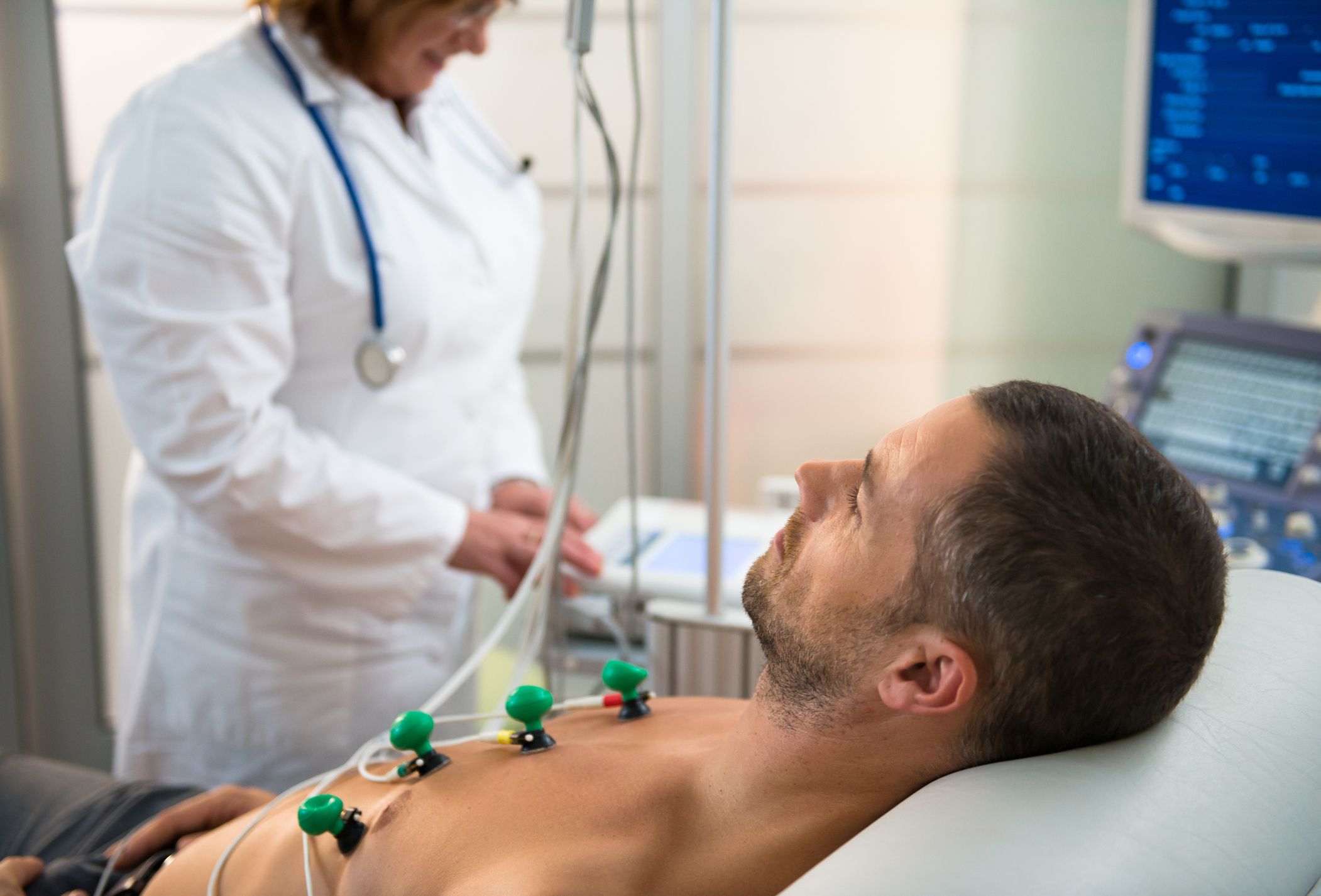
Enregistrement continu
Chaque battement pendant 24-48 heures. Jour et nuit
Résultats rapides
Analyse experte dans les 24-48 heures après restitution
Activités normales
Appareil léger. Poursuivez votre routine quotidienne
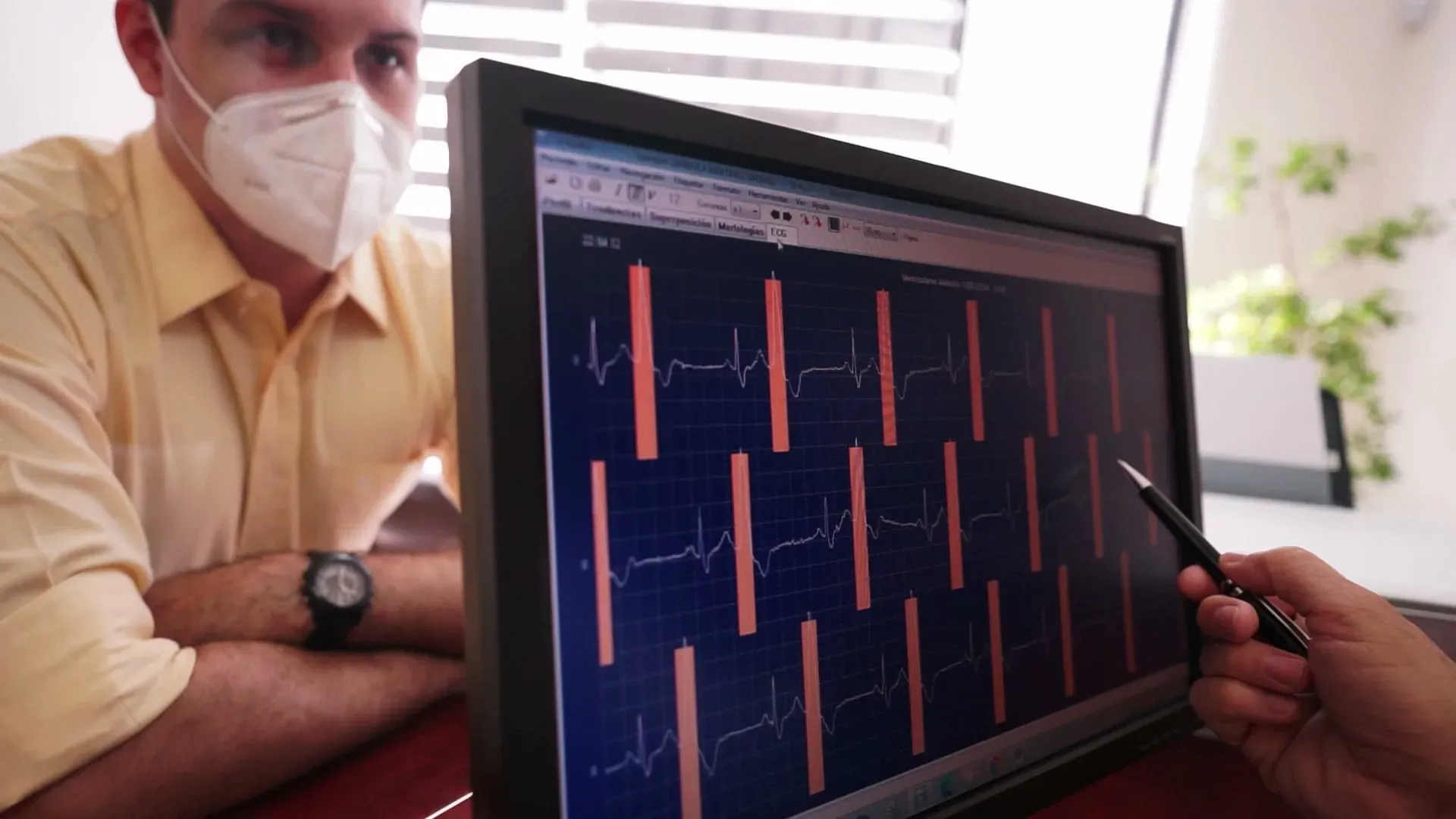
Le Holter est un petit appareil portable qui enregistre votre rythme cardiaque en continu pendant 24 à 48 heures. Contrairement à un ECG standard qui ne capture que quelques secondes, le Holter enregistre chaque battement de cœur durant vos activités quotidiennes et votre sommeil. Il détecte les arythmies qui peuvent ne pas se manifester lors d'une consultation.
Votre cardiologue peut recommander un Holter en cas de palpitations, de vertiges inexpliqués, de malaises ou pour surveiller le rythme cardiaque après un traitement. Vous tenez un journal des symptômes afin que nous puissions les corréler avec d'éventuelles anomalies du rythme.
Chaque enregistrement Holter est analysé par des cardiologues certifiés. Les résultats sont généralement disponibles dans les 24-48 heures suivant la restitution de l'appareil.
Enregistrement continu
Chaque battement pendant 24-48 heures. Jour et nuit
Résultats rapides
Analyse experte dans les 24-48 heures après restitution
Activités normales
Appareil léger. Poursuivez votre routine quotidienne
Holter ECG à Dubaï : enregistrement du rythme cardiaque pendant 24-48 heures
Détectez les arythmies qu'un ECG standard ne révèle pas
Le Holter est un petit appareil portable qui enregistre votre rythme cardiaque en continu pendant 24 à 48 heures. Contrairement à un ECG standard qui ne capture que quelques secondes, le Holter enregistre chaque battement de cœur durant vos activités quotidiennes et votre sommeil. Il détecte les arythmies qui peuvent ne pas se manifester lors d'une consultation.
Votre cardiologue peut recommander un Holter en cas de palpitations, de vertiges inexpliqués, de malaises ou pour surveiller le rythme cardiaque après un traitement. Vous tenez un journal des symptômes afin que nous puissions les corréler avec d'éventuelles anomalies du rythme.
Chaque enregistrement Holter est analysé par des cardiologues certifiés. Les résultats sont généralement disponibles dans les 24-48 heures suivant la restitution de l'appareil.
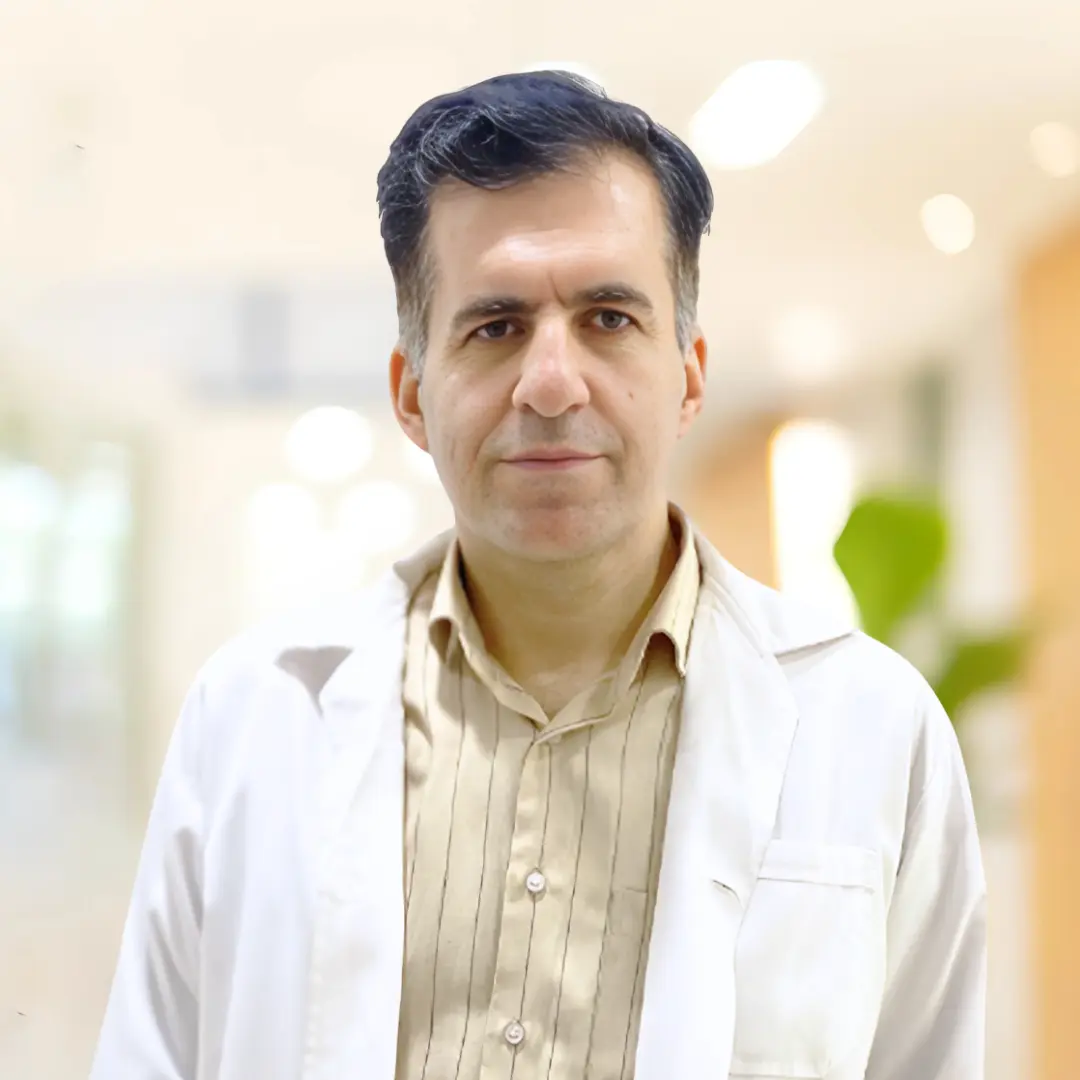
Dr. Shahoo Mazhari
Découvrez nos services
Services holter ecg complets au DCDC Dubai Healthcare City.

Tous les services de cardiologie
Voir tous les services cardiaques et cardiovasculaires.
Holter 48 heures
Surveillance prolongée pour les symptômes intermittents ou fugaces.
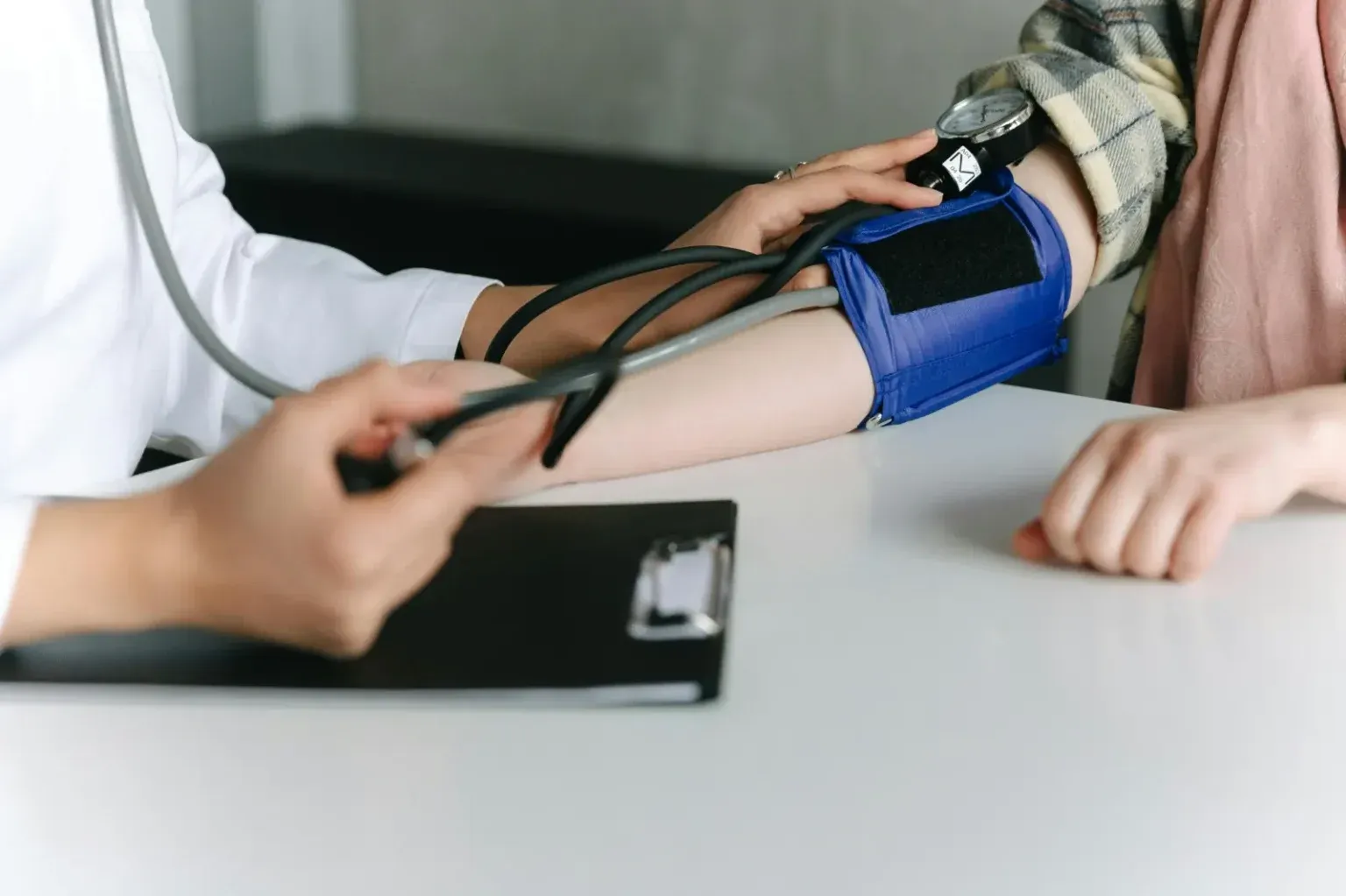
Diagnostic des arythmies
Évaluation et prise en charge experte des battements irréguliers.
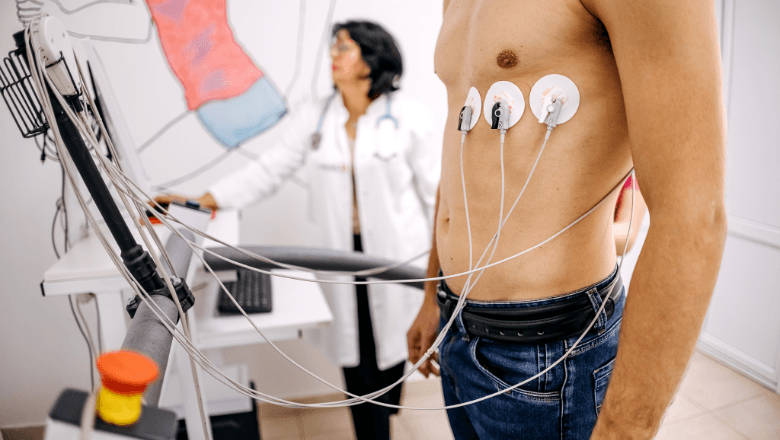
Tous les services realises par des specialistes agrees DHA
Qui devrait passer un Holter ECG ?
Le Holter est recommandé pour les symptômes qui peuvent ne pas se manifester lors d'une consultation. Détection des arythmies manquées par l'ECG standard.
Palpitations fréquentes ou cœur qui s'emballe
Vertiges ou étourdissements inexpliqués
Épisodes de perte de connaissance (syncope)
Sensation de battements manqués
Surveillance après changement de traitement
Évaluation du rythme après un infarctus
Pourquoi choisir DCDC pour le Holter ECG ?
Établissement agréé MOHAP avec pose le jour même, analyse par cardiologues experts et résultats rapides.
Agréé MOHAP
Centre médical accrédité à Dubai Healthcare City. Licence NIMY7VY5-240925.
Résultats rapides
Analyse experte dans les 24-48 heures après restitution de l'appareil.
Prise en charge assurance
Facturation directe avec plus de 20 assureurs. Nous gérons les autorisations préalables pour vous.
Emplacement pratique
Bâtiment 64, Bloc A à Dubai Healthcare City. Parking gratuit sur place.
Cardiologues experts
Spécialistes certifiés en interprétation du rythme cardiaque.
Expérience patient
Note de 4.8/5 sur Google. Appareils confortables, analyse approfondie.
Votre visite en tout confort
Un processus d'examen Holter simple, etape par etape, concu pour le confort, la rapidite et la precision.
Tarifs du Holter ECG
Les tarifs ECG à Dubaï varient selon le type de test et la couverture d'assurance pour ECG de repos et de stress.
- Les tarifs varient selon le type d'examen et la necessite de produit de contraste
- Couverture d'assurance acceptee avec ordonnance et verification
- Tarifs transparents pour paiement direct avec devis instantane sur demande
Verification d'assurance en quelques minutes - Pas de frais caches - Reponse rapide sur WhatsApp
Guide du patient
À quoi s'attendre lors du Holter ECG
Deux visites rapides au cabinet. Pose et restitution de l'appareil. Activités normales entre les deux.
Assurance et localisation
Partenaires d'assurance
- •Plus de 20 assureurs à Dubaï dont Daman, AXA, ADNIC et d'autres
- •Assistance pré-autorisation et facturation directe (le cas échéant)
- •Vérification de la couverture avant votre rendez-vous dans notre clinique de Dubai Healthcare City
- •Tarification transparente sans frais cachés pour les services de holter ecg








Rendez-nous visite a Dubai Healthcare City
Doctors Clinic Diagnostic Center
Batiment 64, Bloc A, Al Razi Medical Complex, Dubai Healthcare City, Dubai, EAU
Pres de Oud Metha Road - Acces facile depuis Bur Dubai, Downtown Dubai, Business Bay - Parking gratuit dedie disponible
Horaires d'ouverture
Lun-Jeu, Sam : 8h - 22h30 | Dim : 8h30 - 22h30 | Ven : 9h - 22h
Comment fonctionne l'assurance chez DCDC
Vérifier la couverture
Vérifiez que votre plan couvre Holter ECG
Obtenir une référence
Certains assureurs exigent une référence du médecin — nous pouvons vous guider
Pré-autorisation
Nous gérons la pré-autorisation directement avec votre assureur
Facturation directe
Pas de paiement initial — nous facturons directement votre assureur
Co-paiement uniquement
Vous ne payez que le co-paiement applicable à la clinique
Vérifier la couverture
Vérifiez que votre plan couvre Holter ECG
Obtenir une référence
Certains assureurs exigent une référence du médecin — nous pouvons vous guider
Pré-autorisation
Nous gérons la pré-autorisation directement avec votre assureur
Facturation directe
Pas de paiement initial — nous facturons directement votre assureur
Co-paiement uniquement
Vous ne payez que le co-paiement applicable à la clinique
Your Specialist
Dr. Shahoo Mazhari
Consultant Cardiologist
MD, Consultant Cardiologist
Persian · English · Kurdish
Guide du patient
How Holter Monitoring Works: A Detailed Guide
A Holter monitor consists of a small, battery-powered recording device connected to several adhesive electrodes placed on your chest. These electrodes detect the electrical signals produced by your heart with each beat, and the device records these signals continuously onto a digital storage medium. Modern Holter devices are lightweight, typically weighing less than 100 grams, and are small enough to clip to a belt or carry in a pocket without interfering with your daily activities.
During the monitoring period, you will be asked to keep a symptom diary, noting the exact time of any palpitations, dizziness, chest discomfort, shortness of breath, or other symptoms. This diary is a critical component of the test because it allows your cardiologist to correlate your symptoms with specific heart rhythm events captured on the recording. For example, if you note palpitations at 3:15 PM, the cardiologist can examine that precise moment on the recording to determine whether the sensation was caused by a benign extra beat, a sustained arrhythmia, or occurred during a completely normal rhythm.
After you return the device, the recording is downloaded to a computer and analysed using specialised cardiac monitoring software. The software automatically flags episodes of abnormal heart rate, irregular rhythms, pauses, and other findings, but every flagged event and the overall recording are personally reviewed by a board-certified cardiologist. The final report details your average heart rate, minimum and maximum heart rates, total number of premature beats, any episodes of sustained arrhythmia, and the correlation between your diary entries and rhythm events.
Conditions Détectées par le Monitoring Holter
Fibrillation Auriculaire (FA)
L'arythmie soutenue la plus courante, caractérisée par des battements rapides et irréguliers des cavités supérieures du cœur. Peut survenir en courts épisodes manqués par un ECG standard.
Tachycardie Supraventriculaire (TSV)
Épisodes de rythme cardiaque anormalement rapide provenant au-dessus des ventricules, causant souvent des palpitations soudaines, des vertiges ou un essoufflement.
Contractions Ventriculaires Prématurées (CVP)
Battements cardiaques supplémentaires provenant des cavités inférieures. Le Holter quantifie leur fréquence pour déterminer si un traitement est nécessaire.
Contractions Auriculaires Prématurées (CAP)
Battements supplémentaires des cavités supérieures. Courants et généralement bénins, mais une haute fréquence peut prédire une future fibrillation auriculaire.
Tachycardie Ventriculaire
Arythmie potentiellement grave avec battements rapides provenant des ventricules. Même de brefs épisodes détectés sur Holter peuvent nécessiter une évaluation supplémentaire.
Bradycardie et Bloc Auriculo-ventriculaire
Fréquences cardiaques anormalement lentes ou retards de conduction électrique entre les cavités supérieures et inférieures, pouvant causer vertiges, fatigue ou syncope.
Articles associés
Cardiology in Dubai: Expert Heart Care
An overview of cardiology services in Dubai including diagnostic tests, treatment options, and when to see a cardiologist for heart concerns.
Heart Health & Prevention in Dubai
Preventive cardiology strategies including heart screening tests, lifestyle modifications, and risk factor management for residents in Dubai.
Hypertension: The Silent Killer
Understanding high blood pressure, its effects on the heart, and why regular monitoring and treatment are essential for long-term cardiovascular health.
Services connexes
Decouvrez d'autres services de diagnostic et de consultation disponibles dans notre clinique de Dubai Healthcare City.
Questions frequentes
Questions courantes sur Holter ECG a Dubai.
Non. L'appareil et les électrodes doivent rester au sec. Douchez-vous avant la pose ou après la restitution.
Oui. Travail, exercice léger, sommeil. Poursuivez votre routine. Évitez la transpiration excessive et gardez l'appareil au sec.
Oui. Les schémas de sommeil peuvent révéler des arythmies importantes. Portez-le en continu pendant les 24-48 heures complètes.
Dans les 24-48 heures après la restitution de l'appareil. Le cardiologue analyse l'intégralité de l'enregistrement.
Oui, pour la couverture assurance. Votre cardiologue ou médecin traitant peut fournir une prescription.
Faits cles
Supervision medicale
Tous les services sont fournis sous la supervision de professionnels medicaux agrees dans notre etablissement accredite MOHAP.