
Lumipat sa pangunahing nilalaman
DCDC, Dubai Healthcare City, Dubai, UAE

Echocardiogram (Echo) in Dubai

Non-Invasive Heart Scan | Same-Day Appointments, 24-Hour Results

4.8/51000+ Mga Review
100k+ Napaglingkuran
DCDC
4.8

I-book ang Iyong Appointment

MGA NA-VERIFY NA KWENTO NG PASYENTE

Mga Na-verify na Review ng Pasyente ng DCDC Diagnostic Center sa Dubai

Mga na-verify na review at totoong kwento ng pasyente mula sa Dubai Healthcare City

4.8 / 5mula sa 1,000+ na review

Lubos akong nasiyahan sa medikal na klinikang ito. Dito ko ginawa ang aking unang pregnancy screening. Abot-kaya at napaka-propesyonal. Ang radiologist ay malugod, mabait, at nagpaganda ng karanasan.

A

Aizhan Tokmanbetova

Na-verify na Pasyente

Nasaktan ang tuhod ko noong Biyernes ng gabi at nakakuha ng MRI appointment noong Linggo ng hapon (na-book noong Linggo ng hapon). Naghintay ng mga 2 minuto lang at natapos sa mahigit 30 minuto. Kamangha-mangha, magiliw, at mahusay ang team.

K

Kirsten Evans

Na-verify na Pasyente

Ang team ni Dr. Osama ay malambot at kamangha-mangha. Pagkatapos ng masamang karanasan sa ibang lugar, ang aking pelvic exam dito ay mas propesyonal. Magandang report at napaka-tumpak.

M

Mary

Na-verify na Pasyente

Mahusay na serbisyo at matulunging front desk. Isinaayos ni Ms. Cleous ang lahat nang maayos, at si Dr. Ziryab ay may kaalaman at propesyonal.

D

Dominic Patino

Na-verify na Pasyente

Pambihirang karanasan sa MRI, malinis na pasilidad, magiliw na kawani, malinaw na paliwanag, at maayos na proseso. Mabilis at detalyado ang resulta, at naglaan ng oras ang radiologist upang ipaliwanag ang mga natuklasan.

M

Mahmoud Mounir

Na-verify na Pasyente

Magandang karanasan sa ultrasound, magiliw na kawani at makatwirang presyo. Kalidad na pangangalaga sa abot-kayang halaga.

K

Komal Ahmed

Na-verify na Pasyente
Na-verify na Kwento ng Pasyente

Echocardiogram in Dubai: Heart Ultrasound Imaging

See your heart beating in real-time with zero radiation

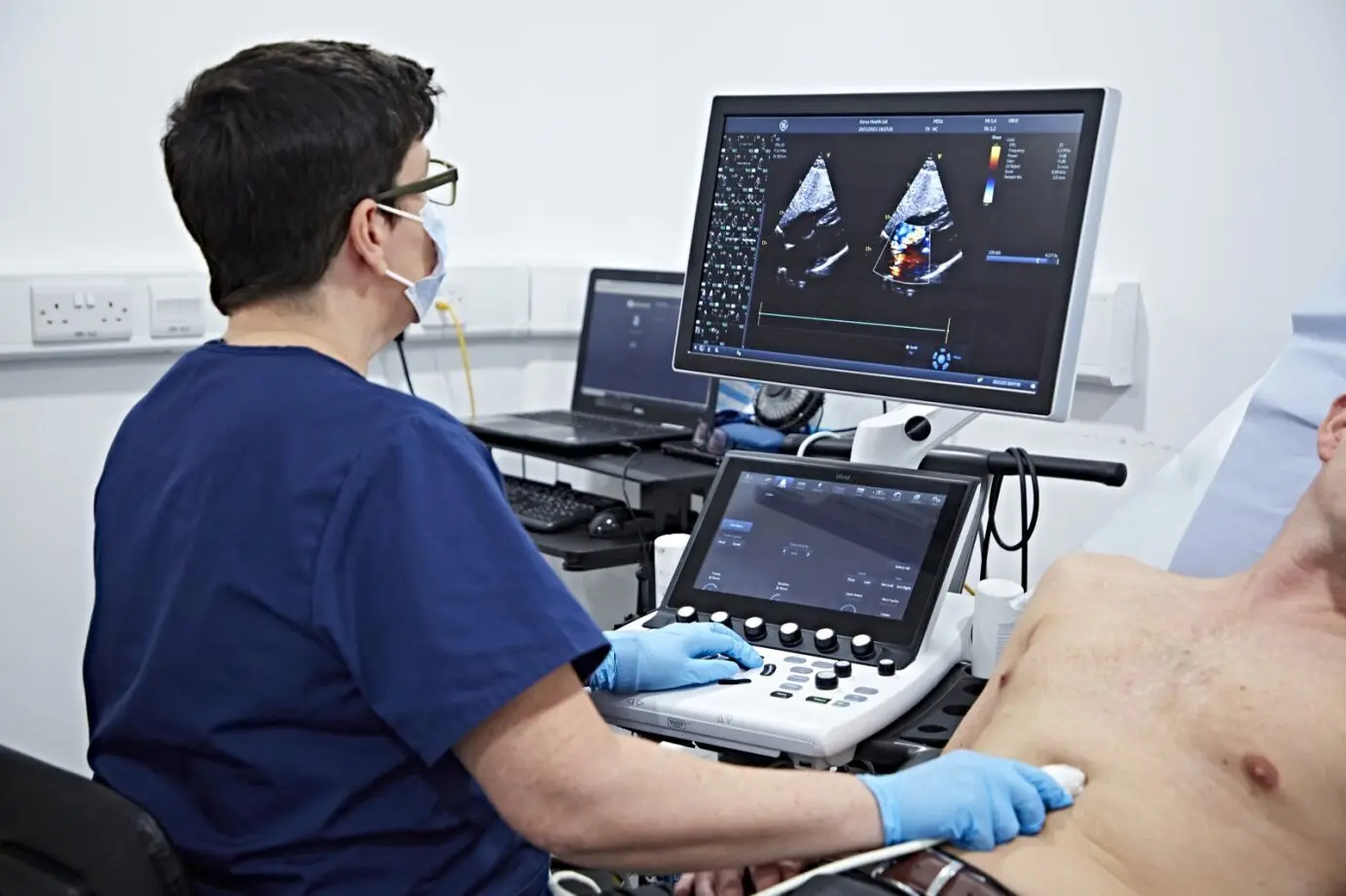
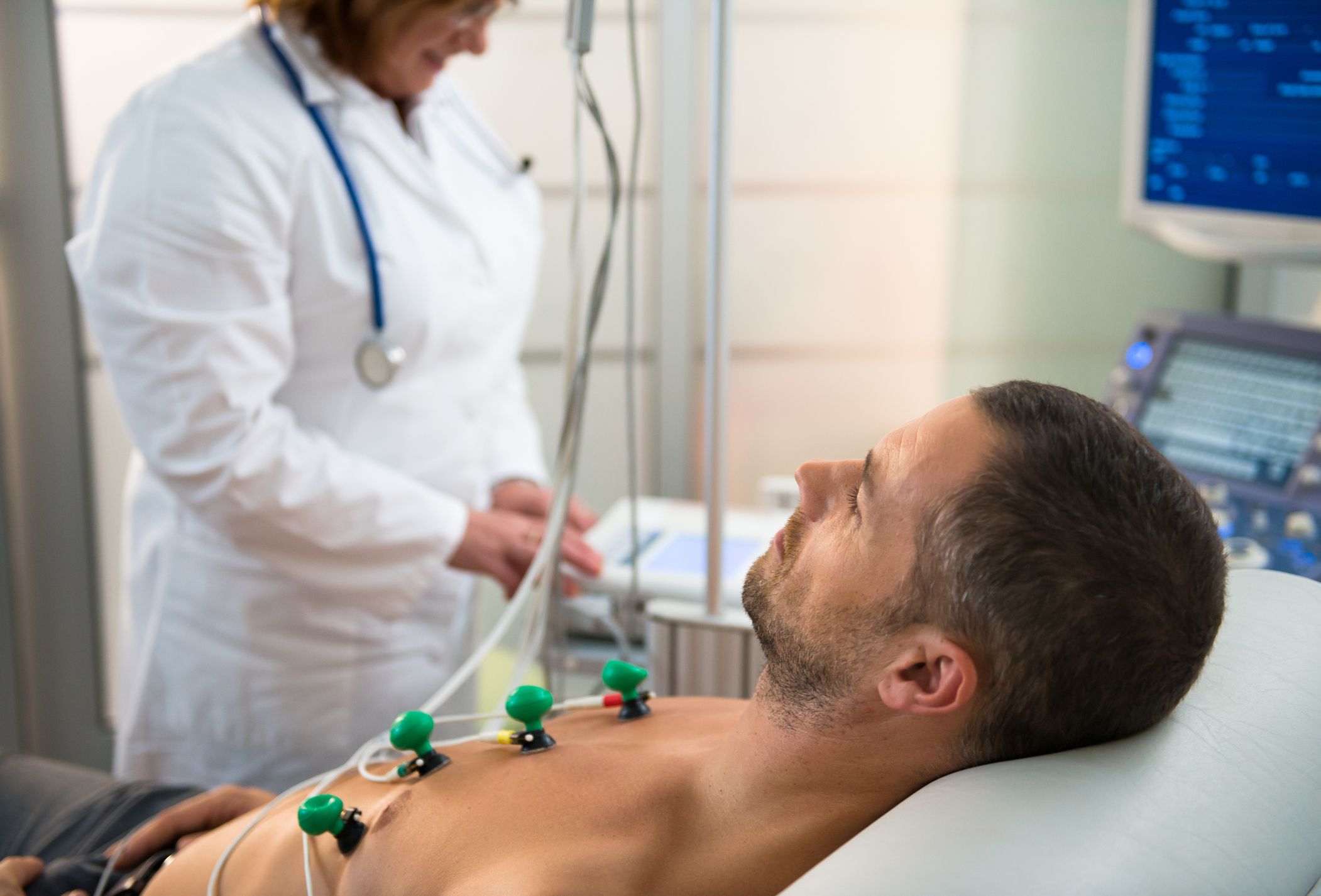
Echocardiogram heart ultrasound at DCDC Dubai
Same-Day na Resulta

Walang Radiation

Ligtas, non-invasive na scan gamit ang magnetic field (walang X-ray o ionizing radiation).

Fast Results

Expert cardiologist interpretation within 24 hours

Non-Invasive

Painless. No injections or contrast required

Mag-book ng Appointment para sa Echocardiogram

An echocardiogram uses sound waves to create live images of your heart. You can see your heart beating, valves opening and closing, and blood flowing through the chambers. It's completely painless with no radiation. making it ideal for repeated monitoring.

Your cardiologist may recommend an echo for heart murmurs, shortness of breath, chest pain, valve disease, or to assess heart function after a cardiac event. The test takes 20-40 minutes and provides detailed information about your heart's structure and pumping ability.

Every echo is reviewed by board-certified specialist cardiologists at our echocardiography suite near Oud Metha Metro with same-day appointments and results typically within 24 hours.

The echocardiogram is one of the most versatile tools in cardiology. It measures ejection fraction, the percentage of blood your heart pumps out with each beat, which is a critical indicator of heart function. A normal ejection fraction ranges from 50 to 70 percent. The test also evaluates heart valve function, identifies areas of the heart wall that may not be contracting properly, and detects fluid around the heart (pericardial effusion).

Unlike many cardiac imaging tests, echocardiography uses no radiation and requires no contrast injection for standard studies. This makes it safe for repeated monitoring over time, which is particularly valuable for patients with chronic heart conditions, those recovering from cardiac surgery, and individuals on medications that may affect heart function. It is also safe during pregnancy when cardiac assessment is needed.

An echocardiogram can detect a wide range of cardiac conditions that might otherwise go undiagnosed until they become serious. Heart valve disease, including mitral valve prolapse, aortic stenosis, and regurgitation, is identified by visualizing valve leaflet movement and measuring blood flow velocity across each valve. Cardiomyopathies, where the heart muscle becomes enlarged, thickened, or stiffened, are diagnosed through chamber measurements and wall thickness assessment. Pericardial effusion, the accumulation of fluid around the heart, is immediately visible on echo and can be monitored for progression toward the dangerous condition of cardiac tamponade. Congenital heart defects such as atrial and ventricular septal defects are reliably detected, even in adults who may have been unaware of these conditions for decades. The echocardiogram is often the first test that reveals the underlying cause of symptoms like unexplained breathlessness, fatigue, palpitations, or leg swelling.

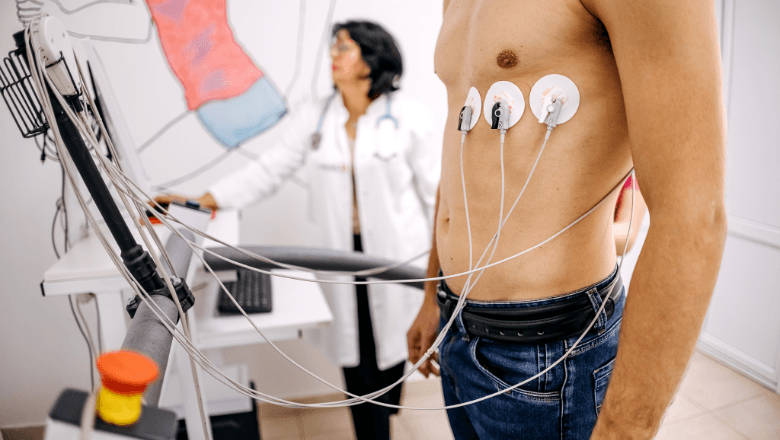
Several types of echocardiogram exist, each suited to specific clinical questions. The standard transthoracic echocardiogram (TTE) is the most common type, performed by placing the transducer on the chest wall to obtain images through the rib spaces. A stress echocardiogram combines resting echo images with images captured immediately after exercise on a treadmill or pharmacological stress, revealing areas of the heart muscle that may not receive adequate blood flow during exertion, which can indicate coronary artery disease. Doppler echocardiography measures blood flow velocity and direction through the heart chambers and across the valves, essential for grading valve stenosis and regurgitation severity. Tissue Doppler imaging assesses the speed of heart muscle contraction and relaxation, providing sensitive markers of diastolic dysfunction that standard measurements may miss. Your cardiologist will select the type of echo most appropriate for your clinical situation.

A cardiologist typically recommends an echocardiogram when clinical findings or symptoms suggest a structural or functional heart problem. Common triggers include a newly detected heart murmur on physical examination, unexplained shortness of breath that worsens with activity, chest pain that may be cardiac in origin, swelling in the legs or abdomen suggesting fluid retention, abnormal ECG findings that need structural correlation, and a family history of cardiomyopathy or sudden cardiac death. An echo is also routinely ordered before and after cardiac surgery, to monitor the effects of chemotherapy drugs that can damage the heart, and to evaluate patients with poorly controlled hypertension for signs of left ventricular hypertrophy. If your doctor has recommended an echo test in Dubai, DCDC offers same-day appointments with board-certified cardiologist interpretation and results within 24 hours.

DHA Licensed

Ang Aming mga Serbisyo sa Echocardiogram

Komprehensibong serbisyo sa echocardiogram sa DCDC Dubai Healthcare City.

All Cardiology - DCDC

All Cardiology

View all heart and cardiovascular services.

Stress Echo - DCDC

Stress Echo

Heart function during exercise. for coronary artery assessment.

Konsultasyon sa Cardiology - DCDC

Konsultasyon sa Cardiology

Expert review of your echo results and cardiac care.

ECG Monitoring - DCDC

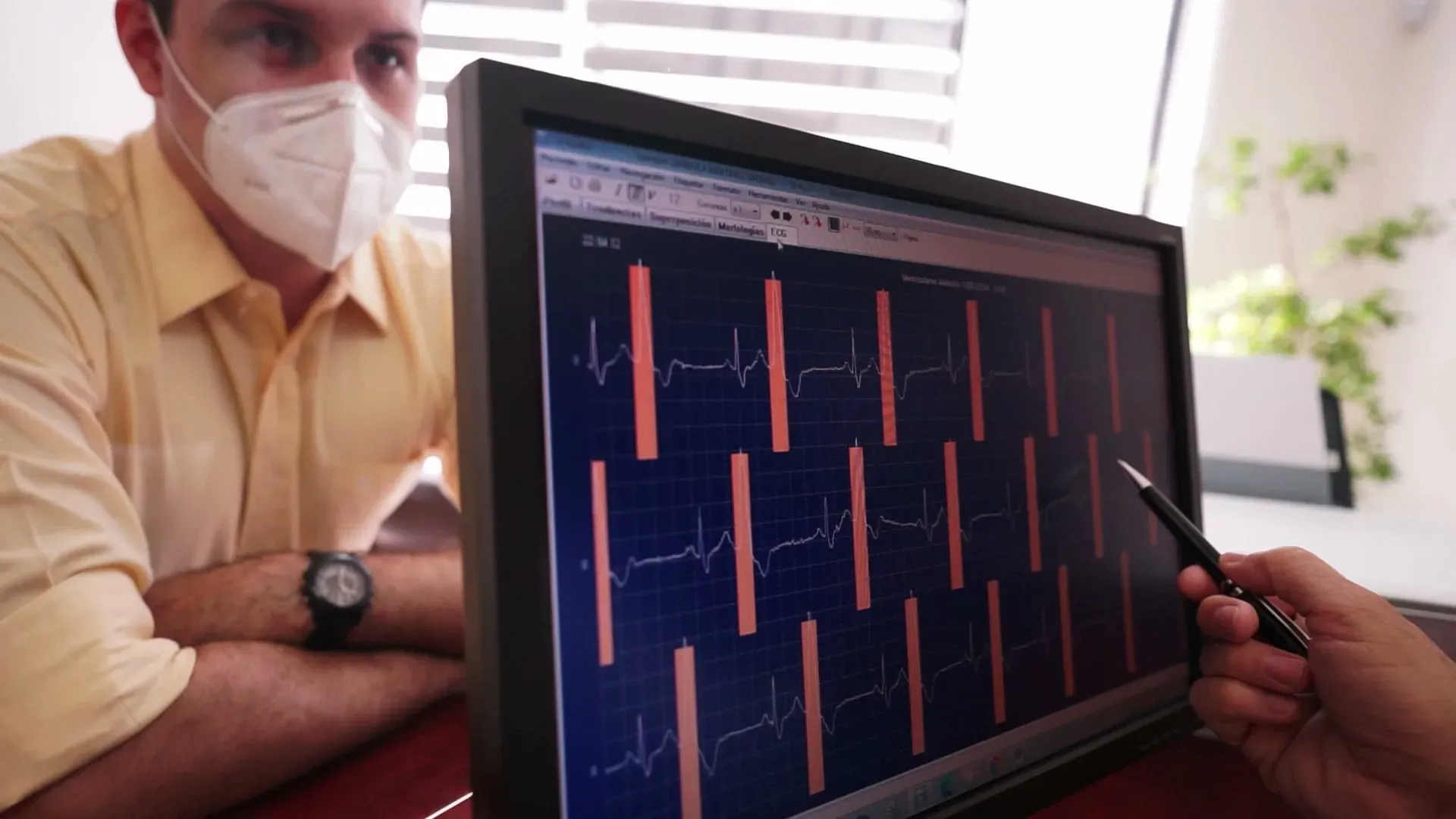
ECG Monitoring

Electrical heart rhythm monitoring.

Lahat ng serbisyo ay ginagawa ng mga DHA-licensed na espesyalista

Sino ang Dapat Kumuha ng Echocardiogram?

An echocardiogram is recommended when your cardiologist needs to visualize your heart's structure, pumping function, or valves. either for diagnosis or monitoring.

Pinakakaraniwan

Heart murmurs or abnormal heart sounds

Pinakakaraniwan

Unexplained chest pain or shortness of breath

Monitoring after heart attack or heart disease

Valve disease assessment (stenosis, regurgitation)

Heart function check after treatment or surgery

Hypertension effects on the heart

Family history of cardiomyopathy or sudden cardiac death

Athletes requiring cardiac clearance or pre-participation screening

Patients on chemotherapy drugs known to affect heart function

Unexplained swelling in the legs, ankles, or abdomen

Why Choose DCDC for Your Echocardiogram?

MOHAP-licensed facility with advanced cardiac imaging, specialist cardiologists, and results within 24 hours.

MOHAP Licensed

Accredited medical center in Dubai Healthcare City. License NIMY7VY5-240925.

Fast Results

Reports ready within 18-24 hours. Same-day for urgent cases.

Insurance Support

Direct billing with 20+ insurers. We handle pre-authorization for you.

Convenient Location

Building 64, Block A in Dubai Healthcare City. Free parking on-site.

Expert Cardiologists

Board-certified specialists in cardiac imaging and echocardiography.

Patient Experience

4.8/5 Google rating. Comfortable, non-invasive cardiac imaging.

Ang Iyong Komportableng Pagbisita

Isang simple, hakbang-hakbang na proseso ng Echocardiogram scan na dinisenyo para sa kaginhawahan, bilis, at katumpakan.

1

Check in

Insurance verification and appointment confirmation.

2

Preparation

Change into gown if needed, quick history review.

3

Positioning

Lie comfortably on your left side.

4

Echo

20-40 minutes. Gel on chest, transducer imaging. Painless.

5

Results

Report to your doctor within 18-24 hours.

Echocardiogram Pricing

Ang presyo ng Echocardiogram sa Dubai ay nag-iiba ayon sa uri ng test at insurance coverage para sa standard at stress echocardiogram.

  • Ang presyo ay nag-iiba ayon sa uri ng scan at kung kailangan ng contrast
  • Tinatanggap ang insurance coverage na may referral at verification
  • Transparent na self-pay rate na available na may instant na presyo kapag hiniling

Verification ng insurance sa ilang minuto • Walang nakatagong bayad • Mabilis na sagot sa WhatsApp

Gabay para sa Pasyente

What to Expect During Your Echocardiogram

A painless, radiation-free test that takes 20-40 minutes.

Before

  • Simple preparation.
  • Clothing:Wear a two-piece outfit. You may change into a gown.
  • Eating:No fasting required. eat and drink normally.
  • Medications:Continue taking them as prescribed.

During

  • 20-40 minutes, completely painless.
  • Position:Lie on your left side on an exam table.
  • Gel:Warm gel applied to your chest for sound wave transmission.
  • Imaging:Transducer moved gently across your chest. No discomfort.
  • Radiation:None. Uses sound waves only.

After

  • No recovery time.
  • Activities:Resume everything immediately. driving, work, exercise.
  • Results:Report sent to your doctor within 18-24 hours.
  • Urgent:Same-day reporting for critical cases.

Insurance at Lokasyon

MOHAP License: Ganap na lisensyadong diagnostic center sa Dubai Healthcare City

Mga Kasosyo sa Insurance

  • •20+ na insurance provider sa Dubai kabilang ang Daman, AXA, ADNIC, at iba pa
  • •Suporta sa pre-authorization at direct billing (kung naaangkop)
  • •Verification ng coverage bago ang iyong appointment sa aming klinika sa Dubai Healthcare City
  • •Transparent na presyo na walang nakatagong bayad para sa mga serbisyo ng echocardiogram

ADNIC insurance logo
Aetna insurance logo
Al-Buhaira insurance logo
AlMadhalla insurance logo
amity insurance logo
AXA insurance logo
Daman insurance logo
ECARE insurance logo
Tingnan lahat ng kasosyo sa insurance

Bisitahin Kami sa Dubai Healthcare City

Doctors Clinic Diagnostic Center

Building 64, Block A, Al Razi Medical Complex, Dubai Healthcare City, Dubai, UAE

Malapit sa Oud Metha Road · Madaling puntahan mula sa Bur Dubai, Downtown Dubai, Business Bay · May libreng dedikadong parking

Oras ng Trabaho

Sab-Huw: 8AM - 10PM | Biy: 9AM - 9PM

Paano Gumagana ang Insurance sa DCDC

Suriin ang Coverage

I-verify na sakop ng iyong plano ang Echocardiogram

Kumuha ng Referral

Ang ilang insurer ay nangangailangan ng GP referral — maaari ka naming gabayan

Pre-Authorization

Kami ang mag-aasikaso ng pre-auth nang direkta sa iyong insurer

Direct Billing

Walang bayad sa una — direkta kaming nagbi-bill sa iyong insurer

Co-Pay Lang

Ikaw ay magbabayad lamang ng anumang naaangkop na co-pay sa klinika

Ang Iyong Espesyalista

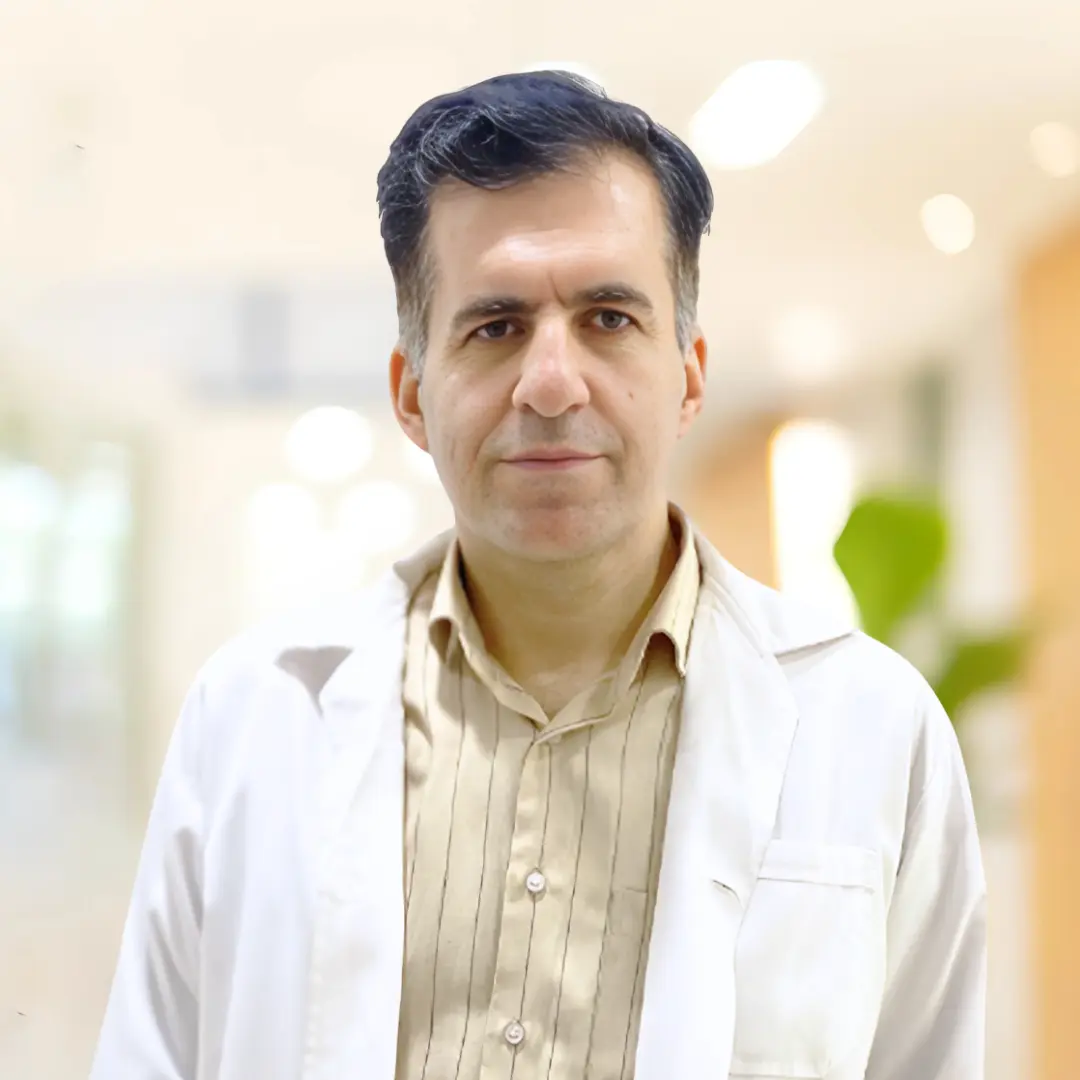
Dr. Shahoo Mazhari

Dr. Shahoo Mazhari

Consultant Cardiologist

MD, Consultant Cardiologist

Ekspertise
EchocardiographyECG InterpretationStress Testing
Mga Wika

Persian · Ingles · Kurdish

Tingnan ang Buong Profile

Gabay para sa Pasyente

Understanding Echocardiography: How Heart Ultrasound Works

Echocardiography uses high-frequency sound waves (ultrasound) to create real-time moving images of your heart. A transducer placed on your chest emits sound waves that bounce off your heart structures and return to the transducer as echoes. A computer processes these echoes into detailed images that show your heart beating, valves opening and closing, and blood flowing through the chambers. This is the same safe ultrasound technology used during pregnancy.

Several modes of echocardiography provide different types of information. Two-dimensional (2D) echo shows real-time cross-sectional views of the heart. M-mode provides a single-beam view that is excellent for precise measurements of chamber sizes and wall thickness. Doppler echocardiography measures the speed and direction of blood flow through the heart, which is essential for assessing valve function and detecting abnormal blood flow patterns such as regurgitation or stenosis.

Color flow Doppler adds a visual map of blood flow direction and velocity overlaid on the 2D image, making it easy to see areas of turbulent or abnormal flow. Tissue Doppler imaging measures the velocity of the heart muscle itself, providing information about how well the heart muscle relaxes and contracts. Together, these techniques give cardiologists a comprehensive assessment of cardiac structure and function in a single non-invasive examination.

Ejection fraction (EF) is one of the most important measurements obtained from an echocardiogram. It represents the percentage of blood that leaves the left ventricle with each heartbeat. A normal EF is 50 to 70 percent. An EF below 40 percent typically indicates significant heart muscle weakness and may be classified as heart failure with reduced ejection fraction (HFrEF). Serial echocardiograms allow cardiologists to track changes in EF over time, monitor response to treatment, and adjust medications accordingly.

Heart Conditions Assessed by Echocardiogram

Heart Valve Disease

Echocardiography is the primary tool for diagnosing and grading valve stenosis (narrowing) and regurgitation (leaking) affecting the mitral, aortic, tricuspid, and pulmonary valves. It guides decisions about medical management versus surgical repair or replacement.

Heart Failure

Echo measures ejection fraction and other parameters that define the type and severity of heart failure. It distinguishes between heart failure with reduced ejection fraction (HFrEF) and heart failure with preserved ejection fraction (HFpEF), which require different treatment approaches.

Cardiomyopathy

Echocardiography detects dilated cardiomyopathy (enlarged, weakened heart), hypertrophic cardiomyopathy (thickened heart muscle), and restrictive cardiomyopathy (stiffened heart muscle). It helps differentiate between types and monitor disease progression.

Pericardial Effusion

Echo can identify fluid accumulation in the sac surrounding the heart (pericardium) and assess whether the effusion is large enough to compress the heart chambers, a potentially life-threatening condition called cardiac tamponade.

Congenital Heart Defects

Echocardiography is essential for diagnosing structural heart abnormalities present from birth, such as atrial septal defect (ASD), ventricular septal defect (VSD), and patent ductus arteriosus (PDA), both in children and adults.

Left Ventricular Hypertrophy

Long-standing high blood pressure can cause the heart muscle to thicken. Echocardiography measures wall thickness and left ventricular mass, providing an objective assessment of hypertensive heart disease that helps guide blood pressure treatment intensity.

Mga Kaugnay na Artikulo

Mga Kaugnay na Serbisyo

Galugarin ang iba pang serbisyo sa diagnostics at konsultasyon na available sa aming klinika sa Dubai Healthcare City.

Mga Madalas Itanong

Mga karaniwang tanong tungkol sa Echocardiogram sa Dubai.

No, an echocardiogram is completely painless. The test involves applying a warm water-based gel to your chest and moving a small handheld device called a transducer across different positions on your chest wall. The transducer emits sound waves that bounce off your heart structures to create images. You may feel light pressure from the transducer, but there are no needles, injections, or radiation involved. Some patients find lying on their left side for an extended period mildly uncomfortable, but the test itself causes no pain. The sonographer may ask you to change positions or hold your breath briefly to obtain specific views of your heart.

A standard transthoracic echocardiogram typically takes 20 to 40 minutes, with most patients done in about 30 minutes. The duration depends on the complexity of findings and the number of views the sonographer needs to obtain. If your cardiologist has requested specific measurements or your heart anatomy requires additional imaging angles, the test may take slightly longer. A stress echocardiogram, which combines echo imaging with exercise or medication-induced stress, takes approximately 45 to 60 minutes in total. There is no recovery time after a standard echocardiogram, and you can resume all normal activities, including driving and exercise, immediately afterward.

No fasting is required for a standard transthoracic echocardiogram. You can eat, drink, and take your regular medications as normal before the test. However, if you are scheduled for a stress echocardiogram, you may be asked to avoid heavy meals, caffeine, and certain medications for a specified period before the test, as these can affect your heart rate response during exercise. Your booking team will provide specific preparation instructions when you schedule the appointment. For a transesophageal echocardiogram (TEE), which involves passing a probe through the esophagus, fasting for several hours beforehand is required. This type is less common and is arranged separately.

An echocardiogram provides a comprehensive assessment of your heart. It measures the size of your heart chambers (left and right atria and ventricles), the thickness of your heart walls, and how strongly your heart contracts with each beat (ejection fraction). It evaluates all four heart valves for stenosis (narrowing) or regurgitation (leaking) and uses Doppler technology to measure the speed and direction of blood flow through your heart. The test can detect structural abnormalities, fluid around the heart (pericardial effusion), blood clots within the chambers, and signs of conditions such as cardiomyopathy, congenital heart defects, and the effects of high blood pressure on heart structure.

At DCDC, echocardiogram results are typically available within 18 to 24 hours. For urgent or clinically critical cases, same-day reporting is available. After your scan, the images and measurements are reviewed by a board-certified specialist cardiologist who prepares a detailed report including all key measurements, findings, and clinical interpretation. This report is sent directly to your referring physician and is also accessible through our patient portal. If your cardiologist identifies any immediately concerning findings during the review, they may contact your referring doctor sooner. We recommend scheduling a follow-up consultation with your cardiologist or referring doctor to discuss the results in detail.

Yes, a referral from a licensed physician is required for an echocardiogram, both for medical appropriateness and for insurance coverage. The referral provides the sonographer and interpreting cardiologist with important clinical context, such as your symptoms, medical history, and the specific clinical question being asked. This information is essential for accurate interpretation of the images. If you do not have a referral, our general practitioners or cardiologists at DCDC can assess your symptoms during a consultation and provide one on the same day if an echocardiogram is clinically indicated. For self-pay patients, we can also arrange a same-day consultation and echocardiogram.

Ejection fraction (EF) is the percentage of blood that your left ventricle pumps out with each heartbeat. It is one of the most important measurements obtained from an echocardiogram and serves as a key indicator of how well your heart is functioning as a pump. A normal ejection fraction ranges from 50 to 70 percent. An EF of 41 to 49 percent is considered mildly reduced, while an EF of 40 percent or below indicates significantly reduced heart function and may be classified as heart failure with reduced ejection fraction. Your cardiologist will interpret your EF in the context of your overall clinical picture, symptoms, and other echocardiographic findings.

A standard echocardiogram images your heart at rest, assessing structure, valve function, chamber sizes, and ejection fraction under normal resting conditions. A stress echocardiogram adds a physical or pharmacological stress component. You either exercise on a treadmill or receive a medication that increases your heart rate, and echo images are taken before and immediately after the stress. This comparison reveals areas of the heart muscle that may not receive adequate blood supply during exertion, which can indicate coronary artery disease. A stress echo is particularly useful for evaluating chest pain during exercise, assessing known coronary artery disease, and pre-surgical cardiac risk evaluation.

Mga Pangunahing Katotohanan

Modalidad:
Echocardiogram
Pangunahing Indikasyon:
Heart function assessment, valve evaluation, and cardiac condition monitoring
Tagal:
30-45 minutes
Paghahanda:
No special preparation required. Can eat and drink normally.
Oras ng Report:
24-48 hours (same-day available for urgent cases)
Lokasyon:
Dubai Healthcare City
Insurance:
Most major insurance accepted (Daman, AXA, Bupa, etc.)

Medikal na Pagsusuri at Pamamahala

Lahat ng serbisyo ay ibinibigay sa ilalim ng pamamahala ng mga lisensyadong propesyonal sa medisina sa aming MOHAP-accredited na pasilidad.