Mga Pangunahing Punto
- HSG stands for hysterosalpingography, a specialized X-ray test that evaluates the uterus and fallopian tubes
- The test uses a contrast dye injected through the cervix to visualize tubal patency and uterine shape
- HSG is one of the first-line investigations recommended during a fertility workup
- The procedure takes approximately 15 to 30 minutes and is performed in a radiology suite
- DCDC Dubai Healthcare City offers HSG with experienced radiologists and gynecologists working together
An HSG test, short for hysterosalpingography, is a diagnostic X-ray procedure that allows doctors to examine the inside of the uterus and fallopian tubes. It is one of the most commonly recommended tests for women who are trying to conceive and facing difficulties, as it provides critical information about whether the fallopian tubes are open and whether the uterine cavity has a normal shape.
This guide explains what an HSG test involves, why fertility specialists recommend it, who should consider having one, how it compares to other fertility investigations, and what the procedure looks like at Doctors Clinic Diagnostic Center in Dubai Healthcare City.
What Does HSG Stand For?
HSG stands for hysterosalpingography. The name breaks down into three parts: "hystero" refers to the uterus, "salpingo" refers to the fallopian tubes, and "graphy" means imaging or recording. In simple terms, it is an X-ray-based imaging test specifically designed to look at the uterus and the fallopian tubes in a single procedure.
During the test, a special contrast dye is gently injected through the cervix into the uterus. As the dye fills the uterine cavity and flows into the fallopian tubes, a series of X-ray images are captured in real time using fluoroscopy. This allows the radiologist to see whether the dye passes freely through the tubes, which indicates they are open, or whether there is a blockage at any point.
"The HSG test is one of the most informative procedures we perform because it gives us a real-time view of both the uterine cavity and the fallopian tubes in a single session," explains Dr. Osama Elzamzami, Consultant Radiologist at DCDC. "For many of our patients, this is the test that finally provides the clarity they have been seeking about why conception has not occurred."
Why Do Doctors Recommend an HSG Test?
Doctors recommend HSG testing primarily as part of a fertility evaluation. When a couple has been trying to conceive for 12 months (or 6 months if the woman is over 35) without success, the gynecologist typically orders a set of baseline investigations. The HSG test is almost always included in this initial workup because tubal factors account for approximately 25 to 35 percent of female infertility cases.
Beyond fertility assessment, HSG may also be recommended for women who have experienced recurrent miscarriages, as it can reveal uterine abnormalities such as septum, polyps, or fibroids that may interfere with implantation. Additionally, doctors may order an HSG after certain surgical procedures, such as tubal ligation reversal, to confirm that the tubes are patent after repair.
- Unexplained infertility lasting more than one year
- Suspected blocked fallopian tubes based on medical history
- Previous ectopic pregnancy
- History of pelvic inflammatory disease (PID)
- Recurrent miscarriages with suspected uterine abnormality
- Post-surgical evaluation of tubal patency
- Pre-IVF assessment when tubal status needs confirmation
Who Needs an HSG Test?
The HSG test is most commonly recommended for women of reproductive age who are being evaluated for infertility. However, the specific situations that call for an HSG vary depending on the patient's history and symptoms. Understanding whether you are a candidate for this test can help reduce uncertainty and allow you to prepare appropriately.
Women Undergoing Fertility Workup
The most common reason for an HSG test is a fertility workup. If you and your partner have been actively trying to conceive without success, your gynecologist will likely recommend an HSG alongside blood hormone tests and a semen analysis for your partner. The HSG provides information that blood tests alone cannot offer, specifically whether the physical pathway from the uterus through the tubes is clear for an egg to be fertilized and travel to the uterus for implantation.
A 32-year-old teacher from Abu Dhabi came to DCDC after 18 months of trying to conceive without success. Her blood work and her husband's semen analysis were both normal, and she was beginning to wonder if she would ever get answers. Her gynecologist referred her for an HSG test, which revealed a partial blockage in her left fallopian tube that no other test had detected. With that information, her fertility specialist adjusted her treatment plan, and she conceived naturally within four months. Her story illustrates why HSG is often the test that provides the missing piece of the puzzle.
Women with a History of Pelvic Infections
Pelvic inflammatory disease (PID), sexually transmitted infections such as chlamydia, or previous pelvic surgeries can cause scarring and adhesions in the fallopian tubes. Even if these conditions were treated years ago, the resulting damage may still affect tubal function. An HSG test can detect partial or complete blockages caused by old infections or scarring.
Women with Recurrent Pregnancy Loss
Women who have experienced two or more miscarriages may be advised to undergo an HSG to evaluate the shape and structure of the uterine cavity. Conditions such as a uterine septum, bicornuate uterus, or intrauterine adhesions (Asherman syndrome) can be identified on HSG and may explain why pregnancies are not being sustained.
Pre-IVF Assessment
Before starting in vitro fertilization (IVF), some fertility specialists request an HSG to check for hydrosalpinx, a condition where a blocked tube fills with fluid. Research has shown that untreated hydrosalpinx can reduce IVF success rates, so identifying it beforehand allows the medical team to plan accordingly, sometimes recommending removal or clipping of the affected tube before embryo transfer.
What Does an HSG Test Reveal?
The HSG test provides two main categories of diagnostic information: the patency (openness) of the fallopian tubes and the morphology (shape and structure) of the uterine cavity. Together, these findings help doctors determine whether a structural issue is contributing to fertility difficulties.
Fallopian Tube Findings
When the contrast dye flows freely through both fallopian tubes and spills into the pelvic cavity, this is called "free spill" and indicates normal tubal patency. If the dye stops at any point along the tube, it suggests a blockage. The location of the blockage matters: proximal blockages (near the uterus) may be caused by mucus plugs or spasm and can sometimes be temporary, while distal blockages (near the ovary end) are more often associated with previous infection or endometriosis.
Uterine Cavity Findings
The HSG also outlines the shape of the uterine cavity. A normal uterus appears as a smooth, inverted triangle on the X-ray image. Abnormalities that may be detected include a uterine septum (a wall dividing the cavity), polyps or fibroids projecting into the cavity, intrauterine adhesions, and congenital uterine anomalies such as a bicornuate or T-shaped uterus.
How HSG Differs from Other Fertility Tests
While HSG is a cornerstone of fertility investigation, it is not the only test available. Understanding how it compares to other diagnostic methods helps patients appreciate why their doctor may choose one test over another or recommend a combination.
| Test | What It Evaluates | Uses Radiation | Invasiveness |
|---|---|---|---|
| HSG (Hysterosalpingography) | Tubes and uterine cavity | Yes (X-ray) | Minimally invasive |
| Transvaginal Ultrasound | Ovaries, uterus, follicles | No | Non-invasive |
| Sonosalpingography (SSG/HyCoSy) | Tubal patency | No (ultrasound) | Minimally invasive |
| Diagnostic Laparoscopy | Tubes, ovaries, pelvic cavity | No | Surgical (invasive) |
| MRI Pelvis | Uterine anomalies, endometriosis | No | Non-invasive |
Each test provides different information. HSG remains the most widely used first-line tubal patency test.
HSG is often preferred as a first-line test because it evaluates both the tubes and the uterine cavity in a single quick procedure. Unlike laparoscopy, it does not require general anesthesia or surgical incisions. Compared to sonosalpingography (SSG), HSG provides a permanent X-ray image record and is considered the gold standard by many fertility guidelines worldwide.
The HSG Procedure: A Brief Overview
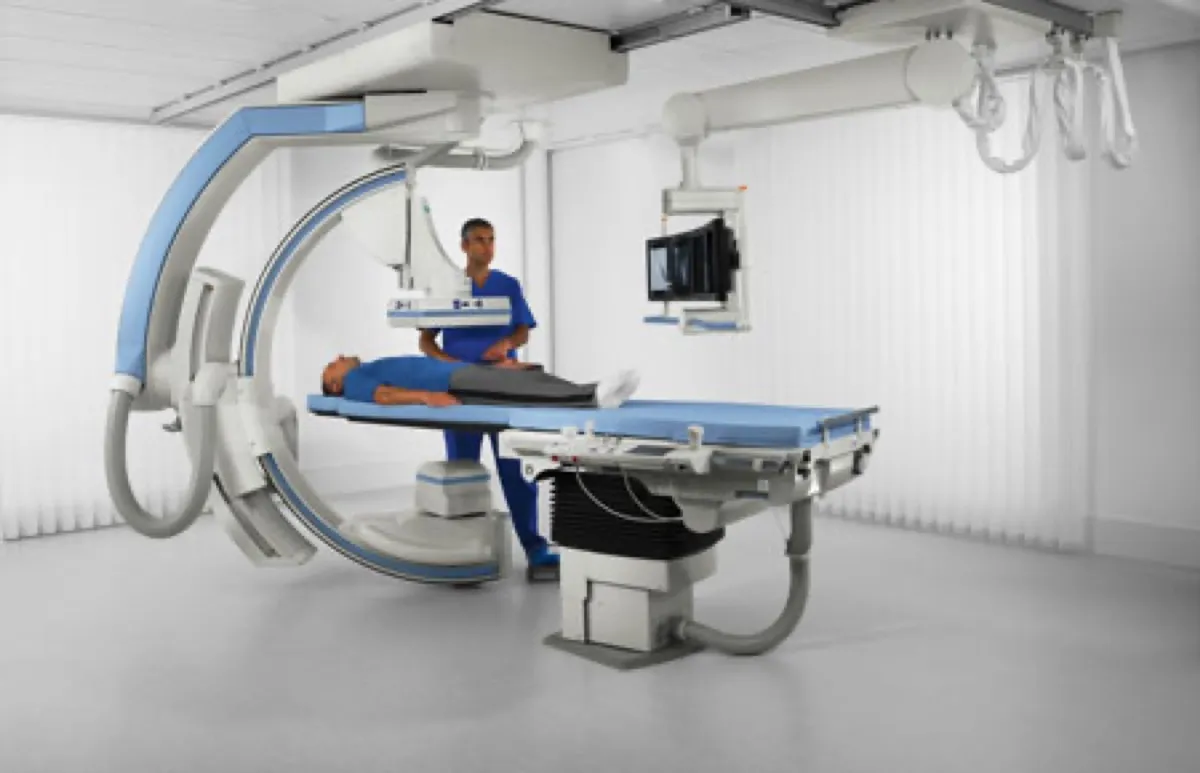
The HSG test is performed in a radiology suite equipped with fluoroscopy (real-time X-ray). The patient lies on the examination table, and a speculum is placed in the vagina, similar to a routine cervical exam. A thin catheter is then inserted through the cervix into the uterus, through which the contrast dye is slowly injected.
As the dye fills the uterine cavity and passes into the fallopian tubes, the radiologist captures images on the screen. The entire procedure typically takes 15 to 30 minutes. Most patients experience mild to moderate cramping during the dye injection, which usually subsides within minutes after the procedure is complete. For a detailed step-by-step guide, see our article on the HSG test procedure.
DCDC's Approach to HSG Testing
At Doctors Clinic Diagnostic Center in Dubai Healthcare City, HSG tests are performed through a coordinated approach involving both our radiology and gynecology departments. With over 13 years of operation in DHCC and more than 1,000 diagnostic scans performed every month across all imaging modalities, DCDC brings a depth of experience that ensures consistently accurate results. The procedure is carried out by an experienced radiologist using modern fluoroscopy equipment, while the referring gynecologist provides pre-test consultation and post-test result interpretation.
Our team understands that undergoing a fertility test can be an emotionally significant experience. Patients receive clear pre-procedure instructions, a comfortable environment during the test, and prompt results with a follow-up consultation to discuss findings and next steps. We also offer pain management options for patients who are concerned about discomfort during the procedure.
The clinic is conveniently located in Dubai Healthcare City and regularly serves patients from surrounding areas including Oud Metha, Karama, Bur Dubai, and Al Jaddaf. Our HSG test services are available with minimal waiting times, and we coordinate scheduling to ensure the test is performed during the optimal window of the menstrual cycle.
Ready to Book an HSG Test?
At Doctors Clinic Diagnostic Center in Dubai Healthcare City, our experienced radiologists and gynecologists work together to provide accurate and comfortable HSG testing. Contact us to schedule your appointment during the optimal time in your cycle.
Book HSG TestMga Madalas Itanong
Final Thoughts
An HSG test is one of the most valuable diagnostic tools available during a fertility evaluation. By providing clear images of the fallopian tubes and uterine cavity in a single, relatively quick procedure, it helps doctors and patients understand whether a structural issue may be contributing to difficulty conceiving. Knowing what the test involves and why it is recommended can help reduce anxiety and allow you to approach the experience with confidence.
If your gynecologist has recommended an HSG test or you are exploring fertility options, Doctors Clinic Diagnostic Center in Dubai Healthcare City offers this procedure with experienced specialists, modern equipment, and a patient-centered approach. Early evaluation often leads to earlier answers and better-informed treatment decisions. For details on pricing, see our guide to HSG test cost in Dubai.
Mga Sanggunian at Reperensya
Ang artikulong ito ay sinuri ng aming medikal na team at tumutukoy sa mga sumusunod na sanggunian:
- American College of Obstetricians and Gynecologists - Evaluating Infertility
- Radiological Society of North America - Hysterosalpingography
- American Society for Reproductive Medicine - Tubal Factor Infertility
- Dubai Health Authority - Diagnostic Imaging Standards
Ang medikal na nilalaman sa site na ito ay sinusuri ng mga DHA-licensed na manggagamot. Tingnan ang aming patakarang editorial para sa higit pang impormasyon.

Isinulat ni
Dr. Osama Elzamzami
Consultant Radiologist
MD, Radiology
Dr. Osama Elzamzami is a Consultant Radiologist specializing in diagnostic imaging including MRI, CT, ultrasound, and fluoroscopy procedures such as HSG at DCDC Dubai Healthcare City.