
Mga Pangunahing Punto
- Children should have their first dental visit by age one or within six months of their first tooth erupting — early visits prevent problems and build positive associations with dental care
- Tooth decay is the most common chronic childhood disease worldwide, affecting 42% of children aged 2-11, yet it is almost entirely preventable with proper oral hygiene and regular dental visits
- Children's dental cleaning in Dubai starts from AED 200, with fluoride treatments from AED 100 and dental sealants from AED 150 per tooth — preventive care that saves thousands in future treatment costs
- Dubai's climate and lifestyle factors — including AC-induced dry mouth, high consumption of sugary drinks, and juice culture — create unique dental challenges for children that parents must actively manage
- DCDC in Dubai Healthcare City offers family-friendly dental care with 6+ dental specialists, MOHAP licensing, direct billing with 20+ insurance providers, and an average wait time of just 15 minutes
- Baby teeth matter more than many parents realise — they guide permanent teeth into position, support jaw development, and help children speak and eat properly. Losing them early can cause long-term orthodontic problems
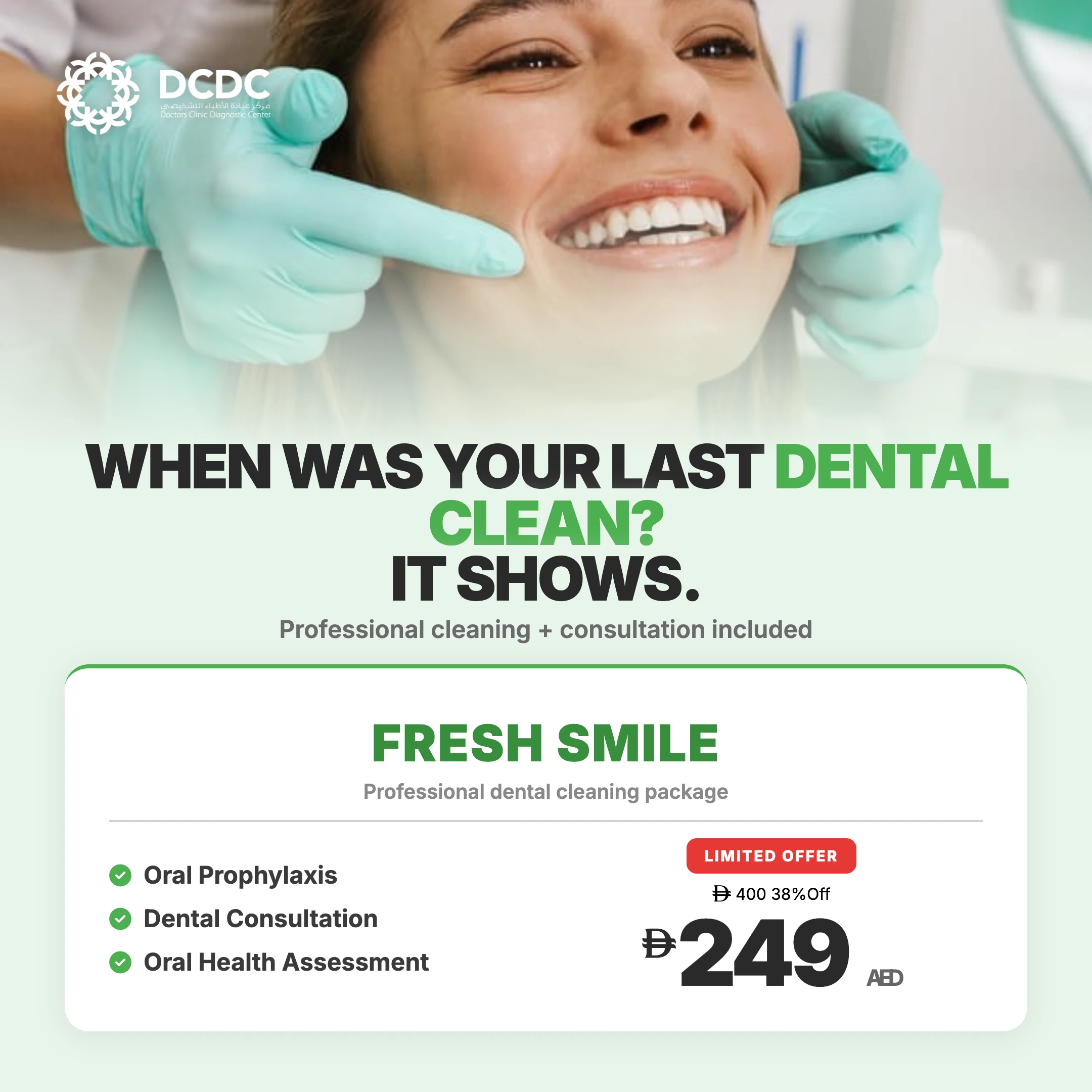
Your child's dental health starts long before their first permanent tooth appears. Establishing good oral care habits early, choosing the right dentist, and understanding what to expect at each stage of development are the foundations of a lifetime of healthy teeth. In Dubai, where lifestyle factors such as sugary drinks and air-conditioned environments create unique challenges for children's teeth, proactive dental care is especially important. This guide covers everything parents need to know — from first visits and age-specific care to costs, common problems, and how to choose a children's dentist. Dental cleaning and preventive care at DCDC start from AED 200, making professional children's dentistry accessible to families across Dubai.
According to Dr. Chadi El Masry, "Children who have positive dental experiences early in life are far more likely to maintain regular dental visits as adults. At DCDC, we focus on making every child's visit comfortable, educational, and even enjoyable — because the habits we build in childhood determine a lifetime of oral health. Prevention is always better, simpler, and less costly than treatment."


When Should Your Child First Visit the Dentist in Dubai?
The American Academy of Pediatric Dentistry recommends that every child should see a dentist by their first birthday or within six months of the eruption of their first tooth — whichever comes first. This recommendation is echoed by the World Health Organization and dental authorities worldwide, yet many parents in Dubai delay their child's first dental visit until age three or four, by which time preventable problems may already have developed.
The first dental visit is not primarily about treatment. It is an opportunity for the dentist to examine your child's mouth for early signs of decay, assess jaw and bite development, check for oral habits that could cause problems (such as thumb sucking or prolonged pacifier use), and counsel parents on nutrition, fluoride use, and home oral hygiene. Early visits also help children become familiar with the dental environment, significantly reducing the likelihood of dental anxiety later.
- 6-12 months: First tooth appears — schedule the first dental visit. The dentist will examine the gums and any erupted teeth, discuss feeding practices, and advise on teething.
- 12-18 months: If you have not yet visited a dentist, do so now. Early cavities (baby bottle tooth decay) can begin as soon as the first teeth appear.
- By age 2: Your child should have had at least one dental visit and be on a 6-monthly check-up schedule.
Kids Dental Care by Age: What to Expect
Children's dental needs change significantly as they grow. Understanding what to expect at each stage helps parents provide the right care and recognise when professional intervention is needed.
Ages 0-2: Infants and Toddlers
Baby teeth typically begin erupting around six months of age, starting with the lower front teeth. By age two, most children have all 20 primary (baby) teeth. During this stage, parents should clean the baby's gums with a soft damp cloth after feeding, even before teeth appear. Once the first tooth erupts, use a baby toothbrush with a rice-grain-sized smear of fluoride toothpaste twice daily. Avoid putting children to bed with a bottle of milk, formula, or juice — this is the most common cause of early childhood cavities (baby bottle tooth decay).
Ages 3-5: Preschool Years
By age three, children should have all 20 baby teeth and be visiting the dentist every six months. Parents should brush their child's teeth twice daily with a pea-sized amount of fluoride toothpaste and begin introducing flossing when teeth start touching (usually around age 2-3). This is the age to start teaching children to spit out toothpaste rather than swallowing it. Dental sealants may be recommended for the back baby teeth if the child is cavity-prone. Thumb sucking and pacifier use should ideally stop by age three to prevent bite and alignment issues.
Ages 6-12: School Age
This is the mixed dentition stage — children gradually lose their baby teeth and permanent teeth erupt. The first permanent molars appear around age six (often called "six-year molars") and are particularly vulnerable to cavities because of their deep grooves. Dental sealants on these molars can reduce cavity risk by up to 80%. Children should begin brushing independently around age 7-8, but parents should supervise and check their technique until at least age 10. This is also the age when orthodontic evaluation is recommended — the American Association of Orthodontists advises a first orthodontic screening by age seven.
Ages 13-18: Teenagers
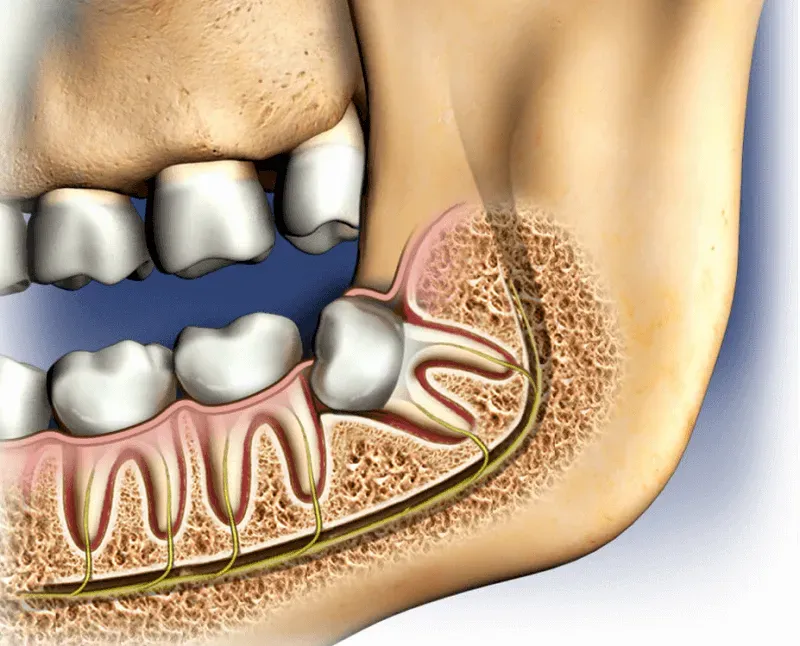
By age 13, most children have all 28 permanent teeth (wisdom teeth appear later, typically between ages 17-25). Teenagers face unique dental challenges: increased consumption of sugary and acidic drinks, sports injuries, orthodontic treatment, and sometimes neglect of oral hygiene. Parents should ensure continued 6-monthly dental visits, discuss mouthguard use for sports, and be aware that wisdom teeth may need monitoring or removal. For teenagers with braces, more frequent dental cleanings (every 3-4 months) may be recommended to manage plaque accumulation around brackets and wires.
Common Dental Problems in Children
Dental problems in children are extremely common — the CDC reports that 42% of children aged 2-11 have had at least one cavity in their primary teeth. Understanding the most frequent issues helps parents identify problems early and seek timely treatment.
Dental Cavities (Tooth Decay)
Cavities remain the most common chronic disease in children — five times more common than asthma. They are caused by bacteria (primarily Streptococcus mutans) that produce acids when they feed on sugars, dissolving tooth enamel. In baby teeth, cavities can progress rapidly because the enamel is thinner than in permanent teeth. Left untreated, cavities can cause pain, infection, difficulty eating, and premature tooth loss that affects the alignment of permanent teeth.
Thumb Sucking and Pacifier Habits
Thumb sucking is a natural reflex in infants and toddlers, but if it continues beyond age 3-4, it can cause significant dental and skeletal problems including open bite (front teeth don't meet when the mouth is closed), narrowing of the upper jaw, and protrusion of the upper front teeth. Pacifier use has similar effects. Most children stop naturally, but if the habit persists, your dentist can recommend behavioural strategies or, in some cases, an orthodontic appliance to help break the habit.
Early Tooth Loss
When baby teeth are lost prematurely — due to decay, trauma, or extraction — the adjacent teeth can drift into the empty space, blocking the permanent tooth from erupting in its correct position. This often results in crowding, misalignment, and the need for orthodontic treatment. If a baby tooth is lost early, your dentist may recommend a space maintainer — a small device that holds the space open until the permanent tooth is ready to come through.
Dental Trauma
Falls, sports injuries, and playground accidents are common causes of dental trauma in children. Chipped, cracked, loosened, or knocked-out teeth require prompt dental attention. For a knocked-out permanent tooth, time is critical — if the tooth is reimplanted within 30 minutes, there is a good chance of saving it. Store the tooth in milk or saliva (not water) and see a dentist immediately.
If your child is experiencing dental pain, it is important to understand the underlying cause. Our guide on dental cleaning costs in Dubai explains how regular professional cleaning helps prevent many of these common childhood dental problems.
How to Prepare Your Child for a Dental Visit
Dental anxiety in children is common and often reflects parental anxiety or negative dental experiences passed down through family attitudes. The good news is that with proper preparation, most children can have positive, anxiety-free dental visits.
- Start talking positively about the dentist early: Use simple, positive language. Describe the dentist as a friendly doctor who helps keep teeth strong and healthy. Avoid words like "pain," "needle," "drill," or "hurt" — even to reassure them it won't hurt.
- Read children's books about dental visits: There are many age-appropriate books that normalise dental visits and help children know what to expect.
- Play "dentist" at home: Let your child practice opening their mouth wide, counting teeth, and using a toothbrush on a stuffed animal or doll. This familiarises them with the process.
- Schedule morning appointments: Young children tend to be better rested and more cooperative in the morning. Avoid scheduling appointments during nap time.
- Stay calm and positive: Children are highly attuned to parental anxiety. If you are nervous about dental visits, your child will pick up on it. Model calm, positive behaviour.
- Avoid bribery with sweets: Promising treats after the dentist sends a contradictory message. Instead, plan a non-food reward like a visit to the park or a sticker.
- Let the dental team take the lead: Experienced paediatric dental teams know how to communicate with children at every age. Trust their approach and avoid intervening unless your child is genuinely distressed.
Pediatric Dental Treatments: What Your Child May Need
Preventive treatments are the cornerstone of children's dentistry. When children do develop problems, modern paediatric treatments are designed to be as comfortable and minimally invasive as possible.
Fluoride Treatments
Professional fluoride application strengthens tooth enamel and makes it more resistant to acid attacks from bacteria. Fluoride varnish is painted onto the teeth in seconds, is flavoured, and is well-tolerated even by very young children. The American Dental Association recommends professional fluoride treatments every 6 months for children at moderate to high risk of cavities.
Dental Sealants
Sealants are thin, protective coatings applied to the chewing surfaces of back teeth (molars and premolars), where most childhood cavities occur. The deep pits and grooves on these teeth trap food and bacteria that brushing cannot effectively reach. Sealants fill these grooves, creating a smooth, easy-to-clean surface. The CDC reports that sealants can prevent 80% of cavities in back teeth for up to two years, with continued protection for up to four years. The procedure is painless, requires no drilling, and takes only a few minutes per tooth.
Dental Fillings for Children
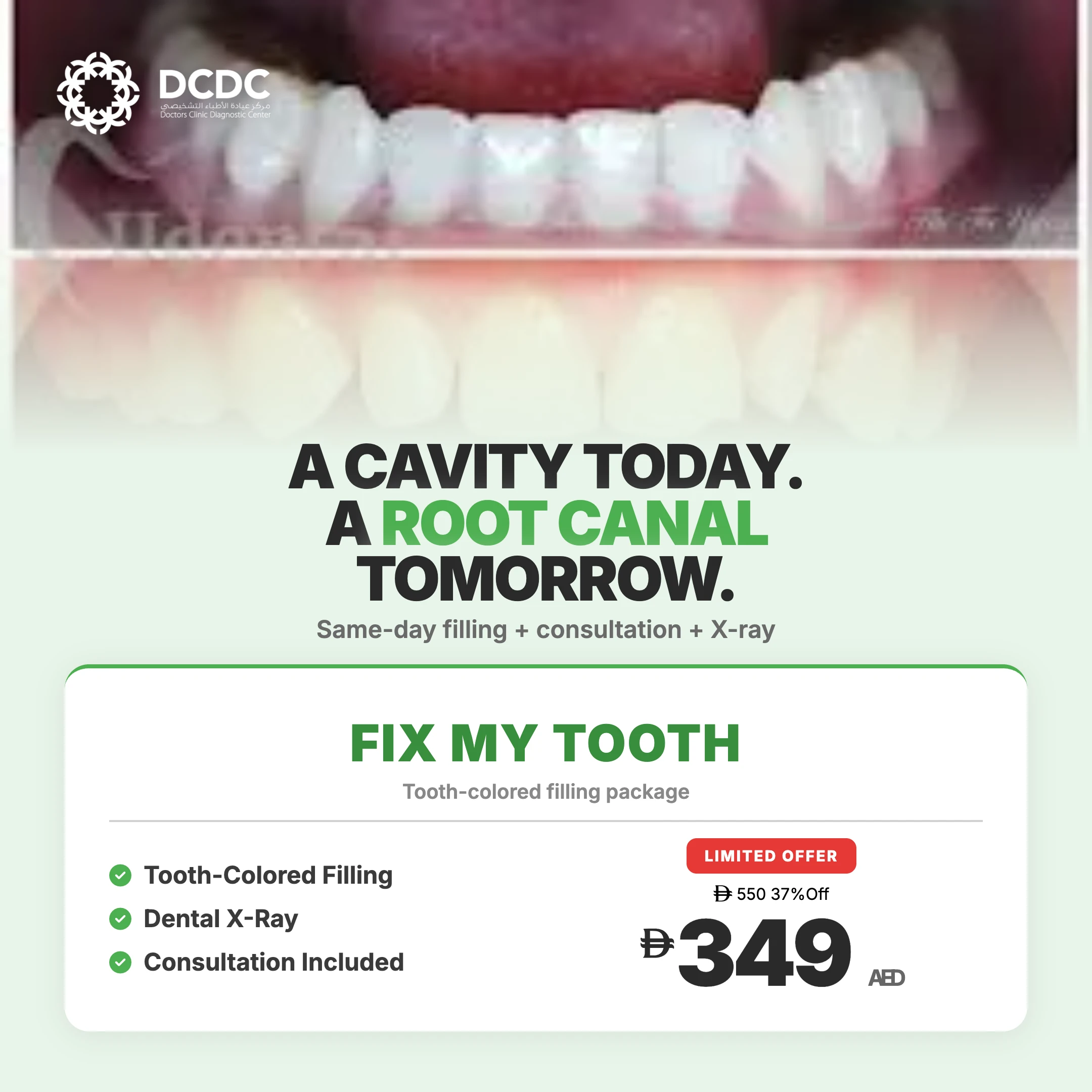
When cavities do develop, they need to be treated — even in baby teeth. Left untreated, cavities can cause pain, infection, and premature tooth loss. Modern tooth-coloured (composite) fillings are used to restore decayed teeth while maintaining a natural appearance. For baby teeth, the procedure is typically quick and straightforward. For anxious children, various comfort measures are available including topical anaesthetic, gentle technique, and distraction methods.
Orthodontic Assessment
An orthodontic evaluation by age seven allows the dentist to identify emerging alignment and bite issues while the jaw is still growing. Early intervention (interceptive orthodontics) can guide jaw growth, create space for crowded permanent teeth, and reduce the complexity and duration of future orthodontic treatment. Not every child needs early treatment, but early assessment ensures that those who do can benefit from timely intervention.
Kids Dental Care Cost in Dubai
Understanding the cost of children's dental care helps parents plan and budget for their child's oral health. The following table outlines typical costs for paediatric dental services in Dubai. Preventive care is significantly less expensive than treating problems after they develop.
| Treatment | Approximate Cost (AED) | Recommended Frequency |
|---|---|---|
| Children's dental check-up and examination | From 150 | Every 6 months |
| Children's dental cleaning (scaling and polishing) | From 200 | Every 6 months |
| Fluoride varnish application | From 100 | Every 6 months |
| Dental sealant (per tooth) | From 150 | Once per tooth (lasts 2-4 years) |
| Tooth-coloured filling (composite) | From 150 – 500 | As needed |
| Tooth extraction (baby tooth) | From 200 | As needed |
| Space maintainer | From 500 | After premature tooth loss |
| Orthodontic consultation | From 200 | Initial assessment by age 7 |
| Dental X-ray (periapical) | From 100 | As clinically needed |
| OPG panoramic X-ray | From 200 | As clinically needed |
Prices are approximate and may vary. Contact DCDC for current pricing and insurance coverage details. Most insurance plans cover preventive dental care for children.
Most comprehensive insurance plans in the UAE cover children's dental check-ups, cleanings, fluoride treatments, and basic restorative work. DCDC offers direct billing with 20+ insurance providers including Daman, AXA, Bupa, MetLife, and Cigna — meaning parents pay only their co-payment at the time of the visit, with no out-of-pocket claims to process. For families without insurance, DCDC offers competitive self-pay rates starting from AED 200 for dental cleaning. For more details on dental cleaning pricing for the whole family, see our guide on toothache causes and treatment in Dubai to understand when dental problems become urgent.
Dubai-Specific Dental Challenges for Children
Living in Dubai presents unique factors that affect children's dental health. Being aware of these challenges allows parents to take proactive steps to protect their child's teeth.
Air-Conditioning and Dry Mouth
Dubai's climate means children spend much of their time in air-conditioned environments — at home, in school, in cars, and in malls. Air conditioning significantly reduces indoor humidity, which can lead to dry mouth (xerostomia). Saliva is the mouth's natural defence against tooth decay — it neutralises acids, washes away food particles, and contains minerals that strengthen enamel. Reduced saliva flow increases cavity risk. Encourage children to drink water regularly throughout the day, not just when they feel thirsty.
Sugary Drinks and Juice Culture
Fresh juices, smoothies, flavoured milks, and soft drinks are widely available and heavily consumed by children in Dubai. Even "healthy" fresh juices contain high levels of natural sugars and acids that erode tooth enamel. A single 250ml glass of fresh orange juice contains approximately 21 grams of sugar — almost the entire daily recommended limit for a child. Encourage water as the primary drink, limit juice to mealtimes only (never sipping throughout the day), and use a straw to reduce contact with teeth.
Ramadan and Eid Sweets
During Ramadan and Eid celebrations, children are often exposed to large quantities of traditional sweets, dates, chocolates, and sticky confections. While these are important cultural traditions, the prolonged and frequent consumption of sugary foods significantly increases cavity risk. Parents can help by ensuring thorough brushing after sweet consumption, providing water to rinse the mouth, choosing less sticky sweet options when possible, and scheduling a dental cleaning appointment soon after these festive periods.
Low Fluoride in Bottled Water
Most bottled water brands available in Dubai contain very low levels of fluoride — well below the optimal concentration of 0.7 parts per million recommended for dental health. Since many families in Dubai rely entirely on bottled water, children may not receive adequate fluoride through their drinking water. This makes professional fluoride treatments and the use of fluoride toothpaste even more important for children in Dubai.
What to Expect at DCDC for Your Child's Dental Visit
At Doctors Clinic Diagnostic Center in Dubai Healthcare City, we understand that a child's dental experience shapes their attitude toward oral health for life. Our dental department is designed to make paediatric visits comfortable, efficient, and positive.
- Welcoming environment: From the moment you arrive, our reception team ensures a family-friendly experience. With an average wait time of just 15 minutes, children are not kept waiting long enough to become anxious or restless.
- Experienced dental team: DCDC's dental department comprises 6+ dental specialists who are experienced in treating patients of all ages, including young children and anxious teenagers.
- Modern equipment: We use ultrasonic scalers for gentle, comfortable cleaning, CBCT and OPG dental imaging for comprehensive diagnosis when needed, and modern composite materials for natural-looking fillings.
- Thorough examination: Every children's dental visit includes a comprehensive oral examination, oral cancer screening (for teenagers), cleaning, and age-appropriate oral hygiene education.
- Insurance and billing: DCDC is networked with 20+ insurance providers including Daman, AXA, Bupa, MetLife, and Cigna. We handle direct billing so parents pay only the co-payment — no paperwork, no out-of-pocket claims.
- Convenient location and hours: Located in Building 64, Block A, Al Razi Medical Complex in Dubai Healthcare City, with free dedicated on-site parking. Open Saturday to Thursday 8 AM to 10 PM, Friday 9 AM to 9 PM — extended hours that accommodate school schedules and working parents.
- MOHAP licensed: DCDC is a MOHAP-licensed facility (License No. NIMY7VY5-240925), ensuring the highest standards of clinical care and safety for your child.
DCDC's 4.8/5 Google rating from over 1,000 verified patient reviews and 98% patient satisfaction rate reflect our commitment to providing exceptional care for patients of all ages, including children.
Book Your Child's Dental Check-Up at DCDC
Give your child the best start in oral health. At Doctors Clinic Diagnostic Center in Dubai Healthcare City, our dental team provides gentle, thorough dental cleaning and preventive care for children of all ages. Children's dental cleaning from AED 200. Insurance accepted with direct billing.
Walk-ins welcome. Book online, call, or WhatsApp us today.
How to Choose a Children's Dentist in Dubai
Choosing the right dentist for your child is one of the most important decisions you can make for their long-term oral health. Not all dental clinics are equally equipped or experienced in treating children. Here are the key factors to consider when selecting a children's dentist in Dubai.
- Experience with children: Look for a dental practice that regularly treats paediatric patients and has dentists experienced with children's unique dental needs. Ask how the clinic handles anxious or uncooperative children.
- MOHAP or DHA licensing: Ensure the clinic is licensed by the Ministry of Health and Prevention (MOHAP) or the Dubai Health Authority (DHA). This guarantees that the clinic meets UAE regulatory standards for clinical care, sterilisation, and safety.
- Modern equipment: A clinic with modern dental technology — ultrasonic scalers, digital X-rays, intraoral cameras — can provide more accurate diagnoses, more comfortable treatments, and reduced radiation exposure for your child.
- Insurance coverage: Verify that the clinic accepts your insurance plan and offers direct billing. This eliminates the hassle of out-of-pocket payments and reimbursement claims.
- Convenient location and hours: Choose a clinic with hours that accommodate school schedules and a location with easy parking. You are more likely to keep regular appointments if the clinic is conveniently accessible.
- Patient reviews: Check Google reviews and ask other parents for recommendations. Look for consistent positive feedback about the clinic's approach to children and overall patient experience.
- Comprehensive services: Choose a clinic that offers a full range of dental services — from preventive cleaning and fillings to orthodontic assessment and dental imaging — so your child can receive all their dental care in one place as they grow.
When dental problems arise, early treatment prevents complications. Learn more about how dental fillings in Dubai can restore your child's teeth if cavities develop despite preventive efforts.
Preventive Dental Care Tips for Parents
The most effective dental care for children happens at home, every day. Here are evidence-based tips that parents can implement immediately to protect their child's teeth.
Brushing Guidelines by Age
- Under 12 months: Wipe gums with a clean, damp cloth after feeding. Once the first tooth appears, use a soft baby toothbrush with a rice-grain-sized smear of fluoride toothpaste.
- Ages 1-3: Brush twice daily with a pea-sized amount of fluoride toothpaste. Parents should do the brushing — children at this age do not have the dexterity to clean their teeth effectively.
- Ages 3-6: Continue supervised brushing with a pea-sized amount of fluoride toothpaste. Begin teaching children to spit rather than swallow toothpaste. Introduce flossing when teeth begin to touch.
- Ages 6-8: Children can begin brushing independently, but parents should supervise and "finish" the brushing to ensure all surfaces are cleaned properly.
- Ages 8+: Most children can brush independently. Parents should periodically check technique and ensure brushing lasts a full 2 minutes.
Diet and Nutrition for Healthy Teeth
- Limit sugary snacks to mealtimes: The frequency of sugar exposure matters more than the total amount. Snacking on sweets throughout the day causes continuous acid attacks on tooth enamel.
- Choose tooth-friendly snacks: Cheese, nuts, raw vegetables, and yoghurt are good choices. Avoid sticky sweets (toffee, gummy bears, dried fruit) that cling to teeth.
- Water is the best drink: Encourage water as the default drink. Limit juice to one small glass at mealtimes, diluted 1:1 with water for younger children.
- Never put a child to bed with a bottle: Milk, formula, or juice pooling around teeth overnight is the primary cause of early childhood cavities (baby bottle tooth decay).
- Wait 30 minutes after acidic food before brushing: Acids temporarily soften enamel. Brushing immediately after acidic food or drink can wear away softened enamel. Rinse with water first, then brush 30 minutes later.
When to Seek Emergency Dental Care for Children
Dental emergencies in children require prompt action. Knowing what constitutes an emergency and how to respond can save a tooth and prevent complications.
- Knocked-out permanent tooth: This is a true dental emergency. Find the tooth, hold it by the crown (not the root), rinse gently with milk if dirty, and attempt to reinsert it into the socket. If reinsertion is not possible, store the tooth in milk or saliva. See a dentist within 30 minutes for the best chance of saving the tooth.
- Knocked-out baby tooth: Do not attempt to reimplant a baby tooth — this could damage the developing permanent tooth beneath it. See a dentist to ensure no fragments remain and to discuss whether a space maintainer is needed.
- Broken or chipped tooth: Rinse the mouth with warm water, apply a cold compress to reduce swelling, and see a dentist as soon as possible. Save any tooth fragments.
- Severe toothache: Rinse with warm salt water, use over-the-counter children's pain relief (ibuprofen or paracetamol — not aspirin for children), and see a dentist promptly. A severe toothache may indicate an abscess that requires urgent treatment.
- Dental abscess (swelling): Facial swelling near a tooth is a dental emergency. An untreated abscess can spread infection to other areas of the face and body. See a dentist or visit an emergency department immediately.
- Bitten tongue or lip with significant bleeding: Apply firm pressure with a clean cloth. If bleeding does not stop within 15 minutes, or if the wound is deep, visit an emergency department.
DCDC's extended hours — Saturday to Thursday 8 AM to 10 PM, Friday 9 AM to 9 PM — mean that dental care is available when your child needs it, including evenings and weekends when many clinics are closed. Walk-ins are welcome for urgent dental concerns.
The Importance of Baby Teeth: Why They Matter More Than You Think
A common misconception among parents is that baby teeth are unimportant because they will eventually fall out. This is incorrect — baby teeth serve critical functions that affect your child's health and development.
- Guide permanent teeth: Baby teeth hold space for permanent teeth and guide them into the correct position. Premature loss of baby teeth can cause permanent teeth to erupt crooked or impacted.
- Support jaw development: Baby teeth stimulate proper growth and development of the jawbone. Loss of teeth can affect jaw growth and facial structure.
- Enable proper nutrition: Children need their teeth to chew food properly. Dental pain or missing teeth can lead to poor nutrition if children avoid hard or crunchy foods.
- Support speech development: Baby teeth are essential for learning to speak clearly. Missing or decayed front teeth can affect pronunciation of certain sounds.
- Affect self-esteem: Children with visibly decayed or missing teeth may feel self-conscious, affecting their social interactions and confidence.
- Prevent infection: Untreated decay in baby teeth can cause painful abscesses that, in rare cases, can lead to serious infections requiring hospitalisation.
Protect Your Child's Smile — Book at DCDC Today
From first dental visits to teenage check-ups, Doctors Clinic Diagnostic Center provides comprehensive dental care for children in a comfortable, family-friendly environment. MOHAP-licensed facility in Dubai Healthcare City. Direct insurance billing with 20+ providers. Children's dental cleaning from AED 200.
Call, WhatsApp, or book online. Walk-ins welcome — average wait time just 15 minutes.
Kaugnay na Serbisyo sa DCDC
Dalubhasang pangangalaga at advanced diagnostics sa Dubai Healthcare City
Frequently Asked Questions
Final Thoughts
Your child's dental health is an investment that pays dividends for a lifetime. Starting dental visits early, maintaining a consistent preventive care routine, and addressing problems promptly are the three pillars of excellent children's oral health. In Dubai, where lifestyle factors create additional challenges for children's teeth, proactive dental care is not optional — it is essential.
At Doctors Clinic Diagnostic Center in Dubai Healthcare City, our team of 6+ dental specialists provides comprehensive dental care for children of all ages in a welcoming, family-friendly environment. With children's dental cleaning from AED 200, direct insurance billing with 20+ providers, free on-site parking, and extended opening hours (Sat-Thu 8 AM-10:30 PM, Fri 9 AM-10 PM), we make it easy for parents to prioritise their child's oral health. Contact us today to book your child's dental appointment.
Mga Sanggunian at Reperensya
Ang artikulong ito ay sinuri ng aming medikal na team at tumutukoy sa mga sumusunod na sanggunian:
- World Health Organization - Oral Health Fact Sheet
- American Academy of Pediatric Dentistry - First Dental Visit FAQ
- NHS - Taking Care of Children's Teeth
- CDC - Children's Oral Health
- Mayo Clinic - Cavities/Tooth Decay: Symptoms and Causes
- American Dental Association - Baby Teeth
Ang medikal na nilalaman sa site na ito ay sinusuri ng mga DHA-licensed na manggagamot. Tingnan ang aming patakarang editorial para sa higit pang impormasyon.
Isinulat ni
Dr. Chadi El Masry
Dentist
DDS
Dr. Chadi El Masry is a Dentist at Doctors Clinic Diagnostic Center (DCDC) in Dubai Healthcare City.
Related Articles
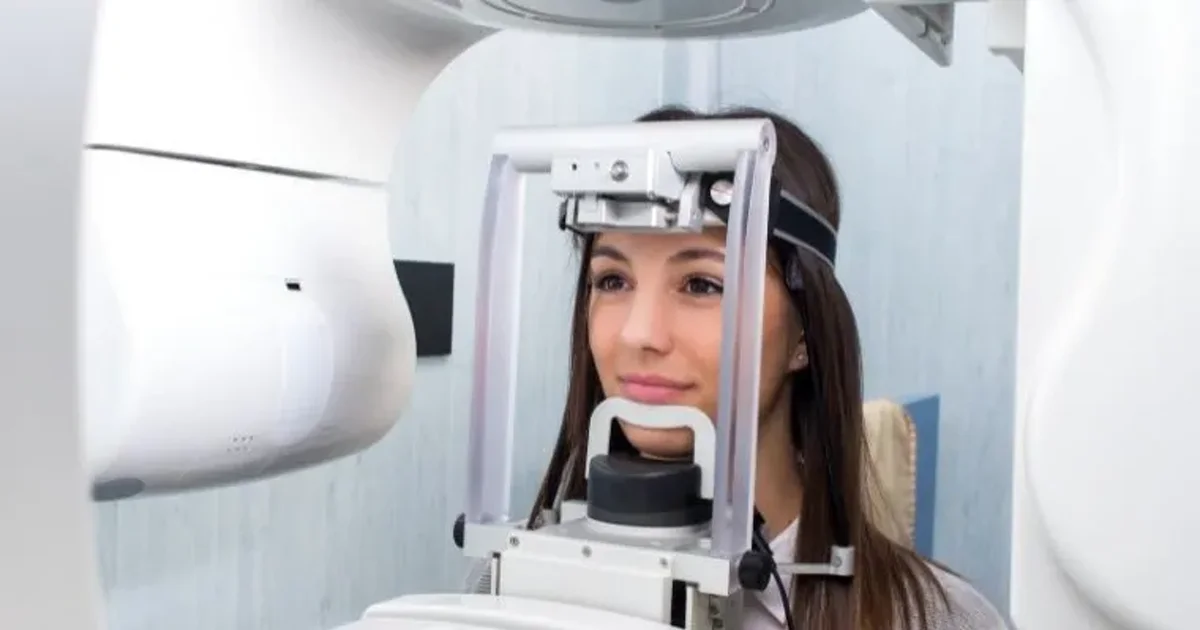
Dental Cleaning Cost Dubai: From AED 200 (2026)
Dental Fillings Cost Dubai: From AED 150 (2026)
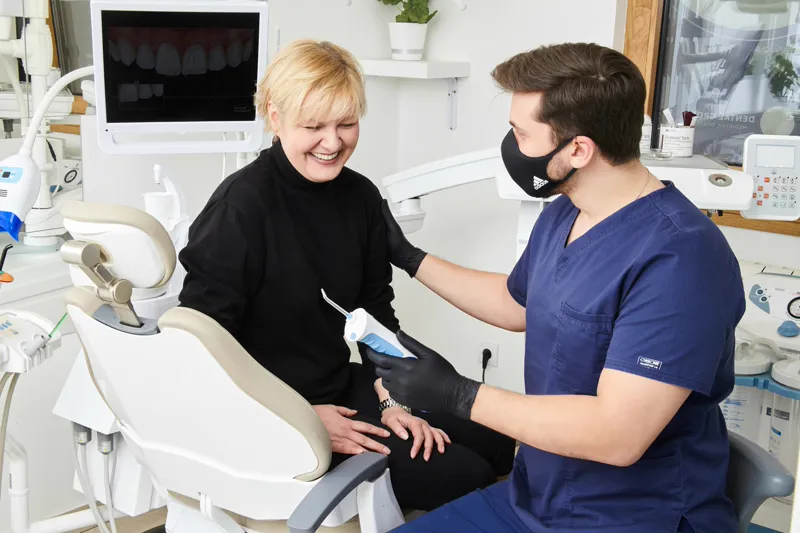
Gum Disease Treatment Dubai: From AED 1,000 (2026)
Bad Breath Dubai: Causes & Treatment (2026)
Toothache Dubai: Causes & When to See a Dentist (2026)
More in Dental
Tooth Filling vs Crown Dubai: Which One? (2026)
Basahin Pa
Dental Crowns vs Veneers Dubai: Guide (2026)
Basahin PaDentures vs Dental Implants Dubai (2026)
Basahin Pa
Dental Veneers Cost Dubai: From AED 500 (2026)
Basahin PaRoot Canal vs Tooth Extraction Dubai (2026)
Basahin PaDental Inlays & Onlays Dubai: Cost Guide (2026)
Basahin Pa© 2026 Doctors Clinic Diagnostic Center (DCDC), Dubai Healthcare City. Originally published at https://doctorsclinicdubai.ae/blog/kids-dental-care-dubai. All rights reserved. Unauthorized reproduction is prohibited.