Mga Pangunahing Punto
- Creatinine is a waste product of muscle metabolism that healthy kidneys filter from the blood — elevated creatinine levels are one of the earliest detectable markers of declining kidney function, but a single high reading does not always indicate kidney disease
- Normal creatinine ranges differ by age and gender: 0.7–1.3 mg/dL for adult men and 0.6–1.1 mg/dL for adult women. Children, older adults, and individuals with low muscle mass may have different baseline values
- Common causes of elevated creatinine include chronic kidney disease (CKD), uncontrolled diabetes, hypertension, dehydration, certain medications (NSAIDs, ACE inhibitors), and high-protein diets — not all causes require alarm
- The estimated glomerular filtration rate (eGFR) is calculated from creatinine and provides a more clinically meaningful measure of kidney function than creatinine alone — eGFR below 60 mL/min for three or more months indicates CKD
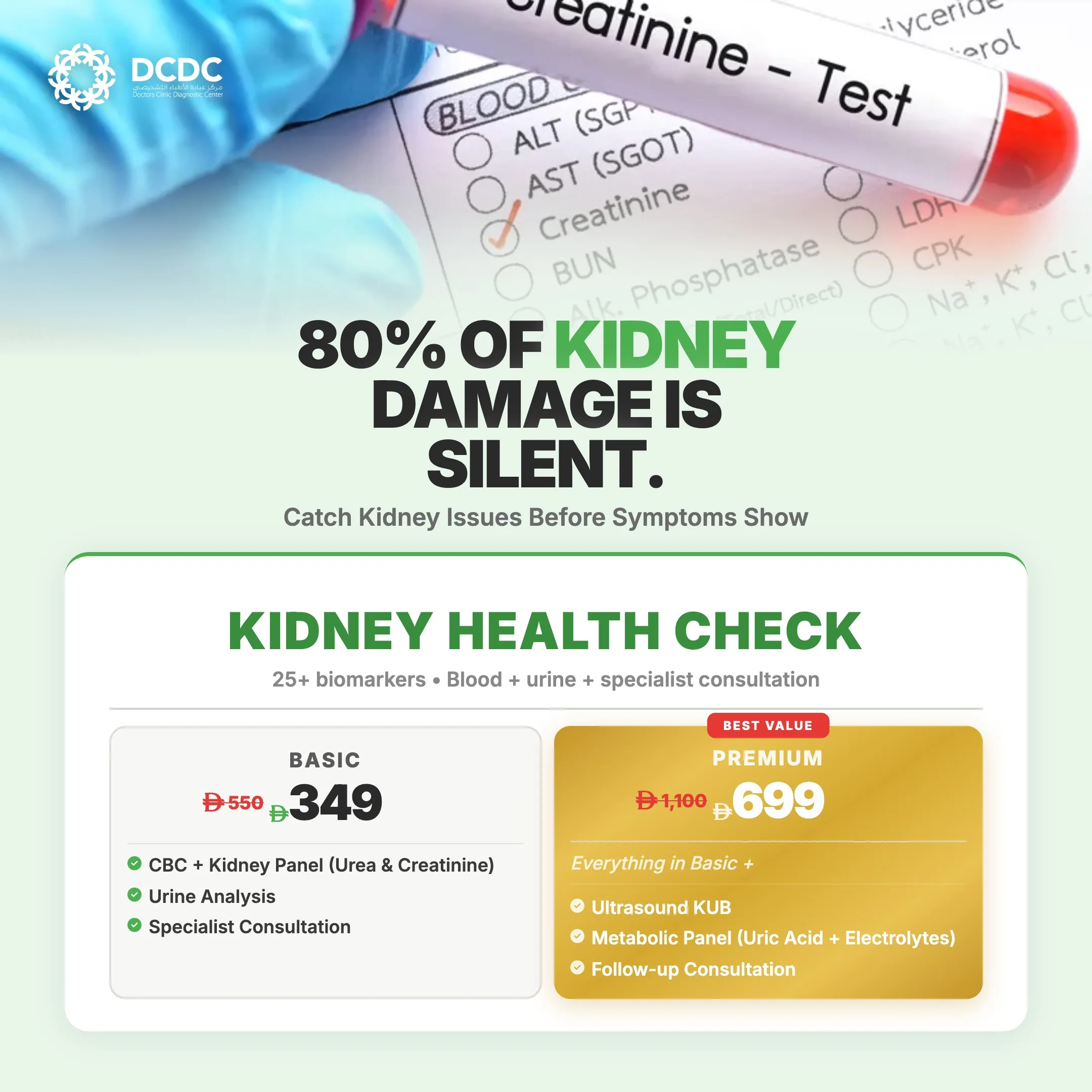
- At DCDC Dubai Healthcare City, comprehensive kidney function testing starts from AED 149 with same-day results, on-site sample collection, and direct billing with 20+ insurance partners
- Early detection through routine kidney screening can slow or prevent progression of kidney disease — the UAE's high prevalence of diabetes and hypertension makes regular creatinine and eGFR monitoring particularly important for residents
A creatinine blood test result that comes back higher than expected can be genuinely alarming. For many patients in Dubai, that single number on a lab report raises immediate questions: does this mean my kidneys are failing, do I need to see a specialist, and what should I do next? The reality is more nuanced than a single value can convey. Creatinine is a waste product that your muscles produce at a relatively constant rate, and your kidneys are responsible for filtering it out of the blood. When kidney filtration slows down, creatinine accumulates — but temporary elevations can also result from dehydration, intense exercise, high-protein meals, or certain medications. Understanding what your creatinine level actually means, how it relates to your age and gender, and when it genuinely warrants concern is the first step toward protecting your kidney health. At DCDC Dubai Healthcare City, our kidney function testing services provide comprehensive creatinine, BUN, and eGFR analysis from AED 149 with same-day results.
This evidence-based guide explains everything you need to know about high creatinine levels: what creatinine is and why it matters, normal reference ranges by age and gender, the most common causes of elevated creatinine, how creatinine relates to eGFR and kidney disease staging, symptoms to watch for, Dubai-specific testing costs, and practical steps you can take to support kidney health. Reviewed by Dr. Hadeel Elnur, General Practitioner at DCDC Dubai Healthcare City.

What Is Creatinine and Why It Matters
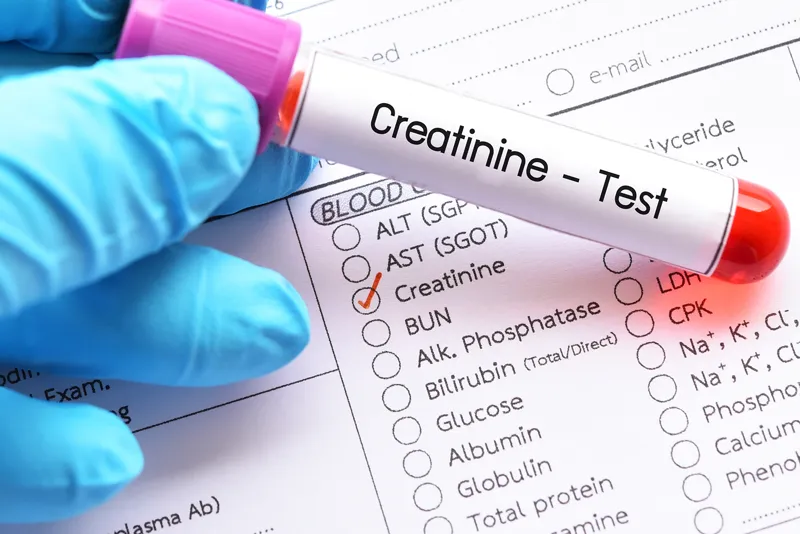
Creatinine is a chemical waste product generated by the normal, ongoing metabolism of creatine phosphate in your muscles. Every time a muscle contracts — whether you are walking, lifting, typing, or even breathing — creatine phosphate is broken down to produce the energy that powers that contraction, and creatinine is left behind as a byproduct. Because muscle metabolism occurs continuously and at a relatively predictable rate, the body produces creatinine at a steady pace throughout the day.
Under normal circumstances, this creatinine travels through the bloodstream to the kidneys, where it is filtered out by millions of tiny filtering units called nephrons and excreted in urine. Healthy kidneys are remarkably efficient at this task — they clear virtually all creatinine from the blood, keeping serum (blood) creatinine levels within a narrow, predictable range. When the kidneys become damaged or begin to lose filtering capacity, they can no longer remove creatinine as effectively, and blood creatinine levels begin to rise.
This is why a simple blood creatinine test is one of the most widely used screening tools for kidney health worldwide. According to the National Kidney Foundation, serum creatinine is the primary input used to calculate the estimated glomerular filtration rate (eGFR) — the gold-standard clinical measure of how well your kidneys are filtering. However, it is important to understand that creatinine levels can be influenced by factors beyond kidney function, including muscle mass, diet, hydration status, and certain medications. A complete clinical picture always considers creatinine alongside eGFR, urinalysis, and the patient's medical history. For a comprehensive overview of all the markers included in kidney blood work, see our Kidney Function Test Dubai Guide.
Normal Creatinine Levels by Age and Gender
One of the most common questions patients ask after receiving lab results is whether their creatinine level is normal. The answer depends on several factors, most importantly your age, biological sex, and muscle mass. Men generally have higher creatinine levels than women because they typically carry more muscle mass — and more muscle means more creatine phosphate turnover and therefore more creatinine production. Similarly, younger adults with greater muscle mass tend to have slightly higher creatinine than elderly patients whose muscle mass has naturally declined.
The following table shows the standard reference ranges used by accredited laboratories in the UAE, aligned with international guidelines from the Kidney Disease Improving Global Outcomes (KDIGO) consortium and the National Kidney Foundation:
| Age Group / Category | Normal Creatinine Range (mg/dL) | Key Notes |
|---|---|---|
| Newborns (0–30 days) | 0.3 – 1.0 | Reflects maternal creatinine initially; stabilises within days |
| Infants (1–12 months) | 0.2 – 0.4 | Lower due to very low muscle mass |
| Children (1–10 years) | 0.3 – 0.7 | Rises gradually with growth and increasing muscle |
| Adolescents (11–17 years) | 0.5 – 1.0 | Higher in boys than girls from puberty onward |
| Adult Men (18–60) | 0.7 – 1.3 | Higher baseline due to greater muscle mass |
| Adult Women (18–60) | 0.6 – 1.1 | Lower baseline; may drop further in pregnancy |
| Men Over 60 | 0.7 – 1.2 | May decline slightly with age-related muscle loss |
| Women Over 60 | 0.6 – 1.0 | Slightly lower range; interpret alongside eGFR |
Standard serum creatinine reference ranges by age and gender. Source: KDIGO guidelines and NKF clinical reference.
It is critically important to understand that a creatinine level at the upper end of the normal range is not necessarily safe. According to the Mayo Clinic, creatinine can remain within the normal range during the early stages of kidney disease because the remaining healthy nephrons compensate by working harder. This is precisely why eGFR — which adjusts for age and sex — is considered a more sensitive indicator than raw creatinine alone. A creatinine of 1.2 mg/dL in a muscular 30-year-old man has an entirely different clinical significance than the same value in a 75-year-old woman with low muscle mass.
What Causes High Creatinine Levels
Elevated serum creatinine can result from a wide range of causes — some directly related to kidney damage, others entirely benign and temporary. Understanding the distinction is essential to avoid unnecessary alarm while still recognising when prompt medical attention is needed. According to Dr. Hadeel Elnur, a General Practitioner at DCDC, "A single elevated creatinine reading doesn't always mean kidney disease. We look at the trend over time, along with eGFR and other markers, to give patients a complete picture of their kidney health."
Kidney-Related Causes
- Chronic Kidney Disease (CKD) — the most clinically significant cause. Sustained high creatinine accompanied by a declining eGFR over three or more months is the defining feature of CKD. The condition is often driven by diabetes or hypertension, both of which are highly prevalent in the UAE population
- Acute Kidney Injury (AKI) — a sudden, rapid rise in creatinine (often doubling within 48 hours) caused by severe dehydration, major blood loss, sepsis, contrast dye reactions, or drug toxicity. AKI is a medical emergency requiring immediate treatment
- Kidney infections (pyelonephritis) — bacterial infections that damage kidney tissue can temporarily or permanently elevate creatinine if severe or recurrent
- Glomerulonephritis — inflammation of the kidney's filtering units (glomeruli) due to autoimmune conditions, infections, or vasculitis
- Urinary tract obstruction — kidney stones, enlarged prostate, or tumours blocking urine flow can cause creatinine to rise as back-pressure damages the kidneys
Non-Kidney Causes (Temporary or Benign)
- Dehydration — reduced blood volume concentrates creatinine in the blood. This is particularly relevant in Dubai's extreme heat, where fluid losses can be substantial even with moderate outdoor activity
- High-protein diet — consuming large quantities of red meat or protein supplements can temporarily raise creatinine, as the muscle-derived protein breakdown produces more creatinine precursors
- Intense exercise — vigorous physical activity causes acute muscle breakdown (rhabdomyolysis in extreme cases), releasing creatinine into the bloodstream
- Medications — certain drugs raise creatinine without actually harming the kidneys. NSAIDs (ibuprofen, diclofenac), ACE inhibitors, ARBs, trimethoprim, and cimetidine can all elevate serum creatinine through various mechanisms
- Creatine supplements — widely used in fitness culture in Dubai, creatine monohydrate supplements increase creatinine production and can elevate blood levels without any kidney impairment
- High muscle mass — athletes, bodybuilders, and individuals with naturally large muscle bulk produce more creatinine and may have higher baseline levels that fall outside the standard reference range without any kidney pathology
For a deeper understanding of how kidney disease develops and progresses through its stages, read our comprehensive CKD Stages Guide.
Symptoms of High Creatinine You Should Know
One of the most dangerous aspects of elevated creatinine and declining kidney function is that the early stages are almost entirely silent. Most people with mildly elevated creatinine feel completely normal, and many cases of chronic kidney disease are discovered incidentally during routine blood tests ordered for unrelated reasons. This is why the National Institute of Diabetes and Digestive and Kidney Diseases (NIDDK) and the National Health Service (NHS) both emphasise that screening — not symptoms — is the primary tool for early kidney disease detection.
As creatinine continues to rise and kidney function declines further (typically below an eGFR of 30), waste product accumulation and fluid imbalance begin to produce noticeable symptoms:
- Swelling (oedema) — fluid retention in the ankles, feet, legs, or around the eyes, particularly noticeable in the morning
- Fatigue and weakness — impaired erythropoietin production by the kidneys leads to anaemia, causing persistent tiredness that does not improve with rest
- Changes in urination — urinating more frequently (especially at night), producing foamy or bubbly urine (indicating protein leakage), or producing very little urine
- Nausea and loss of appetite — uraemia (build-up of urea and other toxins) causes a metallic taste in the mouth, nausea, and reduced appetite
- Shortness of breath — fluid overload in the lungs or severe anaemia can make breathing difficult, especially with exertion
- Persistent itching (pruritus) — phosphorus and calcium imbalances in advanced CKD irritate nerve endings in the skin
- Muscle cramps — electrolyte disturbances, particularly low calcium and high potassium, can trigger painful muscle cramps
- Difficulty concentrating — cognitive cloudiness, sometimes called "brain fog," is associated with uraemic toxin accumulation
- High blood pressure — the kidneys play a central role in blood pressure regulation; declining function often causes hypertension, which in turn accelerates further kidney damage
If you are experiencing any combination of these symptoms alongside a known or suspected elevated creatinine, you should seek medical evaluation promptly. However, the absence of symptoms does not mean your kidneys are healthy — routine screening remains essential, especially for individuals with diabetes, hypertension, or a family history of kidney disease.
High Creatinine vs Kidney Disease: Understanding the Link
Many patients assume that high creatinine automatically equals kidney disease, but the relationship is more complex than a single test result can reveal. Creatinine is a surrogate marker — it reflects kidney function indirectly by measuring how much waste is accumulating in the blood. A single elevated creatinine reading can indicate genuine kidney impairment, but it can also result from dozens of non-renal factors.
Clinicians use several criteria to distinguish temporary creatinine elevations from actual kidney disease:
- Trend over time — a single elevated reading is investigated, but CKD is formally diagnosed only when reduced eGFR or kidney damage markers persist for three months or longer
- eGFR calculation — the CKD-EPI equation converts creatinine into an estimated filtration rate adjusted for age and sex, providing a more clinically meaningful number than raw creatinine
- Urine albumin-to-creatinine ratio (ACR) — protein leaking into the urine is a direct sign of glomerular damage and can be present even when creatinine is still normal
- Clinical context — a creatinine of 1.5 mg/dL in a well-hydrated patient with diabetes and hypertension carries very different implications than the same value in a bodybuilder who just completed an intense workout
- Imaging — kidney ultrasound can reveal structural abnormalities (small kidneys, cysts, obstruction) that support or refute a CKD diagnosis
The KDIGO clinical guidelines define CKD as abnormalities of kidney structure or function, present for more than three months, with implications for health. This deliberately broad definition ensures that patients are identified early, when intervention is most effective, rather than waiting for creatinine to reach dramatically elevated levels.
Concerned About Your Creatinine Levels?
Book a kidney function test at DCDC Dubai Healthcare City. Comprehensive KFT from AED 149 with same-day results, on-site sample collection, and direct insurance billing with 20+ partners.
Walk-in or book online — Sat to Thu 8 AM–10 PM, Fri 9 AM–9 PM
How Creatinine and eGFR Work Together
While creatinine tells you how much waste is in the blood, the estimated glomerular filtration rate (eGFR) tells you how much filtering your kidneys are actually performing. The eGFR is calculated from your serum creatinine level using the 2021 CKD-EPI equation, which adjusts for age and sex. It estimates the number of millilitres of blood your kidneys can filter per minute per 1.73 square metres of body surface area.
eGFR is considered more clinically useful than creatinine alone because it accounts for factors that naturally influence creatinine production. A 25-year-old male athlete and a 70-year-old woman could have the same creatinine value, but their eGFR — and therefore their actual kidney function — may be dramatically different. The National Kidney Foundation and KDIGO both recommend eGFR as the primary tool for CKD staging and clinical decision-making.
| eGFR Range (mL/min/1.73m²) | CKD Stage | Kidney Function Level | Clinical Action |
|---|---|---|---|
| 90 or above | Stage 1 | Normal or high (with other markers of kidney damage) | Monitor annually; manage risk factors (diabetes, BP) |
| 60 – 89 | Stage 2 | Mildly decreased | Monitor every 6–12 months; optimise cardiovascular risk |
| 45 – 59 | Stage 3a | Mildly to moderately decreased | Nephrology referral recommended; medication review |
| 30 – 44 | Stage 3b | Moderately to severely decreased | Active nephrology management; dietary modifications |
| 15 – 29 | Stage 4 | Severely decreased | Prepare for renal replacement therapy (dialysis or transplant) |
| Below 15 | Stage 5 | Kidney failure | Dialysis or kidney transplant required |
CKD staging by eGFR based on KDIGO 2024 guidelines. Stage 1 requires additional markers of kidney damage (e.g., proteinuria) alongside normal eGFR.
In practice, your doctor will always report both creatinine and eGFR together. If your creatinine is mildly elevated but your eGFR is above 90, and there is no protein in your urine, this is often reassuring — the elevation may be related to muscle mass, diet, or hydration rather than kidney disease. Conversely, if your eGFR falls below 60 on repeated testing three months apart, this confirms CKD regardless of how close your creatinine appears to the normal range.
Creatinine Test Cost in Dubai
Kidney function testing is one of the most affordable and accessible blood tests available in Dubai. Costs vary depending on whether you need a basic creatinine-only test or a comprehensive renal panel that includes BUN, eGFR, electrolytes, and urinalysis. The following table compares typical pricing across Dubai healthcare providers. For a detailed breakdown including package options and insurance coverage, see our Kidney Function Test Cost guide.
| Test Type | What It Includes | Typical Dubai Price Range | DCDC Price |
|---|---|---|---|
| Basic Creatinine Test | Serum creatinine only | AED 50 – 150 | Included in KFT panel |
| Kidney Function Test (KFT) | Creatinine, BUN, eGFR | AED 100 – 300 | From AED 149 |
| Comprehensive Renal Panel | KFT + electrolytes (Na, K, Cl, HCO3) + uric acid | AED 200 – 500 | From AED 199 |
| Full Kidney Screen + Urine ACR | Renal panel + urinalysis + urine albumin-to-creatinine ratio | AED 300 – 600 | From AED 299 |
| Nephrologist Consultation + Testing | Specialist assessment + comprehensive kidney panel | AED 500 – 1,200 | From AED 400 |
Kidney function test pricing in Dubai (2026). DCDC prices are DHA-regulated and subject to change. Most Dubai insurance plans cover kidney function testing when clinically indicated.
At DCDC, kidney function testing starts from AED 149 for the standard KFT panel. The clinic accepts direct billing with over 20 insurance partners — including Daman, AXA, Bupa, MetLife, and Cigna — eliminating the need for patients to pay upfront and claim reimbursement. Pricing is regulated by the Dubai Health Authority, and DCDC operates under MOHAP License No. NIMY7VY5-240925.
What to Expect at DCDC
If you are visiting DCDC Dubai Healthcare City for a creatinine or kidney function test, here is what the experience looks like from arrival to receiving your results:
Arrival and Parking
DCDC is located in Building 64, Block A, Al Razi Medical Complex within Dubai Healthcare City. The clinic offers free dedicated on-site parking, so you will not need to search for paid parking or walk long distances from public lots. The clinic is open Saturday to Thursday from 8 AM to 10 PM and Friday from 9 AM to 9 PM — these extended hours mean you can schedule your blood test before work, during a lunch break, or in the evening without taking time off.
Check-In and Registration
Upon arrival, the reception team will register you and verify your insurance details if applicable. DCDC works with more than 20 insurance providers for direct billing, so in most cases you will not need to pay out of pocket. The average wait time at DCDC is approximately 15 minutes — the clinic maintains a 4.8 out of 5 Google rating from over 1,000 reviews and a 98% patient satisfaction score, reflecting consistent attention to patient experience and operational efficiency.
Blood Draw and Sample Collection
The kidney function test requires a simple venous blood draw from your arm — typically taking less than five minutes. DCDC features on-site sample collection with same-day results for routine tests, including the standard creatinine and KFT panel. No fasting is required for a basic kidney function test, although your doctor may advise fasting if additional tests (such as a lipid panel or glucose) are being drawn at the same time.
Results and Follow-Up
Routine KFT results — including creatinine, BUN, eGFR, and electrolytes — are typically available the same day. Results are accessible through DCDC's digital patient portal, so you can review your numbers from your phone or computer without needing to return to the clinic. If any values are abnormal, the medical team will contact you to discuss the findings and, if appropriate, arrange a follow-up consultation or referral to a nephrologist.
How to Lower High Creatinine Naturally
If your creatinine is mildly elevated and your doctor has confirmed that no serious kidney disease is present, several evidence-based lifestyle modifications can help support healthy creatinine levels and overall kidney function. It is important to emphasise that these measures support kidney health but do not replace medical treatment for diagnosed kidney disease. For more prevention strategies, see our Kidney Health Prevention guide.
Stay Well Hydrated
Adequate hydration is one of the simplest and most effective ways to support kidney function. Dehydration reduces blood flow to the kidneys and concentrates creatinine in the blood. In Dubai's hot climate, where temperatures regularly exceed 40 degrees Celsius during summer months, daily fluid intake should be increased to compensate for sweat losses. The general recommendation is 2.5 to 3.5 litres of water daily, but individual needs vary based on body size, activity level, and environmental exposure. Patients with advanced kidney disease or heart failure should follow their doctor's specific fluid guidelines.
Moderate Protein Intake
Excessive protein consumption — particularly from red meat — increases creatinine production and places additional filtration burden on the kidneys. The National Institute of Diabetes and Digestive and Kidney Diseases (NIDDK) recommends that individuals with elevated creatinine or early CKD limit protein intake to approximately 0.8 grams per kilogram of body weight per day. This does not mean eliminating protein entirely, but rather choosing lean sources (fish, poultry, eggs, legumes) and avoiding very high-protein diets or excessive protein supplement use.
Reduce Sodium Intake
High sodium intake causes the body to retain fluid and raises blood pressure, both of which stress the kidneys. The World Health Organization recommends limiting sodium to less than 2,000 mg per day (approximately 5 grams of salt). In practice, this means reducing processed foods, restaurant meals, pickled items, and added table salt — all of which feature prominently in many diets common among Dubai's diverse population.
Exercise Regularly but Sensibly
Regular moderate exercise supports cardiovascular health, helps control blood pressure and blood sugar, and maintains healthy body composition — all of which benefit kidney function. However, extremely intense exercise (particularly heavy weightlifting or endurance events) can cause acute creatinine spikes through muscle breakdown. If you are monitoring creatinine levels, aim for 150 minutes per week of moderate-intensity activity such as brisk walking, swimming, or cycling, and avoid blood tests immediately after intense training sessions.
Manage Underlying Conditions
Diabetes and hypertension are the two leading causes of chronic kidney disease worldwide, and both conditions are exceptionally prevalent in the UAE. Tight blood sugar control (HbA1c below 7% for most patients) and blood pressure management (target below 130/80 mmHg for patients with kidney disease) are the most impactful interventions for preventing creatinine from rising further. Work closely with your doctor to ensure your diabetes and blood pressure medications are optimised.
Review Your Medications
Several common over-the-counter and prescription medications can raise creatinine levels. Non-steroidal anti-inflammatory drugs (NSAIDs) such as ibuprofen and diclofenac are among the most widely used kidney-affecting medications and are easily available over the counter in Dubai. If your creatinine is elevated, discuss every medication and supplement you take with your doctor — including herbal remedies and protein supplements — so that nephrotoxic agents can be reduced or replaced where possible.
When to See a Nephrologist in Dubai
Not every elevated creatinine result requires a specialist consultation. Your general practitioner can manage most cases of mildly elevated creatinine, order repeat testing, and implement lifestyle recommendations. However, referral to a nephrologist becomes important when specific clinical thresholds are crossed. For details on what to expect from a specialist visit, including costs and insurance coverage, see our Nephrologist Consultation Guide.
You should see a nephrologist if any of the following apply:
- eGFR below 30 mL/min/1.73m² (CKD Stage 4 or 5) — planning for renal replacement therapy may be necessary
- eGFR declining rapidly — a sustained drop of more than 5 mL/min per year or a 25% decline from baseline warrants specialist evaluation
- Persistent proteinuria — urine albumin-to-creatinine ratio above 30 mg/g on two or more occasions, indicating ongoing glomerular damage
- Creatinine rising despite treatment — if creatinine continues to increase despite blood pressure optimisation, blood sugar control, and medication adjustments
- Suspected glomerulonephritis or systemic disease — blood in the urine, active urine sediment, or suspicion of an autoimmune condition affecting the kidneys
- Electrolyte abnormalities — persistent hyperkalaemia (high potassium), metabolic acidosis, or refractory hypertension that your GP is unable to control with standard therapy
- Kidney disease in young patients — unexplained kidney dysfunction in patients under 40 may suggest hereditary conditions (polycystic kidney disease, Alport syndrome) requiring specialist genetic evaluation
Understanding Your Creatinine Test Results
When you receive your creatinine test results, the lab report will typically display your serum creatinine value alongside the reference range, your calculated eGFR, and flags indicating whether any values fall outside the normal range. Here is a practical framework for interpreting what those numbers mean for your health:
Creatinine Within Normal Range and eGFR Above 90
This is the ideal result. Your kidneys are filtering effectively, and no immediate concern exists. If you have risk factors for kidney disease (diabetes, hypertension, family history), continue annual screening. If you have no risk factors, routine health checkups every one to two years are sufficient.
Creatinine Slightly Elevated, eGFR 60–89
This range indicates mildly reduced kidney function and places you in CKD Stage 2 if other markers of kidney damage are present. Your doctor will likely repeat the test in three months to confirm the trend. Consider lifestyle modifications: hydration, moderate protein intake, blood pressure management, and review of any nephrotoxic medications. This is the most actionable stage — intervention here can prevent further progression.
Creatinine Elevated, eGFR 30–59
This represents moderate CKD (Stage 3a or 3b) and warrants referral to a nephrologist. At this stage, you may still feel entirely well, but the kidneys have lost a significant portion of their filtering capacity. Medication adjustments, dietary changes, and closer monitoring intervals (every three to six months) become necessary. The goal is to stabilise kidney function and prevent progression to Stages 4 and 5.
Creatinine Significantly Elevated, eGFR Below 30
An eGFR below 30 indicates severe kidney impairment (Stage 4) or kidney failure (Stage 5 if below 15). At this level, symptoms are often present, and the nephrologist will begin discussing renal replacement therapy options — either dialysis or kidney transplant. This is an urgent clinical situation requiring specialist-led management, frequent monitoring, and careful attention to fluid balance, electrolytes, and anaemia.
Protecting Your Kidney Health in Dubai
The UAE has one of the highest rates of diabetes in the world — according to the International Diabetes Federation, approximately 16.3% of the adult population has diabetes, with many more undiagnosed. Hypertension affects an estimated 29% of adults in the UAE. These two conditions together account for the vast majority of chronic kidney disease cases, making proactive kidney screening exceptionally important for anyone living in Dubai.
Dubai's specific environmental and lifestyle factors add additional kidney health considerations. Extreme summer heat accelerates dehydration, which is the most common cause of temporarily elevated creatinine in the region. High protein diets and the widespread use of creatine and protein supplements among the fitness-oriented population also contribute to elevated creatinine readings that may not indicate kidney disease. Conversely, many residents delay medical check-ups due to cost concerns, language barriers, or unfamiliarity with the healthcare system — allowing genuine kidney problems to progress silently.
The most effective kidney protection strategy is straightforward: get your creatinine and eGFR checked annually if you have any risk factors (age over 50, diabetes, hypertension, family history, regular NSAID use) and every two to three years if you are young and healthy with no risk factors. A kidney function test takes minutes, costs from AED 149, and can detect problems years before symptoms appear.
Book Your Kidney Function Test Today
DCDC Dubai Healthcare City offers comprehensive kidney function testing from AED 149 with same-day results. MOHAP-licensed laboratory, on-site sample collection, and digital results via patient portal. Rated 4.8/5 from 1,000+ patient reviews.
Free parking available — Building 64, Block A, Al Razi Medical Complex, Dubai Healthcare City
Kaugnay na Serbisyo sa DCDC
Dalubhasang pangangalaga at advanced diagnostics sa Dubai Healthcare City
Frequently Asked Questions
Key Points About High Creatinine Levels
A high creatinine level is a signal that deserves attention, but it is not an automatic diagnosis of kidney disease. The clinical significance of any creatinine result depends on whether it is a temporary fluctuation or a sustained trend, how it translates into your estimated glomerular filtration rate, and what your complete medical context reveals.
For residents of Dubai, where diabetes and hypertension are exceptionally common and environmental factors like extreme heat increase the risk of dehydration-related kidney stress, routine creatinine screening is a particularly valuable preventive measure. A kidney function test takes minutes, is widely available, and costs from AED 149 at DCDC Dubai Healthcare City.
If your creatinine is elevated, the most important step is to repeat the test, stay well hydrated, and work with your doctor to identify the cause. Early-stage kidney disease responds well to lifestyle modification and medical management — but only if it is detected before irreversible damage has accumulated. Do not wait for symptoms to appear; by the time kidney disease produces noticeable symptoms, significant function has already been lost.
At DCDC, we combine MOHAP-licensed laboratory testing with same-day results, digital portal access, and direct insurance billing to make kidney health monitoring as accessible and convenient as possible. Whether you need a routine screen or are managing a known kidney condition, our team is here to support you at every stage.
Mga Sanggunian at Reperensya
Ang artikulong ito ay sinuri ng aming medikal na team at tumutukoy sa mga sumusunod na sanggunian:
- Mayo Clinic — Creatinine Test: Overview and Results
- National Kidney Foundation — Know Your Kidney Numbers
- NHS UK — Chronic Kidney Disease Diagnosis
- Cleveland Clinic — Creatinine Clearance Test
- NIDDK — Tests and Diagnosis of Chronic Kidney Disease
- KDIGO — Clinical Practice Guidelines for Chronic Kidney Disease
- MedlinePlus — Creatinine Test
Ang medikal na nilalaman sa site na ito ay sinusuri ng mga DHA-licensed na manggagamot. Tingnan ang aming patakarang editorial para sa higit pang impormasyon.

Isinulat ni
Dr. Hadeel Elnur
General Practitioner
MD, General Practice
Dr. Hadeel Elnur is a General Practitioner at Doctors Clinic Diagnostic Center (DCDC) in Dubai Healthcare City.
Related Articles
Kidney Function Test Dubai: KFT Guide
CKD Dubai: Stages, Symptoms & Treatment

Kidney Health Dubai: Prevention Tips
Nephrologist Dubai: Consultation Guide
More in Nephrology
© 2026 Doctors Clinic Diagnostic Center (DCDC), Dubai Healthcare City. Originally published at https://doctorsclinicdubai.ae/blog/high-creatinine-levels-dubai. All rights reserved. Unauthorized reproduction is prohibited.