Mga Pangunahing Punto
- Ear wax removal in Dubai costs from AED 300 for an ENT consultation that includes otoscopic examination and microsuction removal of impacted cerumen at DCDC Dubai Healthcare City
- Microsuction is the safest and most effective method for ear wax removal — it uses gentle suction under direct visualisation, with no water, no pressure, and no risk of pushing wax deeper
- At DCDC Dubai Healthcare City, ear wax removal is performed using microscopic suction by trained ENT professionals, the same method recommended by the NHS and AAO-HNS
- Most Dubai insurance plans with ENT coverage — including Daman, AXA, Bupa, Cigna, and MetLife — cover ear wax removal when medically indicated, often with zero co-pay
- The procedure takes 15-30 minutes, is virtually painless, and provides immediate relief from blocked ears, muffled hearing, and ear discomfort
- Cotton buds cause an estimated 12,000 emergency department visits per year in the US alone — never insert anything into the ear canal for wax removal
- Three clinical methods exist — microsuction (AED 300-500), irrigation (AED 200-350), and manual curette (AED 300-500) — each suited to different patient profiles and wax types
If you are searching for the ear wax removal cost in Dubai, the price starts from AED 300 for a professional ENT consultation that includes ear examination and microsuction wax removal. The exact cost depends on the method used, the severity of impaction, whether one or both ears need treatment, and whether you are using insurance. This guide breaks down every cost factor, compares all three removal methods (microsuction vs irrigation vs manual curette), explains what to expect during the procedure, and helps you decide whether professional removal is worth the investment compared to home remedies.
Whether you are experiencing muffled hearing, a blocked sensation, tinnitus, or ear pain from impacted wax, this guide gives you transparent pricing for ear wax removal in Dubai, a clinical comparison of all removal methods, and practical advice on when to see an ENT specialist versus a GP. Based on guidelines from the American Academy of Otolaryngology-Head and Neck Surgery (AAO-HNS), the NHS, and clinical experience at DCDC Dubai Healthcare City.
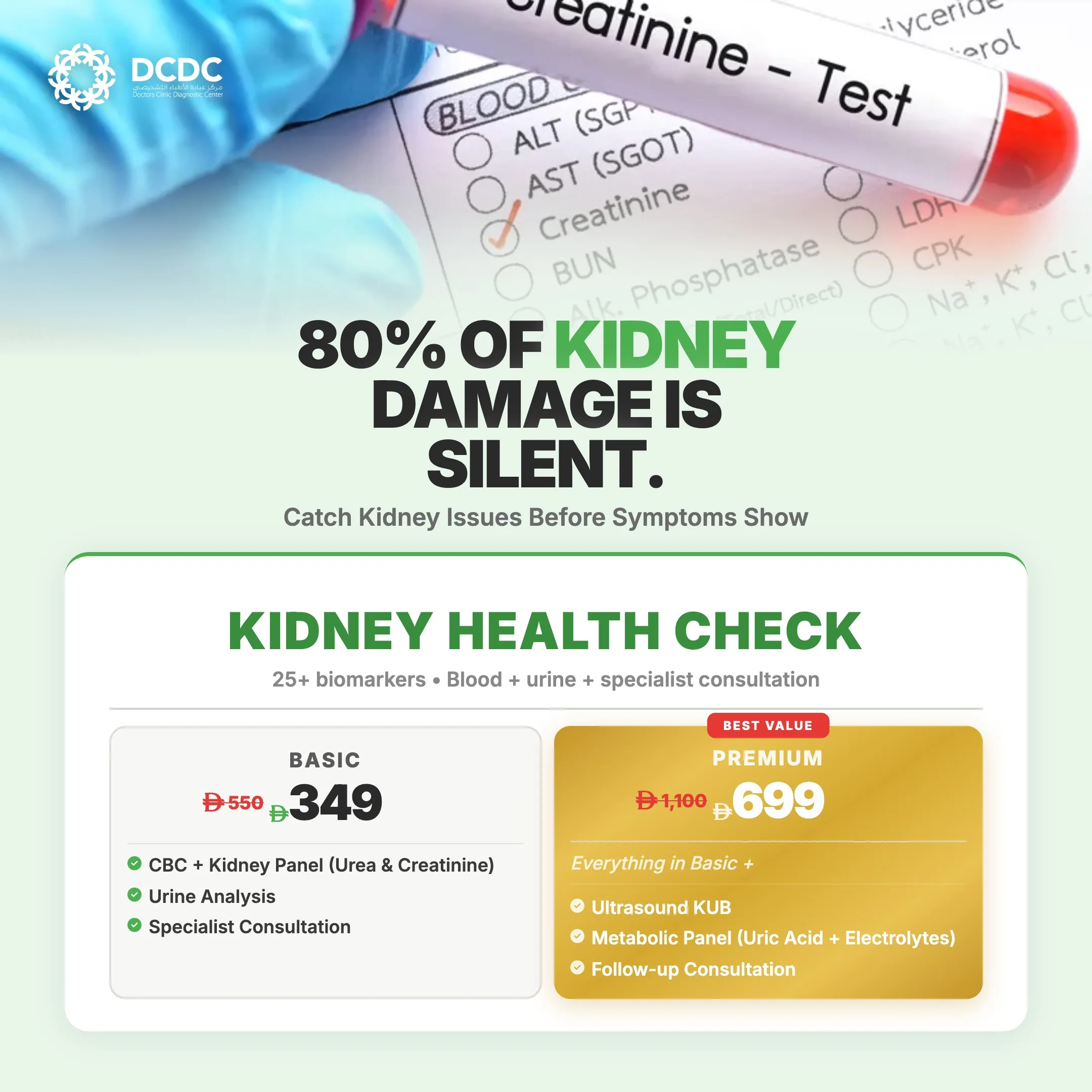
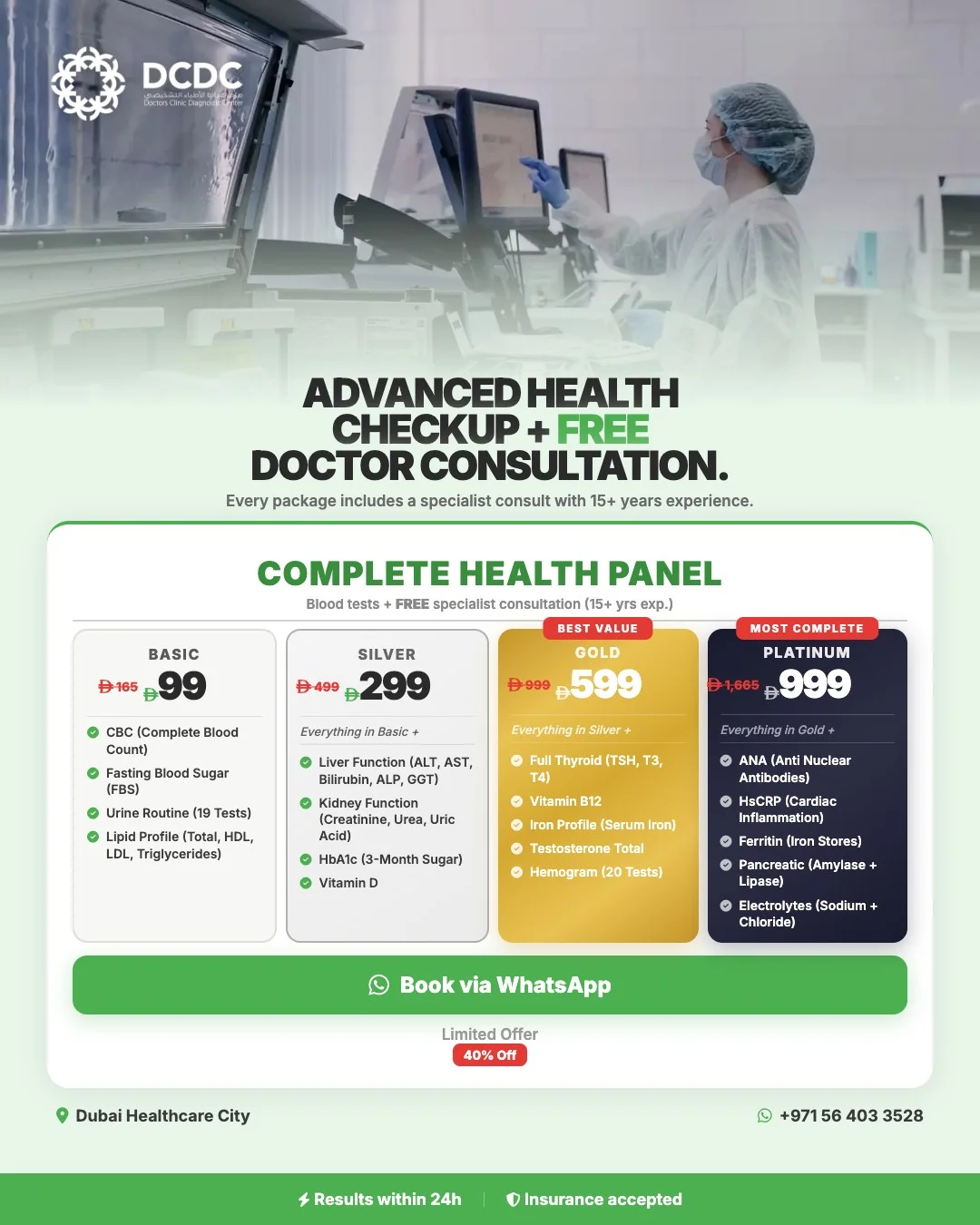
Health Screening Packages
Save with our bundled screening packages — specialist consultation included




Ear Wax Removal Cost in Dubai: Complete Price Overview
The cost of ear wax removal in Dubai ranges from AED 200 to AED 800 depending on the facility type, removal method, and whether additional diagnostic tests are required. At a MOHAP-licensed clinic like DCDC in Dubai Healthcare City, the ENT consultation fee starts from AED 300 and includes a full otoscopic examination plus microsuction removal during the same visit. Hospital-based ENT departments and private clinics in areas like Jumeirah, DIFC, and Marina may charge AED 500-800 for the same procedure, often adding separate facility fees.
| Service | Price Range (AED) | What's Included | Where |
|---|---|---|---|
| ENT Consultation + Microsuction | 300 - 500 | Otoscopy, ear examination, microsuction wax removal (both ears) | DCDC Dubai Healthcare City |
| GP Consultation + Irrigation | 200 - 350 | Basic ear check, warm water irrigation (if appropriate) | GP clinics, polyclinics |
| ENT Consultation + Microsuction | 500 - 800 | Otoscopy, microsuction, possible audiometry | Hospital ENT departments |
| ENT Consultation + Manual Curette | 300 - 500 | Otoscopy, manual removal with Jobson Horne probe under direct vision | ENT clinics |
| Audiometry (if hearing loss suspected) | 200 - 400 | Pure-tone audiometry, hearing threshold assessment | ENT clinics with audiology |
| Follow-Up Visit (if needed) | 150 - 300 | Re-examination, additional suctioning if residual wax | Same clinic |
| Ear Drops (OTC, pre-treatment) | 20 - 50 | Olive oil, sodium bicarbonate, or hydrogen peroxide drops | Any pharmacy |
Ear wax removal pricing in Dubai (2026). DCDC offers direct billing with 20+ insurance providers. Contact us for current rates.
At DCDC, the from-AED 300 consultation includes the ear wax removal procedure itself — there is no separate charge for microsuction when performed during the ENT visit. This bundled pricing model is more cost-effective than facilities that charge a consultation fee plus a separate procedure fee, which can push the total to AED 600-1,000. With a 4.8/5 Google rating from over 1,000 reviews and 98% patient satisfaction, DCDC delivers clinical excellence at transparent prices.
What Is Ear Wax and Why Does It Build Up?
Ear wax, medically known as cerumen, is a natural substance produced by ceruminous glands in the outer third of the ear canal. It serves several important protective functions: trapping dust, debris, and microorganisms; lubricating the ear canal to prevent dryness and itching; and creating a mildly acidic environment (pH 5.2-7.0) that inhibits bacterial and fungal growth. According to the American Academy of Otolaryngology-Head and Neck Surgery (AAO-HNS), ear wax is not a sign of poor hygiene — it is a healthy, self-cleaning mechanism that protects the delicate structures of the middle and inner ear.
Under normal circumstances, ear wax migrates naturally from the inner ear canal toward the ear opening through a process called epithelial migration, assisted by jaw movements during chewing and talking. The wax eventually dries, flakes, and falls out on its own. However, this self-cleaning mechanism can fail for several reasons, leading to cerumen impaction — a condition affecting approximately 6% of the general population and up to 57% of elderly patients in nursing homes, according to a 2020 systematic review published in the Journal of Primary Care & Community Health.
There are two main types of ear wax, determined largely by genetics. Wet cerumen (honey-brown, moist) is predominant in people of European and African descent, while dry cerumen (grey, flaky) is more common in people of East Asian descent. The type of wax you produce affects how easily it clears naturally — dry wax is more prone to accumulation because it does not migrate as efficiently. Interestingly, the ABCC11 gene that determines wax type also affects body odour, which is why populations with dry ear wax also tend to have less axillary (underarm) odour.
- Cotton bud use: The most common cause of impaction. Cotton buds push wax deeper into the canal rather than removing it, compacting it against the tympanic membrane. A 2017 study in the Journal of Pediatrics estimated 12,500 paediatric ER visits per year in the US from cotton bud injuries alone
- Hearing aid or earbud use: Devices block the natural outward migration of wax and stimulate increased cerumen production through physical irritation of the canal. With the rise of AirPods and similar in-ear devices, ENT clinics have reported increased impaction in younger patients
- Narrow or tortuous ear canals: Some individuals have anatomically narrower canals that are more prone to blockage, particularly common in children and certain ethnic populations
- Excessive hair growth in the ear canal: More common in older men, canal hair can trap wax and prevent natural clearance
- Overproduction of cerumen: Some individuals genetically produce more wax than average, or produce a drier, harder type that does not migrate as easily
- Skin conditions: Eczema, psoriasis, and dermatitis of the ear canal can alter wax consistency and increase debris that mixes with cerumen
- Working environment: Construction workers, outdoor labourers, and anyone regularly exposed to dust, sand, or particles are at higher risk due to debris mixing with cerumen
- Dubai-specific factor — dust and humidity: The UAE's desert environment means higher dust exposure, which can mix with ear wax and accelerate blockage. Additionally, frequent transitions between extreme outdoor heat and aggressive indoor air conditioning can affect wax consistency
Signs You Need Professional Ear Wax Removal
Not all ear wax requires removal. The AAO-HNS Clinical Practice Guideline on Cerumen Impaction states that ear wax should only be treated when it causes symptoms or prevents adequate examination of the ear. If your ears feel normal and you can hear clearly, your ear wax is doing its job and should be left alone. However, when impacted wax causes any of the following symptoms, professional removal is recommended.
- Muffled hearing or sudden hearing reduction: The most common symptom, affecting over 75% of patients with impaction. Often noticed after showering when water causes dry wax to expand and completely block the canal
- A sensation of fullness or pressure in the ear: Often described as feeling like the ear is plugged, underwater, or stuffed with cotton
- Tinnitus (ringing or buzzing in the ear): Impacted wax pressing against the tympanic membrane can generate phantom sounds. A 2019 study in the International Journal of Audiology found that cerumen impaction accounts for 5-8% of tinnitus cases
- Ear pain or aching (otalgia): Particularly if wax is pressed firmly against the eardrum or if there is secondary infection
- Dizziness or balance issues: Severe impaction near the tympanic membrane can affect the vestibular system and cause mild vertigo
- Itching or discharge from the ear: May indicate that wax is trapping moisture and creating an environment for infection (otitis externa)
- Cough or reflex symptoms: The ear canal shares a nerve (Arnold's nerve, a branch of the vagus nerve) with the throat, so impacted wax can trigger a chronic cough — a finding documented in the Lancet
- Hearing aid feedback or malfunction: Wax blocking the hearing aid receiver is the most common cause of hearing aid problems, responsible for up to 60% of hearing aid repairs
- Autophony: Hearing your own voice or breathing abnormally loud in the affected ear, caused by partial occlusion of the canal
If you are experiencing any of these symptoms alongside ear pain, fever, or discharge, it is important to rule out an ear infection, which requires different treatment. At DCDC, our doctors examine the ear with an otoscope before proceeding with any wax removal to ensure there is no underlying infection or tympanic membrane perforation.
When to See an ENT Specialist vs a GP for Ear Wax
Many patients are unsure whether they need a GP or an ENT specialist for ear wax removal. The answer depends on your medical history and the complexity of your situation. Understanding the distinction can save you time and ensure you receive the most appropriate care.
When a GP Is Sufficient
- You have no history of ear surgery, ear tubes (grommets), or tympanic membrane perforation
- Your symptoms are mild to moderate (slight muffling, mild fullness) without pain, dizziness, or discharge
- You have no history of recurrent ear infections or chronic ear disease
- You are over 5 years old and can cooperate with the procedure
- A GP who performs irrigation (ear syringing) can handle soft to moderate wax in patients with intact eardrums
When You Need an ENT Specialist
- You have a history of ear surgery (mastoidectomy, tympanoplasty, stapedectomy) — only microsuction by an ENT specialist is safe
- You have or have had ear tubes (grommets) — irrigation is contraindicated
- You suspect a perforated eardrum — symptoms include sudden pain followed by drainage, reduced pain, and hearing loss
- You have recurrent impaction (3+ episodes per year) — an ENT can investigate underlying causes and create a management plan
- You experience severe symptoms including vertigo, significant hearing loss, or suspected infection alongside wax impaction
- You are a child under 5 or a patient who cannot cooperate for irrigation
- The wax is rock-hard, deeply impacted, or has been present for months — microsuction under microscope is the safest approach
At DCDC Dubai Healthcare City, you can see a GP or be referred to our ENT team on the same day if needed, avoiding a second trip. Our multidisciplinary setup means your GP can quickly determine whether your case is straightforward or requires specialist attention — and if it does, you can walk down the hallway rather than book another appointment elsewhere.
Microsuction vs Irrigation vs Syringing: Full Comparison
There are three primary clinical methods for removing impacted ear wax: microsuction, irrigation (ear syringing), and manual removal with curettes. Each has distinct advantages, risks, and cost implications. Understanding the differences is essential when choosing a provider for ear wax removal in Dubai. Many patients arrive asking specifically about one method, but the best approach depends on your ear anatomy, medical history, and wax type.
| Feature | Microsuction | Irrigation (Syringing) | Manual Curette |
|---|---|---|---|
| How it works | Gentle vacuum suction under microscope or endoscope — wax is suctioned out directly | Warm water (37°C) flushed into canal using controlled-pressure irrigator to dislodge and float wax out | Doctor uses a curette, Jobson Horne probe, or micro-forceps under direct vision to scoop or grasp wax |
| Visualisation | Continuous visualisation through binocular microscope — clinician sees everything in real time | Limited — clinician cannot see inside the canal during irrigation | Direct vision via otoscope or microscope — good but limited field of view |
| Safety profile | Safest method. No water, no pressure. Gold standard per NHS and AAO-HNS | Moderate risk. Not safe with perforated eardrums, grommets, or active infections. Risk of vertigo, otitis externa | Safe in skilled hands. Requires patient cooperation. Minor risk of canal abrasion |
| Safe with perforation? | Yes — safe for all ear conditions | No — contraindicated with perforated eardrums | Yes — if performed carefully |
| Safe with grommets? | Yes | No — water can enter middle ear through tube | Yes — if performed carefully |
| Pre-treatment required? | No — can remove hard, dry wax without softening drops | Usually — 3-7 days of ear drops recommended to soften wax first | Sometimes — hard wax may benefit from pre-softening |
| Procedure time | 10-20 minutes (both ears) | 15-30 minutes (both ears) | 10-20 minutes (both ears) |
| Patient discomfort | Mild — brief suction noise, slight pulling sensation | Moderate — water pressure sensation, dizziness common during procedure | Mild to moderate — scraping sensation, requires still head |
| Effectiveness | Very high — 95%+ first-visit success rate | Moderate — may require repeat visits if wax is hard | High for accessible wax — lower for deep impaction |
| Cost in Dubai (AED) | 300 - 500 | 200 - 350 | 300 - 500 |
| Best for | All patients — especially those with ear history, children, hearing aid users | Soft wax in healthy ears with intact eardrums and no surgery history | Visible wax near canal opening, cooperative adults, supplement to microsuction |
| Risk of infection | Minimal — ear stays dry | Higher — moisture can cause otitis externa (swimmer's ear) | Minimal — no water introduced |
Comprehensive comparison of ear wax removal methods available in Dubai. Microsuction is the gold standard recommended by the NHS and AAO-HNS.
A key distinction patients often miss: ear syringing and ear irrigation are not identical. Traditional ear syringing used a metal syringe to forcefully inject water into the ear canal — this method has been largely abandoned due to high complication rates including perforation and caloric vertigo. Modern ear irrigation uses an electronic irrigator (such as the Propulse system) that delivers water at controlled pressure and temperature, making it significantly safer than old-fashioned syringing. However, even modern irrigation carries more risk than microsuction and is contraindicated in patients with ear surgery history, perforations, grommets, or active infection.
Why Microsuction Is the Gold Standard for Ear Wax Removal
Microsuction has become the gold standard for ear wax removal in modern ENT practice, and it is the method used at DCDC Dubai Healthcare City. The procedure uses a fine, low-pressure suction device (typically 2-3mm diameter) under direct visualisation through a binocular operating microscope or rigid endoscope. This means the clinician can see exactly what they are doing at all times with magnification, making it the most precise and controlled method available.
The NHS explicitly recommends microsuction as the preferred method for ear wax removal, and a 2020 Cochrane review noted that suction methods are particularly advantageous because they avoid introducing water into the ear canal — eliminating the risk of otitis externa (swimmer's ear) that can occur with irrigation. The Cleveland Clinic similarly notes that microsuction is the safest option for patients with a history of ear surgery, tympanic membrane perforation, grommets, or active infection.
- Direct visualisation: The entire procedure is performed under microscopic or endoscopic view with 6-12x magnification, so the clinician never works blindly and can distinguish wax from tissue
- No water involved: Unlike irrigation, microsuction keeps the ear canal dry, reducing infection risk to near zero
- Safe for all patients: Can be used on patients with perforated eardrums, grommets, hearing aids, previous ear surgery, cleft palate history, and active infections
- Immediate results: Wax is removed in real time; patients notice improved hearing immediately — often mid-procedure
- Minimal discomfort: Most patients report only a mild suction sensation and brief noise during the procedure. No anaesthesia is required
- No pre-treatment required: Unlike irrigation, which often requires 3-7 days of ear drops beforehand, microsuction can remove hard, dry, impacted wax without softening
- Diagnostic capability: The microscope allows the clinician to identify underlying conditions (polyps, cholesteatoma, foreign bodies) that might be hidden behind the wax
Dr. Hadeel Elnur, General Practitioner at DCDC, notes: "I see patients every week who have been using cotton buds or ear candles for years, gradually compacting wax deeper into their ear canals. When they finally come in because they cannot hear properly, we perform microsuction and the relief is immediate. Many patients tell me they had no idea how much hearing they had been missing. The procedure takes 15 to 30 minutes and is well tolerated by almost everyone, including anxious patients and children over age five."
Factors That Affect Ear Wax Removal Cost in Dubai
While the baseline cost of ear wax removal in Dubai starts from AED 300, several factors can influence the final price you pay. Understanding these variables helps you budget accurately and avoid unexpected charges.
- Type of facility: MOHAP-licensed clinics in Dubai Healthcare City typically charge AED 300-500 for ENT consultations. Hospital-based ENT departments charge AED 500-800+ due to higher overhead and facility fees. Standalone polyclinics may charge less but may not offer microsuction
- Removal method: Microsuction (AED 300-500) and manual removal (AED 300-500) are priced similarly. Irrigation is slightly cheaper (AED 200-350) but is not suitable for all patients and may require a follow-up visit
- Severity of impaction: Simple wax removal during a routine consultation is straightforward. Severely impacted, rock-hard cerumen may require pre-treatment with cerumenolytic drops and a follow-up visit, adding AED 150-300
- One ear versus both ears: Most ENT consultations include examination and treatment of both ears at no additional charge. Confirm this with your clinic before booking
- Additional diagnostics: If your doctor suspects hearing loss beyond simple wax blockage, an audiometry test (AED 200-400) may be recommended. If infection is suspected, a culture swab may be taken
- Doctor seniority: A consultation with a specialist ENT surgeon typically costs more than one with a general practitioner or ENT registrar. However, microsuction quality depends on training and equipment, not seniority alone
- Insurance coverage: With insurance, your out-of-pocket cost may be zero or limited to a small co-pay (AED 0-50). Without insurance, you pay the full consultation fee
- Time of day: Some clinics charge a premium for same-day or after-hours appointments. At DCDC, standard pricing applies regardless of appointment time
At DCDC, we maintain transparent pricing with no hidden fees. The ENT consultation from AED 300 covers the examination, diagnosis, and microsuction removal in the same visit. If a hearing test is needed after wax removal to assess whether underlying hearing loss exists, our on-site audiometry suite ensures you do not need to visit a separate facility.
Blocked Ears? Book Same-Day Ear Wax Removal
DCDC offers same-day appointments for ear wax removal using microscopic suction — the safest method available. From AED 300 with direct insurance billing. Book your appointment or WhatsApp us now.
Call or WhatsApp — Dubai Healthcare City
Does Insurance Cover Ear Wax Removal in Dubai?
Yes, most comprehensive and enhanced insurance plans in Dubai cover ear wax removal when it is medically necessary — meaning you have symptoms of impaction such as hearing loss, pain, or tinnitus. The procedure is classified as a diagnostic and therapeutic ENT consultation, not a cosmetic or elective procedure, so it falls under standard specialist coverage.
DCDC works with over 20 insurance providers through direct billing, which means you do not need to pay upfront and claim reimbursement later. Our reception team verifies your benefits and obtains pre-authorisation (if required) before your appointment, so you know exactly what your co-pay will be before you walk into the consultation room.
| Insurance Provider | Typical Coverage | Expected Co-Pay | GP Referral Required? |
|---|---|---|---|
| Daman (Enhanced) | Full ENT consultation coverage | AED 0 - 20 | Not typically |
| AXA | Specialist visit covered | Varies by plan tier | Some plans require referral |
| Bupa Global | Full ENT + audiometry coverage | AED 0 on comprehensive plans | No |
| Cigna | Specialist consultations covered | Varies by plan | Pre-auth may be required |
| MetLife | ENT consultations covered | Varies by plan | Check plan requirements |
| DHA Essential Benefits (Basic) | Specialist referral coverage | AED 10 - 50 | Yes — GP referral required |
Insurance coverage for ear wax removal in Dubai. DCDC offers direct billing with all listed providers. Contact our reception team to verify your specific plan.
If you are unsure about your coverage, contact DCDC reception before your appointment. Our insurance team can verify your benefits within minutes and advise whether pre-authorisation or a GP referral is needed. For patients without insurance, the self-pay rate starts from AED 300.
Step-by-Step: What to Expect at DCDC for Ear Wax Removal
Knowing what happens during your visit eliminates anxiety and helps you prepare. At DCDC Dubai Healthcare City (Building 64, Block A, Al Razi Medical Complex), the entire ear wax removal process — from check-in to walking out with clear ears — typically takes 30-45 minutes. Here is the step-by-step process.
- 1. Arrival and check-in (5 minutes): Our multilingual reception team (Arabic, English, Farsi, Urdu, Hindi) verifies your insurance, processes pre-authorisation if needed, and confirms your co-pay. Free parking is available in the building. Average wait time is 15 minutes
- 2. Medical history review (5 minutes): Your doctor takes a detailed history — how long your symptoms have lasted, whether you use cotton buds, earbuds, or hearing aids, any history of ear infections, ear surgery, or tympanic membrane perforation, and any previous ear wax removal procedures
- 3. Otoscopic examination (2-3 minutes): Both ear canals are examined using a lighted otoscope to assess the type (wet/dry), colour, location, and severity of wax impaction. This examination also checks for signs of infection, tympanic membrane perforation, foreign bodies, or polyps
- 4. Method selection: Based on the examination, your doctor selects the most appropriate removal method. In most cases, microsuction is chosen. For very soft, superficial wax, manual removal or irrigation may be suitable. Your doctor explains the chosen method and obtains consent
- 5. Microsuction procedure (10-20 minutes): Using a binocular operating microscope for 6-12x magnified direct vision, the clinician inserts a fine suction cannula (2-3mm) into the ear canal and gently vacuums out the wax. You will hear a suction noise and may feel mild pulling sensations, but the procedure is not painful. Both ears are treated in the same session
- 6. Post-removal examination (2-3 minutes): After removal, the doctor re-examines the ear canal to confirm all wax has been cleared and that the tympanic membrane is healthy and intact. If hearing concerns remain, an audiometry test may be recommended
- 7. Aftercare and prevention advice: You receive personalised guidance on preventing future buildup — which ear drops to use, how often, how to safely clean your ears at home, when to return for a checkup, and lifestyle modifications specific to your risk factors
Same-day appointments are available for acute ear concerns, and you can book by phone, WhatsApp, or through our online booking system. With MOHAP license and a 4.8/5 Google rating, DCDC combines clinical standards with genuine patient convenience. Direct billing with 20+ insurance providers means minimal out-of-pocket hassle.
Home Remedies vs Professional Ear Wax Removal
Many patients try home remedies before seeking professional help. While some home approaches are safe for mild wax buildup, they have significant limitations and risks when dealing with true impaction. Here is an evidence-based comparison.
| Method | How It Works | Cost (AED) | Effectiveness | Safety | Recommended? |
|---|---|---|---|---|---|
| Olive oil / mineral oil drops | Softens wax over 3-7 days to aid natural migration | 10 - 20 | Mild buildup only | Very safe for intact eardrums | Yes — as first step or pre-treatment |
| Sodium bicarbonate drops | Dissolves cerumen chemically over 3-7 days | 15 - 30 | Moderate for soft wax | Safe, may cause temporary fizzing | Yes — OTC option |
| Hydrogen peroxide (3%) | Bubbles to break up wax physically | 10 - 25 | Moderate | Safe short-term; avoid with perforation | Yes — short-term use only |
| OTC irrigation kits | Warm water flush via bulb syringe or squeeze bottle | 50 - 100 | Variable | Risk of infection, vertigo, incomplete removal | No — not without medical guidance |
| Ear candles | Hollow cone lit on fire, claims to create suction | 30 - 80 | Zero — proven ineffective | Dangerous — burns, perforation, candle wax deposit | Absolutely not — FDA warns against |
| Cotton buds | Attempts to scoop wax out manually | 5 - 10 | Counterproductive — pushes wax deeper | Dangerous — 12,500+ ER visits/year in children (US) | Never — causes impaction |
| Professional microsuction | Clinical suction under microscope by trained clinician | 300 - 500 | 95%+ first-visit success | Safest clinical method | Yes — gold standard |
Evidence-based comparison of home and professional ear wax removal methods
The bottom line: ear drops are a reasonable first step for mild symptoms. If your symptoms do not improve within 5-7 days of using drops, or if you have severe hearing loss, pain, dizziness, or a history of ear problems, professional removal is necessary. At AED 300, professional microsuction is a small price for immediate, safe, and complete resolution — compared to weeks of uncertainty with home remedies that may not work.
Dangers of Cotton Buds and What NOT to Put in Your Ears
Despite clear warnings from every major medical organisation, cotton buds (Q-tips) remain the most commonly used — and most harmful — tool for ear cleaning worldwide. A 2017 study published in the Journal of Pediatrics found that cotton buds cause an estimated 12,500 emergency department visits per year among children in the United States alone. The actual number of injuries is likely much higher, as most cotton-bud-related ear problems are treated in GP and ENT clinics rather than emergency departments.
The problem with cotton buds is straightforward: the ear canal is a narrow (7mm diameter), blind-ended tube approximately 2.5cm long in adults. Inserting any object pushes wax deeper toward the eardrum rather than removing it. Over weeks and months of regular cotton bud use, wax becomes progressively more compacted, forming a hard plug that can only be removed professionally. In severe cases, cotton buds cause tympanic membrane perforation (a hole in the eardrum), external ear canal abrasion leading to infection, and even damage to the tiny bones (ossicles) of the middle ear.
Items You Should NEVER Put in Your Ears
- Cotton buds / Q-tips: Push 60-70% of wax deeper with each use. The single most common cause of cerumen impaction and ear canal injury
- Ear candles: Categorically unsafe and proven ineffective. The FDA has issued multiple warnings. Associated with burns, perforation, and candle wax deposits in the ear canal
- Bobby pins, hairpins, or keys: Can lacerate the delicate ear canal skin, introducing bacteria and causing infection
- Pen caps or pencils: Surprisingly common in office settings. Risk of breakage and foreign body impaction
- Twisted tissue or paper: Fragments can detach and become lodged in the canal
- Fingers: While less damaging than objects, fingers push wax inward and can introduce bacteria
- Unregulated ear cleaning tools sold online: Many are unsterilised, too rigid, or poorly designed. Without otoscopic visualisation, blind insertion of any tool is dangerous
The AAO-HNS, NHS, WHO, and Mayo Clinic all agree: nothing smaller than your elbow should go in your ear. If your ears feel blocked, use softening drops for a few days. If symptoms persist, see an ENT doctor for safe, professional removal.
How Often Should You Get Ear Wax Removed?
For most people, the answer is: only when you have symptoms. The ear is a self-cleaning organ, and routine ear wax removal is not medically necessary for the general population. The AAO-HNS Clinical Practice Guideline explicitly states that asymptomatic cerumen — ear wax that is not causing hearing loss, pain, or other symptoms — should not be removed.
However, certain groups are prone to recurrent impaction and may benefit from scheduled preventive removal. Below is a guide based on risk category.
| Patient Group | Recommended Frequency | Why |
|---|---|---|
| General population (no risk factors) | Only when symptomatic | Ears are self-cleaning; routine removal is unnecessary |
| Hearing aid users | Every 6 months | Hearing aids block natural wax migration and stimulate overproduction |
| Daily earbud users (4+ hours) | Every 12 months (annual check) | In-ear devices block migration; wax accumulates faster |
| Elderly patients (65+) | Every 6-12 months | Drier wax, reduced jaw mobility, increased canal hair |
| Narrow ear canal anatomy | Every 6-12 months | Anatomically prone to impaction regardless of hygiene |
| Patients with eczema/psoriasis of ear | Every 12 months or when symptomatic | Skin conditions alter wax consistency and increase debris |
| Children with recurrent ear problems | As needed (GP/ENT assessment) | Narrower canals, may need regular monitoring |
| Outdoor/construction workers in Dubai | Every 12 months | Dust exposure accelerates wax-debris buildup |
Recommended ear wax removal frequency by patient risk group
For the general population, a practical approach is to see a doctor only when symptoms appear. If you experience muffled hearing, fullness, or discomfort, book an appointment rather than reaching for cotton buds. At DCDC, same-day appointments are available for acute ear concerns, so you do not need to suffer with blocked ears while waiting for an appointment.
Need Regular Ear Wax Management?
If you wear hearing aids, use earbuds daily, or have a history of recurrent ear wax impaction, our medical team can create a personalised management plan. Contact DCDC to discuss your ear health needs.
Call or WhatsApp — Dubai Healthcare City, Building 64
Ear Wax Removal for Children in Dubai
Children are particularly susceptible to cerumen impaction because their ear canals are narrower than those of adults. The American Academy of Pediatrics (AAP) reports that excessive or impacted ear wax is found in approximately 10% of children and is one of the most common reasons for paediatric ENT referrals. In Dubai, where many families use air conditioning extensively (which can dry out ear wax and make it harder), paediatric ear wax problems are a frequent presentation at clinics like DCDC.
The approach to ear wax removal in children differs from adults in several important ways. First, children's ear canals are more sensitive, shorter (approximately 1.5cm vs 2.5cm in adults), and the child's cooperation is essential for safe removal. Microsuction is the preferred method for children because it is faster, more precise, and avoids the uncomfortable sensation of water in the ear that comes with irrigation. Most children over the age of five tolerate microsuction well with gentle reassurance from the clinician and parent.
- When to suspect ear wax in children: Complaints of blocked ears, not responding when called (especially from one side), turning up the TV volume, pulling or rubbing at the ear, or complaints of buzzing sounds
- Never use cotton buds on children: Children's ear canals are shorter, and the eardrum is closer to the opening. The risk of tympanic membrane injury is higher than in adults
- Ear drops as first step: For mild buildup, paediatric-formulated olive oil drops (2 drops twice daily for 3-5 days) are safe for children over age one. Do not use hydrogen peroxide drops in young children without medical advice
- Professional removal for significant impaction: If drops do not resolve symptoms within a week, or if the child has ear pain, fever, or discharge, professional examination and removal is needed to rule out infection
- Cost for children: The same ENT consultation fee applies (from AED 300 at DCDC). Most paediatric insurance plans cover the visit in full
- Impact on development: Impacted ear wax can affect a child's hearing during critical developmental stages, potentially impacting speech and language development. If your child is underperforming at school or seems inattentive, an ear examination is a simple first step
DCDC offers on-site audiometry to assess hearing after wax removal in children, ensuring no underlying hearing loss has been missed. For a comprehensive guide on hearing evaluations, see our article on hearing tests in Dubai.
Ear Wax Removal and Hearing Loss: What to Know
Impacted ear wax is one of the most common reversible causes of hearing loss worldwide. The World Health Organization estimates that cerumen impaction contributes to conductive hearing loss in up to 5% of adults globally — approximately 200 million people. The good news is that once the wax is removed, hearing returns to baseline almost immediately — often within seconds of the microsuction procedure. Patients frequently describe the experience as dramatically improved sound clarity, as if a volume dial has been turned up.
However, not all hearing loss caused by ear wax returns to normal after removal. If wax has been impacted for months or years, the prolonged pressure on the tympanic membrane may cause temporary inflammation that takes a few days to resolve. In some cases, removing the wax reveals an underlying sensorineural hearing loss that was previously masked by the wax itself — the patient assumed their hearing was getting worse due to wax, when in fact an age-related or noise-induced hearing loss was also developing.
This is why DCDC offers on-site audiometry and hearing assessment alongside ear wax removal. If your hearing does not fully return to normal after microsuction, a pure-tone audiometry test (AED 200-400) can identify whether additional hearing loss exists and what further steps are needed. Early detection of sensorineural hearing loss is important because treatment options like hearing aids are most effective when fitted early.
How to Prevent Ear Wax Buildup: Evidence-Based Tips
While you cannot completely prevent ear wax production — nor should you want to, as it serves a protective purpose — you can significantly reduce the likelihood of problematic impaction with these evidence-based strategies.
- Stop using cotton buds immediately: This is the single most effective prevention measure. Ears are self-cleaning; cotton buds interfere with this process and are the leading cause of impaction
- Use olive oil drops weekly: If you are prone to wax buildup, placing 2-3 drops of room-temperature olive oil in each ear once a week can keep wax soft and promote natural migration. The NHS recommends this as a routine prevention strategy
- Clean only the outer ear: After showering, gently wipe the outer ear (the pinna and the entrance to the ear canal) with a damp washcloth. Never insert anything into the canal itself
- Manage earbud and hearing aid hygiene: Clean your earbuds and hearing aid moulds daily with a dry cloth. Remove hearing aids for a few hours each day when possible to allow natural wax migration
- Take regular earbud breaks: If you use in-ear headphones for work or exercise, remove them for at least 10 minutes every hour to allow air circulation and natural wax clearance
- Address underlying skin conditions: If you have eczema or psoriasis affecting your ears, work with your dermatologist to manage the condition, as skin flakes can mix with wax and accelerate buildup
- Stay hydrated: Particularly important in Dubai's climate, adequate hydration (2-3 litres daily) helps maintain wax consistency. Dehydration produces drier, harder wax that is more difficult for the ear to clear naturally
- Chew gum or eat chewy foods: Jaw movement aids the natural migration of wax out of the ear canal. Regular chewing (especially after meals) can help keep wax moving
- Schedule preventive visits if you are high-risk: Hearing aid users, the elderly, and those with a history of recurrent impaction should consider a preventive ENT check every 6-12 months
Ear Wax Removal Recovery and Aftercare
One of the advantages of ear wax removal — particularly microsuction — is that there is virtually no recovery period. Most patients walk out of the clinic with immediately improved hearing and no restrictions on their daily activities. However, following a few simple aftercare steps helps ensure optimal healing and prevents rapid re-accumulation.
First 24-48 Hours After Removal
- Avoid putting anything in your ears: No cotton buds, earbuds, or ear plugs for 24 hours to allow the canal skin to settle after the procedure
- Keep ears dry: Avoid swimming or submerging your head in water for 24-48 hours. When showering, you can place a cotton ball lightly in the ear opening (not pushed in) to prevent water entry
- Mild sensitivity is normal: You may notice slight sensitivity to sound or a mild tickling sensation as your ear adjusts to being unblocked. This resolves within a few hours
- Contact your doctor if: You experience significant pain, bleeding, persistent dizziness, or discharge after the procedure — these are uncommon but warrant prompt review
Long-Term Prevention After Removal
- Begin weekly olive oil drops starting one week after removal to maintain soft, manageable wax
- Permanently stop using cotton buds — if you have been a regular user, breaking this habit is the single most effective way to prevent future impaction
- If you wear hearing aids or earbuds, follow your audiologist's cleaning schedule and remove devices for rest periods daily
- Book a follow-up check in 6-12 months if you are in a high-risk group (hearing aid user, elderly, narrow canals, previous recurrent impaction)
Ear Wax Removal Myths vs Facts
Ear wax is surrounded by misconceptions that lead to harmful practices. Here are the most common myths, corrected with evidence.
| Myth | Fact | Source |
|---|---|---|
| Ear wax means your ears are dirty | Ear wax is a sign of healthy ear function — it protects, lubricates, and fights bacteria | AAO-HNS Clinical Guideline |
| Cotton buds clean your ears | Cotton buds push 60-70% of wax deeper, causing impaction. They are the leading cause of preventable ear injury | Journal of Pediatrics, 2017 |
| Ear candles remove ear wax | Research shows ear candles produce no suction, do not remove wax, and cause burns and wax deposits. The FDA has issued multiple warnings | FDA Safety Communication |
| You should clean your ears regularly | Ears are self-cleaning. Wax migrates outward naturally. Only intervene when symptoms occur | NHS UK Guidelines |
| Ear wax removal is painful | Microsuction is virtually painless. Most patients report only mild suction sensation and brief noise | Cochrane Review, 2020 |
| Dark wax means infection | Wax colour varies from light yellow to dark brown depending on age, diet, and how long it has been in the canal. Dark wax is not necessarily infected | Cleveland Clinic |
| Hydrogen peroxide dissolves all wax | H2O2 can soften mild buildup but rarely resolves true impaction. It should not be used with perforated eardrums | Mayo Clinic |
Common ear wax myths corrected with medical evidence
Kaugnay na Serbisyo sa DCDC
Dalubhasang pangangalaga at advanced diagnostics sa Dubai Healthcare City
Mga Madalas Itanong
Mga Huling Kaisipan
At from AED 300 — often covered by insurance — professional ear wax removal by microsuction is one of the most affordable, immediately effective medical procedures available in Dubai. Compared to the risks of cotton buds (emergency visits averaging AED 1,000-3,000 for perforation repair), the cost of treating otitis externa from failed home irrigation (AED 500-1,500 including antibiotics and follow-ups), or the hidden cost of months of reduced hearing affecting your work performance and quality of life, a 30-minute ENT visit is a straightforward value proposition.
If your ears feel blocked, if you notice muffled hearing, or if you have been relying on cotton buds for years, stop the cycle today. At DCDC Dubai Healthcare City, our MOHAP-licensed team performs ear wax removal using microscopic suction — the same gold-standard method used in leading ENT departments worldwide. With same-day appointments, direct billing with 20+ insurers, free parking, and an average wait time of 15 minutes, there is no reason to put up with blocked ears. Book your ear wax removal appointment today and hear the difference.
Mga Sanggunian at Reperensya
Ang artikulong ito ay sinuri ng aming medikal na team at tumutukoy sa mga sumusunod na sanggunian:
- American Academy of Otolaryngology-Head and Neck Surgery (AAO-HNS) — Clinical Practice Guideline: Cerumen Impaction
- NHS — Ear Wax Build-Up: Treatment and Removal
- Mayo Clinic — Earwax Blockage: Symptoms, Causes, and Treatment
- Cleveland Clinic — Earwax Buildup and Blockage: When to See a Doctor
- World Health Organization (WHO) — Deafness and Hearing Loss Fact Sheet
- Journal of Primary Care & Community Health — Prevalence and Management of Cerumen Impaction: A Systematic Review (2020)
- Journal of Pediatrics — Injuries from Cotton Tip Applicators in the United States, 1990-2010 (2017)
- International Journal of Audiology — Tinnitus and Cerumen Impaction: Prevalence and Association (2019)
Ang medikal na nilalaman sa site na ito ay sinusuri ng mga DHA-licensed na manggagamot. Tingnan ang aming patakarang editorial para sa higit pang impormasyon.

Isinulat ni
Dr. Hadeel Elnur
General Practitioner
MD, General Practice
Dr. Hadeel Elnur is a General Practitioner at Doctors Clinic Diagnostic Center (DCDC) in Dubai Healthcare City, serving as a first point of contact for ear, nose, and throat concerns and coordinating referrals to ENT specialists when needed.
Mga Kaugnay na Artikulo
Ear Infection Treatment Dubai: Causes & Care
Hearing Test Dubai: Audiometry Types & Cost
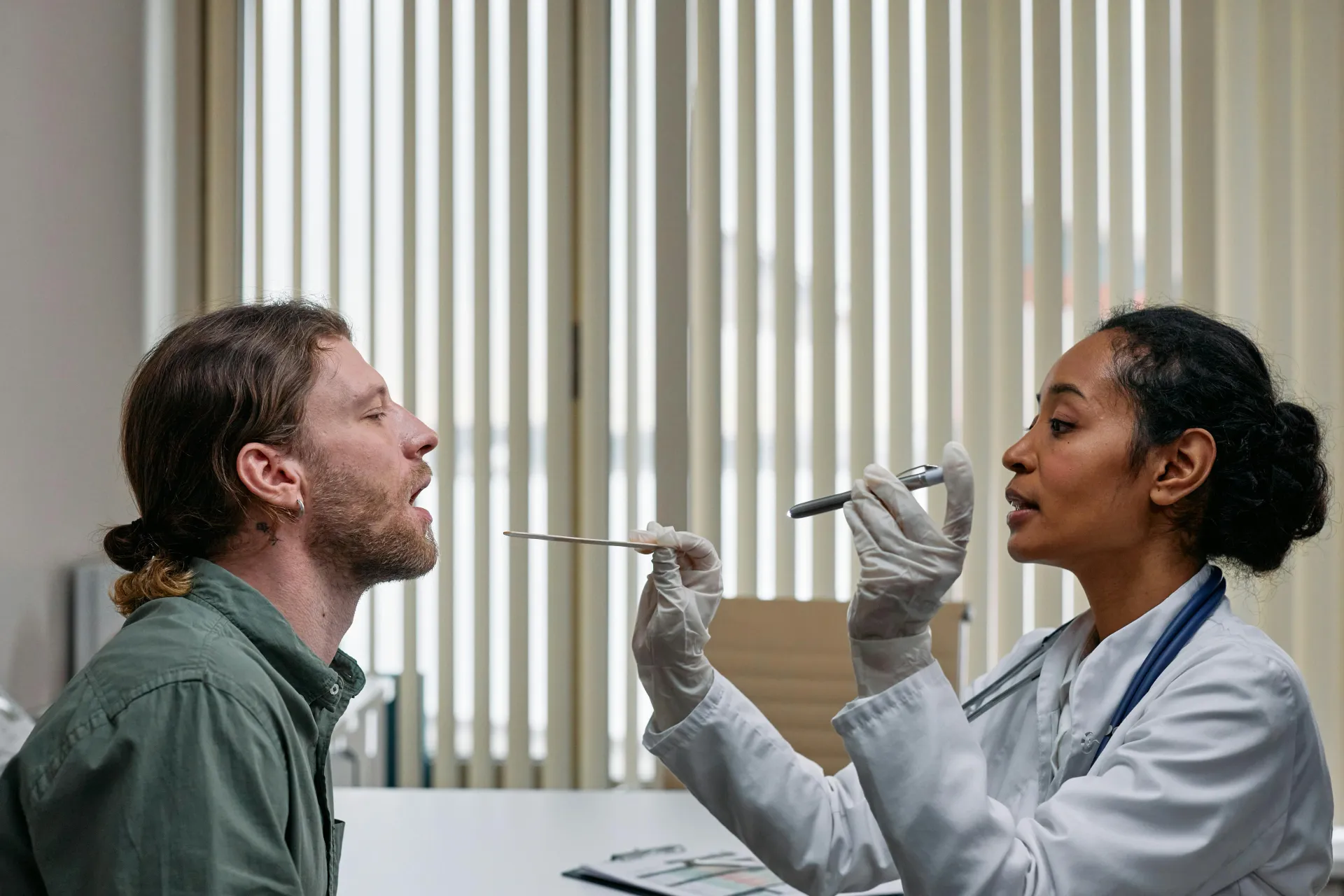
ENT Doctor Dubai: When to See a Specialist
Sinusitis Treatment Dubai: ENT Relief Guide
Higit pa sa General Health

AC Sickness Dubai: Summer Cold Symptoms (2026)
Basahin Pa
Allergy Specialist Dubai: Tests & Guide (2026)
Basahin PaAllergy Testing Dubai: IgE Blood Panels & Cost (2026)
Basahin Pa
Blood Test Dubai: Types, Cost & Fasting Guide (2026)
Basahin Pa
Cancer Screening Dubai: Tests & Cost by Age (2026)
Basahin Pa
Cortisol Test Dubai: Levels & Cost Guide (2026)
Basahin Pa© 2026 Doctors Clinic Diagnostic Center (DCDC), Dubai Healthcare City. Originally published at https://doctorsclinicdubai.ae/blog/ear-wax-removal-cost-dubai. All rights reserved. Unauthorized reproduction is prohibited.