
نکات کلیدی
- Home X-ray in Dubai starts from AED 350 at DCDC, significantly below the market average of AED 400–800 for a single-region portable X-ray.
- Portable digital X-ray produces image quality comparable to fixed clinic systems, with results reviewed by a licensed radiologist within 24 hours.
- Common home X-ray types include chest (PA/lateral), bone and extremity, spine, and multi-region studies—all performed with full lead shielding.
- DCDC's DHA-licensed radiographers bring calibrated portable equipment to your home anywhere in Dubai, with visits typically completed in 30–45 minutes.
- Insurance coverage for home X-ray is available through DCDC's direct billing with 20+ insurance providers—check eligibility before your appointment.
- Elderly, bedridden, and post-surgical patients benefit most from home X-ray, avoiding painful transport and hospital-acquired infection risk.
Getting an X-ray no longer means a trip to the hospital. DCDC's X-Ray at Home service brings portable digital imaging directly to your doorstep in Dubai, starting from AED 350. Whether you need a routine chest X-ray, a bone or joint study, or an urgent scan for an elderly family member who cannot travel, home X-ray eliminates the stress of clinic visits while delivering radiologist-reviewed, diagnostic-quality results. This guide covers current 2026 pricing, what the service includes, how to book, and everything you need to know before scheduling a home X-ray in Dubai.
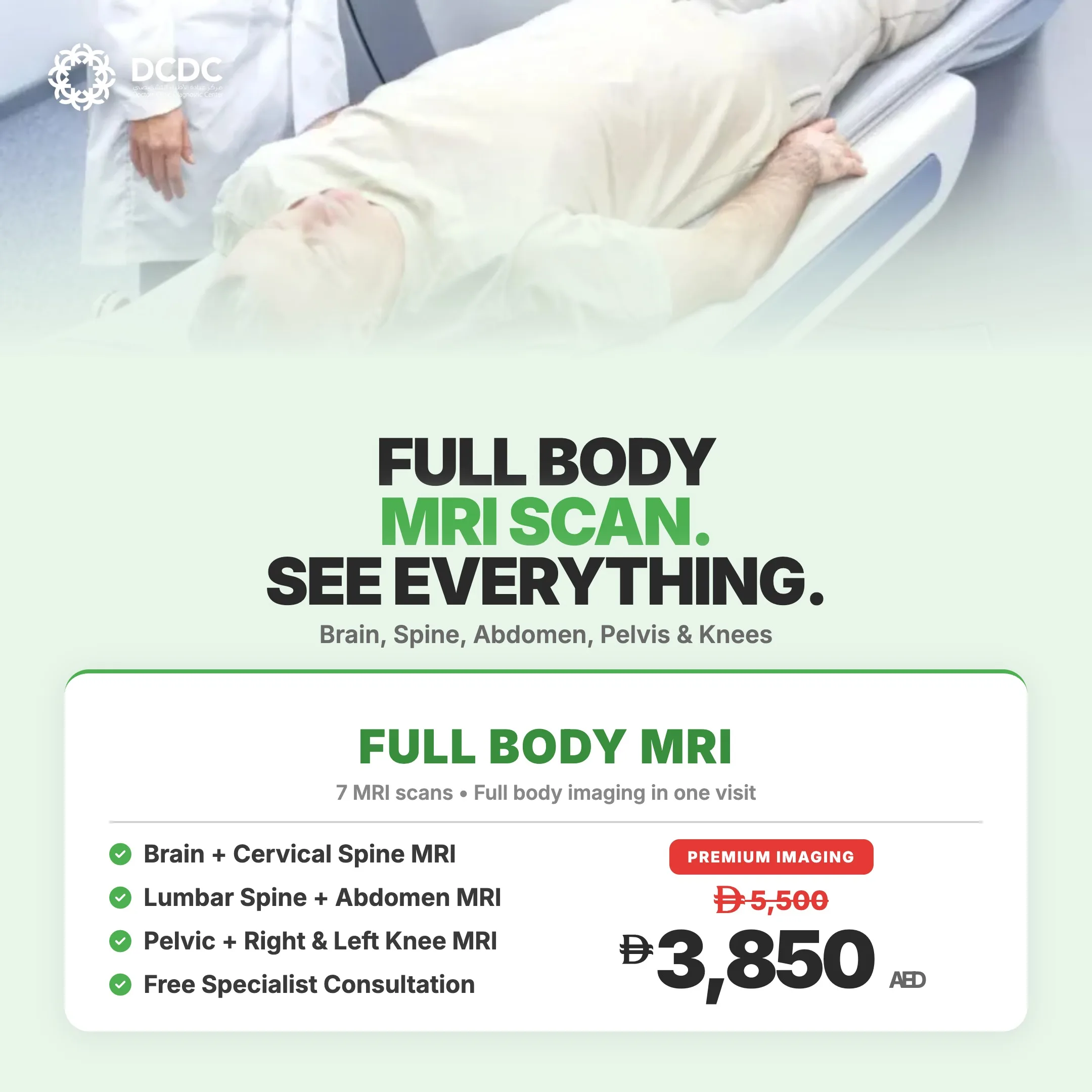


How Much Does a Home X-Ray Cost in Dubai?
Home X-ray pricing in Dubai varies depending on the body region, number of views, and the provider. At DCDC, a basic single-region home X-ray starts from AED 350, which includes the radiographer visit, portable digital imaging, and a radiologist-reviewed report. This positions DCDC well below the broader market, where home X-ray services typically range from AED 400 to over AED 1,000 per visit.
The cost difference between a home X-ray and an in-clinic X-ray reflects the additional logistics: a DHA-licensed radiographer travels to your location with a portable digital X-ray unit, lead shielding, and all necessary consumables. However, when you factor in taxi fares, ambulance costs for bedridden patients, lost work hours, and the physical toll of transporting someone in pain, a home X-ray often proves more cost-effective overall.
| X-Ray Type | DCDC Home Price | Market Range |
|---|---|---|
| Chest X-Ray (PA) | From AED 350 | AED 400–800 |
| Bone / Extremity X-Ray | From AED 400 | AED 450–900 |
| Spine X-Ray | From AED 450 | AED 500–1,000 |
| Multiple Views / Regions | From AED 600 | AED 700–1,500 |
Home X-ray pricing comparison in Dubai (2026). Prices are indicative and may vary based on insurance, location, and clinical requirements.
Prices listed above are starting rates. Your final cost may differ depending on your insurance plan, the number of views required, your location within Dubai, and whether additional services such as a same-day radiologist consultation are requested. DCDC offers direct billing with over 20 insurance providers, which can significantly reduce or eliminate out-of-pocket costs.
What Is Included in a Home X-Ray Service?
A comprehensive home X-ray service is more than just taking an image. At DCDC, every home X-ray visit includes a complete end-to-end diagnostic workflow designed to match the quality and safety standards of an in-clinic X-ray.
- DHA-licensed radiographer: A qualified, licensed radiographer arrives at your home with all necessary credentials and identification.
- Portable digital X-ray unit: Battery-powered equipment with image quality comparable to fixed clinic systems, producing high-resolution digital images.
- Radiation safety measures: Lead shielding (aprons and thyroid guards) provided for the patient and any household members nearby, following international radiation protection protocols.
- Proper patient positioning: The radiographer ensures correct positioning for diagnostic-quality images, whether the patient is standing, seated, or bedridden.
- Secure image transmission: Digital images are transmitted securely to DCDC's radiology department immediately after acquisition.
- Radiologist-reviewed report: A licensed radiologist interprets the images and produces a formal report, typically available within 24 hours.
- Urgent findings escalation: Any critical or unexpected findings are communicated to the referring physician and patient immediately, without waiting for the standard reporting window.
Types of X-Ray Available at Home
Modern portable X-ray technology can perform the majority of plain radiograph studies that would otherwise require a visit to a radiology department. The following types of X-ray are routinely available through DCDC's home service in Dubai.
- Chest X-ray (PA and lateral): The most commonly requested home X-ray. Used to evaluate lung conditions, pneumonia, heart size, pleural effusions, and post-surgical changes. If you are comparing costs, see our detailed guide on chest X-ray cost in Dubai.
- Bone and extremity X-ray: Covers hands, wrists, forearms, elbows, shoulders, feet, ankles, knees, and hips. Essential for suspected fractures, arthritis monitoring, and post-operative follow-up.
- Spine X-ray: Cervical, thoracic, and lumbar spine imaging for back pain, disc disease assessment, and spinal alignment evaluation.
- Pelvis and hip X-ray: Commonly required for elderly patients with hip pain or suspected hip fractures after a fall.
- Abdominal X-ray: Used to assess bowel obstruction, constipation patterns, kidney stones, or the positioning of medical devices such as feeding tubes.
- Multi-region studies: When a physician orders X-rays of multiple body areas (for example, chest plus lumbar spine), these can be completed in a single home visit.
For a broader overview of all X-ray types and what each study evaluates, refer to our comprehensive X-ray scan guide for Dubai.
Who Needs an X-Ray at Home?
Home X-ray services are designed for patients who face barriers to visiting a clinic or hospital. While anyone can request a home X-ray for convenience, certain patient groups benefit the most from this service.
- Elderly patients with limited mobility: Seniors with arthritis, osteoporosis, or general frailty who find clinic visits physically taxing and risky. Our guide on elderly care at home in Dubai covers the full range of home services available.
- Post-surgical patients: Individuals recovering from orthopaedic surgery, hip replacement, or spinal procedures who need follow-up X-rays but should avoid unnecessary movement.
- Bedridden patients: Those with chronic illness, paralysis, or terminal conditions who cannot be transported safely.
- Patients with acute fractures: When a suspected fracture makes it painful or unsafe to travel. For more on fracture management, see our bone fracture treatment guide for Dubai.
- Patients with infectious conditions: Those in isolation or quarantine who need imaging without visiting a healthcare facility and risking further transmission.
- Palliative care patients: Individuals receiving end-of-life care at home who require periodic chest or abdominal X-rays for symptom management.
- Busy professionals and families: People who prefer the convenience of a home visit over waiting at a clinic, especially for routine follow-up imaging.
According to Dr. Hadeel Elnur, "Home X-ray is particularly valuable for elderly patients and those recovering from surgery. Transporting a frail patient to a clinic for a simple chest X-ray can cause unnecessary pain and infection exposure. With DCDC's portable digital equipment, we bring diagnostic-quality imaging directly to the bedside."
Home X-Ray vs Clinic X-Ray: Key Differences
Both home and clinic X-rays produce diagnostic-quality images when performed by qualified radiographers using modern digital equipment. However, there are practical differences that may influence your choice.
| Factor | Home X-Ray | Clinic X-Ray |
|---|---|---|
| Convenience | Performed at your location; no travel required | Requires visit to clinic or hospital |
| Cost | From AED 350 (includes home visit) | From AED 150 at DCDC |
| Image Quality | Diagnostic-quality portable digital imaging | Fixed high-resolution digital system |
| Available Studies | Chest, bone, spine, abdomen, pelvis, extremities | All of the above plus specialised views |
| Report Turnaround | Within 24 hours; urgent findings escalated immediately | Often same-day; some within 1–2 hours |
| Radiation Safety | Lead shielding provided; standard safety protocols | Dedicated shielded room; standard protocols |
| Best For | Elderly, bedridden, post-surgical, quarantined patients | Ambulatory patients, complex multi-view studies |
Comparison of home X-ray and clinic X-ray services in Dubai.
For most routine imaging needs—chest X-rays, single-region bone films, spine studies—home X-ray delivers equivalent diagnostic value. Clinic-based X-ray remains preferable when multiple specialised views are needed, when the study requires specific patient positioning equipment, or when immediate results are clinically necessary.
What to Expect During Your Home X-Ray at DCDC
DCDC's home X-ray process is streamlined to minimise disruption while maintaining full diagnostic standards. With a 4.8/5 Google rating and 98% patient satisfaction, the service is designed around patient comfort and clinical accuracy.
- Step 1 — Book your appointment: Call DCDC or send a WhatsApp message with your preferred date, time, and location. The team confirms availability and provides a cost estimate based on the X-ray type ordered.
- Step 2 — Radiographer arrives: A DHA-licensed radiographer arrives at your home within the scheduled time window, carrying a portable digital X-ray unit, lead shielding, and all required consumables.
- Step 3 — Setup (approximately 10 minutes): The radiographer sets up the equipment, positions lead shielding, and prepares the patient. They will confirm the study ordered and verify patient identity.
- Step 4 — X-ray acquisition (seconds): The actual X-ray exposure takes only a few seconds per view. The radiographer ensures proper positioning for each projection and checks image quality on the digital display immediately.
- Step 5 — Secure image transmission: Digital images are transmitted securely to DCDC's radiology department for interpretation. No physical films are required.
- Step 6 — Radiologist report (within 24 hours): A licensed radiologist reviews the images and issues a formal report. The report is shared with the patient and referring physician via secure channels.
- Step 7 — Urgent findings protocol: If the radiologist identifies any critical finding—such as a pneumothorax, large pleural effusion, or displaced fracture—the referring physician is contacted immediately, regardless of the time.
The entire home visit, from the radiographer's arrival to equipment pack-up, typically takes 30 to 45 minutes depending on the number of views required. Patients can remain in bed, in a wheelchair, or seated throughout the process.
Book Your Home X-Ray with DCDC
Schedule a portable X-ray at your home in Dubai. DHA-licensed radiographers, digital imaging, and radiologist-reviewed results from AED 350. Learn more about our X-Ray at Home service or call us to book today.
Is a Portable X-Ray Safe?
Portable X-ray equipment uses the same ionising radiation principles as fixed hospital systems, and the radiation dose for a given study is comparable. According to the World Health Organization, diagnostic X-rays at standard doses carry very low risk, and the diagnostic benefit almost always outweighs the minimal radiation exposure.
Safety measures during a home X-ray at DCDC include lead aprons and thyroid shields for the patient when appropriate, maintaining distance protocols for household members during exposure, and using the lowest effective radiation dose (ALARA principle). The portable digital equipment is regularly calibrated and inspected in accordance with DHA regulations.
- A single chest X-ray delivers approximately 0.02 mSv of radiation—equivalent to roughly 2.4 days of natural background radiation exposure.
- An extremity (hand, foot, or knee) X-ray delivers even less, typically under 0.01 mSv.
- For context, a return flight from Dubai to London exposes passengers to approximately 0.1 mSv—five times more than a chest X-ray.
- Pregnant women should inform the radiographer before any X-ray. In most cases, extremity X-rays can be performed safely with proper abdominal shielding, while chest and abdominal X-rays are generally deferred unless clinically urgent.
The NHS confirms that X-rays are a safe and well-established diagnostic tool, with the radiation dose from most studies being very small. Modern digital equipment, including portable units, uses lower doses than older film-based systems while producing superior image quality.
How to Book an X-Ray at Home in Dubai
Booking a home X-ray through DCDC is straightforward. You do not always need a doctor's referral, though some insurance providers may require one for coverage. Here is how to arrange your appointment.
- Phone: Call DCDC's home care booking line to speak with a coordinator who will confirm the type of X-ray, your address, and the preferred time slot.
- WhatsApp: Send a message with your name, the X-ray required, and your location. The team responds promptly with availability and pricing.
- Online: Visit the DCDC website and submit a home care booking request through the contact form.
When booking, have the following information ready: the type of X-ray ordered (or the body part to be imaged), any referral or prescription from your doctor, your insurance details if applicable, your full address including villa or apartment number, and any special access instructions (such as wheelchair ramps or building security procedures). To learn about the full scope of home medical services available in Dubai, visit our home healthcare services guide.
Insurance Coverage for Home X-Ray in Dubai
Many health insurance plans in Dubai do cover home diagnostic services, including portable X-ray, particularly when there is a documented medical necessity. DCDC partners with over 20 insurance providers and offers direct billing, which means eligible patients pay nothing out of pocket beyond their standard co-pay or deductible.
- Insurance with home care coverage: If your plan includes home healthcare benefits, the home X-ray cost is typically covered in full or with a small co-pay. DCDC's team can verify your eligibility before the visit.
- Insurance without home care coverage: Some plans cover the X-ray itself but not the home visit surcharge. In these cases, you may pay the difference between the in-clinic and home X-ray rates.
- Self-pay patients: If you are uninsured or your plan does not cover home diagnostics, DCDC offers transparent self-pay pricing starting from AED 350 with no hidden fees.
- Pre-authorisation: Some insurers require pre-authorisation for home diagnostic services. DCDC's insurance coordination team handles this process on your behalf to avoid delays.
To confirm coverage before your appointment, contact DCDC with your insurance card details. The team will verify benefits, check whether a referral is needed, and provide a cost breakdown before the radiographer is dispatched.
Check Your Insurance Coverage for Home X-Ray
DCDC offers direct billing with 20+ insurance providers in Dubai. Contact us with your insurance details and we will confirm your home X-ray coverage and out-of-pocket costs before your appointment.
When to Choose Clinic X-Ray Instead
While home X-ray covers the vast majority of routine imaging needs, there are situations where visiting a clinic or hospital radiology department is the better choice.
- Urgent or emergency imaging: If you suspect a serious injury, stroke, or acute abdomen, go to an emergency department where X-ray, CT, and other imaging are available immediately with on-site specialists.
- Complex or specialised studies: Certain projections—such as weight-bearing views, stress views, or specific dental and sinus X-rays—require positioning equipment or techniques that are only available in a clinic setting.
- Immediate results needed: When your physician needs the X-ray result within minutes to make a treatment decision, in-clinic imaging with on-site reporting is faster than the home service's standard 24-hour turnaround.
- Follow-up imaging requiring comparison: If the radiologist needs to compare your new images directly with older films stored in the clinic's PACS system, an in-clinic visit may be more efficient.
- Advanced imaging indicated: If the clinical suspicion warrants a CT scan, MRI, or ultrasound rather than a plain X-ray, those modalities are not available as home services and require a clinic visit.
If you are unsure whether your imaging need is suitable for a home visit, DCDC's medical team can advise you when you call. They will recommend the most appropriate setting based on the clinical indication, urgency, and your physical condition.
Home X-Ray for Elderly and Bedridden Patients
Home X-ray services have the greatest clinical impact for elderly and bedridden patients. Studies show that transporting frail elderly patients to hospital for routine diagnostic tests increases the risk of falls, pressure injuries during transit, hospital-acquired infections, and acute confusion (delirium) triggered by unfamiliar environments.
For elderly patients in Dubai, the practical barriers are even greater: high summer temperatures, long distances between residential areas and hospital radiology departments, and the physical difficulty of transferring a patient from bed to vehicle and back. A home X-ray eliminates all of these challenges.
- Bedridden imaging: DCDC's radiographers are trained to perform supine (lying-down) X-rays on patients who cannot sit or stand. Portable cassettes are placed behind the patient while they remain in bed, and the X-ray unit is positioned above.
- Dementia-friendly approach: Patients with cognitive impairment often become agitated in unfamiliar clinical environments. A home X-ray in familiar surroundings reduces distress and produces better-quality images because the patient is calmer and more cooperative.
- Chronic disease monitoring: Patients with heart failure, COPD, or recurrent pneumonia who need periodic chest X-rays benefit from regular home imaging without repeated hospital visits.
- Post-fall assessment: When an elderly person falls at home, a portable X-ray can quickly assess for hip, wrist, or spinal fractures before deciding whether hospital transfer is necessary.
DCDC's home care division, which maintains a 4.8/5 Google rating based on verified patient reviews, has extensive experience with elderly home diagnostics. The radiographers carry lightweight digital equipment that requires no special room preparation, and they coordinate directly with the patient's physician to ensure seamless follow-up care.
Preparing for Your Home X-Ray
Minimal preparation is needed for most home X-rays, but a few steps will help ensure the visit goes smoothly and produces the best-quality images.
- Clothing: Wear loose, comfortable clothing without metal buttons, zips, or underwire. You may be asked to change into a gown provided by the radiographer for chest or spine X-rays.
- Jewellery and metal objects: Remove necklaces, watches, piercings, and metal hair accessories from the area being imaged. Metal creates artefacts on X-ray images that can obscure diagnostic detail.
- Space: Ensure there is enough room around the patient's bed or chair for the radiographer to position the portable X-ray unit. A clearance of approximately 1.5 metres on one side of the bed is usually sufficient.
- Documentation: Have your Emirates ID, insurance card, and any doctor's referral or prescription ready for the radiographer on arrival.
- Inform household members: Other people in the room will be asked to step back or leave briefly during the X-ray exposure, which takes only a few seconds.
- Medical history: Inform the radiographer of any relevant medical history, including pregnancy or suspected pregnancy, recent surgeries, metal implants, or previous imaging of the same area.
The radiographer will review all of this with you on arrival and answer any questions before proceeding. There is no fasting requirement and no contrast injection for plain X-rays.
خدمات مرتبط در DCDC
مراقبت تخصصی و تشخیص پیشرفته در شهر بهداشت دبی
Frequently Asked Questions
Final Thoughts
Home X-ray services in Dubai have made diagnostic imaging accessible to patients who previously faced significant barriers to care. From elderly individuals who struggle with clinic visits to post-surgical patients who need follow-up imaging without the pain of transport, portable digital X-ray brings the radiology department to your bedside.
At DCDC, home X-ray starts from AED 350—competitively priced against the broader Dubai market while maintaining the same diagnostic standards as in-clinic imaging. With DHA-licensed radiographers, modern portable digital equipment, radiologist-reviewed reports within 24 hours, and direct billing with over 20 insurance providers, the service is designed for both clinical quality and patient convenience.
If you or a family member needs an X-ray but cannot easily travel to a clinic, a home X-ray is a safe, accurate, and increasingly affordable option. Contact DCDC to check your insurance coverage, confirm pricing for your specific study, and schedule a visit at a time that suits you.
منابع و مراجع
این مقاله توسط تیم پزشکی ما بررسی شده و به منابع زیر ارجاع میدهد:
- World Health Organization — Ionizing Radiation and Health Effects
- NHS — X-ray Overview
- Mayo Clinic — X-ray: About
- RadiologyInfo — Bone X-ray (Radiography)
- Cleveland Clinic — Chest X-ray
محتوای پزشکی این سایت توسط پزشکان دارای مجوز DHA بررسی میشود. مشاهده سیاست تحریریه برای اطلاعات بیشتر.

نوشته شده توسط
Dr. Hadeel Elnur
General Practitioner
MD, General Practice
Dr. Hadeel Elnur is a General Practitioner at Doctors Clinic Diagnostic Center (DCDC) in Dubai Healthcare City.
Related Articles

Chest X-Ray Cost Dubai: From AED 150
X-Ray Scan Dubai: Complete Guide

Home Healthcare Dubai: Services & Cost
Elderly Care at Home Dubai: Full Guide
Bone Fracture Treatment Dubai: Full Guide
More in Diagnostic Imaging
Ultrasound at Home Dubai: From AED 599 (2026)
بیشتر بخوانید
Neck MRI Dubai: What It Shows & Cost (2026)
بیشتر بخوانیدX-Ray Scan Dubai: Complete Guide (2026)
بیشتر بخوانید
MRI vs Ultrasound Dubai: Which Scan? (2026)
بیشتر بخوانید
MRI vs X-Ray Dubai: Which Scan Do You Need? (2026)
بیشتر بخوانید
Kidney Ultrasound vs CT Dubai: Which Test? (2026)
بیشتر بخوانید© 2026 Doctors Clinic Diagnostic Center (DCDC), Dubai Healthcare City. Originally published at https://doctorsclinicdubai.ae/blog/x-ray-at-home-dubai. All rights reserved. Unauthorized reproduction is prohibited.