
Termin vereinbaren
Verifizierte Patientenbewertungen des DCDC Diagnosezentrum in Dubai
Verifizierte Bewertungen und echte Patientenberichte aus Dubai Healthcare City
Ich bin sehr zufrieden mit dieser medizinischen Klinik. Ich hatte hier mein erstes Schwangerschaftsscreening. Es war erschwinglich und sehr professionell. Der Radiologe war einladend, freundlich und machte die Erfahrung großartig.
Aizhan Tokmanbetova
Am Freitagabend habe ich mir das Knie verletzt und am Sonntagabend einen MRT-Termin bekommen (am Sonntagnachmittag gebucht). Ich habe etwa 2 Minuten gewartet und war in etwas mehr als 30 Minuten fertig. Das Team war erstaunlich, freundlich und effizient.
Kirsten Evans
Das Team von Dr. Osama war sanft und erstaunlich. Nach einer schlechten Erfahrung anderswo war meine Beckenuntersuchung hier viel professioneller. Toller Bericht und sehr präzise.
Mary


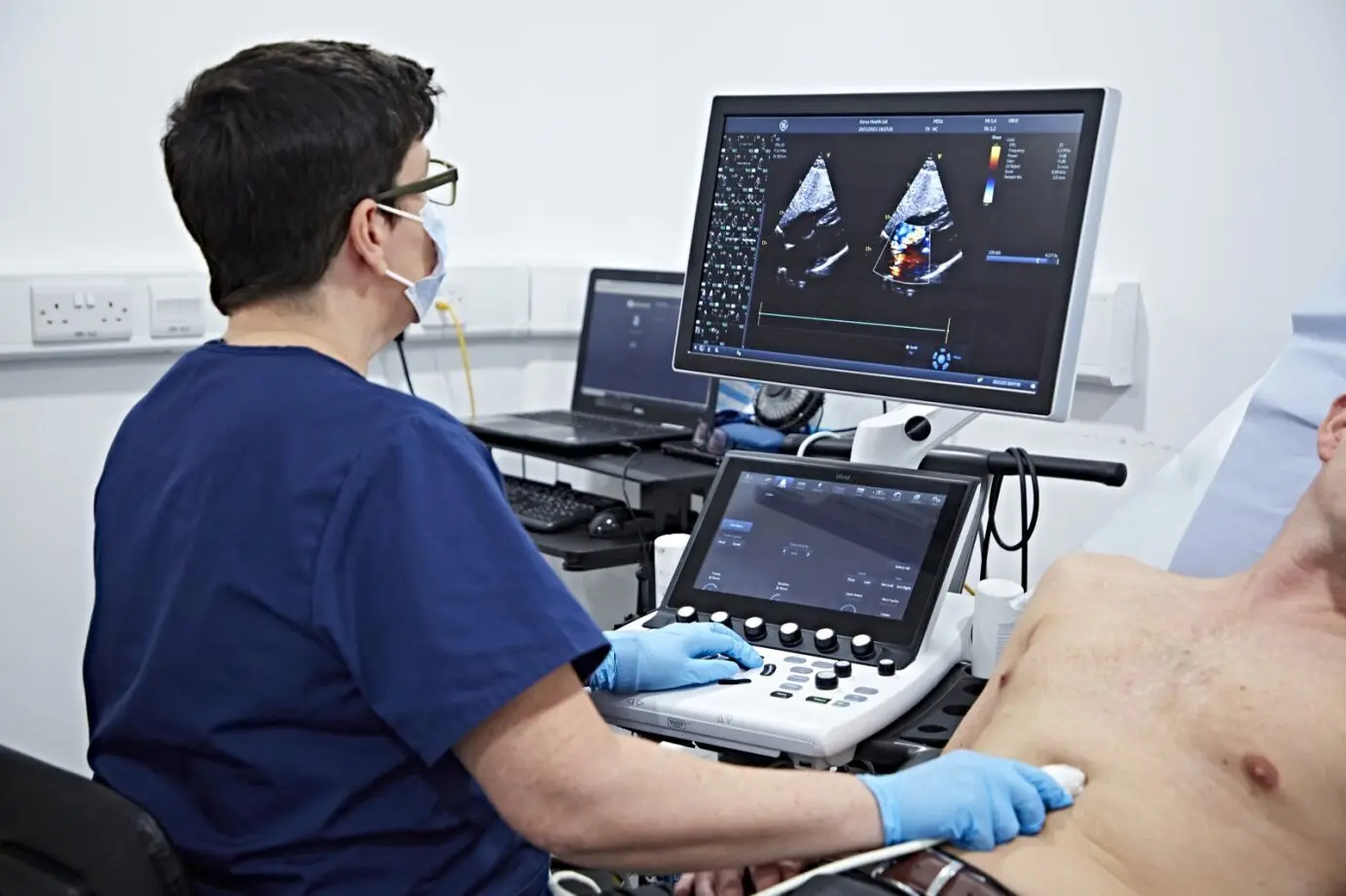
Echokardiogramm in Dubai: Herzultraschall-Bildgebung
Sehen Sie Ihr Herz in Echtzeit ohne Strahlung schlagen
Fachärztliche Versorgung
Echokardiogramm bei DCDC Dubai Healthcare City
Experten-Echokardiogramm in Dubai Healthcare City. Herzultraschall, Termine am selben Tag, 24-Stunden-Ergebnisse, Versicherung akzeptiert. Nicht-invasive Herzbildgebung.
Fachärztliche Versorgung
Echokardiogramm bei DCDC Dubai Healthcare City
Echokardiogramm in Dubai: Herzultraschall-Bildgebung
Sehen Sie Ihr Herz in Echtzeit ohne Strahlung schlagen
Experten-Echokardiogramm in Dubai Healthcare City. Herzultraschall, Termine am selben Tag, 24-Stunden-Ergebnisse, Versicherung akzeptiert. Nicht-invasive Herzbildgebung.
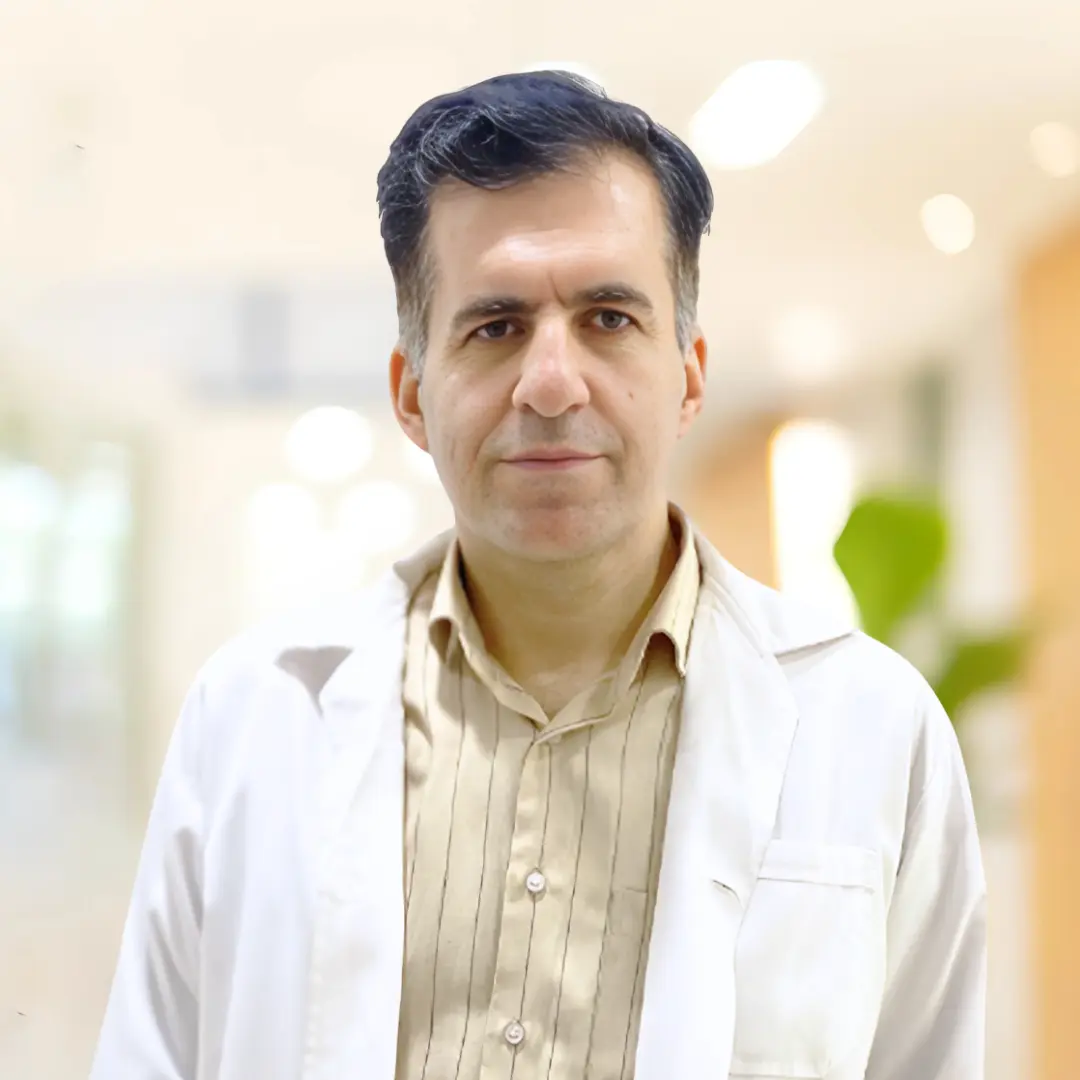
Dr. Shahoo Mazhari
Unsere Leistungen entdecken
Umfassende echokardiogramm Leistungen im DCDC Dubai Healthcare City.

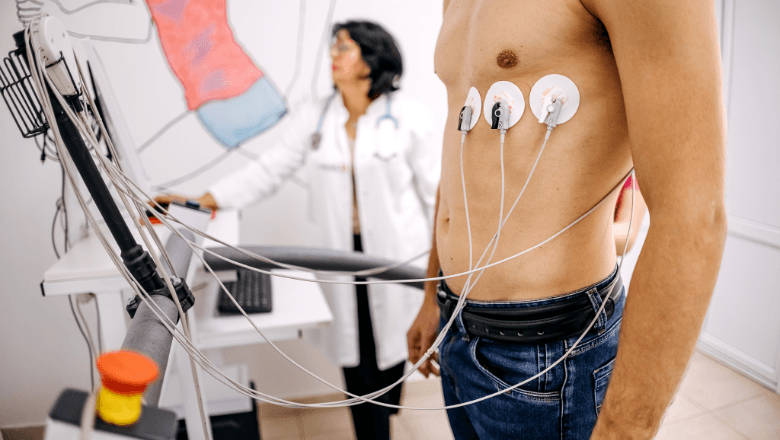
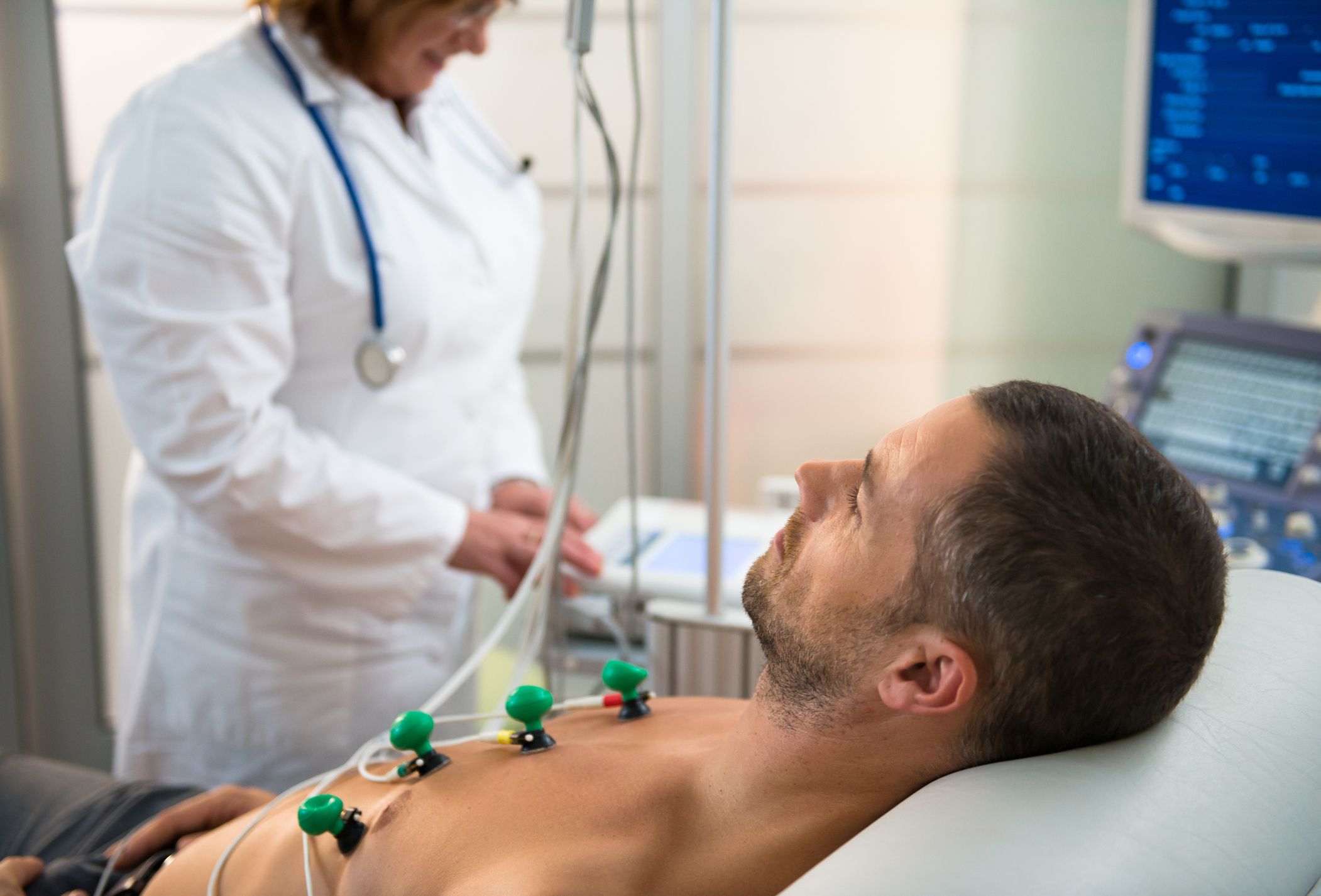
Alle Leistungen werden von DHA-lizenzierten Spezialisten durchgeführt
Wer sollte ein Echokardiogramm bekommen
Experten-Echokardiogramm in Dubai Healthcare City. Herzultraschall, Termine am selben Tag, 24-Stunden-Ergebnisse, Versicherung akzeptiert. Nicht-invasive Herzbildgebung.
Heart murmurs or abnormal heart sounds
Unexplained chest pain or shortness of breath
Monitoring after heart attack or heart disease
Valve disease assessment (stenosis, regurgitation)
Heart function check after treatment or surgery
Hypertension effects on the heart
Warum DCDC für Echokardiogramm wählen
Fachärztliche und zuverlässige Versorgung
MOHAP Licensed
Accredited medical center in Dubai Healthcare City. License NIMY7VY5-240925.
Fast Results
Reports ready within 18-24 hours. Same-day for urgent cases.
Insurance Support
Direct billing with 20+ insurers. We handle pre-authorization for you.
Convenient Location
Building 64, Block A in our clinic. Free parking on-site.
Expert Cardiologists
Board-certified specialists in cardiac imaging and echocardiography.
Patient Experience
4.8/5 Google rating. Comfortable, non-invasive cardiac imaging.
Ihr angenehmer Besuch
Ein einfacher, schrittweiser Echokardiogramm-Untersuchungsprozess für Komfort, Schnelligkeit und Genauigkeit.
Echokardiogramm-Preise
Die Echocardiogram-Preise in Dubai variieren je nach Testtyp und Versicherungsdeckung für Standard- und Stress-Echokardiogramme.
- Preise variieren je nach Untersuchungsart und Kontrastmittelbedarf
- Versicherungsdeckung akzeptiert mit Überweisung und Verifizierung
- Transparente Selbstzahlerpreise mit sofortigem Angebot auf Anfrage
Versicherungsverifizierung in Minuten • Keine versteckten Gebühren • Schnelle Antwort auf WhatsApp
Patientenratgeber
Was Sie erwartet
Experten-Echokardiogramm in Dubai Healthcare City. Herzultraschall, Termine am selben Tag, 24-Stunden-Ergebnisse, Versicherung akzeptiert. Nicht-invasive Herzbildgebung.
Versicherung & Standort
Versicherungspartner
- •Über 20 Versicherungsanbieter in Dubai einschließlich Daman, AXA, ADNIC und andere
- •Vorabgenehmigung-Unterstützung und Direktabrechnung (falls zutreffend)
- •Deckungsüberprüfung vor Ihrem Termin in unserer Klinik in Dubai Healthcare City
- •Transparente Preisgestaltung ohne versteckte Gebühren für echokardiogramm-Leistungen








Besuchen Sie uns in Dubai Healthcare City
Doctors Clinic Diagnostic Center
Gebäude 64, Block A, Al Razi Medical Complex, Dubai Healthcare City, Dubai, VAE
Nahe der Oud Metha Road · Einfacher Zugang von Bur Dubai, Downtown Dubai, Business Bay · Kostenlose Patientenparkplätze verfügbar
Öffnungszeiten
Mo-Do, Sa: 8:00 - 22:30 Uhr | So: 8:30 - 22:30 Uhr | Fr: 9:00 - 22:00 Uhr
So funktioniert die Versicherung bei DCDC
Deckung prüfen
Überprüfen Sie, ob Ihr Plan Echokardiogramm abdeckt
Überweisung erhalten
Einige Versicherer verlangen eine Überweisung — wir helfen Ihnen gerne
Vorab-Genehmigung
Wir übernehmen die Vorab-Genehmigung direkt mit Ihrem Versicherer
Direktabrechnung
Keine Vorauszahlung — wir rechnen direkt mit Ihrem Versicherer ab
Nur Eigenanteil
Sie zahlen nur den anfallenden Eigenanteil in der Klinik
Deckung prüfen
Überprüfen Sie, ob Ihr Plan Echokardiogramm abdeckt
Überweisung erhalten
Einige Versicherer verlangen eine Überweisung — wir helfen Ihnen gerne
Vorab-Genehmigung
Wir übernehmen die Vorab-Genehmigung direkt mit Ihrem Versicherer
Direktabrechnung
Keine Vorauszahlung — wir rechnen direkt mit Ihrem Versicherer ab
Nur Eigenanteil
Sie zahlen nur den anfallenden Eigenanteil in der Klinik
Your Specialist
Dr. Shahoo Mazhari
Consultant Cardiologist
MD, Consultant Cardiologist
Persian · English · Kurdish
Patientenratgeber
Echokardiographie (Echo) verstehen
Die Echokardiographie (Echo) ist eine Ultraschalluntersuchung des Herzens, die Herzstrukturen, Klappenbewegungen und Pumpfunktion in Echtzeit abbildet. Es wird keine Strahlung verwendet und ist vollkommen sicher und komfortabel. Es ist das präziseste diagnostische Werkzeug zur Beurteilung der Herzfunktion.
Am DCDC führen zertifizierte Kardiologen die Untersuchung mit hochpräzisen 2D- und 3D-Echogeräten durch. Die Untersuchung ermöglicht die Messung der Ejektionsfraktion, Beurteilung der Herzdrücke und Erkennung von Herzthromben und Strukturanomalien.
Eine Echo-Sitzung dauert in der Regel 30-45 Minuten. Sie kann in Ruhe oder unter Belastung (Stress-Echo) durchgeführt werden, und die Ergebnisse sind für die meisten Fälle am selben Tag verfügbar.
Erkrankungen, die durch Echo bewertet werden
Herzinsuffizienz und reduzierte Ejektionsfraktion
Messung der linksventrikulären Ejektionsfraktion und Beurteilung der Pumpfunktion zur Diagnose systolischer oder diastolischer Herzinsuffizienz.
Herzklappenerkrankungen
Beurteilung von Stenosen oder Insuffizienz der Aorten-, Mitral-, Pulmonal- und Trikuspidalklappen für Nachsorge oder Interventionsentscheidungen.
Angeborene Herzfehler
Erkennung von Vorhof- oder Kammerseptumdefekten und strukturellen Herzanomalien bei Kindern und Erwachsenen.
Perikarderguss und Aortenerkrankungen
Identifikation von Flüssigkeitsansammlungen um das Herz (Perikarditis) und Aortenerweiterung oder -ruptur.
Herzthromben und Schlaganfallrisiko
Erkennung von Thromben im linken Vorhof oder Ventrikel und kardialer Emboliequelle bei Vorhofflimmern.
Pulmonale Hypertonie
Messung des Pulmonalarteriendrucks und Beurteilung der rechtsventrikulären Belastung bei Lungenembolie.
Verwandte Artikel
Kardiologie in Dubai: Leitfaden für Experten-Herzversorgung
Erfahren Sie mehr über die Kardiologie-Dienstleistungen bei DCDC.
Prävention von Herzerkrankungen
Praktische Schritte zur Vorbeugung von Herzerkrankungen.
Hypertonie: Der Stille Killer
Warum Bluthochdruck gefährlich ist und wie er behandelt wird.
Verwandte Leistungen
Entdecken Sie weitere Diagnose- und Beratungsleistungen in unserer Klinik in Dubai Healthcare City.
Häufig gestellte Fragen
Häufige Fragen zu Echokardiogramm in Dubai.
Wir bieten Echokardiogramm in Dubai Healthcare City an. Unser Team aus erfahrenen Spezialisten steht Ihnen für eine umfassende Untersuchung und Beratung zur Verfügung. Kontaktieren Sie uns für weitere Informationen.
Die Dauer variiert je nach individuellem Fall. Unser Team wird Sie vorab über den genauen Zeitaufwand informieren. Kontaktieren Sie uns für einen Termin.
Die meisten großen Versicherungen in Dubai decken Echokardiogramm ab. Wir bieten Direktabrechnung mit über 20 Versicherungsgesellschaften, einschließlich Daman, AXA und Bupa. Kontaktieren Sie uns, um Ihre Versicherungsdeckung zu überprüfen.
Unser Team wird Ihnen vor dem Termin spezifische Vorbereitungsanweisungen geben. Im Allgemeinen empfehlen wir, alle aktuellen Medikamente und relevante medizinische Unterlagen mitzubringen.
Bei DCDC bieten wir Echokardiogramm mit erfahrenen Spezialisten, modernster Ausrüstung und erstklassiger Patientenversorgung in Dubai Healthcare City an. Unsere Einrichtung ist von MOHAP lizenziert und folgt strengen klinischen Standards.
Sie können einen Termin für Echokardiogramm telefonisch unter +971 54 219 5008 oder über unser Online-Buchungssystem vereinbaren. Wir bieten flexible Terminzeiten einschließlich Same-Day-Termine bei Verfügbarkeit.
Wichtige Fakten
Medizinische Aufsicht
Alle Leistungen werden unter Aufsicht lizenzierter medizinischer Fachkräfte in unserer MOHAP-akkreditierten Einrichtung erbracht.