
Wichtigste Erkenntnisse
- Food poisoning symptoms typically appear 1-6 hours after eating contaminated food and include nausea, vomiting, diarrhoea, stomach cramps, and fever — most cases resolve within 24-48 hours with proper hydration and rest
- Dubai's extreme summer heat (45°C+) accelerates bacterial growth in food, making food poisoning significantly more common between May and October — food left at room temperature for just 2 hours can harbour dangerous bacteria
- See a doctor immediately if you notice blood in your stool, fever above 38.5°C, signs of severe dehydration (dizziness, dark urine, no urination), or if symptoms persist beyond 3 days — these are red flags that require medical evaluation
- Common bacteria behind food poisoning in Dubai include Salmonella, E. coli, Campylobacter, and Staphylococcus aureus — a stool test can identify the exact pathogen and guide targeted treatment
- Children under 5 and adults over 65 are at highest risk for complications from food poisoning, including severe dehydration and electrolyte imbalance — seek medical attention earlier for these groups
- At DCDC Dubai Healthcare City, food poisoning evaluation includes a GP consultation from AED 150, on-site stool and blood tests with same-day results, and IV fluid rehydration if needed — with direct billing for 20+ insurance partners
Food poisoning is one of the most common reasons for urgent GP visits in Dubai, and the risk increases dramatically during summer when temperatures exceed 45°C and food spoils faster than many people realise. Whether you ate something at a restaurant, received a food delivery that sat in the heat, or suspect something from a hotel buffet, knowing which symptoms are normal and which require a doctor can make the difference between a miserable day at home and a dangerous medical situation. This guide covers everything you need to know: how to recognise food poisoning symptoms, when to seek medical attention, what treatment options are available, and how Dubai's climate makes food safety especially important. If you are experiencing symptoms now, our General Consultation service at DCDC offers same-day appointments in Dubai Healthcare City.
From identifying the type of food poisoning to understanding when home care is enough and when you need medical help — plus Dubai-specific risks, treatment costs, and prevention tips for the summer months. Reviewed by Dr. Hadeel Elnur, General Practitioner at DCDC Dubai Healthcare City.
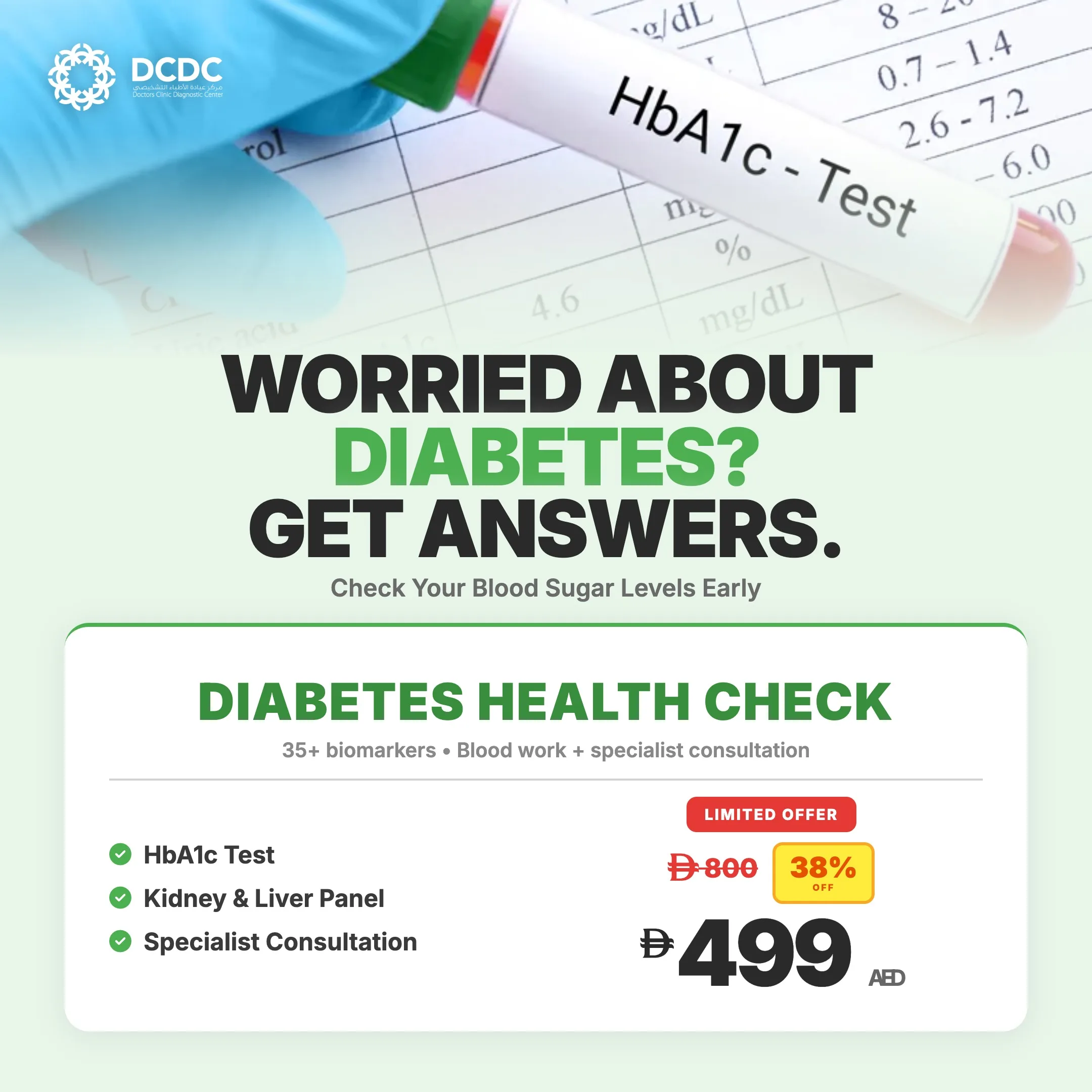
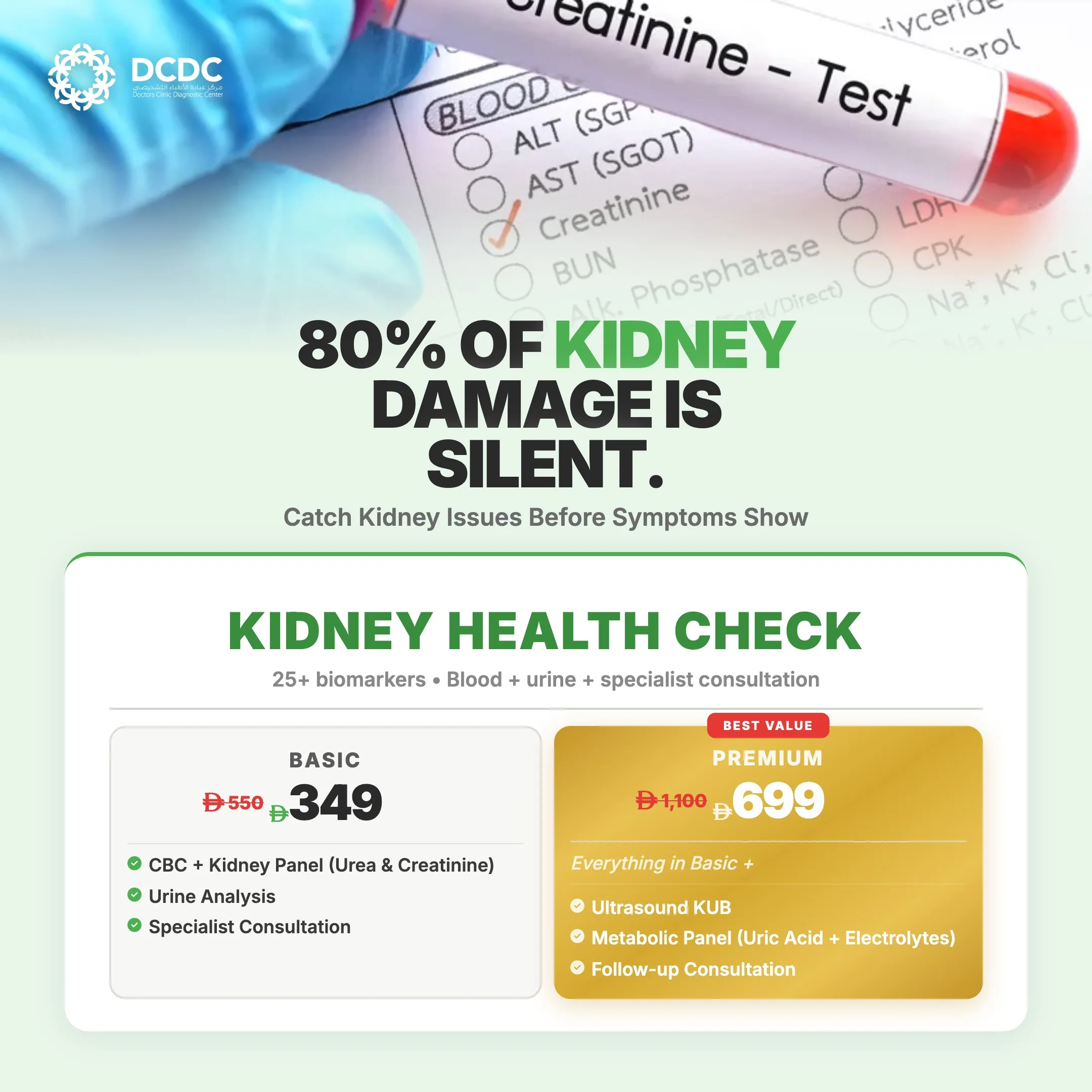
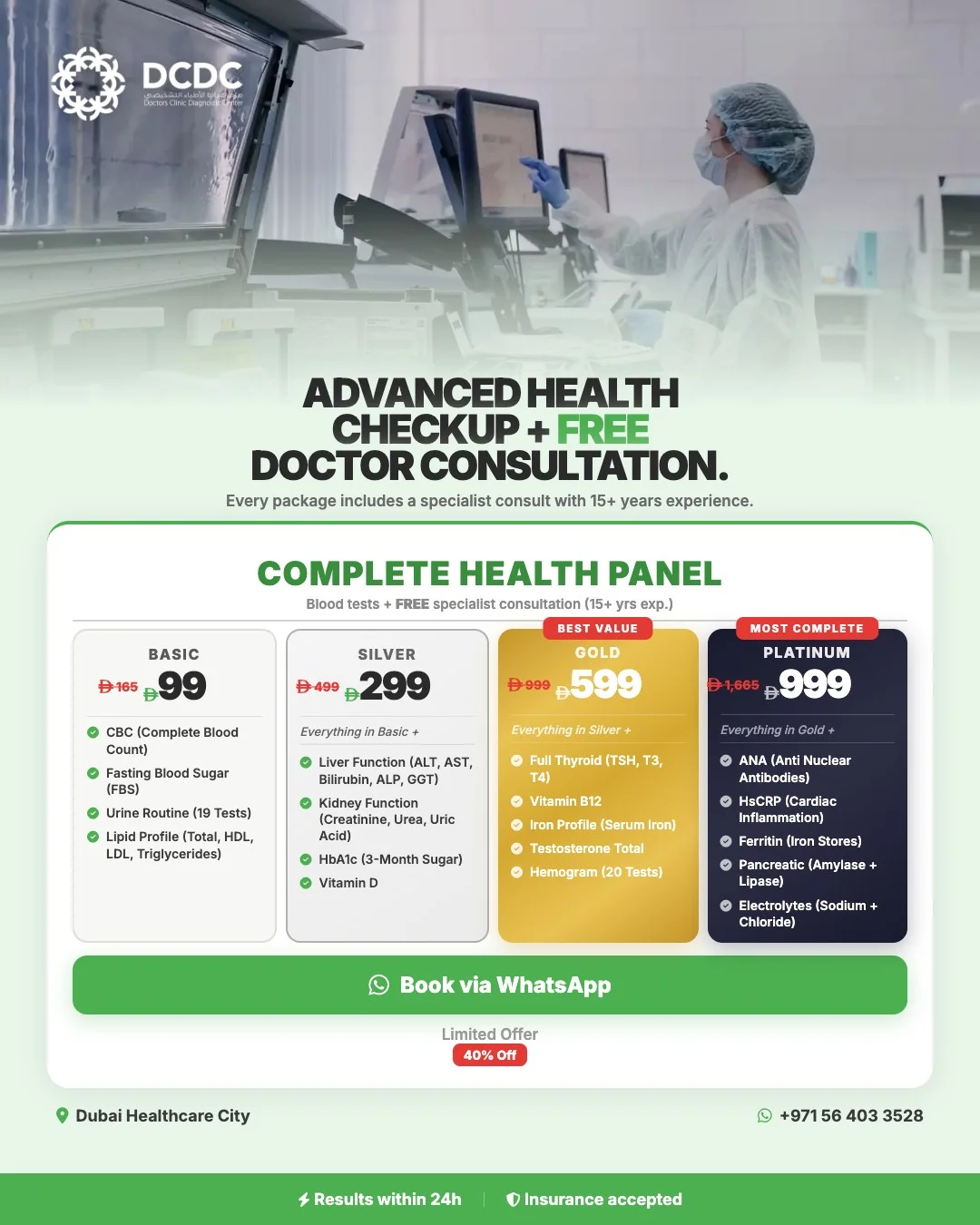
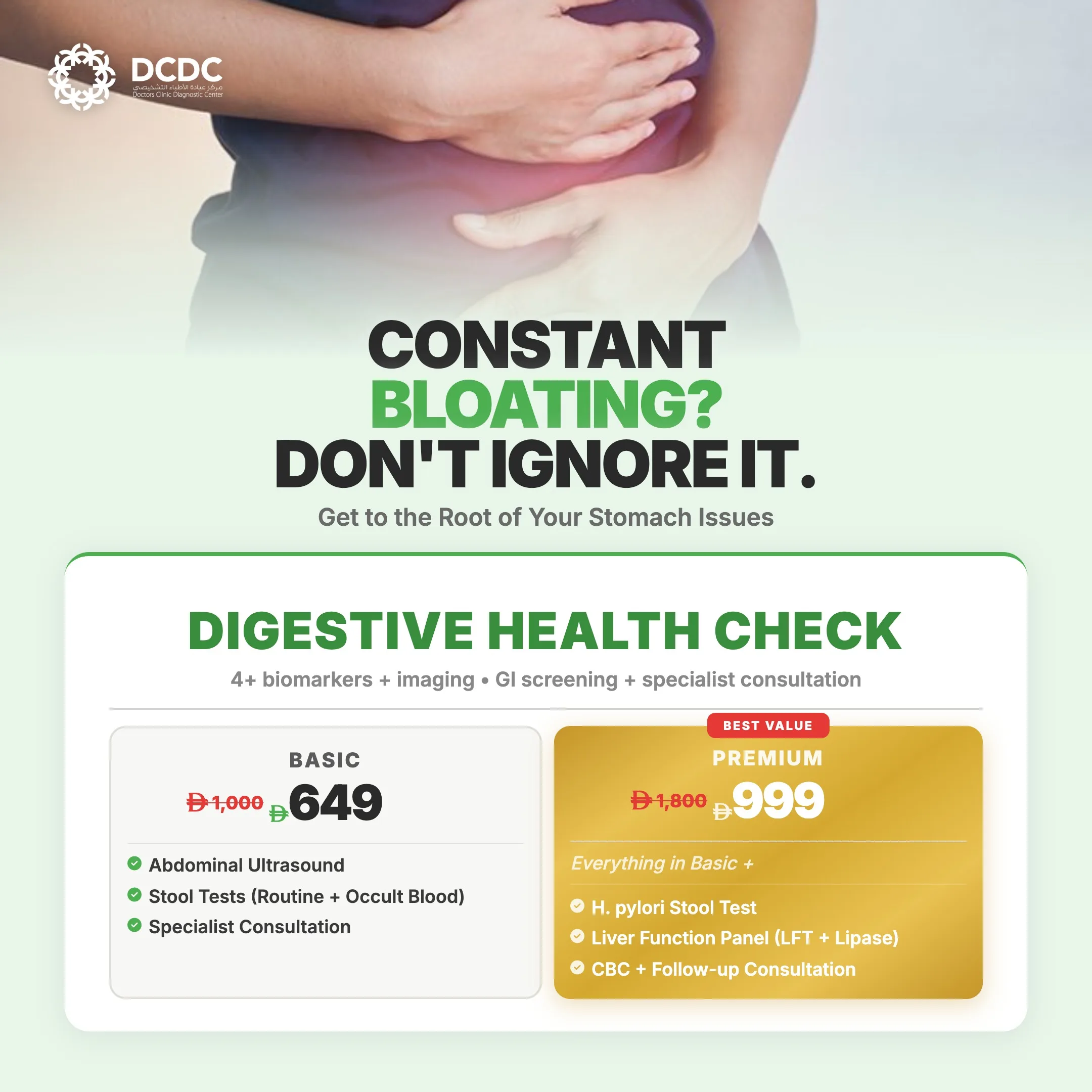
Health Screening Packages
Save with our bundled screening packages — specialist consultation included


What Is Food Poisoning?
Food poisoning (foodborne illness) occurs when you consume food or water contaminated with harmful bacteria, viruses, parasites, or their toxins. It is not a single disease but a group of conditions caused by different pathogens, each with distinct symptoms and timelines. Understanding the common culprits helps you identify what may have made you ill and how serious it might be.
Common Bacteria That Cause Food Poisoning
- Salmonella: Found in raw or undercooked poultry, eggs, and unpasteurised dairy. Symptoms appear 6-72 hours after exposure and include diarrhoea, fever, and abdominal cramps lasting 4-7 days. One of the most common causes of food poisoning worldwide
- Escherichia coli (E. coli): Certain strains (especially E. coli O157:H7) cause severe bloody diarrhoea and can lead to kidney complications. Commonly found in undercooked beef, unpasteurised milk, and contaminated fresh produce. Symptoms typically appear 1-3 days after exposure
- Campylobacter: The most frequent bacterial cause of gastroenteritis globally. Found in undercooked poultry, unpasteurised milk, and contaminated water. Causes watery or bloody diarrhoea, cramping, and fever starting 2-5 days after exposure
- Staphylococcus aureus: Produces toxins in food left at room temperature. Symptoms appear rapidly — within 1-6 hours — and include severe nausea, vomiting, and stomach cramps. Particularly relevant in Dubai's heat where food left out spoils quickly
- Norovirus: Highly contagious virus spread through contaminated food, water, or surfaces. Causes sudden onset of vomiting and diarrhoea within 12-48 hours. Common in shared dining environments and buffets
- Clostridium perfringens: Thrives in large quantities of food kept warm but not hot enough. Common in catered events and buffets. Causes diarrhoea and cramps 6-24 hours after eating, usually resolving within 24 hours
According to the World Health Organization, an estimated 600 million people — nearly 1 in 10 globally — fall ill after eating contaminated food each year. In hot climates like Dubai's, the risk is amplified because bacteria multiply fastest between 5°C and 60°C (the "danger zone"), and summer temperatures keep food in this range almost constantly when left unrefrigerated.
Food Poisoning Symptoms: How to Recognise It
Food poisoning symptoms vary depending on the pathogen involved, the amount of contaminated food consumed, and your overall health. However, there is a recognisable pattern that distinguishes food poisoning from other digestive issues:
Early Symptoms (First 1-6 Hours)
- Nausea: Often the first symptom — a persistent feeling of queasiness that may or may not lead to vomiting
- Vomiting: The body's attempt to expel the contaminated food. May be sudden and forceful, especially with Staphylococcus toxins
- Stomach cramps: Abdominal pain ranging from mild discomfort to severe, gripping cramps
- Loss of appetite: Complete aversion to food is common and actually protective — your body is signalling you to stop eating
Developing Symptoms (6-48 Hours)
- Watery diarrhoea: Frequent, loose stools as the intestines try to flush out the pathogen. May occur 10-15+ times per day in severe cases
- Fever: Low-grade fever (37.5-38.5°C) indicates your immune system is fighting the infection. High fever (>38.5°C) is a red flag requiring medical attention
- Muscle aches and weakness: General malaise and body aches, similar to flu symptoms
- Headache: Often related to dehydration from fluid loss through vomiting and diarrhoea
- Chills and sweating: Temperature regulation is disrupted, causing alternating chills and sweating
Symptom Timeline by Pathogen
| Pathogen | Onset After Eating | Main Symptoms | Typical Duration |
|---|---|---|---|
| Staphylococcus aureus | 1-6 hours | Severe nausea, vomiting, cramps | 24-48 hours |
| Clostridium perfringens | 6-24 hours | Watery diarrhoea, cramps | 24 hours |
| Salmonella | 6-72 hours | Diarrhoea, fever, cramps | 4-7 days |
| Norovirus | 12-48 hours | Vomiting, diarrhoea, nausea | 1-3 days |
| Campylobacter | 2-5 days | Bloody diarrhoea, fever, cramps | 2-10 days |
| E. coli O157:H7 | 1-3 days | Severe bloody diarrhoea, cramps | 5-10 days |
Symptom onset and duration vary by pathogen. This table covers the most common causes of food poisoning.
Food Poisoning vs Stomach Flu: Key Differences
Many people confuse food poisoning with "stomach flu" (viral gastroenteritis), and the symptoms can look almost identical — nausea, vomiting, diarrhoea, and abdominal pain. However, the causes, onset, and treatment differ in important ways:
| Feature | Food Poisoning | Stomach Flu (Viral Gastroenteritis) |
|---|---|---|
| Cause | Bacteria, toxins, or parasites in contaminated food | Viruses (norovirus, rotavirus) spread person-to-person |
| Onset | Hours after eating a specific meal | 12-48 hours after viral exposure |
| Vomiting | Can be severe and sudden | Usually moderate, comes in waves |
| Diarrhoea | May be bloody (Salmonella, E. coli, Campylobacter) | Usually watery, not bloody |
| Fever | Variable — depends on pathogen | Low-grade fever common |
| Duration | 24 hours to 10 days (depends on pathogen) | 1-3 days typically |
| Contagious | Not usually person-to-person | Highly contagious |
| Other affected people | Others who ate the same food often get sick | Close contacts get sick regardless of food |
Distinguishing food poisoning from stomach flu helps determine the right treatment approach.
The key clue is timing and shared exposure: if symptoms started within hours of a specific meal and other people who ate the same food are also sick, food poisoning is the most likely cause. If symptoms appeared gradually and close contacts (who ate different food) are also ill, viral gastroenteritis is more probable. Both conditions carry a significant risk of dehydration — for a detailed guide on recognising and managing dehydration, see our dehydration symptoms and treatment guide.
Common Causes of Food Poisoning in Dubai
Dubai's unique combination of extreme heat, diverse food culture, and year-round tourism creates specific food poisoning risk factors that residents and visitors should understand:
Summer Heat and Food Spoilage
When ambient temperatures exceed 45°C — which happens regularly from June through September — food left outside refrigeration enters the bacterial "danger zone" (5-60°C) almost immediately. A sandwich left on a kitchen counter, groceries sitting in a hot car for 30 minutes, or leftovers cooling on the stove can harbour dangerous bacterial levels faster than many people expect. Bacteria like Staphylococcus aureus can produce toxins in contaminated food within just 2 hours at room temperature in Dubai's summer.
Food Delivery Risks
Dubai has one of the highest food delivery rates in the Middle East, with platforms like Talabat and Deliveroo handling millions of orders monthly. During peak summer, food may sit in delivery bags on motorcycles in 45-50°C heat for 30-60 minutes between the restaurant and your door. This transit time in extreme heat is enough for bacterial multiplication, especially in dishes containing rice, chicken, seafood, or dairy. To reduce risk: eat delivered food immediately, avoid ordering dishes that are sensitive to temperature abuse, and check that hot food arrives hot and cold food arrives cold.
Buffet Dining
Buffets are a cornerstone of Dubai's dining culture — hotel brunches, wedding receptions, and corporate events all centre around buffet-style service. The risk lies in food sitting at serving temperature for extended periods. Dishes that are not maintained at above 60°C (hot) or below 5°C (cold) become breeding grounds for bacteria. Dubai Municipality enforces strict food safety regulations, but the sheer volume of buffet service means risk remains. Avoid buffet items that look like they have been sitting for a long time, and be cautious with seafood, mayonnaise-based salads, and rice dishes at buffets.
Ramadan Food Preparation
During Ramadan, large quantities of food are often prepared hours in advance for iftar gatherings. Pre-dawn suhoor meals may be prepared the evening before and left in the refrigerator — or sometimes on the counter. The combination of bulk cooking, advance preparation, and the rush to serve at iftar can lead to food not being stored, reheated, or served at safe temperatures.
The Air-Conditioning Factor
Dubai's indoor lifestyle means many people spend most of their time in air-conditioned environments. This creates a false sense of security about food safety — people may leave food on the counter thinking the AC keeps it cool enough. However, most air-conditioned rooms are set between 22-25°C, which is well within the bacterial danger zone. Food left on a kitchen counter in an air-conditioned Dubai apartment can still develop unsafe bacterial levels within 2-4 hours.
When to See a Doctor for Food Poisoning
Most food poisoning cases resolve on their own within 24-48 hours with rest and hydration. However, certain symptoms are red flags that indicate you need medical attention. Do not wait these out at home:
Red Flag Symptoms — See a Doctor Immediately
- Blood in your stool or vomit: Bloody diarrhoea may indicate infection with E. coli, Salmonella, or Campylobacter and carries risk of complications including kidney damage
- Fever above 38.5°C (101.3°F): High fever suggests a bacterial infection that may need antibiotic treatment rather than just supportive care
- Signs of severe dehydration: Dizziness or lightheadedness when standing, dark amber or brown urine, no urination for 8+ hours, dry mouth and no tears, rapid heartbeat, or confusion
- Symptoms lasting more than 3 days: Most food poisoning resolves within 48 hours. Persistent symptoms suggest a more serious infection or complication that needs investigation
- Inability to keep any fluids down: If vomiting is so severe that you cannot retain even small sips of water for more than 12 hours, you risk dangerous dehydration and may need IV fluids
- Severe abdominal pain: Intense, localised, or worsening abdominal pain — especially in the lower right — could indicate appendicitis or other conditions that mimic food poisoning
- Neurological symptoms: Blurred vision, tingling, muscle weakness, or difficulty swallowing are rare but serious signs of botulism or toxin-mediated food poisoning
High-Risk Groups — Seek Medical Attention Earlier
- Children under 5: Dehydrate rapidly and are more susceptible to complications
- Adults over 65: Weakened immune response and higher complication risk
- Pregnant women: Certain pathogens (Listeria, Salmonella) pose serious risks to the pregnancy
- Immunocompromised individuals: Those on chemotherapy, immunosuppressant medications, or with HIV/AIDS
- People with chronic illness: Diabetes, kidney disease, or inflammatory bowel disease
According to Dr. Hadeel Elnur, the most important step when experiencing food poisoning symptoms is to stay hydrated. "Most cases resolve within 24-48 hours with proper fluid intake, but if you notice blood in your stool, a fever above 38.5°C, or severe dehydration signs like dizziness and dark urine, you should see a doctor immediately rather than waiting it out. Early assessment allows us to check for bacterial infections that may need antibiotics and prevents dehydration from becoming dangerous."
Food Poisoning Treatment Options
Treatment for food poisoning depends on the severity of symptoms, the suspected pathogen, and the patient's overall health. Here is a comprehensive look at the treatment spectrum from home care to medical intervention:
Home Care for Mild Food Poisoning
- Oral rehydration is the priority: The greatest danger from food poisoning is dehydration caused by vomiting and diarrhoea. Drink oral rehydration solution (ORS) — available at any Dubai pharmacy — in small, frequent sips (30-50 ml every 10-15 minutes). ORS is more effective than plain water because it contains the precise balance of sodium, potassium, and glucose to maximise fluid absorption
- Rest completely: Your body is fighting an infection. Rest allows your immune system to work effectively and reduces fluid loss from activity
- Avoid solid food initially: Do not force yourself to eat during the first 6-12 hours of active vomiting. Once vomiting subsides, introduce bland foods gradually (see recovery diet section below)
- Avoid anti-diarrhoeal medication initially: Over-the-counter medications like loperamide (Imodium) may slow the body's natural process of flushing out the pathogen. Avoid them in the first 24 hours unless directed by a doctor, and never use them if you have bloody diarrhoea or fever
- Monitor your temperature: Check your temperature every 4-6 hours. If fever exceeds 38.5°C, seek medical attention
- Paracetamol for fever and pain: Paracetamol (acetaminophen) can help manage fever and body aches. Avoid NSAIDs (ibuprofen) as they can irritate an already inflamed stomach
Medical Treatment
- IV fluid rehydration: If you cannot keep oral fluids down or show signs of moderate-to-severe dehydration, intravenous fluids restore hydration and electrolytes rapidly. This can be administered at a clinic — hospital admission is not always necessary
- Anti-emetics: Prescription anti-nausea medication (ondansetron, metoclopramide) can stop severe vomiting, allowing you to retain oral fluids and begin recovery
- Antibiotics (when indicated): Not all food poisoning requires antibiotics — in fact, most cases do not. Antibiotics are prescribed for specific confirmed bacterial infections (certain Salmonella, Campylobacter, or severe E. coli infections) identified through stool culture. Using antibiotics unnecessarily can worsen some infections (E. coli O157:H7) and contributes to antibiotic resistance
- Electrolyte correction: Blood tests may reveal imbalances in sodium, potassium, or other electrolytes that need targeted supplementation
- Stool and blood testing: Identifying the specific pathogen through laboratory testing guides treatment decisions and determines whether antibiotics are appropriate
For a detailed overview of the blood tests used to assess infection markers, electrolyte balance, and organ function during food poisoning evaluation, see our complete blood test guide for Dubai.
Food Poisoning Treatment Cost in Dubai (2026)
Understanding the cost of food poisoning treatment helps you plan and avoids the financial shock of an emergency room visit. Treating food poisoning early at a clinic is significantly less expensive than waiting until it becomes an emergency. Here are indicative costs at DCDC Dubai Healthcare City:
| Service | DCDC Price | Dubai Market Range |
|---|---|---|
| GP Consultation | From AED 150 | AED 200-500 |
| Stool Analysis (Routine) | From AED 100 | AED 100-300 |
| Stool Culture & Sensitivity | From AED 200 | AED 200-500 |
| Complete Blood Count (CBC) | From AED 100 | AED 100-300 |
| Electrolyte Panel | From AED 150 | AED 150-400 |
| CRP (Inflammation Marker) | From AED 100 | AED 100-250 |
| Kidney Function Tests | From AED 200 | AED 200-500 |
Prices are indicative and may vary based on insurance coverage. DCDC operates under DHA-regulated pricing at Dubai Healthcare City. Prices valid as of May 2026.
A typical food poisoning evaluation at DCDC — GP consultation plus stool analysis and basic blood work — costs approximately AED 350-550 total. Compare this with a Dubai emergency room visit, which can cost AED 1,500-4,000+ for the same assessment. DCDC accepts 20+ insurance partners including Daman, AXA, Bupa, MetLife, and Cigna with direct billing, and self-pay patients benefit from DHA-regulated pricing with no hidden fees.
Think You Have Food Poisoning?
Walk in or book a same-day GP appointment at DCDC Dubai Healthcare City. GP consultation from AED 150, on-site stool and blood tests with same-day results, and IV rehydration if needed. Book a consultation or WhatsApp us now.
Open Sat-Thu 8 AM-10:30 PM, Fri 9 AM-10 PM. Free parking available.
What to Expect at DCDC for Food Poisoning
If you visit Doctors Clinic Diagnostic Center (DCDC) in Dubai Healthcare City with food poisoning symptoms, here is your step-by-step patient journey — from arrival to recovery:
Step 1: Arrival and Registration
DCDC is located in Building 64, Block A, Al Razi Medical Complex, Dubai Healthcare City (DHCC). Free dedicated on-site parking is available. Walk-in patients and same-day appointments are welcomed — no need to wait days for an opening. The average wait time is 15 minutes. Our reception team will check you in and verify your insurance (we accept 20+ insurance partners with direct billing) or arrange self-pay pricing.
Step 2: Vitals and Triage
A nurse will immediately check your blood pressure, heart rate, temperature, and oxygen saturation. These vitals help the GP assess dehydration severity and determine the urgency of your case. If you are visibly dehydrated or distressed, you will be prioritised.
Step 3: GP Consultation with Dr. Hadeel Elnur
Dr. Hadeel Elnur, a general practitioner and the first point of contact at DCDC, will take a detailed history: what you ate, when symptoms started, the nature of your vomiting and diarrhoea (frequency, colour, presence of blood), your fluid intake, and any underlying conditions. A focused physical examination includes abdominal palpation, skin turgor assessment for dehydration, and mucous membrane check. Based on the clinical picture, Dr. Hadeel will determine whether you need laboratory tests and what treatment approach is best.
Step 4: On-Site Laboratory Tests
DCDC's on-site laboratory means you do not need to visit a separate lab or wait days for results. Tests commonly ordered for food poisoning include: stool analysis (to identify bacteria, parasites, or blood), stool culture and sensitivity (to identify the specific pathogen and which antibiotics it responds to), complete blood count (to check white blood cell count indicating infection), CRP (inflammation marker), and electrolyte panel (to assess dehydration impact). Routine blood and stool test results are available same day, so your doctor can review results and adjust treatment without requiring a follow-up visit.
Step 5: Treatment and Recovery Plan
Depending on your condition, treatment may include: IV fluid rehydration if you are significantly dehydrated or cannot keep oral fluids down, anti-nausea medication to stop vomiting and enable oral rehydration, prescription medication (antibiotics only if stool culture confirms a bacterial infection that requires them), dietary guidance for the recovery period, and a follow-up plan if symptoms are severe or test results warrant monitoring. If Dr. Hadeel identifies that your case requires specialist input — such as a gastroenterologist for persistent symptoms — she coordinates the multi-specialty workup within DCDC's network.
DCDC is a MOHAP-licensed facility rated 4.8/5 on Google from 1,000+ verified reviews with 98% patient satisfaction. The clinic is open Saturday-Thursday 8 AM-10:30 PM and Friday 9 AM-10 PM, with extended hours that make it accessible after work or on weekends.
Food Poisoning in Children: Special Considerations
Children are particularly vulnerable to food poisoning complications, primarily because they dehydrate much faster than adults. A child's smaller body means that the same volume of fluid lost through vomiting and diarrhoea represents a much larger percentage of total body water.
Warning Signs in Children That Require Immediate Medical Attention
- No wet nappies for 6+ hours (infants) or no urination for 8+ hours (older children) — this indicates significant dehydration
- No tears when crying — a classic sign of dehydration in young children
- Sunken eyes or fontanelle (the soft spot on an infant's head) — indicates moderate-to-severe dehydration
- Bloody diarrhoea — at any age, this requires medical evaluation
- Fever above 38°C in children under 3 months — always requires urgent medical assessment regardless of suspected cause
- Persistent vomiting that prevents the child from keeping any fluids down for more than 4-6 hours
- Unusual drowsiness, irritability, or lethargy — the child seems "not themselves" and is difficult to rouse or console
- Abdominal pain that is severe or getting worse rather than coming and going with diarrhoea episodes
Managing Food Poisoning in Children at Home
- Oral rehydration solution (ORS) is essential: Give small, frequent sips — 5 ml (one teaspoon) every 1-2 minutes for young children. Do not give fruit juice, fizzy drinks, or sports drinks, which can worsen diarrhoea
- Continue breastfeeding: For breastfed infants, continue breastfeeding alongside ORS. Breast milk provides both hydration and immune support
- Resume normal diet gradually: Once vomiting stops, offer bland, age-appropriate foods. Do not restrict diet unnecessarily — early return to normal eating supports recovery
- Avoid anti-diarrhoeal medications: Loperamide and similar medications are not recommended for children. They can mask symptoms and cause dangerous side effects in young children
If your child has a fever alongside food poisoning symptoms, accurate assessment is important. Our guide on managing child fever covers when a fever is concerning, how to measure it accurately, and when to seek emergency care.
Dubai Summer Food Safety Tips
Prevention is always better — and cheaper — than treatment. Dubai's summer creates unique food safety challenges that require conscious habits. Here is an evidence-based guide to reducing your food poisoning risk:
Shopping and Storage
- Buy cold and frozen items last and get them into your refrigerator within 30 minutes. In Dubai summer, your car boot can reach 60-70°C — keep a cooler bag in your car for grocery runs
- Check expiry dates carefully: Heat accelerates spoilage, and products approaching their expiry date may already be compromised if they experienced temperature fluctuations during transport or display
- Refrigerator temperature: Set your fridge to 4°C or below and your freezer to -18°C. Use a thermometer to verify — many UAE fridges run warmer than the dial suggests
- Do not overload your fridge: Air needs to circulate to maintain safe temperatures. An overstuffed fridge has warm spots where bacteria thrive
Cooking and Serving
- The 2-hour rule becomes a 1-hour rule: In temperate climates, food can safely sit at room temperature for 2 hours. In Dubai's summer (>35°C), reduce this to 1 hour. After that, refrigerate or discard
- Cook meat and poultry thoroughly: Use a meat thermometer — chicken should reach 74°C internally, beef burgers 71°C. Do not rely on colour alone
- Reheat leftovers to 74°C: Reheating until "warm" is not enough. Food must reach 74°C throughout to kill bacteria that may have multiplied during storage
- Separate raw and cooked food: Use different cutting boards and utensils for raw meat and ready-to-eat foods. Cross-contamination is a leading cause of home food poisoning
Food Delivery Safety
- Eat delivered food immediately — do not leave it sitting while you finish a task or wait for someone to arrive
- Check food temperature on arrival: Hot food should be hot, cold food should be cold. If it is lukewarm, consider the risk
- Be cautious with high-risk items: Sushi, raw fish, cream-based sauces, rice dishes, and seafood are higher-risk items for delivery in extreme heat
- Check Dubai Municipality ratings: Restaurants in Dubai are rated by Dubai Municipality for food safety compliance. Choose establishments with high hygiene ratings
Recovery Diet After Food Poisoning
What you eat during and after food poisoning significantly affects your recovery speed. Your digestive system is inflamed and weakened — it needs gentle, easy-to-digest foods while it heals.
First 24 Hours: Focus on Fluids
During active vomiting and diarrhoea, do not force solid food. Focus entirely on staying hydrated with oral rehydration solution (ORS), clear broth, and small sips of water. Avoid dairy, caffeine, alcohol, and sugary drinks — these can worsen diarrhoea and delay recovery.
Days 2-3: The BRAT Diet and Beyond
Once vomiting stops and appetite begins to return, introduce bland foods gradually:
- B - Bananas: Easy to digest, rich in potassium (an electrolyte lost through diarrhoea and vomiting)
- R - Rice (white): Binding, low in fibre, gentle on the stomach. Avoid brown rice initially
- A - Applesauce (unsweetened): Provides pectin, which helps firm stool, plus gentle natural sugars for energy
- T - Toast (plain white): Simple carbohydrates that are easy to digest without irritating the gut
- Additional safe foods: Plain crackers, boiled potatoes (without butter), clear chicken soup, steamed chicken breast, plain oatmeal
Foods to Avoid During Recovery
- Dairy products: Milk, cheese, and ice cream can worsen diarrhoea due to temporary lactose intolerance that often follows gastroenteritis
- Fatty and fried foods: Hard to digest and can trigger nausea and cramps
- Spicy food: Irritates the inflamed digestive tract
- Caffeine and alcohol: Both are diuretic and worsen dehydration
- Raw fruits and vegetables: High fibre content can aggravate diarrhoea. Cook vegetables until soft
- Sugary foods and drinks: High sugar content draws water into the intestine, worsening diarrhoea (osmotic effect)
Full Recovery Timeline
Most people can return to a normal diet within 3-5 days after food poisoning. However, your gut may remain sensitive for 1-2 weeks. Introduce rich, spicy, and heavy foods gradually. If diarrhoea or bloating recurs when reintroducing certain foods, you may have temporary food sensitivities — this is normal and usually resolves within 2-4 weeks. If digestive symptoms persist beyond 4 weeks, consult your GP as this may indicate post-infectious irritable bowel syndrome (PI-IBS) or a food intolerance that needs investigation.
Take Action: Your Next Step
Food poisoning is unpleasant, but most cases resolve with proper hydration and rest. The key is knowing when home care is enough and when you need professional help. If you are currently experiencing food poisoning symptoms — especially blood in your stool, high fever, signs of dehydration, or symptoms lasting more than 3 days — do not wait. Early medical evaluation prevents complications and gets you feeling better faster.
At Doctors Clinic Diagnostic Center (DCDC) in Dubai Healthcare City, we offer same-day GP consultations from AED 150 with on-site laboratory testing for immediate stool and blood analysis. Our MOHAP-licensed facility is rated 4.8/5 on Google from 1,000+ reviews with 98% patient satisfaction. We accept 20+ insurance partners with direct billing, including Daman, AXA, Bupa, MetLife, and Cigna.
Need to See a Doctor for Food Poisoning?
Book a same-day GP appointment at DCDC Dubai Healthcare City. On-site stool and blood testing with same-day results. GP consultation from AED 150. Direct billing with 20+ insurers. Book your consultation now or WhatsApp us for instant scheduling.
Building 64, Block A, Al Razi Medical Complex, DHCC. Open Sat-Thu 8 AM-10:30 PM, Fri 9 AM-10 PM. Free on-site parking.
Verwandte Leistungen im DCDC
Fachkundige Betreuung und moderne Diagnostik in Dubai Healthcare City
Frequently Asked Questions
Stay Safe and Act Early
Food poisoning in Dubai is a reality that residents and visitors face year-round — but the risk rises sharply during the summer months when temperatures exceed 45°C. The combination of extreme heat, a thriving food delivery culture, and popular buffet dining creates conditions where food spoils faster and bacteria thrive. Most cases resolve with proper hydration and rest within 48 hours, but knowing the red flags — bloody stool, high fever, severe dehydration, or symptoms lasting more than 3 days — can prevent a manageable illness from becoming a dangerous one.
Prevention is your best strategy: follow the 1-hour rule for food left unrefrigerated in summer, check delivery food temperatures on arrival, store leftovers promptly, and cook meats to safe internal temperatures. But if symptoms do develop, do not hesitate to seek professional evaluation — early treatment is simpler, faster, and far less expensive than emergency care. At DCDC Dubai Healthcare City, our team provides same-day GP consultations from AED 150 with on-site stool and blood testing for immediate answers. Walk in, WhatsApp us, or call to book. We are open until 10 PM with free parking.
Quellen und Referenzen
Dieser Artikel wurde von unserem medizinischen Team überprüft und bezieht sich auf folgende Quellen:
- World Health Organization — Food Safety Fact Sheet
- NHS — Food Poisoning: Symptoms, Treatment and Prevention
- CDC — Food Poisoning Symptoms
- Mayo Clinic — Food Poisoning: Symptoms and Causes
- Cleveland Clinic — Food Poisoning
Medizinische Inhalte auf dieser Website werden von DHA-lizenzierten Ärzten überprüft. Siehe unsere redaktionelle Richtlinien für weitere Informationen.

Verfasst von
Dr. Hadeel Elnur
General Practitioner
MD, General Practice
Dr. Hadeel Elnur is a General Practitioner at Doctors Clinic Diagnostic Center (DCDC) in Dubai Healthcare City.
Related Articles

Dehydration Dubai: Symptoms & Treatment (2026)
Blood Test Dubai: Types, Cost & Fasting Guide (2026)
Food Intolerance Test Dubai: From AED 500 (2026)

UTI Treatment Dubai: Symptoms & Prevention (2026)

Child Fever: When to Worry & What to Do (2026)
More in General Health
Dizziness Causes Dubai: When to Get Checked (2026)
Weiterlesen
Elderly Care at Home Dubai: Full Guide (2026)
Weiterlesen
IV Drip at Home Dubai: From AED 449 (2026)
Weiterlesen
Nurse at Home Dubai: Cost & Services (2026)
Weiterlesen
Stomach Infection Treatment Dubai (2026)
Weiterlesen
Cholesterol Levels by Age Dubai: Chart (2026)
Weiterlesen© 2026 Doctors Clinic Diagnostic Center (DCDC), Dubai Healthcare City. Originally published at https://doctorsclinicdubai.ae/blog/food-poisoning-treatment-dubai. All rights reserved. Unauthorized reproduction is prohibited.