Key Takeaways
- The yellow fever vaccine is a single-dose live attenuated (17D) vaccine, and WHO considers one dose to provide lifelong protection in most healthy people
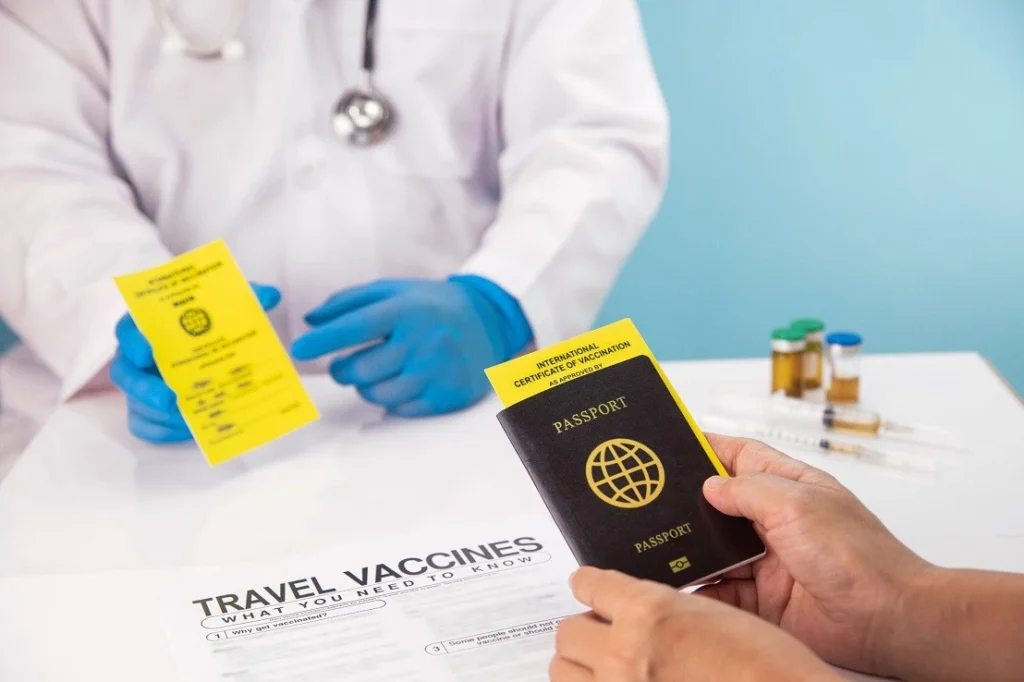
- The International Certificate of Vaccination (yellow card) has been valid for life since 11 July 2016, but it only becomes valid 10 days after you are vaccinated, so get your dose at least 10 days before departure
- WHO lists 47 countries with yellow fever risk, 34 in Africa and 13 in Central and South America, and many other countries ask for a certificate from travellers arriving from these places
- Certificate rules and health recommendations are different: you may need the vaccine for your own protection even if the country you visit does not ask for proof
- The vaccine is not suitable for infants under 6 months, people with severe egg allergy, thymus disease or weakened immunity; pregnancy, breastfeeding and age over 60 need a doctor's review
- Most side effects are mild (soreness, low fever, headache), while serious reactions are rare, and a GP consultation at DCDC starts from AED 249 with current vaccine pricing available on request
If you are planning a trip to Africa or South America, the yellow fever vaccine Dubai travellers need depends on where you are going, how long you are staying and what border officials will ask to see. Yellow fever is a mosquito-borne viral illness with no specific cure, but one dose of vaccine protects most people for life. This guide explains WHO requirements, how the yellow card works, who should not be vaccinated, and how to prepare. Our vaccination services team at Doctors Clinic Diagnostic Center (DCDC) in Dubai Healthcare City can review your itinerary and advise on the right steps.
Dr. Hadeel Elnur, a general practitioner at DCDC who advises adult and travel vaccination patients, prepared this guide using current WHO and CDC guidance. It covers the disease, the certificate rules, risk countries, the vaccine itself, side effects and contraindications, timing, what happens at your DCDC appointment, and answers to the questions patients ask us most often. It is general information and does not replace a consultation tailored to your health and itinerary.
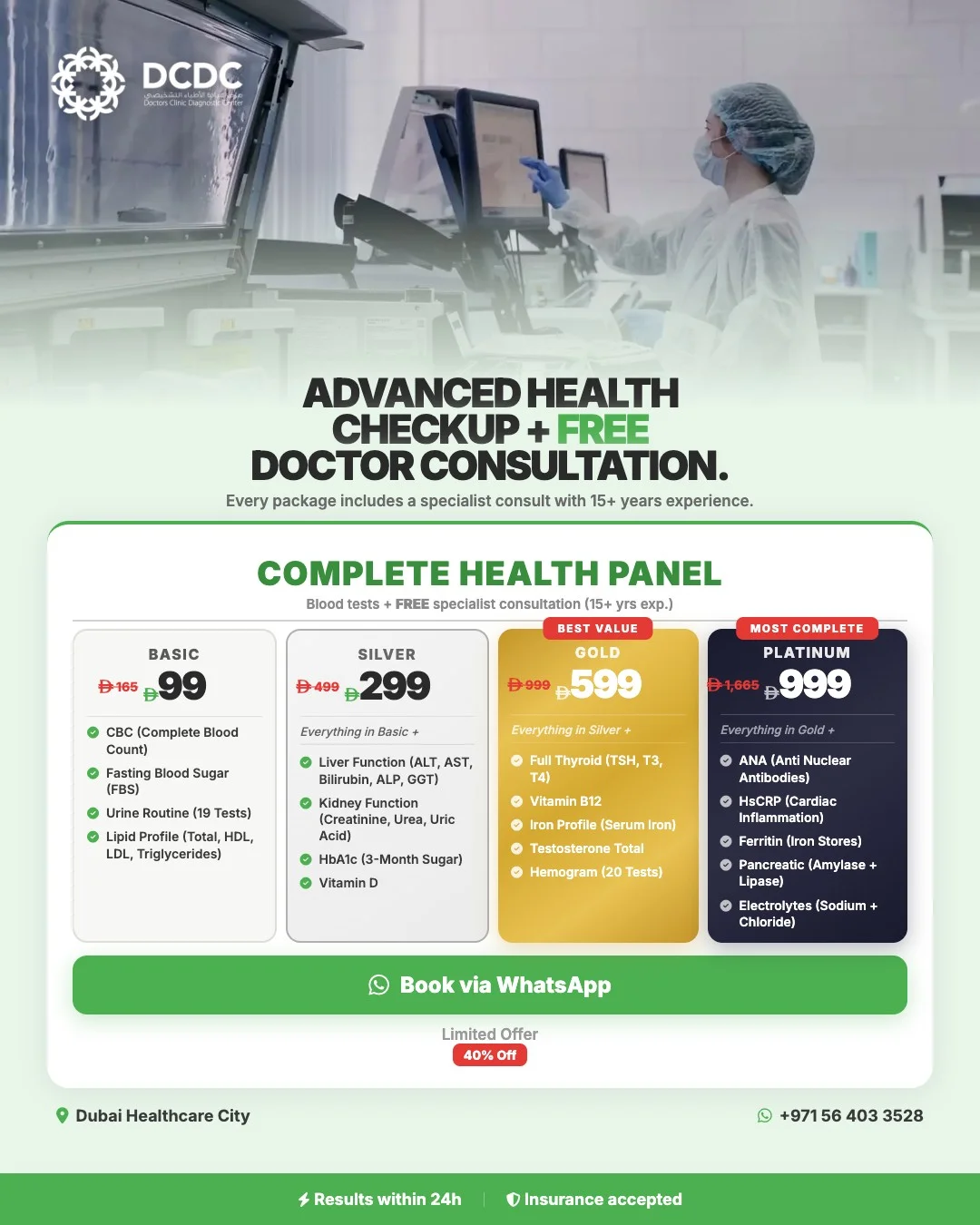
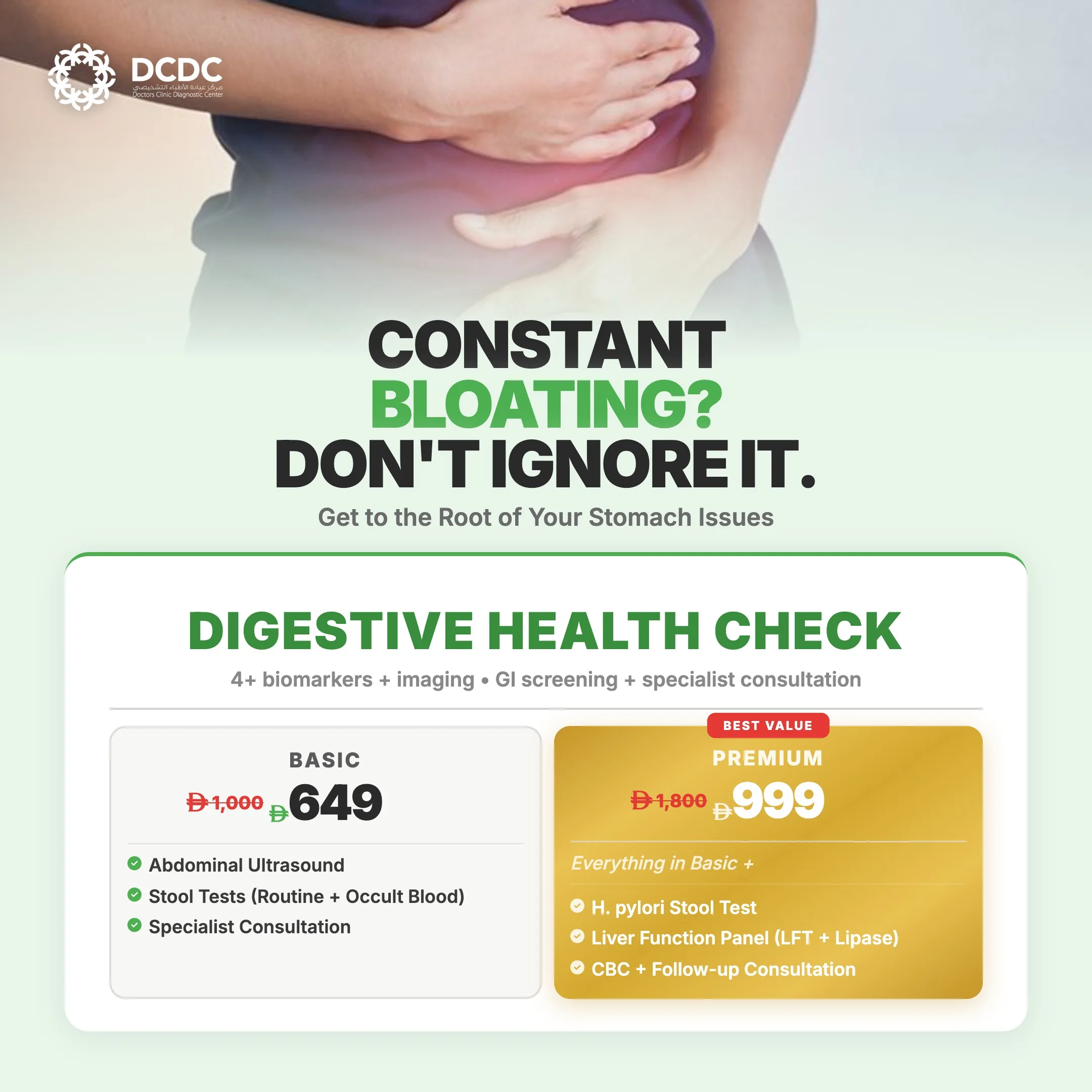
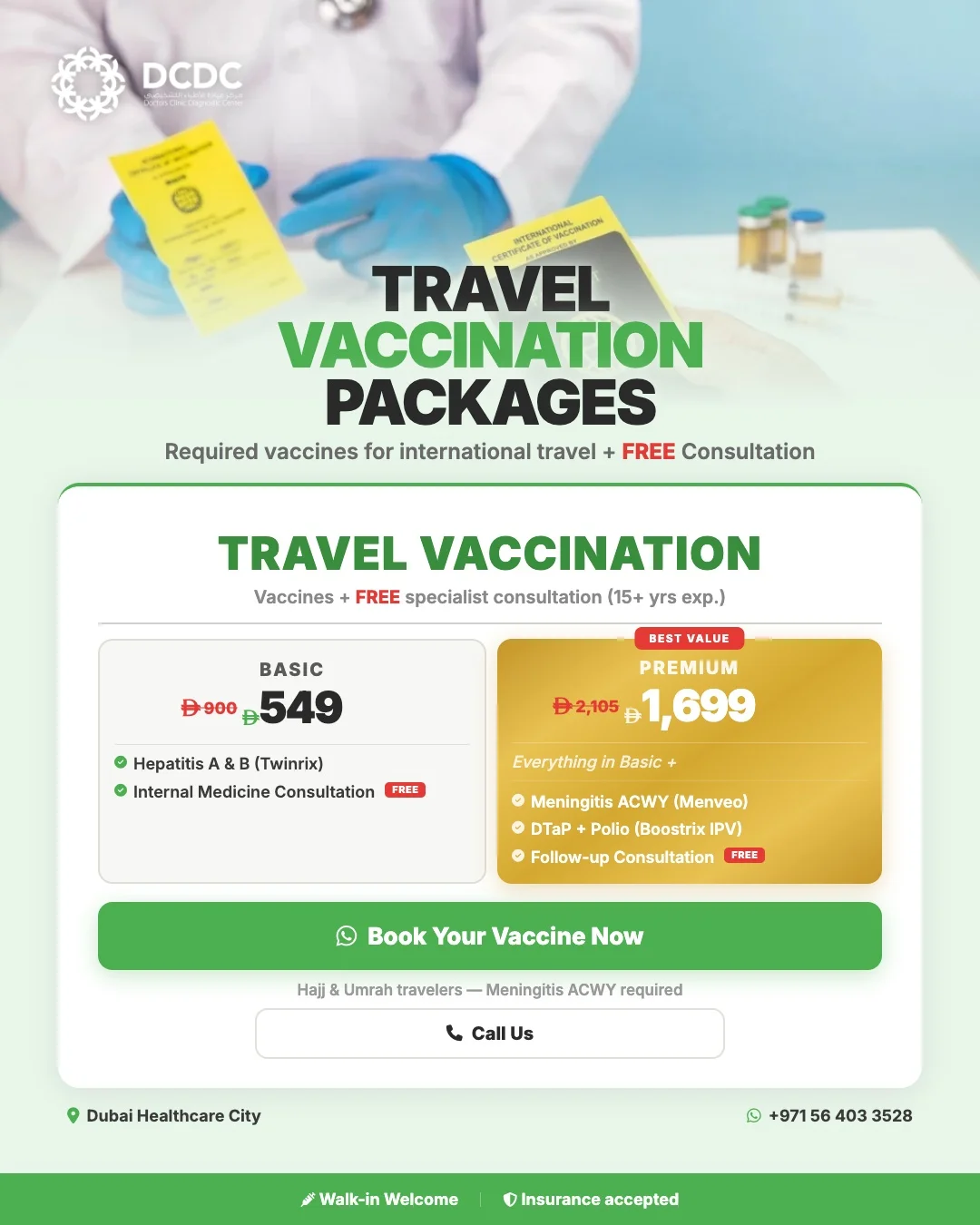
Health Screening Packages
Save with our bundled screening packages — specialist consultation included

What Is Yellow Fever and Why Does Vaccination Matter?
Yellow fever is a viral infection caused by a flavivirus and spread by the bites of infected Aedes and Haemagogus mosquitoes. It is not contagious from person to person. The virus circulates in tropical parts of Africa and Central and South America, where it cycles between mosquitoes and monkeys and occasionally spills over into people. The name comes from the jaundice, a yellowing of the skin and eyes, that appears in severe cases when the virus damages the liver.
Most infected people have no symptoms or a mild illness. When symptoms do appear, they start 3 to 6 days after the bite with sudden fever, chills, severe headache, back pain, muscle aches, nausea and vomiting. Many people then recover. However, about 15% enter a toxic second phase within 24 hours of apparent recovery, with high fever, jaundice, abdominal pain, bleeding from the mouth, nose, eyes or stomach, and kidney failure. According to the World Health Organization (WHO), around half of those who reach this severe phase die within 7 to 10 days.
There is no specific antiviral treatment for yellow fever. Care is supportive: fluids, fever and pain control, and treatment of complications. That is why prevention is so important, and why yellow fever is one of the few diseases for which a vaccine is both strongly protective and, for many itineraries, legally relevant. A single dose gives lasting protection in the vast majority of healthy people.
Why Dubai Residents Should Pay Attention
Dubai is one of the world's busiest transit hubs, and a large share of the emirate's population has family, business or travel links to East and West Africa, the Indian subcontinent and South America. Residents regularly travel to countries in the yellow fever belt, such as Nigeria, Uganda, Kenya, Ethiopia, Ghana, Brazil and Colombia. Two separate questions apply to these trips: whether you personally are at risk of infection, and whether a country you are entering or returning to will ask for proof of vaccination. This guide answers both.
WHO Requirements: Which Countries Require a Yellow Fever Certificate?
Yellow fever vaccination requirements come from the International Health Regulations (2005), a legally binding WHO framework. Under these rules, countries may ask arriving travellers for a valid International Certificate of Vaccination or Prophylaxis (ICVP) if they have been in a country with a risk of yellow fever transmission. The aim is to stop the virus being imported into places where the right mosquitoes exist but the disease does not.
It helps to separate two different ideas that travellers often confuse:
- Certificate requirements are entry rules set by the country you are travelling to. They usually apply when you arrive from, or have recently transited through, a country with yellow fever risk. Breaking the rule can mean being denied boarding, quarantined, or vaccinated at the border.
- Vaccination recommendations are health advice for people travelling to areas where yellow fever transmission occurs. They apply even if the country you are visiting does not ask for a certificate. WHO recommends vaccination for anyone travelling outside urban areas in endemic zones, even where cases have not been officially reported.
Is a Yellow Fever Certificate Required to Enter the UAE?
Travel guidance for the UAE generally states that a yellow fever certificate is needed only when you arrive from a country with a risk of yellow fever transmission. Travellers flying into Dubai directly from Europe, North America, most of Asia and the Gulf are not asked for one. Residents returning from Africa or South America, and visitors transiting through those regions, should carry their certificate. Because national lists are revised, confirm the current position with your airline or the UAE Ministry of Health and Prevention (MOHAP) before you fly.
Countries That Commonly Ask for a Certificate
Many countries in Africa, Asia and the Middle East require proof of vaccination from arrivals coming from risk countries, and a smaller number of African and South American countries require it from all arriving travellers over a set age (usually 9 months or 1 year). WHO updates its country list every year, and individual governments can change their rules at short notice. The most reliable approach is to check three things for each leg of your journey: the final destination, every transit country, and the country you return to.
If you are heading somewhere with a broader set of health requirements, our guide to travel vaccines in Dubai by destination puts yellow fever alongside other commonly advised vaccines.
The International Certificate of Vaccination (Yellow Card)
The ICVP, often called the yellow card or ICV, is the only document that border officials accept as proof of yellow fever vaccination. It is a small booklet with a standard format set out in Annex 6 of the International Health Regulations. A valid entry records your full name, date of birth, sex, nationality and passport number, the date of vaccination, the vaccine's manufacturer and batch number, and the signature of the supervising clinician. It must also carry the official stamp of the vaccination centre.
How Long Is the Certificate Valid?
Since 11 July 2016, a yellow fever certificate has been valid for the lifetime of the person vaccinated. This followed WHO's conclusion in 2013 that a single dose provides lifelong protection in healthy people. The change applies to all certificates, including older ones that were printed with a 10-year validity. A country cannot lawfully reject a properly completed certificate because more than 10 years have passed, and it cannot require a booster from a traveller who has one.
There is one important timing rule: the certificate becomes valid 10 days after the vaccine is given. If you travel sooner than that, border officials may treat you as unvaccinated.
Official Stamp and Authorised Centres
Yellow fever vaccination must be given at a facility designated by the national health authority, and the certificate must be completed and stamped by that facility. In the UAE, authorised yellow fever vaccination centres are those approved by the relevant health authority. Before you book, ask any provider, including us, whether it can issue the official stamped ICVP, because a vaccine without a valid certificate will not satisfy border control. At DCDC, our team will confirm certificate and vaccine availability with you when you contact us, so you know exactly what to expect before you visit.
Lost or Incorrect Certificates
A lost certificate can usually be replaced by the centre that issued it, provided your vaccination record can be verified. Errors such as a misspelled name or wrong passport number should be corrected before you leave the clinic, as border officials can reject a certificate with alterations that are not countersigned. Keep the original with your passport and a photograph of it on your phone.
Who Should Get the Yellow Fever Vaccine?
You should consider the vaccine if any of the following apply to you:
- You are travelling to, or living in, a country or area with yellow fever transmission risk, particularly if you will spend time in rural, forested or savanna areas or near wetlands.
- You are travelling to a country that requires a certificate from arrivals who have been in a risk country, or you will transit through one.
- You are visiting family in West or Central Africa or South America and will spend extended time outdoors, where mosquito exposure is highest.
- You work in a role that may expose you to the virus, such as laboratory staff handling the virus, or aid and humanitarian staff in endemic regions.
- You are travelling for Hajj, Umrah or business through regions where certificates are checked on return.
Short stays in capital cities are generally lower risk than rural trips, but mosquitoes that carry yellow fever can breed in cities, and large urban outbreaks have occurred, for example in Angola and the Democratic Republic of the Congo in 2016. A doctor will weigh your exact itinerary, season and activities. A travel-focused consultation also covers other risks on the same trip, which you can plan using our pre-travel health checklist.
Yellow Fever Risk Areas: Africa and South America
WHO classes 47 countries as endemic or having regions with risk of yellow fever transmission: 34 in Africa and 13 in Central and South America. The table below gives a practical overview of the regions where Dubai travellers most often go. Risk varies inside a country, and some countries have only partial risk zones, so the list is a guide and not a substitute for itinerary-specific advice.
| Region | Examples of Countries with Risk | Key Points |
|---|---|---|
| West Africa | Nigeria, Ghana, Senegal, Mali, Guinea, Sierra Leone, Cameroon | Highest burden in the world; certificates often required by neighbours and by countries receiving travellers |
| Central Africa | Democratic Republic of the Congo, Angola, Central African Republic, Gabon, Republic of the Congo | Urban outbreaks documented; vaccination strongly advised |
| East Africa | Uganda, Kenya (parts), Ethiopia (southern and western areas), South Sudan, Sudan (southern areas), Tanzania (limited) | Risk varies by region; many travellers visit for safari or family visits |
| Northern South America | Colombia, Venezuela, Guyana, Suriname, French Guiana | Forest-linked transmission; vaccination advised for most areas outside cities |
| Amazon Basin and Andes | Brazil, Peru, Bolivia, Ecuador, Paraguay | Large outbreaks in Brazil since 2016; vaccination advised for travel to risk areas |
| Caribbean and Central America | Panama, Trinidad and Tobago | Recommendations vary by area; check current guidance |
Based on WHO and CDC country classifications. Lists change as outbreaks evolve; confirm the latest recommendation for your exact destination before you travel.
Not every country with some risk requires or recommends the vaccine for the whole territory. For example, parts of Kenya, Ethiopia and Brazil are recommended areas while other parts are not. If you travel across borders, such as an overland route between several African countries, plan the vaccine as if each stretch of the route counts.
If your trip also involves mosquito-borne disease in these regions, read our guide on malaria prevention for travellers, because many areas with yellow fever risk also have malaria. The two diseases need different protection: yellow fever has a vaccine, whereas malaria prevention relies on a combination of antimalarial medication and bite avoidance.
About the Vaccine: Type, Dose and Protection
The yellow fever vaccine is a live attenuated vaccine made from the 17D strain of the virus, which was developed in the 1930s and has been used safely in hundreds of millions of people. It is grown in chicken eggs, which is why egg allergy is relevant. Several manufacturers supply 17D-based vaccines that meet WHO standards, and they are considered interchangeable for the purpose of the certificate.
| Feature | Details |
|---|---|
| Vaccine type | Live attenuated (17D strain) |
| Doses needed | One dose for most adults and children |
| How it is given | Single injection under the skin or into the muscle, usually in the upper arm |
| Protection starts | From about 10 days; around 99% of vaccinated people are protected within 30 days |
| Certificate valid from | 10 days after vaccination |
| Duration of protection | Lifelong for most healthy people (WHO, 2013) |
| Certificate validity | Lifetime, since 11 July 2016 |
| Minimum age | Usually 9 months for routine use; earlier only in special circumstances |
| Booster | Not routinely needed; may be considered for specific groups (see below) |
Source: WHO and CDC. Your doctor will confirm the right approach for your health and itinerary.
Do Some People Need a Second Dose?
Most people never need a second dose. WHO's position is that one dose is enough, but additional doses may be recommended for people who were vaccinated while pregnant, those who were vaccinated while living with HIV, people who received a hematopoietic stem cell transplant after their first dose, and children vaccinated before the age of 2 years who go on to travel to a high-risk area. The CDC also suggests considering a booster for travellers going to areas with an ongoing outbreak or for people spending prolonged periods in endemic regions, if their first dose was more than 10 years ago. Your doctor will check your history and advise.
What About Giving It Together With Other Vaccines?
The yellow fever vaccine can be given on the same day as most other travel vaccines, including those against typhoid and hepatitis A. If it is not given on the same day as another live vaccine (such as MMR or varicella), the vaccines should be spaced at least 28 days apart unless they are given together. Planning the order of your vaccines matters, so tell your doctor everything you have had recently. See our guides on the typhoid vaccine and the hepatitis A vaccine for the other two shots most commonly paired with yellow fever.
Side Effects of the Yellow Fever Vaccine
Most people tolerate the vaccine well. Mild reactions are common and usually appear 3 to 7 days after vaccination, lasting a day or two. Between 10% and 30% of vaccinated people report some mild symptoms.
Common, Mild Side Effects
- Soreness, redness or slight swelling at the injection site
- Low-grade fever
- Headache
- Muscle aches and tiredness
Rest, fluids and paracetamol are enough for most people. Avoid planning a demanding schedule in the week after your shot.
Rare but Serious Reactions
Serious reactions are uncommon, but you and your doctor should know about them so you can recognise a problem early:
- Severe allergic reaction (anaphylaxis): about 1 in 130,000 doses; usually occurs within minutes to hours, which is why we ask you to wait in the clinic after vaccination.
- Yellow fever vaccine-associated neurologic disease: inflammation of the brain or nerves, including Guillain-Barré syndrome, reported in roughly 0.4 to 0.8 per 100,000 doses. Most people recover.
- Yellow fever vaccine-associated viscerotropic disease: a rare illness resembling severe yellow fever, reported in about 0.3 per 100,000 doses. Risk rises with age and in people with thymus disorders.
Seek urgent medical help if you develop a high fever, severe headache, confusion, weakness, seizures, persistent vomiting or yellowing of the skin within about 30 days of vaccination. Tell the treating doctor that you recently had the yellow fever vaccine.
Contraindications and Precautions
Because it is a live vaccine, the yellow fever vaccine is not suitable for everyone. A doctor should always review your history before it is given. The CDC separates the groups into two categories: contraindications, where the vaccine should generally not be given, and precautions, where it may still be appropriate after weighing the risks.
Contraindications: Who Should Not Be Vaccinated
- Infants under 6 months: the risk of vaccine-related brain inflammation is highest in very young infants. In general, vaccination is given from 9 months of age.
- Severe egg allergy: anaphylaxis after eating eggs or egg protein is a contraindication. Mild egg intolerance is usually not, but you should disclose it.
- Weakened immune system: this includes symptomatic HIV or a CD4 count under 200 per mm3, cancers such as leukaemia and lymphoma, organ or stem cell transplant, and primary immunodeficiency.
- Immunosuppressive treatment: chemotherapy, radiation, high-dose corticosteroids, or immune-modulating biologic drugs.
- Thymus disorders: a history of thymus disease or thymectomy, including thymoma and myasthenia gravis linked to thymus disease.
- Previous severe reaction to a previous dose or to a component of the vaccine.
Precautions: Special Circumstances
- Pregnancy: the vaccine is generally avoided in pregnancy unless travel to a high-risk area is unavoidable. Reviews have not found an increase in birth defects, so vaccination can be considered if the risk of infection is real.
- Breastfeeding: the vaccine virus has been passed to infants through breast milk in rare cases, so it is usually avoided unless travel cannot be postponed.
- Infants 6 to 8 months: vaccination may be considered only when travel to an area with active transmission is unavoidable.
- Age over 60: the risk of serious reactions is higher, so a doctor weighs the benefit against the risk for your specific destination.
- Mild illness: if you have a fever or acute illness on the day, your doctor may postpone the vaccine.
Medical Exemption Letters
If you cannot be vaccinated for medical reasons but you are travelling to a country that requires a certificate, your doctor can issue a signed and stamped exemption letter, and WHO provides a section on the ICVP for this purpose. Acceptance is at the discretion of the destination country, so contact the relevant embassy before you travel. Your doctor will also advise you on how to reduce mosquito exposure if you cannot be vaccinated, and may suggest postponing your trip to an at-risk area.
When to Get Vaccinated Before You Travel
Get the yellow fever vaccine at least 10 days before you depart. That is the minimum time for the certificate to become valid and for your immune response to develop. In practice, aim for 3 to 4 weeks before departure. This gives you time to deal with a mild reaction, to fix a mistake on your certificate, and to space out any other live vaccines.
- 4 to 6 weeks before: book a travel consultation, review your itinerary and medicines, and check entry rules for each country on your route.
- At least 10 days before: latest date for the yellow fever vaccine if you want a valid certificate on departure.
- Day of travel: carry the original ICVP with your passport, and keep a photo copy.
Last-minute travellers are not out of options, but a certificate issued less than 10 days before arrival may not be accepted. If your trip is urgent, speak with your clinic and the destination's embassy about the best way forward.
What to Expect at DCDC: Your Yellow Fever Vaccine Journey
Doctors Clinic Diagnostic Center (DCDC) is a MOHAP-licensed clinic in Dubai Healthcare City. Here is what a typical visit looks like, from the moment you contact us to the follow-up.
1. Before You Arrive
Message us on WhatsApp at +971 50 970 3884 or call +971 54 219 5008 to ask about yellow fever vaccine availability, current pricing and certificate issuance. DCDC does not publish a fixed yellow fever vaccine price, so contact DCDC for current yellow fever vaccine pricing before you visit. Our multilingual team speaks Arabic, English, Farsi, Urdu and Hindi. Please bring your passport, Emirates ID, any previous vaccination record, your insurance card, and details of your travel dates and destinations.
2. Arrival and Check-In
DCDC is in Building 64, Block A, Al Razi Medical Complex, Dubai Healthcare City. Free dedicated on-site parking is available. We are open Saturday to Thursday from 8 AM to 10 PM and Friday from 9 AM to 9 PM, so evening appointments after work are possible. We bill more than 20 insurance partners directly, and our front desk will check what your plan covers.
3. Pre-Vaccination Consultation
You will see a general practitioner for a travel health consultation, which starts from AED 249. The doctor reviews your itinerary and the risk level of each area you will visit, then checks the points that decide whether the vaccine is safe for you: egg allergy, current or recent illness, medicines (especially steroids or immune-suppressing drugs), pregnancy or breastfeeding, thymus or immune conditions, and any previous vaccine reactions. If the vaccine is not suitable, we discuss alternatives, such as a medical exemption letter and mosquito protection.
4. Vaccination
The injection itself takes seconds. Afterwards you will wait in the clinic for around 15 minutes so that our team can watch for any immediate allergic reaction. We explain what side effects to expect and which symptoms need urgent attention.
5. Certificate Issuance
Your vaccination details are recorded in your medical file, and the International Certificate of Vaccination is completed with your name, passport details, vaccine batch number and date. We check every field with you before you leave. Remember that the certificate becomes valid 10 days after vaccination.
6. Follow-Up
If you have a fever, rash, severe headache or other worrying symptoms in the weeks after vaccination, contact us or seek urgent care. We can also arrange the other vaccines on your itinerary, blood tests and a pre-travel health check through our general medicine team. For a broader preparation plan, read our pre-travel health checklist.
Planning a Trip to a Yellow Fever Risk Area?
Speak to our team about yellow fever vaccine availability, certificate issuance and your travel itinerary. Message us on WhatsApp or book online. Contact DCDC for current yellow fever vaccine pricing.
GP consultation from AED 249. 20+ insurance partners with direct billing. Rated 4.8/5 from 1,000+ verified Google reviews.
What Does the Yellow Fever Vaccine Cost in the UAE?
DCDC does not have a published yellow fever vaccine price, so please contact DCDC for current yellow fever vaccine pricing. A GP consultation at DCDC starts from AED 249. For market context only, press reports have cited a UAE government fee of AED 120 for the yellow fever vaccine at Emirates Health Services centres (reported by Gulf News and Khaleej Times), plus a small fee for a first-time international immunisation card. A 2016 Dubai Health Authority pricing resolution listed the yellow fever vaccine at AED 215. These are older or public-sector figures and should not be read as private clinic prices. Government centres may also have limited slots or require appointments, and private clinics charge a consultation fee in addition to the vaccine.
Insurance may cover part or all of a travel vaccine depending on your plan. Our front desk can check your cover with any of our 20+ direct-billing insurance partners before your appointment.
Combining Yellow Fever With Other Travel Vaccines
Yellow fever is rarely the only health risk on a trip to Africa or South America. The right combination depends on where you go, how long you stay and what you do there. Common companions include:
- Typhoid: recommended for most travel to sub-Saharan Africa, South Asia and South America. Read about the typhoid vaccine in Dubai.
- Hepatitis A: spread by contaminated food and water, advised for almost all travel to these regions. See hepatitis A vaccine cost in Dubai.
- Malaria prevention: medication and bite avoidance rather than a routine vaccine; see malaria prevention for travel.
- Others: meningococcal vaccine (important for Hajj, Umrah and the African meningitis belt), polio boosters, rabies, tetanus and routine boosters.
Our overview of travel vaccines by destination sets out these recommendations region by region, and a consultation at DCDC tailors them to your own itinerary and medical history.
Protecting Yourself From Mosquito Bites
Vaccination is the foundation, but bite avoidance remains important because several other diseases, including malaria, dengue, chikungunya and Zika, spread in the same regions. Use an insect repellent containing DEET, picaridin or IR3535 on exposed skin, wear long sleeves and trousers at dawn and dusk, sleep under treated nets or in screened or air-conditioned rooms, and avoid standing water around your accommodation. Yellow fever-carrying Aedes mosquitoes bite during the day, so daytime precautions count.
Related Services at DCDC
Expert care and advanced diagnostics at Dubai Healthcare City
Frequently Asked Questions
Final Thoughts
Yellow fever is a serious illness with no cure, but it is one of the most preventable. A single dose of the 17D vaccine, given at least 10 days before you travel, protects most people for life, and the resulting certificate is accepted for life. The important steps are to check the rules for every country on your route, ask a doctor whether the vaccine is safe for you, and leave enough time before departure.
At DCDC in Dubai Healthcare City, our general practitioners review your itinerary, medical history and the vaccines you may need alongside yellow fever. We are MOHAP licensed, rated 4.8/5 from 1,000+ verified Google reviews, open Saturday to Thursday 8 AM to 10 PM and Friday 9 AM to 9 PM, with free on-site parking at Building 64, Block A, Al Razi Medical Complex. Message us on WhatsApp at +971 50 970 3884 or call +971 54 219 5008 to ask about availability and current yellow fever vaccine pricing, or visit our vaccination services page to learn more.
Sources & References
This article references the following sources:
- World Health Organization — Yellow Fever Fact Sheet
- WHO — International Travel and Health: Yellow Fever Vaccination Requirements and Recommendations
- WHO — International Health Regulations (2005)
- Centers for Disease Control and Prevention — Yellow Fever Vaccine
- CDC Yellow Book — Yellow Fever
- UAE Ministry of Health and Prevention (MOHAP)
- Staples JE et al. Yellow Fever Vaccine: Recommendations of the ACIP — MMWR 2010 (PubMed)
This information is educational and does not replace individual medical advice. See our editorial policy for more information.

Written by
Dr. Hadeel Elnur
General Practitioner
MD, General Practice
Dr. Hadeel Elnur is a General Practitioner at Doctors Clinic Diagnostic Center (DCDC) in Dubai Healthcare City, advising adults on travel health and vaccination.
Related Articles

Travel Vaccines Dubai: Required Shots by Destination

Pre-Travel Health Checklist Dubai
Malaria Vaccine Dubai: Travel Prevention
Typhoid Vaccine Dubai: Cost & Guide
Hepatitis A Vaccine Cost Dubai: Guide
More in Travel Health
© 2026 Doctors Clinic Diagnostic Center (DCDC), Dubai Healthcare City. Originally published at https://doctorsclinicdubai.ae/blog/yellow-fever-vaccine-dubai-guide. All rights reserved. Unauthorized reproduction is prohibited.