Key Takeaways
- The injectable typhoid vaccine (Typhim Vi) is the most commonly administered type in Dubai, offering protection within 2 weeks and lasting approximately 2-3 years before a booster is needed
- Typhoid vaccination costs from AED 250 per dose at DCDC in Dubai Healthcare City, with direct billing available through 20+ insurance partners
- The CDC and WHO recommend typhoid vaccination for anyone traveling to South Asia (India, Pakistan, Bangladesh), sub-Saharan Africa, and parts of Central and South America
- You should receive the injectable typhoid vaccine at least 2 weeks before travel, and the oral vaccine series should be completed at least 1 week before departure
- Typhoid fever is caused by Salmonella Typhi bacteria spread through contaminated food and water, causing prolonged fever, abdominal pain, and potentially life-threatening complications if untreated
- Neither vaccine provides 100% protection, so practicing safe food and water habits while traveling remains essential even after vaccination
- Children aged 2 and older can receive the injectable typhoid vaccine, while the oral vaccine (Vivotif) is approved for children aged 6 and older
- DCDC offers same-day typhoid vaccination with walk-in availability, a pre-travel health consultation, and official documentation for travel records
Typhoid fever remains one of the most common vaccine-preventable infections among travelers from the UAE, particularly those visiting family in South Asia or traveling to sub-Saharan Africa. An estimated 9 million cases and over 100,000 deaths occur globally each year, and travelers who skip vaccination are placing themselves at genuine risk, even on short trips. Our vaccination services at Doctors Clinic Diagnostic Center (DCDC) in Dubai Healthcare City include typhoid vaccination as part of a comprehensive pre-travel health assessment, ensuring you are protected before you board your flight.
This guide covers everything you need to know about the typhoid vaccine in Dubai: what typhoid fever actually is, which vaccine types are available, who needs to be vaccinated, what it costs, what side effects to expect, and how to combine vaccination with practical food and water safety measures for complete protection. Dr. Hadeel Elnur, a general practitioner at DCDC who regularly administers typhoid vaccines to travelers heading to endemic regions, reviewed this guide to ensure it reflects current clinical practice and real-world pricing.
What Is Typhoid Fever?
Typhoid fever is a serious bacterial infection caused by Salmonella enterica serotype Typhi (commonly called Salmonella Typhi). It spreads through the fecal-oral route, meaning you contract it by consuming food or water that has been contaminated by the feces of an infected person. Unlike many foodborne illnesses that cause a brief episode of diarrhea and resolve on their own, typhoid is a systemic infection that enters the bloodstream and can affect multiple organs if left untreated.
The World Health Organization estimates that 9 million people contract typhoid fever annually, with more than 100,000 deaths worldwide each year. The disease is concentrated in regions with limited access to clean water and sanitation, particularly South Asia, sub-Saharan Africa, and parts of Central and South America. For residents of Dubai traveling to these regions, whether for family visits, business, or tourism, typhoid represents one of the most tangible infectious disease risks they will face.
Typhoid Fever Symptoms
Symptoms typically appear 1 to 3 weeks after exposure and develop gradually rather than all at once. The hallmark of typhoid is a sustained, progressively rising fever that can reach 39-40 degrees Celsius and last for weeks without treatment. Other symptoms include:
- Prolonged high fever that increases in a stepwise pattern over several days
- Severe headache and general malaise
- Abdominal pain and tenderness, often concentrated in the lower abdomen
- Constipation or diarrhea (constipation is more common in adults, diarrhea in children)
- Loss of appetite, nausea, and vomiting
- Rose-colored spots on the chest and abdomen in some patients
- Fatigue and muscle aches that worsen as the fever persists
Without antibiotic treatment, typhoid fever can lead to intestinal perforation, internal bleeding, and sepsis, all of which are life-threatening. Even with treatment, recovery takes 2 to 4 weeks, and about 1-5% of patients become chronic carriers, shedding the bacteria in their stool for months or years without showing symptoms themselves. The emergence of extensively drug-resistant (XDR) typhoid, particularly in Pakistan, has made prevention through vaccination even more critical, since standard antibiotics may not work against these strains.
Typhoid Vaccine Types Explained
Two main types of typhoid vaccine are available internationally, and both are used in Dubai. Understanding the differences helps you and your doctor choose the right option for your situation.
Injectable Typhoid Vaccine (Typhim Vi / Vi Polysaccharide)
The injectable typhoid vaccine contains purified Vi capsular polysaccharide from Salmonella Typhi. It is given as a single intramuscular injection, usually in the upper arm. This is the most commonly administered typhoid vaccine in Dubai clinics, including DCDC, because of its convenience and suitability for most patients.
- Brand name: Typhim Vi (manufactured by Sanofi Pasteur)
- Dose: Single injection
- Age eligibility: Approved for adults and children aged 2 years and older
- Protection begins: Approximately 2 weeks after injection
- Duration of protection: 2-3 years, after which a booster is recommended if ongoing risk exists
- Efficacy: Approximately 50-70% protection against typhoid fever
- Type: Inactivated (not a live vaccine), safe for immunocompromised patients and pregnant women when medically indicated
Oral Typhoid Vaccine (Vivotif / Ty21a)
The oral typhoid vaccine is a live attenuated vaccine taken as a series of capsules. It uses a weakened strain of Salmonella Typhi (Ty21a) that stimulates an immune response without causing disease. While less commonly stocked in Dubai clinics than the injectable version, it is an option for patients who prefer to avoid injections.
- Brand name: Vivotif (manufactured by Emergent BioSolutions)
- Dose: 4 capsules taken on alternate days (day 1, 3, 5, and 7)
- Age eligibility: Approved for adults and children aged 6 years and older
- Protection begins: Approximately 1 week after completing the full 4-dose series
- Duration of protection: Up to 5 years, after which the full 4-dose series is repeated
- Efficacy: Approximately 50-80% protection depending on exposure conditions
- Type: Live attenuated vaccine, not suitable for immunocompromised patients or pregnant women
Typhoid Conjugate Vaccine (TCV)
A newer category, typhoid conjugate vaccines (such as Typbar-TCV), are WHO-prequalified and used primarily in endemic countries for routine childhood immunization programs. TCVs can be given from as young as 6 months of age and produce a stronger, longer-lasting immune response than the older Vi polysaccharide vaccine. While TCVs are not yet widely stocked for travelers in Dubai, they represent the future direction of typhoid prevention globally and may become available at travel clinics in the coming years.
| Feature | Injectable (Typhim Vi) | Oral (Vivotif) |
|---|---|---|
| Administration | Single injection in upper arm | 4 capsules on alternate days |
| Minimum age | 2 years | 6 years |
| Protection starts | ~2 weeks after injection | ~1 week after completing series |
| Duration of protection | 2-3 years | Up to 5 years |
| Booster needed | Every 2-3 years if at risk | Repeat full series every 5 years |
| Vaccine type | Inactivated (not live) | Live attenuated |
| Safe in pregnancy | Yes, when indicated | No (live vaccine) |
| Safe if immunocompromised | Yes | No (live vaccine) |
| Antibiotic interaction | None | Must avoid antibiotics during course |
Comparison based on WHO and CDC guidelines. Your doctor will recommend the most appropriate type based on your health status, age, and travel timeline.
Who Needs the Typhoid Vaccine?
Typhoid vaccination is not part of the routine immunization schedule in the UAE or most high-income countries. It is specifically recommended for people with an increased risk of exposure to Salmonella Typhi, which in Dubai primarily means travelers. The following groups should strongly consider typhoid vaccination:
- Travelers to endemic countries: Anyone visiting South Asia, sub-Saharan Africa, Southeast Asia, or parts of Central and South America, regardless of trip length. Even trips shorter than one week carry meaningful risk in highly endemic areas like India, Pakistan, and Bangladesh.
- People visiting friends and relatives (VFR travelers): This group has the highest typhoid risk among travelers from Dubai. Travelers visiting family often eat home-cooked food, stay in residential areas, drink local water, and are less likely to take food precautions compared to hotel-based tourists.
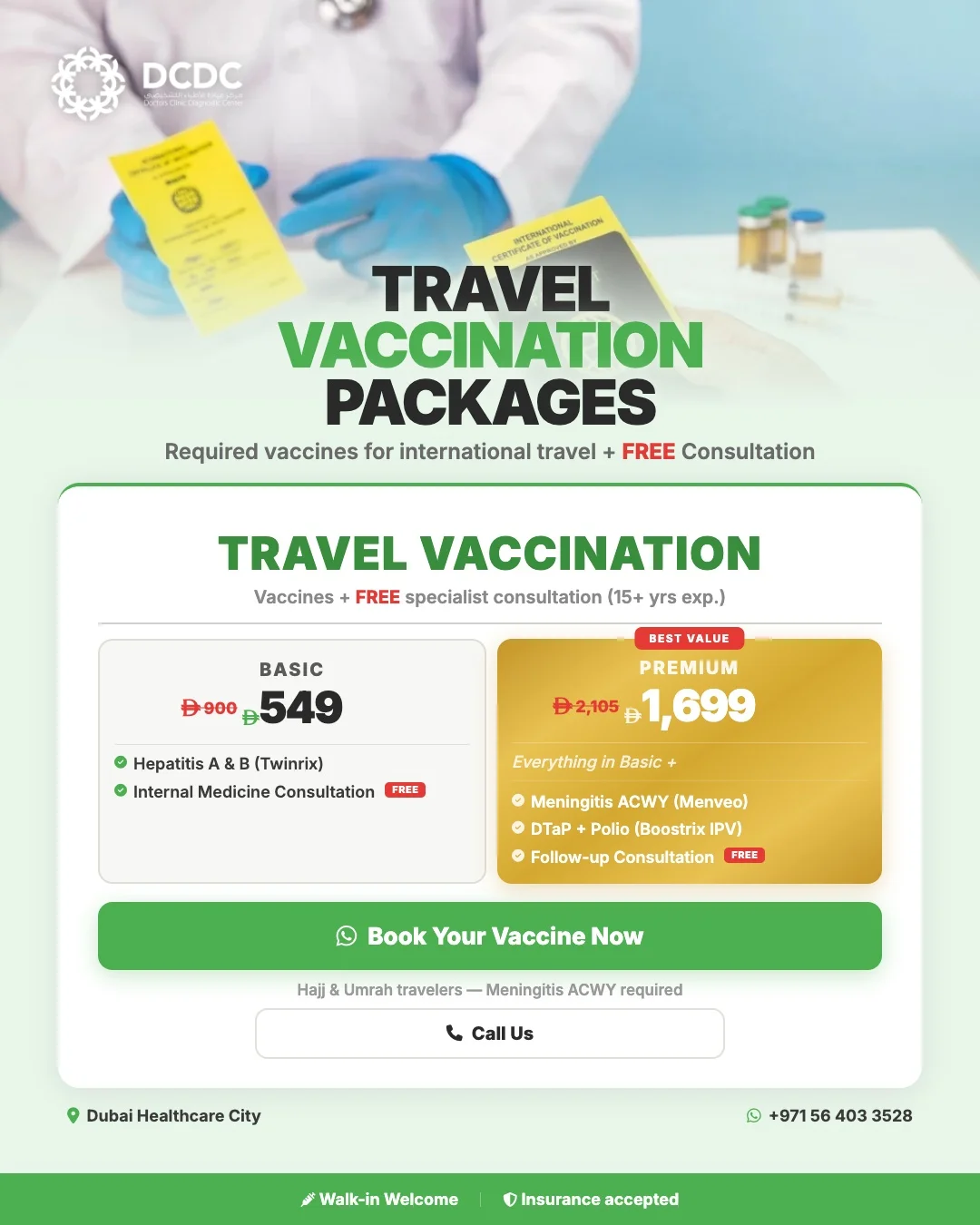
- Hajj and Umrah pilgrims: While not mandatory for Saudi Arabia entry, typhoid vaccination is recommended due to the sheer volume of people from endemic countries gathering in close quarters with shared food preparation.
- Humanitarian and aid workers: Anyone working in refugee camps, disaster relief zones, or areas with disrupted water and sanitation infrastructure.
- Laboratory workers: Staff handling Salmonella Typhi cultures in microbiology laboratories.
- Long-term travelers and expatriates: Anyone spending extended periods in endemic regions, particularly if living outside major cities with reliable water treatment.
For a broader look at which vaccines are recommended for specific destinations, see our complete travel vaccines guide, which maps vaccine recommendations to regions worldwide.
Countries Where Typhoid Vaccine Is Recommended
The CDC and WHO classify typhoid risk by region rather than assigning a single global list, but some areas consistently carry higher risk than others. The following table summarizes the regions where typhoid vaccination is recommended for travelers departing from Dubai.
| Region | Key Countries | Risk Level |
|---|---|---|
| South Asia | India, Pakistan, Bangladesh, Nepal, Sri Lanka | Very high |
| Southeast Asia | Indonesia, Philippines, Myanmar, Cambodia, Vietnam | High |
| Sub-Saharan Africa | Nigeria, Ethiopia, Kenya, Tanzania, Uganda, DRC | High |
| East Africa | Somalia, Sudan, Mozambique, Madagascar | High |
| Central America | Guatemala, Honduras, El Salvador, Nicaragua | Moderate |
| South America | Peru, Bolivia, Ecuador, Colombia | Moderate |
| Middle East | Iraq, Yemen, Afghanistan | Moderate to high |
| Central Asia | Tajikistan, Uzbekistan, Kyrgyzstan | Moderate |
Risk classification based on CDC Yellow Book and WHO epidemiological data. Risk varies within countries — rural areas and regions with poor sanitation carry higher risk than major cities.
A special note on Pakistan: the CDC has issued specific guidance that all travelers to Pakistan should receive the typhoid vaccine due to the presence of extensively drug-resistant (XDR) typhoid strains. These strains do not respond to most standard antibiotics used to treat typhoid fever, making prevention through vaccination even more important than in other endemic countries.
Typhoid Vaccine Cost in Dubai (2026)
Typhoid vaccine pricing in Dubai varies by clinic, vaccine type, and whether a consultation fee is bundled or charged separately. At DCDC, we aim to keep pricing transparent so you can plan ahead. The following table reflects current pricing at Doctors Clinic Diagnostic Center as of 2026.
| Service | Details | Approx. Cost (AED) |
|---|---|---|
| Typhoid Vaccine (Injectable - Typhim Vi) | Single dose, protection in ~2 weeks | from AED 250 |
| Pre-Travel GP Consultation | Full travel health risk assessment | from AED 249 |
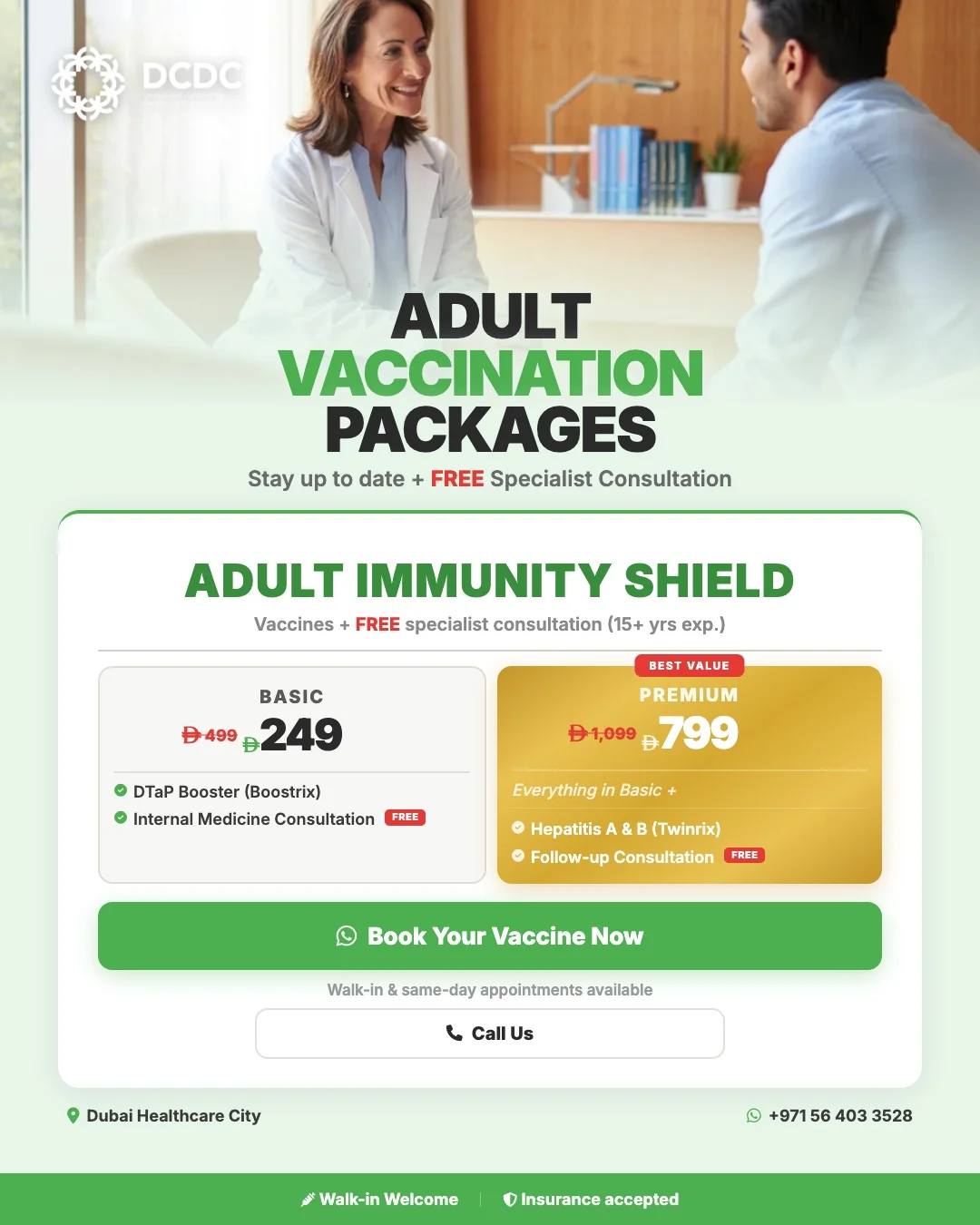
| Typhoid + Hepatitis A Bundle | Both vaccines in a single visit | from AED 500 |
| Typhoid Booster (Repeat Dose) | For travelers still at risk after 2-3 years | from AED 250 |
| Comprehensive Travel Vaccine Package | Typhoid + Hep A + Hep B + consultation | from AED 850 |
Prices as of July 2026 and approximate. Exact pricing depends on your specific needs — confirm with DCDC before your visit. Insurance coverage may reduce out-of-pocket cost.
Compared to the cost of treating typhoid fever abroad, which can run into thousands of dirhams in hospital fees, lost travel days, and medical evacuation if complications arise, the vaccine represents a fraction of the potential financial impact. Many patients combine the typhoid vaccine with other travel vaccines in a single visit to save on consultation fees and time.
What to Expect at DCDC
Getting vaccinated at Doctors Clinic Diagnostic Center in Dubai Healthcare City is designed to be straightforward, whether you book in advance or walk in. Here is what the process looks like from arrival to departure.
Arrival and Parking
DCDC is located in Building 64, Block A, Al Razi Medical Complex, Dubai Healthcare City. The complex offers free dedicated parking, so you do not need to worry about finding paid parking in the area. If you are using public transport, the Healthcare City metro station is within walking distance.
Check-In and Registration
Our front desk team will register your visit, verify your insurance details if applicable, and pull up any existing medical file. The average wait time at DCDC is 15 minutes. Bring your Emirates ID or passport, your insurance card, and any existing vaccination records you have from any country.
Pre-Travel Health Consultation
Before administering the vaccine, your GP will conduct a pre-travel health assessment. This includes reviewing your destination, travel dates, planned activities, accommodation type, medical history, allergies, current medications, and any previous vaccinations. Based on this review, the doctor will recommend whether you need the typhoid vaccine alone or additional vaccines such as Hepatitis A, Hepatitis B, or meningococcal depending on your destination.
Vaccine Selection and Administration
For most travelers, the injectable Typhim Vi vaccine is recommended due to its single-dose convenience and suitability for the widest range of patients. The injection is given in the upper arm and takes less than a minute. If you are receiving multiple travel vaccines, they can typically be administered in the same visit at different injection sites.
Post-Vaccination Observation
As with all vaccinations, you will be asked to remain in the clinic for 15-20 minutes after your injection so our team can monitor for any immediate adverse reaction. Serious reactions are extremely rare, but this observation period is a standard safety precaution followed worldwide.
Travel Health Documentation and Advice
Your vaccination is recorded in your official UAE medical file and you receive documentation for your travel records. Your doctor will also provide practical food and water safety advice specific to your destination, along with a note of when your booster is due if you will be traveling to endemic areas again. If additional vaccines are needed as part of a multi-dose series, follow-up appointments are scheduled before you leave.
According to Dr. Hadeel Elnur, "Typhoid fever remains a significant risk for travelers to South Asia and parts of Africa. At DCDC, we recommend getting the typhoid vaccine at least two weeks before travel, and we combine it with a full pre-travel health assessment to ensure comprehensive protection. Many patients are surprised to learn they also need Hepatitis A or a tetanus booster, which we can administer in the same visit."
Book Your Typhoid Vaccine at DCDC
Walk-in typhoid vaccination is available at our Dubai Healthcare City clinic, or book online to guarantee availability. Same-day appointments offered when capacity allows.
Typhoid vaccine from AED 250. Pre-travel consultation included. 20+ insurance partners with direct billing.
Typhoid Vaccine Schedule and Timing
Timing your typhoid vaccine correctly is essential for it to provide protection by the time you reach your destination. Getting vaccinated the day before your flight does not give the vaccine enough time to work. Here is the recommended timeline for each vaccine type.
Injectable Vaccine (Typhim Vi) Timing
- Minimum lead time: At least 2 weeks before travel. The vaccine needs approximately 14 days to stimulate a protective immune response.
- Ideal timing: 4-6 weeks before travel, especially if you need additional vaccines that may require their own lead time or multiple doses.
- Booster schedule: Every 2-3 years if you continue to travel to endemic regions. There is no need for a booster if your last dose was within 2 years.
Oral Vaccine (Vivotif) Timing
- Series duration: 4 capsules taken on days 1, 3, 5, and 7 (alternate days over one week)
- Minimum lead time: The series must be completed at least 1 week before travel, meaning you need to start the series at least 2 weeks before departure.
- Important restrictions: Capsules must be taken on an empty stomach with a cold or lukewarm drink (not hot), and you must avoid antibiotics during the course and for at least 3 days before and after, as antibiotics can kill the live vaccine bacteria and reduce effectiveness.
- Booster schedule: Repeat the full 4-capsule series every 5 years if ongoing risk persists.
For travelers who are also getting the Hepatitis B vaccine, which requires a 3-dose series over 6 months for full protection, starting the process early is particularly important. Your GP at DCDC can create a combined schedule that coordinates multiple vaccines efficiently.
Typhoid Vaccine Side Effects
Both typhoid vaccine types are well-established and have strong safety profiles supported by decades of use. Side effects, when they occur, are typically mild and short-lived.
Common Side Effects (Injectable Typhim Vi)
- Pain, redness, or swelling at the injection site — the most frequently reported side effect, usually resolving within 1-2 days
- Mild headache — reported by a minority of patients and typically resolves within 24 hours
- Low-grade fever — occurs in a small percentage of recipients and rarely lasts more than a day
- Fatigue or general malaise — mild tiredness that passes quickly
- Muscle aches — occasional and mild
Common Side Effects (Oral Vivotif)
- Abdominal discomfort, nausea, or bloating — the most common side effect with the oral vaccine
- Diarrhea or loose stools — reported by some patients during the capsule course
- Mild headache
- Low-grade fever — less common than with the injectable vaccine
- Skin rash — rare but reported occasionally
Rare and Serious Side Effects
Severe allergic reactions (anaphylaxis) to either typhoid vaccine are extremely rare. Signs of a serious reaction include difficulty breathing, swelling of the face or throat, rapid heartbeat, dizziness, and widespread hives. This is why all vaccination clinics, including DCDC, ask patients to wait for a 15-20 minute observation period after injection. In decades of global use, the typhoid vaccine has an excellent safety record, and the risk of a serious side effect is far lower than the risk of contracting typhoid fever itself when traveling to an endemic area.
Typhoid Prevention Beyond Vaccination
No typhoid vaccine provides 100% protection. Efficacy ranges from 50% to 80% depending on the vaccine type and the intensity of exposure. This means that safe food and water practices while traveling are not optional extras — they are an essential second layer of protection that works alongside your vaccine. The following precautions significantly reduce your risk.
Water Safety
- Drink only bottled, boiled, or treated water. In endemic areas, do not assume tap water is safe, even in hotels.
- Use bottled water for brushing teeth. This is one of the most overlooked exposure routes.
- Avoid ice cubes unless you are certain they were made from purified water.
- Avoid fountain drinks and fresh juices from street vendors that may have been prepared with untreated water.
Food Safety
- Eat food that is freshly cooked and served hot. Bacteria multiply rapidly in food left at room temperature.
- Avoid raw or undercooked meat, seafood, and eggs.
- Peel all fruit yourself. Pre-cut fruit from vendors may have been washed in contaminated water.
- Be cautious with salads and raw vegetables, particularly leafy greens that are difficult to clean thoroughly.
- Choose busy restaurants with high turnover over places where food may have been sitting for hours.
- Avoid unpasteurized dairy products, including fresh milk, soft cheeses, and yogurt drinks from street vendors.
Personal Hygiene
- Wash hands with soap and water before eating and after using the bathroom. Hand sanitizer is a backup, not a replacement.
- Carry hand sanitizer with at least 60% alcohol for situations where soap and water are not available.
- Avoid touching your face, mouth, or eyes with unwashed hands.
For a comprehensive checklist that covers typhoid prevention alongside other travel health considerations, see our pre-travel health checklist, which you can use to prepare systematically before any trip to an endemic region.
Insurance Coverage for Typhoid Vaccine in Dubai
Insurance coverage for typhoid vaccination in the UAE depends on your specific plan and insurer. Here is what you need to know before your appointment.
- Travel vaccines are not universally covered. Many standard UAE health insurance plans classify typhoid vaccination as an elective or travel-related expense, which may not be included in basic coverage tiers.
- Enhanced plans may cover it. Some comprehensive health insurance plans include preventive vaccination benefits that extend to travel vaccines like typhoid, particularly if recommended by a physician.
- Occupational coverage may apply. If typhoid vaccination is required for your job (such as laboratory workers or humanitarian aid staff), your employer's insurance or occupational health policy may cover the cost.
- DCDC works with 20+ insurance partners with direct billing. Our front desk team can verify whether your specific plan covers the typhoid vaccine before your appointment, so you know your exact out-of-pocket cost in advance.
- Self-pay is straightforward. For patients paying out of pocket, no referral or pre-authorization is needed. You can walk in, receive the vaccine, and pay at the time of service.
Even when the vaccine is not covered by insurance, the cost is modest compared to the medical expenses associated with contracting typhoid abroad. Treatment for typhoid fever in a foreign hospital can cost thousands of dirhams, plus the disruption of lost travel days and potential medical evacuation.
Typhoid Vaccine for Children
Children traveling to typhoid-endemic countries need vaccination just as much as adults, and in some ways more so, because young children are more likely to put unwashed hands in their mouths, drink unsafe water accidentally, and have less awareness of food safety precautions. The approach depends on the child's age.
Children Aged 2-5 Years
The injectable Typhim Vi vaccine is the only option for this age group, as the oral vaccine is not approved for children under 6. A single injection is given at least 2 weeks before travel, with the same booster schedule as adults (every 2-3 years if ongoing risk). The vaccine is well tolerated in young children, with the most common side effect being mild soreness at the injection site.
Children Aged 6 and Older
Children in this age group can receive either the injectable or oral vaccine. The injectable option is generally preferred for convenience, but the oral vaccine may be considered for children who have a strong fear of needles, provided they can swallow capsules reliably and are not taking antibiotics.
Children Under 2 Years
Neither the injectable nor the oral typhoid vaccine is approved for infants under 2 years of age. For families traveling with very young children to endemic areas, the focus shifts entirely to strict food and water precautions. Parents should prepare all infant food and drinks with bottled or boiled water, avoid feeding the child any locally prepared food that cannot be verified as safe, and maintain rigorous hand hygiene for both themselves and the child. Discuss specific precautions with your GP during the pre-travel consultation.
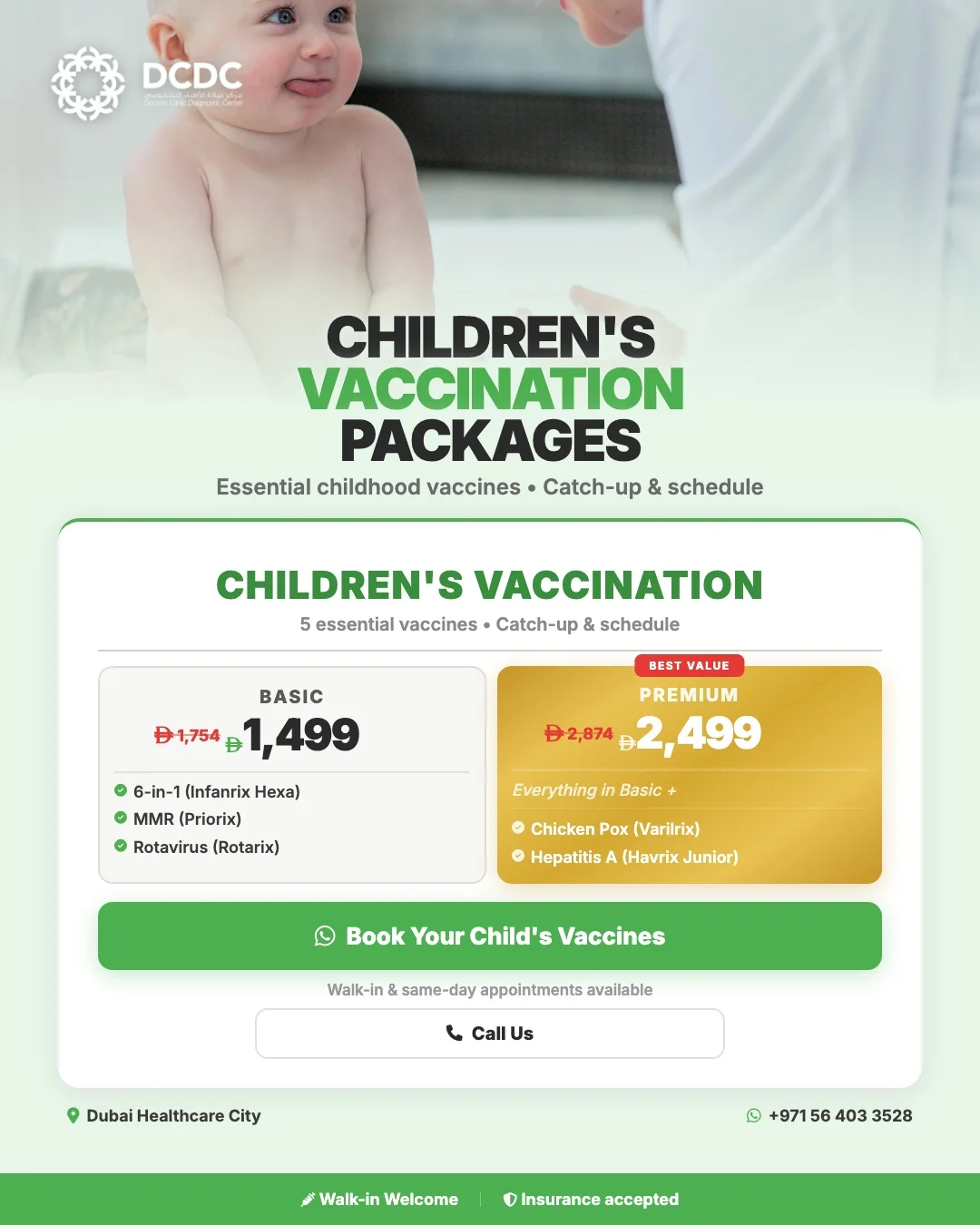
Dr. Hadeel Elnur adds: "We see many families in Dubai who travel annually to visit relatives in South Asia. Parents often remember their own typhoid vaccine but forget to check whether their children are due for a dose or a booster. I recommend including typhoid on the travel checklist for the entire family, not just the adults, and coming in at least a month before travel so we have time to address everyone's vaccination needs."
Traveling with Family? Book a Pre-Travel Health Assessment
DCDC offers family travel health consultations where we review vaccination needs for parents and children together. Rated 4.8/5 from 1,000+ verified reviews with 98% patient satisfaction. Book online or walk in at our Dubai Healthcare City clinic.
MOHAP Licensed. Open Sat-Thu 8 AM-10 PM, Fri 9 AM-9 PM. Multilingual staff: Arabic, English, Farsi, Urdu, Hindi.
Typhoid Vaccine Contraindications and Precautions
While the typhoid vaccine is safe for the vast majority of people, there are specific situations where one or both vaccine types may need to be avoided or where additional caution is warranted.
- Severe allergic reaction to a previous dose: If you have had an anaphylactic or other severe reaction to a previous typhoid vaccine or any vaccine component, do not receive that vaccine type again. Discuss alternatives with your doctor.
- Immunocompromised patients: The oral Vivotif vaccine is a live vaccine and should not be given to patients with weakened immune systems, including those with HIV/AIDS, on chemotherapy, or taking immunosuppressive medications. The injectable Typhim Vi is inactivated and remains safe for these patients.
- Pregnancy: The oral vaccine is not recommended during pregnancy due to its live nature. The injectable vaccine can be given to pregnant women if the risk of typhoid exposure is significant, after discussion with the treating physician.
- Current antibiotic use: Antibiotics can kill the live bacteria in the oral vaccine and reduce its effectiveness. The oral series should not be started if you are currently on antibiotics, or within 3 days of completing an antibiotic course.
- Acute illness with fever: As with most vaccines, vaccination should be postponed if you have a moderate to severe acute illness with fever. A mild cold without fever is not a reason to delay.
Your doctor at DCDC will review all of these considerations during your pre-travel consultation and recommend the safest and most effective option for your specific situation.
Related Services at DCDC
Expert care and advanced diagnostics at Dubai Healthcare City
Frequently Asked Questions
Final Thoughts
Typhoid fever is not a theoretical risk for travelers from Dubai — it is a real and common infection that affects thousands of travelers annually, particularly those visiting South Asia and sub-Saharan Africa. The typhoid vaccine is one of the most straightforward travel health measures available: a single injection that takes less than a minute, provides protection within two weeks, and costs a fraction of what treating the disease abroad would involve.
At Doctors Clinic Diagnostic Center in Dubai Healthcare City, we combine typhoid vaccination with a comprehensive pre-travel health assessment that covers all recommended vaccines for your destination, practical food and water safety guidance, and any prescriptions you may need for your trip. With walk-in availability, same-day appointments, 20+ insurance partners with direct billing, and multilingual staff who speak Arabic, English, Farsi, Urdu, and Hindi, we make the process as convenient as possible. Do not wait until the week before your flight — book your typhoid vaccine at DCDC and travel with one less thing to worry about.
Sources & References
This article was reviewed by our medical team and references the following sources:
- World Health Organization — Typhoid Fact Sheet
- Centers for Disease Control and Prevention — Typhoid Fever Prevention
- CDC Yellow Book — Typhoid and Paratyphoid Fever
- NHS — Typhoid Vaccination
- Cleveland Clinic — Typhoid Fever: Causes, Symptoms & Treatment
- StatPearls (NIH) — Typhoid Vaccine
Medical content on this site is reviewed by DHA-licensed physicians. See our editorial policy for more information.

Written by
Dr. Hadeel Elnur
General Practitioner
MD, General Practice
Dr. Hadeel Elnur is a General Practitioner at Doctors Clinic Diagnostic Center (DCDC) in Dubai Healthcare City.
Related Articles

Travel Vaccines Dubai: Required Shots by Destination (2026)
Pre-Travel Health Checklist Dubai (2026)
Hepatitis B Vaccine Dubai: Cost & Guide (2026)
Malaria Vaccine Dubai: Travel Prevention (2026)
Adult Vaccines Dubai: Schedule & Cost (2026)
More in Vaccination
Adult Vaccines Dubai: Schedule & Cost (2026)
Read MoreMeningococcal Vaccine UAE: Price, Schedule & Who Needs It
Read MoreRSV Vaccine Cost Dubai: Pricing Guide (2026)
Read More
Umrah & Hajj Vaccines Dubai: Full Guide (2026)
Read MoreFlu Season Preparation Dubai: Stay Protected (2026)
Read MoreShingrix Vaccine Dubai: Cost & Schedule (2026)
Read More© 2026 Doctors Clinic Diagnostic Center (DCDC), Dubai Healthcare City. Originally published at https://doctorsclinicdubai.ae/blog/typhoid-vaccine-dubai-guide. All rights reserved. Unauthorized reproduction is prohibited.