Key Takeaways
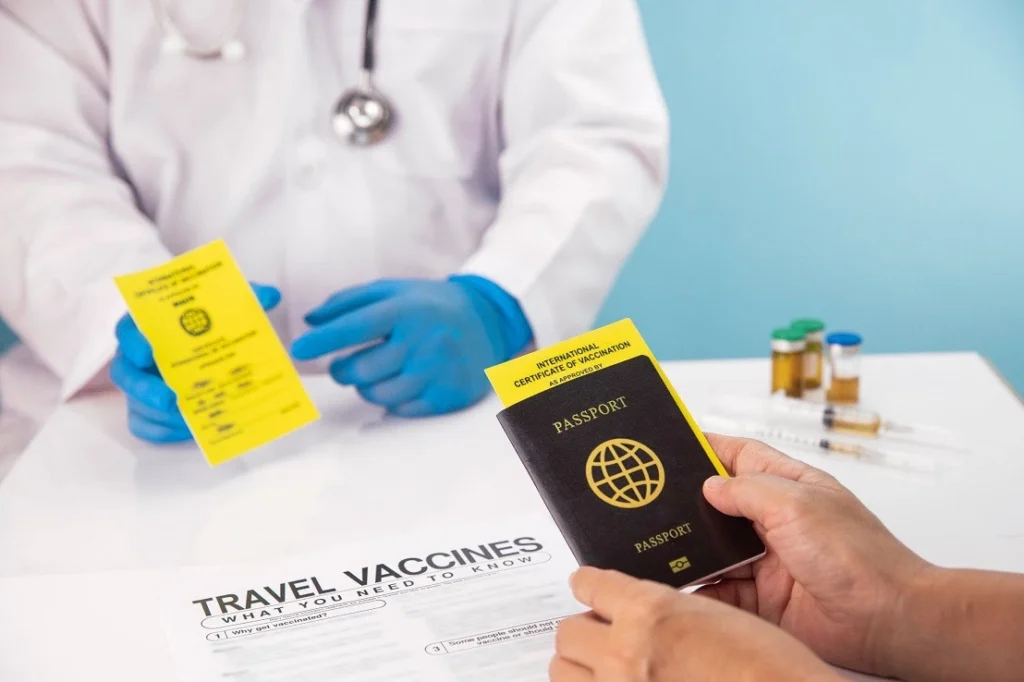
- Meningococcal ACWY vaccination is mandatory for every Hajj and Umrah pilgrim aged one and above — no certificate, no visa approval, regardless of nationality or how many times you have performed the pilgrimage before
- The certificate must be issued no less than 10 days and no more than 5 years (conjugate vaccine) or 3 years (polysaccharide vaccine) before you arrive in Saudi Arabia — a certificate issued too close to departure is not accepted
- Seasonal influenza is strongly recommended but not mandatory, given how much time pilgrims spend in dense crowds where respiratory infections spread easily
- At DCDC, the meningococcal ACWY vaccine (MENVEO) costs AED 200–350 per dose, with combined Hajj/Umrah vaccination visits typically totaling AED 350–790 depending on which additional vaccines you need
- Pilgrims who arrived in the UAE from abroad may already carry residual immunity or valid certificates from their home country — DCDC reviews existing documentation before recommending any repeat dose
- Same-day vaccination and certificate issuance is available at DCDC in Dubai Healthcare City, which matters because many travel agencies will not confirm your Hajj or Umrah visa without proof of vaccination on file
- Heat exhaustion, dehydration and respiratory illness cause more hospital visits among pilgrims than any vaccine-preventable disease — vaccination is one part of a broader pre-travel health checklist
Every year, thousands of residents travel from the UAE to perform Umrah or Hajj, and every year a share of them are turned back at the visa stage or delayed at the airport because their meningococcal vaccination certificate is missing, expired, or issued too close to travel. Saudi Arabia's entry requirements for pilgrims are strict, specific, and non-negotiable — they are not a general recommendation, they are a condition of entry. Our vaccination services at Doctors Clinic Diagnostic Center (DCDC) in Dubai Healthcare City are built around exactly this kind of deadline-driven travel medicine, and this guide walks through every vaccine Saudi Arabia requires or recommends for Umrah and Hajj in 2026, the exact timing rules, and realistic Dubai pricing.
Vaccination requirements for Hajj and Umrah are set jointly by the Saudi Ministry of Health and international travel health authorities including the WHO and CDC, and they are updated most years based on current outbreak patterns. This guide reflects the 2026 requirements as published by Saudi health authorities, with practical guidance on what applies to UAE-based travelers specifically. Dr. Hadeel Elnur, a general practitioner at DCDC who manages pilgrimage vaccination appointments year-round, reviewed this guide to ensure it reflects what pilgrims actually need to know before booking their trip.

Why Meningococcal ACWY Vaccination Is Mandatory for Hajj and Umrah
Meningococcal disease spreads fastest in exactly the conditions that define Hajj and Umrah: enormous numbers of people from dozens of countries sharing sleeping quarters, transport, and prayer spaces for days at a time. Historical outbreaks of meningococcal meningitis linked to Hajj gatherings, including cases that were then carried home by returning pilgrims and spread within their own communities, are the reason Saudi Arabia made the quadrivalent meningococcal vaccine a hard entry requirement rather than a suggestion.
The requirement applies to every pilgrim aged one year and above, regardless of nationality, regardless of how many times you have already performed Hajj or Umrah, and regardless of whether you are traveling for a few days or the full Hajj season. Airlines and Saudi immigration checkpoints check for a valid vaccination certificate, and travel agents processing Umrah and Hajj visas will typically not finalize your visa application without it on file. This is one of the few vaccines in the world that functions as a genuine visa condition rather than a health recommendation.
Complete List of Required and Recommended Vaccines for Pilgrims (2026)
Not every vaccine on the Hajj and Umrah health checklist is mandatory for every traveler. Some are universal requirements, others depend entirely on which country you are arriving from or have recently transited through. Here is the full breakdown.
- Meningococcal ACWY vaccine — mandatory for everyone: Required for all pilgrims aged 1 and above entering Hajj-designated zones (Makkah, Madinah, Jeddah and Taif), with no exceptions for nationality or prior pilgrimage history.
- Poliomyelitis vaccine — mandatory only for specific countries: Travelers from countries reporting wild poliovirus (WPV1) or circulating vaccine-derived poliovirus type 1 (cVDPV1) need at least one dose of oral or inactivated polio vaccine; travelers from countries reporting cVDPV2 need at least one dose of inactivated polio vaccine (IPV). The list of affected countries changes and is published by Saudi health authorities ahead of each Hajj season.
Recommended (Not Legally Required) Vaccines
- Seasonal influenza: Strongly recommended at least 10 days before arrival, given how easily flu spreads in crowded pilgrimage settings and among older or chronically ill pilgrims.
- Routine vaccines kept up to date: Saudi health authorities recommend all pilgrims confirm they are current on MMR, tetanus-diphtheria-pertussis (Tdap), and varicella before travel, since interrupted immunization histories are common among international travelers.
- Pneumococcal vaccine: Recommended for pilgrims aged 65 and older, or those with chronic heart, lung, kidney or immune conditions, due to the higher risk of respiratory complications in crowded, dusty environments.
- COVID-19 vaccination: Current guidance is reviewed periodically by Saudi health authorities; check the latest advisory closer to your travel date, particularly if you are in a higher-risk age or health category.
Meningococcal ACWY Vaccine: Timing, Types and Certificate Rules
The timing rules around the meningococcal vaccine catch more pilgrims off guard than any other part of the process, because the certificate is valid within a specific window — not simply "before travel." Get it too late and you are turned away; get it too early relative to your vaccine type and the certificate may have already expired by the time you land in Saudi Arabia.
- Minimum window: The vaccine must be administered no less than 10 days before you arrive in Saudi Arabia. Immunity takes time to build, and a certificate issued closer to departure than this is not accepted.
- Maximum validity — conjugate vaccine (MENVEO, MENACTRA): Valid for up to 5 years from the date of vaccination. This is the preferred vaccine type because conjugate vaccines are associated with reduced nasal and throat carriage of the bacteria, meaning vaccinated pilgrims are also less likely to silently spread it to others.
- Maximum validity — polysaccharide vaccine: Valid for up to 3 years only. If your last dose was a polysaccharide formulation and it has been more than 3 years, you will need a fresh dose regardless of your conjugate-vaccine timeline.
- Age requirement: Applies to every pilgrim aged 1 year and older — infants under 1 traveling with family are generally exempt, though this should be confirmed with your travel agent given how frequently country-specific rules are updated.
Because the certificate's format matters as much as the vaccine itself — it must clearly show the vaccine brand, batch number, date of administration, and an official clinic stamp — it is worth having it issued at a facility that regularly processes Hajj and Umrah paperwork rather than a general practice unfamiliar with the requirement. For a deeper look at vaccine brands, side effects and how meningococcal vaccination works outside the pilgrimage context, see our full meningococcal vaccine guide.
Hepatitis A and B: Should Pilgrims Consider Them?
Hepatitis A and B are not mandatory entry requirements for Hajj or Umrah, but both are worth considering given the realities of pilgrimage travel. Hepatitis A spreads through contaminated food and water, which is a genuine risk when large numbers of people are relying on shared catering and communal dining over several days. Hepatitis B spreads through blood and body fluids, which matters if you anticipate needing any medical care, minor procedures, or shared personal items during your trip.
Many adult pilgrims from the UAE have never received either vaccine, particularly if they grew up in a country where these were not part of the routine childhood schedule. If you are already booking a pilgrimage vaccination visit for the mandatory meningococcal dose, it is efficient to review your hepatitis A vaccine and hepatitis B vaccine status in the same appointment rather than as a separate trip.
Hajj and Umrah Vaccination Costs in Dubai (2026 Pricing)
| Vaccine | Who Needs It | DCDC Price | Dubai Market Range |
|---|---|---|---|
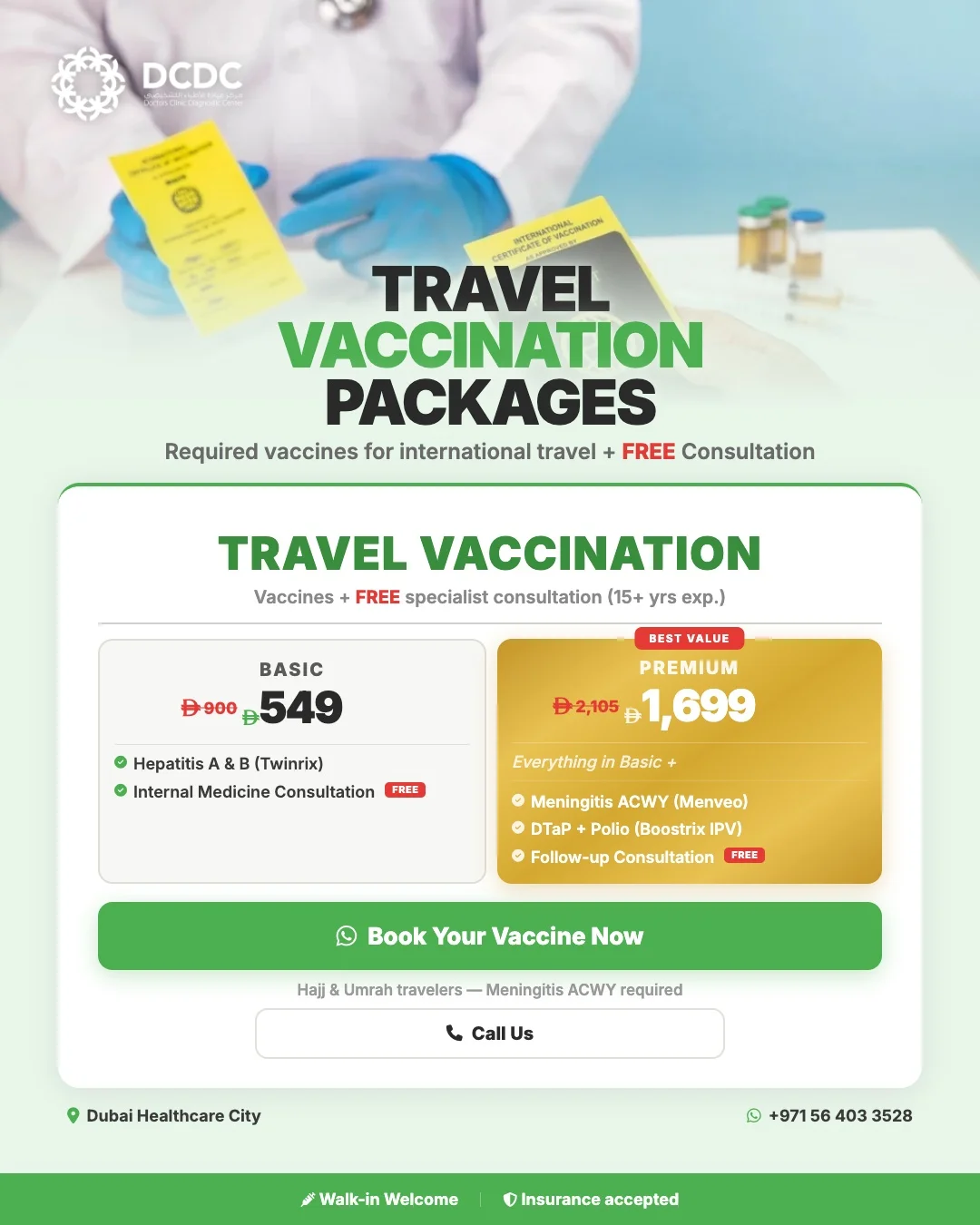
| Meningococcal ACWY (MENVEO) — conjugate, single dose | Mandatory for all pilgrims aged 1+ | from AED 200 | AED 200–350 |
| Polio booster (IPV) | Only if from a country with active transmission | from AED 150 | AED 150–300 |
| Seasonal influenza | Recommended for all pilgrims | from AED 150 | AED 150–250 |
| Hepatitis A (HAVRIX, per dose) | Recommended, not mandatory | from AED 150 | AED 150–320 |
| Hepatitis B (ENGERIX B, per dose) | Recommended, not mandatory | from AED 180 | AED 180–280 |
| Combined Hajj/Umrah vaccination visit (meningococcal + consultation + certificate) | Most UAE-based pilgrims | from AED 250 | AED 325–790 |
Prices as of 2026 and approximate. Final cost depends on which vaccines your specific travel history requires. Consultation and certificate issuance are included in DCDC's pilgrimage vaccination visit unless otherwise noted.
Insurance Coverage for Pilgrimage Vaccination in the UAE
Insurance coverage for Hajj and Umrah vaccination is one of the least consistent areas of UAE health insurance, and it is worth checking your specific plan before assuming either way.
- Travel and pilgrimage vaccines are often excluded from basic UAE health insurance plans, since they are classified as elective travel medicine rather than core preventive care.
- Enhanced or premium plans sometimes include a travel vaccination allowance — check your policy wording for "travel medicine" or "pilgrimage vaccination" coverage specifically.
- DCDC works with 20+ insurance providers, including Daman, AXA, and Bupa, with direct billing where your policy allows it, so you are not required to pay upfront and claim later.
- Our front desk verifies your coverage before your appointment whenever possible, so you know your exact out-of-pocket cost before you commit to the visit.
Health Risks During Hajj and Umrah Beyond Vaccination
Vaccination covers only part of the health picture for Hajj and Umrah. The conditions that actually send the largest number of pilgrims to medical tents and hospitals each year are heat-related illness, dehydration, and respiratory infections spread through prolonged crowd contact — none of which a vaccine prevents on its own.
- Heat exhaustion and heatstroke: Outdoor rituals often take place during peak daytime heat, and dense crowds trap heat further. Hydration, sun protection, and pacing yourself matter as much as any medical preparation.
- Respiratory infections: Close, sustained crowd contact makes colds, flu, and other respiratory illnesses spread rapidly — which is exactly why the seasonal flu vaccine is recommended even though it is not mandatory.
- Chronic condition management: Pilgrims managing diabetes, hypertension, or heart disease should carry an adequate medication supply, a written summary of their condition, and confirm with their doctor whether their condition and medications are suitable for extended physical activity in heat.
- Foodborne and waterborne illness: Shared catering across large numbers of pilgrims raises the risk of gastrointestinal illness — sticking to bottled or verified water sources and freshly prepared food reduces this risk considerably.
A pre-travel consultation is a useful opportunity to address all of this together, not just the mandatory vaccine — reviewing chronic medications, confirming fitness for the physical demands of Hajj, and getting practical advice on heat and hydration specific to your health profile.
What to Expect at DCDC During Your Pilgrimage Vaccination Visit
Pilgrimage vaccination is one of the most time-sensitive visits we handle at Doctors Clinic Diagnostic Center, since travel dates and visa deadlines are fixed and cannot be renegotiated. Here is exactly what happens when you come to DCDC in Dubai Healthcare City for your Hajj or Umrah vaccination.
Before You Arrive
- Bring your Emirates ID or passport
- Bring any previous vaccination certificates, including from outside the UAE, so we can check validity windows accurately
- Note your planned travel date so we can confirm you are within the 10-day minimum window before departure
- List any known allergies or previous vaccine reactions
During Your Visit
- Step 1 — Registration: Our front desk registers your visit and verifies insurance coverage where applicable.
- Step 2 — Travel and medical review: The doctor reviews your travel itinerary, prior vaccination history, and health status to confirm exactly which vaccines apply to your specific situation — mandatory and recommended.
- Step 3 — Vaccination: Vaccines are drawn from cold-chain certified storage and administered, typically in the upper arm. A single-vaccine visit usually takes under 10 minutes.
- Step 4 — Observation: You wait 15-20 minutes on-site so our team can monitor for any immediate reaction, a standard global safety precaution.
- Step 5 — Certificate issuance: You receive your official vaccination certificate, correctly formatted with vaccine brand, batch number, and clinic stamp, ready to submit to your travel agent or airline.
Same-day appointments are frequently available at DCDC, which matters when Hajj and Umrah visa deadlines leave little room for scheduling delays. DCDC is located in Building 64, Block A, Al Razi Medical Complex in Dubai Healthcare City, with free dedicated on-site parking and an average wait time of just 15 minutes. Our team is multilingual — Arabic, English, Farsi, Urdu and Hindi are all spoken on-site — which is useful given how many nationalities travel through Dubai for Hajj and Umrah each year. If you are also due for a routine booster alongside your pilgrimage vaccine, it can usually be combined into the same visit; see our adult vaccination schedule guide for what else might be overdue.
Traveling for Umrah or Hajj Soon?
Bring your travel dates and any existing vaccination records, and our doctors will confirm exactly which vaccines you need and issue your certificate the same day. Walk-ins are welcome at our Dubai Healthcare City clinic, or book online.
Meningococcal ACWY vaccine from AED 200. Combined pilgrimage visit from AED 250, including certificate.
Dr. Hadeel Elnur on Preparing Pilgrims for a Safe Hajj or Umrah
"The most common mistake I see is timing," says Dr. Hadeel Elnur. "Pilgrims either leave the meningococcal vaccine until the last week before travel, which risks falling short of the 10-day minimum, or they assume an old certificate from years ago is still valid without checking whether it was a conjugate or polysaccharide vaccine — the two have very different expiry windows. I always recommend booking your vaccination appointment as soon as your travel dates are confirmed, not the week before you fly."
"As a general practitioner, I also use this visit to look at the whole picture, not just the mandatory vaccine. If a pilgrim has diabetes or high blood pressure, we talk about medication timing during long days of walking in heat. If they have never had a tetanus booster or their flu shot is overdue, we address it in the same appointment. Pilgrims travel from every corner of the world through Dubai, and my job is to make sure the certificate they leave with is not just technically valid, but that they are genuinely prepared for a physically demanding trip."
Vaccination Timeline: When to Start Before Departure
Working backward from your travel date is the simplest way to avoid a last-minute scramble. Use this timeline as a general guide, adjusted based on which vaccines your specific travel history requires.
| Timing Before Departure | What to Do |
|---|---|
| As soon as travel dates are confirmed | Book your vaccination consultation. Multi-dose vaccines (hepatitis A, hepatitis B) need to be planned around a full series, not a single visit. |
| 4-6 weeks before travel | Ideal window for the meningococcal ACWY vaccine, comfortably clearing the 10-day minimum with room for any unexpected delays. |
| 2-3 weeks before travel | Get your seasonal flu vaccine and confirm routine boosters (Tdap, MMR) are current. |
| At least 10 days before travel | Absolute minimum for meningococcal ACWY vaccination to be valid for entry — do not book travel assuming you can vaccinate any closer than this. |
| 1-2 days before travel | Confirm your certificate is correctly formatted and packed with your travel documents, not left at home with other paperwork. |
General planning timeline for Hajj and Umrah vaccination. Multi-dose vaccines require earlier planning than shown here.
Common Mistakes Pilgrims Make With Vaccination Requirements
After years of processing pilgrimage vaccinations, a handful of avoidable mistakes come up again and again.
- Vaccinating too close to travel: Missing the 10-day minimum window is the single most common reason pilgrims are delayed at the visa or airport stage.
- Not knowing which vaccine type they previously received: A polysaccharide certificate expires after 3 years, not 5 — assuming the longer window applies to an older certificate is a frequent and costly error.
- Losing or misplacing the certificate: Since the certificate is a physical or digital document required at multiple checkpoints, keep it with your passport rather than separately.
- Ignoring general health preparation: Focusing only on the mandatory vaccine while ignoring hydration planning, medication supply, and general fitness for a physically demanding trip leads to more medical issues on the ground than the diseases the vaccine prevents.
Get Your Hajj or Umrah Vaccination Certificate at DCDC
Doctors Clinic Diagnostic Center in Dubai Healthcare City provides the mandatory meningococcal ACWY vaccine, correctly formatted certificates, and a full pre-travel health review for Hajj and Umrah pilgrims. Rated 4.8/5 from 1,000+ verified reviews with 98% patient satisfaction. Book online or walk in — open Saturday to Thursday 8 AM to 10 PM, Friday 9 AM to 9 PM.
MOHAP-licensed facility. 20+ insurance partners with direct billing. Free dedicated parking. Multilingual staff (Arabic, English, Farsi, Urdu, Hindi).
Related Services at DCDC
Expert care and advanced diagnostics at Dubai Healthcare City
Frequently Asked Questions
Do Not Leave Pilgrimage Vaccination Until the Last Week
Hajj and Umrah vaccination is one of the few areas of preventive healthcare with a hard, non-negotiable deadline attached to it — miss the 10-day minimum window before the meningococcal ACWY vaccine, or misjudge which certificate type you were previously given, and it can delay or derail travel plans that took months to arrange.
At Doctors Clinic Diagnostic Center in Dubai, the process is built to remove that risk: same-day vaccination and correctly formatted certificates, a review of any existing vaccination history so you never repeat a dose unnecessarily, and a broader pre-travel health check that covers the heat, hydration, and chronic condition management that matter just as much as the vaccine itself. Confirm your travel dates, book your appointment as early as possible, and arrive prepared for a trip that is as much about physical endurance as it is about a stamp in a certificate booklet.
Sources & References
This article was reviewed by our medical team and references the following sources:
- World Health Organization — International Travel and Health, Meningococcal Disease
- Centers for Disease Control and Prevention — Saudi Arabia: Hajj and Umrah Pilgrimages
- Meningitis Research Foundation — Vaccination for Hajj and Umrah Pilgrims
- Saudi Ministry of Health — Hajj Health Requirements
- National Travel Health Network and Centre (NaTHNaC) — Hajj and Umrah Factsheet
- UAE Ministry of Health and Prevention — National Immunization Program
Medical content on this site is reviewed by DHA-licensed physicians. See our editorial policy for more information.

Written by
Dr. Hadeel Elnur
General Practitioner
MD, General Practice
Dr. Hadeel Elnur is a General Practitioner at Doctors Clinic Diagnostic Center (DCDC) in Dubai Healthcare City.
Related Articles

Travel Vaccines Dubai: Required Shots by Destination
Meningococcal Vaccine Dubai: Cost & Guide
Adult Vaccines Dubai: Schedule & Cost
Hepatitis A Vaccine Cost Dubai: Guide
More in Vaccination
Flu Season Preparation Dubai: Stay Protected (2026)
Read MoreShingrix Vaccine Dubai: Cost & Schedule (2026)
Read MoreVaccines During Pregnancy Dubai: Safety Guide (2026)
Read MoreHepatitis A Vaccine Cost Dubai: Guide (2026)
Read MoreVaccine Side Effects Dubai: When to Worry (2026)
Read MoreRSV Vaccine Cost Dubai: Pricing Guide (2026)
Read More© 2026 Doctors Clinic Diagnostic Center (DCDC), Dubai Healthcare City. Originally published at https://doctorsclinicdubai.ae/blog/umrah-hajj-vaccination-guide-dubai. All rights reserved. Unauthorized reproduction is prohibited.