Key Takeaways
- DEXA body composition scan is the clinical gold standard for measuring body fat percentage, lean muscle mass, bone mineral density, and regional fat distribution — with accuracy unmatched by BIA scales or InBody devices
- A DEXA body composition scan in Dubai costs from AED 350–800, providing a comprehensive report that includes total body fat %, visceral fat estimation, lean mass by region (arms, legs, trunk), and bone density
- Unlike bathroom scales or BMI, DEXA distinguishes between fat mass, lean tissue, and bone — meaning two people at the same weight can have vastly different body compositions and health risks
- Athletes, fitness enthusiasts, weight loss patients, and individuals at risk for osteoporosis benefit most from DEXA body composition analysis for tracking progress and guiding training or nutrition plans
- DCDC Dubai Healthcare City offers DEXA body composition scans with subspecialty radiologist interpretation and results within 18–24 hours
- Repeat DEXA scans every 3–6 months provide objective tracking of fat loss, muscle gain, and bone density changes that subjective measures like the mirror or scale cannot capture
Body composition analysis goes beyond the number on your bathroom scale to reveal what your body is actually made of — how much is fat, how much is muscle, and how much is bone. In a city where fitness culture thrives and health awareness is high, understanding your body composition provides actionable insights that weight alone cannot. The DEXA scan (Dual-Energy X-ray Absorptiometry) is the clinical gold standard for body composition measurement, offering precision that bioelectrical impedance (BIA) scales and InBody devices cannot match. At DCDC's diagnostic radiology department in Dubai Healthcare City, we offer DEXA body composition analysis with subspecialty radiologist interpretation.
This guide covers everything you need to know about body composition analysis in Dubai in 2026: why it matters, how DEXA works, what your results mean, how it compares to other methods, costs, and who benefits most. Reviewed by Dr. Hadeel Elnur, General Practitioner at DCDC Dubai Healthcare City.

Why Body Composition Matters More Than Weight
Body weight is a crude metric that tells you almost nothing about your health. A 90 kg person could be an elite athlete with 12% body fat and abundant lean muscle, or a sedentary individual with 35% body fat and metabolically unhealthy visceral fat. Their health risks, fitness levels, and nutritional needs are completely different — yet the scale shows the same number.
Body composition analysis separates your total body weight into its three core components: fat mass (subcutaneous and visceral), lean mass (muscle, organs, connective tissue, water), and bone mineral content. This separation provides clinically meaningful information that guides fitness programming, nutrition planning, weight management, and disease risk assessment. For athletes, it tracks whether training is building muscle or just changing scale weight. For weight loss patients, it confirms that you are losing fat (not muscle). For older adults, it screens for sarcopenia (muscle wasting) and osteoporosis simultaneously.
How DEXA Body Composition Analysis Works
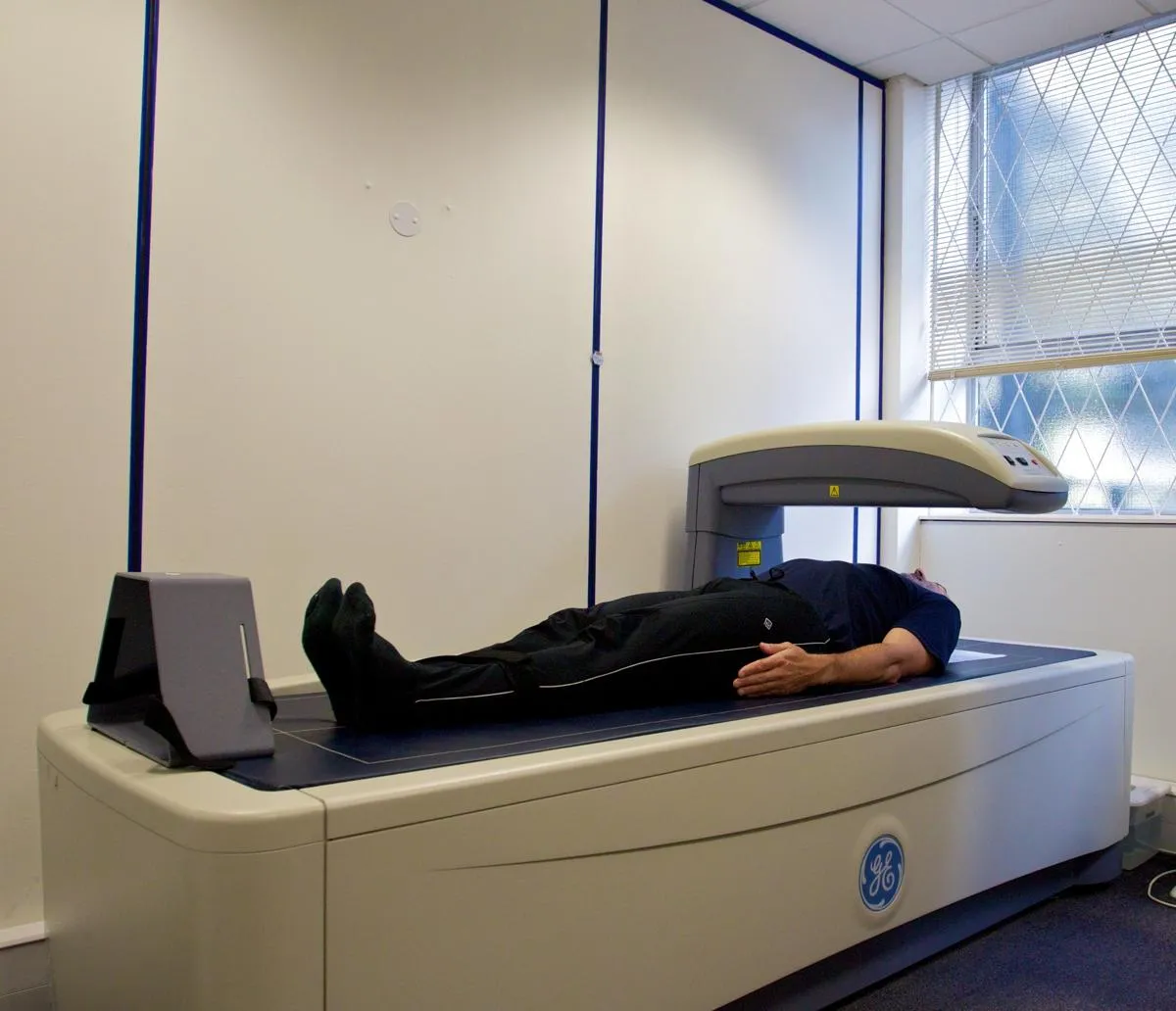
DEXA (Dual-Energy X-ray Absorptiometry) uses two low-dose X-ray beams at different energy levels to differentiate between bone mineral, lean soft tissue, and fat tissue as they pass through your body. The scanner moves over your entire body from head to toe while you lie still on a padded table. The scan takes approximately 10–15 minutes and exposes you to an extremely low radiation dose — approximately 1–5 microsieverts, which is less than the natural background radiation you receive in a single day.
The DEXA scanner at DCDC produces a detailed report that includes total body fat percentage, total lean mass (kg), total fat mass (kg), bone mineral density (g/cm²), regional breakdown (left arm, right arm, trunk, left leg, right leg), android (abdominal) to gynoid (hip) fat ratio, visceral adipose tissue (VAT) estimation, and comparison to age- and sex-matched reference populations. For a deeper dive into DEXA versus other measurement tools, see our detailed DEXA vs InBody accuracy comparison.
Body Composition Analysis Cost in Dubai: 2026 Pricing
Body composition analysis costs vary significantly depending on the method used. DEXA provides the highest accuracy but at a higher price point than consumer-grade methods.
| Method | Cost in Dubai (AED) | Accuracy | What It Measures |
|---|---|---|---|
| DEXA body composition scan | 350–800 | Gold standard (±1–2% for body fat) | Fat %, lean mass, bone density, regional distribution, visceral fat |
| DEXA bone density only | 300–600 | Gold standard for bone | Bone mineral density only (hip and spine) |
| InBody / BIA device (gym or clinic) | 50–200 | Moderate (±3–5% for body fat) | Estimated fat %, lean mass, water. Affected by hydration, food, exercise |
| Smart scale (home BIA) | 100–500 (device purchase) | Low (±5–8%) | Rough estimate only; inconsistent between brands |
| Skinfold callipers | 50–150 (trainer measurement) | Moderate (±3–5%, operator dependent) | Subcutaneous fat only; misses visceral fat |
| Hydrostatic (underwater) weighing | 500–1,500 | High (±2–3%) | Fat vs lean mass; no bone data, no regional breakdown |
DEXA provides the most comprehensive and accurate body composition data. InBody and BIA devices are useful for frequent tracking but should be benchmarked against DEXA.
DCDC's DEXA body composition scan includes the full-body scan, subspecialty radiologist interpretation, and a detailed printed report with all metrics — from AED 350. This represents excellent value compared to the Dubai market average and includes bone density assessment at no additional cost.
Understanding Your DEXA Body Composition Results
Your DEXA report contains several metrics. Here is what each means and what ranges are considered healthy.
Body Fat Percentage
| Category | Men | Women |
|---|---|---|
| Essential fat | 2–5% | 10–13% |
| Athletes | 6–13% | 14–20% |
| Fitness | 14–17% | 21–24% |
| Average (healthy) | 18–24% | 25–31% |
| Above average / overweight | 25–30% | 32–38% |
| Obese | >30% | >38% |
Body fat percentage ranges by category and sex (ACE/ACSM guidelines). DEXA provides the most accurate measurement of these values.
Android-to-Gynoid Ratio (A/G Ratio)
The A/G ratio compares fat stored around the abdomen (android region) to fat stored around the hips and thighs (gynoid region). A higher A/G ratio indicates more central (visceral) fat distribution, which is strongly associated with increased cardiovascular disease, type 2 diabetes, and metabolic syndrome risk. An A/G ratio below 1.0 is generally considered healthy. Ratios above 1.0 in men or 0.8 in women warrant attention to diet, exercise, and metabolic health monitoring.
Visceral Adipose Tissue (VAT)
DEXA estimates visceral fat — the metabolically active fat surrounding your internal organs — which is the most dangerous type of fat from a health perspective. Even individuals with a normal BMI can have elevated visceral fat (a condition called 'skinny fat' or 'metabolically obese normal weight'). DEXA's ability to quantify visceral fat is a major advantage over BIA devices and skinfold measurements, which cannot distinguish between subcutaneous and visceral fat.
DEXA vs InBody: Which Is More Accurate?
InBody and similar bioelectrical impedance analysis (BIA) devices are popular in gyms and wellness clinics because they are fast, affordable, and non-invasive. However, BIA accuracy is significantly affected by hydration status, recent food and drink intake, exercise timing, skin temperature, and menstrual cycle phase. Studies show that BIA devices can deviate from DEXA by 3–8 percentage points for body fat measurement, with the greatest inaccuracies in very lean or very obese individuals.
DEXA provides a true measurement using X-ray physics, while BIA provides an estimate based on electrical resistance. For tracking trends over time, BIA can be useful if you control all variables (same time of day, same hydration, same conditions). But for a baseline assessment, clinical decision-making, or absolute accuracy, DEXA is the clear choice. Many athletes and coaches use a combination: DEXA every 3–6 months for a true benchmark, with weekly InBody readings for trend monitoring in between.
Who Benefits Most from Body Composition Analysis?
While anyone can benefit from knowing their body composition, certain groups gain the most actionable value from DEXA analysis.
- Athletes and competitive sports: Tracking lean mass gain and fat loss by body region helps optimise training programmes and competition weight categories.
- Weight loss patients: Confirms that you are losing fat (not muscle). If lean mass is declining, your nutrition or exercise plan needs adjustment. For patients on weight loss medications, DEXA verifies healthy composition changes.
- Fitness enthusiasts: Objectively measures progress beyond the scale — muscle gained, fat lost, regional improvements.
- Post-menopausal women: Combined body composition and bone density assessment screens for both osteoporosis and age-related muscle loss (sarcopenia). See our guide on how often to get a DEXA scan.
- Older adults: Sarcopenia (muscle wasting) and osteoporosis are major causes of falls and fractures. DEXA identifies both conditions simultaneously.
- Metabolic health assessment: Visceral fat and A/G ratio correlate with insulin resistance, type 2 diabetes risk, and cardiovascular disease risk better than BMI or waist circumference alone.
- Personal trainers and coaches: Provides objective data to design and validate training and nutrition programmes for clients. For athletes interested in DEXA benchmarking, see our DEXA for athletes guide.
Know Your Body Composition
Book a DEXA body composition scan at DCDC Dubai Healthcare City. Precise body fat %, lean mass, bone density, and visceral fat measurement from AED 350.
Results within 18–24 hours. Subspecialty radiologist interpretation. Call or WhatsApp to book.
How to Prepare for a DEXA Body Composition Scan
DEXA body composition scanning requires minimal preparation, but following these guidelines ensures the most accurate and consistent results.
- Stay hydrated normally: Do not over-hydrate or under-hydrate. Drink your normal amount of water. Excess water can slightly inflate lean mass readings.
- Avoid heavy exercise for 24 hours: Intense exercise causes fluid shifts and temporary muscle inflammation that can affect measurements.
- Fasting is not required: However, for maximum consistency between repeat scans, try to be in a similar fed/fasted state each time.
- Wear lightweight clothing: Metal-free athletic wear is ideal. Remove all metal (jewellery, belt, underwire bra, zippers).
- Schedule consistently: If you plan repeat scans for tracking, book them at the same time of day and under similar conditions.
- Inform the technologist: If you have any metal implants (joint replacements, plates, screws), inform the staff as these can affect localised measurements.
What to Expect at DCDC for Your DEXA Scan
Getting a DEXA body composition scan at DCDC Dubai Healthcare City is quick and comfortable.
- Step 1 — Check-in: Arrive at DCDC, present your ID and insurance card. Free parking available on-site.
- Step 2 — Preparation: Change into a gown or lightweight clothing. Remove all metal items.
- Step 3 — The scan: Lie flat on the DEXA table. The scanning arm passes over your body from head to toe. The scan takes 10–15 minutes. It is painless and requires no injection or contrast.
- Step 4 — Results: A subspecialty radiologist interprets the scan and generates a detailed report within 18–24 hours. The report includes all body composition metrics, bone density, and comparison data.
DCDC's DEXA scanner provides precise, reproducible measurements with minimal radiation exposure — less than a single day of natural background radiation. With a 4.8/5 Google rating and an average wait time of 15 minutes, the experience is efficient from check-in to completion.
Frequently Asked Questions About Body Composition Analysis
Below are answers to the most commonly asked questions about body composition testing in Dubai.
Related Services at DCDC
Expert care and advanced diagnostics at Dubai Healthcare City
Frequently Asked Questions
Final Thoughts
Body composition analysis via DEXA provides the most accurate, comprehensive, and clinically useful assessment of what your body is made of. Whether you are tracking fat loss, building muscle, screening for osteoporosis, assessing metabolic health risk, or simply wanting to know your true body fat percentage, DEXA delivers precision that scales, BMI, and BIA devices cannot match.
At DCDC Dubai Healthcare City, DEXA body composition scans start from AED 350 and include bone density assessment, visceral fat estimation, and subspecialty radiologist interpretation — all with results within 18–24 hours. Book your scan by phone or WhatsApp and take the first step toward understanding your body beyond the number on the scale.
Sources & References
This article was reviewed by our medical team and references the following sources:
- American College of Sports Medicine — Body Composition Assessment
- National Institutes of Health — DEXA for Body Composition Analysis
- Mayo Clinic — Body Fat: What's Healthy?
- Cleveland Clinic — Body Composition: What It Is and How to Measure It
- International Society for Clinical Densitometry — Body Composition Standards
Medical content on this site is reviewed by DHA-licensed physicians. See our editorial policy for more information.

Written by
Dr. Hadeel Elnur
General Practitioner
MD, General Practice
Dr. Hadeel Elnur is a General Practitioner at Doctors Clinic Diagnostic Center (DCDC) in Dubai Healthcare City.
Related Articles
DEXA vs InBody: Accuracy Comparison (2026)
DEXA Body Composition for Athletes (2026)
How Often Should You Get a DEXA Scan? (2026)
Whole Body DEXA Scan Dubai (2026)
© 2026 Doctors Clinic Diagnostic Center (DCDC), Dubai Healthcare City. Originally published at https://doctorsclinicdubai.ae/blog/body-composition-analysis-dubai. All rights reserved. Unauthorized reproduction is prohibited.