تخطي إلى المحتوى الرئيسي
مركز الأطباء التشخيصي، مدينة دبي الطبية، دبي، الإمارات
العودة للمدونة
Pediatrics

"Is That X-Ray Safe for My Child?": A Radiologist Answers Your Questions

فريق DCDC الطبي14 min read
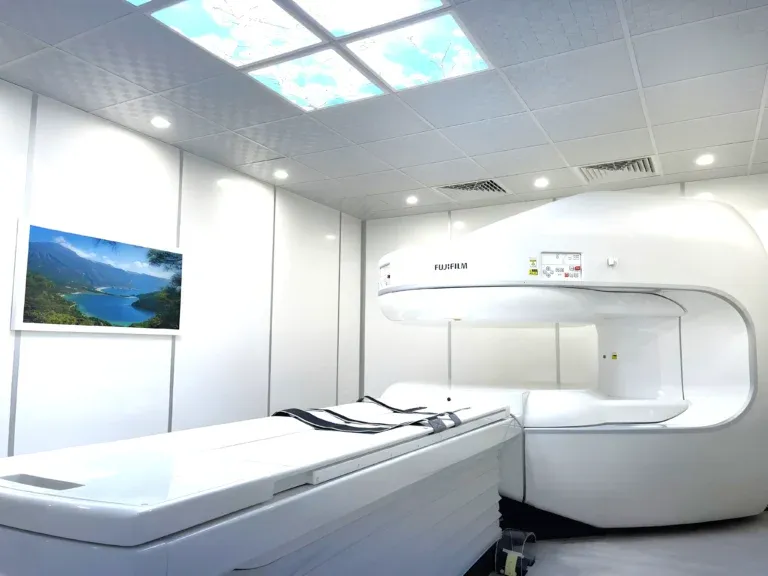
Modern pediatric imaging equipment at DCDC Dubai Healthcare City
مراجعة طبية بواسطة Dr. Osama ElzamzamiConsultant Radiologist, FRCR (London)

النقاط الرئيسية

  • Ultrasound is always radiation-free and our first choice for children when possible
  • A chest X-ray gives less radiation than a day at the beach - modern machines use tiny doses
  • We follow ALARA protocols: lowest possible dose for the clearest image
  • Most kids over 6 can do MRI without sedation with proper preparation
  • Parents can stay with their child during most imaging procedures
  • Our radiologists are trained in pediatric-specific protocols and interpretation

Your pediatrician just ordered an X-ray for your child, and your stomach drops. Is it safe? How much radiation are we talking about? Will it hurt? These questions flood every parent's mind, and they're exactly the right questions to ask.

As a radiologist who's spent years imaging children, I want to give you honest, practical answers. Not medical jargon, not dismissive "it's fine," but real information you can use to make informed decisions about your child's care.

هل أنت مستعد للخطوة التالية؟

احجز موعدك اليوم واستمتع برعاية متخصصة في مركز دكتورز كلينك التشخيصي في مدينة دبي الطبية.

Let's Talk About Radiation, Honestly

The word "radiation" sounds scary. It conjures images of nuclear disasters and cancer. But here's something most people don't realize: you're being exposed to radiation right now. Natural background radiation from the sun, soil, buildings, and even bananas gives each of us about 3 millisieverts (mSv) per year.

Now, let's put pediatric imaging in perspective:

Imaging TypeRadiation DoseEquivalent To...
Chest X-ray0.1 mSv10 days of background radiation
Limb X-ray (arm/leg)0.001 mSvA few hours of background radiation
Abdominal X-ray0.7 mSv~3 months of background radiation
Ultrasound0 mSvZero radiation (uses sound waves)
MRI0 mSvZero radiation (uses magnetic fields)

Radiation doses for common pediatric imaging procedures

A limb X-ray, the most common pediatric X-ray for suspected fractures, delivers less radiation than eating a banana. I'm not being flippant; I'm trying to provide honest context.

Why We Love Ultrasound for Kids

Here's a secret from the radiology world: when we can use ultrasound instead of X-ray or CT, we're thrilled. Our diagnostic radiology department prioritizes ultrasound for children whenever possible because it uses sound waves, the same technology that's been monitoring pregnancies for over 50 years. There's no radiation. None. Zero.

It's also painless, doesn't require any preparation in most cases, and lets your child stay comfortable with you right beside them.

Conditions We Often Diagnose with Ultrasound

  • Abdominal pain: Appendicitis, constipation, kidney issues
  • Hip problems in infants: Developmental dysplasia of the hip (DDH)
  • Pyloric stenosis: The condition causing projectile vomiting in newborns
  • Testicular issues: Torsion, hernias, hydroceles
  • Thyroid and neck lumps: Enlarged lymph nodes, thyroid nodules

Pediatric Imaging Costs at DCDC Dubai (2025)

Understanding the cost of pediatric imaging helps you plan ahead. Here are the typical prices for children's imaging at Doctors Clinic Diagnostic Center in Dubai Healthcare City:

Imaging ProcedureCost (AED)
Chest X-ray (child)200 - 300
Limb X-ray (arm, leg, hand, foot)250 - 400
Abdominal ultrasound (child)500 - 800
Hip ultrasound (infant)400 - 600
Brain ultrasound (newborn)500 - 700
MRI without sedation2,000 - 3,500
MRI with sedation3,500 - 5,000

Prices are approximate and may vary. Most insurance plans cover medically necessary pediatric imaging.

For a detailed breakdown of chest X-ray costs in Dubai and what affects pricing, see our dedicated guide. If your child needs an ultrasound, you'll find it's one of the most affordable and accessible imaging options available.

Comparing Imaging Modalities for Children

Parents often ask: "Which scan is best for my child?" The answer depends on what we're looking for. Here's a side-by-side comparison of the imaging options available:

ModalityRadiationDurationSedation Needed?Best For...
X-rayMinimal5 minutesNoFractures, chest infections
UltrasoundZero15-20 minutesNoAbdomen, hips, soft tissue
MRIZero20-45 minutesSometimes (under 6 years)Brain, spine, joints
CT scanHigher5-10 minutesRarelyEmergencies, trauma

We always choose the lowest-radiation option that can answer the clinical question.

For more information about what to expect from an MRI scan in Dubai, including preparation tips and what happens during the procedure, read our comprehensive guide. If your child's doctor has ordered an abdominal ultrasound, our detailed guide explains the process step by step.

A Parent's Story: When Your Child Needs an Ultrasound

Fatima brought her 4-year-old son, Omar, to DCDC after he had been complaining of tummy pain for three days. Her pediatrician had ordered an abdominal ultrasound, and Fatima was nervous. "He's terrified of doctors," she told us at reception. "Last time we went for a blood test, it took four of us to hold him down."

Our sonographer, who has years of experience with children, took a different approach. She let Omar explore the ultrasound room first, touching the (turned-off) machine and sitting on the bed. She showed him the gel and let him squeeze some onto his own hand. "It's like slime!" he said, laughing. She gave him a small toy dinosaur to hold and told him the ultrasound wand was going to "take pictures of the dinosaur's home inside his tummy."

Within minutes, Omar was lying still, fascinated by the grey-and-white images on the screen. "Is that my tummy?" he kept asking. The scan took about 15 minutes, and Omar didn't cry once. The ultrasound showed a mesenteric lymphadenitis, a benign condition where lymph nodes in the abdomen become temporarily swollen, usually after a viral infection. It resolved on its own within a week.

"I was so worried it might be something serious," Fatima told us afterward. "But the scan gave us peace of mind, and Omar actually wants to come back. He keeps telling his friends about the 'tummy camera.'" Stories like Omar's remind us why a child-friendly approach isn't just nice to have; it's essential for getting accurate diagnostic images.

Need Pediatric Imaging? We Make It Easy

At DCDC Dubai Healthcare City, our team specializes in making imaging comfortable for children of all ages. From radiation-free ultrasound to low-dose X-ray, we use child-friendly techniques and the latest technology to get the clearest images with the least stress.

Book an Appointment

When X-Rays Are Actually the Best Choice

Sometimes ultrasound simply can't see what we need to see. Bones appear as bright white on ultrasound, so we can't evaluate fractures well. For these situations, X-ray remains the gold standard:

  • Suspected fractures: Did they break something after that fall?
  • Chest infections: Pneumonia shows up beautifully on chest X-ray
  • Swallowed objects: Kids put things in their mouths (and sometimes swallow them)
  • Scoliosis evaluation: Spine curvature assessment

The ALARA Principle

Every reputable imaging facility follows ALARA: As Low As Reasonably Achievable. This means we use the absolute minimum radiation dose needed to get a diagnostic-quality image. For children, we adjust machine settings specifically for their smaller bodies.

The Real Challenge: Keeping Kids Still

I'll be honest: the hardest part of pediatric imaging isn't the technology. It's convincing a scared, squirmy toddler to stay still for three seconds. This is where experience matters enormously.

For Babies and Toddlers

  • We time the image for the exact moment between wiggles
  • Feeding right before ultrasound often puts them in a cooperative mood
  • Colorful distractions: bubbles, light-up toys, videos
  • Warm blankets and dim lights for ultrasound

For Older Children

  • We explain exactly what will happen (no surprises)
  • Let them press buttons to feel in control
  • Show them the images afterward (most kids think it's cool)
  • Rewards: stickers are still magical at any age

MRI for Children: The Sedation Question

MRI scans present a unique challenge. The scan itself is completely safe because MRI uses magnetic fields and radio waves, not radiation. But it requires lying still in a narrow tube for 30-60 minutes while loud clicking and banging noises happen all around you.

Children around 6-7 years and older can often complete an MRI awake if properly prepared. For younger children or longer scans, sedation might be the kindest option, which simply means your child sleeps peacefully through a scan they wouldn't otherwise tolerate.

How to Prepare Your Child

Your attitude sets the tone. If you're anxious, your child will pick up on it. If you're matter-of-fact and calm, they'll likely follow your lead.

What to Bring

  • A favorite small toy or comfort object (no metal for MRI)
  • Comfortable clothes without zippers or metal buttons
  • A snack for afterward (especially if they fasted)
  • Your phone loaded with their favorite show for distraction

Questions You Should Always Ask

You have every right to understand what's happening with your child's care:

  • "Is this imaging test necessary, or is it precautionary?"
  • "Could we start with ultrasound instead of X-ray/CT?"
  • "Can I stay with my child during the procedure?"
  • "When will we get the results?"

Pediatric Imaging at DCDC

At Doctors Clinic Diagnostic Center in Dubai Healthcare City, we're equipped for all pediatric imaging needs. Our radiologists have years of experience interpreting pediatric images, and our technologists know how to work with children of all ages.

WhatsApp Us

The Bottom Line

I understand the anxiety that comes with your child needing medical imaging. But modern pediatric imaging is remarkably safe. Ultrasound has zero radiation risk. X-rays deliver doses so small they're measured in fractions of what you receive naturally.

When imaging is medically indicated, the benefit to your child far outweighs any minimal theoretical risk. Your job is to ask questions and help your child feel comfortable. Our job is to get the clearest images with the least possible intervention.

Have Questions About Your Child's Scan?

Our pediatric imaging team at DCDC Dubai Healthcare City is happy to answer your questions before, during, and after your child's appointment. We believe informed parents make the best advocates for their children's health. Call us or WhatsApp us to discuss your child's imaging needs.

Contact Us Today

Together, we'll take good care of your child.

الأسئلة الشائعة

I understand the worry - it's natural. But here's some perspective: a single chest X-ray exposes your child to about 0.1 millisieverts (mSv) of radiation. We all receive about 3 mSv per year just from natural background radiation (from the sun, soil, and even bananas). So one chest X-ray is roughly equivalent to 10-12 days of normal life. Our digital equipment uses even lower doses than older machines, and we only recommend X-rays when the diagnostic benefit clearly outweighs this minimal risk.
Yes, absolutely. Ultrasound uses sound waves - the same technology used to monitor babies during pregnancy for decades. There's no radiation involved whatsoever. It's painless, can be repeated as many times as needed, and has no known side effects. This is why we always consider ultrasound first for pediatric imaging when it can answer the clinical question.
For most procedures, yes - and we encourage it. Having a parent nearby helps children feel safe and stay calm, which actually helps us get better images faster. For X-rays, you may wear a lead apron and stay in the room. For ultrasound, you can be right next to your child the entire time. For MRI, you can stay in the room but not inside the scanner.
This is one of our most common challenges, and honestly, it's where experience matters most. Our technologists use distraction techniques, let kids hold a favorite toy, and time our imaging for the exact moment they're still. Our digital equipment captures images much faster than older machines. For some procedures, we might use gentle immobilization devices. In rare cases where we absolutely need a still image, we'll discuss sedation options with you.
Each has different strengths: X-ray uses a tiny amount of radiation and is best for bones and chest - it's quick, taking just seconds. Ultrasound uses sound waves (no radiation) and is great for soft tissues and abdomen - it takes 15-30 minutes. CT uses more radiation than X-ray, so we only use it when truly necessary. MRI uses magnetic fields (no radiation) and gives excellent soft tissue detail - it takes 30-60 minutes. We always choose the safest option that will answer your doctor's question.
Not always. Children around 6-7 and older can often complete an MRI without sedation if we prepare them properly. We explain what will happen, let them hear the sounds beforehand, and keep the scan as short as possible. For younger children, or scans that take longer than 30-40 minutes, sedation might be recommended - not because MRI is dangerous, but because we need them to stay completely still for clear images.
Be honest but calm - explain they'll take pictures of the inside of their body. For ultrasound of the abdomen, they may need to fast for a few hours. For MRI, remove all metal (hair clips, jewelry). Bring their favorite small toy or blanket for comfort. Dress them in comfortable clothes without metal zippers. And most importantly - stay calm yourself. Kids pick up on parental anxiety.
At the doses used in modern diagnostic imaging, we have no evidence of long-term harm. The theoretical risk from a few X-rays in childhood is so small it's essentially unmeasurable. That said, we take a 'better safe than sorry' approach - we only perform imaging when medically necessary, use the lowest effective dose, and shield areas not being imaged.
It depends on why they were needed, but generally, multiple diagnostic X-rays in a year are not cause for concern. We track cumulative doses, and even children who've had 10+ X-rays in a year are typically well below any level of concern. What matters is whether each X-ray was medically necessary. If you're worried, ask to speak with our radiologist - we can review your child's imaging history.
Different imaging tools see different things best. X-rays are superior for bones - if your child has a suspected fracture, X-ray is usually the best first choice. Ultrasound excels at soft tissues and fluid - it's better for abdominal pain or checking internal organs. Your doctor chose the imaging that's most likely to answer their specific clinical question. If you're unsure why a particular test was ordered, please ask.
Yes, in most cases you can stay in the MRI room with your child, though you cannot be inside the scanner itself. You will need to remove all metal objects (jewelry, watches, credit cards, phones) before entering the MRI room. You can hold your child's hand or foot during the scan and talk to them through the intercom. Your presence is often the most effective way to keep your child calm and still during the procedure.
Most children around 6-7 years old and above can complete an MRI without sedation if properly prepared. However, this varies significantly by child. Some mature 5-year-olds manage well, while some anxious 8-year-olds may struggle. We assess each child individually. Key factors include the child's temperament, the length of the scan, and how well they respond to preparation. We always try without sedation first and have strategies to help your child stay calm.
CT scans use more radiation than X-rays, so we only recommend them for children when absolutely necessary, typically in emergencies like head trauma, suspected internal injuries, or complex fractures. When a CT is medically indicated, the diagnostic benefit far outweighs the radiation risk. We use pediatric-specific protocols that significantly reduce the radiation dose compared to adult settings. In non-urgent situations, we always explore MRI or ultrasound as radiation-free alternatives first.
For an X-ray, dress your child in comfortable clothes without metal buttons, zippers, or snaps. Remove any jewelry or hair accessories with metal. Explain in simple, age-appropriate language that a special camera will take a picture of their bones, and it will only take a few seconds. Reassure them it won't hurt. Bring a small reward like a sticker or snack for afterward. Most importantly, stay calm and positive, as children mirror their parents' emotions.

هل أنت مستعد للخطوة التالية؟

احجز موعدك اليوم واستمتع برعاية متخصصة في مركز دكتورز كلينك التشخيصي في مدينة دبي الطبية.

The Bottom Line

I understand the anxiety that comes with your child needing medical imaging. But modern pediatric imaging is remarkably safe. Ultrasound has zero radiation risk. X-rays deliver doses so small they're measured in fractions of what you receive naturally.

When imaging is medically indicated, the benefit to your child far outweighs any minimal theoretical risk. Your job is to ask questions and help your child feel comfortable. Our job is to get the clearest images with the least possible intervention. Together, we'll take good care of your child.

المصادر والمراجع

تمت مراجعة هذا المقال من قبل فريقنا الطبي ويستند إلى المصادر التالية:

  1. Dubai Health Authority - Pediatric Radiation Protection Standards
  2. UAE Ministry of Health - Child Health Imaging Guidelines
  3. Federal Authority for Nuclear Regulation UAE - Medical Radiation Safety
  4. Image Gently Alliance - Pediatric Imaging Safety
  5. American College of Radiology - Pediatric Guidelines

يتم مراجعة المحتوى الطبي على هذا الموقع من قبل أطباء مرخصين من هيئة الصحة. اطلع على سياستنا التحريرية لمزيد من المعلومات.

Dr. Osama Elzamzami

كتبه

Dr. Osama Elzamzami

عرض الملف الشخصي

Consultant Radiologist

FRCR (London), MD Radiology

Dr. Osama Elzamzami is a highly experienced Consultant Radiologist with international qualifications from the Royal College of Radiologists, London. He specializes in diagnostic imaging interpretation and is known for his detailed, accurate reporting.

Related Articles

خدمات ذات صلة في DCDC

رعاية متخصصة وتشخيص متقدم في مدينة دبي الطبية

تواصل مع مركز الأطباء للتشخيص في دبي عبر واتساباتصل بمركز الأطباء للتشخيص في دبي