النقاط الرئيسية
- 3D mammography (digital breast tomosynthesis) detects 41% more invasive breast cancers than conventional 2D mammography, according to peer-reviewed research published in JAMA
- 3D mammograms reduce false-positive callbacks by up to 40%, meaning fewer women are recalled for unnecessary additional imaging and biopsies
- The radiation dose from a 3D mammogram is slightly higher than a standard 2D mammogram but remains well within FDA safety limits and is clinically insignificant
- Women with dense breast tissue benefit the most from 3D mammography because tomosynthesis eliminates the tissue overlap that hides cancers on 2D images
- DCDC in Dubai Healthcare City offers both 2D and 3D mammography with same-day reporting by experienced consultant radiologists
A 3D mammogram, also known as digital breast tomosynthesis, is an advanced breast imaging technology that captures multiple thin-layer images of the breast from different angles, creating a quasi-three-dimensional reconstruction that radiologists can scroll through slice by slice. Unlike a conventional 2D mammogram, which compresses all breast tissue into a single flat image where overlapping structures can obscure or mimic cancers, tomosynthesis separates the breast tissue into individual layers, dramatically improving the visibility of small tumors and reducing the number of false alarms that lead to stressful callbacks.
This evidence-based guide compares 2D and 3D mammograms across every factor that matters to patients: cancer detection rates, false-positive recall rates, radiation exposure, cost differences in Dubai, suitability for dense breasts, and what the latest clinical evidence says about which technology you should choose for your next screening.
What Is the Difference Between 2D and 3D Mammogram?
The fundamental difference between a 2D mammogram and a 3D mammogram lies in how the breast tissue is imaged and displayed. A conventional 2D digital mammogram takes two X-ray images of each breast, one from above (craniocaudal view) and one from the side (mediolateral oblique view), compressing the entire thickness of the breast into a single flat image per view. This means that all the glandular tissue, fat, ligaments, and blood vessels are superimposed on top of one another in the final image.
This superimposition creates two significant clinical problems. First, overlapping tissue can hide a genuine cancer behind a dense area of normal breast tissue, causing the radiologist to miss the tumor entirely. This is called a false negative. Second, overlapping tissue can create the visual impression of a mass where none exists, prompting the radiologist to recall the patient for additional imaging or biopsy. This is called a false positive. Both scenarios have real consequences: missed cancers delay treatment, and false-positive callbacks cause unnecessary anxiety, additional radiation exposure, invasive biopsies, and financial cost.
A 3D mammogram (tomosynthesis) solves both problems by acquiring a series of low-dose X-ray projections as the X-ray tube moves in an arc over the compressed breast. The system captures between 9 and 25 individual exposures, depending on the manufacturer, over a sweep angle of 15 to 50 degrees. A computer algorithm then reconstructs these projections into a stack of thin slices, each approximately 1 millimeter thick, that the radiologist can scroll through on a high-resolution monitor, examining one layer of breast tissue at a time.
"The difference is comparable to reading a book versus looking at its cover," says Dr. Osama Elzamzami, Head of Radiology at DCDC. "With 2D mammography, you see everything compressed into one image. With tomosynthesis, you can turn each page individually, and that is what allows us to find cancers that would otherwise be hidden."
The result is a dramatic improvement in diagnostic clarity. Because each slice shows only a thin layer of tissue, the overlapping structures that cause both false negatives and false positives on 2D imaging are largely eliminated. The radiologist can distinguish a true mass from a summation artifact (an illusion created by overlapping normal tissue), identify the margins of a lesion more clearly, and detect subtle architectural distortions and asymmetries that are invisible on conventional images.
How 3D Tomosynthesis Works
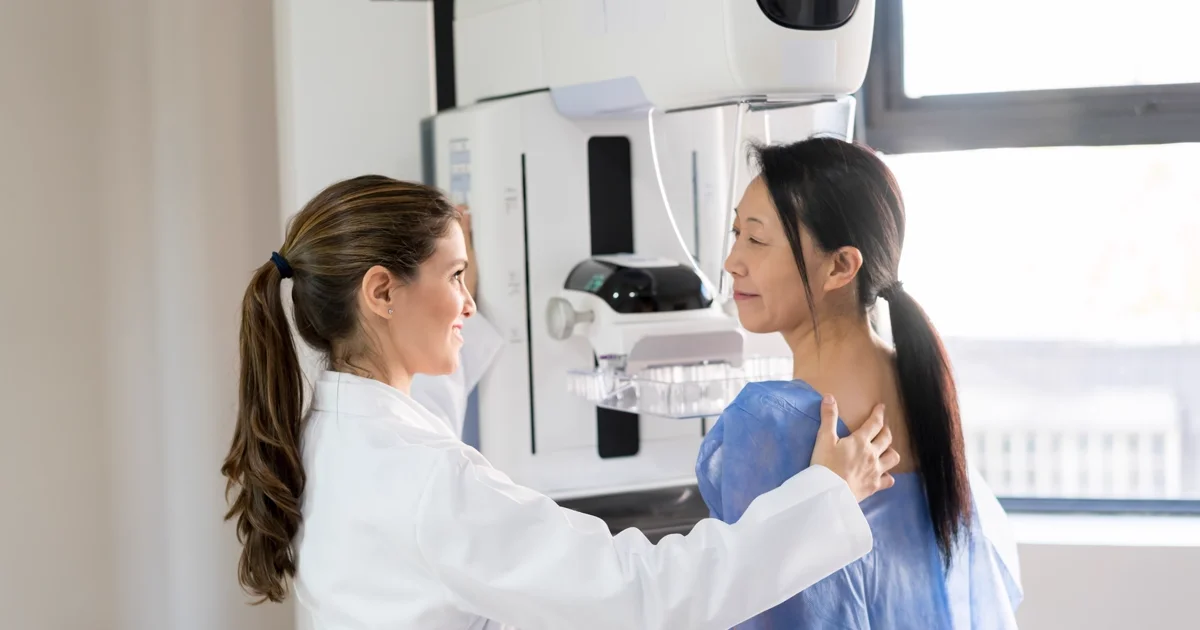
Digital breast tomosynthesis (DBT) uses the same mammography compression paddle and detector as a standard 2D mammogram. The patient experience is nearly identical: the breast is positioned on the detector plate, the compression paddle gently flattens the breast to spread the tissue evenly, and the X-ray exposure occurs. The key difference is what happens with the X-ray tube during the exposure.
In a 2D mammogram, the X-ray tube is stationary and fires a single burst of radiation straight through the breast. In a 3D mammogram, the X-ray tube pivots in a controlled arc above the breast, pausing at multiple positions to capture a series of low-dose exposures. Each exposure produces a projection image from a slightly different angle. The total arc sweep typically ranges from 15 degrees (narrow-angle tomosynthesis) to 50 degrees (wide-angle tomosynthesis), depending on the equipment manufacturer.
Once the raw projection images are acquired, a computer reconstruction algorithm processes them into a stack of thin cross-sectional slices, typically 1 mm thick, oriented parallel to the detector surface. A single breast compression may yield 40 to 80 individual slices for a breast of average thickness. The radiologist then scrolls through these slices on a dedicated mammography workstation, examining the tissue layer by layer for any signs of cancer, calcifications, architectural distortion, or asymmetry.
Modern tomosynthesis systems also generate a synthesized 2D image (C-View or V-Preview) from the 3D dataset, which serves as a digital reconstruction that mimics the appearance of a conventional 2D mammogram. This synthesized image allows the radiologist to perform the traditional 2D review and the detailed 3D scroll-through from a single compression, without needing to take a separate 2D exposure. This approach, known as combo mode with synthesized 2D, has become the standard of care because it provides the diagnostic benefits of both 2D and 3D imaging while keeping the total radiation dose comparable to that of a standard 2D mammogram alone.
Cancer Detection Rates: 2D vs 3D
The clinical evidence comparing cancer detection rates between 2D and 3D mammography is robust and consistently favors tomosynthesis. Multiple large-scale studies conducted across different countries and healthcare systems have demonstrated that 3D mammography finds significantly more cancers than 2D mammography, particularly invasive cancers, which are the tumors most likely to spread and threaten a patient's life.
The landmark JAMA study by Friedewald et al. (2014), which analyzed nearly 500,000 screening examinations across 13 medical centers in the United States, found that adding tomosynthesis to standard 2D mammography increased the invasive cancer detection rate by 41%, from 2.9 per 1,000 screens with 2D alone to 4.1 per 1,000 screens with 2D plus 3D. At the same time, the recall rate (the percentage of women called back for additional imaging after screening) decreased by 15%, from 10.4% with 2D alone to 9.1% with 2D plus 3D.
The TOMMY trial conducted in the United Kingdom, the STORM trial in Italy, and the Malmö Breast Tomosynthesis Screening Trial in Sweden have all produced consistent findings: 3D mammography detects more cancers, particularly small invasive cancers, while reducing the number of women who are unnecessarily recalled for further workup. A meta-analysis published in Radiology in 2019 pooled data from multiple prospective studies and concluded that tomosynthesis increases cancer detection by 1.6 additional cancers per 1,000 screens compared to 2D mammography alone, with a simultaneous reduction in false-positive recall rates.
"These are not marginal improvements," says Dr. Osama Elzamzami, Head of Radiology at DCDC. "Finding 41% more invasive cancers means that women who undergo 3D screening are significantly more likely to have their cancer caught at an early, treatable stage. And reducing callbacks means fewer women endure the anxiety and expense of being called back for what turns out to be nothing."
The clinical significance of these findings cannot be overstated. Invasive cancers detected at an early stage (stage I) have a five-year survival rate exceeding 99%, compared to approximately 29% for cancers detected at stage IV. Every additional invasive cancer found by tomosynthesis represents a patient whose prognosis is fundamentally improved by earlier detection.
Which Is Better for Dense Breasts?
Breast density is the single most important factor that determines how much benefit a patient will gain from 3D mammography over 2D. Women with dense breasts benefit the most from tomosynthesis because the tissue overlap problem that 3D imaging solves is most severe in dense breast tissue.
Breast density refers to the proportion of fibroglandular tissue (the milk-producing glands and their supporting connective tissue) relative to fatty tissue in the breast. Radiologists classify breast density into four categories using the ACR BI-RADS system: A (almost entirely fatty), B (scattered fibroglandular density), C (heterogeneously dense), and D (extremely dense). Approximately 40-50% of women aged 40 to 74 have dense breasts (category C or D), meaning that dense breast tissue is not rare but rather represents a substantial portion of the screening population.
Dense breast tissue appears white on a mammogram, and so do cancers. This overlap in appearance is the fundamental reason why conventional 2D mammography has a reduced sensitivity in women with dense breasts. Studies have shown that the sensitivity of 2D mammography drops from approximately 85-90% in women with fatty breasts to as low as 48-64% in women with extremely dense breasts. In other words, a 2D mammogram may miss up to half of the cancers present in women with the densest breast tissue.
Tomosynthesis directly addresses this limitation. By separating dense tissue into individual layers, 3D mammography allows the radiologist to see through the density and identify cancers that would be completely obscured on a 2D image. The TOMMY trial specifically demonstrated that the improvement in cancer detection with tomosynthesis is greatest in women with heterogeneously dense (BI-RADS C) and extremely dense (BI-RADS D) breast tissue. For these women, 3D mammography is not merely a marginal upgrade but a fundamentally more effective screening tool.
Additionally, women with dense breasts have an independent elevated risk of developing breast cancer (1.5 to 2 times the average risk), making the improved detection capability of tomosynthesis particularly valuable in this population. The combination of higher cancer risk and lower 2D sensitivity means that dense-breasted women stand to gain the most from 3D screening, both in terms of earlier cancer detection and fewer false-positive callbacks.
If you have been told that you have dense breast tissue, or if your previous mammogram reports describe your density as BI-RADS C or D, discussing 3D mammography with your doctor is a practical step toward more accurate screening. For more information on dense breast screening options, see our guide on dense breast tissue screening.
Radiation Dose: 2D vs 3D
Radiation dose is one of the most common concerns patients raise when considering 3D mammography, and it deserves a clear, evidence-based answer. A 3D mammogram does deliver a slightly higher radiation dose than a standard 2D mammogram, but the difference is small and falls well within the safety limits established by the U.S. Food and Drug Administration (FDA) and international regulatory bodies.
A standard 2D mammogram delivers a mean glandular dose (the standard measure for breast radiation) of approximately 1.2 milligray (mGy) per view. A 3D mammogram alone delivers approximately 1.5 to 2.0 mGy per view. In the early days of tomosynthesis, when both a full 2D exposure and a 3D acquisition were performed during the same examination (combo mode), the total dose was roughly double that of 2D alone, at approximately 2.4 mGy per view.
However, the widespread adoption of synthesized 2D imaging (C-View or V-Preview) has effectively eliminated this concern. With synthesized 2D technology, the radiologist no longer needs a separate 2D exposure because a computer-generated 2D image is reconstructed from the 3D dataset. This means the total radiation dose for a modern 3D mammogram with synthesized 2D is approximately 1.5 to 2.0 mGy per view, which is only marginally higher than the 1.2 mGy of a standard 2D mammogram.
To put these numbers in context, the FDA-mandated maximum allowable dose for a single mammographic view is 3.0 mGy, meaning that even the highest-dose 3D mammograms are well below the regulatory ceiling. Furthermore, the mean glandular dose from a single mammogram (whether 2D or 3D) is equivalent to approximately 7 weeks of natural background radiation, which every person on earth receives simply from cosmic rays and naturally occurring radioactive elements in the soil and atmosphere.
"The small increase in radiation from 3D mammography is clinically insignificant when weighed against the substantial improvement in cancer detection," says Dr. Osama Elzamzami, Head of Radiology at DCDC. "With synthesized 2D technology, the dose difference has become negligible. No patient should avoid 3D screening because of radiation concerns."
Cost Difference in Dubai
The cost of mammography in Dubai varies depending on the type of imaging, the facility, and whether the examination is covered by insurance. Understanding the price difference between 2D and 3D mammograms helps patients make informed decisions about their breast cancer screening.
| Feature | 2D Mammogram | 3D Mammogram (Tomosynthesis) |
|---|---|---|
| Cancer detection rate | Baseline (2.9 per 1,000 screens) | 41% higher for invasive cancers (4.1 per 1,000 screens) |
| False-positive callback rate | Higher (10.4%) | Up to 40% lower (as low as 6.4%) |
| Radiation dose (per view) | ~1.2 mGy | ~1.5-2.0 mGy (with synthesized 2D) |
| Approximate cost in Dubai | AED 400-800 | AED 800-1,500 |
| Scan time per breast | ~10 seconds | ~15 seconds |
| Best suited for | Routine screening in fatty breasts | Dense breasts, high-risk women, comprehensive screening |
Comparison of 2D and 3D mammography. Data reflects published clinical evidence and typical Dubai pricing as of 2026.
A standard 2D mammogram in Dubai typically costs between AED 400 and AED 800, depending on the facility and whether a radiologist report is included. A 3D mammogram (tomosynthesis) generally costs between AED 800 and AED 1,500. The price premium for 3D reflects the more advanced technology, longer interpretation time (radiologists must review many more images), and higher equipment cost.
Many health insurance plans in the UAE now cover mammography screening as a preventive benefit, particularly for women aged 40 and older. However, coverage for 3D mammography specifically varies by insurer and plan. Some insurance companies cover 3D mammography at the same rate as 2D, while others may require a co-payment or prior authorization. At DCDC, the patient services team can verify insurance coverage before your appointment so there are no financial surprises. For detailed pricing information, see our guide on mammogram cost in Dubai.
When considering cost, it is worth noting that the higher upfront price of a 3D mammogram may be offset by the reduced need for callbacks. Each false-positive callback typically involves additional imaging (diagnostic mammogram, ultrasound), and in some cases a biopsy, all of which carry their own costs. By reducing false-positive rates by up to 40%, 3D mammography can actually be more cost-effective over multiple screening rounds by preventing downstream expenses.
Book a 3D Mammogram at DCDC
At Doctors Clinic Diagnostic Center in Dubai Healthcare City, our radiology team provides both 2D and 3D mammography (tomosynthesis) with advanced imaging technology and same-day radiologist reporting. Learn more about our mammogram screening services.
Which Mammogram Should You Choose?
The choice between a 2D and 3D mammogram depends on your individual risk factors, breast density, screening history, and personal preferences. While the evidence consistently demonstrates that 3D mammography is superior to 2D in terms of cancer detection and callback reduction, the best choice for you depends on your specific circumstances.
A Patient Decision Story
A 47-year-old woman living in Dubai had been undergoing routine 2D mammograms annually since age 40. Each year, her mammogram report noted that she had heterogeneously dense breast tissue (BI-RADS C). In her sixth year of screening, she was called back after her 2D mammogram showed a possible area of concern in her left breast. The callback required a diagnostic mammogram, an ultrasound, and ultimately a needle biopsy, all of which came back negative. The entire process took three weeks, caused significant anxiety, and resulted in out-of-pocket costs for the additional procedures.
After that experience, she asked her doctor about alternatives. Her physician explained that with her breast density, a 3D mammogram would reduce the likelihood of both false-positive callbacks and missed cancers. She switched to 3D mammography at DCDC the following year. Her first 3D mammogram was clear, with no callback needed, and the radiologist was able to see through her dense tissue with the clarity that tomosynthesis provides.
"For women with dense breasts who have experienced the stress of a false-positive callback, switching to 3D mammography is one of the most practical steps they can take," says Dr. Osama Elzamzami, Head of Radiology at DCDC. "The improvement in image clarity with tomosynthesis directly translates into fewer unnecessary recalls and more accurate screening results."
When to Choose 3D Mammography
- You have dense breast tissue: Women with BI-RADS C or D density gain the most benefit from tomosynthesis because the tissue overlap that hides cancers on 2D imaging is most pronounced in dense breasts
- You have a family history of breast cancer: Higher-risk women benefit from the increased sensitivity of 3D mammography, which detects more invasive cancers at earlier stages
- You have experienced false-positive callbacks: If previous 2D mammograms have led to unnecessary recalls, 3D mammography can reduce the likelihood of this happening again by up to 40%
- You want the most thorough screening available: For women who prioritize maximum detection accuracy, 3D mammography represents the current standard of care in breast cancer screening technology
- You are aged 40-74 and starting routine screening: Major radiology organizations, including the American College of Radiology, recommend 3D mammography as the preferred screening method for all women, regardless of breast density
When 2D Mammography Remains Appropriate
A standard 2D mammogram continues to be a valid and effective screening tool. It has decades of proven mortality reduction behind it and remains the minimum standard of care recommended by every major medical organization. For women with predominantly fatty breast tissue (BI-RADS A or B), the benefit gap between 2D and 3D is smaller because tissue overlap is less of an issue in fatty breasts. Additionally, in settings where 3D mammography is not available or not covered by insurance, a 2D mammogram is far better than no mammogram at all. The most important screening decision is not which technology to use but whether to screen at all.
Not Sure Which Mammogram Is Right for You?
Our radiology team at DCDC can help you determine whether a 2D or 3D mammogram is the best option based on your breast density, risk factors, and screening history. Contact us for a personalized recommendation.
Available 6 days a week in Dubai Healthcare City
الأسئلة الشائعة
Final Thoughts
3D mammography (digital breast tomosynthesis) represents a meaningful advancement over conventional 2D mammography. It detects 41% more invasive cancers, reduces false-positive callbacks by up to 40%, and provides the greatest benefit to women with dense breast tissue, who make up nearly half of the screening population. The slightly higher radiation dose is clinically insignificant, particularly with modern synthesized 2D technology that keeps total exposure comparable to a standard 2D mammogram. For women in Dubai who want the most accurate breast cancer screening available, 3D mammography at a qualified imaging center is the evidence-based choice.
At Doctors Clinic Diagnostic Center in Dubai Healthcare City, both 2D and 3D mammography are available with same-day reporting by experienced consultant radiologists. Whether you are due for your first mammogram or your tenth, the radiology team at DCDC ensures you receive precise, personalized imaging and clear communication of your results. For pricing details, see our guide on mammogram cost in Dubai, or book an appointment to discuss which mammography option is right for you.
المصادر والمراجع
تمت مراجعة هذا المقال من قبل فريقنا الطبي ويستند إلى المصادر التالية:
- Friedewald SM, Rafferty EA, Rose SL, et al. Breast Cancer Screening Using Tomosynthesis in Combination With Digital Mammography. JAMA. 2014;311(24):2499-2507.
- Skaane P, Bandos AI, Gullien R, et al. Comparison of Digital Mammography Alone and Digital Mammography Plus Tomosynthesis in a Population-based Screening Program. Radiology. 2013;267(1):47-56.
- American College of Radiology - Breast Cancer Screening Recommendations
- U.S. Food and Drug Administration - Mammography Quality Standards Act (MQSA)
يتم مراجعة المحتوى الطبي على هذا الموقع من قبل أطباء مرخصين من هيئة الصحة. اطلع على سياستنا التحريرية لمزيد من المعلومات.

كتبه
Dr. Osama Elzamzami
Diagnostic Radiology
MD, FRCR
Dr. Osama Elzamzami is a Consultant Radiologist specializing in diagnostic imaging including mammography, CT, MRI, and ultrasound at DCDC Dubai Healthcare City.