मुख्य बातें
- The OPG (orthopantomogram) is the standard first imaging study ordered before any orthodontic treatment, including braces and clear aligners
- A single OPG scan shows all erupted teeth, unerupted teeth, supernumerary teeth, and missing teeth across both jaws in one image
- Orthodontists use the OPG to assess jaw growth, root length, bone levels, and the position of developing teeth before planning tooth movement
- Children as young as 7 can safely have an OPG to evaluate mixed dentition and predict future orthodontic needs
- DCDC Dubai Healthcare City provides digital OPG scans on a walk-in basis with same-day radiologist reporting, accepted by orthodontists across Dubai
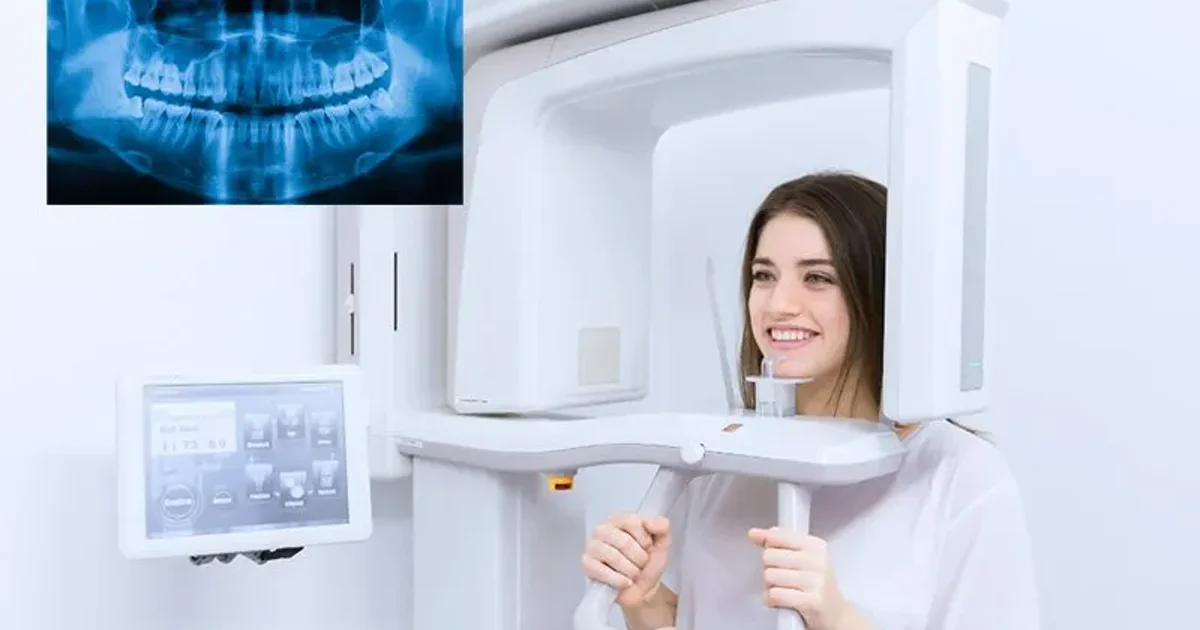
An OPG X-ray (orthopantomogram) is the first imaging study every orthodontist requests before recommending braces, clear aligners, or any form of tooth movement. This single panoramic scan captures both jaws, every tooth (including those still buried beneath the gums), the temporomandibular joints, and the surrounding bone in less than 15 seconds. Without the diagnostic information an OPG provides, no responsible orthodontist will begin treatment - because moving teeth without understanding the full picture risks root damage, failed treatment, and wasted time.
This guide explains exactly why orthodontists depend on the OPG, what they look for on the image, how the scan applies to children versus adults, when additional imaging such as cephalometric analysis is combined with the OPG, and where to get a reliable orthodontic OPG scan in Dubai. Every section is reviewed by a consultant radiologist to ensure clinical accuracy.
Why Every Orthodontic Case Starts with OPG
Orthodontic treatment is fundamentally about moving teeth through bone. Before a single bracket is bonded or a single aligner tray is fabricated, the orthodontist must know exactly what is happening beneath the gum line - and the OPG is the only imaging study that provides this full-arch overview in a single, low-radiation scan. Skipping the OPG before orthodontics is comparable to a surgeon operating without reviewing imaging first: it is clinically unacceptable.
The OPG answers several critical questions that directly influence whether orthodontic treatment can proceed, how long it will take, and what mechanics the orthodontist will use. These questions include: Are all permanent teeth present? Are any teeth impacted or blocked from erupting? Are the roots of existing teeth healthy enough to withstand orthodontic forces? Is there adequate bone support around every tooth? Are the temporomandibular joints structurally normal? Are there any hidden pathologies - cysts, tumors, or infections - that must be addressed before treatment begins?
No clinical examination, no matter how thorough, can answer these questions. A visual inspection of the mouth reveals only the crowns of erupted teeth. The OPG reveals everything else: the roots, the bone, the developing teeth, the nerve canals, and the jaw joints. This is why orthodontic guidelines from the American Association of Orthodontists (AAO), the British Orthodontic Society (BOS), and the European Federation of Orthodontic Specialists Associations all recommend a panoramic radiograph as part of every initial orthodontic records appointment.
"I never start orthodontic treatment without an OPG," says Dr. Osama Elzamzami, Consultant Radiologist at DCDC. "The panoramic image is the orthodontist's roadmap. It reveals unerupted teeth, short roots, bone defects, and jaw asymmetries that are invisible to the naked eye. Identifying these findings before treatment begins is what separates predictable orthodontics from guesswork."
What the Orthodontist Sees on Your OPG
When an orthodontist examines your OPG, they are not simply counting teeth. They are systematically evaluating more than a dozen anatomical features that directly affect treatment planning. Each finding can change the type of braces recommended, the sequence of tooth movement, and the estimated treatment duration. The following table summarizes the key structures and conditions an orthodontist evaluates on a standard OPG.
| Structure / Condition | What the OPG Reveals | Why It Matters for Orthodontics |
|---|---|---|
| Erupted teeth | Position, alignment, and spacing of all visible teeth in both arches | Confirms the clinical findings and helps plan bracket placement and wire sequencing |
| Unerupted / impacted teeth | Location, angulation, and depth of teeth still within the bone (especially canines and wisdom teeth) | Impacted canines may need surgical exposure; impacted wisdom teeth may need extraction before or during treatment |
| Missing teeth (congenitally absent) | Absence of tooth buds for permanent teeth that should be developing | Changes the treatment goal - orthodontist may close the gap or hold it open for a future implant |
| Supernumerary teeth | Extra teeth (mesiodens, paramolars) that can block normal eruption | Must be extracted before orthodontic alignment can proceed |
| Root length and morphology | Length, shape, and integrity of each tooth root | Short or dilacerated roots are at higher risk of resorption during orthodontic movement; force levels must be reduced |
| Bone levels (alveolar bone height) | Height of bone support around each tooth | Reduced bone height limits the amount of safe tooth movement and may require periodontal treatment first |
| Jaw symmetry | Relative size and shape of the left and right mandibular rami and condyles | Jaw asymmetry affects bite alignment and may indicate a skeletal problem requiring surgical correction |
| Temporomandibular joints (TMJ) | Shape, surface, and position of the condylar heads within the joint fossae | Pre-existing TMJ degeneration or condylar resorption can worsen during orthodontics if not identified early |
| Periapical pathology | Abscesses, granulomas, or cysts at root tips | Active infections must be treated and resolved before orthodontic forces are applied to the affected tooth |
| Previous dental work | Crowns, bridges, root canal treatments, posts, and implants | Brackets cannot be bonded to implants (they do not move); bridgework may need sectioning; root-canal-treated teeth respond differently to orthodontic force |
An OPG provides the orthodontist with a comprehensive diagnostic overview that no clinical examination alone can match. Each finding directly influences the treatment plan.
The OPG does not replace a clinical examination - it complements it. The orthodontist correlates what they see on the panoramic image with what they observe intraorally: the patient's bite, the soft tissue health, the facial profile, and the patient's own goals. Together, the clinical and radiographic findings form the foundation of a safe, effective orthodontic treatment plan.
OPG for Children's Orthodontic Assessment
The American Association of Orthodontists recommends that every child have an orthodontic evaluation by age 7, even if the teeth appear straight. At this age, children are in the mixed dentition stage - a combination of baby teeth and permanent teeth - and the OPG is the single most informative imaging study for evaluating what is developing beneath the surface.
In children, the OPG reveals developing tooth buds that have not yet erupted, allowing the orthodontist to predict crowding, identify teeth that are developing in the wrong position, and detect congenitally missing teeth years before the gap becomes visible in the mouth. Early detection of these issues enables interceptive orthodontics - limited, targeted treatment during childhood that can reduce the complexity and duration of full braces in the teenage years.
Specific conditions the OPG identifies in pediatric orthodontic patients include:
- Ectopic canines: The upper canines are the most commonly impacted teeth after wisdom teeth. The OPG shows whether these teeth are developing in the correct path or drifting toward the palate or the adjacent lateral incisor root. Early detection at age 8 to 10 allows the orthodontist to create space and guide the canine into the arch without surgery.
- Congenitally missing teeth: Approximately 2 to 8 percent of the population is missing one or more permanent teeth (excluding wisdom teeth). The most commonly absent teeth are the lower second premolars and the upper lateral incisors. The OPG confirms the absence of the tooth bud, allowing the orthodontist to plan whether to close the space orthodontically or maintain it for a future prosthetic replacement.
- Supernumerary teeth (mesiodens): Extra teeth, particularly mesiodens in the upper midline, can block the eruption of permanent incisors. The OPG shows their exact position, guiding the oral surgeon's extraction approach before orthodontic treatment begins.
- Delayed eruption: If a permanent tooth is significantly delayed compared to the contralateral tooth, the OPG helps determine the cause - whether it is a physical obstruction (such as a supernumerary tooth or cyst), ankylosis (fusion of the tooth root to the bone), or simply a normal developmental variation.
- Jaw growth assessment: The OPG provides a preliminary view of mandibular length, ramus height, and condylar morphology. While a cephalometric X-ray is needed for precise skeletal measurements, the OPG offers an initial screening for gross skeletal discrepancies such as mandibular asymmetry or undergrowth.
Parents often ask whether the radiation from an OPG is safe for children. The answer is unequivocally yes. A digital OPG delivers approximately 10 to 14 microsieverts (μSv) of radiation to a child - less than 2 days of natural background radiation. Modern OPG machines automatically reduce the radiation dose for smaller patients using child-specific exposure settings. The diagnostic benefit of identifying orthodontic problems early far outweighs the negligible radiation exposure.
A 13-year-old patient was referred to DCDC for an OPG before starting braces. The scan revealed that both upper canines were impacted and migrating toward the roots of the lateral incisors - a finding that was completely invisible on clinical examination because the baby canines were still in place and the gums appeared normal. "Without the OPG, the orthodontist would have begun aligning the visible teeth while the impacted canines continued resorbing the roots of the adjacent teeth," explains Dr. Elzamzami. "The OPG changed the entire treatment plan. The oral surgeon exposed both canines first, and the orthodontist then guided them into the arch over the following 18 months. The outcome was excellent - but only because the OPG identified the problem before any damage occurred."
OPG for Adult Orthodontic Planning
Adult orthodontic treatment has increased dramatically over the past decade, driven by the popularity of clear aligners and lingual braces. However, adult orthodontics presents unique challenges that make the pre-treatment OPG even more critical than in younger patients. Adults are more likely to have bone loss from periodontal disease, root-canal-treated teeth with compromised root structure, existing dental restorations, and early signs of TMJ degeneration - all of which the OPG reveals.
The orthodontist evaluates the following adult-specific factors on the OPG:
- Periodontal bone levels: Adults with a history of gum disease often have reduced bone support. The OPG shows generalized or localized bone loss, which determines how aggressively teeth can be moved. In cases of significant bone loss, the orthodontist uses lighter forces, avoids certain tooth movements (such as intrusion), and coordinates closely with a periodontist throughout treatment.
- Root resorption history: Some adults already have shortened roots from previous orthodontic treatment, trauma, or idiopathic resorption. The OPG measures root length before treatment begins, establishing a baseline. If roots are already short, the orthodontist adapts the mechanics to minimize further resorption.
- Existing restorations and prosthetics: Crowns, bridges, veneers, and root-canal-treated teeth respond differently to orthodontic forces than natural teeth. The OPG maps every restoration so the orthodontist can plan bracket placement, bonding technique, and force application accordingly. Implants, for example, cannot be moved orthodontically because they are fused to the bone.
- Wisdom teeth assessment: Many adults still have partially erupted or impacted wisdom teeth. The OPG determines whether these teeth need extraction before orthodontic treatment to prevent relapse or crowding in the posterior segments.
- TMJ status: Adults are more susceptible to temporomandibular joint disorders. The OPG screens for condylar flattening, osteophytes, and erosion. If pre-existing TMJ pathology is identified, the orthodontist may modify the treatment plan to avoid exacerbating the condition - for example, by avoiding elastic wear that increases joint loading.
For adult patients considering clear aligners such as Invisalign, the OPG is equally essential. Although aligner companies use intraoral scans for tray fabrication, the treating orthodontist still requires a panoramic radiograph to evaluate root health, bone levels, and hidden pathology before approving the digital treatment plan. The intraoral scan shows only crown anatomy; the OPG shows everything beneath the gum line.
OPG X-Ray for Orthodontic Assessment at DCDC
Get a high-resolution digital OPG scan for your orthodontic records at Doctors Clinic Diagnostic Center. Walk-ins welcome. Same-day radiologist reporting. Located in Dubai Healthcare City.
No referral required for self-pay patients
OPG Combined with Cephalometric Analysis
While the OPG provides the panoramic overview of all teeth, roots, and jaw structures, it does not measure skeletal relationships with precision. This is where the lateral cephalometric X-ray (commonly called a "ceph") becomes the OPG's essential complement in orthodontic diagnosis. Most orthodontists request both an OPG and a cephalometric X-ray as part of the initial records appointment, and the two images together form the radiographic foundation of every orthodontic treatment plan.
The cephalometric X-ray is a standardized lateral (side-view) skull radiograph that allows the orthodontist to perform angular and linear measurements of the skeletal and dental relationships. These measurements determine whether the patient's malocclusion (bad bite) is caused by a tooth-position problem, a jaw-size discrepancy, or a combination of both. This distinction is critical because tooth-position problems are correctable with braces alone, while jaw-size discrepancies in growing patients may require growth-modification appliances, and in non-growing adults may require orthognathic (jaw) surgery.
Here is how the OPG and the cephalometric X-ray complement each other:
- OPG contribution: Identifies all teeth present, their eruption status, root morphology, bone levels, pathology, and TMJ anatomy. Answers the question: "What dental and bony structures are we working with?"
- Cephalometric contribution: Measures the angular relationship between the upper jaw, lower jaw, and cranial base. Determines whether the skeletal pattern is Class I (normal), Class II (lower jaw set back), or Class III (lower jaw set forward). Assesses the inclination of the upper and lower incisors relative to their respective jaw bases. Answers the question: "What is the underlying skeletal cause of the malocclusion?"
- Combined analysis: The orthodontist integrates both images to determine whether the patient needs extraction or non-extraction treatment, whether growth modification is appropriate (in children), and whether the case requires surgical correction (in adults with severe skeletal discrepancy).
At DCDC, both the OPG and the lateral cephalometric X-ray can be taken in the same visit, often using the same machine (many modern panoramic units have a cephalometric arm attachment). This means the patient completes their full orthodontic imaging in a single appointment, with both images reported by a consultant radiologist the same day.
When Additional Imaging Is Needed
The OPG is the standard first-line imaging study for orthodontics, but there are specific clinical scenarios where additional imaging is required to answer questions that the OPG cannot resolve on its own. Understanding when and why supplementary imaging is ordered helps patients appreciate that each scan serves a distinct diagnostic purpose - the goal is always to gather precisely the information needed without unnecessary radiation.
CBCT (Cone-Beam Computed Tomography)
A CBCT scan produces three-dimensional images that allow the orthodontist to visualize structures the two-dimensional OPG cannot fully resolve. CBCT is not ordered routinely for every orthodontic case - it is reserved for complex situations where three-dimensional spatial information changes the treatment plan. Common orthodontic indications for CBCT include:
- Impacted canines: The CBCT localizes the exact three-dimensional position of an impacted canine relative to the roots of adjacent teeth, determining whether root resorption has already occurred and guiding the surgical exposure approach (buccal vs. palatal).
- Supernumerary teeth: When the OPG shows a supernumerary tooth overlapping with other structures, the CBCT clarifies its exact position and relationship to vital anatomy, enabling precise surgical planning.
- Skeletal asymmetry evaluation: For patients with facial asymmetry, a CBCT can generate a three-dimensional skeletal model that reveals the exact location and magnitude of the asymmetry, which is essential for planning orthognathic surgery.
- Temporary anchorage device (TAD) placement: Mini-screws used as orthodontic anchorage require precise placement to avoid tooth roots and anatomical structures. A small-field CBCT of the planned insertion site confirms that adequate bone and safe corridors exist.
- Airway assessment: In patients with suspected obstructive sleep apnea or narrow airways, a CBCT can measure the three-dimensional airway volume, which may influence whether the orthodontist incorporates jaw advancement into the treatment plan.
Periapical X-Rays
If the OPG reveals a suspicious finding around a specific tooth - such as a possible periapical lesion, a questionable root fracture, or an unclear root morphology - the orthodontist may request a periapical (PA) X-ray of that individual tooth. Periapical X-rays offer higher resolution than the OPG for a localized area, and they are the gold standard for evaluating root detail, periapical pathology, and the periodontal ligament space around a single tooth.
Hand-Wrist Radiograph
In growing patients where the timing of treatment depends on the patient's remaining growth potential, a hand-wrist X-ray may be taken to assess skeletal maturity. The degree of fusion of the growth plates in the hand and wrist bones indicates whether the patient is still in an active growth phase, approaching peak growth velocity, or has completed growth. This information determines whether growth-modification appliances (such as headgear or functional appliances) are still viable options.
In every case, the principle of ALARA (As Low As Reasonably Achievable) applies: imaging is performed only when the diagnostic benefit justifies the radiation exposure, and the lowest-dose modality capable of answering the clinical question is selected first. The OPG fulfills this role as the essential baseline, and additional imaging is layered on only when clinically indicated.
Orthodontic Imaging at DCDC Dubai
Doctors Clinic Diagnostic Center (DCDC) in Dubai Healthcare City is a trusted imaging partner for orthodontists across Dubai, providing the full spectrum of radiographic studies needed for orthodontic assessment - from standard digital OPG scans to cephalometric X-rays and CBCT imaging - all under one roof with same-day consultant radiologist reporting.
What orthodontic patients and referring orthodontists can expect at DCDC:
- Complete orthodontic imaging in one visit: OPG, lateral cephalometric X-ray, and CBCT (when indicated) can all be completed during a single appointment. Patients do not need to visit multiple facilities or return on separate days.
- Digital technology with dose optimization: DCDC uses the latest digital panoramic and cephalometric systems, which deliver sharper images at lower radiation doses than older film-based equipment. Automatic child-specific dose reduction ensures pediatric patients receive the minimum necessary exposure.
- Same-day radiologist reporting: Every OPG and cephalometric image is reviewed and reported by a consultant radiologist - not by a technician or general practitioner. Reports are typically completed the same day and sent directly to the referring orthodontist.
- Walk-in availability: While appointments are encouraged, DCDC accepts walk-in patients for OPG scans throughout clinic hours. No referral is required for self-pay patients, making it easy to complete imaging at short notice.
- Insurance accepted: DCDC works with major insurance providers in Dubai. Patients using insurance may need a referral from their orthodontist or general practitioner to activate coverage.
- Convenient DHCC location: DCDC is located in Dubai Healthcare City, easily accessible from Oud Metha, Umm Hurair 2, Karama, Bur Dubai, and the wider Dubai metro area. Free parking and metro access are available nearby.
Whether you are a patient who has been told by your orthodontist to get an OPG before starting braces, a parent arranging your child's first orthodontic records appointment, or an orthodontist looking for a reliable imaging partner with fast turnaround, DCDC provides the imaging quality, diagnostic expertise, and convenience that orthodontic cases demand.
Book Your Orthodontic OPG Scan Today
Walk in or book ahead for a digital OPG X-ray at DCDC Dubai Healthcare City. Same-day results. Accepted by orthodontists across Dubai. Call or WhatsApp to schedule.
अक्सर पूछे जाने वाले प्रश्न
Final Thoughts
The OPG X-ray is the indispensable first step in every orthodontic journey. It gives the orthodontist a complete roadmap of the teeth, roots, bone, and jaw structures - information that no clinical examination can provide and that no responsible clinician will proceed without. For children, the OPG identifies developing problems years before they become clinically apparent, enabling early intervention that simplifies later treatment. For adults, the OPG screens for bone loss, root compromise, and TMJ pathology that directly influence treatment safety and mechanics.
If you or your child has been advised to get an OPG before starting orthodontic treatment, Doctors Clinic Diagnostic Center in Dubai Healthcare City provides high-resolution digital OPG scans with same-day consultant radiologist reporting and walk-in availability. Combined OPG and cephalometric imaging can be completed in a single visit. Explore our full range of OPG X-ray services or contact us to book your scan.
स्रोत एवं संदर्भ
यह लेख हमारी चिकित्सा टीम द्वारा समीक्षित है और निम्नलिखित स्रोतों का संदर्भ देता है:
- American Association of Orthodontists - Clinical Practice Guidelines for Orthodontic Radiography
- British Orthodontic Society - Radiographic Guidelines for Orthodontic Assessment
- American Dental Association - Dental Radiographic Examinations: Recommendations for Patient Selection and Limiting Radiation Exposure
- European Journal of Orthodontics - The Role of Panoramic Radiography in Orthodontic Diagnosis and Treatment Planning
- RadiologyInfo.org - Panoramic Dental X-ray (Orthopantomogram)
इस साइट पर चिकित्सा सामग्री DHA-लाइसेंस प्राप्त चिकित्सकों द्वारा समीक्षित है। हमारी देखें संपादकीय नीति अधिक जानकारी के लिए।

लेखक
Dr. Osama Elzamzami
Diagnostic Radiology
MD, FRCR
Dr. Osama Elzamzami is a Consultant Radiologist specializing in diagnostic imaging including X-ray, CT, MRI, OPG, CBCT, and ultrasound at DCDC Dubai Healthcare City. With extensive experience in dental and maxillofacial radiology, he provides expert reporting for panoramic and cone-beam imaging studies used in orthodontic assessment and treatment planning.