Mga Pangunahing Punto
- Nearly 50% of women undergoing mammography have dense breast tissue (categories C or D), which is a normal variation and not a disease or abnormality
- Dense breast tissue appears white on a mammogram, the same shade as tumors, which reduces the sensitivity of standard mammography and can mask cancers that would otherwise be visible
- Women with extremely dense breasts (category D) have a 4 to 6 times higher risk of developing breast cancer compared to women with almost entirely fatty breasts (category A)
- Supplemental screening with breast ultrasound or breast MRI can detect cancers that mammograms miss in dense tissue, increasing the cancer detection rate by 2 to 4 additional cancers per 1,000 women screened
- DCDC in Dubai Healthcare City offers comprehensive breast imaging including digital mammography, breast ultrasound, and same-day results with experienced radiology specialists
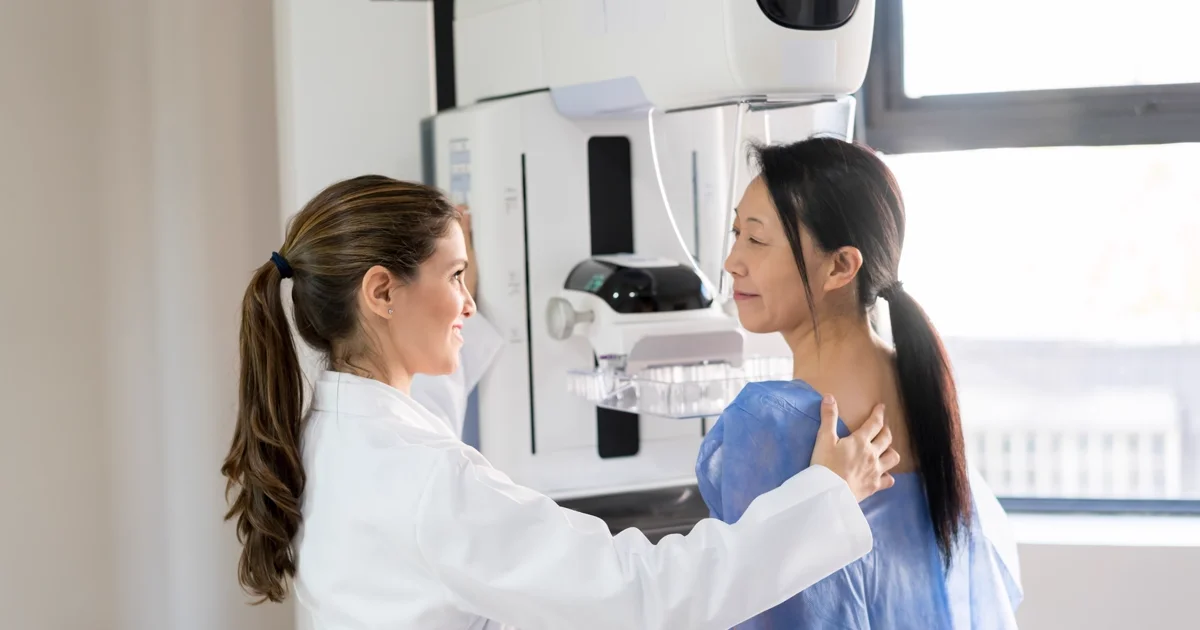
If you have ever received a mammogram report that mentions dense breast tissue, you are not alone. Nearly half of all women who undergo screening mammography have breasts classified as heterogeneously dense or extremely dense. While breast density is a completely normal anatomical variation and not a medical condition, it has two important clinical implications: it reduces the ability of a standard mammogram to detect cancer, and it is independently associated with a higher risk of developing breast cancer. Understanding what breast density categories mean, how density affects screening accuracy, and what additional steps you can take is essential for every woman who wants to be proactive about her breast health.
This guide explains what dense breast tissue is, how the four breast density categories are classified, why density matters for mammogram accuracy and cancer risk, what supplemental screening options are available, and how the breast imaging team at Doctors Clinic Diagnostic Center (DCDC) in Dubai Healthcare City can help you navigate your screening pathway.
What Is Dense Breast Tissue?
Dense breast tissue refers to a higher proportion of fibroglandular tissue (a combination of fibrous connective tissue and glandular milk-producing tissue) relative to fatty tissue within the breast. Every breast is composed of a mixture of these two tissue types, and the ratio between them determines the overall breast density. Women with dense breasts have more fibroglandular tissue and less fat, while women with non-dense breasts have more fatty tissue and less fibroglandular tissue.
Breast density is not something you can feel during a physical examination or determine on your own. A woman with dense breasts does not necessarily have firmer or larger breasts. Density is determined exclusively by the appearance of breast tissue on a mammogram, where fibroglandular tissue appears white and fatty tissue appears dark (translucent). The radiologist reading your mammogram assesses the overall proportion of white (dense) tissue to dark (fatty) tissue and assigns a density category.
Several factors influence breast density. Younger women tend to have denser breasts, and density typically decreases with age as glandular tissue is gradually replaced by fat after menopause. Hormone replacement therapy (HRT) can maintain or increase density, while higher body mass index (BMI) is associated with lower density. Genetics also play a significant role, with studies estimating that 60% to 70% of the variation in density between women is attributable to genetic factors.
"Breast density is one of the most important factors we assess when reading a mammogram," explains Dr. Osama Elzamzami, Diagnostic Radiologist at DCDC. "It directly affects how well the mammogram can detect a potential cancer, and it carries its own independent risk implications. Every woman should know her breast density category."
Breast Density Categories (A Through D)
The American College of Radiology (ACR) classifies breast density into four standardized categories within the Breast Imaging Reporting and Data System (BI-RADS). These categories are assigned by the radiologist based on the visual assessment of the mammogram and describe the overall composition of the breast tissue. The four breast density categories are designated A through D, with A representing the least dense breasts and D representing the most dense.
| Category | Description | Approximate Prevalence | Screening Recommendation |
|---|---|---|---|
| A - Almost entirely fatty | The breasts are composed almost entirely of fat with very little fibroglandular tissue. Mammograms are highly sensitive and tumors are easy to identify. | Approximately 10% of women | Standard mammography is highly effective. No supplemental screening routinely needed. |
| B - Scattered areas of fibroglandular density | The breasts contain scattered areas of fibroglandular tissue mixed with predominantly fatty tissue. Mammogram sensitivity remains high. | Approximately 40% of women | Standard mammography is effective for most women. Supplemental screening generally not required. |
| C - Heterogeneously dense | The breasts contain a significant amount of fibroglandular tissue that could obscure small masses. This is classified as dense breast tissue. | Approximately 40% of women | Supplemental screening with breast ultrasound is recommended, particularly for women with additional risk factors. |
| D - Extremely dense | The breasts are composed almost entirely of fibroglandular tissue with very little fat. Mammogram sensitivity is significantly reduced. This is classified as dense breast tissue. | Approximately 10% of women | Supplemental screening with breast ultrasound is strongly recommended. Breast MRI may be considered for high-risk women. |
ACR BI-RADS breast density categories A through D, with prevalence estimates and screening recommendations.
Categories A and B are considered non-dense, while categories C and D are considered dense. When a mammogram report states that you have dense breasts, it means your tissue has been classified as either category C (heterogeneously dense) or category D (extremely dense). Together, these two categories account for roughly half of all women who undergo mammography, which means having dense breast tissue is very common and entirely normal.
It is important to understand that breast density can change over time. A woman classified as category C in her 40s may be reclassified as category B in her 60s as her breast tissue naturally becomes less dense with age. Conversely, a woman who begins hormone replacement therapy may see her density increase. This is why density is assessed on every mammogram rather than being a one-time determination.
Why Dense Breasts Affect Mammogram Accuracy
The fundamental challenge with dense breasts mammogram interpretation is a problem of contrast. On a mammogram, both fibroglandular tissue and tumors appear white. In a fatty breast (category A), a white tumor stands out clearly against the dark background of fat, much like a snowball on a dark lawn. In a dense breast (category D), a white tumor is hidden within the surrounding white fibroglandular tissue, much like a snowball in a snowstorm. This phenomenon is called the masking effect, and it is the primary reason why mammography is less sensitive in women with dense breasts.
The numbers are significant. The sensitivity of mammography (its ability to correctly identify a cancer that is present) is approximately 85% to 90% in women with fatty breasts but drops to approximately 60% to 70% in women with extremely dense breasts. This means that mammograms miss roughly 1 in 3 cancers in women with the densest tissue. These missed cancers are called interval cancers because they are typically diagnosed in the interval between screening mammograms, often at a more advanced stage.
Dense tissue also increases the rate of false-positive results. Because dense fibroglandular tissue can mimic the appearance of a mass, women with dense breasts are more likely to be called back for additional imaging, leading to unnecessary anxiety and sometimes biopsies that reveal benign findings. The callback rate is approximately twice as high for women with dense breasts compared to women with fatty breasts.
"The masking effect of dense tissue is one of the most significant limitations of conventional mammography," says Dr. Osama Elzamzami. "It does not mean mammograms are useless for women with dense breasts. Mammography remains the foundation of breast cancer screening. But for women in categories C and D, supplemental imaging can find cancers that the mammogram alone would miss."
Dense Breasts and Breast Cancer Risk
Beyond its impact on mammogram accuracy, dense breast tissue is an independent risk factor for breast cancer. Having dense breasts increases your risk of developing breast cancer regardless of other risk factors. The biological mechanism is not fully understood, but researchers believe the higher proportion of epithelial and stromal cells in dense tissue provides more cellular targets for mutations that lead to cancer.
The risk increases with each step up the density scale. Compared to women with almost entirely fatty breasts (category A), women with heterogeneously dense breasts (category C) have approximately 1.2 to 2.1 times the risk of developing breast cancer, and women with extremely dense breasts (category D) have approximately 4 to 6 times the risk. To put this in perspective, extremely dense breast tissue confers a relative risk comparable to having a first-degree relative (mother or sister) with breast cancer.
Increased risk does not mean certainty. The vast majority of women with dense breasts will never develop breast cancer. The absolute lifetime risk of breast cancer for the average woman is approximately 12% (1 in 8). Even with extremely dense breasts, the absolute risk remains relatively low, though higher than average. The clinical significance lies in informing screening decisions: women with dense breasts and additional risk factors (family history, genetic mutations, prior chest radiation) may benefit from enhanced surveillance beyond standard mammography.
A large-scale study published in the Journal of the National Cancer Institute followed over 200,000 women and confirmed that breast density is a stronger predictor of breast cancer risk than most other commonly used factors, including age at first birth and family history in second-degree relatives. This underscores the importance of knowing your density category and discussing its implications with your healthcare provider.
Know Your Breast Density
At DCDC in Dubai Healthcare City, our breast imaging specialists provide comprehensive mammogram screening with breast density assessment. Understanding your density category is the first step toward a personalized screening plan.
Supplemental Screening Options
For women with dense breast tissue, supplemental screening refers to additional imaging tests performed alongside standard mammography to improve overall cancer detection. These tests exploit different tissue properties than X-ray-based mammography and are not subject to the same masking effect. The three primary supplemental screening modalities are breast ultrasound, breast MRI, and contrast-enhanced mammography.
Breast Ultrasound
Breast ultrasound uses high-frequency sound waves to create images of the breast tissue. Unlike mammography, ultrasound does not rely on X-ray contrast between tissue types, which means that tumors in dense tissue are visible on ultrasound even when they are hidden on a mammogram. Handheld breast ultrasound is the most commonly used supplemental screening tool for women with dense breasts and is widely available, non-invasive, involves no radiation, and is relatively affordable.
Research consistently shows that adding ultrasound screening to mammography for women with dense breasts detects an additional 2 to 4 cancers per 1,000 women screened that mammography alone would have missed. These cancers are typically small, node-negative, and invasive, meaning they are found at an early, highly treatable stage. A landmark multicenter study (the ACRIN 6666 trial) demonstrated that supplemental ultrasound screening increased the cancer detection rate by 4.2 cancers per 1,000 women with dense breasts and at least one additional risk factor.
The main limitation of breast ultrasound is a higher false-positive rate compared to mammography. Ultrasound may identify benign cysts or fibroadenomas that require further evaluation. However, most experts agree that the benefit of detecting additional early-stage cancers outweighs the cost of evaluating false-positive findings.
Breast MRI
Breast MRI is the most sensitive imaging modality for breast cancer detection, with a sensitivity of approximately 95% regardless of breast density. MRI uses powerful magnets and gadolinium-based contrast agents to visualize blood flow patterns, and because cancers typically develop abnormal blood vessel networks (angiogenesis), they enhance prominently on MRI even when invisible on both mammography and ultrasound.
Breast MRI is currently recommended as an annual screening tool for women at high risk of breast cancer (lifetime risk greater than 20%), including those with BRCA1 or BRCA2 gene mutations, a strong family history, or prior chest radiation before age 30. For women with dense breasts who do not fall into the high-risk category, the role of MRI as a supplemental screening tool is evolving, with some guidelines now recommending it for women with extremely dense breasts (category D) even in the absence of other risk factors.
Contrast-Enhanced Mammography (CEM)
Contrast-enhanced mammography (CEM) combines standard mammography with an intravenous iodine-based contrast agent. Like MRI, CEM exploits the abnormal blood supply of tumors to improve visualization. Early studies suggest CEM has sensitivity comparable to breast MRI while being faster, more widely available, and less expensive. CEM is emerging as a practical alternative for supplemental screening in women with dense tissue, though it involves additional radiation exposure and the use of contrast dye.
Should You Get Additional Testing?
The decision to pursue supplemental screening should be made individually in consultation with your healthcare provider. Not every woman with dense breasts needs additional testing, and the optimal strategy depends on the interplay of breast density, personal risk factors, family history, and patient preferences.
Supplemental screening with breast ultrasound is generally recommended for the following groups:
- Women with heterogeneously dense (C) or extremely dense (D) breasts who have one or more additional risk factors, such as a family history of breast cancer, a personal history of breast biopsy showing atypical cells, or known genetic predisposition
- Women with extremely dense breasts (category D) regardless of other risk factors, given the substantial reduction in mammographic sensitivity and the independently elevated cancer risk associated with extreme density
- Women whose mammogram results are inconclusive or show an area of concern that cannot be fully evaluated due to overlapping dense tissue
- Women who feel anxious about the limitations of mammography alone and prefer a more comprehensive screening approach for reassurance
Women at high lifetime risk (greater than 20%) should discuss breast MRI screening with their physician, regardless of breast density. Risk assessment tools such as the Tyrer-Cuzick model can help estimate individual lifetime risk based on a combination of personal and family history factors.
Supplemental screening is not a replacement for mammography. Mammograms remain the only screening modality proven in large randomized trials to reduce breast cancer mortality. Supplemental imaging is an addition to, not a substitute for, regular mammographic screening. For a detailed explanation of what your mammogram results mean, see our guide to understanding mammogram results.
Patient Story: How Supplemental Screening Made a Difference
A 48-year-old Dubai resident with no family history of breast cancer had been receiving annual mammograms for three years, all of which were reported as normal. Her mammogram consistently noted heterogeneously dense breast tissue (category C). When she visited DCDC for her fourth annual screening, the radiologist recommended adding a breast ultrasound based on her density classification.
The ultrasound identified a 9-millimeter solid mass in the upper outer quadrant of the left breast that was completely invisible on the mammogram due to the surrounding dense tissue. A subsequent ultrasound-guided biopsy confirmed an early-stage invasive ductal carcinoma. Because the cancer was detected at a small size with no lymph node involvement, the patient was treated with lumpectomy and radiation therapy and had an excellent prognosis.
"This case illustrates exactly why supplemental screening matters for women with dense breasts," says Dr. Osama Elzamzami. "The mammogram was technically adequate and read by an experienced radiologist, but the dense tissue simply masked the cancer. The ultrasound found it at a stage where treatment outcomes are most favorable. This is the value of a layered screening approach."
Dense Breast Screening at DCDC Dubai
DCDC (Doctors Clinic Diagnostic Center) in Dubai Healthcare City provides comprehensive breast imaging services designed to address the challenges of dense breast tissue. The center offers digital mammography, breast ultrasound, and personalized screening consultations under the guidance of experienced consultant radiologists.
Breast Density Assessment
Every mammogram performed at DCDC includes a formal breast density assessment using the ACR BI-RADS classification system. Your density category (A through D) is documented in your mammogram report, and the radiologist provides a clear explanation of what your density means for your screening plan. If you are classified as having dense breasts (category C or D), the radiologist will discuss whether supplemental imaging is recommended based on your individual risk profile.
Same-Day Supplemental Ultrasound
For women with dense breast tissue, DCDC offers same-day supplemental breast ultrasound. Women found to have dense breasts on their mammogram can have a targeted or whole-breast ultrasound performed on the same visit. This integrated approach reduces anxiety, eliminates scheduling delays, and provides a more complete assessment in a single appointment.
Experienced Radiology Team
The radiologists at DCDC have extensive experience in mammographic interpretation and breast ultrasound, with a particular focus on the nuanced assessment of dense breast tissue. Each case receives careful attention, and results are communicated promptly, with detailed reports available within the same day in most cases.
DCDC is located in Dubai Healthcare City, easily accessible from across Dubai and the UAE. Appointments can be booked by phone, WhatsApp, or through the online booking form. For a broader overview of mammogram types and technology, see our comparison of 2D vs 3D mammogram technology.
Book Your Breast Screening at DCDC
At Doctors Clinic Diagnostic Center in Dubai Healthcare City, our radiology team provides expert breast imaging including digital mammography with breast density assessment and supplemental breast ultrasound. Get comprehensive screening with same-day results and personalized care.
Call or WhatsApp to schedule your appointment today.
Mga Madalas Itanong
Final Thoughts
Understanding your breast density is one of the most important steps you can take in managing your breast health. Dense breast tissue is common, affecting roughly half of all women, and while it is not a disease or abnormality, it has meaningful implications for both the accuracy of your mammogram and your individual cancer risk. Knowing your breast density category empowers you to have an informed conversation with your healthcare provider about whether supplemental screening is appropriate for your situation.
The key takeaway is straightforward: mammography remains the foundation of breast cancer screening for all women, but for those with dense breasts, adding supplemental imaging such as breast ultrasound can detect cancers that mammograms miss, often at an early and highly treatable stage. At Doctors Clinic Diagnostic Center in Dubai Healthcare City, our breast imaging team provides comprehensive screening that includes density assessment, same-day supplemental ultrasound when indicated, and personalized guidance based on your individual risk profile. If you are due for a mammogram, or if you have been told you have dense breasts and want to discuss your screening options, contact DCDC to schedule an appointment.
Mga Sanggunian at Reperensya
Ang artikulong ito ay sinuri ng aming medikal na team at tumutukoy sa mga sumusunod na sanggunian:
- American College of Radiology - ACR BI-RADS Breast Imaging Reporting and Data System
- Journal of the National Cancer Institute - Breast Density and Risk of Breast Cancer
- ACRIN 6666 Trial - Performance of Screening Ultrasonography as an Adjunct to Screening Mammography in Women with Dense Breasts
- American Cancer Society - Breast Cancer Screening Guidelines
- RadiologyInfo.org - Dense Breasts: Answers to Commonly Asked Questions
Ang medikal na nilalaman sa site na ito ay sinusuri ng mga DHA-licensed na manggagamot. Tingnan ang aming patakarang editorial para sa higit pang impormasyon.

Isinulat ni
Dr. Osama Elzamzami
Diagnostic Radiology
MD, FRCR
Dr. Osama Elzamzami is a Diagnostic Radiologist specializing in breast imaging, mammography, and diagnostic radiology at DCDC Dubai Healthcare City.