
رزرو نوبت
نظرات تأیید شده بیماران مرکز تشخیصی DCDC در دبی
نظرات تأیید شده و داستانهای واقعی بیماران از شهر سلامت دبی
از این کلینیک پزشکی بسیار راضی هستم. اولین غربالگری بارداری خود را اینجا انجام دادم. قیمت مناسب و بسیار حرفهای بود. رادیولوژیست خوشامدگو، مهربان بود و تجربه عالیای داشتم.
آیژان توکمانبتووا
جمعه شب زانویم آسیب دید و یکشنبه عصر وقت MRI گرفتم (یکشنبه بعدازظهر رزرو کردم). حدود ۲ دقیقه صبر کردم و در کمتر از ۳۰ دقیقه کارم تمام شد. تیم فوقالعاده، دوستانه و کارآمد بود.
کریستن اوانز
تیم دکتر اسامه مهربان و فوقالعاده بود. بعد از یک تجربه بد در جای دیگر، معاینه لگن من اینجا بسیار حرفهایتر بود. گزارش عالی و بسیار دقیق.
ماری


آنالیز اسپرم در دبی: ارزیابی جامع باروری مردانه
آنالیز اسپرم طبق معیارهای WHO 2021 برای ارزیابی دقیق باروری مردانه و برنامهریزی درمان
معیارهای WHO 2021
آنالیز طبق آخرین استانداردهای مرجع بینالمللی
بیش از ۱۵ پارامتر
ارزیابی جامع تمام ویژگیهای اسپرم با اهمیت بالینی
اتاق جمعآوری خصوصی
امکانات خصوصی اختصاصی برای جمعآوری نمونه به صورت راحت و محرمانه
بررسی متخصص اندرولوژی
تفسیر بالینی توسط متخصصان سلامت تولیدمثل مردانه
آنالیز اسپرم در دبی سنگ بنای ارزیابی باروری مردانه و اولین آزمایش ضروری برای هر زوجی است که در باردار شدن مشکل دارد. با وجود اهمیت محوری آن، اغلب نادیده گرفته میشود یا به تأخیر میافتد و در عوض تمرکز زودهنگام بر شریک زن میشود، در حالی که عامل مردانه حدود ۴۰ تا ۵۰ درصد از تمام موارد ناباروری را تشکیل میدهد. در DCDC در دبی هلثکر سیتی، آنالیز طبق معیارهای سازمان بهداشت جهانی ۲۰۲۱، استاندارد طلایی فعلی که در پرتو آخرین شواهد علمی تفسیر میشود، انجام میشود.
آنالیز جامع پارامترهای متعددی را از یک نمونه ارزیابی میکند. تمرکز و تعداد کل اسپرمها اندازهگیری میشود. تحرک پیشرونده نسبت اسپرمهایی را که به سمت جلو شنا میکنند — که برای رسیدن به تخمک و لقاح ضروری است — ارزیابی میکند. مورفولوژی سختگیرانه (معیار Kruger) ساختار طبیعی سر، قطعه میانی و دم را ارزیابی میکند، زیرا فقط اسپرمهای با شکل طبیعی میتوانند تخمک را بارور کنند. حجم، pH، زمان مایعشدن و ویسکوزیته اطلاعاتی درباره سلامت پروستات و وزیکولهای سمینال ارائه میدهند.
مقادیر حداقل مرجع طبق WHO 2021 شامل: تمرکز اسپرم بیش از ۱۶ میلیون/میلیلیتر، تحرک کل بیش از ۴۲٪، تحرک پیشرونده بیش از ۳۰٪، و مورفولوژی طبیعی بیش از ۴٪ است. نتایج زیر این حدود به الیگوزواسپرمی، آستنوزواسپرمی یا تراتوزواسپرمی اشاره میکند.
معیارهای WHO 2021
آنالیز طبق آخرین استانداردهای مرجع بینالمللی
بیش از ۱۵ پارامتر
ارزیابی جامع تمام ویژگیهای اسپرم با اهمیت بالینی
اتاق جمعآوری خصوصی
امکانات خصوصی اختصاصی برای جمعآوری نمونه به صورت راحت و محرمانه
بررسی متخصص اندرولوژی
تفسیر بالینی توسط متخصصان سلامت تولیدمثل مردانه
آنالیز اسپرم در دبی: ارزیابی جامع باروری مردانه
آنالیز اسپرم طبق معیارهای WHO 2021 برای ارزیابی دقیق باروری مردانه و برنامهریزی درمان
آنالیز اسپرم در دبی سنگ بنای ارزیابی باروری مردانه و اولین آزمایش ضروری برای هر زوجی است که در باردار شدن مشکل دارد. با وجود اهمیت محوری آن، اغلب نادیده گرفته میشود یا به تأخیر میافتد و در عوض تمرکز زودهنگام بر شریک زن میشود، در حالی که عامل مردانه حدود ۴۰ تا ۵۰ درصد از تمام موارد ناباروری را تشکیل میدهد. در DCDC در دبی هلثکر سیتی، آنالیز طبق معیارهای سازمان بهداشت جهانی ۲۰۲۱، استاندارد طلایی فعلی که در پرتو آخرین شواهد علمی تفسیر میشود، انجام میشود.
آنالیز جامع پارامترهای متعددی را از یک نمونه ارزیابی میکند. تمرکز و تعداد کل اسپرمها اندازهگیری میشود. تحرک پیشرونده نسبت اسپرمهایی را که به سمت جلو شنا میکنند — که برای رسیدن به تخمک و لقاح ضروری است — ارزیابی میکند. مورفولوژی سختگیرانه (معیار Kruger) ساختار طبیعی سر، قطعه میانی و دم را ارزیابی میکند، زیرا فقط اسپرمهای با شکل طبیعی میتوانند تخمک را بارور کنند. حجم، pH، زمان مایعشدن و ویسکوزیته اطلاعاتی درباره سلامت پروستات و وزیکولهای سمینال ارائه میدهند.
مقادیر حداقل مرجع طبق WHO 2021 شامل: تمرکز اسپرم بیش از ۱۶ میلیون/میلیلیتر، تحرک کل بیش از ۴۲٪، تحرک پیشرونده بیش از ۳۰٪، و مورفولوژی طبیعی بیش از ۴٪ است. نتایج زیر این حدود به الیگوزواسپرمی، آستنوزواسپرمی یا تراتوزواسپرمی اشاره میکند.

Dr. Hadi Komshi
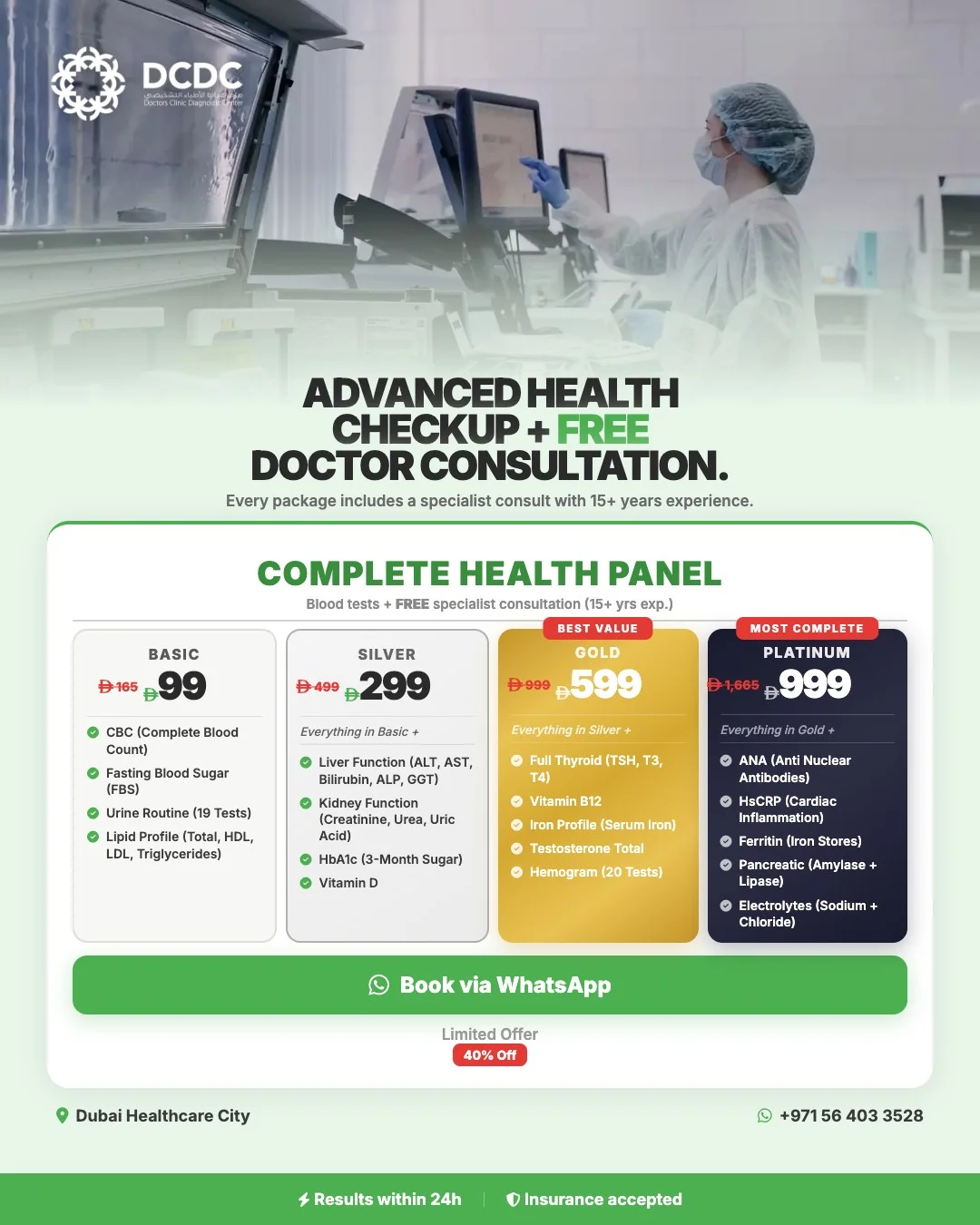
Complete Health Panel
Advanced health checkup with FREE specialist consultation. 4 tiers from basic blood work to full-body screening with 40+ biomarkers.
10–40+ tests included
What's Included
Who is this for?
Anyone wanting a comprehensive baseline health check with specialist consultation
خدمات ما را کاوش کنید
خدمات جامع آنالیز اسپرم در DCDC شهر سلامت دبی.
آنالیز اسپرم پیشرفته
پنل گسترشیافته شامل قابلیت حیات، آنتیبادی اسپرم و شاخص پراکندگی DNA.
آزمایشهای هورمونی
FSH، LH، تستوسترون و پرولاکتین برای ارزیابی باروری هورمونی مردانه.
تمام خدمات توسط متخصصان دارای مجوز DHA انجام میشود
چه کسانی باید آنالیز اسپرم انجام دهند؟
آنالیز اسپرم اولین آزمایش برای هر مردی است که پس از ۱۲ ماه رابطه منظم محافظتنشده بچهدار نشده، یا در موارد وجود عوامل خطر زودتر. همچنین برای تأیید موفقیت وازکتومی و پایش درمانهای باروری استفاده میشود.
زوجهایی که پس از ۱۲ ماه رابطه منظم در باردار شدن مشکل دارند
زوجهایی که در صورت بالای ۳۵ سال بودن شریک زن پس از ۶ ماه به ارزیابی باروری میپردازند
مردانی که سابقه بیضه نزول نکرده در دوران کودکی دارند
سابقه تروما به بیضه، پیچخوردگی یا جراحی قبلی بیضه
واریکوسل تشخیص دادهشده به صورت بالینی یا با سونوگرافی
شیمیدرمانی یا پرتودرمانی قبلی که سیستم تولیدمثل را تحت تأثیر قرار داده
چرا DCDC را برای آنالیز اسپرم در دبی انتخاب کنید؟
آزمایشگاه دارای مجوز MOHAP که آنالیز را طبق پروتکلهای WHO 2021 با تجهیزات کالیبرهشده و حریم خصوصی کامل انجام میدهد
معیارهای WHO 2021
ما آنالیز را طبق آخرین معیارهای WHO 2021، جامعتر و دقیقتر از معیارهای قدیمی ۲۰۱۰، انجام میدهیم.
اتاق جمعآوری خصوصی
اتاق جمعآوری نمونه خصوصی و راحت در مرکز با پردازش فوری برای حفظ دقت اندازهگیری تحرک.
بررسی متخصص اندرولوژی
نتایج توسط متخصصان سلامت تولیدمثل مردانه با توصیهها و مراحل درمانی واضح تفسیر میشود.
محرمانه بودن کامل
نتایج کاملاً محرمانه است و فقط برای پزشک ارجاعدهنده و بیمار فاش میشود. صورتحساب محرمانه حریم خصوصی شما را تضمین میکند.
مراجعه راحت شما
فرآیند اسکن آنالیز ساده و گام به گام که برای راحتی، سرعت و دقت طراحی شده است.
هزینه آنالیز اسپرم در دبی
قیمت آنالیز در دبی بسته به نوع خدمت و پوشش بیمه برای انواع مختلف خدمات متفاوت است.
- قیمتها بسته به نوع اسکن و نیاز به ماده حاجب متفاوت است
- پوشش بیمه با ارجاع و تأیید پذیرفته میشود
- نرخهای شفاف پرداخت نقدی با قیمتگذاری فوری در صورت درخواست
تأیید بیمه در چند دقیقه • بدون هزینه پنهان • پاسخ سریع در واتساپ
راهنمای بیمار
تجربه آنالیز اسپرم در DCDC
خصوصی، حرفهای و با احتیاط کامل در هر مرحله.
بیمه و موقعیت
شرکای بیمه
- •بیش از ۲۰ شرکت بیمه در دبی از جمله ضمان، آکسا، ادنیک و دیگران
- •پشتیبانی پیشتأیید و صورتحساب مستقیم (در صورت امکان)
- •بررسی پوشش بیمه قبل از نوبت شما در کلینیک ما در شهر بهداشت دبی
- •قیمتگذاری شفاف بدون هزینه پنهان برای خدمات آنالیز اسپرم








به ما در شهر سلامت دبی سر بزنید
مرکز تشخیصی کلینیک پزشکان
ساختمان ۶۴، بلوک A، مجتمع پزشکی الرازی، شهر سلامت دبی، دبی، امارات متحده عربی
نزدیک جاده عود متحا · دسترسی آسان از بر دبی، داونتاون دبی، بیزینس بی · پارکینگ اختصاصی رایگان موجود
ساعات کاری
دوشنبه-پنجشنبه، شنبه: ۸ صبح - ۱۰:۳۰ شب | یکشنبه: ۸:۳۰ صبح - ۱۰:۳۰ شب | جمعه: ۹ صبح - ۱۰ شب
نحوه عملکرد بیمه در DCDC
بررسی پوشش
بررسی کنید که بیمه شما آنالیز اسپرم را پوشش میدهد
دریافت ارجاع
برخی بیمهها نیاز به ارجاع پزشک عمومی دارند — ما راهنمایی میکنیم
پیشتأیید
ما پیشتأیید را مستقیماً با بیمهگر انجام میدهیم
فاکتور مستقیم
بدون پرداخت اولیه — ما مستقیماً با بیمهگر تسویه میکنیم
فقط سهم بیمار
فقط سهم بیمار قابل اعمال را در کلینیک پرداخت میکنید
بررسی پوشش
بررسی کنید که بیمه شما آنالیز اسپرم را پوشش میدهد
دریافت ارجاع
برخی بیمهها نیاز به ارجاع پزشک عمومی دارند — ما راهنمایی میکنیم
پیشتأیید
ما پیشتأیید را مستقیماً با بیمهگر انجام میدهیم
فاکتور مستقیم
بدون پرداخت اولیه — ما مستقیماً با بیمهگر تسویه میکنیم
فقط سهم بیمار
فقط سهم بیمار قابل اعمال را در کلینیک پرداخت میکنید
Your Specialist
Dr. Hadi Komshi
Specialist Internal Medicine
MD, Specialist Internal Medicine
Persian · Arabic · English
راهنمای بیمار
Understanding Male Fertility and Semen Parameters
Male fertility depends on the continuous production, maturation, and transport of healthy sperm cells. Spermatogenesis, the process of sperm production in the testicles, takes approximately 72 to 74 days from initial stem cell division to mature sperm capable of fertilisation. This extended cycle means that any insult to testicular function — whether from infection, heat, toxins, or hormonal imbalance — may not manifest in semen parameters for two to three months after the event. Understanding this timeline is essential when interpreting results and planning lifestyle or treatment interventions.
The WHO 2021 fifth edition manual for semen analysis represents a significant update from the previous 2010 criteria, establishing reference limits from a larger, more geographically diverse population of fertile men. The new criteria adjusted the lower reference limit for morphology from 3 percent to 4 percent and revised concentration thresholds. These reference limits represent the fifth percentile of fertile men, meaning approximately 5 percent of men who achieved conception within 12 months would fall below these thresholds. They should be interpreted as population-based thresholds rather than absolute cut-offs determining individual fertility status.
Male Fertility Conditions Assessed Through Semen Analysis
Oligozoospermia
Sperm concentration below 16 million/mL (WHO 2021), ranging from mild to severe, affecting the probability of natural conception and guiding treatment decisions from lifestyle modification to assisted reproduction.
Asthenozoospermia
Progressive motility below 30 percent or total motility below 42 percent, impairing the ability of sperm to reach and penetrate the egg, diagnosed by WHO-compliant motility assessment.
Teratozoospermia
Normal morphology below 4 percent by strict Kruger criteria, with head, midpiece, or tail defects reducing fertilisation potential, investigated further with DNA fragmentation index.
Azoospermia
Complete absence of sperm in the ejaculate, classified as obstructive or non-obstructive, each with distinct causes and treatment pathways including surgical sperm retrieval for ICSI.
Varicocele-related Infertility
Dilated testicular veins raising scrotal temperature and impacting spermatogenesis, often presenting as oligoasthenoteratozoospermia on semen analysis, potentially reversible with varicocelectomy.
Retrograde Ejaculation
Backward flow of semen into the bladder rather than anterograde ejaculation, causing absent or low-volume ejaculate, diagnosed by post-ejaculate urine analysis revealing sperm.
خدمات مرتبط
سایر خدمات تشخیصی و مشاورهای موجود در کلینیک ما در شهر سلامت دبی را کاوش کنید.
سؤالات متداول
سؤالات متداول درباره آنالیز اسپرم در دبی.
آنالیز جامع بیش از ۱۵ پارامتر را اندازهگیری میکند، از جمله: تمرکز اسپرم (میلیون/میلیلیتر)، تعداد کل در هر انزال، تحرک پیشرونده، تحرک کل، مورفولوژی سختگیرانه طبق معیار Kruger، حجم مایع منی، pH، زمان مایعشدن و ویسکوزیته. پنلهای پیشرفته شامل قابلیت حیات، آزمایش آنتیبادی و شاخص پراکندگی DNA میشوند. تمام نتایج با مقادیر مرجع WHO 2021 مقایسه میشوند.
دستورالعملهای WHO 2021 پرهیز ۲ تا ۵ روزه قبل از جمعآوری نمونه را توصیه میکنند. پرهیز کمتر از دو روز تعداد و حجم را کاهش میدهد، و بیش از ۵ روز تحرک را کاهش میدهد. ثبات در دوره پرهیز هنگام تکرار آزمایش برای مقایسه مهم است.
WHO 2021 حدود مرجع حداقل را از مردان بارور که ظرف ۱۲ ماه بچهدار شدهاند تعیین کرده است. نتایج زیر این حدود به ضعف باروری احتمالی اشاره میکند اما به معنای ناباروری مطلق نیست. بسیاری از مردان با نتایج زیر مرجع به طور طبیعی بچهدار میشوند.
تمرکز تعداد اسپرم در هر میلیلیتر است، با حد مرجع WHO 2021 از ۱۶ میلیون/میلیلیتر. تعداد کل، تمرکز ضربدر حجم است و کل اسپرم در هر انزال را نشان میدهد (حد مرجع ۳۹ میلیون). تعداد کل در برخی موارد از نظر بالینی مهمتر است.
بله. آنالیز استاندارد کمیت و تحرک پایه را ارزیابی میکند اما یکپارچگی DNA اسپرم را ارزیابی نمیکند. شاخص پراکندگی DNA (DFI) آزمایش پیشرفتهتری است که شکستهای DNA را که ممکن است باعث سقط مکرر و شکست IVF حتی با پارامترهای استاندارد طبیعی شوند تشخیص میدهد.
پارامترهای مایع منی به طور طبیعی بین نمونهها متفاوت است. یک نتیجه غیرطبیعی باید با آنالیز مجدد بعد از ۴ تا ۶ هفته برای چرخه اسپرمسازی ۷۲ روزه تأیید شود. اگر هر دو آنالیز غیرطبیعی باشد، ارزیابی بیشتری لازم است.
نتایج غیرطبیعی یک مسیر تشخیصی منظم را هدایت میکند. آزمایش هورمونی (FSH، LH، تستوسترون، پرولاکتین) عملکرد بیضه را ارزیابی میکند. سونوگرافی واریکوسلها و انسدادها را شناسایی میکند. آزمایش ژنتیک برای موارد کماسپرمی شدید یا آزواسپرمی توصیه میشود. گزینههای درمانی از اصلاح واریکوسل و درمان هورمونی تا تولیدمثل با کمک پزشک متفاوت است.
آزواسپرمی حدود ۱٪ از مردان و ۱۰ تا ۱۵٪ از مردان نابارور را مبتلا میکند. ممکن است انسدادی (تولید طبیعی اما انسداد وجود دارد) یا غیرانسدادی (اختلال در تولید) باشد. آزواسپرمی انسدادی اغلب جراحی قابل درمان است؛ برخی موارد غیرانسدادی به درمان هورمونی پاسخ میدهند یا اسپرم را میتوان مستقیماً از بیضه برای ICSI استخراج کرد.
اطلاعات کلیدی
نظارت پزشکی
تمام خدمات تحت نظارت متخصصین پزشکی دارای مجوز در مرکز معتبر وزارت بهداشت ارائه میشود.