

Termin vereinbaren
Verifizierte Patientenbewertungen des DCDC Diagnosezentrum in Dubai
Verifizierte Bewertungen und echte Patientenberichte aus Dubai Healthcare City
Ich bin sehr zufrieden mit dieser medizinischen Klinik. Ich hatte hier mein erstes Schwangerschaftsscreening. Es war erschwinglich und sehr professionell. Der Radiologe war einladend, freundlich und machte die Erfahrung großartig.
Aizhan Tokmanbetova
Am Freitagabend habe ich mir das Knie verletzt und am Sonntagabend einen MRT-Termin bekommen (am Sonntagnachmittag gebucht). Ich habe etwa 2 Minuten gewartet und war in etwas mehr als 30 Minuten fertig. Das Team war erstaunlich, freundlich und effizient.
Kirsten Evans
Das Team von Dr. Osama war sanft und erstaunlich. Nach einer schlechten Erfahrung anderswo war meine Beckenuntersuchung hier viel professioneller. Toller Bericht und sehr präzise.
Mary


Spermiogramm in Dubai: Umfassende männliche Fruchtbarkeitsbeurteilung
Spermiogramm nach WHO-Kriterien 2021 für präzise männliche Fruchtbarkeitsbeurteilung und Behandlungsplanung
WHO-Standard 2021
Analyse nach neuesten internationalen Referenzstandards
Über 15 Parameter
Umfassende Beurteilung aller klinisch relevanten Sameneigenschaften
Privater Probenraum
Private dedizierte Einrichtung zur bequemen und vertraulichen Probenentnahme
Andrologen-Überprüfung
Klinische Interpretation durch Spezialisten für männliche Reproduktionsgesundheit
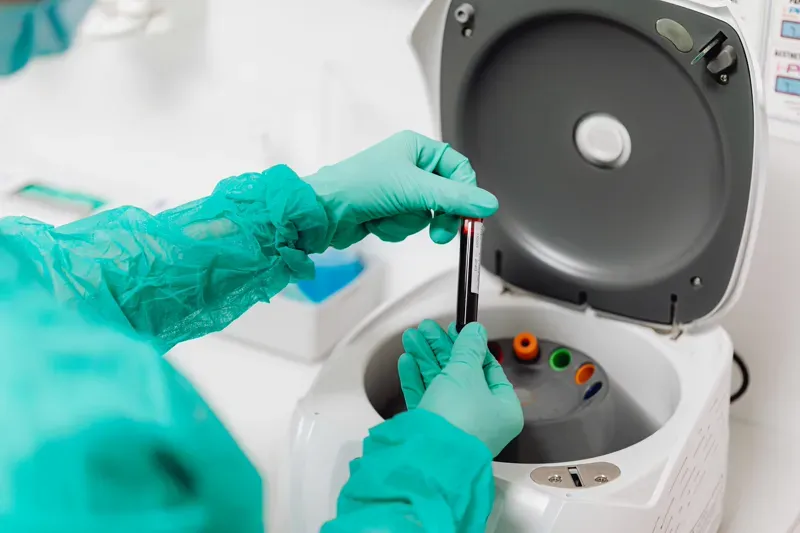
Das Spermiogramm in Dubai ist der Grundstein der männlichen Fruchtbarkeitsbeurteilung und die erste notwendige Untersuchung für jedes Paar mit Schwierigkeiten bei der Empfängnis. Trotz seiner zentralen Bedeutung wird es oft vernachlässigt oder verzögert und stattdessen früh auf die weibliche Partnerin fokussiert — obwohl der männliche Faktor etwa 40–50 % aller Unfruchtbarkeitsfälle ausmacht. Bei DCDC in Dubai Healthcare City führen wir die Analyse nach WHO-Kriterien 2021 durch, dem aktuellen Goldstandard.
Die umfassende Analyse beurteilt mehrere Parameter aus einer Probe. Sie misst die Spermienkonzentration und Gesamtanzahl. Die progressive Motilität bewertet den Anteil der Spermien, die sich zielgerichtet vorwärtsbewegen — wesentlich für das Erreichen und Befruchten der Eizelle. Die strenge Morphologie nach Kruger-Kriterien beurteilt die Normalstruktur von Kopf, Mittelstück und Schwanz. Samenvolumen, pH-Wert, Verflüssigungszeit und Viskosität liefern Informationen über die Gesundheit von Prostata und Samenbläschen.
WHO 2021-Referenzwerte umfassen: Konzentration über 16 Millionen/ml, Gesamtmotilität über 42 %, progressive Motilität über 30 % und normale Morphologie über 4 %. Ergebnisse unterhalb dieser Grenzen weisen auf Oligozoospermie, Asthenozoospermie oder Teratozoospermie hin.
WHO-Standard 2021
Analyse nach neuesten internationalen Referenzstandards
Über 15 Parameter
Umfassende Beurteilung aller klinisch relevanten Sameneigenschaften
Privater Probenraum
Private dedizierte Einrichtung zur bequemen und vertraulichen Probenentnahme
Andrologen-Überprüfung
Klinische Interpretation durch Spezialisten für männliche Reproduktionsgesundheit
Spermiogramm in Dubai: Umfassende männliche Fruchtbarkeitsbeurteilung
Spermiogramm nach WHO-Kriterien 2021 für präzise männliche Fruchtbarkeitsbeurteilung und Behandlungsplanung
Das Spermiogramm in Dubai ist der Grundstein der männlichen Fruchtbarkeitsbeurteilung und die erste notwendige Untersuchung für jedes Paar mit Schwierigkeiten bei der Empfängnis. Trotz seiner zentralen Bedeutung wird es oft vernachlässigt oder verzögert und stattdessen früh auf die weibliche Partnerin fokussiert — obwohl der männliche Faktor etwa 40–50 % aller Unfruchtbarkeitsfälle ausmacht. Bei DCDC in Dubai Healthcare City führen wir die Analyse nach WHO-Kriterien 2021 durch, dem aktuellen Goldstandard.
Die umfassende Analyse beurteilt mehrere Parameter aus einer Probe. Sie misst die Spermienkonzentration und Gesamtanzahl. Die progressive Motilität bewertet den Anteil der Spermien, die sich zielgerichtet vorwärtsbewegen — wesentlich für das Erreichen und Befruchten der Eizelle. Die strenge Morphologie nach Kruger-Kriterien beurteilt die Normalstruktur von Kopf, Mittelstück und Schwanz. Samenvolumen, pH-Wert, Verflüssigungszeit und Viskosität liefern Informationen über die Gesundheit von Prostata und Samenbläschen.
WHO 2021-Referenzwerte umfassen: Konzentration über 16 Millionen/ml, Gesamtmotilität über 42 %, progressive Motilität über 30 % und normale Morphologie über 4 %. Ergebnisse unterhalb dieser Grenzen weisen auf Oligozoospermie, Asthenozoospermie oder Teratozoospermie hin.

Dr. Hadi Komshi
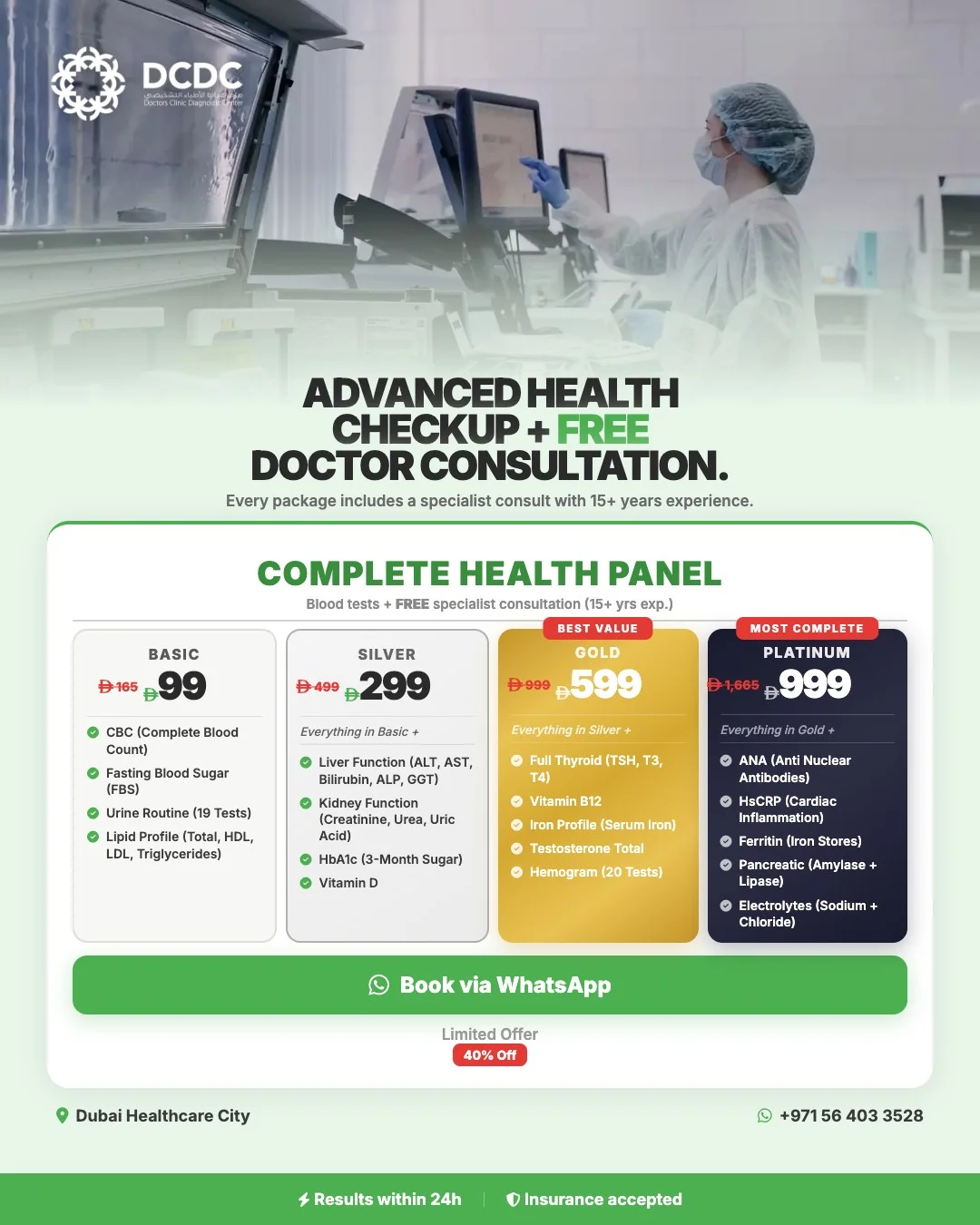
Complete Health Panel
Advanced health checkup with FREE specialist consultation. 4 tiers from basic blood work to full-body screening with 40+ biomarkers.
10–40+ tests included
What's Included
Who is this for?
Anyone wanting a comprehensive baseline health check with specialist consultation
Unsere Leistungen entdecken
Umfassende spermiogramm Leistungen im DCDC Dubai Healthcare City.
Basis-Spermiogramm
Spermienanzahl, Motilität, Morphologie, Volumen und pH nach WHO 2021.
Erweitertes Spermiogramm
Erweitertes Panel mit Vitalität, Anti-Spermien-Antikörpern und DNA-Fragmentationsindex.
Hormontests
FSH, LH, Testosteron und Prolaktin zur männlichen Hormon-Fruchtbarkeitsbeurteilung.
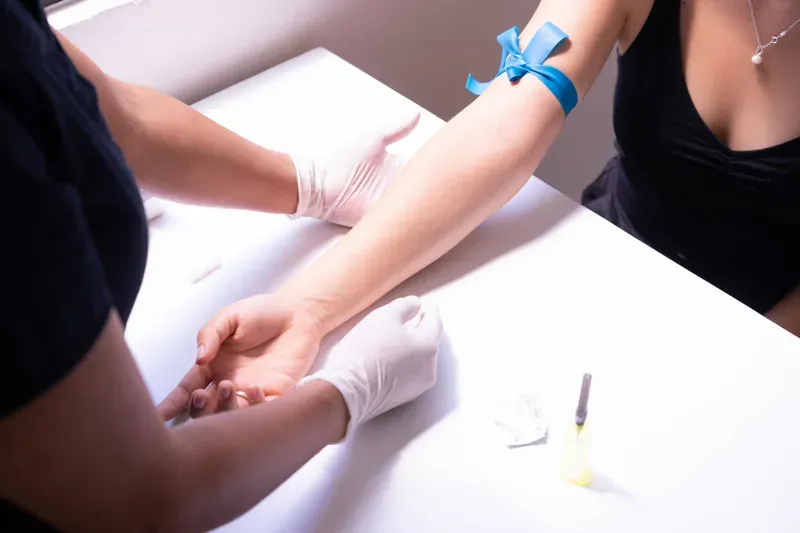
Bluttests
Umfassende Stoffwechsel- und Gesundheitspanels zur Unterstützung der Fruchtbarkeitsbeurteilung.
Gesundheitscheck
Full wellness assessment including male reproductive health markers.
Alle Leistungen werden von DHA-lizenzierten Spezialisten durchgeführt
Für wen ist Spermiogramm geeignet?
Das Spermiogramm ist die erste Untersuchung für jeden Mann, der nach 12 Monaten regelmäßigen ungeschützten Geschlechtsverkehrs noch keine Kinder hat — oder früher bei Risikofaktoren. Es wird auch zur Bestätigung einer erfolgreichen Vasektomie und zur Überwachung von Fruchtbarkeitsbehandlungen eingesetzt.
Paare mit Schwierigkeiten bei der Empfängnis nach 12 Monaten regelmäßigem ungeschützten Verkehr
Paare, die nach 6 Monaten eine Fruchtbarkeitsbeurteilung anstreben, wenn die Partnerin über 35 ist
Männer mit Vorgeschichte von Kryptorchismus im Kindesalter
Vorgeschichte von Hodentrauma, Torsion oder Hodenoperationen
Klinisch oder per Ultraschall diagnostizierte Hodenkrampfadern
Frühere Chemotherapie oder Bestrahlung mit Auswirkungen auf das Reproduktionssystem
Warum DCDC für das Spermiogramm in Dubai wählen?
MOHAP-zertifiziertes Labor mit Analyse nach WHO 2021-Protokollen mit kalibrierten Geräten und voller Vertraulichkeit
WHO-Standard 2021
Wir führen die Analyse nach den neuesten WHO 2021-Standards durch, umfassender und präziser als die früheren 2010-Standards.
Privater Probenraum
Privater, komfortabler Probenentnahmeraum in der Einrichtung mit sofortiger Verarbeitung für genaue Motilitätsmessung.
Andrologen-Überprüfung
Ergebnisse werden von Spezialisten für männliche Reproduktionsgesundheit mit klaren Empfehlungen und Behandlungsschritten interpretiert.
Volle Vertraulichkeit
Ergebnisse sind vollständig vertraulich und werden nur dem überweisenden Arzt und Patienten mitgeteilt. Diskrete Abrechnung sichert Ihre Privatsphäre.
Ihr angenehmer Besuch
Ein einfacher, schrittweiser Spermiogramm-Untersuchungsprozess für Komfort, Schnelligkeit und Genauigkeit.
Kosten des Spermiogramms in Dubai
Die Spermiogramm-Preise in Dubai variieren je nach Leistungsart und Versicherungsdeckung für verschiedene Leistungstypen.
- Preise variieren je nach Untersuchungsart und Kontrastmittelbedarf
- Versicherungsdeckung akzeptiert mit Überweisung und Verifizierung
- Transparente Selbstzahlerpreise mit sofortigem Angebot auf Anfrage
Versicherungsverifizierung in Minuten • Keine versteckten Gebühren • Schnelle Antwort auf WhatsApp
Patientenratgeber
Das Spermiogramm-Erlebnis bei DCDC
Privat, professionell und in jedem Schritt diskret.
Versicherung & Standort
Versicherungspartner
- •Über 20 Versicherungsanbieter in Dubai einschließlich Daman, AXA, ADNIC und andere
- •Vorabgenehmigung-Unterstützung und Direktabrechnung (falls zutreffend)
- •Deckungsüberprüfung vor Ihrem Termin in unserer Klinik in Dubai Healthcare City
- •Transparente Preisgestaltung ohne versteckte Gebühren für spermiogramm-Leistungen








Besuchen Sie uns in Dubai Healthcare City
Doctors Clinic Diagnostic Center
Gebäude 64, Block A, Al Razi Medical Complex, Dubai Healthcare City, Dubai, VAE
Nahe der Oud Metha Road · Einfacher Zugang von Bur Dubai, Downtown Dubai, Business Bay · Kostenlose Patientenparkplätze verfügbar
Öffnungszeiten
Mo-Do, Sa: 8:00 - 22:30 Uhr | So: 8:30 - 22:30 Uhr | Fr: 9:00 - 22:00 Uhr
So funktioniert die Versicherung bei DCDC
Deckung prüfen
Überprüfen Sie, ob Ihr Plan Spermiogramm abdeckt
Überweisung erhalten
Einige Versicherer verlangen eine Überweisung — wir helfen Ihnen gerne
Vorab-Genehmigung
Wir übernehmen die Vorab-Genehmigung direkt mit Ihrem Versicherer
Direktabrechnung
Keine Vorauszahlung — wir rechnen direkt mit Ihrem Versicherer ab
Nur Eigenanteil
Sie zahlen nur den anfallenden Eigenanteil in der Klinik
Deckung prüfen
Überprüfen Sie, ob Ihr Plan Spermiogramm abdeckt
Überweisung erhalten
Einige Versicherer verlangen eine Überweisung — wir helfen Ihnen gerne
Vorab-Genehmigung
Wir übernehmen die Vorab-Genehmigung direkt mit Ihrem Versicherer
Direktabrechnung
Keine Vorauszahlung — wir rechnen direkt mit Ihrem Versicherer ab
Nur Eigenanteil
Sie zahlen nur den anfallenden Eigenanteil in der Klinik
Your Specialist
Dr. Hadi Komshi
Specialist Internal Medicine
MD, Specialist Internal Medicine
Persian · Arabic · English
Patientenratgeber
Understanding Male Fertility and Semen Parameters
Male fertility depends on the continuous production, maturation, and transport of healthy sperm cells. Spermatogenesis, the process of sperm production in the testicles, takes approximately 72 to 74 days from initial stem cell division to mature sperm capable of fertilisation. This extended cycle means that any insult to testicular function — whether from infection, heat, toxins, or hormonal imbalance — may not manifest in semen parameters for two to three months after the event. Understanding this timeline is essential when interpreting results and planning lifestyle or treatment interventions.
The WHO 2021 fifth edition manual for semen analysis represents a significant update from the previous 2010 criteria, establishing reference limits from a larger, more geographically diverse population of fertile men. The new criteria adjusted the lower reference limit for morphology from 3 percent to 4 percent and revised concentration thresholds. These reference limits represent the fifth percentile of fertile men, meaning approximately 5 percent of men who achieved conception within 12 months would fall below these thresholds. They should be interpreted as population-based thresholds rather than absolute cut-offs determining individual fertility status.
Male Fertility Conditions Assessed Through Semen Analysis
Oligozoospermia
Sperm concentration below 16 million/mL (WHO 2021), ranging from mild to severe, affecting the probability of natural conception and guiding treatment decisions from lifestyle modification to assisted reproduction.
Asthenozoospermia
Progressive motility below 30 percent or total motility below 42 percent, impairing the ability of sperm to reach and penetrate the egg, diagnosed by WHO-compliant motility assessment.
Teratozoospermia
Normal morphology below 4 percent by strict Kruger criteria, with head, midpiece, or tail defects reducing fertilisation potential, investigated further with DNA fragmentation index.
Azoospermia
Complete absence of sperm in the ejaculate, classified as obstructive or non-obstructive, each with distinct causes and treatment pathways including surgical sperm retrieval for ICSI.
Varicocele-related Infertility
Dilated testicular veins raising scrotal temperature and impacting spermatogenesis, often presenting as oligoasthenoteratozoospermia on semen analysis, potentially reversible with varicocelectomy.
Retrograde Ejaculation
Backward flow of semen into the bladder rather than anterograde ejaculation, causing absent or low-volume ejaculate, diagnosed by post-ejaculate urine analysis revealing sperm.
Verwandte Leistungen
Entdecken Sie weitere Diagnose- und Beratungsleistungen in unserer Klinik in Dubai Healthcare City.
Häufig gestellte Fragen
Häufige Fragen zu Spermiogramm in Dubai.
Die umfassende Analyse misst über 15 Parameter, darunter: Spermienkonzentration (Millionen/ml), Gesamtanzahl pro Ejakulat, progressive Motilität, Gesamtmotilität, strenge Morphologie nach Kruger-Kriterien, Samenvolumen, pH-Wert, Verflüssigungszeit und Viskosität. Erweiterte Panels umfassen Vitalität, Antikörpertests und DNA-Fragmentationsindex. Alle Ergebnisse werden mit WHO 2021-Referenzwerten verglichen.
WHO 2021-Leitlinien empfehlen 2–5 Tage Abstinenz vor der Probenentnahme. Weniger als 2 Tage reduziert Anzahl und Volumen; mehr als 5 Tage reduziert Motilität. Konsistente Abstinenzzeit ist bei Wiederholungstests zum Vergleich wichtig.
WHO 2021 hat Referenzuntergrenzen von fruchtbaren Männern festgelegt, die innerhalb von 12 Monaten Kinder bekommen haben. Ergebnisse unterhalb dieser Grenzen deuten auf mögliche Beeinträchtigung der Fruchtbarkeit hin, bedeuten aber keine absolute Unfruchtbarkeit. Viele Männer mit Ergebnissen unter den Referenzwerten bekommen auf natürlichem Weg Kinder.
Die Konzentration ist die Anzahl der Spermien pro Milliliter, die WHO 2021-Grenze liegt bei 16 Millionen/ml. Die Gesamtanzahl ist die Konzentration multipliziert mit dem Volumen und repräsentiert die gesamte Anzahl pro Ejakulat (Referenzgrenze 39 Millionen). Die Gesamtanzahl ist in manchen Fällen klinisch wichtiger.
Ja. Ein Standardspermiogramm beurteilt Quantität und grundlegende Motilität, bewertet aber nicht die DNA-Integrität der Spermien. Der DNA-Fragmentationsindex (DFI) ist ein fortschrittlicherer Test, der DNA-Strangbrüche erkennt, die wiederholte Fehlgeburten und IVF-Versagen verursachen können, selbst bei normalen Standardparametern.
Spermiogrammparameter variieren natürlicherweise zwischen Proben. Ein auffälliges Ergebnis sollte nach 4–6 Wochen durch eine Wiederholungsanalyse bestätigt werden, um den 72-tägigen Spermiogenesezyklus zu berücksichtigen. Sind beide Analysen auffällig, ist eine weitere Beurteilung erforderlich.
Auffällige Ergebnisse führen zu einem systematischen diagnostischen Pfad. Hormontests (FSH, LH, Testosteron, Prolaktin) beurteilen die Hodenfunktion. Ultraschall identifiziert Krampfadern und Obstruktionen. Genetische Tests werden bei schwerem Spermienmangel oder Azoospermie verordnet. Behandlungsoptionen reichen von Krampfadenkorrektur und Hormontherapie bis zu medizinisch assistierter Reproduktion.
Azoospermie betrifft etwa 1 % der Männer und 10–15 % der Infertilen. Sie kann obstruktiv (normale Produktion, aber Obstruktion) oder nicht-obstruktiv (Produktionsstörung) sein. Obstruktive Azoospermie ist häufig chirurgisch behandelbar; manche nicht-obstruktiven Fälle sprechen auf Hormontherapie an oder Spermien können direkt aus dem Hoden für ICSI gewonnen werden.
Wichtige Fakten
Medizinische Aufsicht
Alle Leistungen werden unter Aufsicht lizenzierter medizinischer Fachkräfte in unserer MOHAP-akkreditierten Einrichtung erbracht.