Wichtigste Erkenntnisse
- Runner's knee (patellofemoral pain syndrome) is the most common running injury, affecting 25-30% of runners
- The root cause is almost never the knee itself: weak glutes, tight quads, and poor hip control are the usual culprits
- Rest alone does not fix runner's knee; it will return as soon as you resume running unless the underlying cause is addressed
- A structured 6-week physiotherapy programme targeting hip and core strength resolves most cases
- Running form modifications such as increasing cadence by 5-10% can immediately reduce knee load
- Dubai-specific factors including heat, hard pavement, and treadmill overuse contribute to higher patellofemoral pain rates
- Shoe selection matters: the right amount of cushioning and support depends on your foot type and running mechanics
You started running to get fit, and for the first few months it felt great. Then a dull ache appeared around your kneecap. It was manageable at first, maybe just noticeable at the start of a run. But now it hurts going up stairs, sitting for long periods, and the thought of your next run fills you with dread instead of excitement. This is runner's knee, and it is the single most common injury in recreational runners. Our Physiotherapy service at DCDC offers same-day appointments in Dubai Healthcare City.
The frustrating thing about runner's knee is that rest makes it feel better, so you assume it has healed. Then you run again and the pain returns within a week. This cycle repeats because rest does not fix the underlying problem. This guide explains exactly what causes runner's knee, why standard advice often fails, and how a targeted physiotherapy programme resolves it for good.
What Exactly Is Runner's Knee?
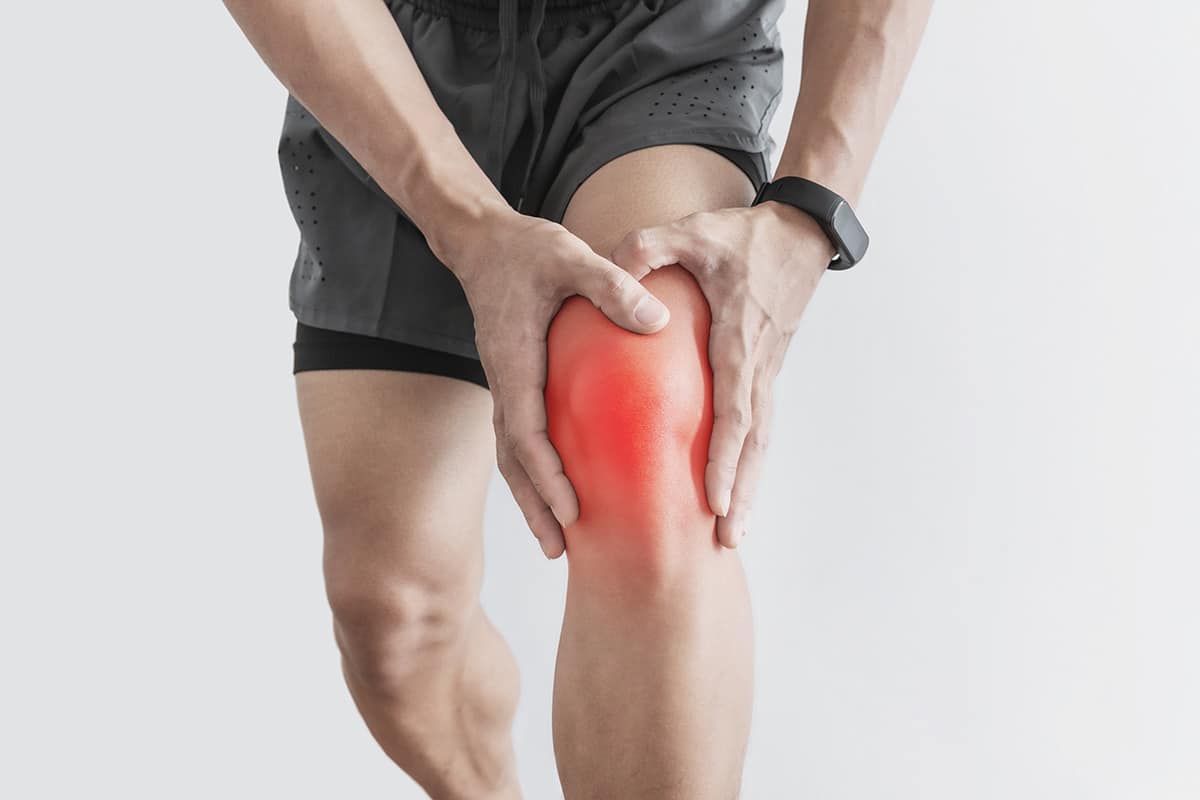
Runner's knee, clinically called patellofemoral pain syndrome (PFPS), is pain around or behind the kneecap (patella) that worsens with running, squatting, climbing stairs, and prolonged sitting. It occurs when the patella does not track smoothly in its groove on the femur during knee bending, creating irritation of the cartilage and surrounding tissues. Despite its name, it is common in cyclists, hikers, and anyone who increases lower-body loading without adequate preparation.
The condition affects 25-30% of all runners at some point, making it the most prevalent running injury worldwide according to systematic reviews published in the British Journal of Sports Medicine. It is more common in women than men, likely due to wider hip angles and differences in neuromuscular control.
Why Does Runner's Knee Happen? The Biomechanical Causes
Runner's knee is rarely caused by a problem in the knee itself. It is almost always the result of how forces are transmitted through the leg during running. The knee sits between the hip and the foot, and when either of those joints is not doing its job properly, the knee absorbs the excess load. Understanding these causes is essential because treatment must target the source, not the symptom.
Weak Gluteal Muscles
The gluteus medius and maximus are the primary stabilisers of the pelvis and femur during single-leg stance, which is what running essentially is: a series of single-leg hops. When these muscles are weak, the femur rotates inward during the landing phase, pushing the patella against the outer edge of its groove. This is the single most common finding in runners with PFPS.
Poor Hip and Core Control
Core weakness allows excessive pelvic drop on the stance leg side, which further increases valgus (knock-knee) forces at the knee. This is visually apparent as a hip drop or a knee that dives inward with each step. It is often more pronounced during fatigue, which is why runner's knee pain typically worsens toward the end of a run.
Quadriceps Imbalance
The vastus medialis oblique (VMO), the inner portion of the quadriceps, plays a key role in keeping the patella centred. When the outer quadriceps (vastus lateralis) dominates, it pulls the patella laterally, increasing friction. This imbalance often develops from sedentary lifestyles where the inner quad becomes inhibited.
Training Errors
- Too much too soon: Increasing weekly mileage by more than 10% creates overload faster than tissues can adapt
- Hard surfaces: Running exclusively on pavement or concrete increases impact forces compared to trails or tracks
- Treadmill overuse: Treadmills encourage a shorter stride and different mechanics that can increase patellofemoral load
- Downhill running: Eccentric quadriceps loading during descent places significantly more force across the patellofemoral joint
What Does a 6-Week Physiotherapy Programme Look Like?
The following programme represents the evidence-based approach used at our sports rehabilitation clinic. It progresses from pain management and basic activation to full return to running over 6 weeks. Each phase should be mastered before progressing. Some patients progress faster, some slower, and the programme should be adjusted based on individual response. For related information, see our guide on IT Band Syndrome: Physio Treatment for Runners.
| Phase | Weeks | Focus | Key Exercises | Running Status |
|---|---|---|---|---|
| Phase 1: Pain Reduction | 1-2 | Reduce symptoms, activate glutes and VMO | Isometric quad holds, clam shells, glute bridges, patellar taping | Reduce volume by 50% or cross-train (cycling, swimming) |
| Phase 2: Strength Building | 3-4 | Progressive hip and quad strengthening | Side-lying hip abduction, single-leg bridges, step-ups, wall sits | Gradual return with walk-run intervals |
| Phase 3: Functional Loading | 5-6 | Dynamic control and return to running | Single-leg squats, lateral band walks, hopping progressions, running drills | Progressive running with form cues, increase by 10% per week |
6-week runner's knee rehabilitation programme outline
Research from the Journal of Orthopaedic & Sports Physical Therapy demonstrates that hip-focused rehabilitation programmes are significantly more effective than knee-focused programmes for patellofemoral pain. The exercises above are designed to strengthen the hip stabilisers first and then progressively load the patellofemoral joint as strength improves.
How Can You Modify Your Running to Reduce Knee Pain?
Running form modifications can provide immediate pain reduction while you work on the underlying strength deficits. These changes reduce the load transmitted through the patellofemoral joint without requiring you to stop running entirely, which is important for both physical and mental health.
- Increase cadence by 5-10%: Taking shorter, faster steps reduces impact force per stride. Use a metronome app or music at the target BPM. If you currently run at 160 steps/min, aim for 168-176
- Lean slightly forward from the ankles: A gentle forward lean shifts loading away from the knee and toward the hip and glute muscles
- Avoid overstriding: Your foot should land under your centre of mass, not out in front. Overstriding acts as a brake and increases patellofemoral force
- Reduce downhill running: Until pain resolves, avoid steep descents or walk the downhill sections
- Run on varied surfaces: Alternate between pavement, track, and softer trail surfaces to distribute impact differently
What Shoes Should You Wear for Runner's Knee?
Shoe selection for runner's knee is often oversimplified. The right shoe depends on your foot mechanics, running style, and the surfaces you run on. There is no single "best shoe" for patellofemoral pain, but there are evidence-based principles to guide your choice.
- Cushioning: Moderate cushioning reduces impact forces compared to minimal shoes. However, excessively cushioned shoes can reduce proprioceptive feedback and alter landing mechanics
- Heel-to-toe drop: A lower drop (6-8mm) encourages midfoot landing and may reduce patellofemoral load compared to high-drop shoes (10-12mm)
- Stability features: If you significantly overpronate, a mild stability shoe can help. But most runners with PFPS do better addressing the problem through hip strengthening rather than shoe corrections
- Shoe rotation: Using 2-3 pairs of different shoes reduces repetitive loading patterns. A 2015 study found that runners who rotated shoes had 39% fewer injuries
- Replacement: Most running shoes lose significant cushioning after 500-800km. Track your mileage and replace accordingly
How Does Running in Dubai Affect Knee Pain?
Dubai's environment creates specific challenges for runners that are often underestimated. These factors do not directly cause runner's knee, but they increase vulnerability and can slow recovery if not managed properly. You may also find our Carpal Tunnel: Non-Surgical Treatment Dubai helpful.
- Heat and dehydration: Running in high temperatures causes faster muscle fatigue, which reduces the protective muscle activation around the knee. Dehydrated muscles are less elastic and more prone to strain
- Hard surfaces: Dubai's running routes (canal, marina, JBR) are predominantly paved, offering no shock absorption. Consider incorporating treadmill sessions or trail runs at Al Qudra for surface variety
- Seasonal patterns: Many Dubai runners drastically increase mileage in October-November when the weather cools, creating a classic too-much-too-soon overload after summer inactivity. Build gradually using the 10% rule
- Treadmill dependency: Summer months often mean treadmill-only running. The fixed belt speed and flat surface create different loading patterns. Vary incline and speed to simulate outdoor running diversity
- Race season: Dubai Marathon, Ras Al Khaimah Half Marathon, and various trail runs concentrate between November and March. Plan your training build-up to peak for your target race, not every race
Knee Pain Stopping You from Running?
Book a running-specific physiotherapy assessment at DCDC Dubai Healthcare City. We will identify the root cause of your knee pain and build a programme to get you running pain-free. Learn more about our physiotherapy services.
Verwandte Leistungen im DCDC
Fachkundige Betreuung und moderne Diagnostik in Dubai Healthcare City
Frequently Asked Questions
Getting Back to Pain-Free Running
Runner's knee is frustrating precisely because it feels like it should be simple to fix. The knee hurts, so surely the knee is the problem. But in almost every case, the solution lies in the hip, the core, and the way you run. Address those factors with targeted physiotherapy, and the knee pain resolves.
If you have been stuck in the rest-run-pain cycle, it is time to break it. A proper biomechanical assessment and a structured strengthening programme can transform your running from a source of pain into the healthy, enjoyable activity it should be.
Quellen und Referenzen
Dieser Artikel wurde von unserem medizinischen Team überprüft und bezieht sich auf folgende Quellen:
- British Journal of Sports Medicine - Patellofemoral pain systematic review and prevalence
- Journal of Orthopaedic & Sports Physical Therapy - Hip vs knee rehabilitation for PFPS
- Scandinavian Journal of Medicine & Science in Sports - Shoe rotation and injury risk
- American Journal of Sports Medicine - Running cadence modification outcomes
- Dubai Health Authority - Physiotherapy practice guidelines
Medizinische Inhalte auf dieser Website werden von DHA-lizenzierten Ärzten überprüft. Siehe unsere redaktionelle Richtlinien für weitere Informationen.

Verfasst von
Dr. Hadi Komshi
Specialist Internal Medicine
MD, DHA-Licensed
Dr. Hadi Komshi is a DHA-licensed Internal Medicine Specialist at Doctors Clinic Diagnostic Center in Dubai Healthcare City, with extensive experience in managing acute and chronic medical conditions including musculoskeletal pain and rehabilitation.
Related Articles
Complete Guide to Physiotherapy in Dubai: Types, Costs & What to Expect
IT Band Syndrome: Physiotherapy Treatment Guide

Plantar Fasciitis: How Physiotherapy Can Help

Sports Physiotherapy in Dubai: Complete Guide
More in Physiotherapy
Physiotherapy Packages Dubai: Save 20%+ (2026)
Weiterlesen
Shoulder Pain Dubai: 7 Causes & When to Worry (2026)
Weiterlesen
PRP vs Cortisone Dubai: Which Injection? (2026)
Weiterlesen
PRP Injection for Joints Dubai: From AED 1,500 (2026)
WeiterlesenPhysiotherapy Cost Dubai: AED 250–500/Session (2026)
WeiterlesenPhysiotherapy Dubai: Types, Cost & Guide (2026)
Weiterlesen© 2026 Doctors Clinic Diagnostic Center (DCDC), Dubai Healthcare City. Originally published at https://doctorsclinicdubai.ae/blog/runners-knee-treatment-physiotherapy. All rights reserved. Unauthorized reproduction is prohibited.