Wichtigste Erkenntnisse
- The OPG scan itself takes only 15 to 20 seconds - the entire appointment, including positioning and preparation, is completed in under 5 minutes
- An OPG X-ray is completely painless with no needles, no contrast dye, and no sensors placed inside the mouth
- Radiation exposure from a single OPG is minimal at approximately 10 to 20 microsieverts, equivalent to about 1 to 2 days of natural background radiation
- Results are available immediately on the digital workstation, and a formal radiologist report is typically completed the same day at DCDC
- Children as young as 5 can safely undergo an OPG scan, and modern machines automatically reduce radiation dose for pediatric patients
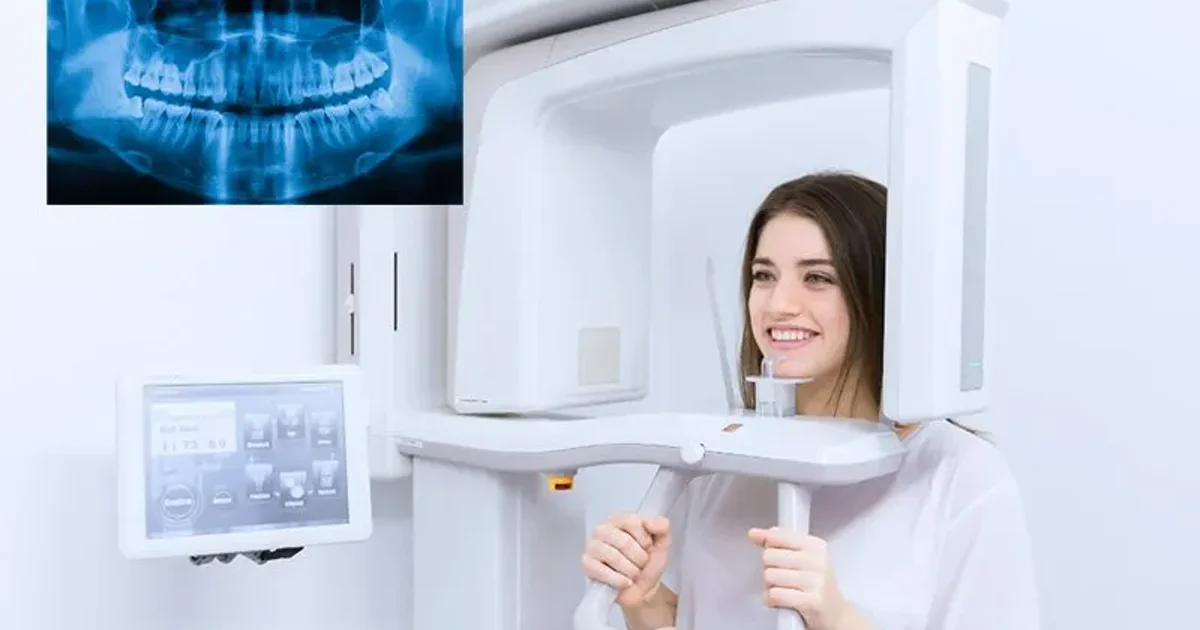
The OPG X-ray procedure is one of the fastest, simplest, and most comfortable imaging studies in modern dentistry. An OPG, or orthopantomogram, captures a complete panoramic image of both jaws, all teeth, and the surrounding bone structures in a single 15-to-20-second sweep - with no pain, no injections, and no special preparation required. Whether your dentist has referred you for a panoramic scan or you are booking one yourself, understanding exactly what happens during the procedure eliminates uncertainty and makes the experience straightforward.
This guide walks you through the complete OPG X-ray procedure from start to finish, explains what to remove before the scan, addresses common concerns about pain and radiation, covers special considerations for children, describes how the panoramic image is read, and details what to expect when you visit DCDC Dubai Healthcare City for your scan. Every section has been reviewed by a consultant radiologist for clinical accuracy.
How Does an OPG X-Ray Work?
An OPG X-ray works by using a technique called rotational tomography, in which an X-ray tube and a digital detector rotate simultaneously around the patient's head in a coordinated semicircular arc. As the tube and detector sweep from one side of the jaw to the other - a journey that takes approximately 15 to 20 seconds - the system captures a continuous series of narrow X-ray slices. Specialized software then reconstructs these slices into a single flat, two-dimensional panoramic image that displays both jaws from ear to ear.
The key principle behind the OPG is called narrow-beam tomography. Rather than exposing the entire head to radiation at once (as a standard skull X-ray would), the OPG machine uses a thin, focused X-ray beam that illuminates only a narrow vertical strip of anatomy at any given moment. This strip sweeps across the jaw as the machine rotates, building up the panoramic image incrementally. The result is a sharp image of the curved jaw structures projected onto a flat plane, with minimal superimposition of structures in front of or behind the focal zone.
"The OPG is essentially a panoramic photograph of the jaw, taken with X-rays instead of visible light," says Dr. Osama Elzamzami, Head of Radiology at DCDC. "The machine sweeps around the patient's head in the same way a panoramic camera pans across a landscape. The entire process takes less time than tying your shoes."
Because the X-ray source remains outside the mouth throughout the procedure, the OPG is classified as an extraoral imaging technique. This is a significant advantage over intraoral X-rays, which require a sensor or film to be placed inside the mouth against the teeth. Patients who have a strong gag reflex, limited mouth opening, or dental anxiety consistently find the OPG far more comfortable than intraoral alternatives.
Modern digital OPG machines have replaced older film-based systems in virtually all contemporary radiology departments and dental clinics. Digital systems offer three important advantages: they produce higher-resolution images, they deliver lower radiation doses (because digital sensors are more sensitive to X-rays than film), and they display the completed image on a computer screen within seconds of the scan, allowing for immediate review by the radiologist or dentist.
Step-by-Step OPG X-Ray Procedure
The complete OPG X-ray procedure takes under 5 minutes from the moment you enter the X-ray room to the moment you leave. There is no preparation required beforehand - no fasting, no blood tests, no medication changes, and no need to arrange a driver. Below is exactly what happens at each stage.
Step 1: Check-In and Registration
You arrive at the radiology department and check in at reception. If you have a referral letter from your dentist or physician, hand it to the front desk. At walk-in centers like DCDC, self-pay patients do not need a referral. The receptionist confirms your details and directs you to the X-ray room.
Step 2: Remove Metal Objects
The radiographer asks you to remove all metallic items from your head and neck area. Metal creates bright white artifacts on the image that can obscure important anatomy. The items you need to remove are detailed in the table below. This step takes about 30 seconds.
Step 3: Wear Protective Shielding
The radiographer places a lead thyroid collar around your neck to shield the thyroid gland from scattered radiation. In some facilities a lead apron covering the torso is also provided. This protective shielding follows the ALARA principle (As Low As Reasonably Achievable) that governs all medical imaging.
Step 4: Positioning in the OPG Machine
You step up to the OPG unit and place your chin on a small chin rest. The radiographer adjusts the height of the machine to match your anatomy and uses light-beam guides projected onto your face to align your head precisely. Two lateral head supports gently press against your temples to prevent any movement during the scan. Correct positioning is the single most important factor in obtaining a high-quality panoramic image.
Step 5: Bite on the Positioning Guide
You bite gently on a sterile plastic bite block (also called a bite peg or positioning guide) that keeps your front teeth slightly apart and your upper and lower jaws in the correct alignment. The bite block ensures that the teeth do not overlap on the image. You are asked to close your lips around the block and press your tongue flat against the roof of your mouth - this prevents the tongue from creating a shadow that could obscure the tooth roots on the image.
Step 6: The Scan
The radiographer steps behind a protective screen and activates the machine. The C-shaped arm of the OPG unit begins rotating slowly around your head, moving from one ear to the other in a smooth semicircular arc. You will hear a low humming sound during the rotation. The scan takes approximately 15 to 20 seconds. During this time you must remain completely still and avoid swallowing, as any movement can blur the image and require a repeat scan.
Step 7: Scan Complete
The machine stops, and you step away from the unit. The digital image appears on the radiographer's workstation within seconds. The radiographer performs a quick quality check to ensure the image is diagnostic. If the image is satisfactory - which it is in the vast majority of cases - you are free to leave immediately. The entire process from entering the room to leaving typically takes 3 to 5 minutes.
There is no recovery time after an OPG. You can eat, drink, drive, and resume all normal activities immediately. There are no side effects from the scan.
What to Remove Before an OPG Scan
Metallic objects in the head and neck area produce bright white artifacts on the OPG image that can obscure teeth, bone, and other critical anatomy. Removing these items before the scan takes only a moment but is essential for obtaining a clear, diagnostic-quality panoramic image. The table below lists everything you need to remove.
| Item to Remove | Why It Must Be Removed |
|---|---|
| Earrings, studs, and ear cuffs | Metal earrings appear as bright white spots near the jaw joint (TMJ) area, potentially obscuring the condyles and ramus of the mandible |
| Necklaces and chains | Necklaces drape across the lower jaw and cervical spine area, creating linear artifacts that can mimic or hide fractures and pathology |
| Eyeglasses and sunglasses | Metal or dense plastic frames project onto the midface and orbital region, obscuring the maxillary sinuses and upper jaw anatomy |
| Removable dentures and retainers | Denture clasps and acrylic bases create dense white shadows that completely obscure the underlying teeth and bone |
| Hairpins, clips, and hair ties with metal | Metal hair accessories at the back of the head project onto the anterior (front) jaw area on the panoramic image, creating confusing overlapping shadows |
| Hearing aids | Hearing aids contain metal components and batteries that produce bright artifacts near the ear canal and TMJ region |
| Facial piercings (lip, nose, tongue, eyebrow) | Piercings appear as dense metallic spots that can mimic foreign bodies or obscure pathology in the area where they project on the image |
Remove all metallic and dense accessories from the head and neck before an OPG scan. Fixed dental work such as crowns, bridges, implants, and orthodontic braces do not need to be removed.
Important: Fixed dental restorations - including metal crowns, bridges, dental implants, and orthodontic brackets and wires - do not need to be removed. These are permanently attached and are expected to appear on the OPG. The radiologist accounts for them when interpreting the image. Similarly, tongue piercings are removed if possible, but if they cannot be removed, the radiographer notes their presence so the radiologist does not mistake them for a foreign body.
Book Your OPG X-Ray at DCDC Dubai Healthcare City
Get a high-resolution digital OPG scan with same-day radiologist reporting at Doctors Clinic Diagnostic Center. Walk-ins welcome. No referral needed for self-pay patients.
Located in Dubai Healthcare City, Building 47
Is an OPG X-Ray Painful?
No, an OPG X-ray is completely painless. There are no needles, no injections, no contrast dye, and no sensors placed inside the mouth. You do not feel the X-rays passing through your body - they are entirely imperceptible to human senses. The only physical sensations during the scan are the light pressure of the chin rest under your jaw, the gentle contact of the lateral head supports against your temples, and the mild sensation of biting on the plastic positioning guide.
"Patients are often surprised by how simple the OPG is," says Dr. Osama Elzamzami, Head of Radiology at DCDC. "They expect something complicated because it is called an X-ray, but the reality is that you stand still for 15 seconds and it is over. There is nothing to feel - no buzzing, no heat, no discomfort whatsoever."
Many patients report that the OPG is significantly more comfortable than a standard intraoral dental X-ray, which requires a rigid sensor or film packet to be pressed against the gums inside the mouth. Intraoral sensors can dig into the floor of the mouth or trigger the gag reflex in sensitive patients. The OPG avoids all of this because the imaging equipment stays entirely outside the mouth.
Can You Have an OPG With a Gag Reflex?
Yes, absolutely. The OPG is the preferred imaging technique for patients with a strong gag reflex precisely because nothing is placed inside the mouth other than a small bite block positioned between the front teeth. The bite block sits well forward of the areas that typically trigger gagging, making the OPG comfortable even for patients who cannot tolerate intraoral X-rays.
Can You Have an OPG With Dental Anxiety?
The OPG is also well suited for patients with dental anxiety. The scan is quick (15 to 20 seconds), there is no drilling or probing, the room is open (not enclosed like an MRI scanner), and the radiographer explains each step before it happens. Patients remain fully clothed and standing upright throughout the procedure. Because the machine rotates around you rather than enclosing you, claustrophobia is not a concern.
OPG X-Ray for Children: What Parents Should Know
OPG X-rays are routinely performed on children and are considered safe for pediatric patients. Dentists and orthodontists frequently request panoramic scans for children to assess the development and positioning of permanent teeth beneath the gums, to identify missing or extra teeth, to evaluate jaw growth, and to plan orthodontic treatment. The OPG is often the first comprehensive dental image a child receives.
At What Age Can a Child Have an OPG?
Children as young as 5 years old can have an OPG, provided they are able to stand still for 15 to 20 seconds and follow simple instructions such as "bite down gently" and "stay very still." Most children aged 6 and above manage the scan without difficulty. For very young or anxious children, the radiographer takes extra time to explain the process in child-friendly language and may allow a parent to stand in the room (wearing a lead apron) for reassurance.
Is the Radiation Safe for Children?
Yes. Modern digital OPG machines include automatic pediatric dose-reduction protocols that lower the X-ray output based on the child's size. A pediatric OPG delivers approximately 5 to 14 microsieverts (uSv) - roughly equivalent to half a day to one day of natural background radiation. This is an extremely low dose, and the diagnostic benefit of identifying dental and orthodontic problems early far outweighs the negligible radiation exposure.
A Reassuring First OPG Experience
Seven-year-old Youssef came to DCDC with his mother for his first-ever OPG scan, referred by his orthodontist to assess his developing permanent teeth. His mother was concerned about radiation and whether her son would be frightened by the machine. The radiographer at DCDC spent a few minutes showing Youssef the machine, letting him touch the chin rest, and explaining that he just needed to "stand like a statue" while the arm went around his head. Youssef bit down on the positioning guide, stood perfectly still for 16 seconds, and the scan was done. "That was it?" he asked, looking surprised. His mother was relieved to learn that the radiation dose was less than what Youssef would receive on a flight to visit his grandparents. The OPG revealed two permanent teeth developing at unusual angles, giving the orthodontist the information needed to plan early intervention.
"We see children for OPG scans every day, and the key is communication," says Dr. Osama Elzamzami, Head of Radiology at DCDC. "When a child understands what is going to happen and that it will not hurt, they cooperate beautifully. The scan is finished before they have time to worry."
After Your OPG: Reading the Panoramic Image
Once the OPG scan is complete, the digital panoramic image appears on the radiologist's workstation within seconds. At DCDC, every OPG is reviewed and reported by a consultant radiologist - not a technician or general practitioner - ensuring the highest standard of diagnostic interpretation. Here is what happens after the scan and how the image is read.
Immediate Image Review
The radiographer performs an initial quality check immediately after the scan to confirm that the image is properly positioned, well-exposed, and free of motion blur or artifacts. If the image meets diagnostic standards - which it does in the vast majority of cases - no repeat scan is needed. If there is significant motion blur (usually caused by the patient moving during the 15-second sweep), a single repeat scan may be performed.
What the Radiologist Looks For
The radiologist systematically evaluates the OPG image using a structured approach that examines every anatomical region displayed on the panoramic view:
- Teeth: Each tooth is assessed for decay (caries), fractures, root abnormalities, periapical (root-tip) infections, and the condition of existing restorations such as fillings, crowns, and implants
- Bone levels: The height of the alveolar bone surrounding the tooth roots is evaluated for signs of periodontal (gum) disease, which causes progressive bone loss
- Jaw bones: The mandible and maxilla are examined for cysts, tumors, fractures, and other bony abnormalities
- Impacted teeth: Any unerupted or impacted teeth (especially wisdom teeth) are identified, and their position relative to the nerve canal and adjacent teeth is documented
- TMJ joints: Both temporomandibular joints are assessed for signs of arthritis, erosion, flattening, osteophytes (bone spurs), or dislocation
- Maxillary sinuses: The lower portions of the sinuses visible on the OPG are checked for fluid, polyps, mucous retention cysts, and tooth roots projecting into the sinus floor
- Nerve canals: The inferior alveolar nerve canal in the mandible is traced to assess its proximity to tooth roots and potential implant sites
How Long Until You Get Results?
At DCDC, the radiologist's formal written report is typically completed the same day as the scan. In urgent cases, a verbal preliminary report can be communicated to your referring dentist within minutes. The report is sent electronically to your dentist or physician, and a copy can be provided to you directly upon request. The digital image itself is also available for your dentist to view on screen or receive via secure electronic transfer.
If the OPG reveals findings that require further investigation, the radiologist may recommend additional imaging such as a CBCT scan for three-dimensional evaluation or targeted intraoral X-rays for higher-resolution views of a specific area. These recommendations are included in the written report.
OPG X-Ray at DCDC Dubai
Doctors Clinic Diagnostic Center (DCDC) provides comprehensive digital OPG X-ray services at its facility in Dubai Healthcare City, combining advanced imaging technology with expert radiologist interpretation to deliver fast, accurate results for patients and referring clinicians.
What makes the OPG experience at DCDC stand out:
- Latest digital OPG technology: DCDC uses state-of-the-art digital panoramic X-ray systems that produce high-resolution images at the lowest possible radiation dose. Digital sensors are significantly more sensitive than film, meaning less radiation is needed to produce a sharp, diagnostic-quality image.
- Pediatric dose protocols: The OPG machine at DCDC includes automatic dose-reduction settings for children, ensuring that young patients receive the minimum radiation necessary for a diagnostic image.
- Same-day consultant radiologist reporting: Every OPG at DCDC is reviewed and reported by a consultant radiologist with expertise in dental and maxillofacial imaging. Reports are typically completed the same day, and urgent findings are communicated to your referring clinician immediately.
- Walk-in availability: While appointments are available, DCDC welcomes walk-in patients for OPG scans throughout clinic hours. No referral is required for self-pay patients.
- Insurance accepted: DCDC works with major insurance providers in Dubai. Patients using insurance may need a referral letter from their dentist or GP to activate coverage.
- Central location: DCDC is located in Dubai Healthcare City, easily accessible from Oud Metha, Umm Hurair 2, Karama, Bur Dubai, and the wider Dubai metro area. Free parking and metro access are available nearby.
Whether you need an OPG for wisdom tooth evaluation, orthodontic planning, implant assessment, jaw pain investigation, or a routine dental screening, DCDC provides a seamless experience from registration through to report delivery. For pricing details, see our guide on OPG X-ray cost in Dubai.
Ready for Your OPG Scan?
Walk in or book ahead for a digital OPG X-ray at DCDC Dubai Healthcare City. Same-day results from a consultant radiologist. Call or WhatsApp to schedule your appointment.
Häufig gestellte Fragen
Final Thoughts
The OPG X-ray procedure is one of the most straightforward imaging studies in medicine. In under 5 minutes - with 15 to 20 seconds of actual scan time - you receive a comprehensive panoramic image of your entire jaw, all teeth, and surrounding structures without any pain, preparation, or recovery time. The radiation dose is minimal, the results are immediate, and the diagnostic value is substantial. For both adults and children, the OPG remains the gold standard screening tool in dental and maxillofacial imaging.
If your dentist or orthodontist has recommended an OPG, or if you want to understand what is happening inside your jaws before starting dental treatment, Doctors Clinic Diagnostic Center in Dubai Healthcare City offers digital OPG scans with same-day consultant radiologist reporting, walk-in availability, and a welcoming environment for patients of all ages. Learn more about what an OPG X-ray is or contact us to book your scan.
Quellen und Referenzen
Dieser Artikel wurde von unserem medizinischen Team überprüft und bezieht sich auf folgende Quellen:
- American Dental Association - Dental Radiographic Examinations: Recommendations for Patient Selection and Limiting Radiation Exposure
- European Commission - Radiation Protection 136: European Guidelines on Radiation Protection in Dental Radiology
- RadiologyInfo.org - Panoramic Dental X-ray (Orthopantomogram)
- International Commission on Radiological Protection (ICRP) - Radiological Protection in Dentistry, Publication 103
- British Dental Journal - Panoramic Radiography in Pediatric Dentistry: Clinical Applications and Radiation Considerations
Medizinische Inhalte auf dieser Website werden von DHA-lizenzierten Ärzten überprüft. Siehe unsere redaktionelle Richtlinien für weitere Informationen.

Verfasst von
Dr. Osama Elzamzami
Diagnostic Radiology
MD, FRCR
Dr. Osama Elzamzami is Head of Radiology at DCDC Dubai Healthcare City, specializing in diagnostic imaging including X-ray, CT, MRI, OPG, CBCT, and ultrasound. With extensive experience in dental and maxillofacial radiology, he provides expert reporting for panoramic and cone-beam imaging studies.