Wichtigste Erkenntnisse
- The UAE has one of the highest diabetes rates in the world — approximately 16% of adults are affected, and many more have undiagnosed pre-diabetes. Early specialist management prevents complications and improves long-term outcomes
- Dr. Hadi Komshi is a Specialist Internal Medicine physician at DCDC who provides comprehensive diabetes care including HbA1c monitoring, medication optimisation, insulin management, and lifestyle counseling — in Persian, Arabic, and English
- HbA1c (glycated haemoglobin) is the gold-standard test for diabetes monitoring, reflecting average blood sugar control over 2-3 months. A target HbA1c below 7% (53 mmol/mol) significantly reduces the risk of microvascular complications
- Type 2 diabetes management at DCDC follows a structured approach: lifestyle modification (diet, exercise, weight management) combined with personalised medication plans that may include metformin, SGLT2 inhibitors, GLP-1 receptor agonists, or insulin as needed
- Insulin resistance — often present years before diabetes develops — can be identified through fasting insulin, HOMA-IR calculation, and metabolic markers, allowing early intervention that may prevent progression to type 2 diabetes
- Regular screening for diabetes complications (eyes, kidneys, nerves, feet, heart) is essential and coordinated by Dr. Hadi with DCDC's cardiology, laboratory, and radiology departments
Diabetes is a chronic metabolic condition that requires ongoing specialist management to prevent serious complications affecting the heart, kidneys, eyes, nerves, and blood vessels. The UAE has one of the highest diabetes prevalence rates in the world, driven by lifestyle factors including sedentary behaviour, calorie-dense diets, and genetic predisposition. At DCDC Healthcare City, Dr. Hadi Komshi, Specialist Internal Medicine, provides comprehensive diabetes management — from initial diagnosis and HbA1c monitoring to medication optimisation, insulin management, and complication screening — in Persian (Farsi), Arabic, and English.
Health Screening Packages
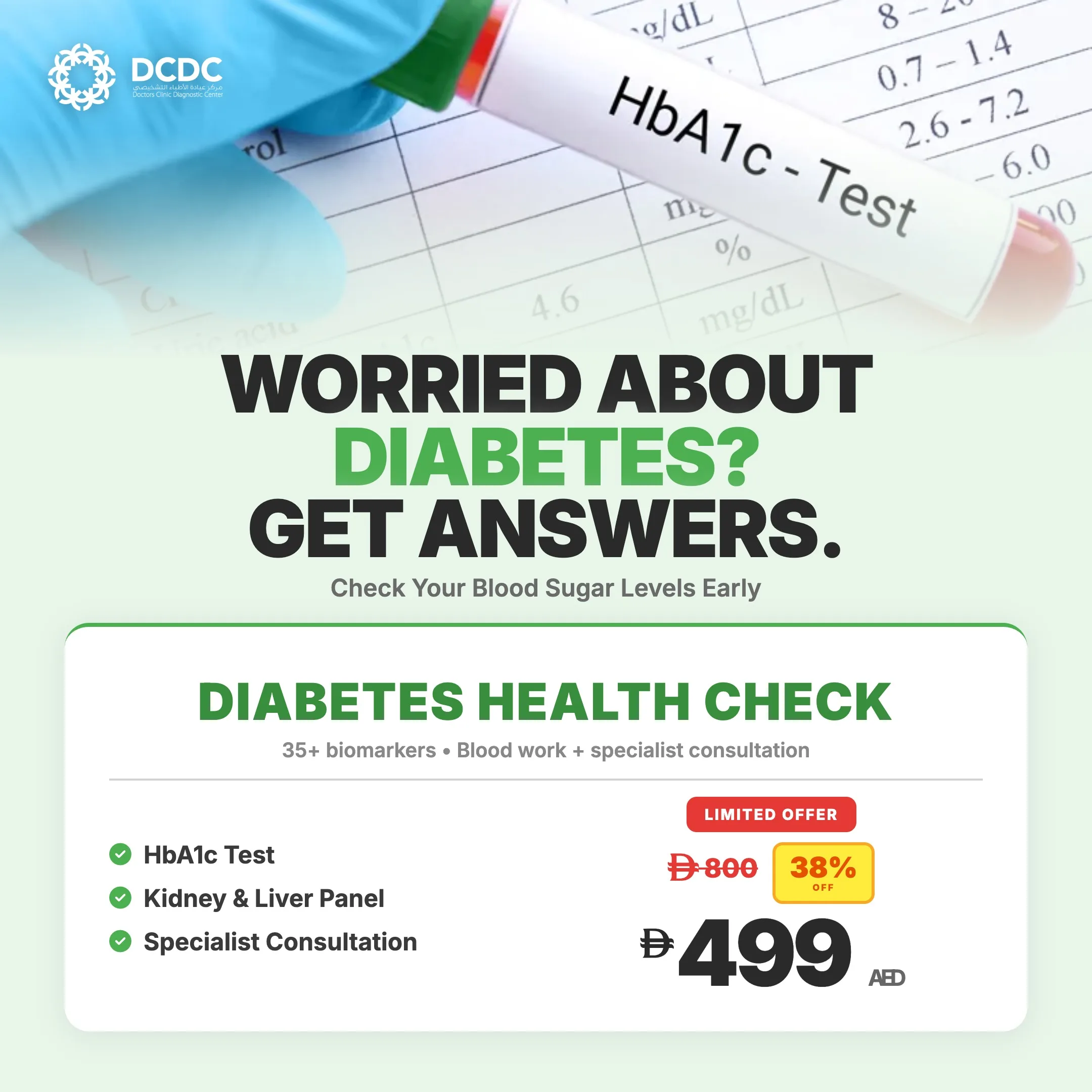
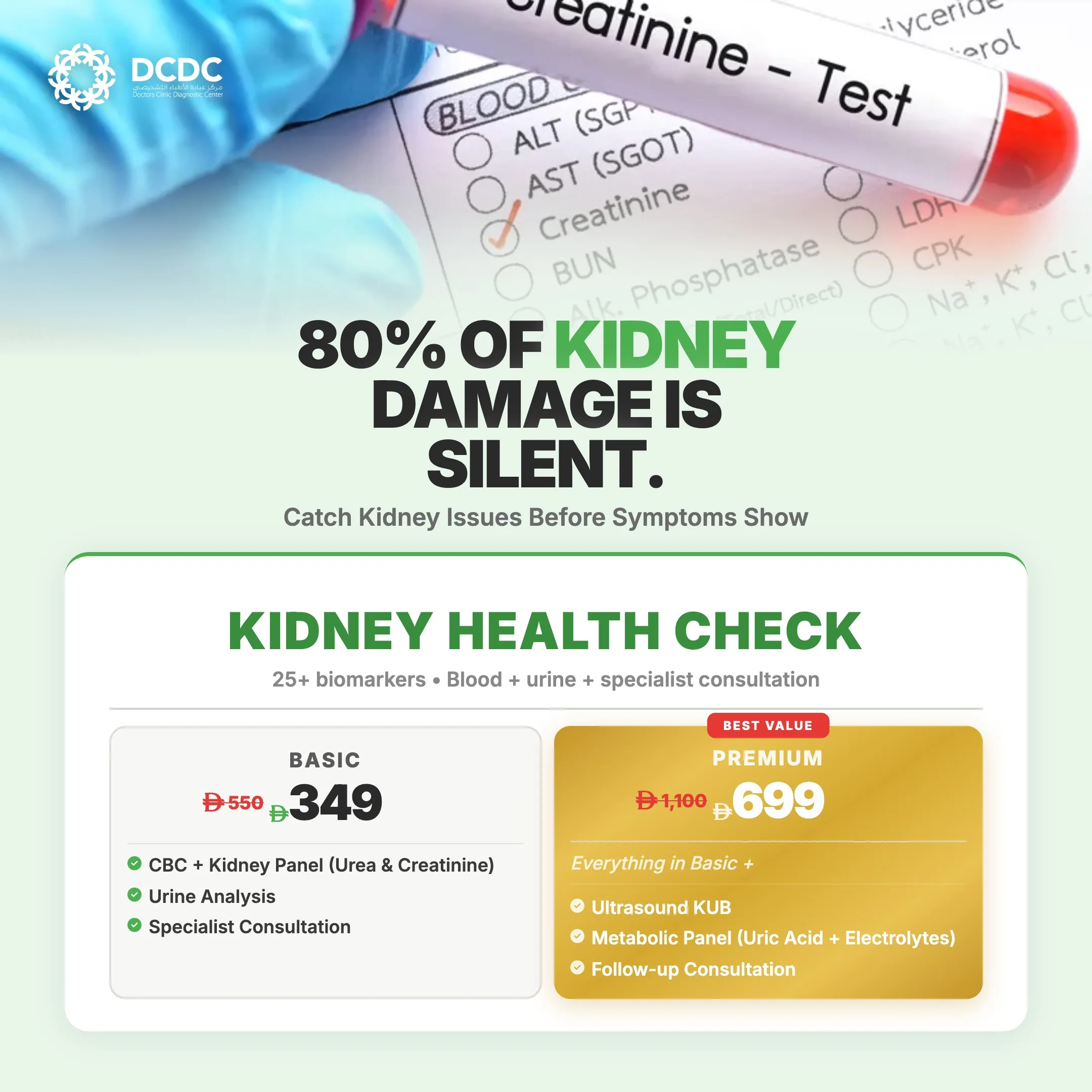
Save with our bundled screening packages — specialist consultation included




Understanding Diabetes: Type 1 vs Type 2
Diabetes occurs when the body cannot properly regulate blood glucose levels. Understanding the type of diabetes is essential because treatment approaches differ significantly.
Type 1 Diabetes
Type 1 diabetes is an autoimmune condition where the immune system destroys the insulin-producing beta cells in the pancreas. It typically develops in childhood or young adulthood and requires lifelong insulin therapy. Patients cannot survive without insulin. Type 1 accounts for approximately 5-10% of all diabetes cases.
Type 2 Diabetes
Type 2 diabetes is the most common form, accounting for 90-95% of cases. It develops when the body becomes resistant to insulin (insulin resistance) and the pancreas cannot produce enough insulin to overcome this resistance. Type 2 diabetes is strongly associated with excess weight, physical inactivity, and genetic predisposition. It is progressive — meaning it tends to worsen over time without active management — but can often be controlled and even put into remission with appropriate treatment.
Pre-Diabetes
Pre-diabetes is a condition where blood glucose levels are higher than normal but not yet high enough for a diabetes diagnosis (HbA1c 5.7-6.4% or fasting glucose 100-125 mg/dL). Without intervention, approximately 70% of pre-diabetic individuals will eventually develop type 2 diabetes. However, pre-diabetes is reversible with lifestyle changes and, in some cases, medication.
Why Diabetes Is So Common in Dubai
The International Diabetes Federation ranks the UAE among the top 10 countries globally for diabetes prevalence. Several factors contribute to this:
- Genetic predisposition: Middle Eastern, South Asian, and Iranian populations have a genetically higher risk of developing type 2 diabetes and insulin resistance compared to European populations
- Sedentary lifestyle: Dubai's car-dependent infrastructure, extreme summer heat limiting outdoor activity, and desk-bound work culture reduce daily physical activity significantly
- Dietary patterns: High consumption of refined carbohydrates, sugary beverages, processed foods, and large portion sizes — compounded by the social importance of food in Middle Eastern and South Asian cultures
- Obesity rates: Approximately 37% of UAE adults are overweight and 19% are obese. Visceral (abdominal) fat is the strongest modifiable risk factor for type 2 diabetes
- Stress and poor sleep: Chronic stress elevates cortisol, which increases insulin resistance. Irregular sleep patterns — common in Dubai — further disrupt glucose metabolism
- Late diagnosis: Type 2 diabetes is often asymptomatic in its early stages. Many patients are diagnosed only when complications have already developed, typically 5-10 years after the disease began
HbA1c: The Gold Standard for Diabetes Monitoring
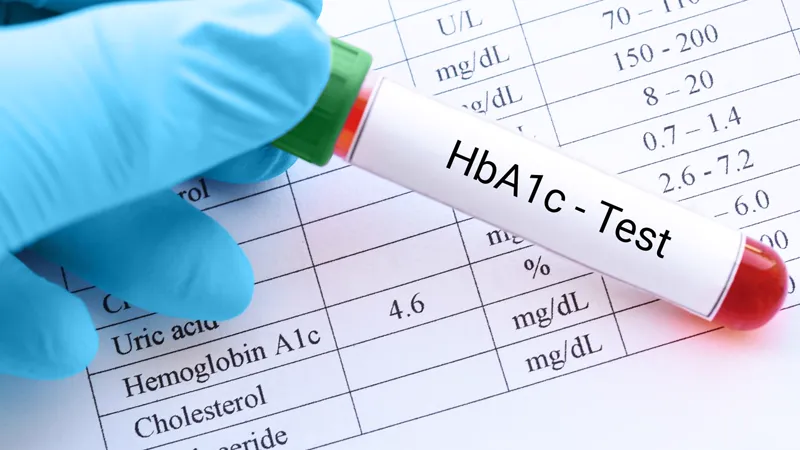
The HbA1c test (glycated haemoglobin) measures the percentage of haemoglobin in your red blood cells that has glucose attached to it. Because red blood cells live for approximately 120 days, HbA1c reflects your average blood sugar control over the previous 2-3 months — providing a much more accurate picture than a single fasting glucose reading.
| HbA1c Level | Category | What It Means |
|---|---|---|
| Below 5.7% | Normal | No diabetes or pre-diabetes |
| 5.7 - 6.4% | Pre-diabetes | Higher than normal — lifestyle intervention recommended to prevent progression |
| 6.5% or above | Diabetes | Diabetes diagnosis — requires management plan and regular monitoring |
| Below 7.0% | Target for most diabetics | Good control — significantly reduced complication risk |
| Above 8.0% | Suboptimal control | Treatment intensification needed — increased complication risk |
HbA1c interpretation guide
Dr. Hadi Komshi recommends HbA1c testing every 3 months for patients with diabetes, and at least annually for those at risk (family history, overweight, pre-diabetes history). The test is available at DCDC's laboratory with same-day results.
Insulin Resistance: The Early Warning Sign
Insulin resistance is a condition where your body's cells do not respond effectively to insulin, forcing the pancreas to produce more and more insulin to maintain normal blood sugar levels. It is the driving force behind metabolic syndrome and is present in the majority of type 2 diabetes patients years before their blood sugar levels become abnormal.
Signs of Insulin Resistance
- Increasing waist circumference (abdominal obesity) — the single strongest clinical sign
- Difficulty losing weight despite diet and exercise efforts
- Skin tags (small flesh-coloured growths, particularly on the neck and armpits)
- Acanthosis nigricans (darkened, velvety patches of skin on the neck, armpits, or groin)
- Fatigue after meals, particularly after carbohydrate-heavy meals
- Sugar and carbohydrate cravings
- Elevated triglycerides and low HDL cholesterol on blood tests
- Polycystic ovary syndrome (PCOS) in women — strongly linked to insulin resistance
Insulin resistance can be assessed through fasting insulin levels and the HOMA-IR calculation (Homeostatic Model Assessment of Insulin Resistance). Dr. Hadi Komshi screens for insulin resistance in patients with risk factors, enabling early intervention before diabetes develops.
Diabetes Treatment at DCDC
Dr. Hadi Komshi follows a structured, evidence-based approach to diabetes management that combines lifestyle modification with pharmacological treatment tailored to each patient's needs.
Lifestyle Management
- Dietary guidance: Personalised nutritional advice focusing on carbohydrate quality (not just quantity), glycaemic index awareness, portion control, and meal timing. Dr. Hadi provides culturally relevant guidance for Persian, Arabic, and South Asian diets
- Physical activity prescription: Structured exercise recommendations — at minimum 150 minutes per week of moderate-intensity aerobic activity plus resistance training, adapted to the patient's fitness level and Dubai's climate
- Weight management: For overweight type 2 diabetes patients, even 5-10% body weight loss can significantly improve insulin sensitivity and may reduce or eliminate the need for medication
- Stress and sleep optimisation: Addressing chronic stress and sleep deprivation — both of which worsen insulin resistance and glycaemic control
Medication Management
- Metformin: The first-line medication for type 2 diabetes. Reduces hepatic glucose production, improves insulin sensitivity, and has a proven safety track record spanning decades. Also used for pre-diabetes prevention in high-risk patients
- SGLT2 inhibitors: (Empagliflozin, dapagliflozin) Newer medications that reduce blood sugar by increasing glucose excretion through urine. They also provide significant cardiovascular and kidney protection — making them particularly valuable for diabetic patients with heart or kidney disease
- GLP-1 receptor agonists: (Semaglutide, liraglutide) Injectable medications that improve blood sugar control, promote significant weight loss, and reduce cardiovascular risk. Semaglutide (Ozempic/Wegovy) has gained particular attention for its dual blood sugar and weight management benefits
- DPP-4 inhibitors: (Sitagliptin, vildagliptin) Oral medications that enhance insulin secretion in response to meals. Well-tolerated with a low risk of hypoglycaemia
- Insulin therapy: Required for all type 1 diabetes patients and for type 2 diabetes patients whose blood sugar cannot be adequately controlled with oral/injectable medications alone. Dr. Hadi provides comprehensive insulin initiation, dose titration, and ongoing management
Diabetes Complication Screening
Diabetes affects virtually every organ system over time. Regular screening for complications is essential to detect problems early when they are most treatable. Dr. Hadi Komshi coordinates a comprehensive annual screening programme:
| Complication | Screening Test | Frequency |
|---|---|---|
| Diabetic retinopathy (eye damage) | Dilated eye examination / retinal photography | Annually |
| Diabetic nephropathy (kidney damage) | Urine albumin-to-creatinine ratio (ACR) + eGFR blood test | Annually |
| Diabetic neuropathy (nerve damage) | Clinical foot examination + monofilament testing | Annually |
| Cardiovascular disease | Lipid profile, blood pressure, ECG, echo if indicated | Annually or as indicated |
| Peripheral vascular disease | Ankle-brachial index (ABI) if symptoms present | As indicated |
| Thyroid dysfunction | TSH blood test (diabetes patients have higher thyroid disease risk) | Every 1-2 years |
Recommended annual diabetes complication screening
Why Choose DCDC for Diabetes Management?
- Multi-language consultations: Dr. Hadi Komshi speaks Persian, Arabic, and English — critical for the diverse Dubai population. Explaining complex diabetes management in a patient's native language improves understanding and adherence
- Integrated laboratory: HbA1c, fasting glucose, lipid profiles, kidney function tests, and all diabetes-related blood work performed on-site with same-day results
- Multi-specialty coordination: Direct referral pathways to cardiology (Dr. Shahoo Mazhari for cardiovascular screening), ophthalmology, and laboratory services within DCDC — no need to visit multiple clinics
- Culturally relevant dietary guidance: Understanding of Persian, Arabic, and South Asian dietary patterns enables practical, culturally appropriate nutritional advice rather than generic diet sheets
- Continuity of care: Same doctor at every visit, building a long-term relationship that is essential for chronic disease management
Book a Diabetes Consultation at DCDC
Dr. Hadi Komshi provides comprehensive diabetes management at DCDC Dubai Healthcare City. Consultations in Persian, Arabic, and English. Same-day lab results available.
Bring your most recent blood test results to your appointment if available.
Who Should Be Screened for Diabetes?
The American Diabetes Association recommends diabetes screening for all adults starting at age 35 and earlier for those with risk factors. Given the UAE's high prevalence, Dr. Hadi Komshi recommends screening for anyone who meets one or more of the following criteria:
- Age 35 or older (regardless of other risk factors)
- Overweight or obese (BMI 25 kg/m2 or above, or 23 kg/m2 for Asian populations)
- Family history of diabetes (parent or sibling with type 2 diabetes)
- Middle Eastern, South Asian, or Iranian ethnic background (genetically higher risk)
- History of gestational diabetes during pregnancy
- Polycystic ovary syndrome (PCOS)
- High blood pressure (140/90 mmHg or above)
- Abnormal cholesterol (high triglycerides or low HDL)
- Previous pre-diabetes diagnosis
- Physical inactivity (less than 150 minutes of exercise per week)
Verwandte Leistungen im DCDC
Fachkundige Betreuung und moderne Diagnostik in Dubai Healthcare City
Frequently Asked Questions
Expert Diabetes Care in Your Language
Diabetes is a condition that responds remarkably well to proper management. The difference between well-controlled diabetes (with minimal complication risk) and poorly controlled diabetes (with progressive damage to eyes, kidneys, nerves, and heart) often comes down to having the right specialist, the right monitoring schedule, and the right treatment plan.
At DCDC Healthcare City, Dr. Hadi Komshi provides the personalised, continuous diabetes care that this condition demands. His ability to consult in Persian, Arabic, and English means that complex diabetes management discussions — about medication changes, insulin dosing, dietary modifications, and complication screening — are conducted in the language you understand best.
Whether you are newly diagnosed, struggling with blood sugar control, concerned about insulin resistance, or due for your annual diabetes screening, book a consultation at DCDC today. Same-day laboratory results are available, so your first visit can be both diagnostic and therapeutic.
Quellen und Referenzen
Dieser Artikel wurde von unserem medizinischen Team überprüft und bezieht sich auf folgende Quellen:
- International Diabetes Federation (IDF) — Diabetes Atlas 10th Edition 2024, UAE Country Profile
- American Diabetes Association (ADA) — Standards of Care in Diabetes 2025
- UK Prospective Diabetes Study (UKPDS) — Intensive blood-glucose control reduces microvascular complications. Lancet. 1998
- Davies MJ et al. Management of hyperglycaemia in type 2 diabetes: ADA/EASD consensus report. Diabetes Care. 2022
- UAE Ministry of Health and Prevention — National Diabetes Prevention Programme 2024
Medizinische Inhalte auf dieser Website werden von DHA-lizenzierten Ärzten überprüft. Siehe unsere redaktionelle Richtlinien für weitere Informationen.

Verfasst von
Dr. Hadi Komshi
Specialist Internal Medicine
MD
Dr. Hadi Komshi is a DHA-licensed Specialist in Internal Medicine at DCDC Dubai Healthcare City. He provides comprehensive diabetes management, thyroid care, hypertension treatment, and general health screening in Persian, Arabic, and English.
Related Articles
HbA1c Test in Dubai: Complete Guide

Insulin Resistance: Signs and Treatment

Type 1 vs Type 2 Diabetes: Key Differences
Pre-Diabetes Prevention in Dubai

Best Iranian Doctors in Dubai at DCDC
Diabetes Test Cost in Dubai
More in Internal Medicine

Bloating Causes & Treatment in Dubai (2026)
WeiterlesenAnemia Treatment Dubai: Types & Causes (2026)
Weiterlesen
Chronic Fatigue Causes Dubai: Why Always Tired (2026)
WeiterlesenIBS vs Food Intolerance Dubai: Which Is It? (2026)
WeiterlesenBest Internal Medicine Doctor in Dubai: Dr. Hadi Komshi at DCDC (2026)
Weiterlesen
Internal Medicine Doctor in Dubai Healthcare City: Dr. Hadi Komshi (2026)
Weiterlesen© 2026 Doctors Clinic Diagnostic Center (DCDC), Dubai Healthcare City. Originally published at https://doctorsclinicdubai.ae/blog/diabetes-specialist-dubai. All rights reserved. Unauthorized reproduction is prohibited.