Key Takeaways
- A CT angiogram is a non-invasive scan that creates 3D images of your coronary arteries in minutes, with 95-99% sensitivity for detecting blockages and a 99% negative predictive value
- Preparation is critical: avoid caffeine 24-48 hours before, fast 4-6 hours, and achieve a resting heart rate below 65 bpm for optimal image quality
- The scan itself takes only 10-15 seconds of active imaging during a single breath hold, with the entire visit lasting 30-60 minutes
- Results classify blockages by stenosis percentage (mild <50%, moderate 50-69%, severe 70%+) and plaque type (soft plaque carries higher rupture risk than calcified plaque)
- CT angiogram radiation dose is very low (1-5 mSv with modern protocols), equivalent to 6-12 months of natural background radiation
- Studies show CT angiography can spare up to 60% of patients from unnecessary invasive catheterization through the "gateway approach"
A CT angiogram (coronary CT angiography) is one of the most powerful non-invasive tools in modern cardiology. In under a minute, it creates detailed 3D images of your heart arteries, detecting blockages, plaque buildup, and structural abnormalities without the risks of traditional catheter-based angiography.
This comprehensive guide covers everything you need to know: what a CT angiogram is and how it works, who needs one, how to prepare, what happens during and after the procedure, how to understand your results, the safety profile, and how CT angiography compares to catheter angiograms and stress tests. We also cover the role of CT in early coronary artery disease detection and prevention.
What Is a CT Angiogram?
A CT angiogram, also called coronary CT angiography (CCTA), is a specialized CT scan that uses contrast dye and advanced ECG-gated imaging technology to create highly detailed, three-dimensional images of the coronary arteries and heart chambers. At DCDC, our CT angiogram service uses ECG-gated technology where the scanner captures images synchronized to your heartbeat, ensuring each image is taken at the precise moment when the heart is most still.
The resulting 3D reconstruction allows the radiologist and cardiologist to virtually "fly through" your coronary arteries, examining them from every angle. This level of detail reveals not just the degree of narrowing (stenosis), but also the composition and vulnerability of any plaque deposits.
What Does a CT Angiogram Show?
- Coronary artery blockages: Detects narrowing from 0-100% in all major coronary arteries (LAD, LCx, RCA, Left Main)
- Plaque composition: Distinguishes between calcified (hard) plaque, non-calcified (soft) plaque, and mixed plaque, each with different risk profiles
- Non-obstructive disease: Identifies early plaque buildup (less than 50% stenosis) that stress tests typically cannot detect
- Coronary anatomy: Reveals anomalous coronary arteries, myocardial bridging, and other structural variants
- Heart chamber size and function: Assesses ventricular size, wall motion, and ejection fraction
- Bypass graft and stent patency: Evaluates whether previous bypass grafts or stents remain open
- Calcium score: Can be measured simultaneously, quantifying calcified plaque burden
When Do You Need a CT Angiogram? Key Indications
Coronary artery disease develops silently for decades. Approximately 50% of heart attacks occur in people who had no prior symptoms. CT angiography is recommended in the following situations.
1. Unexplained Chest Pain
If you experience chest tightness, pressure, or pain that could be cardiac in nature but is not acute enough for emergency intervention, a CT angiogram can quickly determine whether coronary artery disease is the cause. Its 99% negative predictive value means a normal CT angiogram virtually rules out significant coronary disease. Your first step should be a cardiology consultation to assess your symptoms and determine whether imaging is indicated.
2. Shortness of Breath with Exertion
Unexplained breathlessness during physical activity may indicate reduced blood flow to the heart muscle. CT angiography can identify whether coronary artery narrowing is contributing.
3. Strong Family History of Heart Disease
If a first-degree relative (parent, sibling) had a heart attack or coronary artery disease before age 55 (men) or 65 (women), you may benefit from screening CT angiography even without symptoms.
4. Diabetes with Hypertension or Other Risk Factors
Diabetes increases cardiovascular risk by 2-4 times. When combined with hypertension, elevated cholesterol, or smoking, the risk compounds significantly. CT angiography can detect silent disease in these high-risk individuals.
5. Abnormal or Inconclusive Stress Test Results
Stress tests have a significant false positive and false negative rate. CT angiography can definitively clarify inconclusive stress test findings and is increasingly used as a first-line investigation instead of stress testing.
6. Post-Stent or Post-Bypass Follow-Up
CT angiography can assess whether bypass grafts remain patent and whether stents show signs of restenosis, without requiring an invasive catheter procedure.
7. Executive Health Screening
For men over 45 and women over 55 with multiple risk factors, a CT angiogram (often starting with a calcium score) provides the most comprehensive non-invasive assessment of coronary artery health. Dubai's population includes elevated cardiovascular risk groups, particularly South Asian and Middle Eastern demographics.
| Indication | Primary Goal | Urgency |
|---|---|---|
| Unexplained chest pain (stable) | Rule out coronary artery disease | Within 1-2 weeks |
| Inconclusive stress test | Clarify findings with anatomical detail | Within 2-4 weeks |
| Strong family history (asymptomatic) | Screening for silent disease | Elective |
| Diabetes + multiple risk factors | Risk stratification | Elective |
| Post-stent / post-bypass monitoring | Assess graft/stent patency | As scheduled |
| Executive health screening | Comprehensive cardiovascular assessment | Elective |
| Shortness of breath on exertion | Evaluate coronary contribution | Within 2-4 weeks |
| Age 45+ with new risk factors | Baseline cardiovascular assessment | Elective |
Common indications for CT angiography and their typical urgency.
How to Prepare for Your CT Angiogram: Complete Checklist
Proper preparation is essential for a successful CT angiogram. Unlike many other imaging tests, coronary CT angiography requires specific steps in the days and hours before your appointment.
48 Hours Before: Eliminate Caffeine
Caffeine is the most common reason for suboptimal CT angiogram images. Stop all caffeine sources 24-48 hours before your scan: coffee, tea, energy drinks, chocolate, cola, and decaf coffee (which still contains small amounts). A patient once arrived for his scan having had his usual morning espresso. His resting heart rate was 92 bpm despite beta-blockers. The scan had to be rescheduled, adding cost and delay.
Review Your Medications
Continue taking all prescribed medications (including blood pressure and diabetes medications) with water unless specifically instructed otherwise. If you take metformin for diabetes, your doctor may ask you to pause it for 48 hours after the scan due to contrast dye interaction with kidney function. Bring a complete list of your current medications to your appointment.
The Day Before
- Drink plenty of water to stay well hydrated (helps kidney function and IV access)
- Avoid alcohol (can affect heart rate)
- Confirm your appointment time and location
- Prepare comfortable, loose clothing without metal fasteners
- Set aside your Emirates ID, insurance card, and referral letter
- Have a light dinner (avoid heavy, fatty meals)
On the Day: Fasting and What to Bring
Fast for 4-6 hours before the scan. You may drink plain water. Take your regular medications with water. Remove all metal jewellery, watches, and bras with underwire before the scan. Bring your referral letter, previous cardiac test results, and insurance documents.
Heart Rate Target: Why Below 65 BPM Matters
The coronary arteries move with every heartbeat. A slower heart rate means longer rest periods between beats, giving the scanner more time to capture sharp images. The target is a resting heart rate below 65 bpm (ideally below 60 bpm). If your heart rate is above this threshold when you arrive, the medical team may administer oral or IV beta-blockers (such as metoprolol) to lower it. This is safe and standard practice.
Kidney Function and Allergy Considerations
A blood test for creatinine/eGFR (kidney function) should be done within 3 months before the scan. Contrast dye is processed through the kidneys, and impaired kidney function may require special precautions or an alternative approach. If you have a known iodine or contrast dye allergy, inform your doctor in advance. Pre-medication with antihistamines and steroids is effective for most contrast-allergic patients.
| Timing | Action |
|---|---|
| 48 hours before | Stop all caffeine sources (coffee, tea, energy drinks, chocolate, cola) |
| 48 hours before | Review medications with your doctor; note metformin instructions |
| 24 hours before | Stay well hydrated; avoid alcohol |
| Day before | Prepare documents, comfortable clothing; light dinner |
| 6 hours before | Begin fasting (water is permitted) |
| Morning of scan | Take regular medications with water; remove metal jewellery |
| 30-45 min before | Arrive at clinic for check-in and vitals |
| At clinic | Heart rate check; beta-blocker given if HR above 65 bpm |
| At clinic | IV line placed; sublingual nitroglycerin given to dilate arteries |
| Scan time | Breath-hold practice; scan takes 10-15 seconds |
CT angiogram preparation timeline.
Book Your CT Angiogram at DCDC Dubai
Our cardiac imaging team provides detailed preparation guidance at booking. We ensure every patient is optimally prepared for the best possible image quality. Schedule your CT angiogram at DCDC Dubai Healthcare City.
The CT Angiogram Procedure: Step by Step
Step 1: Check-In and Vital Signs
Arrive 30-45 minutes before your scan time. A nurse will record your blood pressure, heart rate, and confirm your medical history and allergies. If your heart rate is above 65 bpm, oral or IV beta-blockers will be administered.
Step 2: IV Line and Contrast Preparation
A small IV cannula is placed in your arm (typically the antecubital vein in the elbow crease). This is connected to a power injector that will deliver iodine-based contrast dye during the scan. You may also receive sublingual nitroglycerin (a spray or tablet under the tongue) to temporarily dilate your coronary arteries for better visualization.
Step 3: Positioning and Breath-Hold Practice
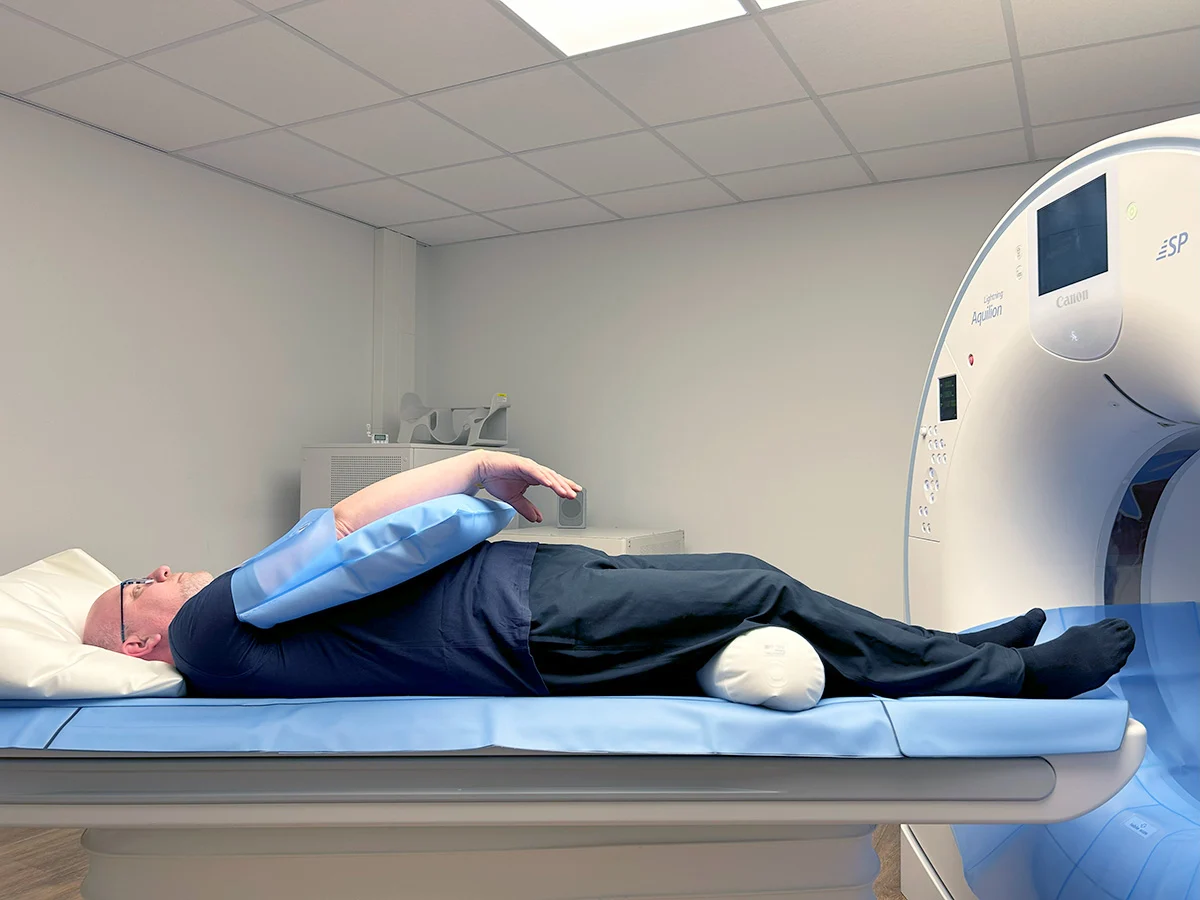
You lie on the CT table on your back with ECG leads attached to your chest. The technician will practice the breath-hold command with you: take a deep breath in, hold it for approximately 10-15 seconds, then breathe normally. This practice ensures you can hold still during the actual scan.
Step 4: The Scan
The contrast dye is injected through the IV at a precise rate using a power injector. You may feel a warm flush throughout your body and a brief metallic taste in your mouth; these are completely normal. The table slides through the scanner, and the actual imaging takes only 10-15 seconds during your breath hold. Some protocols include a preliminary non-contrast calcium score scan first.
Step 5: Completion and Recovery
The IV is removed, and you rest briefly while the technician confirms image quality. If images are adequate, you are free to leave within 15-30 minutes. You can drive yourself home, eat normally, and resume all activities immediately. Drink extra water for 24-48 hours to help flush the contrast dye through your kidneys.
| Stage | Duration | What Happens |
|---|---|---|
| Check-in and vitals | 10-15 min | BP, heart rate, medical history review |
| Beta-blocker (if needed) | 15-30 min | Oral or IV medication to lower heart rate |
| IV placement | 5 min | Cannula inserted, nitroglycerin given |
| Positioning and practice | 5 min | ECG leads attached, breath-hold rehearsal |
| Calcium score (optional) | 5 min | Non-contrast scan measuring calcified plaque |
| CT angiogram scan | 10-15 seconds | Contrast injected, breath hold, scan acquired |
| Post-scan rest | 10-15 min | Image quality confirmed, IV removed |
| Total visit time | 45-90 min | From arrival to departure |
The actual scan takes only 10-15 seconds; the total visit is typically under 90 minutes.
A 60-year-old woman was extremely anxious about her CT angiogram, having avoided cardiac testing for years due to fear. She later told us: "I could not believe how quick and easy it was. The IV was the only thing I felt, and the scan itself was over before I could even start worrying. I wish I had done it years ago."
Understanding Your CT Angiogram Results
After the scan, the radiologist processes the raw data using specialized 3D reconstruction software, analyzing each coronary artery segment by segment. A detailed written report is typically available within 24 hours.
Stenosis Grading: How Blockages Are Classified
| Stenosis Grade | Narrowing | Clinical Significance | Typical Next Step |
|---|---|---|---|
| Normal | 0% | No plaque detected | Reassurance; repeat screening based on risk factors |
| Minimal | 1-24% | Very early plaque; not flow-limiting | Lifestyle modifications; statin discussion |
| Mild | 25-49% | Non-obstructive disease; stress tests usually normal | Aggressive risk factor management; medical therapy |
| Moderate | 50-69% | Potentially significant; may need functional testing | Stress test or fractional flow reserve to assess blood flow impact |
| Severe | 70-99% | Likely flow-limiting; high risk | Cardiology consultation; possible catheterization/stenting |
| Total occlusion | 100% | Complete blockage; collateral vessels may have formed | Urgent cardiology evaluation; PCI or CABG assessment |
Stenosis classification from the Society of Cardiovascular CT (SCCT).
Plaque Types: Why Composition Matters More Than Percentage
Not all plaque is equal. The type of plaque in your arteries significantly affects your risk, sometimes more than the degree of narrowing itself.
- Calcified (hard) plaque: Dense, stable deposits visible as bright white on CT. While they indicate established disease, calcified plaque is relatively stable and less likely to rupture suddenly. Responds well to statin therapy
- Non-calcified (soft) plaque: Fatty deposits that appear as darker areas within the artery wall. Soft plaque carries a higher risk of rupture, which can trigger an acute heart attack. This is the "vulnerable plaque" that cardiologists are most concerned about. CT angiography is unique in its ability to detect soft plaque non-invasively
- Mixed plaque: Contains both calcified and non-calcified components. Treatment depends on the proportion of each type and the overall plaque burden
A 44-year-old runner had a normal stress test but persistent atypical chest discomfort. His CT angiogram revealed a non-calcified (soft) plaque in the LAD artery causing only 40% stenosis, well below the threshold that stress tests can detect. This finding was clinically significant because soft plaque carries a higher rupture risk. His cardiologist started aggressive medical therapy with statins, which stabilize vulnerable plaque. Had he relied solely on the stress test, this dangerous soft plaque would have gone undetected.
Other Important Terms in Your Report
- Plaque burden: The total amount of plaque across all coronary segments, regardless of stenosis severity
- Positive remodeling: The artery wall expands outward to accommodate plaque, maintaining the internal channel size. Plaque exists but is not yet causing narrowing
- Anomalous coronary artery: A coronary artery that takes an unusual path from its origin, which may be clinically significant in some configurations
- Non-diagnostic segment: A portion of an artery that could not be clearly assessed, usually due to motion artifact or heavy calcification
What Happens After You Receive Your Results
| Result Category | Recommended Action |
|---|---|
| Normal (no plaque) | Lifestyle maintenance; screening interval based on risk level |
| Non-obstructive disease (<50%) | Medical therapy (statins, BP control); lifestyle optimization; annual cardiology review |
| Moderate stenosis (50-69%) | Functional stress testing to assess blood flow impact; possible catheterization |
| Severe stenosis (70%+) | Cardiology referral for catheterization assessment; PCI or CABG discussion |
General management pathway based on CT angiogram findings.
A 55-year-old businessman was anxious after his CT angiogram showed 50% stenosis in his LAD artery. His cardiologist reassured him that 50% stenosis is classified as moderate, not typically requiring immediate intervention. A follow-up stress test confirmed normal blood flow. He was started on statin therapy and lifestyle modifications, with a repeat CT angiogram scheduled in 2 years to monitor progression.
CT Angiogram Safety: Radiation, Contrast Dye, and Risks
CT angiography is classified by the ACC and ESC as a low-risk, non-invasive procedure. Understanding the actual risk profile helps you make an informed decision.
Radiation Dose in Perspective
| Radiation Source | Dose (mSv) |
|---|---|
| Single chest X-ray | 0.02 |
| Round-trip flight Dubai to London | 0.1 |
| Annual natural background radiation (UAE) | 2-3 |
| Screening mammogram | 0.4 |
| CT angiogram (modern low-dose protocol) | 1-5 |
| CT abdomen/pelvis | 10-15 |
| Traditional catheter angiogram | 5-15 |
| Nuclear stress test | 10-15 |
Modern CT angiogram protocols deliver radiation equivalent to approximately 6-12 months of natural background radiation.
DCDC uses modern low-dose CT protocols including prospective ECG-gating (scanning only during the quiet phase of the heartbeat), iterative reconstruction algorithms, automatic tube current modulation, and wide-detector coverage that acquires the entire heart in a single rotation.
Contrast Dye Side Effects
- Common and mild (5-10%): Warm flush, metallic taste, brief nausea. These resolve within minutes and are not allergic reactions
- Uncommon moderate reactions (<1%): Hives, mild skin rash, itching. Treated with antihistamines
- Rare severe reactions (<0.01%): Anaphylaxis (difficulty breathing, swelling). Emergency protocols are in place at all imaging centers
Who Should NOT Have a CT Angiogram?
- Pregnant women (radiation risk to fetus)
- Severe kidney disease (eGFR below 30) without dialysis access
- Severe untreated contrast dye allergy (pre-medication protocol may allow safe scanning)
- Highly irregular heart rhythms (atrial fibrillation) that prevent ECG-gating
- Inability to hold breath for 10-15 seconds
A 48-year-old patient had a known history of mild contrast allergy (hives) from a previous CT scan. At DCDC, he underwent a pre-medication protocol with oral steroids and antihistamines 12 hours and 2 hours before the scan. The CT angiogram was completed without any allergic reaction, and it revealed early plaque in his LAD that required preventive treatment.
CT Angiogram vs. Traditional Catheter Angiogram
Traditional catheter angiography (also called invasive coronary angiography or cardiac catheterization) has been the standard for coronary artery assessment for decades. CT angiography has emerged as a powerful non-invasive alternative that can often replace catheterization entirely.
| Feature | CT Angiogram | Catheter Angiogram |
|---|---|---|
| Invasiveness | Non-invasive (IV contrast only) | Invasive (catheter through groin or wrist artery) |
| Procedure time | 10-15 seconds scan; 45-90 min total visit | 30-60 minutes; 2-4 hours with recovery |
| Anaesthesia | None required | Local anaesthesia; mild sedation |
| Recovery | Immediate; drive home same day | 4-6 hours bed rest; no driving 24 hours |
| Hospital stay | Outpatient only | Day case or overnight |
| Radiation dose | 1-5 mSv | 5-15 mSv |
| Sensitivity | 95-99% | 100% (reference standard) |
| Negative predictive value | 99% | 100% |
| Can treat during test? | No (diagnostic only) | Yes (stenting can be done immediately) |
| Major complication risk | Very rare (<0.01%) | Low but higher (0.1-0.5%): stroke, vessel damage, bleeding |
| Plaque characterization | Excellent (soft, calcified, mixed) | Limited (sees only the lumen, not the artery wall) |
| Cost in Dubai | AED 2,500-5,000 | AED 15,000-25,000 (diagnostic only); AED 25,000-35,000+ with stenting |
CT angiogram provides a non-invasive alternative with near-equivalent diagnostic accuracy at a fraction of the cost.
The Gateway Approach: Start with CT
International guidelines increasingly support using CT angiography as the "gateway" to catheterization. Clinical trials have shown that starting with CT angiography can spare up to 60% of patients from invasive catheterization entirely. Only those whose CT shows significant disease proceed to catheterization, where treatment (stenting) can be performed in the same session. This approach reduces unnecessary procedures, complications, cost, and patient anxiety.
A 52-year-old man was referred for catheter angiography based on borderline stress test results. He sought a second opinion and had a CT angiogram at DCDC first. The CT showed completely normal coronary arteries with no plaque whatsoever. The invasive catheterization was cancelled, sparing him the risks, recovery time, and approximately AED 20,000 in costs.
CT Angiogram vs. Stress Test: Anatomy vs. Function
CT angiograms and stress tests answer fundamentally different questions. A CT angiogram shows the anatomy of your coronary arteries (structure, plaque, narrowing). A stress test measures function (how well blood flows to the heart during exertion). Both provide valuable but different information.
| Feature | CT Angiogram | Stress Test |
|---|---|---|
| What it measures | Anatomy: artery structure, plaque, narrowing | Function: blood flow during exercise or pharmacological stress |
| Information type | Structural (detailed coronary images) | Physiological (ECG changes, blood pressure response, symptoms) |
| Duration | 10-15 seconds scan | 30-60 minutes total |
| Physical exertion | None | Required (treadmill) or pharmacological substitute |
| Contrast dye | Yes (IV iodine-based) | No (except nuclear stress tests) |
| Sensitivity | 95-99% | 70-85% (ECG) / 85-90% (nuclear) |
| Detects early disease (<50%) | Yes | No (usually requires 70%+ stenosis for positive result) |
| Exercise capacity assessment | No | Yes (valuable prognostic information) |
| Calcium scoring | Yes (can be done simultaneously) | No |
| Cost in Dubai (AED) | 2,500-5,000 | ECG stress: 1,000-2,000 / Nuclear: 3,000-6,000 |
CT angiogram and stress tests answer different questions and are often complementary.
When to choose a CT angiogram: Low-to-intermediate risk patients, atypical symptoms, ruling out CAD, young patients, strong family history, inconclusive stress test, when detailed plaque information is needed. When to choose a stress test: Assessing exercise capacity, evaluating known CAD severity, functional assessment of moderate stenosis found on CT, monitoring treatment response.
CT Angiography and Early Detection of Coronary Artery Disease
The most dangerous aspect of coronary artery disease is its silence. Through a process called "positive remodeling," arteries expand outward to accommodate growing plaque, maintaining normal blood flow even as disease progresses. This means stress tests remain normal until blockages exceed approximately 70%. By that point, significant disease has been present for years or decades.
CT angiography is uniquely capable of detecting early, non-obstructive coronary artery disease. It can identify plaque buildup at the 10-20% stenosis stage, years before symptoms or stress test abnormalities develop. This early detection enables preventive treatment with statins (which stabilize and can shrink plaque), blood pressure optimization, lifestyle modifications, and targeted diabetes management.
A 47-year-old South Asian businessman in Dubai had no cardiac symptoms. However, given his ethnicity (South Asians have elevated cardiovascular risk), his family history, and borderline cholesterol levels, his doctor recommended a screening CT angiogram. The scan revealed significant non-obstructive plaque in two coronary arteries. He was started on statin therapy and aggressive lifestyle modifications. His cardiologist estimated that early intervention likely prevented a major cardiac event within the next 5-10 years.
The Calcium Score as a Screening Starting Point
For patients at intermediate cardiovascular risk, a coronary calcium score test (AED 800-1,500) provides an excellent, low-cost first step. A calcium score of 0 indicates very low risk and may defer the need for full CT angiography. A score above 100 strongly supports proceeding to CT angiography for detailed coronary assessment. For detailed cost information, visit our CT angiogram cost guide.
CT Angiogram at DCDC Dubai Healthcare City
At Doctors Clinic Diagnostic Center in Dubai Healthcare City, our cardiac CT angiography service combines advanced imaging technology with experienced specialist interpretation. Our approach ensures every patient receives the most accurate diagnostic information with the lowest possible radiation dose.
- Modern CT scanner with cardiac-optimized low-dose protocols
- ECG-gated acquisition for motion-free coronary images
- Experienced consultant radiologists specializing in cardiac imaging
- Comprehensive preparation guidance from the moment you book
- Detailed 3D reconstructions and written reports within 24 hours
- Direct communication with your referring cardiologist for seamless care coordination
- Competitive, transparent pricing with insurance support
Getting Your Results
After your CT angiogram, the radiologist processes the images using 3D reconstruction software, meticulously analyzing each coronary artery segment. A detailed written report is typically available within 24 hours and is shared directly with your referring cardiologist. For urgent cases, preliminary findings can be communicated on the same day.
Book Your CT Angiogram at DCDC
Our cardiac imaging team performs CT angiograms with diagnostic accuracy and patient comfort as top priorities. We offer comprehensive preparation guidance and rapid reporting. Book your CT angiogram at DCDC Dubai Healthcare City.
Or contact us for preparation instructions, pricing, and insurance assistance.
Related Services at DCDC
Expert care and advanced diagnostics at Dubai Healthcare City
Frequently Asked Questions
Final Thoughts
CT angiography has transformed cardiac diagnostics by providing near-equivalent accuracy to invasive catheterization without the associated risks, recovery time, or cost. Whether you are investigating chest symptoms, following up on abnormal tests, screening for silent disease, or monitoring previous treatments, a CT angiogram delivers comprehensive information in minutes.
Proper preparation, including caffeine avoidance and heart rate optimization, is the single most important factor in image quality. Following the checklist in this guide ensures you get the most accurate results possible from a single scan.
At Doctors Clinic Diagnostic Center in Dubai Healthcare City, we combine advanced cardiac imaging technology with experienced specialist interpretation and comprehensive patient support. For pricing and insurance details, visit our CT angiogram cost guide. For calcium score testing information, see our calcium score guide.
Sources & References
This article was reviewed by our medical team and references the following sources:
- American College of Cardiology / American Heart Association - Coronary CT Angiography Guidelines
- European Society of Cardiology - Non-Invasive Coronary Imaging Guidelines
- Society of Cardiovascular Computed Tomography - CCTA Reporting Standards
- NICE Guidelines - Chest Pain of Recent Onset (Updated 2024)
- Agatston AS, et al. - Quantification of Coronary Artery Calcium Using Ultrafast CT. JACC 1990
- MESA (Multi-Ethnic Study of Atherosclerosis) - Calcium Score Reference Data
Medical content on this site is reviewed by DHA-licensed physicians. See our editorial policy for more information.

Written by
Dr. Osama Elzamzami
Consultant Radiologist
MD, Radiology
Dr. Osama Elzamzami is a Consultant Radiologist with over 13 years of experience specializing in cardiac imaging including CT angiography, calcium scoring, and coronary assessment at DCDC Dubai Healthcare City.
Related Articles
CT Angiogram Cost in Dubai: Pricing Guide
Calcium Score Test: What Your Score Means

Heart Health & Prevention in Dubai
More in Cardiology
ECG Cost in Dubai: From AED 200 (2026)
Read More
Echo at Home Dubai: From AED 799 (2026)
Read MoreECG at Home Dubai: Cost & What to Expect (2026)
Read More
Holter Monitor vs ECG Dubai: Which Test? (2026)
Read More
Cardiac Rehabilitation Dubai: Recovery (2026)
Read More
Troponin Test Dubai: Heart Attack Marker (2026)
Read More© 2026 Doctors Clinic Diagnostic Center (DCDC), Dubai Healthcare City. Originally published at https://doctorsclinicdubai.ae/blog/how-to-prepare-ct-angiogram. All rights reserved. Unauthorized reproduction is prohibited.