نکات کلیدی
- Tumor markers are NOT reliable screening tests for cancer in healthy, asymptomatic people — they produce too many false positives and miss too many actual cancers
- The only tumor marker with a recognised screening role is PSA for prostate cancer, and even that requires shared decision-making due to the risks of overdiagnosis
- Tumor markers are most valuable for monitoring known cancers — tracking treatment response, detecting recurrence, and guiding therapy decisions
- A complete blood count (CBC) may show indirect signs suggesting cancer — low white cells, low platelets, or unexplained anaemia — but cannot diagnose cancer on its own
- Liquid biopsy is an emerging technology that detects circulating tumor DNA in blood and may eventually enable multi-cancer screening, but it is not yet standard clinical practice
One of the most common questions patients ask their doctors is: "Can a blood test tell me if I have cancer?" The answer is more nuanced than most people expect. While blood tests play an important role in cancer care, they are not the magic bullet for cancer detection that many hope — and many wellness clinics advertise. Tumor markers like PSA, CA-125, CEA, and AFP are proteins or substances that can be elevated in the blood of some cancer patients. But they can also be elevated in dozens of non-cancer conditions, and they frequently miss actual cancers entirely. Understanding what these tests can and cannot do is essential for making informed decisions about your health and avoiding unnecessary anxiety from misleading "cancer blood panels." Book at DCDC.
This guide provides a detailed, evidence-based explanation of every common tumor marker, what each one tests for, why doctors order them, and — critically — why most are NOT recommended for screening in healthy people. We also cover how a routine complete blood count (CBC) can sometimes provide indirect clues about cancer, and look at the emerging field of liquid biopsy that may eventually transform cancer screening.
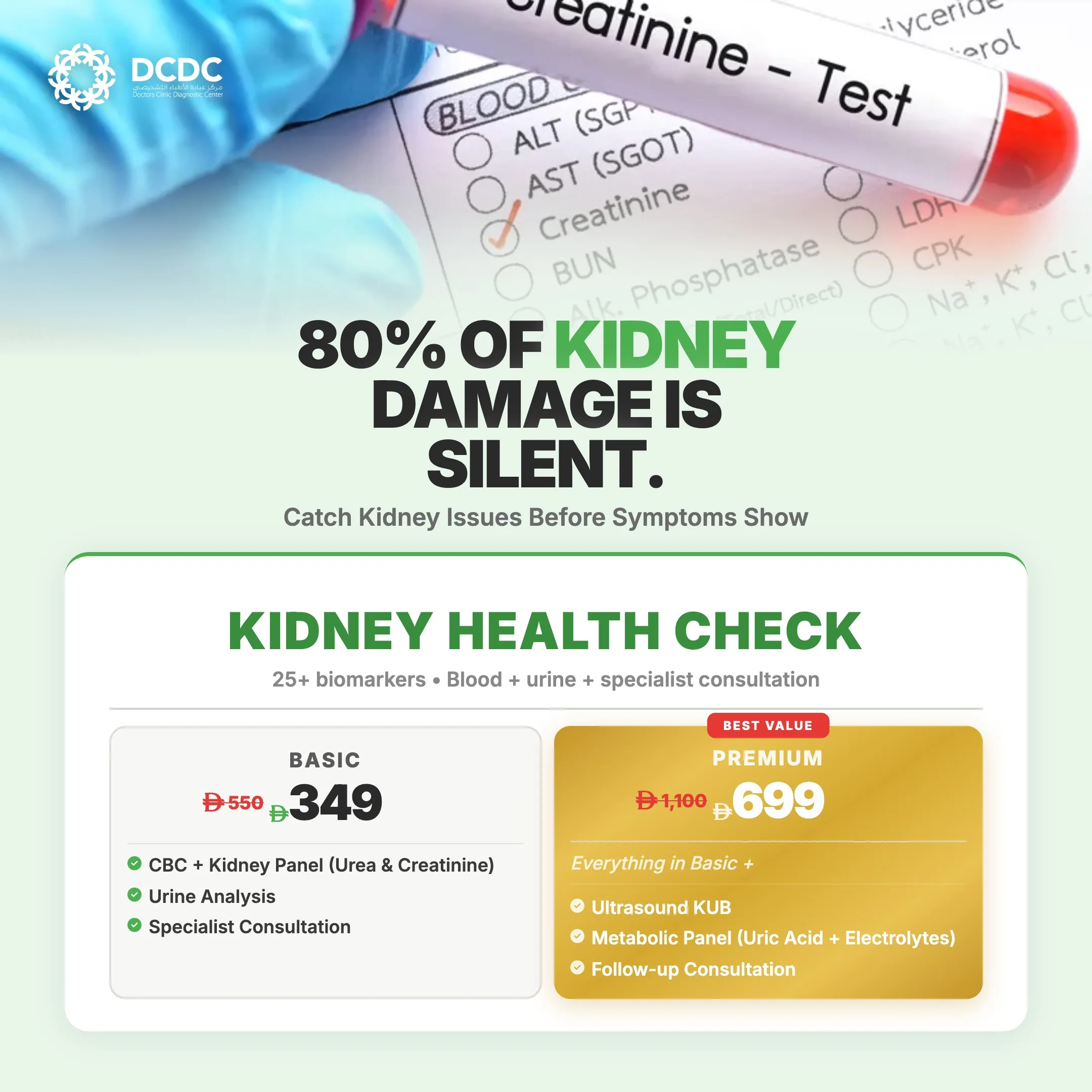
Health Screening Packages
Save with our bundled screening packages — specialist consultation included





What Are Tumor Markers? The Science Behind Cancer Blood Tests
Tumor markers are substances — usually proteins — produced either by cancer cells themselves or by the body in response to cancer. They can be measured in blood, urine, or tissue samples. In theory, an elevated tumor marker could signal the presence of cancer before symptoms develop. In practice, the reality is far more complicated. Most tumor markers have two fundamental problems that limit their usefulness for screening:
Poor specificity means the marker is elevated in many conditions other than cancer. For example, CA-125 (associated with ovarian cancer) is also elevated in endometriosis, pelvic inflammatory disease, liver disease, heart failure, pregnancy, and even during menstruation. CEA (associated with colorectal cancer) is elevated in smokers, people with inflammatory bowel disease, pancreatitis, liver cirrhosis, and hypothyroidism. When a marker is elevated in so many non-cancer conditions, a positive result in a healthy person is far more likely to be a false positive than to indicate actual cancer.
Poor sensitivity means the marker is not elevated in all patients who actually have the cancer. Many early-stage cancers produce too little of the marker to be detected in the blood. For example, CA-125 is elevated in only about 50% of women with stage I ovarian cancer — meaning it would miss half of all early-stage cases. If a screening test misses 50% of the cancers it is supposed to find, it creates a false sense of security in the patients who test negative.
These dual limitations — too many false positives and too many false negatives — are why every major medical organisation (including the American Cancer Society, USPSTF, and ASCO) recommends against using tumor marker panels for cancer screening in healthy, asymptomatic individuals.
Common Tumor Markers Explained: What Each One Tests For
| Tumor Marker | Associated Cancer | Normal Range | Screening Role | Non-Cancer Causes of Elevation |
|---|---|---|---|---|
| PSA | Prostate | < 4.0 ng/mL | Shared decision (age 50+) | BPH, prostatitis, UTI, cycling, ejaculation |
| CA-125 | Ovarian | < 35 U/mL | NOT recommended | Endometriosis, PID, fibroids, pregnancy, menstruation, liver disease |
| CA 15-3 | Breast | < 30 U/mL | NOT for screening; monitoring only | Liver disease, lupus, sarcoidosis, benign breast conditions |
| CEA | Colorectal | < 5.0 ng/mL | NOT for screening; monitoring only | Smoking, IBD, pancreatitis, cirrhosis, hypothyroidism |
| AFP | Liver, testicular, germ cell | < 10 ng/mL | Only in high-risk (hepatitis B/C) | Pregnancy, hepatitis, cirrhosis |
| CA 19-9 | Pancreatic, biliary | < 37 U/mL | NOT recommended | Pancreatitis, cholangitis, bile duct obstruction, cirrhosis |
Common tumor markers, associated cancers, and limitations
PSA (Prostate-Specific Antigen)
PSA is the only tumor marker with a recognised — albeit controversial — role in cancer screening. It is a protein produced by the prostate gland, and levels tend to rise with prostate cancer. However, PSA is also elevated in benign prostatic hyperplasia (BPH, which affects most men over 60), prostatitis (prostate inflammation), urinary tract infection, after ejaculation, and even after vigorous cycling. A PSA above 4.0 ng/mL is traditionally considered elevated, but approximately 15% of men with PSA below 4.0 have prostate cancer, and many men with PSA above 4.0 do not have cancer. The current recommendation from the USPSTF is that men aged 55-69 should engage in shared decision-making with their doctor before PSA testing. Routine PSA screening is not recommended for men under 55 or over 70 without specific risk factors.
CA-125
CA-125 is perhaps the most misused tumor marker in clinical practice. Many wellness clinics include it in "women's cancer panels" as a screening test for ovarian cancer. This is not supported by evidence. The UK Collaborative Trial of Ovarian Cancer Screening (UKCTOCS), which followed over 200,000 women, found that CA-125 screening did NOT reduce ovarian cancer deaths. It did, however, lead to unnecessary surgeries — including removal of healthy ovaries — in women with false positive results. CA-125 is valuable for monitoring known ovarian cancer (tracking treatment response and detecting recurrence), but it should not be used to screen healthy women.
CA 15-3
CA 15-3 is associated with breast cancer and is sometimes included in "cancer screening panels." It is NOT recommended for breast cancer screening or diagnosis. It is insensitive for early-stage breast cancer — normal in the majority of stage I and II patients — and is elevated in many non-cancer conditions including liver disease, lupus, and benign breast conditions. Its legitimate use is in monitoring advanced or metastatic breast cancer during treatment, where rising or falling levels correlate with disease progression or response.
CEA (Carcinoembryonic Antigen)
CEA was one of the first tumor markers discovered and is associated primarily with colorectal cancer, but also with lung, breast, pancreatic, and gastric cancers. It is NOT recommended for cancer screening. Smokers routinely have elevated CEA levels, and many inflammatory and liver conditions also cause elevation. CEA's primary role is in monitoring colorectal cancer after surgical resection — a rising CEA level after surgery can signal recurrence, prompting imaging and further evaluation.
AFP (Alpha-Fetoprotein)
AFP is associated with hepatocellular carcinoma (liver cancer) and germ cell tumors (testicular cancer in men, ovarian germ cell tumors in women). Unlike most other markers, AFP has a recognised screening role in a specific high-risk group: patients with chronic hepatitis B or C or established liver cirrhosis should have AFP measured every 6 months alongside liver ultrasound for hepatocellular carcinoma surveillance. In the general population, AFP screening is not recommended.
CA 19-9
CA 19-9 is associated with pancreatic cancer, but it is also elevated in bile duct obstruction, pancreatitis, cholangitis, and liver disease. Approximately 5-10% of the population are Lewis antigen-negative and cannot produce CA 19-9 at all, making the test completely uninformative in these individuals. CA 19-9 is NOT recommended for pancreatic cancer screening. Its role is in monitoring known pancreatic cancer during treatment and in helping differentiate malignant from benign causes of pancreatic mass or bile duct obstruction.
Need Guidance on Cancer Testing?
Speak with our internal medicine specialist at DCDC Dubai Healthcare City about evidence-based cancer screening — not misleading tumor marker panels.
Screening vs Monitoring: When Doctors Actually Order Tumor Markers
The distinction between screening (testing healthy people without symptoms) and monitoring (tracking a known cancer) is the key to understanding when tumor markers are appropriate. The vast majority of tumor marker orders in clinical practice fall into the monitoring category — they are ordered for patients who have already been diagnosed with cancer, not for healthy people looking for early detection. For related information, see our guide on Cancer Screening Dubai: Tests & Cost by Age.
- Monitoring treatment response: During chemotherapy or immunotherapy, serial tumor marker measurements help determine whether the treatment is working. A falling PSA during prostate cancer treatment, or a declining CA-125 during ovarian cancer chemotherapy, indicates the cancer is responding to therapy
- Detecting recurrence after treatment: After surgery or completion of chemotherapy, regular tumor marker testing can detect cancer recurrence before symptoms develop. A rising CEA after colorectal cancer surgery, for example, prompts imaging to look for metastatic disease
- Guiding therapy decisions: Rising markers during treatment may prompt a change in chemotherapy regimen. Stable or declining markers support continuing the current approach
- Establishing a baseline: Before starting treatment, baseline tumor marker levels help interpret subsequent results. A patient whose CA 19-9 was 500 before treatment and drops to 50 is clearly responding, even though 50 is still technically elevated
- Prognostic information: Very high tumor marker levels at diagnosis (for example, AFP > 10,000 in testicular cancer) correlate with more advanced disease and help classify risk for treatment planning
The bottom line: if you have been diagnosed with cancer, your oncologist may appropriately order tumor markers as part of your treatment and surveillance plan. If you are healthy and asymptomatic, routine tumor marker panels are not recommended by any major medical organisation. The potential harm from false positives — anxiety, unnecessary imaging, biopsies, even surgery — outweighs the negligible screening benefit.
Complete Blood Count (CBC) and Cancer: What to Know
While a complete blood count (CBC) is not a cancer test per se, certain CBC abnormalities can raise suspicion for cancer and prompt further investigation. The CBC measures red blood cells, white blood cells, platelets, haemoglobin, and other components. Here is how each relates to cancer:
- Unexplained anaemia (low haemoglobin): Iron-deficiency anaemia in a man or postmenopausal woman without an obvious dietary or menstrual cause should prompt investigation for gastrointestinal blood loss — a common presentation of colorectal cancer. Anaemia of chronic disease can accompany many cancers
- Low white blood cell count (leukopenia): Can indicate bone marrow infiltration by leukaemia, lymphoma, or metastatic cancer. However, viral infections, medications, and autoimmune conditions are far more common causes
- Very high white blood cell count (leukocytosis): Extremely elevated WBC counts (> 50,000-100,000) can indicate leukaemia. Moderate elevations are usually caused by infection or inflammation
- Low platelet count (thrombocytopenia): May indicate bone marrow involvement by cancer, but is much more commonly caused by viral infections, medications, liver disease, or autoimmune conditions
- Abnormal blood smear: The presence of blast cells (immature white blood cells) on a peripheral blood smear is highly suspicious for acute leukaemia and requires urgent haematology referral
- Elevated ESR/CRP: While not part of the CBC, inflammatory markers are often ordered alongside it. Markedly elevated ESR (> 100) can be associated with lymphoma, myeloma, or advanced solid tumors, though infections and autoimmune conditions are more common causes
The important caveat is that CBC abnormalities have many non-cancer causes, and an abnormal CBC does not mean you have cancer. It means further investigation is needed to determine the cause. However, a routine CBC performed during a health checkup can occasionally be the first clue that leads to a cancer diagnosis — particularly for blood cancers (leukaemia, lymphoma, myeloma) and for gastrointestinal cancers that present with anaemia.
Liquid Biopsy: The Future of Cancer Blood Testing
The field of cancer blood testing is being transformed by liquid biopsy — a technology that detects circulating tumor DNA (ctDNA), circulating tumor cells (CTCs), or other cancer-derived molecules in the blood. Unlike traditional tumor markers (which are proteins that may or may not be produced by a particular cancer), ctDNA is actual DNA shed by tumor cells into the bloodstream. Because it comes directly from the tumor, it carries specific genetic mutations that can identify both the presence and the type of cancer.
The most advanced multi-cancer early detection (MCED) test is Galleri, developed by Grail. This test uses cell-free DNA methylation patterns to screen for over 50 cancer types from a single blood draw. In the PATHFINDER study, Galleri detected cancer in 1.4% of screened individuals, with a positive predictive value of 43% — meaning that when the test flags a possible cancer, it is correct about 43% of the time. While this is a remarkable advance, it also means that 57% of positive results are false positives. The test is also more sensitive for advanced cancers than early-stage cancers, somewhat limiting its screening utility.
Currently, liquid biopsy is most widely used in oncology for patients with known cancer — specifically, for detecting specific mutations that guide targeted therapy (such as EGFR mutations in lung cancer), monitoring for minimal residual disease after surgery, and detecting treatment resistance. The use of liquid biopsy for population-wide cancer screening in healthy people is still investigational. The NHS England is conducting the largest clinical trial to date (the NHS Galleri trial, enrolling 140,000 participants) to determine whether MCED testing reduces late-stage cancer diagnoses and improves outcomes.
Liquid biopsy represents the most promising frontier in cancer detection, and it is likely that within the next decade, a blood test will become a standard part of cancer screening — but we are not there yet. Until large randomised trials confirm that these tests reduce cancer deaths (not just detect cancers), they should not replace established screening methods like mammography, colonoscopy, and LDCT.
Cost of Cancer Blood Tests in Dubai
| Test | Typical Cost (AED) | Screening Role |
|---|---|---|
| PSA | 100-300 | Shared decision (men 55-69) |
| CA-125 | 150-350 | NOT for screening |
| CA 15-3 | 150-350 | NOT for screening |
| CEA | 150-350 | NOT for screening |
| AFP | 150-350 | High-risk liver screening only |
| CA 19-9 | 150-350 | NOT for screening |
| Complete Blood Count (CBC) | 50-150 | Routine health check |
| Tumor marker panel (5-6 markers) | 500-1,200 | NOT recommended for screening |
| Liquid biopsy (Galleri/similar) | 3,000-7,000 | Investigational |
Approximate costs of cancer-related blood tests in Dubai (2026)
At DCDC Dubai Healthcare City, our in-house laboratory offers all standard tumor marker tests, comprehensive blood counts, and full biochemistry panels. Rather than offering blanket "cancer screening panels," our physicians order specific tests based on your individual risk profile, symptoms, and clinical history. If your doctor determines that a specific tumor marker is appropriate for your situation — for example, PSA testing after a shared decision discussion, or AFP monitoring for a patient with chronic hepatitis — we can provide fast, accurate results with same-day or next-day turnaround. You may also find our Lung Cancer Screening: LDCT Early Detection helpful.
Book Evidence-Based Cancer Screening
Skip the misleading "cancer blood panels." Get personalised, evidence-based cancer screening at DCDC Dubai Healthcare City with tests chosen for your specific risk profile.
In-house laboratory with fast turnaround
خدمات مرتبط در DCDC
مراقبت تخصصی و تشخیص پیشرفته در شهر بهداشت دبی
Frequently Asked Questions
Evidence Over Marketing: The Right Tests for the Right Reasons
The appeal of a simple blood test that can detect any cancer is powerful — and someday, liquid biopsy technology may deliver on that promise. But today, tumor markers are not that test. They are imprecise tools that work well for monitoring known cancers but perform poorly as screening tests in healthy populations. Every positive result in a healthy person is far more likely to be a false positive than a true cancer detection, and the cascade of follow-up testing triggered by false positives creates real harm: anxiety, unnecessary imaging, invasive biopsies, and in some documented cases, unnecessary surgery.
The evidence-based approach to cancer screening relies on proven methods: mammography for breast cancer, colonoscopy for colorectal cancer, LDCT for lung cancer in smokers, and Pap smear for cervical cancer. These are the tests that have been shown in large randomised trials to actually reduce cancer deaths. A CBC as part of a routine health checkup provides useful general health information and can occasionally flag an abnormality worth investigating. But a panel of CA-125, CEA, CA 19-9, and CA 15-3 in a healthy person is not evidence-based medicine — it is fear-based marketing.
At DCDC Dubai Healthcare City, we practice evidence-based cancer screening. Our physicians will not order unnecessary tumor marker panels for healthy patients, but they will ensure you receive the age-appropriate and risk-appropriate screening tests that are proven to save lives. If you have specific cancer risk factors, symptoms, or a family history that warrants evaluation, book a health checkup consultation and let us guide you toward the right tests for the right reasons.
منابع و مراجع
این مقاله توسط تیم پزشکی ما بررسی شده و به منابع زیر ارجاع میدهد:
- American Society of Clinical Oncology — Tumor Markers
- USPSTF — Prostate Cancer Screening Recommendation
- UKCTOCS — Ovarian Cancer Screening Trial Results
- GRAIL — PATHFINDER Study Results (Multi-Cancer Early Detection)
- American Cancer Society — Tumor Markers Fact Sheet
محتوای پزشکی این سایت توسط پزشکان دارای مجوز DHA بررسی میشود. مشاهده سیاست تحریریه برای اطلاعات بیشتر.

نوشته شده توسط
Dr. Hadi Komshi
Specialist Internal Medicine
MD, Internal Medicine Specialist
Dr. Hadi Komshi is a Specialist in Internal Medicine with expertise in preventive health, chronic disease management, and executive wellness programs. He practices at DCDC Dubai Healthcare City.
Related Articles

Cancer Screening in Dubai: Tests, Costs & What You Need
Blood Test Dubai: Complete Guide

Health Checkup Cost Dubai
Lung Cancer Early Detection: LDCT Screening Guide
More in Preventive Health

Flu Vaccine Cost Dubai: Guide & Prices (2026)
بیشتر بخوانیدFull Body Checkup Cost Dubai: From AED 249 (2026)
بیشتر بخوانید
PSA Test Dubai: Prostate Screening Guide (2026)
بیشتر بخوانید
Premarital Screening Dubai: Tests & Cost (2026)
بیشتر بخوانیدHPV Vaccine Dubai: Gardasil 9 Cost & Guide (2026)
بیشتر بخوانید
Men's Health Screening Dubai: Tests by Age (2026)
بیشتر بخوانید© 2026 Doctors Clinic Diagnostic Center (DCDC), Dubai Healthcare City. Originally published at https://doctorsclinicdubai.ae/blog/blood-tests-cancer-markers. All rights reserved. Unauthorized reproduction is prohibited.