Wichtigste Erkenntnisse
- Saving your natural tooth with a root canal is almost always the better long-term choice — the American Association of Endodontists and the ADA recommend preserving natural teeth whenever clinically possible
- Root canal treatment has a success rate of 90-97 percent and treated teeth can last a lifetime with proper restoration and care, including placement of a dental crown
- Total cost comparison often favours root canal: root canal plus crown (from AED 299 per canal at DCDC) is typically less expensive than extraction plus implant replacement (AED 5,000-15,000 total)
- Extraction is the right choice when a tooth is cracked vertically below the bone line, has severe periodontal bone loss, or is structurally too damaged to restore — your dentist will advise based on clinical findings and imaging
- Recovery after root canal is faster (1-3 days of mild soreness) compared to surgical extraction (5-10 days with swelling and dietary restrictions)
- DCDC offers both root canal and extraction under one roof in Dubai Healthcare City with 6+ dental specialists, digital imaging, direct insurance billing with 20+ partners, and same-day emergency appointments
If your dentist has told you that a tooth is infected, severely decayed, or badly damaged, two treatment paths usually come up: root canal treatment to save the tooth, or extraction to remove it entirely. The decision affects your oral health, your budget, and your quality of life for years to come. This comprehensive comparison covers everything you need to make the right choice — from clinical indications and success rates to costs, recovery timelines, and long-term outcomes — with Dubai-specific pricing and expert insight from our dental team at DCDC in Dubai Healthcare City.
Below you will find a side-by-side comparison table, detailed pros and cons for each option, a decision-making checklist, pricing breakdown, and answers to the most common questions patients ask. Whether you are dealing with a toothache right now or planning ahead, this guide gives you the evidence-based information you need.
Root Canal vs Extraction: Quick Comparison Table
Before we dive into the details, here is a side-by-side overview of the two procedures. This table summarises the key differences so you can see the big picture at a glance.
| Factor | Root Canal Treatment | Tooth Extraction |
|---|---|---|
| Goal | Save the natural tooth | Remove the tooth entirely |
| Success rate | 90-97% (with proper restoration) | 100% (tooth is removed) |
| Procedure time | 45-90 minutes (1-2 visits) | 20-45 minutes (1 visit) |
| Recovery | 1-3 days mild soreness | 3-10 days (simple to surgical) |
| Cost at DCDC | From AED 299 per canal + crown | From AED 200 per tooth |
| Replacement needed? | No — tooth is preserved | Yes — implant, bridge, or denture recommended |
| Jawbone preservation | Yes — natural root maintains bone | No — bone resorbs over time without replacement |
| Long-term cost | Root canal + crown: AED 1,500-4,000 total | Extraction + implant: AED 5,500-15,000 total |
| Pain during procedure | Minimal — local anaesthesia | Minimal — local anaesthesia (sedation for surgical) |
| Adjacent teeth affected? | No | May shift into the gap over time |
Side-by-side comparison of root canal treatment versus tooth extraction. Individual cases vary — consult your dentist for personalised advice.
What Is Root Canal Treatment?
Root canal treatment (endodontic therapy) is a procedure that removes infected or inflamed pulp tissue from inside the tooth, cleans and disinfects the root canal system, and seals it to prevent reinfection. The tooth is then restored with a filling and, in most cases, a dental crown to protect it from fracture.
When Is Root Canal Recommended?
- Irreversible pulpitis: The nerve inside the tooth is inflamed beyond recovery, causing spontaneous or lingering pain to hot and cold stimuli
- Pulp necrosis: The nerve has died due to deep decay, trauma, or a crack, and bacteria have infected the root canal space
- Dental abscess: A periapical (at the root tip) or lateral abscess has formed, visible on X-ray as a dark area around the root — learn more in our dental abscess treatment guide
- Trauma: A blow to the face has damaged the nerve supply to a tooth, even if the tooth itself looks intact
- Deep decay approaching the pulp: Decay has progressed so close to the nerve that removing it would expose or damage the pulp
- Retreatment: A previous root canal has failed and the tooth needs to be cleaned and sealed again
How Modern Root Canal Works
Modern root canal treatment bears little resemblance to its outdated reputation. At DCDC, our dentists use rotary nickel-titanium instruments that flex with the natural curvature of each canal, electronic apex locators that measure canal length with sub-millimetre accuracy (reducing the need for multiple X-rays), and digital radiography for real-time imaging. Many straightforward cases — particularly front teeth with a single canal — can be completed in a single visit.
The procedure follows these steps: your dentist administers local anaesthesia so you feel no pain, places a rubber dam to isolate the tooth, creates an access opening in the crown of the tooth, uses rotary instruments to remove the pulp and shape the canals, irrigates with antibacterial solutions (typically sodium hypochlorite), dries and fills the canals with biocompatible gutta-percha material, and seals the access opening. A crown is usually placed within 2-4 weeks to protect the treated tooth from fracture.
What Is Tooth Extraction?
Tooth extraction is the complete removal of a tooth from its socket in the jawbone. There are two types: simple extraction (for teeth that are visible and accessible, using forceps and elevators under local anaesthesia) and surgical extraction (for teeth that are broken below the gum line, impacted, or have curved roots, which may require cutting into bone and/or sectioning the tooth).
When Is Extraction the Better Choice?
- Vertical root fracture: A crack running lengthwise down the root cannot be repaired and will harbour bacteria indefinitely
- Severe periodontal disease: If more than 50-60 percent of the bone supporting the tooth is lost, saving it is unlikely to succeed long-term
- Non-restorable tooth structure: When decay or fracture extends so far below the bone level that no crown or filling can grip the remaining tooth
- Failed previous root canal: If retreatment and apicoectomy (root-end surgery) are not feasible, extraction may be the last resort
- Impacted wisdom teeth: Third molars that are stuck against the adjacent tooth or trapped in bone — see our tooth extraction cost guide for detailed pricing
- Orthodontic reasons: Severely crowded teeth may need extraction as part of a braces or Invisalign plan
- Teeth causing recurrent infections: If a tooth keeps getting reinfected despite treatment, extraction stops the cycle
Pros and Cons of Root Canal Treatment
Advantages of Root Canal
- Preserves your natural tooth: Nothing looks, feels, or functions like a real tooth. You maintain your natural bite force, chewing efficiency, and smile appearance
- Protects jawbone density: A living root continues to stimulate the surrounding bone. After extraction, that bone can resorb by up to 25 percent in the first year alone
- Prevents adjacent tooth shifting: Keeping the tooth in place stops neighbouring teeth from drifting into the gap, which can cause bite problems and TMJ issues
- High success rate: A 2023 retrospective study published in Clinical Oral Investigations found cumulative survival rates of 97 percent at 10 years and 81 percent at 20 years for root canal-treated teeth
- Faster recovery: Most patients return to normal eating within 1-3 days, compared to 5-10 days for surgical extraction
- Often more cost-effective long-term: Even with a crown, total treatment cost is usually lower than extraction followed by implant placement
Disadvantages of Root Canal
- Not always possible: Some teeth are too damaged, cracked, or have too little bone support to save
- Requires a crown in most cases: The tooth becomes more brittle after treatment and usually needs a crown, adding to the upfront cost
- Small failure risk: About 3-10 percent of root canals may fail over time, requiring retreatment or eventual extraction
- May need multiple visits: Complex cases with multiple canals, curved roots, or active infections may require 2-3 appointments
- Longer chair time: The procedure typically takes 45-90 minutes compared to 20-30 minutes for a simple extraction
Pros and Cons of Tooth Extraction
Advantages of Extraction
- Definitive removal of infection: Extracting the tooth eliminates the source of infection completely — no possibility of reinfection in that tooth
- Lower upfront cost: A simple extraction starts from AED 200 at DCDC, making it the more affordable immediate option
- Faster procedure: Simple extractions take 20-30 minutes, and the problem tooth is gone the same day
- Necessary when tooth is unsaveable: When the tooth structure is too compromised, extraction is the only responsible clinical choice
- Opens space for better solutions: In some cases, removing a badly damaged tooth creates space for an implant that may function better long-term than a heavily restored natural tooth
Disadvantages of Extraction
- Bone resorption: Without a tooth root, the jawbone in that area begins to shrink. This can affect facial appearance over time and complicate future implant placement
- Adjacent teeth shift: Neighbouring teeth gradually tilt toward the gap, and the opposing tooth can over-erupt, creating bite problems
- Replacement costs are high: A dental implant (the gold standard replacement) costs AED 5,000-10,000, plus the crown on top. Even a bridge requires preparing adjacent healthy teeth
- Chewing efficiency drops: Even the best implant restores only about 80-90 percent of natural chewing force
- Longer total treatment time: While extraction itself is quick, the full restoration process (healing, implant placement, osseointegration, crown) can take 4-9 months
- More post-operative discomfort: Surgical extractions involve swelling, dietary restrictions, and a 5-10 day soft-food recovery period
Not Sure Whether to Save or Extract?
Our dental team at DCDC in Dubai Healthcare City can evaluate your tooth with digital X-rays and give you a clear recommendation. We offer root canal treatment from AED 299 per canal and tooth extraction from AED 200. Direct billing with 20+ insurance partners. Walk-ins welcome, or book via WhatsApp.
Which Is Right for You? A Decision Checklist
Use this checklist to guide your thinking before your dental consultation. Tick the statements that apply to your situation.
Root Canal Is Likely the Better Option If:
- The tooth has enough healthy structure above the gum line to support a crown
- The surrounding bone and gums are in reasonable condition (no severe periodontal disease)
- There is no vertical root fracture visible on imaging
- The tooth plays an important role in your bite (molar for chewing, front tooth for appearance)
- You want to avoid the cost and complexity of an implant or bridge later
- Your dentist confirms the canals are accessible and treatable
- You are generally healthy with no uncontrolled conditions that impair healing
Extraction Is Likely the Better Option If:
- The tooth is cracked vertically through the root
- Severe bone loss around the tooth means it is already loose or mobile
- Not enough tooth structure remains to support any restoration
- A previous root canal on this tooth has failed and retreatment is not feasible
- The tooth is a wisdom tooth causing recurrent infections or crowding
- Extraction is part of an orthodontic treatment plan
- You and your dentist agree that the long-term prognosis of saving the tooth is poor
Dr. Chadi El Masry's clinical perspective: "My philosophy is always to try to save the natural tooth first. A well-done root canal with a good crown can serve a patient for decades. However, I am equally honest when extraction is the better path — holding on to a tooth that cannot be properly restored only delays the inevitable and can lead to further complications. The key is thorough diagnostic imaging and an open conversation with the patient about realistic outcomes for their specific tooth."
Cost Comparison: Root Canal vs Extraction in Dubai
One of the most common questions patients ask is about cost. The table below compares the full financial picture — not just the procedure itself, but the total cost including necessary follow-up treatment. For a detailed breakdown of root canal pricing by tooth type, see our root canal cost in Dubai guide.
| Treatment Pathway | DCDC Price (AED) | Other Dubai Clinics (AED) | What Is Included |
|---|---|---|---|
| Root canal (per canal) | From 299 | 500-2,000 | Pulp removal, canal cleaning, shaping, and sealing |
| Dental crown (post-root canal) | From 800 | 1,200-3,500 | Porcelain or zirconia crown to protect the treated tooth |
| Root canal + crown total | From 1,099 | 1,700-5,500 | Complete tooth-saving treatment |
| Simple tooth extraction | From 200 | 300-600 | Removal of a visible, accessible tooth |
| Surgical extraction | From 500 | 700-1,500 | Removal requiring incision, bone removal, or tooth sectioning |
| Extraction + dental implant + crown | From 5,500 | 6,000-15,000 | Extraction, 3-6 months healing, implant, abutment, and crown |
| Extraction + dental bridge (3-unit) | From 2,400 | 3,000-8,000 | Extraction, bridge fabrication, cementation on adjacent teeth |
All prices are approximate starting points and vary based on case complexity, tooth location, materials, and insurance coverage. DCDC prices are current as of June 2026.
Key financial insight: While extraction appears cheaper upfront (from AED 200 vs from AED 299 per canal), leaving a gap is not a viable long-term plan. Once you factor in the replacement — an implant from AED 5,000 or a bridge from AED 2,400 — the total cost of extraction usually exceeds the cost of saving the tooth with a root canal and crown. The only exception is if you choose not to replace the extracted tooth, which is generally not recommended by dental professionals except for wisdom teeth.
Recovery and Aftercare Compared
How quickly you return to normal life is a practical concern for every patient. Here is what to expect after each procedure.
Recovery After Root Canal
- Day 1: Numbness wears off in 2-4 hours. Mild tenderness when biting is normal. You can eat soft foods on the opposite side
- Days 2-3: Any soreness typically resolves. Over-the-counter ibuprofen or paracetamol is usually sufficient
- Day 4+: Most patients feel completely normal. Avoid chewing hard foods on the treated tooth until the permanent crown is placed
- Crown placement: Scheduled within 2-4 weeks. Until then, avoid biting on very hard or sticky foods with the temporary filling
Recovery After Tooth Extraction
- Day 1: Bite on gauze for 30-60 minutes. Apply ice packs in 15-minute intervals. Eat only cold, soft foods. No spitting, no straws, no smoking
- Days 2-3: Swelling peaks on day 2-3, especially after surgical extraction. Bruising may appear. Continue soft diet
- Days 4-7: Swelling subsides. Stitches dissolve or are removed. Gradually return to normal diet, avoiding the extraction site
- Days 7-14: Soft tissue heals. Bone begins to fill the socket (this process takes 3-6 months to complete)
- Dry socket risk: The blood clot can dislodge in 2-5 percent of extractions, causing intense pain. Follow all post-operative instructions carefully
Long-Term Outcomes: What the Research Says
Both the American Dental Association (ADA) and the American Association of Endodontists (AAE) strongly recommend preserving natural teeth whenever clinically feasible. The AAE's position is clear: "Nothing looks, feels, or functions like your natural tooth. Saving your natural teeth should always be your first choice."
Root Canal Longevity Data
- A 2023 study in Clinical Oral Investigations tracking 598 teeth over up to 37 years found 97 percent survival at 10 years, 81 percent at 20 years, and 68 percent at 37 years
- Root canal-treated teeth restored with crowns show significantly higher survival rates than those without crowns — reinforcing why crown placement is critical
- A 2022 systematic review in the International Endodontic Journal reported weighted success rates of 80-95 percent across multiple longitudinal studies
- The most common reasons for failure are inadequate sealing, missed canals, and recurrent decay — all of which are minimised by experienced clinicians using modern techniques
Extraction and Implant Longevity Data
- Dental implants have a 10-year survival rate of approximately 95 percent, comparable to root canal-treated teeth
- However, implants carry risks of peri-implantitis (inflammation around the implant), screw loosening, and prosthetic complications
- If no replacement is placed after extraction, adjacent teeth shift within 6-12 months and opposing teeth begin to over-erupt
- Bone resorption in the extraction site begins within weeks and can reduce bone volume by 40-60 percent over 2-3 years, potentially complicating future implant placement
If you are experiencing a toothache and are unsure whether the tooth can be saved, our guide on toothache causes and treatment can help you understand what might be happening.
What About Teeth That Had Previous Root Canals?
If a root canal-treated tooth develops a new infection or persistent symptoms, the options are retreatment (redoing the root canal), apicoectomy (surgical removal of the infected root tip), or extraction. The decision depends on several factors.
- Retreatment: Often successful if the original treatment had a technical issue (missed canal, short fill, poor seal). The dentist removes the old filling material, re-cleans the canals, and reseals them
- Apicoectomy: A minor surgical procedure where the tip of the root and any infected tissue are removed. Suitable when the problem is localised to the root tip and the rest of the tooth is sound
- Extraction: Recommended when the root is fractured, the tooth has had multiple failed treatments, or the remaining tooth structure is insufficient for restoration
"When I see a patient whose previous root canal has failed, I always explore retreatment first," says Dr. Chadi El Masry. "With better instruments and imaging than were available even five years ago, we can often resolve issues that previously led to extraction. But I am transparent — if the tooth's prognosis is genuinely poor, I recommend extraction and discuss replacement options on the same day."
Common Myths About Root Canals and Extractions
Myth 1: Root Canals Are Extremely Painful
This is the most persistent myth in dentistry. In reality, modern root canal treatment is performed under effective local anaesthesia, and most patients describe the experience as no more uncomfortable than having a filling placed. The pain patients associate with root canals is actually the pain of the infected tooth before treatment. The root canal relieves that pain.
Myth 2: It Is Better to Just Pull the Tooth and Get an Implant
While dental implants are excellent replacements, no artificial tooth matches the proprioception (sensory feedback) of a natural tooth. Your natural tooth has a periodontal ligament that senses pressure and guides your bite force — an implant does not. Additionally, implants require surgery, months of healing, and significantly higher cost. When the natural tooth can be saved, it is almost always the superior option.
Myth 3: Root Canals Cause Systemic Illness
This debunked theory originated from flawed research by Weston Price in the 1920s. The ADA, AAE, and the World Health Organisation have all rejected this claim. Modern peer-reviewed research has found no causal link between root canal treatment and systemic disease. Root canal-treated teeth are safe.
Myth 4: Extraction Is Always Cheaper
While the extraction itself may cost less, leaving a gap leads to bone loss, shifting teeth, and bite problems. The replacement tooth — whether an implant, bridge, or denture — adds significant cost. When you compare total treatment cost (including the replacement), saving the tooth with a root canal is often the more economical choice.
Myth 5: Extracted Teeth Do Not Need to Be Replaced
Every tooth except wisdom teeth serves a functional purpose. Leaving a gap after extraction causes a cascade of problems: adjacent teeth drift, opposing teeth over-erupt, the bite becomes uneven, the jawbone resorbs, and chewing efficiency decreases. Dental professionals strongly recommend replacing extracted teeth (with the exception of wisdom teeth and teeth removed for orthodontic purposes).
What to Expect at DCDC Dubai Healthcare City
At Doctors Clinic Diagnostic Center (DCDC), located in Building 64, Block A, Al Razi Medical Complex, Dubai Healthcare City, our dental department is equipped and staffed to handle both root canal treatment and tooth extraction with a focus on patient comfort and clinical excellence.
Your Patient Journey
- Step 1 — Arrival and registration: Walk in or arrive for your appointment. Free dedicated on-site parking is available. Registration takes approximately 5 minutes, with insurance verification completed at the front desk
- Step 2 — Diagnostic imaging: Digital X-rays (periapical or panoramic) are taken to evaluate the tooth, surrounding bone, and root anatomy. Results are available instantly on screen
- Step 3 — Clinical examination: Your dentist examines the tooth, tests its vitality (response to cold and electric pulp testing), checks for cracks, assesses gum health, and reviews the imaging
- Step 4 — Diagnosis and treatment plan: Your dentist explains the findings, discusses whether the tooth can be saved, presents your options with transparent pricing, and answers your questions
- Step 5 — Treatment: With your consent, treatment can begin the same day for most cases. Root canal treatment uses rotary nickel-titanium instruments, an electronic apex locator, and antibacterial irrigation. Extraction uses controlled force with minimal trauma to surrounding bone
- Step 6 — Follow-up: You receive detailed aftercare instructions (printed and via WhatsApp). A follow-up call or visit is scheduled to ensure proper healing. Crown placement is arranged within 2-4 weeks for root canal cases
Why Patients Choose DCDC for Dental Care
- MOHAP licensed clinic (License No. NIMY7VY5-240925) in Dubai Healthcare City's Al Razi Medical Complex
- 4.8/5 Google rating from 1,000+ verified reviews with a 98% patient satisfaction rate
- 6+ dental specialists including cosmetic dentists, endodontists, and oral surgeons
- Modern equipment: rotary endodontic systems, electronic apex locators, digital X-rays, ultrasonic scalers
- Direct billing with 20+ insurance partners including Daman, AXA, Bupa, MetLife, and Cigna — no claim forms for you to fill
- Extended hours: Saturday-Thursday 8 AM-10 PM, Friday 9 AM-9 PM
- Competitive pricing: Root canal from AED 299 per canal, extraction from AED 200
Insurance Coverage for Root Canal and Extraction in Dubai
Most comprehensive health insurance plans in the UAE include dental benefits that cover both root canal treatment and tooth extraction. Here is what you can typically expect from insurance coverage.
- Root canal treatment: Usually classified under major restorative benefits, covered at 50-80 percent after deductible. Pre-authorisation may be required for retreatment cases
- Tooth extraction: Generally covered under basic dental or surgical benefits at 70-100 percent. Wisdom tooth extraction may require pre-authorisation
- Dental crown: Typically covered under major restorative benefits at 50-70 percent. Some plans have a waiting period for crowns
- Dental implant: Coverage varies widely. Some plans exclude implants entirely; others cover 50 percent up to an annual sub-limit
DCDC works with 20+ insurance partners including Daman, AXA, Bupa, MetLife, Cigna, and many others, offering direct billing so you do not need to pay upfront and file claims. Our front desk team verifies your coverage before treatment begins so there are no surprises. If you are dealing with a dental emergency, our dental emergency guide explains what to do and what is covered.
Special Considerations for Different Patient Groups
Children and Adolescents
For baby (primary) teeth, extraction is often appropriate because the tooth will fall out naturally anyway. However, if the baby tooth is not due to be lost for more than a year, a pulpotomy (partial nerve treatment) may be recommended to maintain the space for the permanent tooth. For permanent teeth in young patients, root canal is strongly preferred because bone and dental health will be needed for decades to come.
Pregnant Women
Both root canal and extraction can be safely performed during pregnancy, ideally during the second trimester. Local anaesthesia (lidocaine with epinephrine) is safe during pregnancy. However, elective procedures are usually postponed until after delivery. Emergency treatment — whether root canal or extraction — should not be delayed, as untreated dental infections pose a greater risk to the pregnancy than the treatment itself.
Patients with Diabetes
Diabetic patients have a higher risk of infection and slower healing. Well-controlled diabetes (HbA1c below 7 percent) does not significantly affect root canal or extraction outcomes. Poorly controlled diabetes may tip the decision toward root canal (less invasive, smaller wound) when both options are clinically viable. Blood sugar should be well managed before any dental procedure.
Patients on Blood Thinners
Patients taking anticoagulants (warfarin, rivaroxaban, apixaban) or antiplatelet medications (aspirin, clopidogrel) can safely undergo root canal treatment without any medication changes. For extraction, your dentist may coordinate with your physician regarding medication management — though current guidelines generally recommend continuing blood thinners for simple extractions with local haemostatic measures.
Tooth Sensitivity After Treatment
Some patients experience sensitivity or discomfort after either procedure. Understanding what is normal versus what requires attention can ease anxiety during recovery.
After Root Canal
Mild tenderness when biting for 2-5 days is normal, especially if the tooth was infected before treatment. This occurs because the ligament around the root is inflamed from the infection and instrumentation. It resolves with over-the-counter pain relief. If pain worsens after day 3, or if swelling develops, contact your dentist. For more on post-treatment sensitivity, see our guide to tooth sensitivity causes and treatment.
After Extraction
Pain and swelling are expected for 3-5 days after extraction, peaking around day 2-3. Prescribed or over-the-counter pain medication, ice packs, and a soft diet manage this effectively. The main complication to watch for is dry socket (alveolar osteitis), which occurs in about 2-5 percent of extractions. Symptoms include severe pain starting 2-4 days after extraction, a foul taste, and a visibly empty socket. This requires a visit to your dentist for medicated dressing placement.
Book Your Dental Consultation at DCDC
Whether you need a root canal, tooth extraction, or just want a professional opinion, our dental team is here to help. Visit us at Building 64, Block A, Al Razi Medical Complex, Dubai Healthcare City. Open Saturday-Thursday 8 AM-10 PM, Friday 9 AM-9 PM. Free parking available. Call or WhatsApp to book your appointment.
How to Prevent Needing Root Canal or Extraction
The best dental treatment is the one you never need. Most root canals and extractions are preventable with consistent oral care and early intervention.
- Brush twice daily with fluoride toothpaste, spending at least two minutes each time
- Floss daily to remove plaque and food debris from between teeth where your brush cannot reach
- Visit your dentist every 6 months for professional cleaning and checkup — early detection of small cavities prevents them from reaching the nerve
- Treat cavities early: A simple filling costs AED 200-500 and takes 30 minutes. Ignoring a cavity until it reaches the nerve means root canal or extraction
- Wear a mouthguard: If you grind your teeth at night (bruxism) or play contact sports, a custom mouthguard protects against cracks and fractures
- Limit sugary and acidic foods: Frequent exposure to sugar and acid accelerates enamel breakdown and cavity formation
- Do not ignore tooth pain: Pain is your body's signal that something is wrong. Early treatment almost always means simpler, less expensive treatment
Verwandte Leistungen im DCDC
Fachkundige Betreuung und moderne Diagnostik in Dubai Healthcare City
Frequently Asked Questions
Final Thoughts
The decision between root canal and tooth extraction is not always straightforward, but the evidence strongly supports saving your natural tooth whenever possible. A well-performed root canal with a properly fitted crown can serve you for decades, preserving your jawbone, your bite, and your smile without the added cost and complexity of tooth replacement.
When extraction is genuinely the better clinical choice — due to vertical fracture, severe bone loss, or a non-restorable tooth — modern replacement options like dental implants offer excellent long-term outcomes. The key is making the decision based on thorough diagnostics and honest clinical advice, not cost alone or fear of root canal treatment.
At DCDC in Dubai Healthcare City, our dental team provides both root canal treatment (from AED 299 per canal) and tooth extraction (from AED 200) using modern equipment and techniques. We offer transparent pricing, direct insurance billing with 20+ partners, and extended hours to fit your schedule. Book your consultation today — visit us at Building 64, Block A, Al Razi Medical Complex, Dubai Healthcare City, or reach us via WhatsApp.
Quellen und Referenzen
Dieser Artikel wurde von unserem medizinischen Team überprüft und bezieht sich auf folgende Quellen:
- American Association of Endodontists — Saving Your Natural Tooth
- ADA MouthHealthy — Root Canals: Patient Guide
- Clinical Oral Investigations — Long-term tooth survival following primary root canal treatment: a 5- to 37-year retrospective observation (2023)
- International Endodontic Journal — Outcomes of primary root canal therapy: systematic review of longitudinal clinical studies 2003-2020 (2022)
- NHS — Root Canal Treatment Patient Information
- World Health Organisation — Oral Health Fact Sheet
- AAE — Treatment Options for the Diseased Tooth
Medizinische Inhalte auf dieser Website werden von DHA-lizenzierten Ärzten überprüft. Siehe unsere redaktionelle Richtlinien für weitere Informationen.

Verfasst von
Dr. Chadi El Masry
Cosmetic and Restorative Dentist
DDS
Dr. Chadi El Masry is a Cosmetic and Restorative Dentist at Doctors Clinic Diagnostic Center (DCDC) in Dubai Healthcare City.
Related Articles
Root Canal Cost Dubai: Complete Pricing Guide (2026)
Tooth Extraction Cost Dubai: From AED 200 (2026)

Dental Crown Cost Dubai: Pricing & Options (2026)
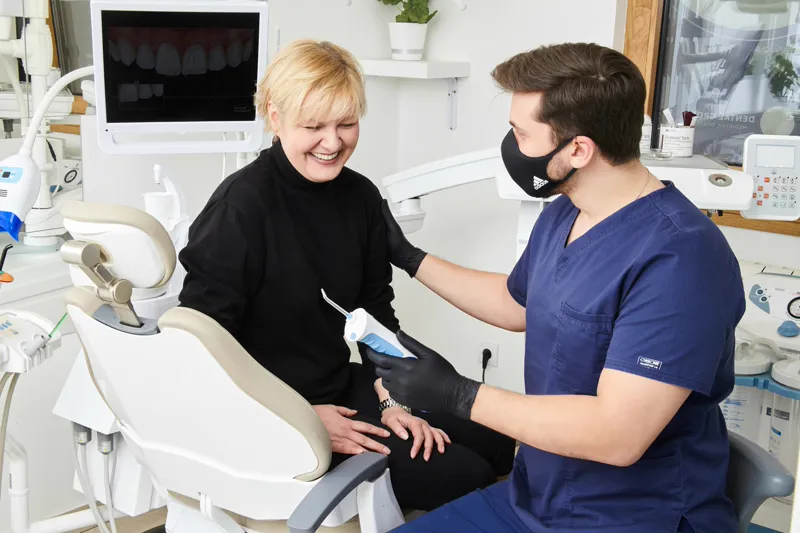
Dental Abscess Treatment Dubai: Symptoms & Care
Toothache Causes & Treatment Guide Dubai
Dental Emergency Guide Dubai: What to Do
More in Dental

Dental Scaling vs Deep Cleaning Dubai (2026)
Weiterlesen
Tooth Filling vs Crown Dubai: Which One? (2026)
Weiterlesen
Dental Crowns vs Veneers Dubai: Guide (2026)
WeiterlesenDentures vs Dental Implants Dubai (2026)
Weiterlesen
Dental Veneers Cost Dubai: From AED 500 (2026)
WeiterlesenDental Inlays & Onlays Dubai: Cost Guide (2026)
Weiterlesen© 2026 Doctors Clinic Diagnostic Center (DCDC), Dubai Healthcare City. Originally published at https://doctorsclinicdubai.ae/blog/root-canal-vs-tooth-extraction-dubai. All rights reserved. Unauthorized reproduction is prohibited.